Guest post by Marcus – 7 Tips to Improve the Symptoms of Bipolar Disorder

dephope

Bipolar disorder (formerly referred to as manic depression) is a condition characterized by mood oscillations- moving between high and low mood. A person suffering from bipolar disorder experiences mood changes and these changes are often erratic and unforeseen.

Symptoms of this disorder regularly change and that is one of the reasons why it can be such a difficult condition to treat and keep a consistent state of mood and activity for sufferers. However, it is possible!

Little things can help and here are 7 tips that might just help make symptoms slightly better:

  1. Make sure you get the Right Amount of Sleep

People who suffer from bipolar disorder often have erratic sleeping patterns. It is believed that one-quarter of these cases sleep too much at night while about a one-third experience difficulty in falling sleep, thereby suffering from insomnia.

As irregular sleeping patterns may precipitate depressive episodes, experts advise setting up an alarm to ensure one gets up at the same time each morning as well as setting fixed hours for sleep in the evening so that the body can adapt to this necessary function.

  1. Consistently take your prescribed Medication

According to Cara Hoepner, a nurse practitioner who also has this condition, discipline is the key when it comes to taking medication prescribed for bipolar disorder. However, she also agrees this can be a difficult task, seeing as some of the medications commonly prescribed (such as Lithium) require constant monitoring via blood tests to ensure they do not become harmful to the patient. Lithium can be toxic in rare cases and so its important to work with a good medical team.

Coupled with the fact that skipping medication will often trigger a relapse, she advises that all patients with this condition should exercise diligence and discipline in taking their meds. Tablet boxes can be very helpful for multiple medications.

  1. Shun Drugs and Alcohol

An expert in bipolar disorder, Bearden, claims that nearly half of patients of bipolar disorder have problems with substance abuse. He also states that this is one of the major reasons why many treatments do not succeed, due to it impeding recovery.

He therefore advises that while alcohol may appear a welcome refuge for bipolar patients in that it temporarily relieves depression, the mere fact that it triggers a depressive state in the brain as well as erratic sleeping patterns and mood oscillations, goes against the purpose. In addition, alcohol and drugs may impair cognitive functioning and hinder chances of  recovery- they exacerbate high and low episodes in the condition.

  1. Invest in Therapy

One of the best ways to improve bipolar disorder symptoms is to invest in therapy, including talking therapies, CBT, art therapy and more. While it may seem unappealing to many patients, therapy actually goes a long way in improving their chances of recovery.

Cognitive behavioural therapy helps patients understand and interpret events and thoughts, thereby enabling them to get back to their normal routine. There are other therapies which assist recovery and maintaining stable relationships .

  1. Learn the Triggers

Learning the triggers of bipolar disorder may help the patient nip the episode in the bud by actually dealing with these triggers before they develop into a full-blown episode.

Some of the triggers that make people unwell include sleep deprivation, social isolation and stressors eg divorce, death, change or job or having a baby . Other major changes in your life may also trigger depressive or manic tendencies, especially if they disrupt your routine so be careful to look after yourself in times of high stress.

  1. Learn the Side Effects

The most common side effect of taking Lithium or other anti psychotic medication  is metabolic syndrome, a side effect that majorly involves the impairment in the functionality of the kidney and the pancreas. A spectrum of effects such as high cholesterol, insulin resistance and weight gain would ensue, and this is where you need to deal with the to keep optimal health. A healthy diet and exercise is always important.

  1. Connect with Friends and Family (Support Network)

If you have a good support network, its so important to share how you are feeling with    close relations or best friends. By discussing your problems with those you trust, they hopefully will provide the emotional support needed to get through difficulties and help recommend further treatment or come with you to the Doctor.

In a nut shell, do not sit back and let your mood disorder take over without help. Speak out and let your friends and family help you out. In some families, there is a stigma so please do be careful as to who you let in when you are unwell.

Living with bipolar disorder is not an easy experience. However, by understanding how to deal with the symptoms, you can certainly improve your symptoms to keep you healthy and well. Read widely and remember that however debilitating episodes can be, Bipolar can be managed on medication and with therapy and. support. You are not alone.

Marcus regularly blogs at psysci, a psychology, science blog that examines the latest research and explains how findings can impact and improve people’s lives
My article for Self Harm UK- ‘I don’t want to hide anymore (about stigma)’

selfharmuk

I am delighted to announce a blog collaboration with the amazing charity Self Harm UK (a part of Youthscape).

I have written a blog for them on my experience of mental health stigma as an ill teenager and what made me speak out further. In the past, I have had self harming thoughts and I myself like reaching out to teens and young people who are suffering out there- so they know they are not alone. I am so pleased to collaborate with Self Harm UK on this and my article can be found here:

Click here to read my article:

https://www.selfharm.co.uk/articles/i-dont-want-to-hide-anymore

Who are Self Harm UK?

From their website selfharm.co.uk:

‘ SelfharmUK (formally selfharm.co.uk) started out of the work of Youthscape, a local charity based in Luton, Bedfordshire, UK. Since it’s beginnings in 1993, the charity has developed a strong and professional reputation for delivering caring, child-centred work, which focuses on the emotional and social needs of all young people. Youthscape works alongside all young people, regardless of race, background, or faith.

By 2004, Youthscapes’s work increasingly involved young people engaging in self-harm. It wasn’t long before a plan began to form to try and reach them them, starting with the provision of informal support groups in local schools. With the help of funding from BBC Children in Need and other grant-making Trusts, the project was able to appoint a specialist staff team in 2005 and develop a more coherent provision that included art projects and therapeutic group programmes. Training and advice for parents and professionals soon followed, in conjunction with the Local Authority and local schools.

In 2008, Youthscape responded to the growing number of enquiries for support and advice coming from outside Luton by beginning to plan for a national project that could support young people from all over the UK. Further planning and fund raising led to the establishment of SelfharmUK later that year and the appointment of a Project Manager

The development of a website was a key part of our initial vision… to have a safe online space available to inform and support young people who self-harm, as well as cater for the needs of their siblings, parents and friends. We also wanted to provide information and training for professionals like youth workers, teachers and social workers.

We wanted to create a safe, pro-recovery site for people to use to communicate with others and express their experiences through the use of blogs, stories, poetry and art. Our next goal was to develop an online group programme – Alumina – which has enabled young people from all over the UK to engage with our staff in real time in order to explore the deeper issues surrounding self-harm. For some it had been the catalyst needed to reduce or stop their harming behaviour, while for others it has proven empowering, enabling them to seek further support in their local area.

We already have a multimedia training programme available to professionals in the UK. Our ongoing vision is to see this rolled out more comprehensively; to serve every part of the UK in supporting and nurturing young people who may be experiencing difficulties with self-harm.

There remains much to be done but we remain committed to improving the lives of anyone impacted by self-harm. Providing effective support for parents and siblings will be a major goal in the near future.

For now, the project remains part of Youthscape as a separate element of this registered charity.’


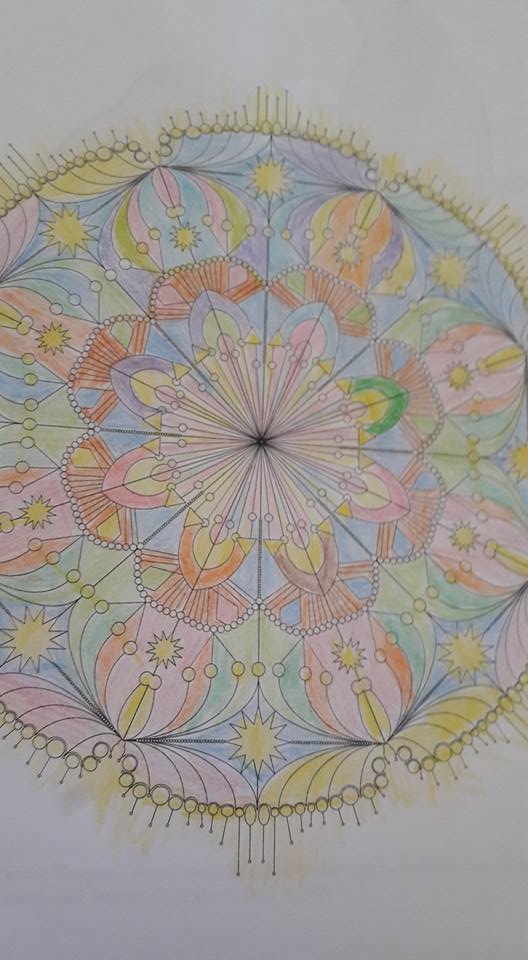
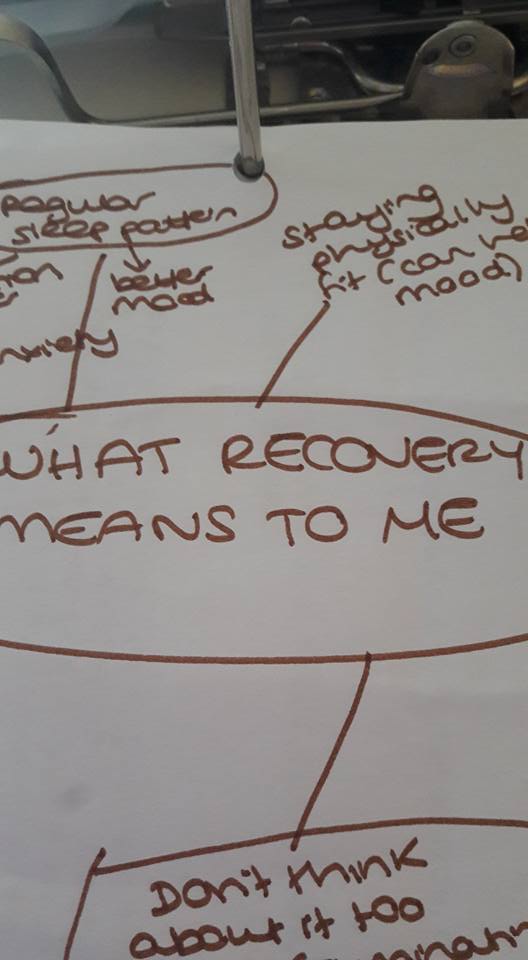
My time recovering in the Acute Day Treatment Unit

adtu3
(my art therapy)

As I have previously written, in 2014, I suffered from a very acute period of mental illness- a manic bipolar episode. I had to stay in hospital for 3 months before I began my recovery process at home. Part of that recovery process was being referred to an Acute Day Treatment Unit (ADTU).

ADTU is effectively a hospital day therapy ward- where groups are run on things like anxiety management, recovery techniques, anger management, assertiveness, relaxation/ meditation to music, arts and crafts and groups such as playing games eg table tennis or quizzes. It is there as a short stay intervention. Some like me had been in hospital already very unwell and some had been referred to ADTU to stop them having to go into hospital and to get them better through therapies.

People are referred there with all kinds of illnesses- depression, bipolar, schizophrenia, eating disorders, drug, alcohol and gambling addictions, psychosis, acute anxiety disorders eg PTSD/ OCD and more.

As well as the therapy groups with occupational therapists, the ADTU has psychiatric nurses, psychiatrist and therapists who support you during your stay. I was there largely because I had been through a very traumatic period of bipolar illness and also because I had decided to change medication to a new mood stabiliser- Lithium.

This meant that as well as the therapy sessions, I had to get used to a new medicine regime and weekly blood tests to determine my Lithium level. When you start Lithium, the level in your blood fluctuates- if it goes too high your body can have a toxic reaction. Luckily this never happened to me but there were times when I was quite low and depressed as the Lithium level was too low. So for about 8 weeks, I had regular blood tests.

In ADTU, you get given a key worker- an occupational therapist or nurse who works with you through your stay and acts a bit like a therapist- they are your support team for when you are there. At ADTU, I lived at home and went in every day 5 days a week. It was challenging as there were constantly new people coming in and out- some very poorly. However I made some incredible friends.

My first important friend I met on my first day! We both began at ADTU at the same time and started our induction. She also has bipolar disorder and we were quite similar- both loving all things girly, glittery and of course- unicorns! We got on well from the beginning, sat with each other in therapy groups, where we both regularly fell asleep in the relaxation to music sessions. She is an amazing and brave woman- who I am honoured to call a friend and we are still in touch today!

I made other friends as well, from sitting in the lounge and chatting in the mornings. One of these was my friend who loves sport and we would chat about what she was doing on her degree. She is also another amazing one who I am still in touch with!

ADTU is meant as a short stay intervention but due to my acute illness and change of medication I was there longer than almost anyone else. This became frustrating as I kept seeing people being discharged and I was still there. In the end after 12 weeks where I became used to all the staff and therapy groups and felt a bit like a veteran (some people are only there for 2 weeks) I emerged still fragile but stronger than I had been.

I owe so much to the wonderful staff- especially my occupational therapist key worker and the therapist running the arts and crafts and recovery groups. The staff were so supportive and kind.

In the UK, there are now only two ADTUs in the whole country as funding has been cut. However, I can honestly say that without the staff there and my new friends- I would have found life so much harder. I owe them so much.

Here are  some of my photos from the therapy folder I kept.

This blog is dedicated to my friends from ADTU who are making amazing strides- my 2 closest friends are now studying for Masters Degrees!

adtu1

Fighting mental health stigma: a personal journey

I have had bipolar disorder for almost 13 years, along side depression, anxiety, psychosis, hypomania and manic symptoms- which ebb and flow and fluctuate. Now that I am on the right medication these bipolar symptoms are kept under control. For most of these 13 years, I didn’t feel I could speak out about my conditions.

My family and close friends have always been very supportive but I felt ashamed. Ashamed of where my brain could go to when unleashed and its chemistry got confused. Ashamed of why I was either suicidally depressed or hyper and manic to a point of having to be sectioned to a psychiatric ward. Ashamed of my illness, confusing my identity with the illness, which made me worried about others judgement of me.

I was diagnosed at a very vulnerable age- 16 years old and as we know teenagers can be cruel. Although I experienced a lot of kindness and empathy, after a hypomanic episode abroad where I was disinhibited, I experienced a lot of cruel rumours from other teens I knew. Rumours that were stupid but that called me many names and compared me to evil things that I do not want to repeat. What was at the most basic of these insults? In my opinion, fear.

People fear what they cannot see and cannot understand.

People in their teen years do not want to be different- and I was the embodiment of difference.

If people can’t comprehend something and it is threatening- they judge or use name calling to feel better.

At 16, I represented a world of chaos at which many could not understand. Perhaps now they will.

I have spent a long time coming to terms with my illness and what it means, finding the right treatment and medication and the right support networks around me. I have incredibly supportive friends and family.

So what does the above treatment boil down to?

Stigma.

Stigma is according to an online dictionary- ‘ A mark of disgrace associated with a particular circumstance , quality or person’

For so long, I felt this ‘mark of disgrace’ and until I was 25, although close friends and family knew about my illness, I didn’t write blogs the way I do now. This was because I wanted to hide this illness that lodged in my brain chemistry.

I don’t want to hide any more and neither should I.

In 2014, I was hospitalised and sectioned for a severe manic episode encompassing psychosis, delusions and hyperness/ disinhibition.

It was shortly after going through the most traumatic experience of my life that I realised. Life is short. I need to help others. If I can break down the stigma and help others through my writing and other work then I will.

Mental Illness must no longer be a ‘mark of disgrace’ but must be seen as a partly physical illness in the brain, deserving and worthy of good treatment and empathy from others.

This post is dedicated to those friends who asked me to write on this and all my friends for their love and support

A Personal Note and Festive Appeal

beyourownlight
I can’t believe that its so very nearly the end of 2016! So many things have happened this year and it has been a remarkable year in so many ways.

Its hard to believe that only 2 and a half years ago, I was living on a hospital ward for 4 months receiving treatment for a bipolar manic episode that included psychosis, delusions and mania. I wasn’t well enough to be back at home for a long time and it was a turbulent process that ripped my whole world apart- I was only 25 and it had come out of the blue.

I look back and think that it has made me stronger and made me totally appreciate life and medication and support networks when I am well. It has meant  I can help others through my blogging and advocacy work and that I can have a better understanding of my own brain. I hope one day there will be more funded research into bipolar.

As it is almost Christmas and Chanukah, I just wanted to highlight Be Ur Own Lights Festive Appeal for Jami (Jewish Association for Mental Illness). Jami are a small charity operating to help people in the UK Jewish Community. I fundraise for them to help their services including day centres, hospital visits, work programmes and befriending. They are on the front line of battling stigma.

Please give whatever you can to the charity to help fulfill their incredible work. Without Jami, life would be a whole lot harder for so many.

Wishing everyone a happy and healthy Festive period.

To donate just click on this just giving link and follow the instructions:
https://www.justgiving.com/fundraising/BeUrOwnLight

Surviving Depression and Suicidal thoughts: a blog for Rethink Mental Illness

beyourownlight
https://www.rethink.org/news-views/2016/12/surviving-depression-and-suicidal-thoughts

Thank you to Rethink for publishing my blog under a pseudonym, for the graphic and sharing my story of hope over adversity.

Rose is the blogger behind Be Your Own Light blog, which provides great articles about living with mental illness, from both herself and guest bloggers. Below she talks to us about how she has dealt with depression and suicidal thoughts. 

When I was 15 years old, I experienced my first depressive episode. I felt unable to leave the house or see friends as the depression brought about an increase in anxiety . My parents looked after me as best they could and I was taken to see an adolescent psychiatrist who put me on anti depressants coupled with therapy. I gradually got better again with time and managed to do well in my exams.

I was eventually hospitalised voluntarily after more periods of illness and at 16 years old, diagnosed with bipolar affective disorder. Understandably, the diagnosis changed my life. I am now 28 and have been taking medication since then. Not long ago, I survived a suicidal depression that I had in the winter of 2013, 6 months before I went into hospital.

At this time, It was apparent that for several years my medication was not controlling my low moods. I would get really depressed very quickly, feel overly emotional when stressed and felt like I had to hide myself away. I began sleeping too much to escape the inner turmoil and to get respite. Sleep became my balm and escape.

However, it was when I began sleeping from 9-5 pm with a quick break for food, not getting washed and dressed or answering my phone and not being able to get in to work, that the psychiatrist was called to the house to see me.

I remember crying and crying- in such pain in my mind. For me, the depression felt so chemical- I knew I needed to change my medication but I didn’t know why everything felt like ‘wading through treacle’. Why couldn’t I find the joy in life anymore, I asked myself? I just couldn’t cope with the painful negative thoughts and feelings and started thinking irrationally that I would be better off not here in the world.

These suicidal thoughts were extremely challenging to deal with.  I was so scared by them that I would tell my parents constantly how I was feeling. I wanted to get the thoughts out my head and so telling people became my salvation- I believe if I had bottled it up, I may not be here today.

Eventually, over time, my medical team worked together to put me on the right  medication- Lithium. The Lithium has changed and saved my life. My brain chemistry is stable, I no longer feel suicidal or depressed. I get up early in the morning and I want to do things with my day. This took a long time but to anyone feeling suicidal- please reach for help.

You can get better- it is your brain playing tricks on you with an illness. I want to spread a message of hope, recovery and survival- life can be dark but if you hold on there is hope. 

Surviving mental illness while practising Judaism

jewish1

This post is being dedicated to my friend Helen Brown who wanted to know how being an Orthodox Jewish woman works and is compatible with having a mental illness. How supportive were the Jewish community when I was ill and what does Judaism mean to me?

So:

Let me start by saying that I was born into Judaism and raised Jewish, in a Modern Orthodox, United Synagogue Household- meaning I keep Kosher, rest on the Sabbath and observe all the festivals, learn and pray when I can. I also practise ‘tzniut’- dressing modestly and endeavour to live my life with the positive values of the Torah (Old Testament) bridging modern society .  I have a great love for and appreciation of Judaism and I have found that it has kept me going through many difficult times.

Prayer in particular has had a very important resonance in my story. When I was ill in hospital with a bipolar episode two years ago, my friend brought me a tehillim prayer book- the Book of Psalms. Another friend brought me a book of strengthening hopeful quotes from Rabbi Nachman. Every day, I prayed to God to release me from my illness, to give me strength and to give me a full and complete recovery. I prayed that the Doctors and nurses would support and help me, and they did. I found freedom through my religion, even if I couldn’t always understand why this particular test was in my life. My friends also lit candles on the Sabbath with a prayer that I would get better and prayed for me.

The support from the Jewish community during this time was incredible. Rabbis visited me with warm chicken soup, cakes, wisdom, advice and prayers. Friends and family rallied round to visit and bring me food, soft toys, cards and themselves. The kindness was immense and never will be forgotten.

However, there is still a stigma against mental illness in the Jewish community, as there is in most other communities.  When I first became ill at 16, I was ridiculed my many who did not understand the meaning of a bipolar manic episode. To this day, I believe there is a woeful misunderstanding and knowledge of psychosis- delusions or hallucinations. There is also a stigma when looking for a marriage partner, if using a matchmaker. I was taught by many to keep quiet about my illness and I still do not readily give the information unless it will help someone else.

Not everyone understands medication or psychotherapy and I am on a mission to educate everyone so the stigma can fall. I am a Modern Orthodox Jewish woman.  This means I love God and want to live by His laws, whilst enjoying the modern world of theatre, books, cinema and culture too.

I believe that I was ill for a reason, whether its brain chemistry, a test or both. What I do know is that the community now is changing- there is much more support and kindness.

We only have to look at the new Jami (Jewish Association of Mental Illness) Head Room Café (a social enterprise cafe raising money for the charity) to see that. The funding and support Jami is getting and its new prominence.

There is still more to do, but we as Jews (and non Jews) have a duty to support anyone who is ill- whether its in the mind or the body.

Guest Post: How Deepdene Care helps support people with psychosis.

deepdene

by Rhona Mackenzie, Clinical Director, Deepdene Care

For more please clink link above or see http://www.deepdenecare.org.uk/

Be Ur Own Light is happy to partner with Deepdene Care,a health provider in the UK


At Deepdene  we support people with severe mental health issues such as psychosis.


As mental health problems are often complex and involve an array of factors, the best course of action for any case is structured, multi-faceted approach that is rolled out over months and possibly years with the primary objective of reducing the impact of the condition on an individual’s life.


As a service provider we have to look at the bigger picture:


Staff have a deeper understanding

A high level of staff training is an intrinsic part of any treatment and care plan.


We train staff to understand and increase their knowledge of all mental health conditions. In the case of psychosis, they are taught to be aware of what hallucinations and delusions are, so that they can act in a proper, effective manner, and are also taught how brain chemicals can affect people. This gives them an educated insight, which not only helps with treatment, but allows them to understand what an individual is going through, ensuring empathetic responses.


In addition, staff have to have an understanding of the side effects of medication. So, again, they are properly equipped to be able to help the service users and approach them with understanding.


Therapies and activities

Therapies and activities are also a key factor in the recovery process, especially occupational therapies, where service users are able to fill their time with meaningful activities. This helps individuals gain routine in their lives, bringing a sense of direction back into what they do and acting as a representation of everyday life.


Getting to know the person and their symptoms 

It is essential that anyone with psychosis under our care is supported and treated as an individual, as each case is completely different from another and symptoms can vary quite dramatically. This is why we place a great deal of focus on listening to patients, observing their behaviours and supporting them in every way possible.


We also promote therapeutic relationships between staff and service users, with the central goal being to build trust and respect among them.


Destigmatising mental illness

As a mental health provider, we have to advocate and educate people to destigmatise mental illnesses and accept the person the way they are – promoting empathy among team members and throughout the service as a whole.


If a person has had a mental illness they are usually more understanding and empathetic towards another mental health sufferer. If a service user/person is being discriminated against, we may need to support them on how to deal with that.


Outside support

We also support those with psychosis through outside professionals like psychologists.


But, and we can’t stress this enough, none of our work would be effective, if we don’t support, respect and accept the individual for the way they are.


Mental Health Recovery

Our ultimate goal is to have individuals be responsible for their own behaviours, which is why we look to educate them to self-support their own physical, emotional and social needs, while we are on hand to offer support when necessary. Almost like a safety net to cushion any falls individuals may have on their personal journey to recovery.


It’s important to dispose of any one-size-fits-all solution. This is about treating the person as an individual, accepting their illness as part of their individuality while at the same time seeing them as a whole person and not just defining them by their mental health condition.


Self-belief is a huge part of the recovery process and we’re able to help individuals develop their esteem, empowering them by educating them on relationships, finance, occupation, choices, diet, exercise and lifestyle. Placing control back into their own hands through guidance and advice.


It’s important to understand individuals so that we know when they are at their best, at which point we can work with them to develop crisis and relapse plans and find out exactly how they’d like to be treated. Essentially it’s a two-way street, and we place a great deal of importance on working with individuals to find the best path.


A Journey through Psychosis.

butterfly2.

Trigger warning: discussion of psychosis and acute mental health. 

Psychosis is something that I have experienced but havn’t ever fully written about as it can be quite a confusing, painful and scary subject

However,  today I had some time to write a blog about it and thought I would share my experiences to educate others and raise awareness.

What is psychosis?

Psychosis takes many forms- its when your brain goes into a heightened  psychotic state- meaning you could start believing things that aren’t real (delusions), hearing voices or seeing hallucinations, talking to yourself, being convinced you are in grave danger- about to be attacked or killed for example (linked to delusional beliefs). Along side psychosis you may also get what is known as ‘grandiose’ beliefs. This means that you believe you can do absolutely anything or that you have super powers/ can run the world/are a religious saviour, for example.

What is important to note is that every human with psychosis is an individual with unique brain chemistry and so not everyone will present in the same way or have the same symptoms. Furthermore, you may be diagnosed with an illness such as bipolar affective disorder, schizophrenia or schizoaffective disorder which can trigger your unique symptoms or alternatively, psychosis can be brought on by drug use such as ‘skunk’ (a potent form of cannabis) or other hard drugs.

How can we treat psychosis?

Its likely that if your  symptoms are really bad you will be encouraged to  go into hospital so you can be treated under a psychiatrist and given anti psychotic medications. These medications (some older and some new drugs) work to stop the heightened thoughts, delusions, voices etc….. and slowly bring you down from the psychotic state.

This is even more important if psychosis was brought about by drug use, to be in an environment where you cannot take drugs. Furthermore, If you have a diagnosed illness or a suspected illness, the care you will receive in hospital by mental health nurses and psychiatric team is generally good and you will be monitored and watched.

I experienced bad psychosis in 2014 during a bipolar manic episode. While I never heard voices or saw hallucinations, I had very bad delusions about the world and was extremely fearful. I thought that I had been kidnapped and was being watched in hospital by a gang (including the nurses). This eased over time as I was given Haloperidol and tranquilisers to slowly bring me down over a few months by a medical team. Thankfully the medication expertly worked on my brain and I was monitored carefully.

I have written this to say- you can survive psychosis and go back to a relatively normal life. Everyone is an individual so this isn’t the same for everyone, especially if you have addictions. For me though as someone with bipolar disorder controlled on medication, I have been able to get back to a happier and normal, stable life.Â