Drawing my sanity: Art during hospitalisation (for Rethink Mental Illness)

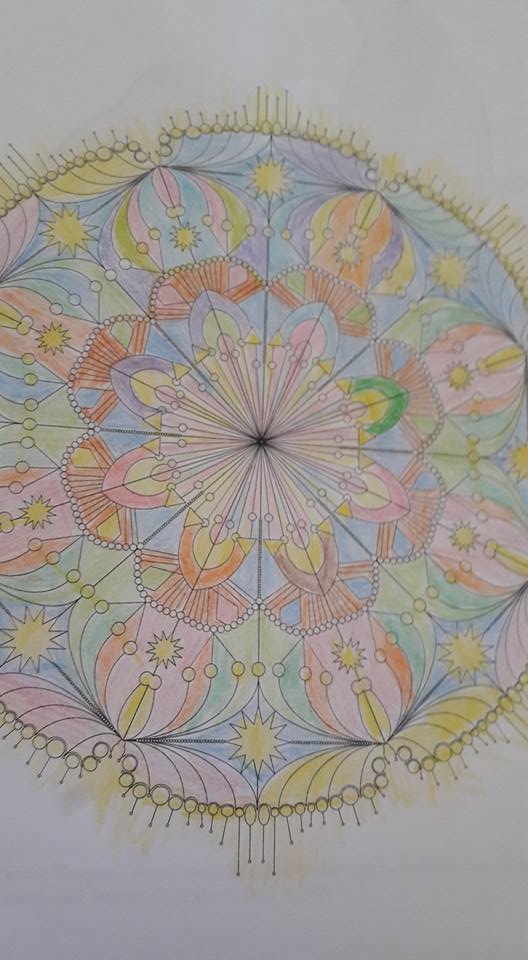
colouring


My latest article for Rethink Mental Illness about how art therapy healed me when in hospital. I hope you like reading:

https://www.rethink.org/news-views/2017/2/art-therapy

Rose is the blogger behind Be Your Own Light blog, which provides great articles about living with mental illness, from both herself and guest bloggers. Below Rose talks about art therapy and the impact it had on her whilst she was in hospital. 

I am 28, and with diagnosed bipolar and anxiety disorders, I have tried many forms of psychotherapy and creative therapies in my life. These have included various talking therapies, cognitive behavioural therapy, mindfulness, meditation, therapies for anxiety disorders and more. However, today I would like to discuss a therapy that was key to my recovery from bipolar psychosis in hospital, on the ward and on the after care day unit – Art.

It sounds simple right?

In 2014, I was sectioned under the Mental Health Act with a manic bipolar episode, including psychosis. I was very unwell and needed medical treatment to stop the psychosis and racing thoughts/actions. In all, I was in an all-womens psychiatric unit for 3 months. While 3 months doesn’t sound like a long period of time, it felt like it.  Every day was spent on a ward where I was away from friends and family and had to get used to new routines, new nurses and doctors, and new patients being admitted – at times the ward was a very chaotic place. I was also in chaos in my own mind due to my mania and psychosis – at times I couldn’t sit still.

Gradually over time, as the medication prescribed by my psychiatrist kicked in, I was able to be a bit calmer and join in with the activities on the ward. One of these was art therapy. My favourite thing to do, in particular, was to sit by myself colouring and rip out images from magazines brought to me – to make them into collages. These were then backed on sugar paper to decorate the clinical hospital walls of my room. When I realised I would be there for months, I set about making my room as homely as possible. I made collages with celebrities I admired, on themes and calming pictures on my wall. The ward had colouring sheets and I would often colour in pictures and I found sometimes it helped with the boredom and would calm me down.

I sat in on a group art therapy session on this ward, which I did find challenging, due to the fact that the therapist was analysing our pictures in front of other people. I felt more comfortable taking myself off and creating pictures and collages in my room or with my friend on the ward, than having that level of analysis at that point.

Indeed, when I was well enough to leave that hospital ward, I spent a further 3 months on an acute day treatment unit – a hospital  day unit with group therapies and classes. When there I would often take myself off into a quiet room to colour with colouring pencils. I found colouring so soothing.

It was during this point when I had come home (from the trauma of all I had been through), that my anxiety levels rose. At one stage, the only thing that would focus me at home and would bring my anxiety level down was colouring in pictures or patterns, so  I bought colouring books to do it in. The world seemed frightening but I was able to reduce it down to the page and picture I was colouring in – a sort of form of mindfulness art therapy.

I have found that creating positive art or the act of colouring in a serene (non triggering) picture, has been pivotal in my recovery. In combination with a new mood stabiliser and courses of talking therapies, I have found that art has healed and soothed me at times when I have felt overwhelmed, anxious and unable to cope. I am now fully well and looking towards my future – but I will always be grateful to those therapists who left out colouring pictures for me to do, who lent me card, glue and glitter and said – “if you want to do it, create.” That creation helped me heal.
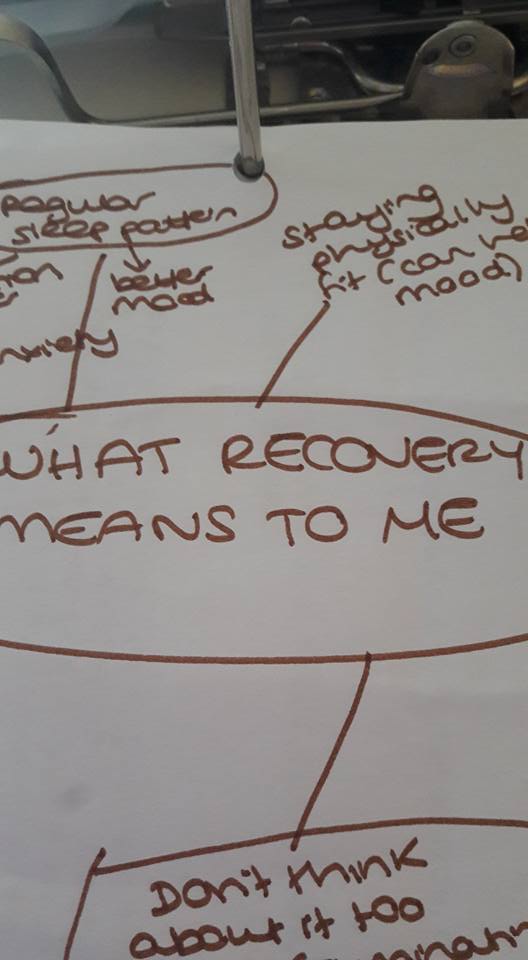
 

The Head On Mental Health Awareness Shabbat Project.

The past almost 2 months, I have been volunteering with the Jewish Association for Mental Illness (Jami) helping plan and coordinate one of their projects with colleagues. This project took place last weekend in the UK Jewish community -and was a cross communal Shabbat (Sabbath) education project taking place in synagogues, Jewish schools and student societies up and down the country.

It was supported by every level of religious observance and in the end we had over 80 communities involved, holding educational talks, reading sermons, holding themed friday night dinners and hosting speakers on mental health. Some communities had talks from speakers at Jami or those with lived experience of mental health issues, or those who are psychiatrists or psychologists.

Our aim was to battle stigma and get people talking. Jami and our team were just amazed by the level of response and positivity towards the project which seemed to grow and grow and reach communities far away including in Scotland!

We also had 150 people at a panel event organised by Jami about mental health topics, where a great discussion was had.

Times are changing and hopefully we will see stigma in the community fall. I am currently getting over a rather nasty cold-and taking time to rest but I wanted to write this to say how much I truly have loved volunteering with pioneers of the event and seeing the project grow to be so successful.

My article for Self Harm UK- ‘I don’t want to hide anymore (about stigma)’

I am delighted to announce a blog collaboration with the amazing charity Self Harm UK (a part of Youthscape).

I have written a blog for them on my experience of mental health stigma as an ill teenager and what made me speak out further. In the past, I have had self harming thoughts and I myself like reaching out to teens and young people who are suffering out there- so they know they are not alone. I am so pleased to collaborate with Self Harm UK on this and my article can be found here:

Click here to read my article:

Who are Self Harm UK?

From their website selfharm.co.uk:

‘ SelfharmUK (formally selfharm.co.uk) started out of the work of Youthscape, a local charity based in Luton, Bedfordshire, UK. Since it’s beginnings in 1993, the charity has developed a strong and professional reputation for delivering caring, child-centred work, which focuses on the emotional and social needs of all young people. Youthscape works alongside all young people, regardless of race, background, or faith.

By 2004, Youthscapes’s work increasingly involved young people engaging in self-harm. It wasn’t long before a plan began to form to try and reach them them, starting with the provision of informal support groups in local schools. With the help of funding from BBC Children in Need and other grant-making Trusts, the project was able to appoint a specialist staff team in 2005 and develop a more coherent provision that included art projects and therapeutic group programmes. Training and advice for parents and professionals soon followed, in conjunction with the Local Authority and local schools.

In 2008, Youthscape responded to the growing number of enquiries for support and advice coming from outside Luton by beginning to plan for a national project that could support young people from all over the UK. Further planning and fund raising led to the establishment of SelfharmUK later that year and the appointment of a Project Manager

The development of a website was a key part of our initial vision… to have a safe online space available to inform and support young people who self-harm, as well as cater for the needs of their siblings, parents and friends. We also wanted to provide information and training for professionals like youth workers, teachers and social workers.

We wanted to create a safe, pro-recovery site for people to use to communicate with others and express their experiences through the use of blogs, stories, poetry and art. Our next goal was to develop an online group programme – Alumina – which has enabled young people from all over the UK to engage with our staff in real time in order to explore the deeper issues surrounding self-harm. For some it had been the catalyst needed to reduce or stop their harming behaviour, while for others it has proven empowering, enabling them to seek further support in their local area.

We already have a multimedia training programme available to professionals in the UK. Our ongoing vision is to see this rolled out more comprehensively; to serve every part of the UK in supporting and nurturing young people who may be experiencing difficulties with self-harm.

There remains much to be done but we remain committed to improving the lives of anyone impacted by self-harm. Providing effective support for parents and siblings will be a major goal in the near future.

For now, the project remains part of Youthscape as a separate element of this registered charity.’


The best way to support a friend or family member through anxiety and depression.

I have been asked by my friends to write an article about how best to support someone through a mental health issue. There is not a one sized fits all answer, due to the fact that every illness and person is unique with their own brain chemistry and life experience. However, I am  going to offer a few tips on what you can do if someone is suffering from an anxiety disorder or depression (for this article I am going to leave out other illnesses eg bipolar, schizophrenia, psychosis, addictions but will speak about them at a later date)

So what can you do if your loved one is suffering from  an anxiety disorder/ depression?

Anxiety disorders are a group of multi faceted disorders which can include things like generalised anxiety, social anxiety, health anxiety, OCD, PTSD and more. Your loved one may be suffering from lack of sleep, nightmares, inability to sit still, palpitations, racing or obsessive thoughts, panic attacks and hyperventilation. They may feel more on edge, or in the case of OCD- be checking and analysing everything. Anxiety disorders run in certain patterns and all are unique to the individual- what one person with anxiety may have will be different to another, however there are some general patterns to anxiety.

When a person is suffering from anxiety, they may also have physical health symptoms as above due to the increase in adrenaline and the stress hormone, cortisol.

Depression or depressive disorders are sometimes caused due to a chemical imbalance in the brain (not enough seretonin) and can require medication to return the brain to its usual state. Some are a mixture of chemical imbalance and challenging life experiences or brought on from a period of stress eg divorce, moving house, losing a baby, having a baby, being unemployed etc . Symptoms typically can include loss of motivation, feeling tearful, low and hopeless, not wanting to engage socially or be involved with activities one enjoys.

If your loved one is suffering from anxiety or depression the best way you can help is by speaking and interacting with them calmly- not judging them or accusing them of anything bad, but simply being a laid back, supportive friend or partner. If someone can’t socialise, its best to just text once in a while and check up on how they are doing- or send a hand written note or card. Most importantly, do not pressure the person to see you, talk to you or go out.. but just be there for them calmly as a listening ear and encourage them to do small achievable things for themselves.

It is good to encourage your friend to go out with you but not to pressurise. Similarly, getting a bit of fresh air can help. If your friend or loved one is at crisis point ie threatening to take their own life, feeling suicidal, not eating or sleeping and being involved in self harming or risk taking behaviours, it is very important to do the following:

1) If a friend is suicidal, listen to them but do not promise to keep it a secret. You must tell their nearest relative/ best friend/ someone they trust if you believe they are in danger of a suicide attempt or at harm to themselves . Encourage them to see their GP immediately or speak to a help line and the GP will be able to tell you if a psychiatric referral is needed. A psychiatrist and team known as the Crisis Team will then  step in to help.

2) If a loved one you live with is suicidal, go with them to the Doctor or get a doctor to come out to you. There is stigma around this BUT if your loved one is really ill and their brain is effectively temporarily ‘broken’ much like a broken leg, it needs fixing. Your loved one needs help and support to recover whether its medication, counselling or more support at home. Do not blame yourself. This is an illness- not something you have done.

Ultimately, be loving, caring and supportive and CALM- however angry or frustrated you feel. Being frustrated to someone who is unwell can cause them to have feelings of guilt, low self esteem or worthlessness which the depression/ anxiety may perpetuate.

Be there as a support and listening ear but make sure you have a break and take time for you too.

My time recovering in the Acute Day Treatment Unit

adtu3
(my art therapy)

As I have previously written, in 2014, I suffered from a very acute period of mental illness- a manic bipolar episode. I had to stay in hospital for 3 months before I began my recovery process at home. Part of that recovery process was being referred to an Acute Day Treatment Unit (ADTU).

ADTU is effectively a hospital day therapy ward- where groups are run on things like anxiety management, recovery techniques, anger management, assertiveness, relaxation/ meditation to music, arts and crafts and groups such as playing games eg table tennis or quizzes. It is there as a short stay intervention. Some like me had been in hospital already very unwell and some had been referred to ADTU to stop them having to go into hospital and to get them better through therapies.

People are referred there with all kinds of illnesses- depression, bipolar, schizophrenia, eating disorders, drug, alcohol and gambling addictions, psychosis, acute anxiety disorders eg PTSD/ OCD and more.

As well as the therapy groups with occupational therapists, the ADTU has psychiatric nurses, psychiatrist and therapists who support you during your stay. I was there largely because I had been through a very traumatic period of bipolar illness and also because I had decided to change medication to a new mood stabiliser- Lithium.

This meant that as well as the therapy sessions, I had to get used to a new medicine regime and weekly blood tests to determine my Lithium level. When you start Lithium, the level in your blood fluctuates- if it goes too high your body can have a toxic reaction. Luckily this never happened to me but there were times when I was quite low and depressed as the Lithium level was too low. So for about 8 weeks, I had regular blood tests.

In ADTU, you get given a key worker- an occupational therapist or nurse who works with you through your stay and acts a bit like a therapist- they are your support team for when you are there. At ADTU, I lived at home and went in every day 5 days a week. It was challenging as there were constantly new people coming in and out- some very poorly. However I made some incredible friends.

My first important friend I met on my first day! We both began at ADTU at the same time and started our induction. She also has bipolar disorder and we were quite similar- both loving all things girly, glittery and of course- unicorns! We got on well from the beginning, sat with each other in therapy groups, where we both regularly fell asleep in the relaxation to music sessions. She is an amazing and brave woman- who I am honoured to call a friend and we are still in touch today!

I made other friends as well, from sitting in the lounge and chatting in the mornings. One of these was my friend who loves sport and we would chat about what she was doing on her degree. She is also another amazing one who I am still in touch with!

ADTU is meant as a short stay intervention but due to my acute illness and change of medication I was there longer than almost anyone else. This became frustrating as I kept seeing people being discharged and I was still there. In the end after 12 weeks where I became used to all the staff and therapy groups and felt a bit like a veteran (some people are only there for 2 weeks) I emerged still fragile but stronger than I had been.

I owe so much to the wonderful staff- especially my occupational therapist key worker and the therapist running the arts and crafts and recovery groups. The staff were so supportive and kind.

In the UK, there are now only two ADTUs in the whole country as funding has been cut. However, I can honestly say that without the staff there and my new friends- I would have found life so much harder. I owe them so much.

Here are  some of my photos from the therapy folder I kept.

This blog is dedicated to my friends from ADTU who are making amazing strides- my 2 closest friends are now studying for Masters Degrees!

adtu1

Guest Post: Quite Great- Psychotherapy to combat stress in the Music Industry.

helen-brice1

Todays guest post is by Quite Great and Helen Brice, psychotherapist and music industry professional.

Music PR and Marketing Company, Quite Great, has formed a unique partnership to help musicians overcome the day to day stresses and strains of the music industry. By teaming up with Helen Brice, a specialist psychotherapist and skills coach, the pioneering PR company has introduced a new psychotherapy service.

 Quite Great have twenty years experience working with musicians of all styles, from all over the world. During this time they have developed an exceptional understanding of musicians and the challenges they face – from the emotional strains of building a career, to the psychological issues that can be developed as fame grows.

Specialist psychotherapist, Helen Brice, has over twenty years experience in the music industry; covering music arrangement, performance, audio production, publishing, artist management and A&R. She is a music graduate and regularly performs in the UK and overseas with the London Bulgarian Choir and the BBC Symphony Chorus. As an active musician Helen has a unique attunement to the pressures and psychological issues that musicians encounter – making her the perfect person to head up the new service.

As Pete Bassett, founder of Quite Great, elaborates: “Every recording artist and performer of music has to have at least two sides to their personality in order to really reach the heights that they wish to achieve. As they go through each stage in their musical career they have to deal with many pressures – from demands made on them by managers, labels and agents, through to handling being ‘dropped’ by labels, and at times, coming to terms with the fact that their popularity is diminishing.”

“These differing stages,” he continues, “can cause real emotional turmoil needing a specialist approach to be taken. There are also other more straight forward challenges that musicians need help with, for example how to overcome ‘stage fright’, and how to build the confidence and thick skin required to face media reviews and online critics. In order to believe they can overcome all problems to become a star, musicians need the self assuredness of an Olympic athlete!”

Helen Brice, (UKCP, MUPCA Accred, MBACP, FRSA) founded Stimmung Therapy Services in 2009 at Harley Street, and receives referrals and enquiries relating to her specialist psychotherapy and skills coaching from all over the world. Helen offers complete flexibility for appointments at her central London practice, as well as via Skype – perfect  for the working lifestyle of musicians and performers. A service unique to Stimmung is emergency onsite psychotherapy and coaching for performance anxiety. This would be backstage at the performance venue, or off set at a live broadcast, or even at the recording studio.

By combining their expertise, Quite Great and Helen Brice, are offering a distinct psychotherapy service that will make a huge difference to both the personal lives of musicians and their careers. For more information, please visit www.quitegreat.co.uk or contact ask@quitegreat.co.uk

Life is Possible: Guest Post by Megan

Megan is a blogger at http://www.themanicyears.com and writes about mental illness and bipolar disorder. She shares with us her positive outlook on life after overcoming adversity. 

I recently got asked a question that I have been asked quite a few times in my life before now. This question was asked by a distant acquaintance of mine; a person who was – until the past couple of months – previously a stranger to me.

The question was this;

“If you had the chance to go back in time, to redo any of your past choices, what would you change and why?”

I have thought about this in passing, at various points as I have progressed throughout my adult years. Usually, I shrug the question off with a   – ‘Yes, there’s probably lots of things I would change’ – without consenting to deeper reflection and proceed to let the thought slowly slip from my mind, like a shallow pool of water that gently drains through the gaps in my fingertips when I attempt to cup it in my hands, leaving its damp trace as a reminder to be embraced again at a later time.

In this occurrence, something about the flow of the conversation between me and this person, made me pause and take the time to delve deeper in to my  introspections, generating the need to deliver an open, raw and honest answer.

I looked back, escaping the present moment by retrograding through a virtual journey within my memories, my life, my youth, the relationships that I’d built and the ones that were torn down. And in that first instance; all I saw was pain.

Up until 2013, I endured a heart-wrenching and debilitating conquest to seek the right kind of help for my issues, and was finally diagnosed with Bipolar Disorder. After the herculean efforts that resulted in this conclusion, I couldn’t quite decide if I had been awarded with a victory badge, or had my autonomy snatched away from me and handed down a stigmatised label of shame.

I had always been a painfully anxious and emotional child, but my first ‘real’ symptoms began when I was 12 years old; I started suffering from psychotic breaks and harmful thoughts. As far as my fragmented memory takes me, I understand this came about as a result of my mothers illness and attempted suicide . It was an attempt for which the blame was placed on me, when I’d packed up my things and left home one day through the impact of her own mental illness. What once were just about manageable emotional waves, became uncontainable storms.

My teenage years to follow were a struggle. Inevitably withdrawing from my peers, I lost myself in my pain and in the midst of it all and I made a lot of wrong choices. By the age of 18, I had turned to risk taking and harmful behaviours in an attempt to seek some sort of alleviation and my mood swings were wildly out of control. The relationship with my mother, even with my friends, had turned in to a wreck of nothing but dysfunctional scraps. Connecting with others was a difficult task, especially when I went back to my studies. A slow withdrawal from society will eventually disconnect you completely from other people. It puts you in a glass box placed high upon the shelves of the unwanted. In those classrooms, I disappeared. I was invisible, slowly degenerating in to the ashes of battle that I had lost a long time ago.

For the last ten years of my life, I feel that I have lost and wasted my youth. Did I choose to turn my back to my own self worth, to my recovery? Did I make a comfy home in the land of unforgiveness in the attempt to punish myself? Did I regret making these – I could argue – deliberate choices?

But when I look back from this day, I find myself understanding the result and my reasoning to that fateful question. And my answer to the question is; I would not change it one bit.

In this moment, I see the value of what I have in my life now, as a result of what lead me here. I now see that I can thank myself that I did not give up on my studies, turning my hurt in to a driver to fuel my career – a notion that I did not realise at the time. I now see, that those people I distanced myself from who walked away, are those people which I’d unconsciously sifted out from the small circle of treasures I am blessed have in my life and who I call ’true’ friends. I now see, that although forever present, these scars that trace through my whole body have toughened and healed. I now see the infinite possibilities and the beauty of life within the depths of my child’s eyes, and I see a reflection of my own growth in there.

If I had not endured my past at all, would I have been in the place that I am now? Would I even dream of risking all the wealth that I have in my life in this moment in time?

I now see, that I won the battle all along. I now see, that life is possible.

On paper, I may be just an ‘unfortunate’ label of a chronic and debilitating mental health disorder, who drew the bad hand in life. But behind the diagnosis, behind the long term medication, hides an unbelievable journey that led me to this present day. And I wouldn’t change any of it for the world.


Surviving mental illness while practising Judaism

This post is being dedicated to my friend Helen Brown who wanted to know how being an Orthodox Jewish woman works and is compatible with having a mental illness. How supportive were the Jewish community when I was ill and what does Judaism mean to me?

So:

Let me start by saying that I was born into Judaism and raised Jewish, in a Modern Orthodox, United Synagogue Household- meaning I keep Kosher, rest on the Sabbath and observe all the festivals, learn and pray when I can. I also practise ‘tzniut’- dressing modestly and endeavour to live my life with the positive values of the Torah (Old Testament) bridging modern society .  I have a great love for and appreciation of Judaism and I have found that it has kept me going through many difficult times.

Prayer in particular has had a very important resonance in my story. When I was ill in hospital with a bipolar episode two years ago, my friend brought me a tehillim prayer book- the Book of Psalms. Another friend brought me a book of strengthening hopeful quotes from Rabbi Nachman. Every day, I prayed to God to release me from my illness, to give me strength and to give me a full and complete recovery. I prayed that the Doctors and nurses would support and help me, and they did. I found freedom through my religion, even if I couldn’t always understand why this particular test was in my life. My friends also lit candles on the Sabbath with a prayer that I would get better and prayed for me.

The support from the Jewish community during this time was incredible. Rabbis visited me with warm chicken soup, cakes, wisdom, advice and prayers. Friends and family rallied round to visit and bring me food, soft toys, cards and themselves. The kindness was immense and never will be forgotten.

However, there is still a stigma against mental illness in the Jewish community, as there is in most other communities.  When I first became ill at 16, I was ridiculed my many who did not understand the meaning of a bipolar manic episode. To this day, I believe there is a woeful misunderstanding and knowledge of psychosis- delusions or hallucinations. There is also a stigma when looking for a marriage partner, if using a matchmaker. I was taught by many to keep quiet about my illness and I still do not readily give the information unless it will help someone else.

Not everyone understands medication or psychotherapy and I am on a mission to educate everyone so the stigma can fall. I am a Modern Orthodox Jewish woman.  This means I love God and want to live by His laws, whilst enjoying the modern world of theatre, books, cinema and culture too.

I believe that I was ill for a reason, whether its brain chemistry, a test or both. What I do know is that the community now is changing- there is much more support and kindness.

We only have to look at the new Jami (Jewish Association of Mental Illness) Head Room Café (a social enterprise cafe raising money for the charity) to see that. The funding and support Jami is getting and its new prominence.

There is still more to do, but we as Jews (and non Jews) have a duty to support anyone who is ill- whether its in the mind or the body.

Guest Post: Inner Self Talk The 7 Words that hold you back

Michael J. Russ- Author and Adversity Coach

Your inner conversation, also known as self-talk, exerts more influence over your attitude, achievement, time, success, happiness, relationships, and overall prosperity than you can imagine. Self-talk is best defined as the thoughts and words you use to describe you and what you are doing.

Regardless of whether your inner dialogue remains in your head or is expressed in conversation, there are seven words that can hold you back. These words are: hard, difficult, tough, impossible, can’t, try and never, and usually make an appearance when referencing current and future actions, especially those related to adversity.

Why should you stop using these seven words? Aside from focusing on the negative, they generate unnecessary additional mental adversity and sow seeds of doubt that prevent you from fully committing.

Do you occasionally find yourself saying, this is going to be hard, it’s tough for me, or I will never finish this? Is there some rule that says something will be hard, tough or difficult, or that you will never get something done?

Have you ever heard a coach tell their team a game will be tough, difficult or impossible to win? Of course, not. A coach would never plant such a thought virus into the heads of their players.

When you approach tasks, goals, and intentions, use self-talk that affirms and supports what you want to happen, instead of what you do not. Thinking and saying, I can do this, is a great example of affirmative self-talk that opens pathways to producing your best effort. The phrase is simple, yet very empowering!

Right about now, you are probably wondering what I suggest you think and say in place of the seven words I recommend you drop from your self-talk vocabulary. In my view, simply referring to a response or future action as a challenge is more appropriate because it does not generate additional mental adversity. Examples of its use would be, cleaning this garage is going to be a real challenge or my health is my greatest challenge. These statements position you for what you must accomplish on the road ahead—igniting strength, will, creativity, and inspiration, as opposed to mountains of negative feelings and emotions that hold you back.

Framing actions as challenges might seem trivial, ridiculous, or even uncomfortable at first. What you will soon experience, however, is a noticeable difference in the way you
think and feel. Viewing actions as challenges sets the stage for mental clarity, optimism, possibility thinking, inspired actions, and miraculous aha moments.

Establishing clear goals and intentions and then crafting an inner conversation that supports them is crucial to making self-talk your most important resource and greatest ally for achievement and designing the life you envision. If you find it too great a challenge to keep the seven words I mentioned unsaid, remember this sage advice, if you can’t say something positive, don’t say anything at all.

About the author:
Michael J. Russ is an international bestselling author, inspiring speaker/trainer, and the founder of Zero AdversityTM Coaching & Training. This article was adapted from his international bestselling book, Zero Adversity: 3 Practical Steps to Freedom, Fulfillment, and Creating an Authentic Life, where he outlines a practical 3-step method everyone can use to experience balance, freedom, and prosperity in their life. Michael can be reached via email at inquiry@michaeljruss.com. http://www.michaeljruss.com

A Journey through Psychosis.

.

Trigger warning: discussion of psychosis and acute mental health. 

Psychosis is something that I have experienced but havn’t ever fully written about as it can be quite a confusing, painful and scary subject

However,  today I had some time to write a blog about it and thought I would share my experiences to educate others and raise awareness.

What is psychosis?

Psychosis takes many forms- its when your brain goes into a heightened  psychotic state- meaning you could start believing things that aren’t real (delusions), hearing voices or seeing hallucinations, talking to yourself, being convinced you are in grave danger- about to be attacked or killed for example (linked to delusional beliefs). Along side psychosis you may also get what is known as ‘grandiose’ beliefs. This means that you believe you can do absolutely anything or that you have super powers/ can run the world/are a religious saviour, for example.

What is important to note is that every human with psychosis is an individual with unique brain chemistry and so not everyone will present in the same way or have the same symptoms. Furthermore, you may be diagnosed with an illness such as bipolar affective disorder, schizophrenia or schizoaffective disorder which can trigger your unique symptoms or alternatively, psychosis can be brought on by drug use such as ‘skunk’ (a potent form of cannabis) or other hard drugs.

How can we treat psychosis?

Its likely that if your  symptoms are really bad you will be encouraged to  go into hospital so you can be treated under a psychiatrist and given anti psychotic medications. These medications (some older and some new drugs) work to stop the heightened thoughts, delusions, voices etc….. and slowly bring you down from the psychotic state.

This is even more important if psychosis was brought about by drug use, to be in an environment where you cannot take drugs. Furthermore, If you have a diagnosed illness or a suspected illness, the care you will receive in hospital by mental health nurses and psychiatric team is generally good and you will be monitored and watched.

I experienced bad psychosis in 2014 during a bipolar manic episode. While I never heard voices or saw hallucinations, I had very bad delusions about the world and was extremely fearful. I thought that I had been kidnapped and was being watched in hospital by a gang (including the nurses). This eased over time as I was given Haloperidol and tranquilisers to slowly bring me down over a few months by a medical team. Thankfully the medication expertly worked on my brain and I was monitored carefully.

I have written this to say- you can survive psychosis and go back to a relatively normal life. Everyone is an individual so this isn’t the same for everyone, especially if you have addictions. For me though as someone with bipolar disorder controlled on medication, I have been able to get back to a happier and normal, stable life.