Guest Post: Mental Health in Schools- Support, Goals and Prevention by Jon Manning at Arthur Ellis: School Enterprise

arthurellis

Last year, 916 children per day in the UK were referred to the Child and Adolescent Mental Health Service. In some areas of the UK, there are mental health appointment waiting times of up to 2 years.

As with everything, we need to learn from this, adapt and solve. Many of our children are subject to a huge amount of information through a variety of channels including social media, news, peers etc, much, much more than if you look at only ten years ago. With these added pressures, we need to ensure they have a more robust support system in place that is ready to react when they need it.

Arthur Ellis: School Enterprise is a non-profit organisation solving mental health issues. Founded through the real life experience of Jon Manning who suffers with Bipolar Disorder. With the help from Medical Professionals, Teachers and Local Authorities, AEforSchools was created, a support system that embeds itself in schools and mentors pupils on those waiting lists and provides empowering workshops for those within school counselling.

Like many things, a mental health issue snowballs, it doesn’t always go away, it may get worse. With the numbers rising, our young people need to understand and be able to differentiate between good mental health and mental illness and know how to take control of their lives to minimise the effects of it. The more children that can take this control at a young age, the more resilient they will become and be able to live fuller lives as they grow.

One thing that I have learnt from my journey to gaining a diagnosis, is that a support network is key. You need to be able to feel comfortable enough to open up to someone who can listen and work with you to support you. Not everyone will be able to help with everything. Personally, my Mum and Dad had different approaches, I would approach one for certain things and the other for something else.

Another main task I took on was exercise, no matter how small. Some days, I didn’t feel able , which is okay. I would however, make sure I did three lots of exercise per week. I found that setting an achievable goal helped so much with giving me a purpose, I could relate that back to how I felt after a jog or a few press ups and it began feeling better…with that, I added a day. This sometimes took so long I felt there was no progress at all but I knew the most important thing was that I was doing it. I found that my Mum was the part of my support network to help push me to not to forget those press ups! You tend to do it when a strong, female is telling you to!

Making little goals and having a support network to help push you to strive towards goals is a great way of tackling issues. You may need medical intervention but this is a good way to help without it (or with it depending on what you need). It is easier to stop a snowball rolling down a hill while it’s still small. The further down it gets, the more help you will need- and that is OK. Be open. Those that are close to you often understand, tell someone you trust.

When I first told people about my diagnosis I often got the reaction ‘Well that makes sense’. We had all been thinking the same thing but hadn’t spoken about it. I was shaking at the thought of telling people, not knowing how they would react, what they would say and what they wouldn’t say- but how they might look. However, because it was the right people, it was fine, liberating in fact to disclose my bipolar!

So use that network you have around you, talk about how you’re feeling and think about something you love, do it in small doses and get your network to help you complete those goals.

Teach your children the same and they will grow up more resilient, more confident and able to handle the ups and downs of life.

Jon Manning, Founder, Arthur Ellis: School Enterprise  https://www.arthurellisltd.com/

This post was featured by Twinkl in their Mental Health in Schools Blog‘.

Channel 4 Launches Lloyds Bank’s Mental Health Awareness Diversity in Advertising Campaign: For Time to Talk Day #GettheInsideOut

channel4
(image: Channel 4)

Channel 4 to launch Lloyds Bank’s £1m award-winning Diversity in Advertising campaign

  • Professor Green, Victoria Pendleton, Jeremy Paxman, Rachel Riley, Ade Adepitan, Alistair Campbell and Alex Brooker star in Lloyds Bank’s mental health awareness campaign
  • New research finds 75% of people believe there is a stigma in Britain attached to people with mental health conditions
  • Almost three quarters (74%) think the average person would be unwilling to discuss their own mental health issues
  • But nearly three quarters (72 per cent) think society has a better understanding of mental health conditions
  • Openness of celebrities and media coverage contributes to positive change


Lloyds Bank’s winning ad campaign of the Channel 4 £1m Diversity in Advertising Award launches exclusively on Channel 4 on mental health awareness Time To Talk Day (1.2.18).


The adverts will feature celebrities – including Professor Green, Jeremy Paxman, Rachel Riley and Alex Brooker – as well as members of the public and Lloyds Bank colleagues playing a variation of the ‘Who am I?’ sticky-note guessing game, to explore the common misconceptions about living with a non-visible disability.


And to coincide with the campaign’s launch, a new Lloyds Bank and Mental Health UK survey, reveals that although improvements have been made in how society thinks about mental health, 75 per cent of people still think there is a stigma attached to the issue.


Lloyds Bank and creative agency, adam&eveDDB, created the mental health adverts  after winning Channel 4’s Diversity in Advertising Award, set up by the broadcaster to improve diversity in advertising.


As the award winner, Lloyds Bank will receive £1m worth of advertising airtime on Channel 4. The competition invited entrants to put forward creative ideas featuring non-visible disabilities.


Channel 4’s Sales Director Jonathan Allan said: “Producing an advert that puts non-visible disabilities at its heart was a demanding brief and it’s been a real pleasure working with Lloyds and adamandeveddb as they developed a fantastic new campaign that makes people think more profoundly about mental health.


“If this campaign can encourage the public and advertisers to think a little harder about all aspects of diversity, it can help make a real difference to people’s lives.”


“The TV ad is brilliantly simple, yet hugely effective,” says Robin Bulloch, Managing Director, Lloyds Bank. “And while winning the Channel 4 Annual Diversity in Advertising Award in itself is a great achievement, the positive difference the campaign will hopefully allow us to make to so many people’s lives is the real ambition here. By raising awareness of invisible disabilities and taking action to promote healthy wellbeing, we can support our colleagues to recognise the signs and feel confident and equipped to support customers and each other.”


Lloyds Bank has been working with Mental Health UK to launch #GetTheInsideOut which will appear on the adverts. #GetTheInsideOut campaign will encourage more people to speak about mental health and aims to inspire those living with a condition to speak up about mental health.


Research from Lloyds Bank and Mental Health UK, undertaken by YouGov, found that seventy-five per cent of respondents feel there is a stigma in Britain attached to people with mental health conditions. And 88 per cent feel society needs to do more (much more (62%) or a little more (25%)) to better understand mental health issues.


The survey reveals that 67 per cent of respondents think people are more comfortable talking about mental health conditions now than they were five years ago. And people feel that the four main factors behind this change were – celebrities talking about mental health (70 per cent); media stories about mental health (70 per cent); societal change (68 per cent); and charities raising awareness (56 per cent).


But the research also reveals that 74 per cent of respondents think people would be fairly unwilling (62 per cent) or not willing at all (11 per cent), to discuss their own mental health issues.


Managing Director of Mental Health UK Brian Dow welcomed the research commissioned by Lloyds Bank and said: “We have come a long way in a short time to raise awareness. In large part thanks to the hard work of the charity sector, campaigns like Time to Change, a willingness of celebrities, notably the Royal Family, to talk about mental health and positive engagement by the media.


“Nevertheless this research shows that we cannot rest of on our laurels – there is a lot more that we need to do.”


Although the survey showed that people think significant steps have been made in the past five years on people’s awareness of mental health, more still needs to be done.


The survey discovers that compared to five years ago;

  • 72 per cent of respondents think that society  has a better understanding of mental health conditions
  • 69 per cent feel people empathise more with people with mental health conditions
  • 70 per cent think society is more aware of the everyday realities of living with a mental health condition
  • 70 per cent also feel there is more awareness of mental health issues raised in the media


In addition;

  • Fifty-six per cent of respondents said they’d feel comfortable talking to someone they don’t know very well about their mental health.
  • While 37 per cent said they’d feel uncomfortable, with over half (57%) of this group concerned that they might offend the person  and a similar proportion (56%) worried they would embarrass or upset themLloyds Bank and Mental Health UK Charity Partnership

    Lloyds Bank is proud to be working in partnership with Mental Health UK. Together the Bank and Charity aim to promote awareness of the link between mental health and money problems, encourage discussion between customers and colleagues. To date, colleagues and customers have raised over £4.8 million which has enabled Mental Health UK to design, build and launch a pioneering new service called Mental Health and Money Advice. This service is the UK’s first advice service dedicated to helping people understand, manage and improve their financial and mental health.

    For further information –

    Channel 4 –

    Tim English, Group PR Manager

    1. 020 7306 6984
    2. tenglish@channel4.co.uk


    Lloyds Bank –

    Eve Speight

    M: 07585965319

    E: eve.speight@lloydsbanking.com


‘Time To Talk: I hope my story can help others feel less alone’: for the Jewish News UK on Time to Talk Day

Today is Time to Talk Day, Time to Change charity’s annual day to talk about our mental health. This year, I decided I wanted to share my story with a local newspaper to my community, the Jewish community in the UK and beyond online. This is also for people who aren’t Jewish and so I am sharing it here. I havnt shared the full article due to SEO reasons but there is a link at the end to the full article!

Remember- its ok to talk about mental health… to loved ones and beyond. It took me a long time to share my story and sharing publicly is not for everyone. I hope the article helps you feel less alone:

elliejewishnews
(image: Eleanor Segall)
Time To Talk Day, marked on 1 February, gives everyone the opportunity to open up about mental health. It’s a subject close to my heart, because it took me 11 years to talk openly about the fact I have bipolar disorder and anxiety.

My story begins in 2003, when, aged 15, I experienced an episode of depression, anxiety and psychosis, where your mind loses touch with reality.

I wasn’t sleeping, my heart would suddenly race, I would cry and have regular panic attacks and couldn’t concentrate on anything. I was incredibly frightened and exhausted.

My parents, as well as teachers at Immanuel College, were hugely supportive and understanding and I sought help from a psychiatrist for the first time.

But that year, while on Israel Tour with my youth group, I also experienced a manic episode and had to come home early. I felt so ashamed, even though it was not my fault that my mind wasn’t well.

My madricha (youth leader) was an incredible support to me and I thank her to this day for all she did to make sure I was safe and well.

Months later, when I started studying for my A-levels, I had a further severe depressive episode.

For the next four months, I was kept in hospital and, aged just 16, I was finally diagnosed with bipolar affective 1 disorder (formerly known as manic depression), which causes both depressive and ‘high’ manic episodes.

The disorder can be medicated and therapy helps, but it’s about finding the right medication and support, which can take a while for each person.

For the next 10 years, I managed my condition and in that time achieved A-levels, went to university and travelled.

But when I turned 25, I again found myself spiralling into illness with a bipolar manic episode.

People suffering with this can have racing thoughts, reckless behaviour, increased activity and movement and delusions, which can, in the worst cases, turn into psychosis. This is what happened to me.

Through no fault of my own, I was back in hospital again. It was extremely frightening. Owing to the severity of the mania, I couldn’t see how ill I was and felt incredibly vulnerable.

At that time, I had no idea if I could recover and get back to some kind of normal life again. It affected everything and even when I began dating, I felt I had to hide my condition.

READ FULL ARTICLE: http://jewishnews.timesofisrael.com/time-to-talk-i-hope-my-story-can-help-others-feel-less-alone/

How I stopped Self Medicating my Post Traumatic Stress Disorder- PTSD and found Recovery by Peter Lang


hopeptsd1
(image: sayquotable.com)

Peter Lang shares his amazing story of recovery from drug and alcohol addiction, homelessness and Post Traumatic Stress Disorder.  Trigger warning: please be careful when reading, talk of drug use. 
Most people think of veterans when they think of Post-Traumatic Stress Disorder (PTSD). Unfortunately, I know all too well that PTSD can also affect civilians. PTSD is defined as the psychiatric disorder that happens following a traumatic event. While war is a common traumatic event that causes PTSD, it’s not the only kind of trauma. Traumatic events can include abuse, life-threatening illnesses, and serious accidents.

As a homeless drug addict, I experienced my share of traumatic events. I spent most of my twenties without a home: couch surfing with acquaintances and strangers all over the country, living on the streets of Philadelphia, and living on the beach in Maui. Throughout this time, I used every substance you can think of: alcohol, heroin, cocaine, meth, prescription medication. I drank so much, I developed avascular necrosis in my hips, which later led to a bilateral hip replacement after a car accident at age 30.

After I got hit by a car when crossing a street in Philadelphia, my mom asked me to come down to Georgia to stay with her. I spent the next two years in a wheelchair. Though I tried periodically to stop drinking and using drugs—with some success—I still struggled. I know now that one of the main reasons I was struggling was that I was trying to self-medicate my PTSD.

On the street, I experienced many traumatic events. There were so many times I got beaten up or taken advantage of or almost died. Once in Hawaii, I did die, and they had to revive me in the hospital. The doctor told me with the amount of alcohol I had in my bloodstream, it was a miracle I was alive.

In early 2016, I met a woman who changed my life. We fell in love almost immediately after meeting each other, and we got married a year later. We are about to celebrate our one-year wedding anniversary.

She made me see that it was okay to ask for help with my PTSD. I didn’t have to feel like I had to take care of it all the time. She made me see that a great deal of my struggles with substances was because I was just trying to numb the pain from traumatic events I hadn’t dealt with.

At one point, I was prescribed benzodiazepines, which did help my PTSD. However, I was never able to take the medication the way I was supposed to, and they became just another substance for me to abuse as opposed to a helpful tool.

It was clear that in order to stop self-medicating, I was going to have to see a counsellor and confront my traumatic events. I started seeing a therapist regularly, and she has helped me immensely. She has helped me to open my eyes and stare the traumatic memories in the face, knowing that they don’t define me.

Another tool that was incredibly helpful for me was meditation. By meditating, I could learn how to become spiritually centered and stop identifying with the painful memories. I’ve also been greatly helped by Buddhist-based 12-step meetings, which have given me a unique perspective on the 12 steps of Alcoholics Anonymous.

Now, I’m doing better than ever. My wife and I are ridiculously in love, we just moved into a nice house, and I’m working full-time as a freelance writer and marketer. I wouldn’t be where I was today if I was unable to deal with my PTSD. I would have never been able to stay clean and sober if I kept self-medicating.

I still struggle with my PTSD frequently. It hasn’t gone away. But now I have the tools to handle any episodes that do come up.

Many people suffering from a substance use disorder are also suffering from a co-occurring mental health disorder. You can treat one without also treating the other. Luckily, you don’t have to. There are plenty of resources that will help you to seek the treatment that you need. All you have to do is ask for it and be open to it.

Peter Lang is a freelance writer from Atlanta, Georgia. He occasionally writes for The Recovery Village. In recovery himself, he has dedicated himself to helping others struggling with substance abuse.


Guest Post: ‘Don’t count the days it may take for Recovery, make the days count’- On PTSD by Christina Hendricks at www.mentalhealthzen.com

Ptsd
(image: PTSDscreening.org)

Trigger warning: contains descriptions of PTSD symptoms

“Don’t count the days it may take for recovery, make the days count. Seeking timely professional help boosts healing, instills hope and ensures recovery,” said 51-year-old Michael Hughes (name changed), a highly decorated firefighting veteran from New York as he stepped out of the therapy room after an intense session of trauma-focused psychotherapy. “Mental health issues are just like any other disease where recovery takes time. You need to have faith, be positive and stay strong,” he said with a smile.

Michael revealed that his job gave him post-traumatic stress disorder (PTSD) and that he got the problem from what he had seen. His 25-year stint as a firefighter with the Homeland Security and Emergency Services fetched him multiple laurels, but at a great price, which he continued to pay for years. After 22 illustrious years of service, he was diagnosed with PTSD because of which he was discharged from service.

Years of attending innumerable incidents of horrendous fire and fatal high-rise blazes gave him nightmares later. Frequent flashbacks of infernal flames engulfing entire blocks of buildings, scenes of the injured and dying being pulled out of the debris, and thick, choking clouds of black smoke adding to the mayhem became an inevitable part of his life. The impact of his job was so powerful that even watching television shows involving fire accidents would send shudders down his spine, waking him up in either cold or hot sweats.

Soon the mental agony made him feel as though the entire world was crashing down on him. Moreover, the fear of becoming an object of scorn and ridicule was so overpowering that he hesitated to express what was going on in his mind. He feared what seemed very real to him, may seem illogical or unreal to others around him. He knew that each traumatic experience of the past was gradually taking its toll on his mental health. The truth was the post-traumatic stress was wreaking havoc on the inside, while he still managed to look seemingly fine on the outside.

But it was a matter of time that he reached a stage when he completely lost all control over his emotions. Even the smallest of fire sparks or the sight of someone hurt or injured would make him upset and depressed. Nevertheless, what was controllable once, had become uncontrollable. Even the smoke coming from a cigarette would trigger a series of vivid flashbacks of a major fire accident, evoking painful memories of the past.

However, it was one ear-deafening Fourth of July, which blew the lid off. The non-stop pompous bright flashes and earth-shattering aerial fireworks all around him became unbearable. The petrifying sounds brought gut-wrenching scenes repeatedly to his mind. The ghastly flashbacks unleashed chronic unrest and panic attacks. He felt so low he contemplated his own life and what it meant. But as fate had ordered it otherwise, a well-timed intervention by his wife Amy (name changed) made him rethink his decision. “Sometimes it’s okay not to feel okay,” were the precise words she used. Her comforting words encouraged him to fight his condition by seeking support. He finally felt assured that his wife wouldn’t view his vulnerability as a disgrace.

Michael’s involvement with numerous emergency situations in both natural and man-made disasters during the course of his career compelled him to bottle up an ocean of emotions, anger, sadness, losses and grief. Finally, on hitting rock-bottom, it was in the mental health rehab that he was diagnosed with depression and anxiety, in addition to PTSD. Besides, the most important lesson which he learnt was to speak his mind. He realized that his family needed to know what he was going through so that they could help in some way or the other. Secondly, he realized that any mental problem should be viewed as a chronic mental health condition, requiring regular visits and check-ups, monitoring of treatment adherence, effectiveness and tolerability, and spreading awareness about the disorder.

The mental health specialists at the rehab, recommended Prolonged Exposure (PE), Cognitive Processing Therapy (CPT) and Eye-Movement Desensitization and Reprocessing (EMDR), in addition to a PTSD K9, to help Michael cope with his condition. Additionally, he was advised to workout with a personal trainer six days a week. Michael knew that it would take a long time to heal the scars of more than two decades, but he was confident that soon the damage will no longer be able to control his life.

Factors that prevent individuals from seeking help

“The brave men and women, who serve their country and as a result, live constantly with the war inside them, exist in a world of chaos. But the turmoil they experience isn’t who they are; the PTSD invades their minds and bodies” – this excerpt from Robert Koger’s 2013 bestseller Death’s Revenge is probably what Michael experienced during a significant chunk of his firefighting years. Apart from the existing confusion and lack of awareness, other reasons that force most individuals employed in emergency services battling similar mental conditions to not seek professional help are:

  • Seeking help could lead to undesirable consequences: The fear of being denied promotions or being ignored due to the stigma surrounding mental health could be a major reason for many to keep quiet.
  • Avoiding any form of discreditable dismissals: Studies suggest that being branded as mentally ill could lead to dismissal, negatively impacting the benefits of such individuals, including their chance to secure employment elsewhere.
  • Being cut off from access to treatment: Postings of emergency services staff across isolated locations worldwide could be another reason.
  • Screening for mental health is viewed in poor light: Popular notions of stigma, guilt and shame that surround mental disorders can prevent many individuals from seeking the required support.
  • Facing problems is a manly thing: “PTSD affects only non manly men,” is one of the biggest misconceptions nurtured by most men in uniform. This attitude need to change completely or else things could blow up to devastating proportions.

Acknowledging mental disorders is the first step to recovery

Living in a socio-cultural set-up where any symptom of mental problem is viewed as a sign of weakness often tends to reinforce the stigma surrounding mental ailments. In fact, even near and dear ones, including family members, don’t seem to prioritise mental health disorders as they would other physical illnesses. According to the National Alliance on Mental Illness (NAMI), around one in five adults (approximately 43.8 million people) in the United States experiences mental health disorders in a given year. Moreover, one in 25 American adults (approximately 9.8 million) is also known to experience a chronic mental health problem, interfering with major life activities.

But the support of family members can work wonders in eradicating the stigma linked to mental health. In fact, studies suggest mental health disorders, such as depression and anxiety, have their own way of hoodwinking even the most cheerful of people into believing that their existence is good for nothing and disgraceful. It can drain energy and happiness, shatter sleep patterns, eat up vigour and vitality, disrupt concentration and hamper functioning, leaving the individual in a constant state of dejection.

Mental health professionals insist on managing mental illness just like other chronic physical health ailments like hypertension and diabetes. The need of the hour is to encourage family members to stand with their loved one’s in providing the support and strength. Acknowledging the truth that there is a serious problem, and that their loved one is fighting a battle within is the first step to recovery. In fact, it is another way to direct people to professional mental health care services.

This article was written by mental health blogger Christina Hendricks at www.mentalhealthzen.com . Featuring case studies of real people with Post Traumatic Stress Disorder.

Guest Post by Reviews Bee: How to Prevent the Negative Impact on Child Mental Health

child1

(image: http://acelebrationofwomen.org/2015/02/childrens-mental-health-matters-take-action/)

The physical health of children has always been an important aspect. Nowadays with the increase of stressful situations, modern medicine is concerned about the importance of childrens mental health, as it plays an important role in their personal development, upbringing and growth into adulthood.

There can be negative impacts on a child’s mental  health, which can be demonstrated as depression, anger, addictions or other mental health conditions.  If you notice behavioural changes in your child, you should take important steps to reach out and help them.

First, identify the reasons.

Everyone faces daily problems and children are not an exception, but in contrast to adults, they are not always able to cope with the relevant issues or take steps to get out of the situation. At times, they may be unable to properly express their feelings appropriate to the situation.

It should be noted that psychological health is formed by the interaction of internal and external factors, including environment. Amongst the most common situations causing mental disorder are tense situations in the family, problems at school such as bullying or low grades and sometimes internet bullying via social media.

As soon as the problem is identified, you, as a parent, should go forward and help your child as much as you can . The following steps are good approaches to the problem:

  1. Communicate with your child

Always have time to talk to your child. Be interested in their problems and show that you care, ask them to tell you about their day and try to understand troubling points in their daily life. You should be able to give advice, but understand their rights to make their own decisions and respect their opinions. Learn to treat the child as an equal partner, so they will share their sincere feelings and problems- so you can help.


  1. Help your child with their lifestyle

If home or school is a difficult environment, try and make it as calm as possible for your child. It is good to balance work and relaxation for the child. Make sure that they sleep on time, as proper sleep is required for their nervous system to calm down. You can even help the diet of the child with good nutrition and include more food rich in protein, vegetables and fruits. It is also good to encourage positive activities and hobbies.


  1. Teach positive thinking

Help your child to find and see sources of positive emotions. Positive thinking will also help the child to find inner peace in different situations. Encourage the child to build plans for the future, set goals and develop ways of reaching them. Being a role model for your child is so important with this.


  1. Boost the childs self-esteem

You should help your child to increase self-esteem, as this can be at the core of unhappiness or mental health issues at home or school. Your task is to prove their worth and how good they truly are. You should assist the child in finding their confidence and improving their self esteem so they can thrive. If you struggle with this, it may help to contact a therapist to help them.


  1. Work with a psychologist.

Many parents decided to get their child referred to work with a psychologist. If your child is truly struggling, this can be helpful. Some tips and guidance granted on the specific needs of your child may prevent future problems and boost their mental health.

This article was written by Reviews Bee at http://www.reviewsbee.com/

Raising our Voices: Stigma and Bipolar Disorder (For Equilibrium Magazine Issue 63)

I was asked by Equilibrium magazine, an online magazine dedicated to mental health and wellbeing by those with lived experience, to write an article for them. I chose to write it on stigma and bipolar disorder and here it is. You can also read it online at :   https://issuu.com/antz333/docs/equilibrium_2063

illness1

I am very excited to be writing my first article for Equilibrium. In this article I
will discuss stigma and life with bipolar.

I have lived with bipolar disorder for thirteen years, having been diagnosed at just
sixteen years old. The illness runs in my family, but it was still a shock when I
found myself unwell in hospital as a teenager. Bipolar disorder is a mood disorder,
which means moods can oscillate between depressive lows and manic highs that
can be treated with medication and therapies. When depressed, one might find
oneself feeling extremely negative and unable to do activities previously enjoyed
or, in bad cases, suicidal and unable to cope with life. When in a manic state, one
may be in a heightened hyperactive state, talking fast/not making sense and
unable to sit still. A person may act in ways they would not usually behave when
in a typical state. This can then spill over into psychosis, with delusions and a loss
of touch with reality, which can eventually lead to hospitalisation in severe cases.
There is currently no cure for the disorder; however, mood stabilising medications
such as Lithium, prescribed by a psychiatrist, and courses of therapy can very
much help. It is believed that bipolar may be caused by a chemical imbalance in
the brain, but there is still so much we do not know. It is for this reason that
stigma about the disorder and other mental health conditions, pervades across
the world.

So, what is stigma? Stigma can be defined by the Oxford dictionary as a ‘mark of
disgrace associated with a circumstance, quality or person’. In terms of mental
illness, people fear what they have not experienced, do not know and do not
understand. It is the fear and ignorance that then perpetuates myths about those
who struggle with their mental health.

Due to the sometimes unpredictable nature of mental illness, in our case, bipolar
disorder, fear and stigma are most definitely generated. When people haven’t
been through the suicidal, heart-wrenching lows, and the sometimes equally
terrible highs, they will comment that the person is ‘attention-seeking’ and just
doing it to get a reaction from other people. We have seen this recently when
depressed celebrities, for example singer Sinéad O’Connor (who has bipolar), open
up to the world about their demons. They get criticised, shot down, told they are
being drama queens, silenced, as if their problems are trivial. There is nothing
trivial about serious mental illness or how the brain can trick you into feeling.
There is nothing trivial about feeling so unwell you can’t get out of bed, wash,
live. There is nothing trivial about experiencing suicidal tendencies and not having
support, because support networks are the one thing that keep bipolar sufferers,
and those with other conditions, going. Without my support network, I know I
would find things so much harder.

So, how do we tackle this stigma? In one word: talking. Telling people about our
experiences. Sharing the world of people who have mental health issues and
reflecting it back to wider society, through explaining to non sufferers what its
like to live with a mental health condition. It Is so important to show wider
society the world inhabited by people with mental health conditions. Everyone
is different. Its vital to explain the unexplainable. Talking about our symptoms
but showing how we can reach recovery or what recovery means to us.

I began speaking about my experiences online via my WordPress blog ‘Be Ur Own
Light’ (www.beurownlight.com) about a year and a half ago. The blog began as a
diary, as I was navigating life with a difficult anxiety disorder which made it
difficult for me to hold down a job long term. I still live with this anxiety and am
learning how to manage it. When I first began writing, I did it secretly and only
showed it to close family members and wrote under pseudonyms. I was effectively
testing the waters to see the reaction. I was frightened I would get negative
feedback.

I began writing for charities such as Rethink Mental Illness, Time to Change and
Bipolar UK, under pseudonyms, because I didn’t yet feel able to associate my name
with the illness. I was scared, and I suppose was experiencing some self-stigma. In
thirteen years I had never written about my illness or mental health online,
though I had explained it to close friends. I remember the day when my first
article for Rethink was published –‘Being Jewish and Bipolar’- and getting hundreds
of likes, shares and positive comments. This built my confidence, and, over the
course of a year, I wrote for more charities and even started writing for the
Huffington Post Lifestyle blog and other websites/magazines under my real name.

A month or two ago, I decided to write all my mental health blogs under my real
name. There is still so much work for us all to do to bring down the stigma, but it
starts from raising our voices. We deserve to be heard and we need to talk in order
to make mental health issues ‘normal’ in society and to fight for better treatment.
One in four people suffer, although I would argue the figure is more like one in
two. Together we can battle, speak out and one day beat the stigma.

Eleanor Segall is a mental health writer and advocate, who has written for many
charities and magazines. She currently works for mental health and learning
disability charity The Judith Trust. Her blog ‘Be Ur Own Light’
(www.beurownlight.com) is read globally and tackles her life with mental health
issues and those of guest bloggers. Eleanor can be found on Twitter and Instagram

Mental Health Stigma and the Workplace: Part Two

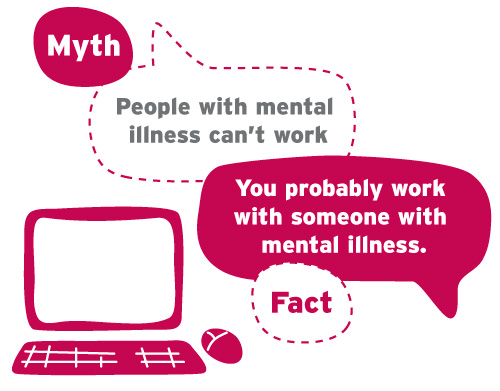
timetochangestigma
(image: Time to Change Wales)

I am going through a particularly challenging, and at times, upsetting period in my life at the moment. This involves job applying and interviewing and facing job rejection. I was recently rejected for a job that I really wanted and knew I could do, having interviewed there and had a positive reaction. It is really hard when you try your best and put yourself out there to follow your dreams, to have it thrown back in your face. There is a blessing in every lesson – as India Arie would say.

For me, in the past, I have had times where I have had periods of sickness off work. These have been due to anxiety and panic attacks as I have written about before. However, I am working on this in therapy at the moment and feeling so much more positive and resilient about work and life in general. I love working, I am good at it and I am able to hold down work and hope I start in a job I love soon.

I have a goal and know I will get there. Its very difficult sometimes when you have time off because it doesn’t matter what its for, the workplace penalises against you for it via sickness records. You are seen as unreliable, incapable and not a good employee, there is job stigma- even if you woke up and had a panic attack and had to force yourself in, it has a knock on effect for the job search and life in general. There is still a stigma as to how you are seen.

So- I have been seeking support to help me in the past month and I feel I know what I am, where I am going and what I want to be. I will keep being resilient in the face of setback and I will achieve my dreams of being a teacher, with the support of loved ones.

It is really tough, it makes me feel low and down on myself- but I will emerge stronger. I hope that one day the workplace changes to see employees with mental health issues as an asset and not a burden. I am also really thankful for my new therapist at the moment- everything will be alright in the end.

Letter to my MP: On Mental Health and Talking Therapy Waiting Lists

house1
(image: Imperial College)

I have just responded to a letter that my MP replied to me today. The other day I wrote to my MP here in London about the Mental Health Units (Use of Force) Bill which aims to stop dangerous restraint in mental health hospitals. This was a campaign through the charity Rethink Mental Illness.

I was sadly less than impressed with the response I received even though it was quick, my MP quoted a lot of figures at me. Now, one of these figures, ‘750,000 more people accessing talking therapies since 2009/10’ really got to me. In 2015, I had a short course of NHS cognitive behavioural therapy which was useful but didnt help my anxiety. However, since late 2015/ early 2016, I have been on the therapy waiting list for talking therapy to help me process the trauma I have been through, Almost 2 years later, I am still on the list and have had to go privately which is less than ideal as you will see in my letter below. I hope it resonates with you and that my MP will use my case study in parliament ( one can only hope):

Dear MP,

Thank you for your swift response to my letter regarding the Mental Health Units Use of Force Bill. In your letter to me, you stated ‘more people accessing mental health services every day….as well as around 750,000 more people accessing talking therapies since 2009/2010’.

As someone with Bipolar disorder who was hospitalised (and sectioned) in 2014 for 4 months, with another 4 months in day hospital due to psychosis and mania, I have been on the waiting list for talking therapy since 2015- almost 2 years ago. When I recently went to a review with my psychiatrist, he said he would speak to psychology for me but that because the service is over stretched I may have to seek therapy via local charities or go privately. Being that I am currently waiting to start work and on ESA, I couldn’t afford private therapy without help from my family and I have had to go private which is grossly unfair due to the trauma I have faced. However, as you state, more people are accessing mental health services meaning that even in someone with a case such as mine, I have had to wait for talking therapy and effectively given up on NHS support in that regard.

I hope you will use my case study as an example in parliament when discussing mental health with Theresa May and your party and would appreciate a response. 

Yours sincerely,

Eleanor Segall

Guest Post by Arslan Butt: The Invisible Crisis: College/ University students coping with Mental Illness

EFTO
(image: EFTO)

“College/ university life,” young, enthusiastic individuals freshly out of school are either excited for this new phase of their lives or tend to think of it as another societal hurdle they need to overcome.

There’s a lot of stress that new students end up experiencing because they’re going into a different educational setting and they want to prove themselves.

Whether it’s worrying about academics or their college-related social life, college/university affects everyone in different ways and thus, comes with its own set of pros and cons. Students are subject to varying levels of stress and other mental illnesses that need to be addressed.

There’s just so much pressure when you’re a first year student. You have this drive to prove yourself but at the same time you don’t want to stand out the wrong way. There’s nothing more stressful than being the student everyone jokes about,” said Stacey Wilson (Film and Digital Media student at Santa Cruz, California).

“Dealing with college/university life is tough enough. Add in the drama that goes on at home and everything just gets tougher for any student,” said Janene Secor (English Major from The Ohio State University)

Youth Are Vulnerable to Mental Health Issues

Parents and students might not have mental illness on their mind when they start college; however, such a period of young adulthood is a crucial one for mental health. According to the Substance Abuse and Mental Health Services Administration, 75% mental illnesses are triggered by the age of 24. Some are triggered in adolescence and some start in college/university.

Furthermore, in 2012, one in five people from 43.8 million adults experienced some type of mental illness. That’s why knowing about mental illness and how it is triggered is important especially when it comes to students.

Around 95% of the directors of the college counselling centre have stated that the number of students with psychological problems in an increasing concern on campus. About 70% of the directors also believe that the number of students who are a victim of major psychological problems has increased in recent times.

Similarly, the rates of depression and anxiety have also increased compared to the previous decade. According to a survey involving college students, being conducted in 2013, found that 40% of men and 57% of women experienced overwhelming anxiety while 27% of men and 33% of women experienced episodes of severe depression that made functioning difficult for them.

Studies also suggest that almost one-third of students fulfill the criteria for depression or anxiety while they are in college.

The Importance of Mental Health Awareness

Depression is stated as the biggest reason of disability across the world which affects around 300 million people globally. Yet, mental health is still stigmatised greatly in our society.

When people talk about their mental illness in society, they can face stigmas although these are starting to fall.

Many studies also agree that to end the discrimination against those with mental ill health, it is important that people are provided with the right education about mental health conditions. 

Furthermore, increasing the accessibility of treatment and screening of psychological problems is crucial for college going students.

In some cases, children that are diagnosed with mental health disorders end up with poor educational outcomes and thus, poor economic outcomes as well. This varies from person to person. 

Offering Students the Support They Need

Research quite clearly states how strong behavioural and mental health supports can improve the life of a student.

When the students get help for psychological problems, then counselling can have a big impact on personal well-being, retention, and academic success.


Offering Mental Health Facilities in Colleges

It is being observed that students have started to utilize the counselling services provided by colleges/universities in a much more positive manner and more frequently. However, there has been a stigma-based backlash from a few college administrators and professors that call their students less resilient and needy because the students use these services.

This attitude is the reason why a majority of students refrain from asking for help, and this is what colleges exactly need to eradicate.

Many colleges/universities have started introducing programmes that directly challenge the prejudice and ableism by not discriminating against students that are struggling with mental illness. Colleges should aim to make mental health care accessible to everyone just like UCLA in America has.

Colleges should aim to provide free mental health treatment and screenings for all of their students. UCLA has started off their efforts of educating their faculty and students about mental illness by holding a voluntary sessions for students to determine if they need help with their mental health.

If a student shows signs of depression, UCLA will provide them with therapeutic services for free, according to the chancellor Gene Block. UCLA has also decided to provide their students with an eight-week programme on cognitive behavioral therapy (CBT) which is  a goal-oriented, focused, and short-term therapeutic treatment that asks for collaboration between the therapist and patient. This doesn’t work for everyone, but is a good start. 

Due to the kind of burden a lot of students feel by starting college, it is important that those vulnerable students with mental health issues have the tools and resources they need to cope with stress, anxiety, depression or other psychological issues.

The treatment program, as well as the online screening, is considered as the first campus-wide screening program for mental health conducted at any university. By catching depression in the early ages, officials of UCLA hope to significantly reduce the damage that the illness does in the early-adult years.

Garen Staglin, the co-chair of the leadership council of the Depression Grand Challenge, hopes that the efforts made by UCLA encourage other institutions and businesses to also focus on mental health issues.

The efforts made by UCLA in Los Angeles, USA have not been futile; Larry Moneta, the vice president of the student affairs at Duke University is quite interested in how UCLA will help its students.

I’m incredibly glad about UCLA’s mental health screening initiative. Mental health issues need to be destigmatized, especially in academic settings so students can comfortably seek the help they’re in need of. I hope other’s implement such programs too,” said Katherine Bracken (English and Theatre student at The Ohio State University)


Sources:

http://time.com/4473575/college-mental-health-guidebook/

https://www.psychologytoday.com/blog/theory-knowledge/201402/the-college-student-mental-health-crisis

https://hpi.georgetown.edu/agingsociety/pubhtml/mentalhealth/mentalhealth.html

http://www.apa.org/about/gr/education/news/2011/college-campuses.aspx

https://www.bustle.com/p/ucla-will-offer-free-mental-health-checks-to-students-heres-why-its-so-necessary-2360904

https://www.thefix.com/all-incoming-ucla-students-receive-vital-mental-health-assist

http://newsroom.ucla.edu/releases/ucla-to-offer-free-mental-health-screening-treatment-to-all-incoming-students

###

Arslan Butt currently works for https://www.CanadianPharmacyWorld.com, has a passion for keeping up-to-date regarding the latest health and lifestyle trends. He likes going on long walks, trying out new healthy eating regimes, and working out.