It was googling the official term of ‘adversity’, it’s one of those words that I know exactly what it means, but it is hard to put into words. The Oxford dictionary defined adversity as “a difficult or unpleasant situation.”. It made me think, that is exactly how people see me when I talk about my life with mental illness. Because living with any mental health disorder is seen as ‘difficult’ or ‘unpleasant’ by those who maybe do not understand and who are afraid.
I have certainly been treated differently due to the way I am affected by my anxiety and depression. I was bullied for being introverted, judged for being worried and insulted for things that were deemed ‘lazy’. I was being defined by an illness that I did not understand fully myself, but one thing I have learned today, is that I have never and should never be defined by my mental illness.
I still have to battle adversity in my day to day life, when I explain that I cannot work because I am still dealing with trauma from my previous job. I deal with the adversity that comes with being a person who attempted suicide and who also lost her dad to suicide. I have to constantly challenge the adverse responses that come when I talk about my mental health to a doctor, to a professional and most of all, to the world.
I am an open book today, you can google me and find so many different stories about my mental health. I try not to hide the way that I feel inside because I know that I am only human. For the most part, I am met with support and my heart even flutters each time someone tells me that my openness has helped them; because that kind of thing is priceless.
However, I get a fair amount of hate from people who have never met me, or who just haven’t taken the time to understand me. I am still being forced into this box where I am seen as this monster, or this ‘snowflake’ (one of the more horrendous terms used to attack people with mental health recently).
I have days where I want to delete my Twitter account, remove my blog and change my name, on the worse days I even consider leaving my own country so that I can go completely off-grid. Unfortunately for the people who feed the stigma and adversity, the trolls of today’s world, there is a bigger part of me that feels almost inspired by the judgement I get.
Because each time a person judges my mental health, I am given a reason to fight.
Overcoming adversity is not easy, and it is so hard to break free from the labels that attach to living with a mental health condition. I may always be anxious and depressed but that isn’t a problem, it doesn’t make me a problem. It’s overcoming the responses to said conditions and fighting the stigma, because the stigma is where the problem lies.
I am no idol on how to challenge stigma and adversity, but I do try my best. All I have learned is that people will judge you, no matter what you do. But what the way you decide to judge and define yourself is what will limit the amount of negative stigma that exists around your lifestyle.
The only advice I can really give, if you want to overcome adversity, is to find the confidence to raise your voice, share your opinions, but always, always, be kind and considerate. If you decide to keep your feelings to the confines of your diary or your loved ones, that is okay because you are making positive changes in your home. If you share it with your community or around the world, that’s ok too because one more voice only adds to the group of people who are fighting for your same belief; there is power in unity.
I know that the one thing that has helped me the most, and has kept me fighting for my right to be treated with the dignity and respect that every person deserves, is the support I get from my own online community.
Thanks to all who voted for this article on Facebook and who have supported me these past 5 years and beyond. I love you all.
I cannot believe that this year (in March) is 5 years since I was hospitalised as a 25 year old for my bipolar disorder. For those of you who know my story, I became unwell with an episode of severe mania within a number of days, which featured psychosis-losing touch with reality and agitation. Its likely that my old medicines stopped working and I started believing delusions that werent real.
When I was hospitalised, I eventually went to the QE2 hospital in Welwyn, Hertfordshire (which has now been knocked down and now based in Radlett!). The support I had from the psychiatrist, nursing team, OTs, ward manager and all the staff was incredible and they really believed that I would get well again. I cannot have been easy to deal with, due to the mania and the fact I was pacing around all the time, singing and in my own little world. Their kindness and help really helped me recover properly- as did the visits and love from family and friends.
I spent 4 months as an inpatient at Welwyn and then a further 4 months in outpatient treatment at a Day Hospital unit in Watford. The day hospital was very beneficial to me and helped me to start on my new medication and process all that had happened. I had help from a very special care coordinator and support worker once I had been discharged from day hospital. My care coordinator helped me so much and was so kind and caring.
Recovery is never linear and its something I have to work at every single day. There will always be life stresses that can trigger my anxiety and depression (and potentially a lesser manic episode, although the mania hasn’t happened yet thank g-d). I still struggle with my anxiety disorder and panic attacks in the mornings sometimes. I believe this is as a result of all the trauma that is involved with being sectioned, being an inpatient and having to rebuild my life after. I had social anxiety anyway, as part of the depressive part of the bipolar, but I still believe that even though I have had talking therapy, that my brain is still processing the trauma. Mental health wards are not fun places to live, as you can imagine and despite the staff trying to make it as calm as possible.
I will get triggered with my panic by certain things- like social events or job interviews and I may not always know fully why- it could be subconscious, or I realise it after. I am still rebuilding my self esteem and the love for myself. Anyone who goes through a severe episode of mental illness will tell you that its hard to separate the illness from yourself. Bipolar from Eleanor.
I have incredible friends, my fiance and family who can separate it. Yet, there are times where we all don’t feel good enough. Where we want to hide even though we are capable of more than we know.
So in these 5 years I have been learning to love me, to think and act on hope, recovery and the future. I have learnt to build self care tools and relaxation into my days if I feel overwhelmed or to stop me from getting too stressed. I have been blessed to have found my life partner and developed my career- although my illness has put my career on hold many times and I have had to reinvent myself. However, I am starting slowly to find the light in the dark.
This is where the phrase ‘Be Ur Own Light’ comes from- to find the inner strength to carry on.
There have been many times when I have wanted to give up. Where I have been hurting and have felt inadequate. When I felt no one would want to date me or that I wasn’t good enough for a career. Because how could I tell people what had happened to me without them thinking I was a ‘fruitloop’? That was my logic.
Thats why I started to write. I write to heal. I write to explain, educate and battle stigma. I write to make sense of my own mind. I write as a job but also to make a difference in the world and I hope I will do that through my book and blogs/ articles.
In the past 5 years, aside from work and my mental health advocacy, I have been travelling again which always brings me joy. I have been to Rome (Italy) , Prague (Czech Republic), Madeira (with Charlotte), Israel (with Rob), Portugal and Romania. I have stayed at my Dads and explored the Cotswolds and gone on holiday to the beach at Broadstairs with Anna and family. I have seen theatre shows, amazing movies and read some fantastic books. I have found a life partner. I have secured a book deal, volunteered for Jami to launch their mental health shabbat, worked with the Judith Trust and my blog is growing. Being published in Glamour, Metro, Happiful, the Telegraph and the Jewish News were major highlights and finding an incredibly supportive community on Twitter too.
Life is not all hard and sad. Yes, there are times when I have found it a nightmare with my anxiety disorder. I am 100% still a work in progress- recovery isnt easy.
I have had to work on my self esteem in therapy. I have had 6 months of psychodynamic therapy. I read self help books. I should exercise and go out more (working on this).
But:
I am not severely depressed or manic. I can hold down part time work, often from home. These 5 years have taught me that I may always have some degree of anxiety- particularly about past events which effect how I react currently. I need to learn how to heal from this and I hope in time I will.
If you had told me 5 years ago I would be writing a book of my life story and been published in national newspapers I would have laughed at you. I am getting married in July and I can’t wait (and also would have probably laughed at you too).
Anxiety is horrible by the way. Your heart races, you get flooded with adrenaline, you fixate on the fear and want it to go away. You feel sweaty and clammy and you may shake. You need to rush to the toilet. It stops you from sleeping. It stops you from living your best life. So I don’t want to trivialise it here. Its a struggle at times and its disruptive to life.
The pain of anxiety, depression and bipolar is matched by my hope and my belief that I will still achieve despite it. Yes there will be difficulties and bumps along the way, but today I am choosing to look towards the sun.
When I look back at this year, 2018, I don’t fully know where to start. It has been one of the most meaningful, eventful, and wonderful years of my life so far, but there have also been sad times.
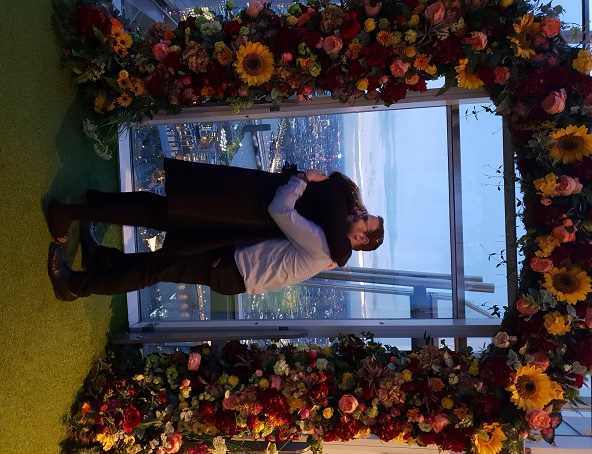
Outside of work, this year was a very special one as back in April, my fiance Robert proposed to me at the Shard, overlooking London. I said yes and 8 months later we are in the middle of wedding planning and planning for our future (and I found my wedding dress!). The proposal was the most amazing thing to happen this year. Also, two of my best friends got engaged and for one we were involved in the proposal and got to see him propose so that was fantastic! I am looking forward to the weddings 🙂 We also celebrated other friends 30th birthdays, engagements and weddings this year as well as many births of their children which was so wonderful.
Sadly this year, we lost my beloved Grandma in June to Parkinsons disease and I miss her every single day- we were very close. A month ago, my Grandpa (on the other side of family) passed away after a short battle with cancer, but I was able to fly to Portugal where he lived and see him before he passed and give him a hug, so that was very important. There is also family illness occurring, my father in law to be is very unwell with cancer and mid treatment- and this is very hard for us all but trying to be a positive as possible!
Back in February, My Dad and I went to Romania to the town of Iasi, to explore where our ancestors lived. There was a lot of snow and walking around palaces and churches and finding the synagogues. When we came back, we discovered that my Great grandpas sister and family died in Moldova across the border, at the hands of the Nazis (via the Yad Vashem online database) A very bittersweet trip but we were pleased to see Iasi.
In happier news, after celebrating our engagement with those we love, in July, my fiance Rob and I went on holiday to Israel which was really wonderful. We stayed with close friends and family and also in hotels and had a really special, meaningful, fun and sunshine filled trip! A personal highlight – the swimming pool at the InterContinental hotel in Tel Aviv and of course, walking through the Old City while sipping iced coffee (it was so hot) and visiting the Kotel. When we came back, we spent a weekend in the Cotswolds at my dad with family- a lovely escape. This year too, I also read some great books (like Michelle Obamas autobiography) and watched some fab films/ theatre shows.
In July, I celebrated my 30th birthday with friends and family (thanks Katie for my delicious birthday cake) and then this December, we celebrated Robs 30th birthday at London Zoo light trail.
This year work wise, has been a blessing- I managed (somehow) to secure a book deal which has been a lifelong dream and am working with the fab team at Trigger Publishing and my patient editor Stephanie- thanks to her, Katie and James for their support as I continue to tap away at my keyboard.
Before 2018 began I was in touch with Naomi Greenaway at the Telegraph (Stella Magazine). Thank you Naomi for helping me to tell and share my story in a sensitive way. It was an honour for me to be featured online at the Telegraph and for my story to reach new readers.
Back in January, I met a wonderful editor on Twitter, Yvette Caster, who was looking for new writers for Metro Blogs (as it was then). She looked at this here blog after I sent her a pitch email and commissioned me to write my first ever article for Metro.co.uk on mental health, weight gain and medication. From there, she and her colleagues continued to commission me to write and when she and they left in the summer, I have continued to pitch articles and be published. Thank you to Ellen Scott, Aimee Meade and the current team at Metro too. Being published online by Metro has been an amazing journey and I am proud to write for them on lifestyle topics and mental health, my favourites this year being about the Royal wedding, homelessness and mental health and sharing my Grandpas story.
Thanks also to Bianca London for commissioning my two Glamour articles, this was another amazing bucket list dream ticked. The one on dating and mental illness, bipolar and how I met my fiance (when I wrote the article, he was my boyfriend) was something very close to my heart and it was a genuine honour to be featured in a magazine I had a read as a teenager and one of the biggest womens magazines in the UK. Still can’t believe it.
Thanks to Rebecca Thair, editor of first ever mental health magazine, Happiful magazine for not only being first to publish my story with bipolar back in January (which was so important to me) but also publishing my later articles on social anxiety and a guide to bipolar. I love working with you and the Happiful team and hope to write more for you. Thanks also to Sonja at UIO Podcast and Sarah Cardwell for interviewing me.
Thanks to Francine Wolficz, Richard Ferrer and Jack Mendel at the Jewish News for all the articles and positive support of my mental health work in and outside of the Jewish community this year. And to Rabbi Ari Kayser at Aish for including my story in Perspectives Magazine with the Jewish Weekly newspaper.
Thanks to writer Olivia Blair at Cosmopolitan/ Hearst for featuring my thoughts on bipolar in several articles which were also published across Hearst publications like Elle Magazine, Prima Magazine and Netdoctor.co.uk . Thanks also to the team at Refinery 29 for featuring me in an article on Seasonal affective disorder and to the fantastic charity No Panic for publishing my personal story with bipolar disorder.
This year I was also a shortlisted finalist for a UK Blog Award for the Health and Social Care Category in March (thank you Lauren and team) and invited to come to the Mind Media Awards as a highly commended journalist in my category. (This was incredibly magical).
Going to the Mind Media Awards in November with my Dad at the Queen Elizabeth Hall and hearing peoples stories of mental health across the UK media was just incredible. It was also a fun night of celebrity spotting- Fearne Cotton, Bryony Gordon, Dame Kelly Holmes, Kim-Joy from Bake Off, Stacey Solomon and Loose Women team, Frankie Bridge and many more. Stephen Fry presented the awards and was just remarkable, humble and funny as always. I was so pleased I managed to attend, it was a privilege to meet people. I met Yvette, Ellen and their producer at Mentally Yours podcast and fellow blogger Katie Conibear. My Dad and I were honoured to attend.
This blog has been a joy at times alongside the hard work. Thank you to all my guest bloggers and all sending submissions- you’ll get a proper individual thank you at our 3rd anniversary in March, but I couldn’t run the blog without your articles and careful attention. Thanks To Vuelio and Feedspot for awards too. Heres to a 2019, our third year of Be Ur Own Light! Thanks also to my Twitter followers who make it so easy for me to share thoughts and ideas with them- and for all the online friendships I have made- you know who you are!
This year has been hard at times but there has been SO much beauty and I feel so grateful and thankful for it all. My mental health has taken a hit at times, but I have found a really good therapist for talking therapy- who has helped me so much and I have also spoken to my GP. Its OK to reach out for support. Thankfully I have a good support network. I have been a little more anxious and battling mild depression but I am slowly getting better again and starting to see the light :).
I just want to wish you all a happy and healthy new year 2019- this will be the year that I please God get married and my best friend Katie (as well as my fiances cousin too!). May it be a year of better health, wellness and joy for us all. And heres to keep fighting stigma!
May the new year be one of dreams coming to fruition and love and laughter.
Socialising during your recovery always requires some effort, and life after rehab always takes some serious adjusting, but it can be especially difficult during the holiday season. The holidays are a time when you reunite with family and friends and spend time at seasonal social gatherings. You may encounter friends from your past times of using, people with whom you have impaired relationships, and social situations that tempt you to compromise your sobriety. In short, despite being one of the happiest times of the year, the holidays can also be stressful and dangerous for sobriety.
While the holiday season is a season of joy and giving that ought to be celebrated, it is important to be on your guard in order to protect your newfound sobriety. In case you find yourself or a loved one struggling to navigate recovery from addiction this season, here are some tips for protecting the sobriety you’ve worked so hard for during the holidays…
Know Your Triggers
Take an inventory of what your triggers for substance use are. In the past, did you use when you were hungry, angry, lonely, or tired? Was substance use an outlet for stress? Do you experience cravings most when you are bored or sad?
Whatever your triggers, be sure to take the necessary steps to keep those triggers at bay. If stress is a trigger for you, for example, practice regular stress relief techniques like meditation, even when you don’t feel particularly stressed. If you are tempted to relapse when you are bored, on the other hand, make it a point to plan out your days with wholesome activities and to have a go-to activity for those times when you truly do have nothing to do.
Use Your Support System
It is so crucial to set up a support system within your social circle during recovery, and the holidays are a perfect time to take advantage of that support system. Talk to members of your support system, especially family members and friends with whom you may be attending holiday gatherings. Tell them about what struggles you are facing and what you are worried about this season. This will help them remain mindful of you and allow them to help you at those times this season when you need it most.
Don’t Be Afraid to Call for Help
Your support system can carry you through the most difficult times of the holiday season. If you are worried about temptations to pick up alcohol during a particular holiday gathering, for example, a friend or family member can refrain from drinking with you or stay by your side throughout the evening to help hold you accountable. If you are worried that spending time with a particular group of people might tempt you to use again, make alternate plans with a friend or family member who understands your recovery.
Consider Whether an Event is Worth It
Holiday gatherings can be stressful for a variety of reasons. You have to answer questions about what you have been up to and what’s new in your life. You may encounter people with whom you used to use during times of addiction. You may find yourself around loved ones with whom you are still trying to repair harmed relationships. There are all kinds of reasons to be stress about attending a holiday season event, and for those occasions when you think the stress may be too much, it’s important to recognize when it may be better to miss an event.
Make a Plan for Parties
If you do feel that a holiday party will be low-risk enough for you to attend, be sure that you still come with a plan. Bring your own non-alcoholic party drink to sip on if you know alcoholic drinks will be present. Drive yourself so that you can duck out a bit early and have more control over when you leave. Plan out what you will say any time someone offers you a drink at parties. Try to envision which scenarios may arise so that you can be prepared for them.
Wear Your Sobriety on Your Sleeve
Finally, make the decision to own your sobriety this season. When someone asks you what is new in your life, go ahead and tell them about your sobriety (only if you feel comfortable doing so, of course.) Talk to them about your journey thus far, in as little or as much detail as you desire. Share what you are looking forward to as you continue your journey. When others see you talk enthusiastically about your recovery, they are sure to respond with similar enthusiasm, offering a shoulder of support and becoming advocates of your recovery.
Christmas is meant to be a joyous time of the year and an opportunity to spend quality time with friends and family, but unfortunately, it can also be one of the most stressful. For some, the biggest worry they will encounter is whether they’ve overcooked the turkey, but for others, far deeper problems are magnified around this time in terms of finances, family tensions and even relationship breakdowns or divorce.
Avoiding the Subject?
For many, the easiest solution at the time is just to put the problem to the back of their mind and focus on the present. In fact, in a survey of 1016 married individuals conducted byBrookman International Divorce Solicitors, 64% of respondents revealed they have put off a major decision because they felt it was ‘not the right time’ to deal with it. One third felt that the New Year was a good time to make a fresh start or major life decision, with ending a relationship or asking for divorce being the most popular major decisions to withhold. Whilst this may seem a temporary solution, avoiding the problem only prolongs the suffering and could lead to a frosty atmosphere over the festive period.
Worrying thoughts at any time of year can cause stress, but they can be particularly troublesome at Christmas, when you’re having to juggle shopping for presents, go to events and balance the interests of lots of different people. The people closest to you will notice the changes in your behaviour, even if they don’t actually know what the underlying cause is.
Left for too long, this build up of stress and tension could reach breaking point and lead to heated arguments and upset. It could even put your mental health at risk. No one wants an explosive argument over the Christmas dinner, so, here’s a few tips to help avoid a Christmas Crisis.
Talk to someone – Speaking to someone close to you about your worries is a great place to start, even if you don’t feel ready to address the person causing the stress directly. Be sure it’s someone you can trust and who will be honest with you. When it comes to a big decision, you don’t want someone beating around the bush, or telling the world about it either!
Nip it in the bud – Whatever the problem is, talk to your partner about it as soon as you feel able to. Whilst the discussion might be difficult, you will feel an immense sense of relief once you have got the issue off your chest. It may be that your partner feels the same way, or has a solution which could result in a better outcome for both of you. Until you speak about it, you simply won’t know.
Focus on yourself – it may seem selfish, but ultimately, you have to make decisions based on your own happiness. If you are constantly making compromises to make others happy, then you’ll always be in conflict. A Christmas full of atmosphere, tension and cold shoulders is no fun for anyone, and actually tackling the problem outright, even if it means a major change is on the horizon, can make the transition far easier for everyone to manage.
Forgive yourself – Decisions which are one-sided can often leave the perpetrator feeling an immense sense of guilt, but it is important to be kind and forgiving to yourself. Sometimes people don’t agree, have different perspectives, or reach a different stage of their lives where priorities change. Understanding that life is a journey and that we all have our own paths to take can help to put the current situation into perspective.
Following these key steps will help you to deal with difficult decisions quickly, effectively and with the best intentions.
In the Brookman survey, 74% of people said they felt instant relief once they had made a decision, be that dealing with the core issue, or simply booking an appointment to get some advice. The important part is taking steps to address the situation so that you don’t feel like it is spiralling out of control.
Whether you decide to end a relationship or not, make sure you make informed decisions that are right for you.
In the past few weeks, I have found that all I want to do is stay inside, under a cosy blanket in my little nook on the couch, reading lots of good books or watching something good on TV (by good I mean my favourite reality shows at this time of year!). I have been practising a lot of self care activities as I havn’t been feeling at my strongest or happiest this week. I think I may have seasonal depression but I am not sure if its the winter blues – probably the winter lack of light combined with my bipolar brain chemistry.
Sometimes I will phone or whatsapp my friends, I will take long bubble baths and sing in the tub (feeling like some kind of surreal movie like Amelie) , I have discovered a new love for the Body Shop seaweed clay facial mask (it leaves my skin so soft and moisturised and helps my spots). I have wrapped myself in my pink, Beauty and the Beast blanket (without make up on) and just enjoyed the freedom of being. Of resting and being in the moment. Of being more mindful.
There have been times when this has become a bad thing. I’ve spent several nights this week on my own and there have been days where my anxiety has increased and I havn’t wanted to go outside. This is because its cold and dark (winter here in England), I don’t want to interact with random people or I just don’t want to be out in this weather when I could be warm and cosy at home. I am an introvert (who also loves people). My introvert side craves time on my own but this is also part of my social anxiety.
However, every anxiety win.. like going to a gig in Holborn with my Dad and using the Tube (I forgot about the lack of personal space) or hanging out with my fiance or friends without cancelling on them, has been good. In truth though, I have had to cancel a lot of plans this week and luckily have very understanding people in my life. I hate letting people down but sometimes I can’t cope- the adrenaline pumps and things feel too much for me, too overwhelming.
I have felt overwhelmed and mildly depressed this week. However, I am coming to the slow realisation that this is OK. Its alright to struggle and to want human contact but also to find it overwhelming too.
I do need to get more fresh air though, exercise more and be healthier. Part of the lure of being inside is that its relaxing and ‘safer’ but the outside world is not as scary as my head decides it is when its cold and dark in winter.
I think I have mild seasonal depression- so its really important I do all I can to work with that and go outside my comfort zone- when all I really want is to be a doormouse surrounded by those I love and sometimes curled up on my own!
I am going to start talking therapy again soon as theres been a lot of stressful things going on, so hopefully that will help too.
This week is Anti Bullying work and here in London, England, The Diana Award is partnering with the musical Everybody’s Talking About Jamie.
The charity is partnering with the West-End show ‘Everybody’s Talking about Jamie’ to highlight that every young person should feel accepted and find a place where they belong in their school community.
New research reveals:
Nearly half (43%) of young people have heard their friends use language that is discriminatory or negative towards being LGBTQ+
Nearly half (45%) of young people have heard their friends use language that is discriminatory or negative about race or skin colour.
Over a third (35%) of young people have been called gay or lesbian as an insult
Over half (58%) of young people say their school has never taught LGBTQ+ focused lessons.
A new Survation Survey, commissioned by The Diana Award and ‘Everybody’s Talking About Jamie’, reveals that nearly half of young people (43%) have heard their friends use language that is discriminatory or negative towards being LGBTQ+ and 45% of young people have heard their friends use discriminatory language about race or skin colour. Over a third (35%) of young people have been called gay or lesbian as an insult.
The Diana Award is urging schools to celebrate what makes pupils unique during Anti-Bullying Week (12-17 Nov).
A special gala night will be held at 7.30pm on Monday 12 November at Apollo Theatre, Shaftesbury Avenue.
In advance of the night gala, to kick-off Anti-Bullying Week on Monday 12 November at Alexandra Palace, London: Over 600 young Anti-Bullying Ambassadors aged 5-18 from across the UK are coming together to participate in a hands on event designed to inspire young people to creatively explore bullying issues through drama, singing, photography, rap, graffiti art, and public speaking – all led by celebrity talent. Cast members of Everybody’s Talking About Jamie will run a workshop at the event which is sponsored by Department for Education, Twitter and Trutex.
The Diana Award runs the leading Anti-Bullying Campaign in the UK and Ireland giving young people, professionals and parents the skills, confidence and training to tackle all forms of bullying as Anti-Bullying Ambassadors.
Alex Holmes, Deputy CEO, The Diana Award: “Nearly half of secondary school students have heard their friends use language that is discriminatory or negative towards being LGBTQ+ which is why during Anti-Bullying Week we are delighted to kick off a year long partnership with hit musical Everybody’s Talking About Jamie. The play encourages everyone, particularly young people, to be themselves and educates the audience about the power of language and the need to celebrate difference. This is at the heart of our work training young people to be Anti-Bullying Ambassadors.
Sadly, we know at the charity The Diana Award that school can be a place where young people don’t feel accepted and are targeted for their identity. We are calling on schools to do more this Anti-Bullying Week to tackle all forms of bullying, particularly in light of this research”.
Jamie Campbell, the inspiration for hit musical said: “We shouldn’t have to live in a world where bullying exists and the best way to tackle it is through education. Charities like The Diana Award and their Anti-Bullying programme and campaign do great work in raising the self-esteem of individuals and it is an honour to be working with this charity”.
The Diana Award was set up in memory of The Duke of Cambridge and Prince Harry’s mother, Diana, Princess of Wales, and her belief that young people have the power to change the world for the better. The charity fosters, develops and inspires positive change in the lives of young people through three key programmes which include; a mentoring programme for young people at risk, a youth-led anti-bullying ambassadors campaign and a prestigious award which publicly recognises young people – The Diana Award.
The Diana Award is a core member of the Anti-Bullying Alliance. The Anti-Bullying Alliance coordinates Anti-Bullying week and focuses on tacking bullying whether it is happening to them or someone else, face to face or online #AntiBullyingWeek
Everybody’s Talking About Jamie, is based on the true story of Jamie Campbell, a 16 year old school boy who wanted to attend his high school prom in a dress. It is a tale of unconditional love between a mother and a son, and their fight to overcome prejudice, beat the bullies and Jamie’s fight to be accepted for himself. All proceeds from the gala night will go towards The Diana Award Anti-Bullying Programme, which empowers young people like Jamie and his peers to tackle bullying, whilst giving them the skills and confidence to change the culture of their schools and communities.
This article was voted for on my Facebook group last month but as always, there has been a lot going on and I wanted to give this one the time it deserved.
Mental health and work is a huge topic. Mental ill health affects peoples ability to work at times- depression, anxiety, panic attacks and other symptoms can stop us from working and disrupt careers. It is one of the biggest causes of sickness, with people being signed off work by their doctors- from stress or other mental health issues. However, some people are able to manage their health symptoms and work through it. For me, and many others, I had to switch to self employment, in order to work more effectively.
I started off at uni studying English Literature and Drama at Goldsmiths here in London, got a 2:1 degree and then worked for a year as a teaching assistant in a primary school. I decided then that it may not be for me and I applied to study a masters degree in Applied Theatre at the Royal Central drama school. This was amazing and eye opening- but I was suffering from anxiety and panic attacks (possibly part of my bipolar disorder or just general..).
The anxiety attacks were debilitating for me at times- but I managed to get my Masters. However, I have often found that certain work places are far less forgiving of people with mental health issues- if they are still symptomatic.
I always thought that I would work as a teaching assistant and become a Reception teacher. I worked in several schools and I loved working with the children. I also tried working for a mental health charity. However, I found that my anxiety was getting worse and worse (despite taking medication and having therapy) and that the career just wasn’t working for my health.
So, I decided to go self employed and become a freelance writer. The perils of freelancing can include: late payment of invoices from clients, having articles pulled at the last minute because the editor changes their mind, clients wanting you to write for free, waiting months for work to be published and some clients only paying on publication- so you don’t get a regular ‘salary’. Income is less stable, its harder to trust people and that you are often sending out pitch emails for writing work- only to get ignored, as editors are often busy with their in house team and work.
The pluses of freelancing: some regular gigs (Thank you Metro!), being featured in Glamour UK is a huge honour and in Happiful and Cosmopolitan/ Elle. I have written a lot this year and I am grateful every day for the editors who have taken a chance on me and commissioned my work.
However, its a balance. Yes working from home is great. Yes setting own hours is good. But, it means that income is less stable for sure. I have far less anxiety and panic working like this. Thats a major plus.
I often feel bad for not earning enough. Or because you have to develop a thick skin to deal with rejection.
In terms of mental health at work- there is SO much that needs to be done. Sickness records mean employees are still penalised, despite their genuine need for a mental health day. Each work place should be trained in signs to spot and have a mental health first aider. Some work places are disability friendly, but many just see you as a worker and if you have a mental illness, will only tolerate so much time off.
I don’t really know what to suggest if you are also in my position. In the UK, we have the benefits system which has been very important for me due to my illness. However, I would love to get to a stage where I can earn enough not to need it.
If you are struggling with your mental health at work, speak to a trusted colleague. HR will not always be supportive – it depends on the organisation, but don’t suffer alone. Just be aware that if you are off sick a lot, some companies will see you as unreliable. This may be 2018, but outdated attitudes at work still exist unfortunately.
There are positives and its important to know there are good, wonderful people out there. I have met many.
I recall reading a story last year about two teenage students from a town in Denver, both of whom lost their lives to suicide within two days of one-another.
In both cases, the students had made their intentions known on social media.
Countless similar stories can be found online. In many cases, such as the one above, people did attempt to reach out to those in need. In other cases, online cries for help were ignored or not taken seriously.
Teen Suicide Rates are Rising
Between 2010 and 2017, the number of teenage suicides in England and Wales increased by 67%.
In London, the figure is rising at an even greater rate, while a similar trend is occurring on the other side of the Atlantic, with the suicide rate of children and teenagers between 10 and 17 years old increasing by 70% in a decade since 2006.
The Role of Social Media in Suicide Prevention
While many believe social media is at least partially responsible for the rising rates of teenage suicides – due to matter such as cyber-bullying – it can be used as an effective tool for suicide prevention. This goes for any user of social media, not just teenagers.
The major platforms themselves are actively engaged in suicide prevention, but much of the onus is on individuals to respond should they encounter a post pertaining to suicide from a friend, family member, or anybody else.
Contacting the Emergency Services
First-and-foremost, you should not hesitate in contacting the emergency services if you believe someone’s life is in imminent danger. Any indications that someone is preparing to take their own life should be treated as a medical emergency. If need-be, contact closer friends or relatives of the person in question as well, to ensure help can arrive as quickly as possible.
In such situations, particularly if the person has made their intentions clear, the danger is obvious.
However, it is not always so easy to spot when a person needs help, or to differentiate between someone simply ‘venting’ after having a bad day and a more serious mental health issue.
The Warning Signs
Spotting the signs that a person may be contemplated suicide based on their social media activity can be difficult, given the absence of body language or tone of voice in many posts, especially those that are purely text rather than photos or videos.
However, there are some warning signs you can look out for.
Tone
While tone of voice by not be present in a lot of social media posts, you will probably be familiar with the tone your friends and family members take on social media. A negative change in tone may be subtle or happen gradually over time, but it should not be overlooked. If you start to notice more posts that strike you as odd or out-of-character, it could be that person’s way of expressing negative emotions.
Signs of Anger or Lashing Out
“Anger turned inward” is how Sigmund Freud described depression, a characterisation that is debated to this day. What seems beyond debate is that anger often coexists with depression, and that it can be outward as well as inward. Therefore, if you see someone reacting angrily or lashing out online, it could suggest they are struggling mentally. Again, this should be particularly alarming if it is out-of-character for that person.
Sad Posts
Of course, sadness is the most obvious emotion to link with depression. When it comes to social media, this could be shown in sharing sad memes and pictures, or posts discrediting their own self-worth. Frequent posts of this nature could be a cry for help and should not be ignored.
It is also worth paying attention to the time of day the person is posting, as insomnia is a common symptom of depression. As such, regular posts late at night or in the early hours may be another warning sign.
Reaching Out to Someone You Are Concerned About
If you are concerned about someone’s wellbeing, raising your concerns with them is usually far from easy and must be done sensitively. However, many people struggle to talk about their mental wellbeing, be it through embarrassment, fear of ridicule, or any other reason perpetuated by the stigma surrounding the topic.
If you are the one to raise the issue, it can help break that barrier immediately.
There is also the myth that talking about suicide is a bad idea and could encourage a person to take their own life, which has contributed in making suicide taboo subject. Again, being the one to raise the topic, if appropriate, can help make a person feel more comfortable in discussing their concerns.
This article from Helpguide.org does a superb job of explaining the steps you can take in opening the dialogue.
Contacting Someone Closer to the Person
You do not have to be a close friend or family member to raise your concerns with a person. Given that we are discussing social media, you can even be the other side of the world.
However, you may ultimately decide that you are not the best person to speak directly to the individual you are concerned about.
That, however, does not mean you are unable to help.
Contacting someone closer to them – either physically or emotionally – clearly and considerately explaining why you are concerned, may encourage that person to bring the issue up. Perhaps they too have noticed the signs but were unsure whether to address them. Your message could be the push they need to do so.
You Can Help a Person in Need
It is quite likely that nothing in this article is new or surprising to you. However, many cries for help on social media go ignored. In the most tragic of cases, lives are needlessly lost. So, if you do find yourself in a situation where a friend or loved one is using social media in such a way, just remember: you can be the one to help. You may even save a life.
This article was contributed by Dan Brown from MyTherapy (free for iOS and Android).
Hi there, I’m Lydia a 20-year-old youtuber and film maker, I’ve been battling my mental health conditions for a little over five years. This article is about C-PTSD (Complex Post Traumatic Stress Disorder) and how I’ve found recovery, but first, what is C-PTSD?
C-PTSD, is a type of post-traumatic stress disorder that stems from repetitive exposure to a traumatic experience, it is also commonly diagnosed alongside BPD (borderline personality disorder), I was diagnosed with C-PTSD around 3 years ago after witnessing a suicide and multiple suicide attempts, without going into too much detail it was really hard, and has taken me until this year (2018) to even begin to process what happened.
So, let’s talk about recovery, there a massive misconception that it isn’t possible to recover from any type of PTSD, however it totally is possible to find recovery. My recovery really got started this year when I made the decision to privately access EMDR (Eye Movement Desensitization and Reprocessing) which was without question the most beneficial type of therapy I’ve tried.
Following this there was a major incident in which my mental stability declined rapidly I was subsequently detained in a psychiatric hospital for a little under a month, following my release, I decided to take control of my mental health and help myself.
The first thing I did to help myself was cut off from everybody negative, which I realised I had to do, because I really was at a point where I could have reached crisis point if things didn’t change. I moved from one end of the country to the other, I blocked everybody’s number, Facebook and Twitter, it was a drastic move but so important and to anybody who struggling with their mental health I’d wholeheartedly recommend doing this, just cut yourself off from everybody negative, you don’t have to justify it, your health and welfare should be the most important thing in your life.
The next thing I did was go to my GP and re-start my medication. Sometimes you just need an extra push, psychiatric medication can’t change your life circumstances, but it can help you heal. This was a pretty big decision but it was one I needed to make.
The final thing I did was to take a break and find a hobby. I went on holiday with my family, I started creating more positive content on YouTube while also documenting my recovery which has been one of the most helpful things I’ve done/ This is because I’m a part of a really supportive community on YouTube, and just reading comments like “you gave me hope” means so much.
The big move I made this year was to write and release my own book on the journey I’ve been on, and I wouldn’t change it because it’s made me who I am today.
After a few years of complete hell, I’ve turned my life around and I’m certainly in a much more positive place, things change and life changes for the better. My overall message for you all would be to never lose hope, just hold on because if you put in the time and work things will change, however don’t expect people to change things for you. Hold on and find recovery.
Lydia is a youtuber and film maker, talking about her mental health. You can see her channels here:



 beurownlight.com