
What’s Family therapy really like? Guest post by Christine H

Family therapy 1
(image: Christine H)

Therapy is growing more and more accepted as a mainstream practice, rather than a scary, stigmatised ordeal. After all, it’s important to take care of mental health, and sometimes, we could all use a little extra help.

However, when it comes to any kind of therapy, it can still be scary. We don’t know what to expect, and we worry that we’ll be forced into something that makes us too uncomfortable. This can especially true in the case of family therapy. Often, family therapy is utilised when one or more family member confronts a serious mental health challenge (such as, for example, bipolar disorder, addiction, or major behavioural issues) that affects the rest of the family.

So, in order to dispel some of the misunderstandings surrounding family therapy, and to perhaps help people become more comfortable with it, here are some important things to know:


There May Be a Mix of Alone and Together Time

Contrary to popular belief, family therapy isn’t just going to be your family talking in a circle with a therapist the whole session. Well, maybe sometimes it will be. But other times, “family therapy” refers to a lot of different compilations of relationships within your family. Parents may talk with the counsellor separately, and then a child who has been the primary subject of therapy will talk with the therapist, and then perhaps the counselor will enable a conversation between the child and parents in order to share information that needs to be shared.

Additionally, family therapy is most effective when all family members are utilising therapeutic tools to get what they can out of the experience. For example, often in the case of addiction, support groups are available for both the person struggling with addiction, and for the family members who are affected by it. In these separate group therapies (which you can learn more about here) family members can gain new perspectives which will empower them to return to family therapy with the information they need to make it a productive venture.


Information that You Want Confidential Can Be Confidential

During all the mix-match of family therapy modules, many individuals are wary about sharing information with the counselor if they don’t want it to be shared with the whole group. And although this might sound kind of shady, it’s not just about keeping major secrets. Often, it’s about protecting family members’ feelings, or being embarrassed or worried about our own feelings.

Since family systems therapy is ultimately about repairing relationships and empowering healthy communication and cooperation, a counsellor can help individuals identify what information is important to share, and how to go about it in the best way. However, there are some challenges that are best talked out one on one with the therapist, and not in the group as a whole. It’s important for all parties involved to understand that they can still control the information that’s shared, and the way they choose to do it… or not.


It’s Not All Talk Therapy

Although sometimes all that’s needed in order to strengthen a family’s power to communicate and cooperate is an outsider guiding the conversation, other times talk therapy can be frustrating for families, as they’ll find themselves going around in the same old circles and arguments that they would on their own. That’s why most counsellors will utilise other techniques and approaches to achieve family goals.

For example, sometimes it’s useful to utilize experiential therapy, which could include anything from a cooperative ropes course, to role playing exercises. You can learn more about those options here.


Practicing Outside of Therapy Sessions Is Vital

One common assumption of family therapy is that the work will get done in therapy sessions, and it doesn’t have to change the way things are outside of therapy. Family therapy can only be successful when it creates changes to habits and systems within the family dynamic that aren’t serving individuals as well as they should.

Most of the time, a therapist will give family members assignments and goals that they can do–both by themselves, and as they interact with the rest of the family–in order to improve family relationships. Often, these are small habits in the way that we talk and the way we share duties in and out of the house.


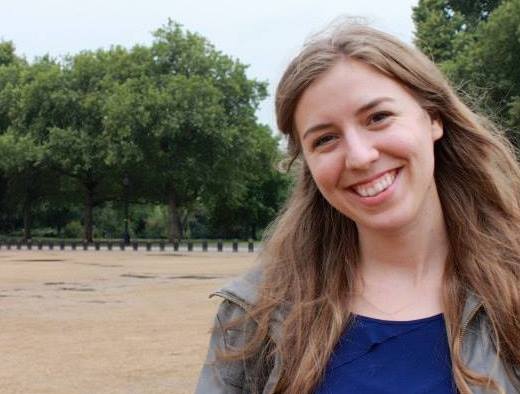
This article was written by expert on family therapy Christine H:
christine

Christine is a professional writer and an avid reader who’s passionate about storytelling in any form. At any given moment, she’s in the middle of at least three books on anything from psychology to ninjas. Although she’s a marathon swimmer and enjoys camping in the mountains, she believes there’s nothing better than a carton of ice cream and a Dawson’s Creek marathon. She blogs about marketing here. Follow more of her writing on Twitter @readwritechill.
 

Autumn leaves and Mental Health tales. (by founder Eleanor)

autumnhyg

(image: http://www.thechakrahouse.co.uk/chakra-hygge-fairy-lights/)

I wanted to write this blog today because I have been reflecting. Over the years, I have come to really love the Autumn (Fall) season, despite being born in summer. Its cosy and calming at times, however these months can bring on some anxiety again for me.

I think that we are all human and are affected by the changing seasons. I know that my bipolar goes in phases, but is largely controlled and stabilised by medicines. However, sometimes hormones can make me feel lower at times of the month or life events can make you feel a bit sadder than normal, and in some cases, provoke depression.

My anxiety arrives in the form of morning panic and I can find it harder to do certain tasks. However, I am lucky that I am not depressed currently but the anxious thoughts are getting worse again.

I will worry about being around crowds, travelling far or socialising en masse with people I havn’t seen for a while. I live within a community where we all gather together for religious festivals and it can be harder to do this when I am more anxious. I particularly find early mornings hard- and don’t want to leave the house before 10am usually!

Working from home is both a blessing as I can work my own hours but I go out less. I am really trying to work on going out more- even down the road, especially before it gets too cold and dark.

Despite the increase in anxiety in the past few days, I am feeling thankful. There are so many good things to look forward to. There are so many exciting projects I can be a part of. When one door closes, I know that another will open.

I am still writing my book, still running my blog and have some articles being published soon. I also do social media management. I hope that my career will continue to diversify and bring joy.  I also need stability and the life of a freelancer, though fulfilling at times, is never easy.

There is a lot to be grateful for- family and friends, my fiance and life- despite the fears, anxiety and catastrophising that I do at times and am trying to limit. Positive mindset is so important- I am working on it!

Autumn can make us feel sadder or more anxious, or cause other mental health symptoms.  However, like now, it can also feel comforting- as I write on my computer, sipping a cup of tea as the darkness is falling. (Is it too new age of me to use the word ‘hygge’)?

As the leaves begin to fall and the frosts come its so important we find our lights in the darkness.

How are you doing? Let me know below!

Love,

Eleanor

The secret is out: I’m writing a book and am going to be an Author!

triggerlogo

I can’t fully believe that I am typing this as its a dream I have had for my entire life. I had been asking God for this to happen when I was ready and for me to be able to write to share and help others.

At my lowest ebb, I dreamt that if I survived the depression and mania that I would like to help others in similar places. Writing has become my therapy and I hope it helps others too.

So… the secret is out…

I am going to be an author and my life story with bipolar disorder and anxiety and how I have overcome adversity will be told in a book written by me for Trigger Publishing.

Trigger ‘the voice of mental health’ are an independent publisher whose work I have followed for some time now,. They are the publishing arm of mental health charity The Shaw Mind Foundation.

In 2016, The Shaw Mind Foundation set up Trigger, a global trade publishing house devoted to opening conversations about mental health. They say ‘We tell the stories of people who have suffered from mental illnesses and recovered, so that others may learn from them.’

In order to get my book published, I had to write three chapters and work with an editorial team. I had admired many of their books, especially those by Hope Virgo, Karen Manton and Terri Cox about their lives with mental illnesses and how they overcame them. I knew Trigger was the right place to share my story of recovery.

My book may not be out til late 2019/ early 2020 but I will keep you all updated. The title will also be revealed at a later stage.

With thanks to the incredible people at Trigger: Stephanie, Katie and James for believing in me and for Hannah for all your help!

Now I just have to get writing! I will write further blogs (or share vlogs) to update on how writing is going.

Love,
Eleanor x

Dealing with my mental health on holiday abroad: Trip to Israel

recharge
(image: GoThinkBig)

On Monday, I returned from a wonderful holiday to Israel with my fiance Rob, seeing friends and family. I hadn’t been to Israel in 9 years for various reasons and he hadn’t been for 13 years (!) so we were determined to make the most of our trip. We definitely don’t want to leave it so long next time.

We travelled around the country staying with family and in hotels too. If anything, we almost packed in too much trying to see everyone- and I still didn’t get to see everyone I wanted to as we were only there for a week. I was also very conscious of the fact that it was very hot and it became apparent that I couldn’t cope with walking  in 36 degree heat for too long!

I made sure that I had lots of water on me as my medication, Lithium,  dehydrates my body quickly so I have to intake more water than most. I found that through heat and dehydration, I would get tired quite quickly so if we had spent a morning travelling, I would need to spend a few hours either resting in air conditioning or sleeping.

In general, my anxiety is better when I am abroad, though there were a few days where morning anxiety did overwhelm  and I chose to rest and sleep and then go out later in the day. My fiance was very understanding of this and went for a wander some mornings. However, once I was rested and had eaten breakfast/ drunk lots of water, I was able to enjoy and do lots of fun things.

On our trip we went to visit my best friend/ cousin and her family in a place called Tel Mond, near Netanya and we went for a day trip to Netanya- which is a beach side resort. They also made a barbeque for us when we arrived which was lovely and we saw other friends who live there. We met their newest arrival – gorgeous baby girl- and I had lots of cuddles with my new cousin!

We then went to Jerusalem for a few days- to the Western Wall to pray, walking in the Old City, seeing my other cousins and catching up over ice cream and meeting friends for dinner in the evening. We spent time in the Jerusalem First station near our hotel, which has restaurants and stalls as well as live music- a bit like Covent Garden! Rob and I went shopping and bought things for our future home as well as for family in England.

After this, we travelled to spend Jewish sabbath- shabbat with my other cousins who moved to Israel last year- and spent time walking around where they live and meeting their friends. It was restful and lovely to catch up with them, eat delicious food and rest.

Our final day was spent in Tel Aviv, going in the swimming pool,  walking around the streets by the beach, drinking iced coffee and going out for dinner with another cousin who happened to be travelling there with her friends. Rob and I also had time to ourselves which was important and we didn’t want to leave!

I am lucky that my medication very much helps my bipolar and so I was able to do all of the above.

For me when abroad, my main concerns are taking my medication on time and each day, getting enough sleep, eat well, staying out the sun at hot times and making sure I rest and drink enough. If I follow that, I can largely function.

Sometimes my anxiety  about being in a new place can kick in upon waking- so I was thankful my fiance understood it took me a bit longer to adjust to the day, but once I was rested, I was able to really enjoy the holiday.

Its important to note that everyone is different on holiday. However, it is vital to cut yourself slack, take rest days (or rest half days) and also take medication on time. I don’t drink alcohol on my meds- but keeping hydrated if you are is so important too.

Also make sure you declare your condition on travel insurance so you are covered if you become unwell abroad! This will make it more expensive but worth it. You don’t want to get sick abroad and have no cover.

I am pleased too that I stayed well- despite being very tired on my return. I made sure I caught up on sleep and didn’t go straight in to work – although I am now back at work.

I am missing my trip already and so thankful to my fiance, friends and family for making it so special.

The Saviour Complex: Guest blog by Charlotte Underwood

saviour1
(image: picturequotes.com)


For so many years, I was told that I have this so-called saviour complex. I never knew the actual definition of this, because, like most things, it’s all down to perspective. To me, the saviour complex is the desire and compulsion to help others at little regard for the cost that it comes with.

This, in my case, means I am attracted, like a cosmic magnet almost, towards people that need helping or that I feel I can ‘fix’ – though this is never my intention, as no one needs to be fixed.

The cost has always been at my own expense, it’s been my own mental health and wellbeing but for a decade, I didn’t mind. I would always rather suffer so another can succeed.

I believe it falls back to my overwhelming urge to constantly help people, being the textbook people pleaser I am. I just want to do good and make everyone else happy, and never myself.

I used to laugh when people would tell me that I had this saviour complex, it just sounded silly to me. I would think that I liked who I liked and I just didn’t care what ‘ailment’ they had. Chemistry is not about biology, they are two very separate things, understand?

I saw my ability to look past the cover as a strength. I could look past anything that may be an ‘issue’ because honestly it never bothered me as long as they were a good person. For this, I still believe it is a strength, though empathy is not the problem here.

It wasn’t until I was around 19 and I had left a particularly hard relationship, I was reminiscing over the last four years or so of my life. I thought about the people I had dated and of whom were my closest friends.

Like a lightbulb, I could see the pattern, each person needed someone to talk to, to listen to them and that may have been a huge part to my attraction towards them.

It is possible that my compulsion to help people had warped into a sense of a ‘turn on’, though not in a sexual way. It could be that I felt like I could relate to those who were hurting, like wounded animals helping each other survive, there is romance in that I think.

However, I believe that maybe everyone needs saving a little, isn’t that what love is?

It’s not about fixing each other or changing who you are. It’s about having a person who you can talk to about anything, who will lift you up and help you past that finish line, even if you fall flat on the ground.

Maybe the ‘saviour complex’ isn’t about wanting to become a saint, it could just be that you have an understanding of a person’s needs and you are willing to help them through their trials, I don’t think that is a bad thing at all.

So yes, maybe I do have this ‘saviour complex’ and an extensive history of relationships and friendships with people who needed help in a variety of ways. I like to support people and make them smile, to feel loved and wanted because everyone needs that. I would like to think that I cannot fix people but for the brief time that I spent with said persons, they healed a little bit.

There is nothing wrong with wanting to save people or to give them freedom but what we need to remember is not to forget ourselves.

I feel that natural empaths are the ones known to have the ‘saviour complex’ and empaths, like myself, are often guilty of not giving ourselves respect, love and care.

So by all means, do good in this world, it really needs it but be sure to remember to look after number one, that’s you.

Charlotte Underwood is a writer, author and mental health blogger. Check out her work here: https://charlotteunderwoodauthor.com/