7 Ways To Care For Yourself And Your Mental Health This Autumn/ Fall.

(image: Ella Ivanescu, Unsplash)

Autumn (or if you’re in the USA, Fall) is one of my favourite seasons. Beautiful autumn leaves, the weather getting gently cooler, cosy hot chocolates and pumpkin spice, the autumn harvest of pumpkins, snuggling in blankets with a good book or TV show and for some- walks in nature with the orange and yellow trees and landscapes. However, did you know that the clocks going back and the change in light and dark, with nights drawing in, can affect your mental health? Studies have shown that when its darker, people are more prone to depression and anxiety and some (like myself at times) struggle with Seasonal Affective Disorder.

There are many ways to take care of yourself if you feel your mood dipping or you are becoming more anxious. If you feel it is affecting your daily functioning, please reach out for support from your doctor (and if you have one, a therapist or psychologist). Here I talk about a few tips to help support your mental health this Autumn.

  1. Make sure you rest as well as play and work

Work can become all consuming, but if you prioritise rest this season too, your body will thank you. Autumn is all about slowing down, recovering, resting (and for animals (and some humans) hibernating). Yes you can work and play hard if you prefer, but make sure you find that balance to support your wellbeing. In our busy lives and for those who are parents or just struggling with their mental health, self care can slip. Practising good self care- eating well, resting, gentle exercise, can really help our minds.

2. Release Control- Give Stress Over

Gabby Bernstein, my favourite spiritual teacher, often says ‘Release control to find peace, surrender it to the Universe’. Surrendering means not obsessing about what we can’t control, but giving it over to a higher power or the universe. This can really help when we feel overwhelmed and stressed, to pray and meditate or simply write down how you are feeling and then ask the universe to take it from you. Journalling thoughts and feelings can help too.

3. Nature walks

Despite the cold, this Autumn, walking in nature can help get the blood pumping and our minds to reset. Sometimes going with a friend, spouse or family member can cheer you up- there is something about the colours of nature, the soft greens that is truly calming.

(image: Erika Mendes, Unsplash)

4. Make your home cosy

Whether its getting some new cushions or blankets, fairy lights or lamps, investing in cosy and light interiors for the darker seasons is a must! I like to use lamps when the nights draw in.

5. Get enough sleep (but not too much!)

During the Autumn/ Winter period, most of us naturally want to hibernate in the evenings. Sometimes this period can make depression and anxiety worse. I know with my bipolar that sometimes I feel lower or more anxious. Getting enough daylight and if you struggle with seasonal affective disorder, use an SAD lamp, which can help you to wake up gently in the mornings. Similarly, make sure you get enough sleep for you to keep your mental and physical health at its best. Depression can cause us to sleep longer hours and hide away- I find daytime distractions can help me not to sleep too much.

6. Take your medication as prescribed

If you struggle with mental health in winter and are prescribed antidepressants or other meds, do not suddenly stop them as this can cause a relapse in your mental health. Make sure you speak to your doctor first!

7. Treat yourself

Treat yourself to a hot chocolate (or pumpkin space drink) and a good book or TV show, wrapped in a cosy hoodie or blanket. You deserve it!

Wishing you all a wonderful and well Autumn/Fall season.

Eleanor
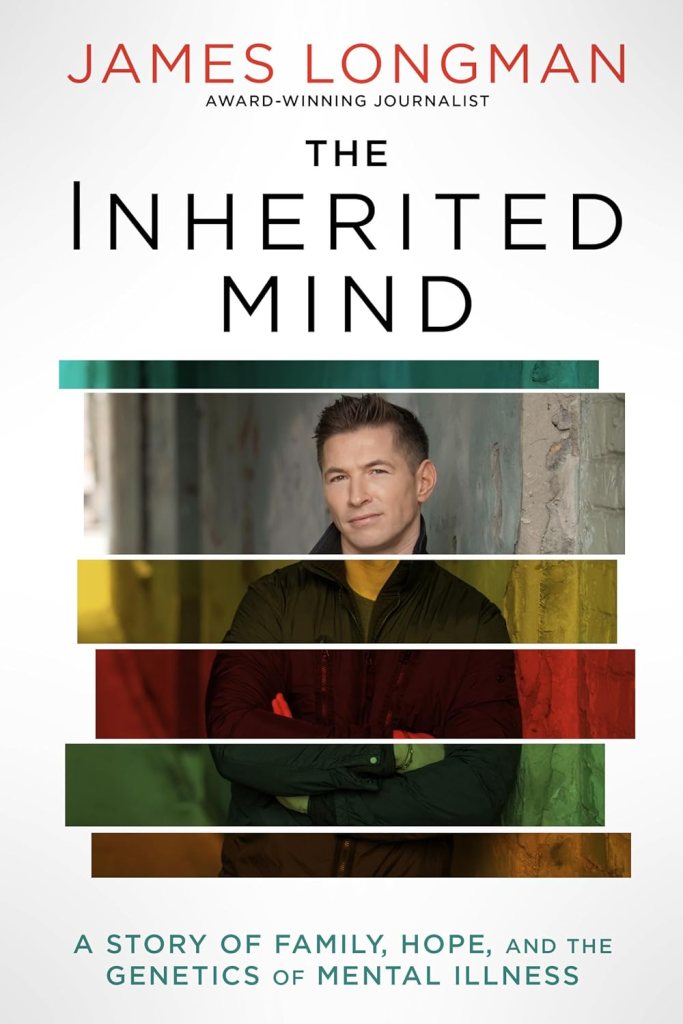
The Inherited Mind: A Story Of Family, Hope And the Genetics Of Mental Illness by Award-Winning Journalist James Longman (featuring our story!)

(image: James Longman/ Hyperion Avenue)

A couple of years ago, an intriguing email landed in my inbox. It was from the award- winning journalist James Longman (of ABC News). He told me he was writing a book investigating his own father’s illness and how much of mental illness is inherited. His father died by suicide when he was just a child and had a diagnosis of schizophrenia and depression, but James did not know a huge amount about this mental health history at the time.

James wanted to delve deeper into the family and genetic side of mental illness. As he got older, James’s own bouts of depression spurred him to examine how his father’s mental health might have affected his own. He engaged with experts to uncover the science behind what is inherited, how much environmental factors can impact genetic traits, and how one can overcome a familial history of mental illness and trauma.

James had seen my own story of family illness with bipolar disorder, as my Dad and other relatives also have the same condition and so he reached out to interview me. With permission from my Dad, I had a wonderful chat over Zoom with James, talking about the links with certain types of mental illness in families and how these types of illness can cause suicidal thoughts and sadly in James’s fathers case, suicide. We also discussed the hopeful journey that can occur if you have access to the right support networks, medications and therapy. Medication in particular has helped to keep us well over the years as bipolar has a definite biological link too.

In The Inherited Mind, James invites readers to reflect on their own stories as he shares his quest to better understand himself and his family. Through speaking to mental health experts, to those who have had similar familial experiences, and about his own life stories, James shows us, with heart and humour, how much our bodies can empower and inform us about our own personal mental health histories.

We are honoured to have our story featured in James’s informative and essential book. Thanks again to him for featuring us as a case study. It will be out in January and you can pre order your copy here

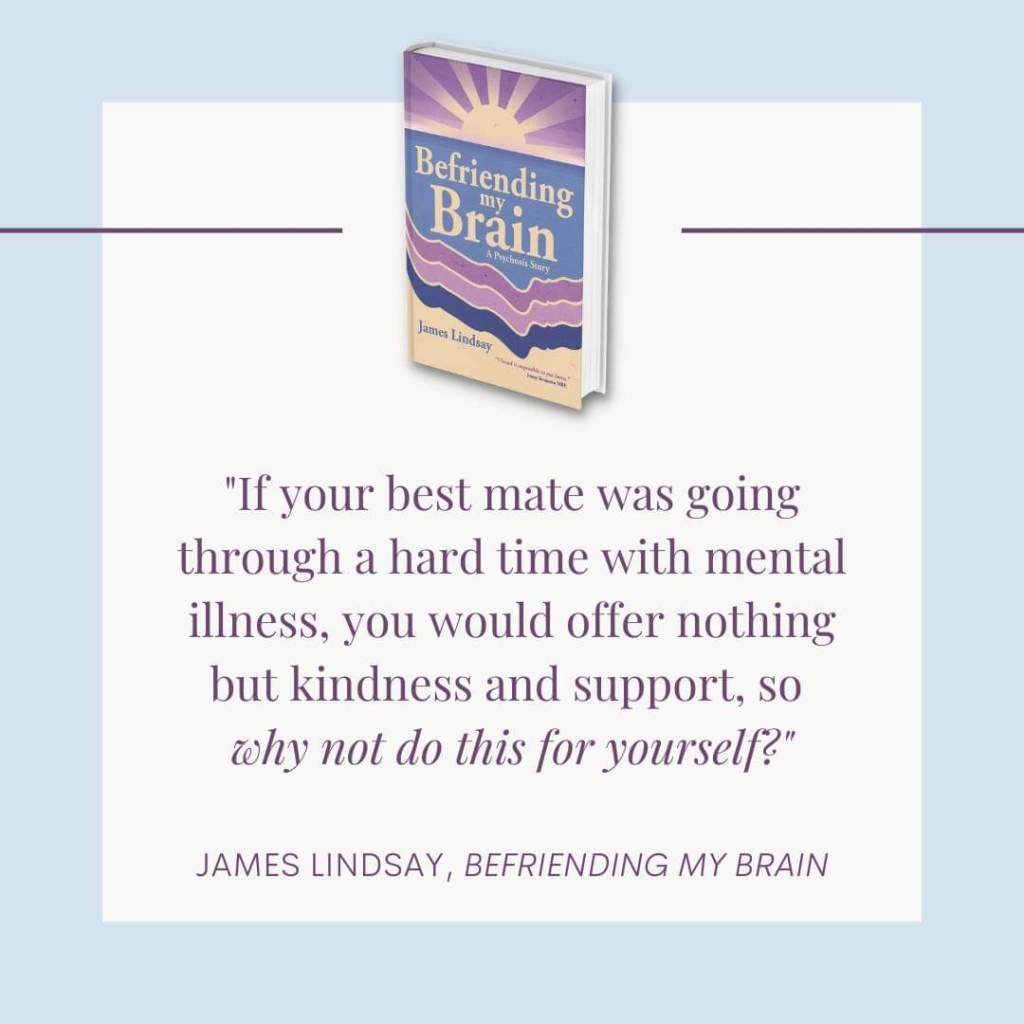
Befriending My Brain: A Psychosis Story. Exciting New Book by James Lindsay and Cherish Editions

(image: James Lindsay/Cherish Editions)

I first ‘met’ my Twitter friend James Lindsay online when he was first starting to talk about his schizoaffective disorder and psychosis. James also works for Mind doing important work in the mental health sphere and we both live locally to one another. I am really proud of James’s determination, not only in his own life, but to help others through his writing and his new book ‘Befriending My Brain’ with Cherish Editions (Trigger Publishing).

An eye-opening memoir about a young man’s descent into schizoaffective disorder– and the steps he took to regain control of his life.


It’s no secret that, in recent years, mental health has become a major topic of conversation. But just because many people feel comfortable discussing their depression, anxiety or other mental health conditions, doesn’t mean that we have removed all stigma from such diagnoses. This is especially true when it comes to psychotic disorders, which affect less than 1 in 100 people in the UK each year (Mind), thus leaving these disorders shrouded in mystery. It doesn’t help that what the media portrays as schizophrenia or psychosis is not always what the sufferer experiences in real life.


As such, it’s vital that we start to bring psychotic disorders, including psychosis, to the forefront. According to a 2016 report from Public Health England, “psychosis is one of the most life-impacting conditions in healthcare.” But with the proper treatment and understanding, it doesn’t have to be life-altering. The same report states that the sooner someone
is treated for their psychosis, the better the chances that they will recover and return to their normal
lives.


James Lindsay has experienced the ups and downs of schizoaffective disorder first-hand, and his book does the vital work of removing some of the mystery surrounding such a diagnosis. It includes the red flags he recognises in hindsight after psychosis landed him in hospital for the better part of a month, but it also retells the inspiring journey he took to recovery in all aspects of his life.

In his case, psychosis and his path to better mental health gave him a new passion in life: helping others through their own diagnoses and getting their lives back, just as he did. No matter where readers are on their journeys, James’ memoir will resonate and remind them, as he puts it, that “recovery is always possible, and hope is never far away.”

(image: Trigger Publishing/ Cherish Editions/James Lindsay)

I can’t wait to read it and review it too!

You can buy a copy of Befriending My Brain: A Psychosis Story by James Lindsay at Amazon, Trigger, Waterstones, WH Smith and all good bookshops.

MORE ABOUT THE AUTHOR
Hailing from Watford, Hertfordshire, James Lindsay works for Hertfordshire Mind Network and uses his free time to advocate for mental health care by blogging and appearing on podcasts and TV. James enjoys playing football, going to the cinema, spending time with friends and family, and exploring new places, with his partner, Holly. Befriending My Brain is his first book.


Learning to Accept and Embrace Having Schizoaffective Disorder This Mental Health Awareness Week by James Lindsay

(image: Mental Health Foundation)

I do often wonder how long I had schizoaffective disorder before my diagnosis, but I guess I will never know. Back in 2016, I had my first experience of displaying symptoms of Schizophrenia (such as delusions), when I suffered from my first psychotic episode.

Before that, I had not really heard of any of these medical terms. I used to wrongly associate schizophrenic people with characters from the film ‘One Flew Over the Cuckoo’s Nest’. I thought they were lost causes who needed constant care, I didn’t think they could be functioning members of society like everyone else, and I feel bad that I used to think that. But I had a lack of education and personal experience.

In late 2019, I suffered from a relapse and had another experience with psychosis (which can be defined as losing touch with reality with delusions and/or hallucinations).. In early 2020 I was finally diagnosed with Schizoaffective Disorder. For those who are unsure, this condition is where symptoms of both psychotic and mood disorders are present together during one episode. ‘Schizo‘ refers to psychotic symptoms and ‘affective’ refers to mood symptoms. It is often described as a cross between Bipolar Disorder and Schizophrenia, as it includes symptoms from both of those conditions.

For me, it is currently something I am able to keep at bay, mainly thanks to my medication but also through being self-aware and looking after my mental wellbeing. I take Quetiapine (200mg slow release) every single day and I am more than happy with that. I have my tablet in the evening, which then helps me fall asleep without much struggle.

Without my meds, I can tell you now that I would be in all sorts of trouble. Every now and then I might forget to take it until just before bed, which means I need much longer to fall asleep because it takes a couple of hours to kick in.

That is ok though, as long as it’s not every night. But I know for a fact that without the medication, I am much more likely to start having delusions (irrational thoughts) and have an episode. Both my 2016 and 2019 episodes happened because my sleep was terrible and at times non-existent. I used to take sleep for granted, which is easy for anyone to do, but if you don’t let the brain repair itself it can lead to all sorts of problems. Just remember that psychosis can happen to absolutely anyone, I would not wish it on my worst enemy.

I am learning new things about my Schizoaffective Disorder all the time. I have joined a few Facebook groups which are supportive communities full of people with (or supporting those with) the same condition, such as this one which has nearly 18k members. For example I discovered through this group that some people who take meds before dinner (e.g. 4/5pm), find themselves waking up around 3am when they’ve worn off. They realised taking them an hour or so after dinner can give them a better sleep.

I have read books by authors with mental illness and they really help normalise it and give me peace of mind. I recently read ‘The Stranger on the Bridge’ by Jonny Benjamin (who is also Schizoaffective) and this gave me so much comfort. When you read a story that has parallels to yours, it gives you so much more hope and confidence that you can overcome your own adversities. Podcasts are a great source of help too and there are plenty out there that cover all kinds of mental illnesses.

I am also fortunate that my job gives me more opportunities to enhance my understanding of the disorder. I am proud to work for Hertfordshire Mind Network (my local mental health charity) as Fundraising & Marketing Officer, who are really supportive and always ask if there is anything they can do to help with my condition. I would advise anyone with mental illness to make your employer aware, because that’s the first step to them being able to support you and make any adjustments you might need.

I think ever since I changed my attitude to being schizoaffective, I have been able to befriend it and realise it’s not my enemy, but part of who I am. I used to feel embarrassed and was maybe even in denial at first. When I had the shame, I was never in the right mindset to go out and learn what this illness actually is, what is it doing to me, what should I look out for, what are my triggers/warning signs, what help can I get from other people.

The reality is – millions of people are schizoaffective and they are some of the best people you can encounter. They are incredible for living through it every day and I am proud to be one of them.

I hope you found my post useful and big thank you to the wonderful Eleanor Segall for the opportunity to contribute to her fantastic blog! If you’d like to connect over mental health you can find me here –

(image: James Lindsay)

@JamesLindsay23– Twitter