This weekend was World Mental Health Day, an important day to shine a light on mental health and people with lived experience of depression, anxiety disorders, bipolar, psychosis, eating disorders, schizophrenia, OCD, PTSD, BPD, EUPD and many other conditions.
Today I want to tell you- do not suffer in silence. If you are struggling please tell a loved one, a therapist or a trusted GP. There are also incredible helplines including Samaritans (116 123 in UK), JTeen, SHOUT and UK charities running services including Noa Girls UK, Jami, SANE, Mind Charity, Bipolar UK and Rethink Mental Illness.
(image: E Mandelstam)
Ive written about my journey with Bipolar 1 and PTSD/Panic disorder. Please make sure you do not suffer with painful feelings or dark thoughts alone. Talking saved my life and I hope it will help you on the road to recovery. You matter and you are not alone.
You can also call NHS 111 option 2 for urgent mental health support and call 999 for emergencies.
Remember the theme this year is for those of us with lived experience to talk safely and make change where we can.
If you’ve ever tried to get mental health support, you’ll know that it can feel like watching a game of ping-pong. You call one service, and they refer you to another. They point you to a helpline, which suggests a group. And at the end of it all is the bottom of a waiting list.
There’s a big shortage of mental health support out there. Whether you’re one of the millions struggling with a severe mental health illness, or simply going through a difficult time in your life, it’s never been harder to find care.
It’s not good enough, and everyone deserves access to the support they need – whether that’s a therapist, a diagnosis, a helpline, a support group.
But the truth is that no service, however good, can give us everything we need, all of the time. The toughest moments in life don’t wait for a therapy appointment. There will always be moments where you’re on your own with it.
That gap is what I built Tough Minds for.
Tough Minds is a completely free, online toolkit to help you go from a difficult moment into a lighter one. There are breathing exercises, guided meditations, an urge-surfing timer, and calming soundscapes to help you relax or decompress.
These are exactly the sort of exercises that a therapist or counsellor might recommend you try – but the ones that are so hard to remember at 2am when you’re in a crisis, or when you’re trying to fight off a difficult urge, or when you just need five minutes to breathe before a job interview.
That’s why Tough Minds has no sign-up, no app to download, nothing to pay for, no ads. Whenever you need it, you can just go to Tough Minds.
(image: Mediensturmer: Unsplash)
Building emotional resilience
Those in-the-moment tools are only half of the reason I created Tough Minds. The other half is about building the underlying skills that can make those difficult moments less frequent and less severe.
We are less likely to be taught how to look after our mental health in school – and that’s a problem. We only ever learn how to look after our minds once we hit a crisis point – which is a bit like taking your first driving lesson when you’re already halfway round the M25 (UK motorway).
It doesn’t have to work that way.
Building Emotional Resilience
Tough Minds also has tools, games and exercises to help you build emotional resilience – the sort of skills you might learn in therapy. There are skills that help people manage emotionally difficult moments and even help with some mental illnesses. Skills like having a wide vocabulary for your own emotions, or knowing how to catch and reframe a spiralling thought before it takes hold.
These are skills like any other – they can be built so they’re there when you need them. That’s the part of Tough Minds I’m most excited to keep building: to improve and steady mental health.
None of this is about pretending that a website or an app can do the job of real support services, or the human-to-human support that so many of us benefit from.
However, what Tough Minds can do is help all of us take care of ourselves. Not instead of support, but around it: when you’re on a waiting list, the days between sessions, the stretch of life after a course of treatment ends, and for the times life is just a little hard.
If that sounds useful to you, you can find Tough Minds at toughminds.org. It’s free, and it’s there whenever you need it.
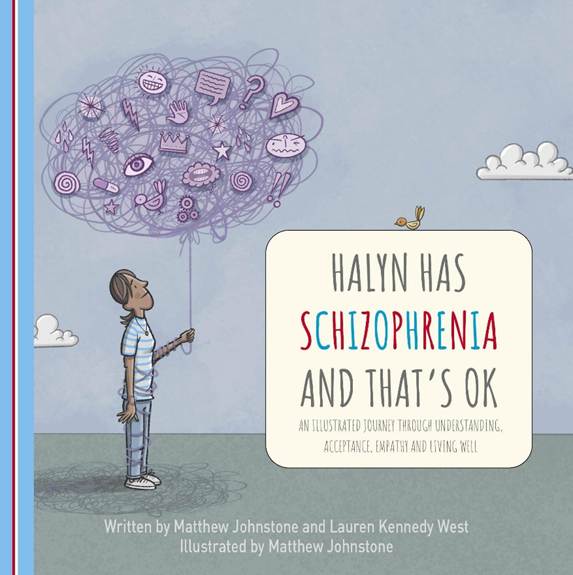
The latest book from authors Matthew Johnstone and Lauren Kennedy West has hit the shelves today and it has such an important message to share. Described as an ‘illustrated journey through understanding, acceptance and living well.’ the book tells Halyn’s story of understanding and accepting her schizophrenia diagnosis.
The publisher says, ‘ Schizophrenia is complex disorder that affects how a person thinks, feels and behaves, with symptoms such as delusions and hallucinations. It affects 1 in 300 people, and more than 24 million globally. It is a serious condition but can be managed effectively with early intervention, ongoing treatment and compassionate support.
This book is for anyone seeking to understand their diagnosis, or for friends and family hoping to support their loved one with schizophrenia. Through humorous and moving illustrations, it shows that it is possible to live a happy and fulfilling life with this condition, and promotes clarity, honesty and caring for those living with mental illness.‘
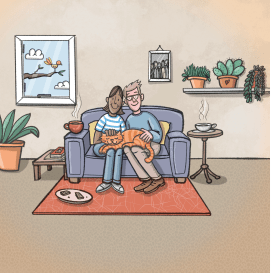
The book is beautifully illustrated with special added extras like the change in colour on Halyn’s T shirt when she is having symptoms (red) and when she feels well, her shirt is blue and there is little bird of hope present. This encourages the reader to see Halyn as a full person with hope and remission and not just a person with a mental illness. Halyn is 26 and she lives with her partner Johann and Chalky Boy, the world’s laziest cat.
The book describes how schizophrenia impacts Halyn on a day to day basis but also says, ‘I have to be a little more vigilant and work a little bit harder at my state of wellbeing than most…but I manage quite well.’. Halyn says, ‘I accept that I may have to live my life a little differently but thats OK’.
(Image: Matthew Johnstone/ Robinson)
This book will go a long way to helping people living with schizophrenia and their loved ones be seen and heard. As someone living with bipolar disorder, I also found the book very inspiring and uplifting, with a hopeful take on what can often be so difficult. It doesn’t shy away from the realities of schizophrenia but explains them through the illustrations and language, in an accessible, clear and powerful way.
‘Halyn Has Schizophrenia And That’s OK‘ is out now, published by Robinson (Hachette) in good bookshops. With thanks to Little Brown and Robinson for the gifted book.
(Image: Matthew Johnstone/ Robinson)
About the authors
Matthew Johnstone has written and illustrated several bestselling mental health and wellbeing titles such as I Had a Black Dog. Matthew’s company Drawn from Experience develops creative/educational programmes, illustrations and videos on understanding mental health and resilience for schools, communities, eHealth and the workplace.
Lauren Kennedy West lives with a diagnosis of schizoaffective disorder, bipolar type, and brings a unique perspective to mental health advocacy. With experience both as a social worker within the mental health care system and as a patient navigating its challenges, Lauren reaches millions through her YouTube channel, Living Well After Schizophrenia.
Autumn (or if you’re in the USA, Fall) is one of my favourite seasons. Beautiful autumn leaves, the weather getting gently cooler, cosy hot chocolates and pumpkin spice, the autumn harvest of pumpkins, snuggling in blankets with a good book or TV show and for some- walks in nature with the orange and yellow trees and landscapes. However, did you know that the clocks going back and the change in light and dark, with nights drawing in, can affect your mental health? Studies have shown that when its darker, people are more prone to depression and anxiety and some (like myself at times) struggle with Seasonal Affective Disorder.
There are many ways to take care of yourself if you feel your mood dipping or you are becoming more anxious. If you feel it is affecting your daily functioning, please reach out for support from your doctor (and if you have one, a therapist or psychologist). Here I talk about a few tips to help support your mental health this Autumn.
Make sure you rest as well as play and work
Work can become all consuming, but if you prioritise rest this season too, your body will thank you. Autumn is all about slowing down, recovering, resting (and for animals (and some humans) hibernating). Yes you can work and play hard if you prefer, but make sure you find that balance to support your wellbeing. In our busy lives and for those who are parents or just struggling with their mental health, self care can slip. Practising good self care- eating well, resting, gentle exercise, can really help our minds.
2. Release Control- Give Stress Over
Gabby Bernstein, my favourite spiritual teacher, often says ‘Release control to find peace, surrender it to the Universe’. Surrendering means not obsessing about what we can’t control, but giving it over to a higher power or the universe. This can really help when we feel overwhelmed and stressed, to pray and meditate or simply write down how you are feeling and then ask the universe to take it from you. Journalling thoughts and feelings can help too.
3. Nature walks
Despite the cold, this Autumn, walking in nature can help get the blood pumping and our minds to reset. Sometimes going with a friend, spouse or family member can cheer you up- there is something about the colours of nature, the soft greens that is truly calming.
(image: Erika Mendes, Unsplash)
4. Make your home cosy
Whether its getting some new cushions or blankets, fairy lights or lamps, investing in cosy and light interiors for the darker seasons is a must! I like to use lamps when the nights draw in.
5. Get enough sleep (but not too much!)
During the Autumn/ Winter period, most of us naturally want to hibernate in the evenings. Sometimes this period can make depression and anxiety worse. I know with my bipolar that sometimes I feel lower or more anxious. Getting enough daylight and if you struggle with seasonal affective disorder, use an SAD lamp, which can help you to wake up gently in the mornings. Similarly, make sure you get enough sleep for you to keep your mental and physical health at its best. Depression can cause us to sleep longer hours and hide away- I find daytime distractions can help me not to sleep too much.
6. Take your medication as prescribed
If you struggle with mental health in winter and are prescribed antidepressants or other meds, do not suddenly stop them as this can cause a relapse in your mental health. Make sure you speak to your doctor first!
7. Treat yourself
Treat yourself to a hot chocolate (or pumpkin space drink) and a good book or TV show, wrapped in a cosy hoodie or blanket. You deserve it!
Wishing you all a wonderful and well Autumn/Fall season.
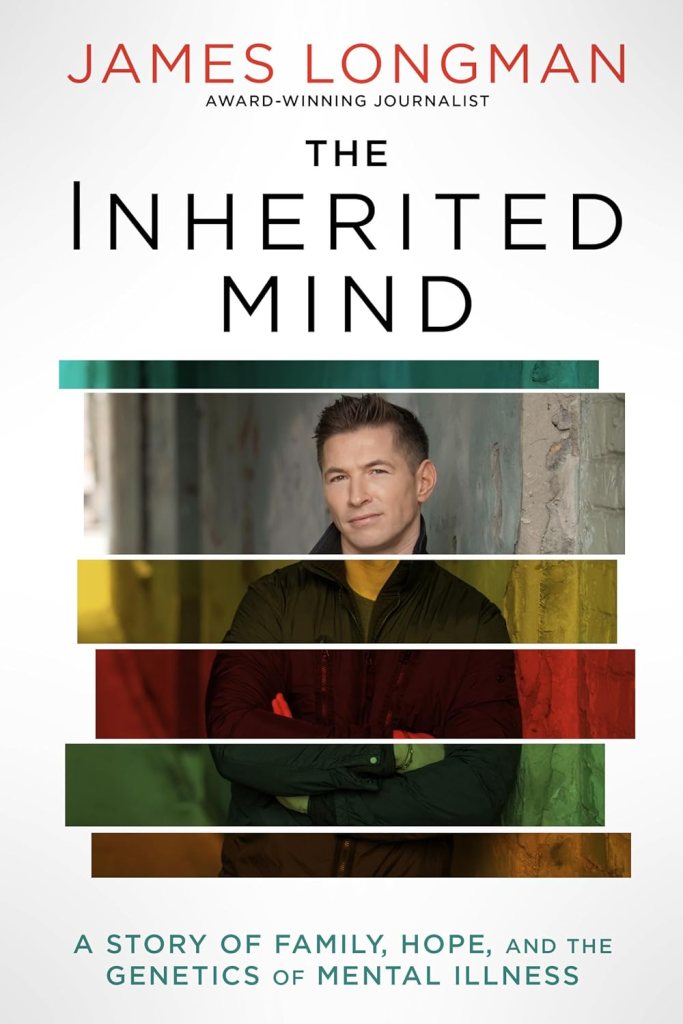
A couple of years ago, an intriguing email landed in my inbox. It was from the award- winning journalist James Longman (of ABC News). He told me he was writing a book investigating his own father’s illness and how much of mental illness is inherited. His father died by suicide when he was just a child and had a diagnosis of schizophrenia and depression, but James did not know a huge amount about this mental health history at the time.
James wanted to delve deeper into the family and genetic side of mental illness. As he got older, James’s own bouts of depression spurred him to examine how his father’s mental health might have affected his own. He engaged with experts to uncover the science behind what is inherited, how much environmental factors can impact genetic traits, and how one can overcome a familial history of mental illness and trauma.
James had seen my own story of family illness with bipolar disorder, as my Dad and other relatives also have the same condition and so he reached out to interview me. With permission from my Dad, I had a wonderful chat over Zoom with James, talking about the links with certain types of mental illness in families and how these types of illness can cause suicidal thoughts and sadly in James’s fathers case, suicide. We also discussed the hopeful journey that can occur if you have access to the right support networks, medications and therapy. Medication in particular has helped to keep us well over the years as bipolar has a definite biological link too.
In The Inherited Mind, James invites readers to reflect on their own stories as he shares his quest to better understand himself and his family. Through speaking to mental health experts, to those who have had similar familial experiences, and about his own life stories, James shows us, with heart and humour, how much our bodies can empower and inform us about our own personal mental health histories.
We are honoured to have our story featured in James’s informative and essential book. Thanks again to him for featuring us as a case study. It will be out in January and you can pre order your copy here