5 Ways to know your loved one may be secretly abusing drugs: Guest Post by Dr Nancy Irwin

Best of nvax quote Drug Addiction Quotes Alluring Drug Addiction Quotes & Sayings Drug
(image: inspirationalquotesmagazine.com)

Addiction has many consequences, both on the addicted person and their loved ones. Something I see very often is that family members don’t understand how they did not recognize it sooner. They regret that their loved one got to such a dark place before they could see there was even a problem.

But the reality is that people abusing drugs learn very quickly how to lie and manipulate. Because they are regularly involved in illicit activities, they become pros at distorting reality. And it’s easiest to trick those they love, considering that they know their loved ones’ soft spots.

This is not a judgment on them. On the contrary, they are not liars by nature, and often they are trying to protect their families.

Around 10% of the US population abuses drugs, and it is therefore more important than ever to learn to spot drug abuse as early as possible. The good news is that even if the individual at risk is good at lying, there are warning signs that are fairly universal.

The following five things could be signs that a loved one is abusing drugs.


  1. Physical Factors

Perhaps the most obvious signs are physical. Individuals who are using increasing volumes of drugs show physical changes which may be hard to account for. Look out for the following:

  • Bloodshot eyes and/or dilated pupils
  • Changes in appetite
  • Changes in sleep patterns
  • Extreme weight loss or weight gain
  • Deteriorating physical appearance
  • Sudden decrease in hygiene
  • Unusual smells
  • Tremors or slurred speech

Of course, all of these changes can have many alternative sources. However, if an individual exhibits many of them at once, and they tie in with some of the other signs on this list, drug abuse may be the most plausible explanation.


  1. Problems at Work

People who have started abusing drugs tend to struggle at work or at school. Their attendance drops, they neglect responsibilities and make mistakes, and cause trouble with colleagues or peers. They may even do something so self-sabotaging that it leads to them losing their job or being expelled.

Once again, drug abuse need not be the first conclusion you jump to. There could be many reasons why an individual starts struggling with work or school, including mental illnesses such as anxiety and depression.

This is especially true with adolescents. Assuming they are using drug abuse without further evidence can decay trust between you, when they might be acting out because they are not coping for whatever reason.

When alternative possibilities are exhausted, or they exhibit other signs on this list, drug abuse may become the most reasonable conclusion.


  1. Sudden Financial Problems

Drug abuse becomes increasingly expensive as the person addicted becomes more and more dependent. Their tolerance grows and they start needing higher quantities of the substance on a more frequent basis. They end up spending more and more of their money on drugs, leaving them unable to finance other responsibilities.

These financial issues can be easier to spot with adolescents who are not earning money. They may start stealing money from you or get caught stealing from peers or from their school. In this case, it may be possible to track their theft directly to their drug abuse.

But you don’t always need as clear a sign as theft. If a loved one who is financially independent suddenly stops paying their debit orders, gets behind on loan payments, or starts asking you and other friends and family for loans, this is a sign that something is wrong. Look into why they suddenly cannot afford their way of life. If there is no legitimate explanation, and they are exhibiting one or more of the other signs, drug abuse may be the most logical conclusion.


  1. Behavioral Changes

Gradual behavioral changes are a sure sign that something is wrong. Of course, they do not necessarily point to drug abuse.

Sometimes, mental illness can be the source of the problem. Alternatively, they may have gone through a trauma or be in some sort of trouble.

However, if a loved one shows changes in personality, starts getting into fights, becomes secretive, and has extreme mood swings, drug abuse may well be the cause. Other behavioral warning signs include a loss of motivation, paranoia, as well as unexplained hours of euphoria followed immediately by a drop in mood.

They may begin to fracture relationships that have, until now, been strong.


  1. Lifestyle Changes

Drug abuse often becomes the centrepoint of the individual’s life. They need to spend time, money, and effort sourcing and taking their drug of choice. They therefore start spending time with friends who are also abusing drugs, hang out at places where illicit drug use is possible, and lose interest in hobbies and activities that were once important to them.

If a loved one starts displaying any of these warning signs, do not panic. Look at the possible reasons for these changes. In isolation, some of these changes are easily explained. Depending on your relationship with the individual, you may be able to discuss the causes with them.

Once you’ve started noticing any one of these signs, it becomes easier to spot the others. If you feel that drug abuse is a likely cause, speak to a professional immediately for advice on how to investigate further and help the person at risk.


drnancy

Dr. Nancy Irwin is co-author of “Breaking Through, Stories of Hope and Recovery” and a Primary Therapist at Seasons in Malibu World Class Addiction and Mental Health Treatment Center.

A Guide to Mood Disorders: Guest blog By Ellie Willis

Mood disorders encompass many disorders of how you feel from day-to-day, whether that is abnormally elevated (mania) or depressed and in low mood. They can include depressive illness such as major depressive disorder, dysthymia, postnatal depression and the bipolar spectrum disorders. They also feature anxiety and panic disorders. These are often down to brain chemistry and sometimes environment.

mooddis1

(image: Pinterest/ Healthyplace.com)


Major Depressive Disorder

Major depression is defined as a depressive illness where you experience a significantly lowered mood and a loss of interest in activities that you would normally enjoy. While it is normal to feel sadness and grief when your life significantly changes, such as when a loved one passes away, when it doesn’t go away or gets worse, it may evolve into major depression. Some of the symptoms of depression are:

• Feelings of helplessness or hopelessness • Feeling guilty over insignificant things • Withdrawing from family and friends • Drinking alcohol or taking drugs as a coping mechanism • Having problems with concentration • Being unproductive • Having a lack of confidence • Feeling irritated or frustrated • Having a lack of interest in sex.

While sometimes a depressive episode seems to come out of the blue, there are often things that can trigger them. These may include: Genetic risk factors • Alcohol or other substance abuse • Medical problems such as thyroid issues or chronic pain • Certain medications such as steroids • Sleeping problems • Stressful life events 

Studies have shown that there appears to be a genetic component to depression. That is, if one of your parents has a depressive illness, you may end up suffering from depression yourself.

Dysthymia is a chronic form of depression that occurs when you suffer from a mild to moderate depression for at least two years. Although dysthymia causes problems in everyday life, dysthymia is often not severe enough to warrant hospitalisation. The chronic nature of the disorder means that you may believe that you have always felt like this.

The good news is that there are a wide range of medications to treat major depressive disorder, such as antidepressants. There are many kinds of medications around, and you may have to try a few until you and your psychiatrist find the perfect one with little to no side effects.

As of the time of writing, the antidepressants most commonly used are SSRIs and SNRIs (selective serotonin reuptake inhibitors and serotonin-norepinephrine reuptake inhibitors). These refer to the types of neurotransmitters (chemicals in the brain that affect mood, among other things) that they affect.

With antidepressants, it is extremely important not to stop medication all at once, unless there are serious side effects and even then, only under medical advice. This is because of discontinuation syndrome. Simply put, this means that your body gets used to the medication being in your system (different to addiction where you crave the drug) and you experience symptoms such as nausea, dizziness and insomnia, to name a few.

Another important way to treat depression is psychotherapy in one form or another. This can help you by learning coping skills to deal with depressive thoughts and negative thinking, as well as having someone to speak to with complete privacy. There are a few other ways for you to combat depression in adjunct to medications or therapy.

These are: • Maintaining good sleeping habits • Exercising more • Seeking out activities that bring you pleasure • Being around caring and supportive people

Postnatal Depression

Postnatal depression is a depressive illness where a new mother experiences depression in the first few months after giving birth to a child.

Some of the symptoms of postnatal depression include:

• Feeling sad or empty • Lowered self-esteem • Changing appetite (usually a decrease) • A loss of enjoyment in everyday activities • Changes in sleep patterns such as insomnia • Not being able to concentrate • Feeling cut off from the baby • A loss of interest in sex • Feeling ashamed, guilty or inadequate • Withdrawing from family and friends • Mood swings • Thoughts of harming yourself or the baby

There are a number of factors that make postnatal depression more likely. Some of these may include: • A history of depression, especially postnatal depression in the past • If the baby is sick or colicky • If you are in an abusive relationship • If you are suffering from stress • If you have little support from family and friends •

Treatment for postnatal depression is essentially similar to that for major depression, such as antidepressants and therapy and in some cases intervention from a psychiatrist or hospital team is required.


Bipolar Disorder Spectrum

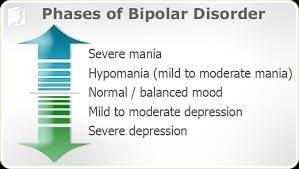
Bipolar disorder is a mental illness characterised by periods of extreme mood states known as mania and depression. It is one of the most serious mental illnesses and is the sixth most disabling condition in the world at the time of writing. It is chronic and potentially life threatening. However, those with it can go on to recovery and live happy and fulfilled lives between episodes. 

According to some studies, one in fifty people may suffer from a form of bipolar disorder. In many cases, there is a family history.

Mania is one pole of bipolar disorder – an extremely elevated or depressed mood, sometimes accompanied by psychosis. You may have racing thoughts or speak so quickly it is difficult for others to understand. You may also have trouble getting to sleep at night or suffer from insomnia. There is a danger of reckless behaviour such as overspending, unsafe sexual activity or aggression. You may feel a sense of grandiosity, making unrealistic plans. Despite mania feeling great at the time, the consequences of mania can be destructive.

Some of the signs of depression include a lowered mood, self-esteem or interest in enjoyable activities, pessimism, reduced energy and changes in appetite. Suicidal thoughts are also possible and must be monitored closely. As bipolar disorder is a recurrent illness and there isn’t any known cure, you may need to take medications to maintain your mood at a normal level.

Hypomania is the hallmark of bipolar II where the patient might feel euphoria or agitation. Hypomanic episodes are similar to manic episodes except they are less severe and sometimes pleasurable to you. There is never psychosis in a hypomanic episode. Despite hypomania increasing productivity, or making you feel increased self-esteem, the consequences can be major, especially as your mood goes down to depression.

A mixed state is a combination of manic and depressed symptoms. In a mixed state you may feel very sad or hopeless while feeling extremely energised. These can be dangerous, because of the suicide risk from being depressed as well as impulsive. If you feel you are heading into a mixed state, you should contact your psychiatrist as soon as possible.

Bipolar disorder type I is characterised by at least one episode of full-blown mania as well as depressive episodes. There is also a chance of psychosis (delusions/ hallucinations)  accompanying a manic episode. Bipolar type II features only hypomania and never mania or psychosis. While these manias are less destructive, the depression tends to be worse, and there is often a high suicide risk.

Cyclothymia is a bipolar spectrum disorder where you may have long periods of minor depression lasting at least two years alternating with hypomania. These depressive periods tend to be irritable and agitated rather than melancholic and lacking in energy.

Bipolar NOS (not otherwise specified) simply refers to bipolar disorders that do not strictly meet the criteria of any of the previously mentioned types of bipolar disorder.

The treatment of bipolar disorder involves medications such as Lithium carbonate, lamotrigine, sodium valporate, and quetiapine, as well as psychotherapy to help overcome negative thoughts that exacerbate depression or after effects of mania. 

As bipolar disorder is a recurrent illness and there isn’t any known cure, you may need to take medications for life to maintain your mood at a normal level. Despite this, many patients continue to do well as long as they stay compliant with treatment and keep aware of their changing mood states.

demilovato1

(image: MTVFORA: http://fora.mtv.ca/words-of-wisdom-celebrity-quotes-on-mental-wellness/)


Anxiety Disorders

The term anxiety disorder covers a wide range of illnesses from panic disorder to post-traumatic stress disorder (PTSD). Despite the wide range of diseases, many share similar treatment options. There is a stigma affecting some anxiety disorders due to stereotypes in the media.


Generalised Anxiety Disorder

It is normal for people to feel some anxiety over normal life events such as exams, work problems or family issues. However, when it causes problems in your everyday life or is particularly severe you may have an anxiety disorder. Generalised anxiety disorder involves having irrational fears, such as being afraid harm will come to you or your loved ones, financial issues, health, relationships and work.

Physical symptoms when experiencing anxiety may include: • Light-headedness • Becoming tired easily, or being unable to sleep properly • Feeling tense or restless, or losing your temper easily • Nausea • Shortness of breath • Headaches • Trembling • Muscle tension Treatment generally involves medications or therapy.

Psychological treatments may involve: • Learning relaxation techniques such as muscle relaxing exercises or meditation • Therapy to teach you how to solve problems that cause anxiety with anxiety disorders, psychological treatments are generally more effective than medication, however it can still be useful.

The most common treatments are antidepressants or benzodiazepines such as alprazolam or diazepam. Generally, benzodiazepines shouldn’t be taken long-term, as there is a risk of becoming dependent on them.

Anxiety disorders are relatively common in the population, with statistics that approximately 25% of the people suffer some kind of anxiety disorder that may warrant treatment in their lifetime. Anxiety is treatable, and therapy or medication may minimise the effects on your life and relationships.

Panic Disorder

Panic disorder is a mental health condition where you experience a feeling known as a panic attack recurrently.

Some of the symptoms of a panic attack include: • Shortness of breath • Dizziness or light-headedness • Tightness or pain in the chest • Trembling or shaking • Dry mouth • Muscle tension • Difficulty gathering thoughts or speaking • Tingling fingers or feet • A choking or smothering feeling • Hot or cold flushes • Nausea or butterflies • Blurred vision • Fear of dying, losing control or going mad

When you have panic disorder, you may also worry about the implications of a panic attack such as humiliation or feeling of going crazy.

You may try and flee from the situation hoping the panic attack will stop. Panic disorder is generally treated via therapeutic methods rather than medications. This may involve your doctor teaching you about panic disorder, for example, that a panic attack is distinguishable from other mental illnesses such as other anxiety disorders or psychosis – this is known as psycho education.

A therapist may instruct you not to avoid any situations where a panic attack may occur. This may be unpleasant at first, but slowly you will not feel anxious in the situation. This will help prevent agoraphobia and the disability it causes.

A common treatment for anxiety disorders is CBT – but there are many types too including exposure therapy and talking therapies. They can be incredibly helpful for you to overcome feelings of anxiety.

This guest blog was written by Ellie Willis, an expert in mental health.


Metro article extract by Eleanor: ‘My Dad and I have helped each other through our Bipolar disorder’

Our founder Eleanor and her Dad shared their story with Metro.co.uk for Fathers Day and Dads Mental Health Day. Here is an extract:

I am the child of a father with bipolar disorder. I was diagnosed with the same condition aged 16 in 2004 – this was only four years after my dad was diagnosed at the age of 44. Our story is a special and unique one, and dad and I have a strong bond as a result.

However, it has not always been easy for me and my family.  Growing up with my mum, dad and younger sister in Hertfordshire, I didn’t fully know that my dad had serious mental health issues until my teenage years. I was largely sheltered from it by my mum and my loving grandparents as a child. My grandparents would look after us when dad was ill with depression and mum had to work.

I am the eldest, and being the child of someone with a mental illness did bring its own challenges. I have always felt a sense of duty and responsibility to look after my sister and both my parents, despite receiving a lot of love and care. This sentiment has meant that I have always felt a need to look after those around me, and make sure my dad is stable with his health.

Many children of those with serious mental health issues are exposed to a lot more than I was. My childhood was largely happy. My dad was never sectioned or hospitalised and never experienced the psychosis that I have experienced with my own bipolar. There were no alcohol or drug issues in my home but dad did experience mood fluctuations with both mania and depression.

He also experienced panic attacks that stopped him from working. Dad remembers having these when I was just four-years-old. In 1996, he had his first bout of severe depression and anxiety. His panic attacks meant that he had to stop working at his job in finance after collapsing there.

Mum became the breadwinner, with two children under seven. My sister was only five-years-old. I know this wasn’t easy for anyone though I don’t fully remember it. I have been told that dad was often not around during the day due to his depression. He would retreat into his bed and sleep, but would come and see us in the evenings, once we came home from school.

I do remember visiting him in hospital one time after his severe panic made him collapse in the street. He was having his heart monitored to rule out a heart attack and was eventually discharged home.

Dad was never referred to a psychiatrist and he believes this is why his bipolar was undiagnosed for so long. He gradually recovered with antidepressant medication and support from the GP and my mum.

He slowly coaxed himself out of bed and out the house to walk down the road to buy a paper. This would take several hours. His depression lifted and he eventually went back to work. Life was easier for our family for a while, although financially, things were tight and there was always a risk my dad might not be able to work.


Read the rest of the article : https://metro.co.uk/2018/06/17/my-dad-and-i-have-helped-each-other-through-bipolar-disorder-heres-our-story-7627817/?ito=cbshare

Twitter: https://twitter.com/MetroUK | Facebook: https://www.facebook.com/MetroUK/

Can Alcohol raise stress levels and affect our mental health?: Guest post by Tomas Sanchez

This guest post was written by Tomas Sanchez and talks about Drinkaware, the UKs top alcohol education charity. For more and help and support, view their website at : https://www.drinkaware.co.uk/

Highly demanding jobs, family duties, money worries, relationships issues, they can all add up to make our stress levels go through the roof. The truth is, it can sometimes feel like we’re sat on a roller coaster, led by a high-pressure lifestyle that is ruining our health and happiness.

According to the Mental Health Foundation, 16 million people experience a mental health problem each year, and stress is a key factor in this. Which is why this year’s Mental Health Awareness Week is focused on understanding the impact stress has on our lives and how to tackle it effectively. The week took place last week between 14th and 20th May.

When it comes to coping with stress, reaching for booze might seem like a good idea to help you lift your spirits and relax. However, in the long run, alcohol can have the opposite effect and contribute towards raising your stress, affecting your mental health and wellbeing.

Wine, beer, cider or spirits, whatever your tipple of choice, the alcohol in your drink is a depressant, which means it can disrupt the delicate balance of chemicals your brain relies on for good mental health – especially when you drink above the alcohol unit guidelines.

In fact, while a pint or two may cheer you up, this is only a short-lived effect that will quickly wear off. But, in the long run, drinking too much too often can exacerbate your stress and contribute towards the development of mental health issues such as anxiety and depression.

Alcohol can also impact your sleep. You might think that drinking can help you nod off a stressful day at work, but in reality, alcohol can alter your sleep cycle and make it harder for you to get the rest you need to tackle the stress in your life.

If you’re struggling to deal with stress, there are more effective ways to cope with it than reaching for alcohol, such as:

Exercise, a great way to de-stress. Go for a run, swim or to a yoga class – or even a brisk walk can help clear your head of the day’s worries.

Talk to a friend about what’s worrying you. If you don’t feel comfortable talking to your friends or family, look for professional help – talk to your GP or an accredited counsellor. They will be able to help you manage your feelings and point you to the right resources to help you restore your wellbeing.

Take a hot bath or do some gentle stretches to relieve tension from your body.

If you do decide to have a drink, follow the UK Chief Medical Officers’ (CMO) advice – it’s safest not to drink more than 14 units of alcohol a week and spread your drinking evenly over three or more days.

If you’re drinking too much too often, cut back on it by:


  • Keeping track of what you’re drinking – use Drinkaware’s App to help you monitor your alcohol intake and change the way you drink.


  • Choosing low-alcohol drinks or mocktails.


  • Giving alcohol-free days a go. If you drink regularly, your body starts to build up a tolerance to alcohol. This is why many medical experts recommend taking regular days off from drinking to ensure you don’t become dependent on alcohol.

Guest Post: Interview with Dr Janina Scarlet, author of new book ‘Therapy Quest’

I have got to know Dr Janina Scarlet, psychologist as I have written more across the media. Janina writes about therapy and mental health in an approachable and meaningful way. She also loves superheroes and fantasy and incorporates them into her work!

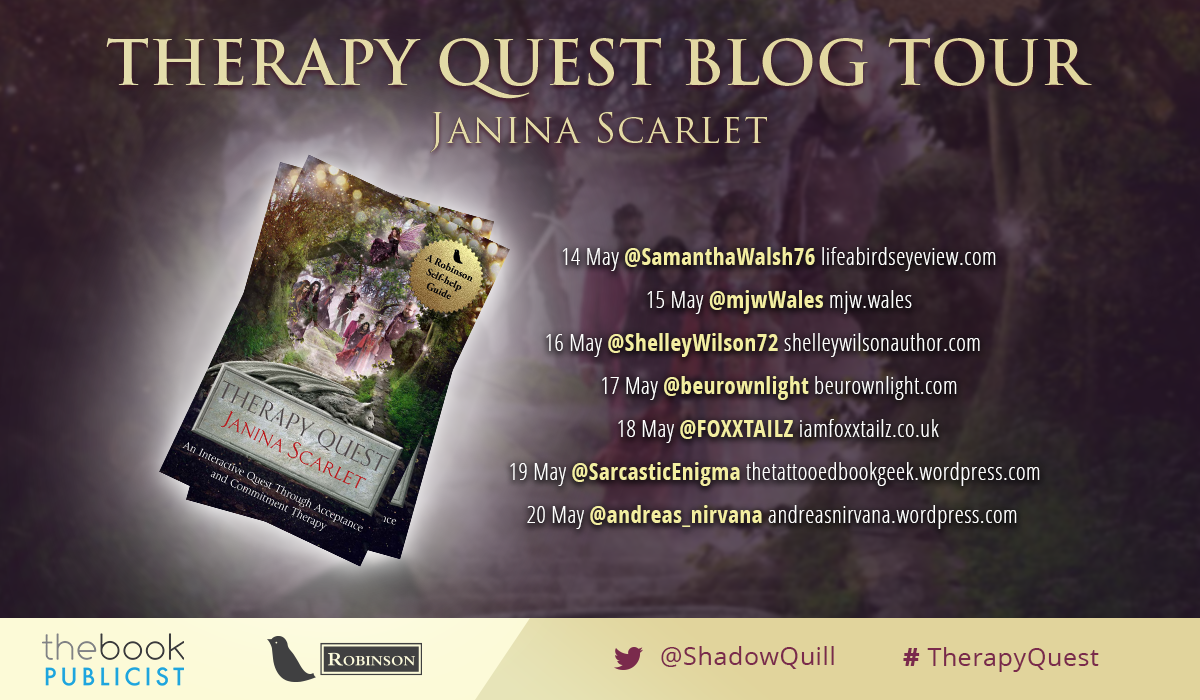
This week for Mental Health Awareness Week, I spoke to her as she launches her  new book ‘Therapy Quest’.

bloggertour.png
(image: The Book Publicist/ Dr Janina Scarlet)


What is your new book Therapy Quest about?

Therapy Quest is an interactive fantasy book in which YOU (the reader) are the main character. You are transported to a magical world of Here and are the Chosen One to stop an evil sorceress, Mallena, from destroying the world. Only you don’t feel like a hero. Not at all. Your anxieties and insecurities nearly lead you to abandon your quest altogether. However, if you decide to partner up with some new friends, such as a vampire with an eating disorder, and an Ogre who struggles with obsessive-compulsive disorder, you just might be able to become a hero after all.

The book is written in a game-like format, which allows you to make choices along the way. Each choice you make will change the rest of your journey and can either allow you to earn or lose points. Some choices can kill your friends or your character, so you have to be careful.

Each time you make a choice, you will also learn a mental health skill, and you will need all the skills you can learn along the way to help you in your final battle.

What was your inspiration for writing it?

I knew I wanted to write a fantasy book with self-help elements in it, in which the reader could learn these skills through the characters they were reading about. My editor, Andrew McAleer, had the brilliant idea of having a similar format to “Choose Your Own Adventure” fighting fantasy books. This sounded like a very interesting challenge to me, and I am extremely honoured to have been able to work on it.

Could you explain a bit about what Superhero Therapy is and how it works in the book?

Superhero Therapy refers to incorporating elements of popular culture, such as fantasy and science fiction books, movies, TV shows, as well as video games, comic books (Superhero or otherwise) into evidence-based (research-supported) therapy to help clients to become their own version of a superhero in real life (IRL).

In Therapy Quest, the reader is the Chosen One, the Hero of their own journey even if they question their ability to do so. Through learning skills such as mindfulness, self-compassion, acceptance, and following their own core values, the readers are invited to take their own superhero journey and develop their own superhero skills, which can be utilized in their every day life as well.

Who could you recommend the book to?

I would recommend this book to anyone age 12 and up who might enjoy fantasy books and would like to learn skills to manage depression, anxiety, trauma, or other mental health struggles.

drjanina

Dr Janina Scarlet is a clinical psychologist and the author of Therapy Quest, a revolutionary self-help book which combines therapy with an interactive fantasy quest.

Guest Post: On Sexual Abuse by Anonymous Woman

childab.jpg

(image: JPMS Medical blogs)


The writer of this article is an anonymous woman who wanted to speak out to share her story of being sexually abused as a child and teen. She also has mental health issues as a result.

Trigger warning: please read with care 


I have been abused twice, both times were at the hands of people I knew and respected, once when I was 8 and once at around age 17/18.

A lot of the memories were lost due to the extent of the trauma, but having EMDR has opened up the box, broken the chain that was firmly fixed around it and let all the memories out.

It has been horrendous, reliving the abuse, the detail of my memory, almost physically feeling I am back, as a child in that bed, remembering the details .  The family friend was a women, who was so trusted by all of us, growing up I adored her, admired her, almost wanted to be her, and now, all of those feelings have vanished replaced by to many emotions to specify one.

When I was a teenager I was abused by a well known Rabbi, thankfully the abuse this man carried out has come out in to the community.

I have written this letter in the hope that more people in the community may feel more able to step forward to talk about this.

If someone would like my e mail address please ask the blog owner for it.  

Dear my abuser (s) 

This letter will never get sent , but I want you to know what impact you had on my life, how those actions which may have only lasted 15 -30 minutes , actions which you probably have forgotten about, shaped the person I have become. 

In a strange way I am grateful for the memories of what you did, as not having the memory, yet knowing that something happened was worse. When the memories savaged my brain, invading my mind with your face, your hands and your body I believed that the shock and horror would never pass, everything I had ever thought of you, all my memories of you changed from seeing you as a positive, supportive influence to a monster who had harmed me in the worst way possible.

Your actions, made me aware from such a young age of my body .For years I knew, that from the age of around 9 my body was an immensely complicated thing in my mind, at such a young age being so aware of my body affected my confidence, self esteem and self love . 

At age 8 you took away the most precious thing, you helped yourself to my innocence, you took away from the person I could have become and began my journey to becoming the person I have been.

That knowledge made me in to a pretty messed up person.

My child is around that age . I look at my child  and see a happy future, a future filled with love and self confidence. The thought of something similar happening to my child  is to painful to contemplate.

By the time I was in my teens, my journey of self destruction was well on its way. I had learned by that time how to hide things, how to keep secrets, how to come across as confident and well adjusted and to this day my public persona and the person I am inside are two very different people. My life, for so many years was about seeking physical pleasure in order to reassure myself that I was a loveable, attractive person, that having sex was the self affirmation I needed to survive, lowering myself, giving my body freely, whilst hating myself for doing it, gave me the tools to breath, to live. Even today, if I do not feel my husband desires me it destroys me for days.

There were so many questions, mostly WHY, and HOW, how could I have let this happen to me twice, and why did it happen twice ( I know now that is was BECAUSE it happened once it happened again ) , how could I have stood as an older teen -when I let the pictures overtake my mind I am screaming silently why, why, why.

It is like being at a movie, a never ending movie, you can not leave the screening, you are on the screen, you try to yell, you try to reach out to the girl in the movie, but she can not hear you, you see her at 8, you see her at 17 you see her life unravelling, and you can not do anything to stop it, you want to beg her to tell, you want to beg her to be strong.

You see the girl grow, you see the way she lived her life, and you understand how the girls journey began, it makes sense to you that the girl ends up with severe mental health issues , you see how mental health issues are worsened by no self esteem, how other tragic events  could tip her over the edge and compel her to seek comfort in the arms of any man who would take her, and you understand her.  

 I understand now that cause and effect would dictate that the reason I ended up in your office, was a direct result of what she did to me at age 8, that she was the one who started the chain of events.

You taught me, you guided me to the mind-set that “the way to get love and care is to do what a man wants”.

My whole self worth was wrapped up in a package labelled, please sleep with me.

I feel so much sadness, sadness for the girl you both violated, sadness that the girl whose body you choose to fulfil your sick desires was mine, sadness that I am constantly questioning everything, why was I there, how could I have let you, why didn’t I tell anyone, when will I be able to go a day, an hour, 10 minutes without one of you pushing your way in to my thoughts.

There is nothing I can do to turn back time, there is no way I can ask you why, or sit with you and show you the movie of my life, the one which you started, I pray that there will come a time I can accept what you both did, I hope with all my heart a day will come when you will not mean anything to me.

All I can do is wait, sit with these constant overwhelming thoughts, trying to untangle them like a necklace with those annoying knots in the chain that are impossible to open, yet I will persevere.

I will continue to pick at the chain until all those knots have gone and you both become dust that is blown away from my mind


If you need support with sexual abuse and you live in the UK please contact:

The Survivors Trust

https://migdalemunah.org.uk/

Safe Line

Extract from my Metro article on Homelessness and Mental health issues

homeless
(image: concordhomeless.org)

This is an extract from a Metro.co.uk article that our founder Eleanor wrote and researched on rough sleeping, homelessness and mental health issues. To read the full article click here: http://metro.co.uk/2018/04/10/homelessness-and-mental-health-whats-being-done-to-help-7421391/

The ‘Beast from the East’ put homelessness under the spotlight in February and March as rough sleepers faced freezing conditions. But a more persistent problem among homeless people, which is little talked about, is the prevalence of mental health issues. As someone with bipolar disorder, who has never been homeless, I wanted to investigate what support there is out there for homeless people with mental health conditions.

Anyone can be affected by homelessness, regardless of age, race or sex. Among homeless people, 44% have been diagnosed with a mental health condition, according to Homeless Link. Homeless link points out that homelessness is a stressful, lonely, traumatic experience, which has a major impact on mental health.

In summarising some of its research into homelessness and mental health, Crisis says: ‘Serious mental health issues, such as schizophrenia, bipolar and post traumatic stress disorder are more common among homeless people. ‘Suicide rates are nine times higher, demonstrating the very real need of effective support’

Homeless people with mental health issues, particularly rough sleepers, often have less access to mental health professionals due to their lack of address or their complex needs. Being homeless is extremely overwhelming. Treatment may be the last thing on the mind of a homeless person with a mental health condition when they are focused on finding a way to get food and a place to sleep. The prevalence of drug and alcohol addictions is an added problem.

According to Crisis: ‘Homeless people are more vulnerable to alcohol and drug use. ‘Multiple diagnosis of substance and mental health issues can be a barrier. Rates of alcohol and drug use are four times higher than in the general population.’

Understandably, addiction can get worse when someone is homeless, due to the stress. St Mungo’s is charity that has conducted research into this area and affected change in legislation. Its investigation ‘Stop the Scandal’, looks at mental health and rough sleeping. The charity called for a national strategy to end rough sleeping and changes to the law.

Following St Mungo’s campaign, in 2017 the government backed the Homelessness Reduction Act. This legislation, which came into force on 3 April, is designed to prevent people becoming homeless and to give councils more power to tackle the issue. The government also committed to halve rough sleeping by 2022.

St Mungo’s is leading the way on this. It said: ‘Our experience is that homeless people are treated poorly and often labelled and judged. ‘People see drink or drugs behind rough sleeping, but rarely think about mental health. ‘Mental ill-health can affect anyone, but people sleeping rough face adverse weather conditions, fear and isolation’.


Read more: http://metro.co.uk/2018/04/10/homelessness-and-mental-health-whats-being-done-to-help-7421391/?ito=cbshare

Twitter: https://twitter.com/MetroUK | Facebook: https://www.facebook.com/MetroUK/

What happens during a Manic episode: Bipolar One Disorder Tales by founder Eleanor

healthyplace1.jpg

When most people think of bipolar disorder, they may think of the two opposing poles that make up the illness. High and low. Manic and depressed. Many also believe that all people with bipolar flit between these moods constantly and that the illness is severe or alike in everyone who has it. This is not the case.

There are two types of bipolar disorder. I have the first one – Bipolar affective One disorder, which means that I have serious manic episodes which include psychosis (loss of touch with reality). This has happened to me twice in my life and both times I have needed hospitalisation. Bipolar two is characterised by lesser manic episodes (hypomania) and more mixed states.

mania2

(image: https://www.34-menopause-symptoms.com/mood-swings.htm)

Being Bipolar One is very challenging. When I get ill, I get really really sick. Loss of insight, loss of reality, needing anti psychotic medicines now- ill. Ill to the point of being sectioned under the mental health act due to lack judgement and insight. Believing that my family are out to get me and people are going to harm me – ill.  Really unwell.

When one of these serious manic episodes strikes for me, my thoughts begin racing and I can’t concentrate. I don’t sleep, I am more creative in the short term but a gibbering wreck in the long term. I start believing I can do things that I can’t rationally. I am super vulnerable and I speak much faster. I may not make much sense and when the delusions begin, I start believing I am going to be harmed.

Luckily, these episodes are kept at bay by a host of excellent medications including Lithium and Quetaipine. I also take anti depressants to keep the low periods at bay in my life.

Full blown psychosis and mania for me are very rare but they do happen. In 10 years, from 2004-2014 I did not have a hospitalisation. I was depressed and anxious but I was able to recover at home.

I had no hypomanic or manic episodes for a decade! No psychosis. One therapist even questioned my diagnosis, before my 2014 hospitalisation.

Mania for me means danger. That danger means I am more vulnerable. I have to be very careful who I surround myself with during those times. I don’t drink alcohol to excess or take drugs, but some with this kind of mania do. Or they spend lots of money or engage in risk taking behaviours such as sexual activity.

I have learnt that as long as I take my medication regularly, get enough sleep, eat well (and don’t engage in long haul travel) that I can keep my symptoms at bay. If my medicines work! (this is always a fear.. that they could stop working).

Mania for me strikes out of the blue sometimes. I also have to be careful that my mood stabiliser medicine is holding me- as with high doses of anti depressants, mania can be triggered without it.

When in psychosis in hospital I have thought the following untrue delusions

– I am being harmed by my family
– There are CCTV cameras watching and filming me in my bedroom/ hospital room
– I have been abused in some way (my mind convinces itself)
– I am being held by a criminal gang (in hospital)

These delusions have always disappeared over time, with excellent care from psychiatrists and psychologists, anti psychotic medicine and good support from family.

I don’t get these when well, and rarely have to go through them. I am learning to accept that my brain chemistry is not the same as other people and having bipolar, a chronic illness, is not my fault. I just do the best I can to manage symptoms and keep myself as well as possible.
If you want to share your story of mania and bipolar, please do write below.

There is hope and recovery after mania. Thank you to all on the Facebook group who voted for this one.  

Love, Eleanor x


We are 2 Years Old! Blog Anniversary of Be Ur Own Light!

Cupcake mit Kerze und die Zahl 2
(image: Michelle Leigh writes)

Wow! I can’t believe that Be Ur Own Light has turned 2 years old! We celebrated our second blogiversary on 1st March so I am a few days late but it doesn’t matter.

This blog has provided me with so many amazing opportunities so far. I have met more and more people who are like minded and want to speak about their own mental health to battle stigma. I have met some incredible people online too and such wonderful contributors. I love also finding and telling untold stories.

The blog  has really grown this year into a good mental health resource. We have had lots of contributors which has been fab. I (Eleanor, founder of blog) have also started a new career as a mental health writer and journalist. That is largely down to the success of the blog and I have truly found a niche. Be Ur Own Light is also a shortlisted finalist in the Health and Social care individual category of the UK Blog Awards 2018! Thank you for all your support of the blog and what we do.

I have written this year for Metro.co.uk, Glamour Magazine (online), No Panic, Happiful Magazine and Happiful.com, Counselling Directory, Mind, SANE, Time to Change, STOP Suicide,  Jewish News, Equilibrium Magazine, World Union of Jewish Students,
and been featured in Cosmopolitan UK, Elle UK and Prima.

Thank you to all these amazing people who have provided guest blogs this year. I have been humbled to work with experts and people with lived experience, to provide information and tell others stories to help end the stigma and provide a resource on mental health.

So thank you to these guest bloggers who gave me such wonderful content. There is more to come. This year March 2017-18 thanks to:

Hannah Brown- Recovery from Anorexia
Time With-  Therapy queries
Charlotte Underwood- Recovery from depression/ suicide
Trysh Sutton- Pure Path Essential Oils

Ariel Taylor- Trichotillomania guide
Jon Manning- Mental health in schools
Channel 4 and Lloyds Bank- Get the Inside Out campaign
Stephen Galloway- Inspirational lyrics
Eugene Farell AXA PPP- Loneliness tips
Peter Lang- PTSD and recovery
Kaitlyn W- Light beyond self harm
Jess Harris- Organ donation
Sam- Recovery from bipolar disorder
Ryan Jackson- Reasons for drug and alcohol addiction stigma
Redfin.com- Seasonal Affective disorder
United Mind Laughter Yoga- Job and wellbeing
Christina Hendricks- on PTSD
Reviews Bee- Child Mental Health
Consumer Money Worries- Mental Health and money
Stephen Smith- OCD and nOCD app
Arslan Butt- University students and mental illness
Tony Weekes- Unity MHS
Ellie Miles- Fighting Health Anxiety
Hope Virgo- Anorexia and recovery
Ann Heathcote- Government and mental health
Jasmine Burns- Strategies to help Binge eating
Bill Weiss- Surviving Opiate withdrawal
Jessica Flores- Bipolar 2 – depression
Jay Pigmintiello- Mindfulness and Meditation
David Baum- 365 Challenge for PTSD awareness
Karen- Mental health professional with anxiety
Dr Stacey Leibowitz Levy- CBT
Lucy Boyle- Burnout Syndrome
Diamond G Health Informer- Technology and mental health
Juno Medical- Anxiety Disorders

Thank you to everyone! This year we aim to cover even more mental health issues and disorders in our quest to provide information and be a home for all.

This year I have also written personal posts about my fight with my anxiety disorder, bipolar disorder, mental health and dating, mental health and weight gain, NHS waiting lists and therapy,  book reviews for Trigger Press for Hope Virgo and Karen Mantons books, Workplace and mental health stigma, Reading as therapy and more! Time to Talk Day and Eating Disorder Awareness Week marked and many conversations had eg stigma about psychiatric medication.

We have won various awards from other bloggers- Liebster, Sunshine, Mystery and Top 30 social anxiety blog and Top 100 bipolar blog from Feedspot.com.

I am so excited that we have over 4,000 followers on Twitter, almost 600 on WordPress, over 2000 on Instagram and of course my loyal Facebook followers too.

Thank you friends and supporters! Heres to a great year talking about all things mental health and normalising it to all.

Eleanor x

Extract from my latest Metro.co.uk article: 6 people share their experiences of friendship during Mental Illness

metrofriends

(image: Ella Byworth for Metro.co.uk)

I have bipolar disorder and four years ago I was hospitalised for a severe manic episode.

Without the love, kindness and support of my friends, I definitely would not have recovered as well.

Their support reminds me I am not alone and helps me to feel loved and safe. But mental ill health can be frightening for those who do not understand it, and sometimes friendships can be lost when one person experiences a mental health condition.

Some people may find it hard to cope with symptoms of a friend’s illness and, as such, cut ties or back away.

Jessica Valentine, psychologist at the Brighton Wellness Centre spoke to Metro.co.uk. She says: ‘Sometimes having a friend with a mental health illness can be draining. ‘On the other hand, it’s good to experience the journey of mental health; the ups and the downs, from a personal level. ‘You really get to ‘feel’ your friend come out of the depression. And, it somewhat makes you feel that you are living it too, side by side, helping them.’

The Mental Health Foundation explains that friendship can ‘play a key role in helping someone live with or recover from a mental health problem and overcome the isolation that often comes with it.

It advises that many people who manage to hold onto friendships while experiencing a mental health condition can see those friendships become stronger as a result.

I wanted to see the role of friendships in other peoples’ lives, either when they were coping with a mental health condition, or when they had witnessed a friend in crisis.

Here six people explain their experiences:

Read their experiences and rest of article: http://metro.co.uk/2018/03/01/6-people-share-their-experiences-of-friendship-during-mental-illness-7343290/?ito=cbshare

Twitter: https://twitter.com/MetroUK | Facebook: https://www.facebook.com/MetroUK/