More than one million people (including myself) are living with bipolar in the UK and, despite the summer meaning excitement and positivity for most, for many living with bipolar this is not always the case.
Common challenges in summer can impact people living with the condition- including high temperatures which can interfere with certain medications (including Lithium and anti psychotics or anti depressants), the longer daylight hours which can disrupt mood stability, and travelling which can sometimes trigger symptoms.
There are ways to manage seasonal challenges, and Bipolar UK is now sharing its top tips to help people navigate the summer months!
Top tips for navigating the next few summer months if you have bipolar from Bipolar UK:
Sleep
Maintaining a regular sleep routine is an important way to support mood stability. Lighter nights can make it more difficult to switch off and wind down; and early sunrises can cause disruptions to sleep. Blackout curtains or an eye mask might help.
Heat
Hot weather can affect both physical and mental wellbeing. Certain medications used to treat bipolar can make it harder for the body to regulate its own temperature, leading to overheating. Staying cool, drinking plenty of water and staying out of the sun during the hottest parts of the day can help reduce the risk of overheating and becoming dehydrated. Rest is important so communicate with friends and family about how you’re feeling and if you need to rearrange plans.
Travel
Be mindful when travelling to different time zones. Jetlag can have an impact on bipolar symptoms. Try to make time to sleep and rest whilst on the plane and when you arrive so you can acclimatise. Set a reminder on your phone of when you need to take your medication so you can stick to your schedule.
Sensitivity
Some bipolar medications can increase sensitivity to sunlight so protecting your skin with a high factor suncream when outside is important, as well as seeking shade when possible. Continue to take your medication as prescribed but do speak to your medical professional if you have any concerns.
Socialising
There are often more social activities during the summer, with people wanting to make the most of the better weather. If it all feels too much, learn to say “no” and preserve your energy. Pick and choose which activities you’d like to do, but don’t feel obliged to do them all.
Routine
Longer days can lead to changes in routine which can trigger shifts in mood. Some people with bipolar feel their mood can shift more easily into hypomania and mania during the summer months, whereas others notice their mood dips into depression. Noticing the signs early and speaking to your mental health team, family or other support network can ensure you get help when you need it and potentially avoid a relapse.
You need daily habits in your life for mental clarity; these daily habits are often vital for wellbeing. Sometimes your mental health might take a dip, you might feel drained, depressed or feeling like you are left behind and cannot keep up. Here are some daily habits that can help to boost your mental health:
Practice Morning Mindfulness
Mindfulness can include simple tasks such as starting off the day on a positive note and setting good intentions by writing or speaking affirmations or engaging in prayer. Every day after you get up, you should make your bed as this is a small exercise that will only take two minutes of your day and prepare for a good day. As soon as you get up, do some simple, mindful stretches like swinging your arms in circles or doing the cobra pose to prepare your body for a focused day quickly.
Move Your Body
You should move your body and avoid sitting in one place, as moving around ensures that blood flows to your brain better and faster, providing it with oxygen, and activities like taking a stroll, especially early morning strolls when the weather is nice and there is calm in the air, are also good for you. You can breathe in fresh air and it makes you look at things from a new perspective. So, take morning or lunchtime walks so you may be prepared for the day. You can also do activities like yoga which boosts mindfulness and helps you get mental clarity. It can also calm your mood, and you can also do cardio workouts like cycling and running to give your brain the pump of blood it needs and help you think more clearly and better.
Fuel Your Brain
If you want your brain to think clearly, you must provide it with the right type of nutrients, too. You should make a list of foods that are good for your mental health and incorporate them into your daily routine. You can have fruits and vegetables, healthy carbs and proteins as your brain cells need nourishment to think better, too! You should also drink water and get yourself hydrated, as water makes your blood move around the body faster, wakes up your brain, and increases brain function. Also, you can take supplements like chlorella, a high protein plant. Some chlorella benefits include detoxification and improved focus, which are good for mental clarity.
Journalling for Emotional Release
There are some activities, like journalling, that you can do at the end of the day to let go of any stress that your body has. You can write about the things that went wrong in the day and what went well. Take your time to reflect on things so you do not end up overthinking things and overstimulating your brain. You should have a journal by your bed so if you feel like some unprocessed thoughts are coming to you, you can vent them out in your journal, which should help your mental health.
Sleep Better
Establish a bedtime routine for yourself that is unique to you so that you can look forward to it every night, and it helps you sleep better. You can read a book, lower the brightness of the lights in your room, and have decaffeinated tea or water. You should also avoid screens before going to bed, the LED light is not good for your eyes and does not let you sleep well. The use of screens has proven to have a strong link with less sleep time and delayed sleep.
Daily activities for your mental health require you to be consistent and true to yourself if you really want to see the results.. So, start with something small like making your bed and practicing mindfulness and then keep on adding some activities to your routine so by the end of a few days, you meet with a better, improved version of yourself, one with a clear mind and better health.
Self care is so important, so why not try a Magnesium Bath? Magnesium baths rely upon magnesium salts (typically magnesium sulfate or magnesium chloride) dissolved in warm water to create a solution with beneficial qualities. Magnesium ions are absorbed through the skin during your soak through a physical process called transdermal absorption, which relaxes muscles by balancing nerve impulses to muscles, and it also reduces inflammation. Magnesium is also beneficial in the production of cell energy as it helps in the production of ATP and enhances the quality of sleep, due to the control of melatonin release. Here we present five evidence-based ways magnesium baths support physical recovery, skin health, mental clarity,
Deep Absorption of Minerals in Warm Baths to Revitalise Muscles
By soaking in warm water with magnesium bath flakes, you’ll be getting a concentrated dose of this vital mineral that will be absorbed directly into the skin. Magnesium ions penetrate the skin through the flakes, entering the muscles when they disrupt pain transmission and minimise the markers of inflammation. This is selective absorption and initiates recovery of active stress, therefore, heals stiffness as well as increases flexibility. The sources of tensions dissolve, and your previously tensed muscles turn into elastic cords capable of moving in any direction. Habitual soaks enhance soothing properties, so, you can live an active life, without muscle soreness.
Enhancing Mental Clarity with Sensory-Rich Immersion
Warm water helps lighten the burden of daily challenges, and magnesium gratefully taps into neurotransmitters like GABA and tones the impartiality of moods. With every deep breath of subtly scented extra essential oils or plant infusions, every breath is gets a little stronger, until you can relax deeply. You become able to go back into your environment, and you can go and do things in a purposeful manner. Recharging of the mind roots you throughout the day in a state of productivity.
Lifting the Home Spa Atmosphere
More than minerals and water are required to turn a typical bathroom into a sanctuary. You can use soft towels, controllable lights, and adornments that create an atmosphere that welcomes relaxation. Include small-scale candles on the periphery of the tub with flames that provide soft illumination. The slightest bit of greenery helps bring nature inside for relaxation.
Gentle Agents to Boost Skin Health with Nourishment
In addition to relaxing the muscles, a magnesium bath helps to give the skin a glow. The mineral helps to hydrate and repair the cells due to its ability to attract moisture to the epidermal layer. During soaking, scrub a bit with a side brush or natural sponge to scrub off dull cells, and in turn, boost circulation. Pat dry and trap moisture by using a light natural oil or serum, and the skin will absorb the nutrients. As time progresses, you will feel that your skin has become smooth already and has a healthy glow that is a result of constant renewal with the help of minerals, so your skin will feel refreshed too.
Retraining to Have Restful Sleeping Routines
Magnesium soaks in the evenings, prepare you to take a lovely, restorative sleep with the help of balancing various hormones that control your circadian rhythm. The temperature reduction when exiting the bath into cool air is an indication to your body that you should take a rest and relax. You will sleep more comfortably, more deeply, with less anxiety and you should end up waking up in a good mood.
Magnesium baths are refreshing and also spiritually enhancing. Muscles relax, minds can be more focused, skin becomes radiant, and sleep comes as easily as breathing. This habit goes beyond relaxation and becomes a specific gesture of care taken towards yourself, one that re-echoes in all the levels of your life. By doing that, every bath will become the ritual of rejuvenation, a special moment created especially in your favour where the stress of the day is washed away and health prevails.
This article was written by Miranda Spears and contains some sponsored links.
I have been really lucky that this festive season, SIMBA beds have gifted me their Custom Comfort Hybrid Pillow to use to help support my head and neck and get a wonderful night’s sleep.
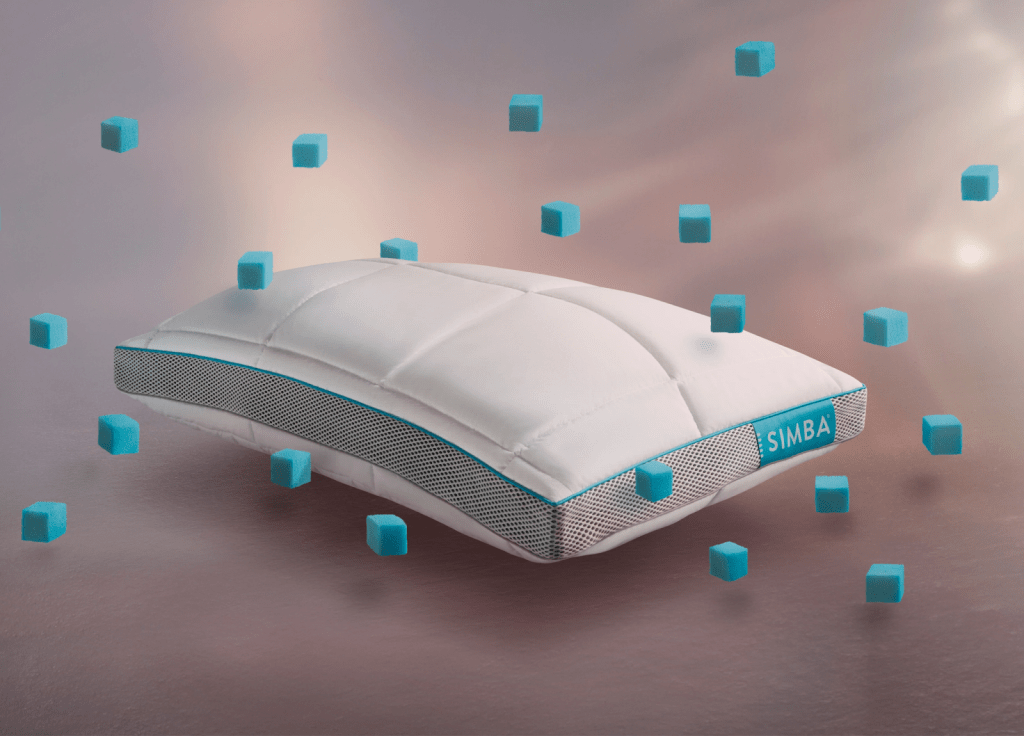
This pillow is designed for revolutionary, personalised comfort. A unique fusion of superb, down-like cushioning with innovative tech. The pillow contains a cotton cover with cool touch tech to support better sleep. It has adjustable height and firmness with a supportive core and a mesh border for maximum air flow, once opened! Plus, it has a washable cover (always a bonus!). SIMBA have truly thought of everything to give you excellent comfort.
I received the pillow in the post, it is large (about A3 size) and SIMBA have said that it has special foam Nanocubes® technology! The turquoise cubes mean its not too soft, not too high, not too firm… always ‘just right’. I find it so comfortable!
SIMBA describe this as, ‘Thanks to the knitted, inner pillow of tiny, squishy, foam Nanocubes® you’ll find at the heart of every Hybrid® pillow; not only does this clever system encourage greater airflow, but you can also remove/add cubes to achieve the height and firmness you prefer in your pillow.’
(image: Unsplash)
I often find also that I get hot at night or it is just too warm from the central heating to sleep in winter. So what could be more helpful than the cooling aspect of this pillow? . It dissipates excess heat and provides instant coolness! This is due to its Stratos® cool-touch tech similar to the innovation that keeps astronauts cool in space! This pillow is also Menopause friendly, so great for any hot flushes at night time.
The pillow feels firm yet comfortable with a definite softness that makes me want to sink right in to it. I love the fact it is adjustable and helps me feel cool at night too. SIMBA say that ‘A soft, cloud-like fill is key to the superb comfort and quality of our pillows and duvets. It consists of springy polyester fibres gently combed and folded into airy, cushioning layers.’
For good sleep hygiene and having a cool, calm bedroom with good support for your head, I really recommend the SIMBA Hybrid Pillow. After one night, I am already loving it and I cannot wait to use it for many more nights for a gentle and comfort filled sleep. Good sleep is so integral to good mental health- thanks SIMBA for letting me have and review this pillow!
I was gifted a SIMBA Hybrid Pillow, in return for an honest review. This article contains non-sponsored links.
Today, I want to talk about something that is near and dear to my heart – mental health. I believe that taking care of our mental well-being is just as important, if not more important, than taking care of our physical health. And one thing I’ve learned in my wellness journey is that it’s easier to work on your mind if your life isn’t ruled by bad habits that affect your mental health.
You see, bad habits can really take a toll on our mental well-being. Whether it’s staying up too late, eating unhealthy foods, or procrastinating on important tasks, these habits can create a negative cycle that affects our mental state. And if we don’t address these bad habits, they can become deeply ingrained in our daily routines, making it even harder to break free from them.
Let’s talk about the habit of procrastination. We’ve all been there – putting off important tasks until the last minute, only to feel overwhelmed and stressed out when the deadline approaches. This kind of behaviour can lead to increased anxiety, decreased self-esteem, and even feelings of guilt or shame. It’s a vicious cycle that can really take a toll on our mental health.
Another bad habit that can affect our mental well-being is the habit of negative self-talk. It’s so easy to fall into the pattern of criticizing ourselves or doubting our abilities. But this kind of negative self-talk can really impact our self-esteem and confidence, making it harder to believe in ourselves and our potential.
We can’t forget about the impact of unhealthy lifestyle habits on our mental health. Poor nutrition, lack of exercise, and not getting enough sleep can all contribute to feelings of fatigue, irritability, and overall lower mood. It’s amazing how much of a difference taking care of your physical health can make on your mental health.
So, what can we do to break free from these bad habits and improve our mental well-being? It’s not always easy, but it’s definitely possible.
I’m going to share 10 bad habits that can affect your mental health, and offer tips and insights on how to break free from these habits in order to improve your overall wellbeing.
(image: Zane Lee: Unsplash)
1. Procrastination: The Thief of Mental Peace
Procrastination is a common habit that can greatly affect our mental health.
Putting off important tasks can lead to increased anxiety, stress, and feelings of guilt.
Overcoming procrastination involves breaking tasks into smaller, manageable steps, setting clear deadlines, and creating a conducive work environment.
2. Negative Self-Talk: The Mind’s Worst Enemy
Negative self-talk can be detrimental to our mental well-being.
It chips away at our self-esteem and confidence, leading to self-doubt and decreased motivation.
Practicing self-compassion, affirmations, and surrounding yourself with positive influences can help combat negative self-talk.
3. Unhealthy Eating Habits: Fuelling Your Body and Mind
Poor nutrition can directly impact our mental health.
Consuming excessive sugar, processed foods, and unhealthy fats can lead to mood swings, fatigue, and decreased cognitive function. Prioritising a balanced diet rich in fruits, vegetables, whole grains, and lean proteins can improve mood and overall well-being.
4. Lack of Physical Activity: Move to Improve
An inactive lifestyle can contribute to feelings of lethargy, low energy, and heightened stress levels.
Incorporating regular physical activity, even in small increments, can release endorphins, reduce stress, and boost self-esteem.
Engaging in activities you enjoy can make fitness enjoyable and beneficial for mental health.
5. Sleep Deprivation: The Silent Saboteur
Inadequate sleep negatively impacts mental health, leading to irritability, reduced focus, and increased anxiety.
Establishing a consistent sleep schedule, creating a relaxing bedtime routine, and ensuring a comfortable sleep environment are essential for improving sleep quality and mental well-being.
6. Excessive Screen Time: Digital Detox for the Mind
Overindulging in screen time, especially before bedtime, can disrupt sleep patterns and contribute to feelings of restlessness.
Setting boundaries for screen time, engaging in offline activities, and practicing mindfulness can help reduce the negative impact of excessive screen exposure on mental health.
7. Isolating Yourself: Connection for Mental Resilience
Isolation can intensify feelings of loneliness, anxiety, and depression.
Cultivating meaningful relationships, seeking social support, and participating in group activities or communities can provide a sense of belonging and support for mental well-being.
8. Overcommitting: The Stress Accumulator
Taking on too many responsibilities can lead to chronic stress, overwhelm, and burnout.
Learning to set boundaries, prioritise tasks, and practice self-care can prevent the detrimental impact of overcommitment on mental health.
9. Avoiding Mental Health Care: Ignoring the Inner Voice
Neglecting mental health needs can exacerbate underlying issues and prevent access to potential support and treatment.
Seeking professional help, engaging in self-care practices, and prioritising mental health check-ins can promote emotional well-being and resilience.
10. Ruminating on the Past: Breaking Free from Mental Anchors
Constantly revisiting past mistakes or unfavourable events can perpetuate feelings of regret, shame, and negative emotions.
Embracing mindfulness practices, focusing on the present moment, and reframing negative thought patterns can help break free from the cycle of rumination and improve mental resilience.
Our daily habits play a significant role in shaping our mental well-being. By addressing and modifying these habits, we can embark on a journey towards improved mental health and overall happiness.
Remember, small changes in habits can lead to profound positive effects on our mental state. I hope this post serves as a reminder to nurture healthy habits that support your mental well-being.
So, let’s work on breaking free from those bad habits that are holding us back and focus on creating a healthier, happier, and more positive mindset. Our mental health is worth the effort!
Whether you struggle with your mental health or not, one way you can boost overall wellbeing, is to create a peaceful, calm bedroom environment. As well as keeping your room relaxed, tidy, clean and restful, you will want to look at your bed and bedding. This can all help to aid better sleep quality!
The team at SIMBA bedding and mattresses, gifted me one of their duvets to try, the Hybrid duvet. This luxurious 10.5 Tog duvet is suitable for year-round use. The Simba Renew Bio™ fill ensures wonderful, down-like softness and warmth, as well as superb breathability for a non-clammy feel; the fresh, cotton outer features their Stratos® temperature control tech to help dissipate excess heat. Perfect for me as I can get really warm at night and really good for the spring/ summer season! It felt super cosy and soft, and I had a great nights sleep.
Experts and SIMBA believe that when a bedroom has good feng shui, the nervous system can relax and we enter a place of safety, which helps promote a better night’s rest. Sleep hygiene and sleeping environment play a significant role in the quality of sleep we get at night.
They say,
‘Your bed is one of the most important pieces of furniture in your home with respect to your feng shui. When you’re sleeping, you’re classified as being in a passive yin state – and therefore more receptive to the vibrations around you. The bed is also the most private place in your home. It absorbs your qi and represents you.
We think we can help with that. Simba’s premium Bed Range allows you to create your ideal bed and choose all the specific features you need. with flexible under bed storage options, in single, double, king and super king. With 500 possible combinations, you can truly get the right look, colour, finish, storage and size for your space, and still have a bed that is unique to you.’
(image: Unsplash: By Matter, Made Better)
I love to have bedding that feels dreamy, induces calm and promotes a zen-like atmosphere. I feel so lucky to have tried my SIMBA duvet and know it will become a staple in my bedroom. As I struggle with anxiety, its so important that my bedroom is a place of calm and quiet, to help promote positive wellbeing. Good sleep often can mean good mental health and I can’t wait to curl up each night!
I was gifted a SIMBA duvet, in return for an honest review. This article contains non-sponsored links.
Our generation loves digital media and smartphones. While it can be highly beneficial in some ways, unfortunately it does come with negative associations, known to affect our mind and bodies more than we may know. Taking more time away from our screens can help to reduce stress, improve sleep quality, improve our relationships, free up more time for friends and family, and help with our personal growth.
As we have become very reliant on our phones and social media, sometimes it’s necessary to actively seek ways to reduce our time using them to help with our overall health.
Spend An Hour A Day On A Screen-Free Hobby
The first thing you should do to help you get respite from constant connectivity and to help your mental health is to spend an hour a day on a screen-free hobby. Identify an hour a day you have free consistently and set it aside for a hobby, whether that’s an hour before you start work or after work. Some examples are throwing on your favourite loungewear and spending an hour exercising, meeting a friend for a fun activity, reading, cooking, crafting, journalling, gardening, listening to a podcast, volunteering or going to explore a new place. If you have the time, on weekends or when you’re not working, try to increase this hour to a few.
Not only does this help you reduce your screen time, but you can focus on yourself and things you enjoy. You don’t have to spend money on this (or you of course can if you want to) and can get creative, whether they’re solo activities or you’re planning activities with a partner or family.
Use An App To Limit App Usage
If you struggle to put your phone down once you’ve picked it up to check what you need to, then you can use your phone to help you limit your phone usage. Most phones have a setting where you can set a limit on your phone, either for specific apps (e.g. you spend too much time on Instagram specifically), or for your phone in general, to flag you when you need to switch it off and have used your limit. Whilst you can switch this off if you need to, it’s not 100% effective of course, but it just provides that extra indication and reminder to help you break unhealthy cycles. Give this a try, it might not be fully effective when it’s the only measure you put in place, but when you combine it with other healthy alternatives to using your phone, it should help overall!
Eat Without Your Phone
Something else that can help you break the cycle of constant connectivity with the digital world is to make sure you don’t use your phone when you’re eating. There are studies that suggest when you eat food and scroll at the same time, a double hit of dopamine is released, so you naturally become more inclined to use your phone more and eat more food. This forms an unhealthy habit for both our mind and body, so keeping them separate is important. Meal times are a great opportunity to sit at a table, listen to your favourite album or have a catch up with friends, family or your partner, rather than keeping on scrolling.
(image: Unsplash: Micheile Henderson)
Leave Your Phone Out Of Your Bedroom
Something else that can really help you to reduce your digital use is to leave your phone out of your bedroom. Get yourself an alarm clock, then you have no reason to need your phone in there. Sitting and scrolling on our phones in bed is so tempting and it’s really easy to do, however it often means we go to sleep later than we should or would want to, as well as making it more difficult to actually sleep when you do put your phone down, as the blue light can disrupt your sleeping patterns and leave you awake for longer.
So, keeping your phone out of your room, for at least an hour before bed, helps to break this cycle. Replace your habit of scrolling on your phone with something relaxing that helps you to unwind, like reading a book or magazine for an hour, having a nice bath and doing your skincare, some meditation or just listening to music. You’ll find you sleep much better, helping you to feel energised and refreshed the next day, as well as helping your mental health.
Are you seeking restful sleep at night? If so, then you are not alone in this; the majority of people face the issue of restlessness at night. In fact, in the United States, about 50 to 70 million people suffer from insomnia, as reported by the National Heart, Lung, and Blood Institute and SleepHealth.org. Millions more around the world, including in the UK, also struggle with the affects of poor sleep.
When your mind is entangled with the day’s worries, whether it’s work stress, family commitments, or occasional illnesses, achieving a truly restful night’s sleep can feel like a distant dream.
But fear not; this guide is here for you to unlock effective tips for a peaceful night’s sleep.
1. Understanding Hormonal Balance
Hormones play a vital role in regulating sleep; they are natural chemicals in your body. For instance, low testosterone levels can significantly impact sleep quality, especially in men. However, TRT can be a viable option if your t-levels are really low and you want to improve sleep patterns. This helps you to regain lost energy and vitality.
There are different types of TRT (testosterone replacement therapy) options available. It includes injectables, creams, gels, or capsules. The best way to determine which option is right for you is to consult your doctor. They will carefully assess your situation and recommend the most suitable course of action tailored to your needs. This ensures that any treatment you receive is safe and appropriate for your overall well-being.
2. Establish a Relaxing Bedtime Routine
A relaxing bedtime routine is crucial in signalling your body that it’s time to relax and get ready for a nap. Start by setting a specific time to go to bed and wake up, even on weekends. This regular schedule helps your body get used to a routine. Next, include soothing activities in your routines, like reading a book, taking a warm bath, or practicing meditation.
These activities promote relaxation and give your mind peaceful thoughts, which leads to restful sleep. In fact, in this way, when you wake up the next morning, you will feel refreshed and ready for a new day.
(image`: Rock n Wool: Unsplash)
3. Create a Sleep-Inducing Environment
Your bedroom environment significantly impacts your ability to get rest. Ensure your bedroom is quiet, dark, and cool. A peaceful space helps you avoid disturbances that can wake you up during the night.
Consider using blackout curtains for darkness because it signals to your brain that it’s time to take a rest. Invest in a comfortable mattress and pillows to support your body adequately. If noise is a problem, use earplugs or a white noise machine to block out disruptive sounds.
Keeping the room cool, usually between 60-67°F (15-19°C), helps your body temperature drop, which is necessary for sleep. When you have the right conditions in your bedroom, you’re more likely to enjoy uninterrupted and high-quality sleep, leaving you energised in the morning.
4. Manage Stress and Anxiety
Stress and anxiety are significant barriers. That’s why it’s recommended to learn stress management techniques that help calm your mind and body. One effective technique is deep breathing exercises. This involves taking slow, deep breaths to relax your nervous system and reduce stress. You can also explore practices like yoga or progressive muscle relaxation, which help alleviate tension and promote relaxation.
Another helpful strategy is journalling. Before bedtime, jot down your worries and thoughts in a journal. This can be a therapeutic way to clear your mind and ease the burden of stress and anxiety, making it easier to fall asleep peacefully.
After all, managing stress is not just about the night; it’s about finding balance throughout your day. In this way, you can create a more harmonious and restful experience for yourself.
5. Mindful Eating and Exercise
What you eat and how you move throughout the day can influence the quality of your sleep. To promote it, taking care of these and being mindful of what you consume is essential. When it comes to eating, avoid heavy meals, caffeine, and alcohol before going to bed, as they can lead to restlessness and insomnia . Instead, opt for light, sleep-promoting snacks like almonds.
In terms of physical activity, regular exercise is beneficial, especially when done in the morning. However, it’s advisable to steer clear of vigorous exercise too close to bedtime, as it may leave you feeling too energised to take a rest. These lifestyle choices can contribute to a more peaceful and refreshed night.
Final Thoughts
Achieving a restful nap is a journey that requires a holistic approach. By establishing daily habits, you can make the way for a better power nap. Remember, each small step you take can significantly improve your sleep quality and impact your overall health and well-being.
Being a mother, let alone a new mother, is no easy task. New moms might find themselves flustered with the idea of being a parent for the first time ever. No longer do they only have to care for themselves but also a little one, too, who depends on them. Frustration, stress, and lack of sleep are all common for new mothers. So, how can they fix this? Here are some tips.
Sleep in the Same Room as Baby
Waking up every few hours in the night is no easy task. Having your sleep disrupted when in a groggy state is several times easier when your baby is close by to you.
Keep a crib or bassinet right next to your bed or at least a few feet away to reduce long walks throughout the house to tend to your baby in the night. This way, you can resume sleep as soon as possible.
Prepare a Feeding & Changing Station Before Bed
Another way to ensure proper rest and sanity as a new mom is to keep a feeding and changing station stocked before going to bed for the night. Keep diapers, wipes, rash cream, baby powder, and a change of clothes nearby. Also keep clean bottles and formula (if applicable) within close reach.
Don’t Skip the Bubble Baths
Good hygiene provides relaxation, which in turn, helps us feel more put together and well-rested. There’s nothing quite like soaking in a calming bubble bath to ease those tense muscles.
Keep Your Mental Health in Check
After having a baby, your mental health is of utmost importance. When you’re in a bad mental health state, it’s difficult to get quality sleep at night. You may have problems falling asleep, staying asleep, or may be oversleeping. Either way, you find yourself feeling unrested.
Right now, your wellbeing and your baby’s well being matter most. A pile of dirty dishes? Leave it for tomorrow. Now is the time to prioritize your physical and mental state in the form of good rest. Unless there’s broken glass on the ground or a horrible stench in the house, the chores can be put off.
Get Physical
Even simply going on a walk around the block can be a great way to get exercise in. This in itself can be a relaxing activity. And as everyone knows, getting exercise can also allow you to get a better night’s rest.
Drinking Calming Teas
Turning to herbal teas like chamomile or lavender can be great ways to unwind after a hectic day as a new mom. Never underestimate the power of a hot beverage filled with calming herbs, especially before bedtime.
Conclusion
Being a new mother is going to be a challenge no matter how you look at it. However, what a mom can do differently to make things easier is to ensure she gets proper rest. With the latter tips, any overwhelmed, exhausted mom can get the rest and relaxation she needs to feel rejuvenated after a long day of parenting.
Massage, the manipulation of muscles and soft tissue, has been used as a therapeutic practice for centuries. From traditional therapies in ancient civilisations to modern practices, massage has continued to prove its efficacy in promoting physical and emotional relaxation, pain relief, and stress reduction. Let us explore the many health benefits that come with getting a massage.
Reducing Stress and Anxiety
Research has shown that massage has a positive impact on both physical and mental wellbeing. One of the primary benefits of massage is its ability to reduce stress and anxiety levels. Massage helps to lower the levels of stress hormones such as cortisol and adrenaline while increasing the levels of feel-good hormones like dopamine and serotonin. As a result, getting a massage allows us to feel more relaxed and at ease, improving our overall emotional and mental health.
Promote Better Sleep
Getting a good night’s sleep is essential for optimal physical and mental health. Regular massage therapy can help bring about restorative sleep by relaxing the muscles, increasing circulation, and reducing tension. Studies have shown that massage therapy can help reduce the symptoms of insomnia and other sleep disorders, thereby promoting better sleep.
Relieves Pain
Many of us deal with chronic pain on a daily basis. Massage therapy can be used to relieve pain and discomfort caused by various factors such as muscle tension, injury, or poor posture. Massage improves circulation, reduces inflammation, helps muscles to relax, and stimulates the release of endorphins, the body’s natural painkillers. Regular massage therapy can provide long-term pain relief and improve flexibility and range of motion.
Boosts Immunity
Another health benefit of massage therapy is its ability to boost the immune system. Studies show that regular massage sessions increase the production and activity of white blood cells, which play a vital role in fighting off infections and illness. Increased circulation and improved lymphatic flow help the body flush out toxins and improve its overall immunity.
In conclusion, massage therapy is an ancient practice that offers numerous health benefits for both physical and mental wellbeing. From reducing stress and anxiety to improving sleep, relieving pain, and boosting the immune system, regular massage sessions are a great way to promote a healthy lifestyle. If you’re dealing with any of the issues mentioned above or simply wanting to relax and unwind, schedule a massage appointment today. Your body and mind will thank you!
This article is by freelance writer Hannah Whittenly.













 beurownlight.com