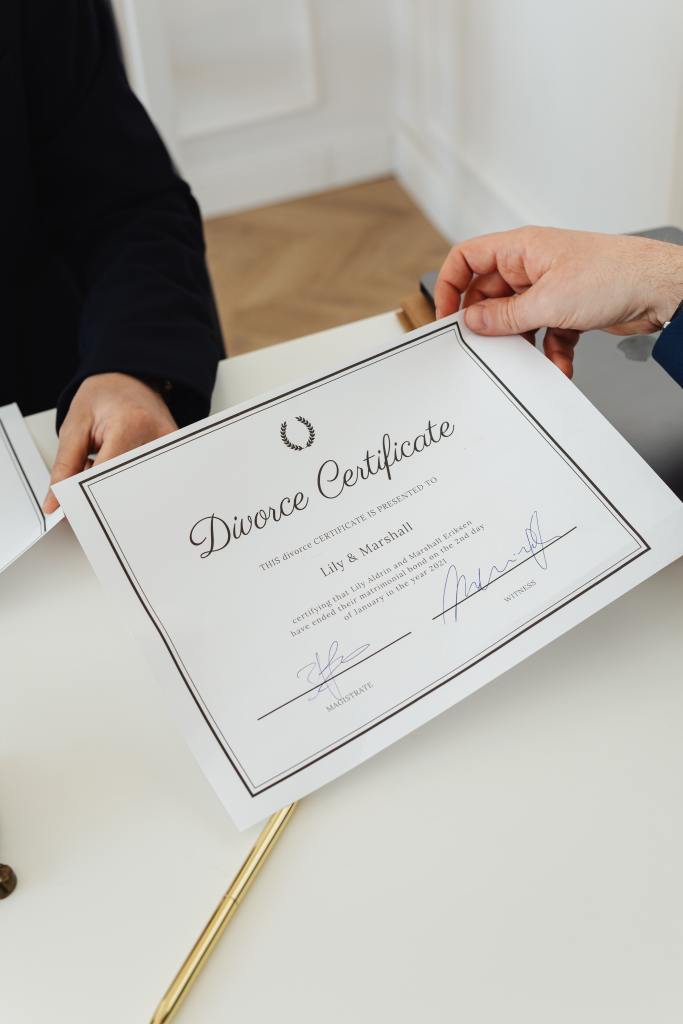
When you are in the midst of getting divorced, you may be surprised at just how much it will drain you emotionally. Whether you have been married only a short period of time or perhaps for decades, knowing you will soon be divorced can be a scary thought that may leave you very depressed, which can result in you making poor decisions as your divorce moves forward. If you want to emerge from your divorce with some emotional health, here are some steps you should take along the way.
Don’t Stay Isolated
As your divorce process moves forward, don’t make the mistake of staying isolated. Instead, stay in touch with your family and friends. If your social network is now cut in half due to your divorce, make new friends by perhaps attending church/synagogue or learning a new hobby- whatever feels right for you.
Don’t Blame Yourself
When couples divorce, it is not unusual for one spouse to blame themselves for the marriage breaking up. Even though there is usually fault to be found on both sides in most divorces, this does not mean you should continually beat yourself up emotionally day after day about your marriage ending. Instead, you need to accept that it happened, plan your future, and try to move forward as best you can. You should reach for support if you need it.
Write Down Your Thoughts
During your divorce, you will be having plenty of meetings with your divorce lawyers and others as well. Needless to say, you may feel a bit drained at the end of the day. If you have plenty of thoughts running through your mind, take some time to write them down in a journal. By having the chance to express your innermost thoughts in this manner, it can be a great way to relieve stress and keep your emotions in balance. Another option would be to talk about your feelings with a therapist when you are ready.
Take Care of Yourself
Last but not least, taking care of yourself physically will play a big role in keeping you feeling ok emotionally. Therefore, you should eat healthily, exercise regularly, and treat yourself to something special now and then, such as dinner at your favourite restaurant, a relaxing vacation, or getting pampered at a day spa. By doing so, you will find many things that were eating away at you will suddenly not seem nearly as important. Self care is vital in the aftermath of a relationship breakdown.
Though you may wonder what the future will hold for you after your divorce is final, looking after yourself and your mental health will pave the way for a new chapter in your life.
Lizzie Weakley is a freelance writer, based in the USA.
According to new data from Mental Health Statistics, during 2020, 58% of workers experienced some kind of work-related stress, while 63% were experiencing moderate levels of anxiety.
Health experts have warned, that if these mental health issues are left untreated, it can impact our day-to-day lives, including the ability to do our jobs.
That’s why the team of experts at Delamere, have shared five ways to open up the conversation about mental health with your employer:
Find the Right Time and Place to Talk
When approaching the conversation of mental health with your employer, one thing that will help is finding the right time to talk. Talking to your boss on a day when they seem overwhelmed might result in you not getting the best response, so make sure to schedule a call or an in-person conversation with them ahead of time.
As well as the right time, it’s also important to find an appropriate place to have the conversation. Find a place that will allow you to talk in a professional and calm way, and is a quiet space in your workplace. If somewhere suitable isn’t available you could also suggest meeting outside the office or even going for a walk.
Plan what you are going to say ahead of your meeting
Before speaking to your manager one of the best ways you can prepare is by planning what you want to discuss ahead of time. This will not only calm any nerves you might be having ahead of the conversation but will also ensure that you are only sharing what is needed to frame how your mental health is impacting your work.
Points you can prepare in advance could include, identifying tasks within your current role and workload that is making you stressed, reminding your boss of your achievements so that they remember you are more than capable, explaining what factors might need to change in order to help you.
Decide Who To Speak To
If you decide to open up to your employer about your mental health, consider who you will feel most comfortable having the conversation with.
If you have a good relationship with one of your managers, it might be helpful talking to them about what you are going through. However, if you find that they aren’t very approachable, consider speaking to someone within your HR department that will be able to help you.
Consider That Your Boss May be More Receptive Than You Think
Though talking about your mental health with your employer may feel like an uncomfortable situation, they may actually be more understanding than you anticipate them to be.
Mental illness is very common illness and a lot of people, unfortunately, suffer from this in the workplace. So when you start the conversation, the chances are your boss or employer will have already had direct experience with dealing with it or even experienced it themselves.
Focus on Your Productivity and Ability to Work
To get the most out of your conversation with your employer, think beforehand about how your mental health is impacting your productivity and ability to work.
If you go into the meeting with this already prepared, the chances are you will have greater success coming up with solutions on how your employer can support you and what you need to get better. Whether it’s more flexible working hours or a lighter workload.
This article was written by Delamere residential addiction care.
Mental health is often viewed as something that exists entirely separate from physical health, but the truth is that they are closely intertwined. In fact, research has shown that improving your physical health can also help improve your mental health. Let’s take a look at some of the ways this happens.
1) Exercise releases endorphins, which have mood-boosting effects.
When you exercise, your body releases endorphins, which have mood-boosting effects. This is one of the reasons why exercise can be so beneficial for people with depression or anxiety disorders. Exercise can help to lift your mood and make you feel happier. In addition, regular physical activity is an effective treatment for mild to moderate depression. It can help to improve symptoms such as fatigue, insomnia, and low energy levels. And it’s a good option for people who don’t want or cannot take medication for their depression.
2) Physical activity can help to improve self-esteem and body image.
When you’re physically active, you start to see results in terms of your body composition and physical abilities. This can boost your self-esteem and make you feel better about yourself. Plus, exercise is a great way to manage stress and anxiety. When you’re stressed out, it’s often hard to find the energy or motivation to do anything. But when you have an outlet for your stress, such as exercise, it can help to ease that tension and make you feel better overall. Read this article for more information on exercising for beginners.
3) Healthy eating can help to regulate your mood.
An unhealthy diet can have a negative impact on your mental health. For example, poor nutrition can lead to fluctuations in blood sugar levels, affecting your mood. In addition, people who eat many processed foods tend to be more likely to suffer from depression and anxiety disorders. Conversely, people who consume a healthy diet that includes plenty of fruits and vegetables are less likely to experience these problems.
4) Physical activity can help you to get a good night’s sleep.
Insomnia and other sleep problems are common among people with mental health disorders. In fact, research has shown that lack of sleep is one of the strongest predictors of depression. However, when you’re physically active, you’re more likely to get a good night’s sleep. In addition, exercise helps promote relaxation and calmness, which can be helpful for people who have trouble sleeping.
5) Physical activity can help to reduce stress levels.
One of the leading causes of mental health problems is prolonged exposure to stress. When you’re constantly stressed out, it can take a toll on your mental health. Exercise is a great way to combat stress because it helps to release tension and promote relaxation. In addition, physical activity can help you to manage your time more effectively and reduce feelings of overload or overwhelm.
When it comes to mental health, there’s no one-size-fits-all solution. But improving your physical health can be an essential part of the overall treatment plan. So if you’re struggling with a mental health disorder, talk to your doctor about ways that you can improve your physical health as well.
6) It can encourage you to take a different approach to your overall health
When you start taking better care of your health, it can prompt you to keep going and look at other areas of your lifestyle that need improving. Exercise and healthy eating can make you feel more energised and positive, completely changing your mindset.
It can also highlight other issues you might be facing that you may not have addressed. Maybe it’s time to go to the doctor or explore a diagnosis with ADHD Centre and get clarity on a problem you’ve been facing for some time. A complete health makeover can help you move forward and make the most of your new energy and lifestyle.
You sabotage your relationships when things feel too calm.
You panic when your partner goes on a family vacation, believing that they’re leaving you forever.
Perhaps you can’t stand hugs or gentle touch.
Maybe you’ve wondered to yourself: “What in the world is wrong with me?! Am I just not cut out to have close friends or a romantic relationship?”
Actually, that’s not the case! You deserve close relationships– everyone does. If you resonate with these scenarios, though, you may have some unprocessed trauma– and that trauma may be making your relationships feel like a rusty, ungreased wheel.
You’re not alone. Here’s how trauma can blow our relationships off-course, and also, how self-compassion can help to ease that struggle.
Trauma Creates Hypervigilance
Trauma is any incident that overwhelms your ability to cope (abuse, neglect, or surviving a natural disaster, just to name a few examples). These abhorrent experiences cause our brains and bodies to swirl with cortisol, also known as the stress hormone.
After a seriously traumatic event (or relationship or childhood), our cortisol levels don’t always return to baseline. Often, the nervous system creates a new baseline of heightened stress response. In short: you don’t go back to being as calm as you were before the storm. Now, you’re hypervigilant all the time. You’re always stressed, always scanning for the next attack.
Unfortunately, relationships can’t be created without vulnerability, and vulnerability can’t happen if you’re constantly scanning for attack.
You might be hypervigilant in your relationships if:
You feel uncomfortable, fidgety, and unsafe during social situations
You constantly micro-analyse everything other people say to make sure they’re not going to hurt you
You constantly micro-analyse everything you say to make sure you don’t say anything “wrong”
Aversion to Intimacy
Trauma, and the excess cortisol it triggers, also creates an aversion to physical closeness. When we’re stressed (i.e., when our cortisol is on full blast), our nervous systems naturally resist being touched.
Do you find yourself shrinking away from hugs? Do you feel an urge to run away when someone gently touches your arm? That’s likely a trauma response.
Of course, if you’ve experienced assault or physical or sexual abuse, this is a double whammy. Since your trauma came from physical touch, your brain has registered any physical touch as dangerous– on top of your increased baseline level of cortisol. Of course you’d feel sick at the thought of a hug! If this sounds like you, go extra easy on yourself if you struggle with relationships; this struggle isn’t your fault.
So, This Sucks… How in the World Do I Heal?
Yes, it sounds bleak. If this is you, you may feel hopeless. I’m with you; I’ve been there. It’s not hopeless, though. This is healable.
Therapy: Do I Even Have to Say It?
Yes, healing this will probably require trauma-informed therapy. You’ll be surprised at how fast you can begin to shift once you see a therapist who validates your traumatic experiences.
Here’s a hint: Psychology Today’s find-a-therapist tool can help you easily find a trauma-informed therapist. (Make sure to select “trauma focused” under the “types of therapy” menu.)
Now That That’s Out of the Way: Self-Compassion Comes Next
I’m 100% serious when I tell you: you deserve to go easy on yourself.
I say this with firmness, and yet, I forget to go easy on myself most days. Regardless, it helps immensely to stop comparing your relationships to other people’s relationships (both friendships and romantic relationships!).
Yes, it may likely take you longer to learn how to develop lasting relationships, both friendly and intimate. It may seem unfair that making and keeping tons of friends, as well as a life partner, comes so easily to some, while you’re struggling to simply text one person back.
Know what? It is unfair. You shouldn’t have gone through the trauma that you went through. What this means, though, is that you can recognize that you face more relational setbacks than someone who didn’t suffer the same trauma as you did. You’re starting further behind with a ball and chain tied to both feet.
Thus: you can stop comparing, and you can stop feeling like you’re “behind” somehow. Always try to recognize even your tiniest victories, even and especially the challenges which seem “easy” to other people.
Wrapping Up
Relationships make our lives juicy and sparkly, and so, if trauma has impacted your ability to form relationships (I’m with you!), then you’re probably struggling.
Try your best to go easy on yourself. You’ve been through a slog of painful experiences that, unfortunately, can make life on Earth feel like walking straight uphill all the time. Therapy helps. Self-compassion helps.
And yes, I know it’s tiring, but there is help for you out there. Just keep going.
Taylor Blanchard is a freelance mental health and wellness writer for hire. Her lived experience and extensive knowledge on mental health, emotional wellness, and spirituality guide her to create deep, compassionate blog posts, which she hopes will help people to feel less alone in the world. Self-care for Taylor looks like staring at the sky, drinking cacao while listening to metal, or cuddling with her rescue Pitbull mix.
A new bundle of joy in the family is indeed a happy addition. While welcoming a new baby is a joyous event, new mothers also have a lot of things to keep in mind. Not to mention, mothers have to make huge adjustments in their routines, schedules, and even hobbies just to make time for the baby.
New mothers are also recommended to get enough rest. However, with an infant to care for, most mothers would not even have much time for themselves. And that’s where fathers should step up.
New mothers need both physical assistance and emotional support. Baby care and household chores are part of physical assistance. Emotional support can be done in various ways. But letting new mothers have a day for themselves is more than enough. Caring for a baby could get exhausting, and having a self-care day can help mothers refresh and recharge themselves after a gruelling week.
Fathers, or partners, can always help in both aspects. But aside from simply volunteering to change diapers and give bottled milk, here are some more ways to assist new mothers:
Have Your Fair Share Of Chores
This is one of the main things that partners can do to help eliminate the stress and burden of new mothers. Most of the time, your wife may not be able to wash the dishes or mop the floors because she needs to attend to the baby.
So, why not volunteer to do the dishes every night? Or help with the laundry each week during your day off? Helping around the house will definitely lessen the physical stress for new moms. Offering to disinfect or sterilise the baby’s things is also a great idea. The extra time they get can be spent resting or bonding with the baby.
Cook or Order Takeout (takeaway)
Just like household chores, cooking also takes time. Most new moms don’t even have the time to think about meal prep or planning. So, might as well just take things into your own hands! You can volunteer to either prepare breakfast or cook dinner so your partner can get more sleep. If you’re working long hours and there’s not much time for you to prepare dinner at night, then offer to order takeout instead.
Offer A Spa or Massage Day
New mothers direly need, and would highly appreciate, a self-care day. Sending them off to a spa or massage session would definitely lift up their mood and calm their mind. Doing this at least once a month can help improve their mental and emotional state. Mothers need a break from all that baby care too! But make sure to have someone reliable enough to care for the baby while mom is away. You can volunteer to do it yourself but if you need to take care of work or other errands, then you may hire a nanny or leave the baby with grandparents or a trusted family member for the day.
If it’s not possible for you or your wife to go out to a spa or massage service, then you can book a home service instead. You can also plan and prepare a homemade bubble bath that your wife can soak and relax in!
(image: unsplash).
Avoid Adding More Pressure
New mothers might be overly conscious and anxious that they aren’t doing a great job with the baby and the house. On your part, you must also understand that they cannot fulfill household duties 100% all the time, since they also have a baby to care for.
So, if you see that the kitchen is not clean, floors are dirty and unswept, and the laundry is already piling up, don’t take it out on her. Instead, ask her which task she may need help with and communicate how you can work together to make sure that basic household duties are still maintained while also caring for the baby.
Appreciate What She Does
New mothers are always overwhelmed, but a simple appreciation will make them feel happier and secured. Many new moms are always thinking that they aren’t doing a good job (even if they are). So, don’t forget to remind them that they are doing great and that you appreciate everything she does for the house and the baby. Most of all, it’s best to remind them that as long as the baby is happy and healthy, then they’re doing more than a good job already.
Encourage Social Interaction
The mental and emotional stress that new mothers feel is sometimes caused by being cooped up in the house for too long. While she can spend more time bonding with the baby and communicating with you, remember that a healthy adult also needs a well-rounded social relationship.
So, encourage your wife to go out and see her friends over coffee sometimes! Recommend a mom group in your area that she may be interested in, or if your wife thinks she should see a therapist to help with postpartum depression or anxiety, then help her book a session.
A new mother would usually insist on being more hands on with her baby, and this is not a surprise, since it is just part of human nature. However, it does not mean that they don’t need the help and support from others—especially from a partner.
Assisting a new mother would not take much time, a simple gesture and moment of appreciation can already do wonders. However, it’s important to also help them with physical tasks to ease their stress and burden. Most of all, it’s important to do these things consistently.
Author’s Bio:
Jess Levine is an experienced writer who loves creating articles that can benefit others. She has worked as a freelance writer in the past making informative articles and fascinating stories. She has extensive knowledge in a variety of fields such as healthcare, technology, business, finance, marketing, personal development, and more.
The Adverse affects of relationships on mental health
Relationships have the power to affect mental health negatively. If you don’t know how they can affect you, it’ll be hard to lay down a great foundation to ensure you don’t fall victim. Take a step to lay down the rules for a positive relationship.
What if we told you that your relationships have the power to affect mental health? It’s true; your relationship status can affect mental health. But, finding out how relationships affect mental health isn’t a simple mathematical equation. There’s a lot more that has to go into it, and to be honest, it’s complicated.
Relationships Have The Power To Affect Your Mental Health
Fact: We all desire to have real connections through stable, long-term relationships with our “ideal partners.” Whether you meet a potential partner after checking out the best dating sites review or through a mutual friend doesn’t matter. What we think about most is the optimism and the excitement we feel once we click with someone else. We never stop to consider what can affect the mental health of the people in a relationship.
Unfortunately, even the most glamorous relationships come with associated risks and can affect mental health. To affect mental health positively, there have to be some previously laid out rules that lay the groundwork for a great relationship.
Without knowing what these boundaries are and the risks associated with a relationship, we are prone to unknowingly affect our mental health. So, what relationship factors affect mental health negatively? Read on to find out.
Lack Of Sex Can Increase Stress Levels Well, well, this shouldn’t be so surprising. If you’re wondering, “can loneliness affect your mental health?” here’s your answer. When you have an intimate partner within your vicinity, chances are, you will have frequent sex. The bonds created during the act of bonding are so outstanding that they have the power to affect your mental health.
Frequent sex can lead to greater satisfaction with your relationship. If there’s less sex, then other aspects of the relationship are affected too. The less sex you have, the more prone you are to affect mental health.
Stress levels will soar, and you’re more likely to exaggerate aspects such as financial disagreements, responsibilities over chores, and parenting disputes. While there may be other underlying issues, lack of sex and intimacy is an undeniable factor that can affect both partners’ mental health.
Relationship Difficulties Can Cause Anxiety
Whenever couples are having relationship difficulties, there’s bound to be full-blown anxiety. Unfortunately, the converse is also true. Anxiety can lead to marital problems. Surprisingly, some research suggests that marriage can protect you against anxiety. Confusing, right?
Well, it depends on how you look at it. For marital issues to affect mental health negatively to the point that they cause anxiety, there have to be underlying issues that aren’t resolved. Problem-solving in a relationship has to be done in a way that allows both parties to express their feelings to deal with matters conclusively.
Once an issue is dealt with, both parties become anxiety-free and display better mental health. On the other hand, married people have potential “shoulders to cry on,” and this kind of emotional support is a great way to affect mental health positively.
Sleeping Problems
Unless your partner snores and keeps you awake through the night, sleeping next to them can help you fully relax during the night. But it isn’t that simple. If there are conflicts or insecurities in the relationship, you will have a more inadequate sleep because of thinking through issues during the night.
This, in turn, escalates problems such as insomnia or daytime fatigue. As a result, there’s a vicious cycle with leeway to affect the mental health of both parties negatively.
Social Pursuits Affect Mental Health
Many people wonder, “why does quarantine affect mental health?.” Couples in healthy relationships have to socialise. Socialising is a great way to boost mental health positively. Leisure time may include meeting family and friends, visiting their favorite restaurant together, or even spending the weekend sampling the latest nightclubs.
However, since there are limited opportunities to get so involved during quarantine, spending more and more time without socialising with other people can take a toll on the relationship. When couples spend time socialising, there’s more opportunity to improve their mental health positively.
Since humans are social creatures, we feel better when we make connections with others. But, even this shouldn’t be excessive. Too much can result in alcohol dependency and self-destructive behavior, which has the potential to affect mental health negatively.
Toxic Relationships Can Lead To Physiological “Fight Or Flight” Responses
Toxic relationships can lead to physiological responses that may urge you to either run from the stressor or fight it. These are common reactions that stem from mental, physical, or emotional abuse. Regardless of the stressor we face, we condition our minds to respond. These kinds of reactions leave us feeling drained and have the potential to create poor mental health.
Conclusion
Whether we like it or not, relationships can affect mental health either positively or negatively. Their effects are worse if they’re negative. To ensure that relationships don’t have a platform to affect mental health negatively, you have to take the necessary precautions to safeguard yourself against negative repercussions.
What do you think is the COVID effect on mental health? What precautions would you put in place to protect your health?
Author’s bio:
Miranda Davis is a freelance writer in the relation and psychology area. Miranda is interested in such topics as building healthy relationships between people, love/sex compatibility, and how to find the right balance in life in general. She is currently doing specific research on the topic. Miranda loves cooking and long-distance walking.
In recent years, mental health has been in the spotlight because society has been starting to learn about how important it is. This is welcomed progress, as more people are now educating themselves and looking for ways to help themselves achieve good mental health. Amidst your search, you will find that small things can help, such as redecorating your room.
Creating your own space is a good opportunity to check on your well-being. Your environment has an effect on your mood and emotions. Arranging and fixing what surrounds the place where you spend most of your time at home is a simple way of focusing on yourself especially in times when you need to do so.
In times where you need to take a break and rest your mind, your room is the nearest place you can go to. If you’ve been feeling down, mentally exhausted, or feeling some unrest, how about you tweak your own space a little?
Here are the best ways to redecorate your room to improve mental health:
Declutter
If your room is messy, it’s highly likely that you haven’t done some organising in a while. I know some people like the way their room is arranged, but let’s face it, it’s a good feeling when clutter is taken away from your own space. A simple step to take to reorganise your thoughts is to reorganise your room. At times when you feel confused, try decluttering. Get rid of the stuff that you don’t need and save your brain from the distraction that a mess creates.
Let the light in
The amount of light inside your room also affects your mood. Research suggests that sunlight is thought to reduce stress and to relax the body. Keeping your space in tune with the natural rhythms of the day aids the body in maintaining the circadian clock, our internal 24-hour clock that keeps our sleep and wake cycles running regularly and smoothly.
So move your curtains aside and open your windows to allow some natural light in your room. In addition, make sure that your curtain set lets you see the sun and if not, you can search for a DIY hardware store around your area where you can purchase the parts that you need.
Display a centerpiece that will lighten up your mood
There is something about seeing something as a centerpiece of a room that affects how you feel. A focal point inside your own space gives off the vibe that you would want to feel once you enter it. According to author Stephanie Roberts, creating a focal point that makes you happy will help you feel relaxed from the get-go. Display something that does that in your bedroom where you tend to always tend to look so you can always see it.
Get plants
Houseplants have been linked to many psychological benefits including reduced anxiety and lower blood pressure. In addition to that, plants also remind you of self-care and can give you an appreciation of the little things. Watering plants is like a reminder to take good care of yourself, while watching it grow makes you feel a sense of accomplishment and that the simple stuff that you do matters.
Make a useful layout
You should not feel lost in your room. It should be easy to navigate and see where everything is. Moreover, designate space for the stuff that you do. Declutter to find space for a desk where you can use your electronic devices at. Using your phone or laptop on your bed can interrupt your sleep cycle. Design everything to optimise your hours of rest separated from the other activities that you do inside your room and place items where it needs to be.
Wrapping up
Redecorating your room benefits your mental health and helps you feel calmer, while you are decorating and with the finished result. It’s a great way to build positive thought patterns and reduce stress. It also proves that we should not overlook the simple and normal tasks for they can serve as a form of small therapy for when we need it the most.
Author’s Bio:
Rosette has a knack for anything DIY. She spent her younger years learning about the different hardware tools and equipment in the hopes of establishing a hardware business in the future. Her career options may have changed, but today, she continues to write so passionately about her first love.
When establishing and maintaining a healthy work-life balance, the overarching goal is clear; an individual should not feel as though their professional life is intruding on their personal time or vice versa. However, it’s always easier to explain than it is to physically manage – which is why it’s important to fully understand the implications of a poor work-life balance and the proactive steps we can all take to minimise any negative impact – such as poor mental wellbeing.
Now, as you would expect, the emergence of modern technology – such as smartphones – has drastically transformed our professional lives and, as such, it can be difficult to create concrete boundaries. Many of our devices can now take on the features and responsibilities of a larger computer system and so our working lives are available at just the touch of a button. So, how do we assess whether this detracts from our free-time and if this impacts our mental health?
Well, in recent months, this very topic has been investigated by mobile phone insurers, loveitcoverit.
Their research found that an astounding 80% of workers identify their smartphones as a tool for their professional responsibilities, clearly demonstrating that they have surpassed the singular, social use that spurred their beginnings. So, whether it’s to communicate with colleagues, access working documents remotely or utilise organisational platforms, our mobiles have become an integrated part of professionalism on a wide scale. As such, it can be difficult to imagine the two in separation – but is this a good thing?
Overusing our mobile devices can be detrimental to our work-life balance as they create an access channel that is available to us at every hour. So, whilst leading mental health organisations emphasise the need for distancing measures – such as short breaks, time off and established social environment outside of work – our smartphones may act as a reminder of our professional responsibilities. In turn, this can lead to individuals feeling pressure to work outside of their agreed working times and intrude on their personal lives.
Due to the sheer number of smartphone users across the country, this could mean that millions are facing the challenge. In fact, less than half of workers claim to have a ‘healthy’ work-life balance!
Of course, this isn’t to say you should never complete a professional task in your free time, it simply means that you must actively monitor and manage how often this happens. This might seem a menial task, but it’s vital.
If you often find yourself feeling stressed due to your working life, then you could be at risk of developing illnesses such as anxiety or depression.
However, luckily, there are further actions we can take to ensure our balance does not tip!
Setting tangible guidelines
We’re not saying that you must ignore your phone if a professional emergency arises, but it is important to make sure your working correspondence doesn’t intrude on your personal life. So, start with something simple – like enforcing a rule of no work related phone use after six on any weekday and perhaps not at all on the weekends.
Ultimately, it’s your decision to make, so find out what works within your routines and go with it!
Communicate with your employer
No one wants to be seen as a ‘complainer’, but if your work responsibilities are damaging your mental health it is important to speak up. Set up a meeting or informal chat with your manager to discuss how you’re feeling and why you feel that way. From there, you can work in tandem to better the situation and make wider improvements that benefit others too!
Better understand your own situation
There is normally a tangible reason for any feelings of stress or anxiety but it might not be clear at first glance. If you’re feeling overwhelmed, take a break and try to dissect your situation.
If you can understand what is causing your stress, you’re in a wholly better position to try and improve it, whether this is in reorganising your routine and methods or in talking to someone else at work!
Creating a healthy and sustainable work-life balance is imperative for our mental wellbeing, so we all must take the time to figure out how to best achieve it. Remember, the working world existed before smartphones did, so it’s a durable environment, and taking the time to figure out positive and progressive ways of moving forward will never be a waste.
This guest blog was written by loveitcoverit, mobile phone insurers in the UK at www.loveitcoverit.com
Trigger warning: talks about self harm, anxiety, depression and mental illness
For 10 or so years, throughout adulthood, I have battled on and off with something invisible and something I still don’t fully understand myself.
Generalised Anxiety Disorder.
I’m now 29 but my illness started at about the age of 21. In my third year of University, I started to dread things, I started to worry about everything I said, did and I started to question if anyone liked me. I have always been apologetic but this was different. I felt like apologising for walking into a room.
I was unable to switch off, unable to focus on my University work and I withdrew a lot socially. Life moved quite slow back then.
For me I knew this was out of character. I’ve always been fun loving and outgoing, with a smile on my face. I became confused about who I was. I developed an uneasy feeling that would take almost 8 years to learn to sit with.
During the first few years of my disorder, I definitely still achieved a lot. I often feel my disorder makes me thrive more, sort of like overcompensation, a little bit like proving people and myself wrong. I graduated with a BSc in Psychology and at the age of 24, I went on to gain my MSc in International Development.
I don’t think I truly recognised these achievements until about the age of 27.
Whilst studying my MSc life changed quite a lot for me. I had gone through a bad break up in my younger years but then I finally met someone who lifted me back up, who challenged my thoughts, someone who was completely different to me in every way. This was oddly comforting for me, a bit like escapism from my own ruminating thoughts.
Then I entered the world of professional work. I started out as a fundraiser, and in my most recent role I tried my hand at facilitating group therapy. In 5 years I have moved through 4 jobs within the charity sector. Sometimes part time.
During this time my anxiety disorder would often become too much. I often sunk low and developed bouts of depression. I would cry and sob. I was back and forth to the GP, often teary, often red in the face and always a bit embarrassed, even though I didn’t need to feel embarrassed.
At one point I was signed off sick from work, bed bound for 3 months, with no motivation at all, just me, myself and my catastrophic thoughts. I was pretty exhausted, shaky, drained and more confused than ever. My physical symptoms manifested as sweating, chest pains, palpitations, shortness of breath and the odd panic attack.
One thing I started to do was open up, I began to share things with my partner and colleagues. They let me cry if I needed and at the same time my GP was stabilising and finding the right medication to suit me. But I was clearly still unwell.
I quit another job I enjoyed through my inability to cope and my lack of self esteem. My Imposter Syndrome led me down another uneven path. Always overworking. Always overthinking. Always overcompensating. I didn’t slow down until I was forced to.
Another behavioural symptom of my anxiety is skin picking and nail biting. In early adulthood I would sit for 3 hours picking at my face and over the years I have made the skin around my thumbnail so sore it would bleed. It is now scarred.
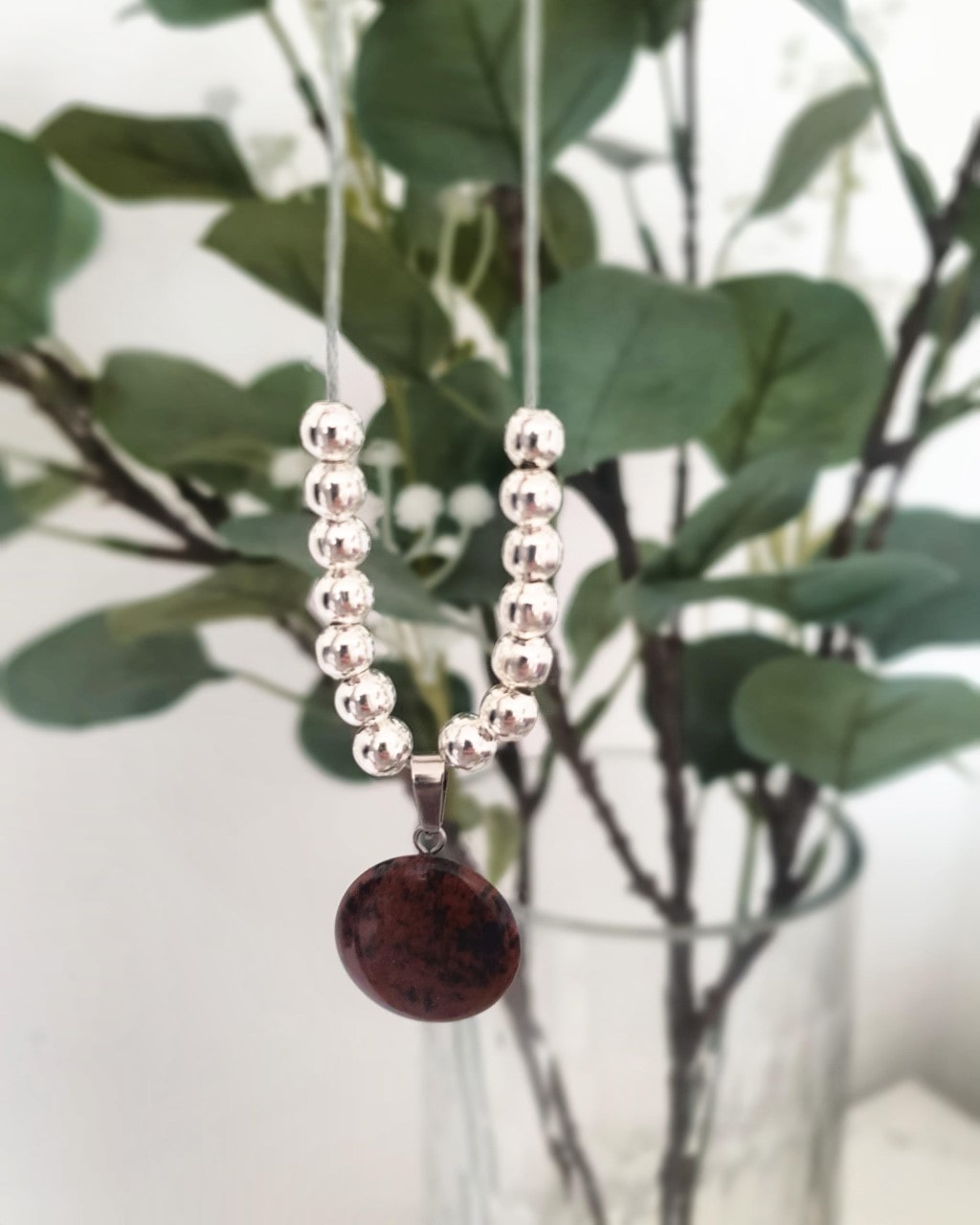
My need to fiddle with something to ease anxiety is always apparent. Earlier this year, I was talking to my friend about making jewellery and how cool it would be to make my own. I have always been into accessories, fashion and jewellery so I said I’d love to make something I can wear and carry with me discreetly but also fiddle with, to stop me from picking so much.
She mentioned worry beads and I was intrigued. I wanted to make my own twist on them. A prettier version, merging them with jewellery design that I would more likely wear, so I did and my life has changed. I have started a small business called Worry Knot.
(image: Emma Johnson at Worry Knot)
Alongside selling calming jewellery, I’m blog writing. I’m advocating more widely about the importance of opening up when confusing and sometimes debilitating symptoms develop. Not only is it therapeutic for me to make my jewellery but it’s extra therapeutic playing with this jewellery a few times a day.
Having something to focus on, things to make and to write about has been crucial in managing my own anxiety, especially at such an anxious time for the world. I hope my jewellery can go on to help those feeling anxious not only now but going forward into the future too.
You can also find me @worryknotuk on Facebook and Instagram.
Emma Johnson is a writer with lived experience of mental health issues. She is the founder of Worry Knot, a jewellery brand to help others who have anxiety.
Reducing anxiety at the moment in our every day lives is so important.
Having anxiety is something that many people have challenges with. It is estimated that about 1 in 5 adults have an anxiety disorder and that more than that will experience an anxiety disorder at some point in their life.
The symptoms of anxiety include feeling restless or on edge, being easily irritated, difficulty controlling feelings of worry and having difficulty sleeping, amongst others.
If you feel that you may be experiencing symptoms of anxiety, there are many things you can do to help reduce and manage those feelings.
1. Look at Lifestyle Choices
A number of different lifestyle behaviours could contribute to your anxiety. Drinking alcohol, taking drugs, eating junk food will all play a big role in how you feel. For example, excessive drinking or the use of drugs can cause a multitude of health problems including liver and kidney damage. It also causes mental illness such as drug and alcohol addictions. You may need further support from a psychiatrist or rehab unit if you are struggling with addiction or mental illness.
On the opposite side, exercising regularly and eating healthy foods are proven to boost your mood, increase the chemicals in your brain that make you feel happy and improve your overall physical health.
If you want to manage anxiety, consider looking at your current lifestyle choices and if there is anything you have the power to change. Be honest in your assessment but know you have options for assistance. Making a big lifestyle change is hard but if there is something you know is causing your mental health and anxiety to worsen, it is a good idea to remove that from your life if possible.
2. Talk to Your Family and Friends
Even if you think your family and friends would not understand, you might end up getting some of your most valuable support from them. You should not ever feel you have to hide any of your mental health concerns from them, unless you know that they would react badly.
Try to avoid shutting people out, being secretive about your mental illness or becoming defensive when people ask.
True friends will listen and care. There is still a stigma to mental illness but it is important to find someone you trust.
3. Set Boundaries
If necessary you can set boundaries for yourself. This could mean letting people know there are certain activities you don’t participate in. It could also mean a limit on how much time you spend with friends and family, in order to practise self care and recuperate.
Many people who struggle with anxiety disorders find that setting up a schedule for themselves that they are consistent in keeping can greatly reduce feelings of anxiety. It helps them to feel more in control and gives them a structure that feels secure.
Setting boundaries is a way for you to have control over your situation and environment, although these should not be too rigid. There are certain things that can’t be controlled that can increase anxiety.
4. Let Go of Things You Can’t Control
If something is out of your control that is causing your anxiety there are ways that you can cope with these feelings. One suggestion is to write down how you are feeling to help let those emotions go. The BACP tells us that, “It can help to express this anxiety in a way that you can control. That could be writing down what you feel, or keeping a journal.”
You can also try making a list of things you are grateful for, or use breathing and relaxation techniques.
If you are still struggling to cope with things out of your control seek help from a professional.
5. Get Professional Help
You could turn to all types of mental health professionals to get help, including GPs (physicians), psychiatrists, psychologists, counsellors and therapists. You may be referred for talking therapies, cognitive behavioural therapy, mindfulness or EMDR therapy for trauma. They may also recommend medication for you too.
In the UK, you would go via your NHS GP who can refer you on to see a psychiatrist or to IAPT for counselling. Also check out the Counselling Directory website.
When searching for a good therapist in the USA, Karen Whitehead, who does counseling in Alpharetta, GA tells us that, “Psychologists (PsyD), Licensed Social Workers (LMSW/LCSW), Licensed Professional Counsellors (LPC), and Licensed Marriage and Family Therapists (LMFT) can all evaluate and treat mental illness, provide talk therapy, support and feedback, and teach coping strategies such as mindfulness.”
Your counsellor will be able to help you better assess your situation and get to the core of your anxieties. Even if you already know why you get anxious, you can benefit from learning coping skills.
Your counsellor can indeed equip you with tools adapted for your specific needs. You will have feedback on what is and what is not working. You can learn to live with, manage and in many cases, recover from anxiety.
You Are Not Alone
Do not ever think you are alone when it comes to your anxiety. Try not to beat yourself up if setbacks occur or you have a bad day.
Talk with your therapist about ways that you can help to further reduce your anxiety. They will be able to help you.
This blog was written by freelance writer Samantha Higgins.















 beurownlight.com