Living With Imposter Syndrome As A Writer by Eleanor

(image: Unsplash)

I wrote about this a little bit a few days ago on my Instagram and Facebook but thought I would write a longer blog here.

So here goes…

In 2016, I started this little blog as a place to share my emotions and feelings around living with anxiety and panic attacks, processing trauma I had been through a few years before and just as a place to vent to family and friends. Nearly 10 years later, I and many contributors have kept this wonderful corner of the internet going and I am very grateful.

From 2016 onwards, I began to write my heart for mental health charities and national publications after sending pitch emails to them about my more unusual story of being diagnosed with bipolar at 16 and hospitalised twice by 25. At the time, bipolar was way less talked about (with psychosis and hospitalisation still a major taboo) and I wanted to be a part of changing that.

Amazingly everything started to click into place after I began online networking with editos… I was writing articles for Metro.co.uk regularly on mental health (Thank you Yvette!), I was featured in Glamour and the Telegraph (thank you editors!), I started writing for Jewish community papers and for a new magazine at the time, Happiful. Then, I decided I wanted to submit my journey with bipolar from 16 onwards to Trigger Publishing as a memoir and signed with them for a book deal in 2018. 2018 was a year of manifestation and synchronicity for me in many areas of my life.

Then, I was asked to write my story to be featured in the Book of Hope by my friends Jonny Benjamin MBE and Britt Pfluger alongside celebrities including Dame Kelly Holmes, Zoella, Alastair Campbell ,Elizabeth Day, Joe Wicks and many others including friends in the mental health writing world. Seeing my name on the cover alongside all these successful people I admired was something else and again my story of hope against adversity was being shared globally to help people who needed it.

My own book Bring me to Light came out in November 2019 just a few months before the Covid Pandemic and so I couldn’t get out there to promote it fully but it still did well on Amazon and was sold in Waterstones and globally. Its something I am hugely proud of despite sometimes feeling shy that my story is out there for all tom read.

Since 2020, I have kept blogging, writing for Metro.co.uk from time to time and I finally self published my children’s book Arabella and the Worry Cloud. However, imposter syndrome has really kicked in, let me explain.

The start of my writing career happened when I was unemployed due to my mental health. I had to leave a face to face teaching job due to my anxiety. I had no idea that this little blog for friends and family would turn into so much. In fact I would say it was a total whirlwind. I was only 30 when I signed my book deal (independently without an agent). I was just 28 when I started writing openly about my mental health and I often feel like an imposter! That little voice that says you’re not good enough because…

I am an independent writer which means I don’t yet have an agent but I have been published before by several publishers and I have also self published my kids book. So I worry that I won’t ever find an agent, that my dream of being a professional author with a team around me (agent, marketing team, earning good money from my craft) seems out of reach. In this industry as well when you pitch to agents to take on your book, it comes with a lot of rejection. My children’s book for example was rejected by Pan Macmillan (although I was fortunate to know someone there who was able to look at my manuscript). I know I need to keep going to help others, but sometimes it feels super lonely and you have to be so resilient. Rejection is normal but its hard.

I chose not to go into journalism full time in a news room for health reasons but I love to write freelance from home and hope to continue to do so.

I guess I feel like an imposter because my career that I did work hard for, came after my former editor Yvette connected with me on Twitter, she liked my blog and commissioned me to write mental health articles (despite at that point never meeting). This was the same for so many incredible editors who gave me their time and knowledge including Naomi Greenaway at the Telegraph , Deborah Joseph (formerly of Glamour) and Rebecca at Happiful. I truly feel blessed these women championed me and my writing.

So I guess what I want to say is that its OK to feel like you aren’t there yet, like you aren’t good enough, like the mountain of where you want to be is too hard to climb. What I have found is when people believe in you, in your ideas, in your story and when you can find that inner confidence and believe in yourself- incredible things can happen. You can manifest your dreams and I do believe one day more will manifest (even if my little imposter voice speaks up).

I want to end this story with something quite relevant that haunts me to this day. I was staying at my Dads when I was writing my first book, in the middle of the Buckinghamshire countryside at the time. I was more ‘high profile’ in the mental health world and very prolific on Twitter back in 2018-19 and so I received an email invitation from a producer at BBC Women’s Hour for a segment they were doing about bipolar. She asked if I would come on the show to talk about it. My fear/ panic about being exposed and too seen (and not worthy) meant I didn’t feel able to do it and I have kicked myself ever since! If anyone from Women’s Hour is reading this (haha) please do get back in touch!

But seriously- sometimes fear and anxiety stops us from doing what we most want to do but are too frightened to do. I still feel scared to give talks about my kids book. I look at others on Instagram who are Sunday Times Bestsellers and have agents and I think to myself….will I ever get there? Unfortunately social media comparisonitis at age 36 (i know I am still young) is still rife.

I think I have to remember that its OK to feel like this, as my friends have told me, so many creatives do. And its ok to take my time, work hard and see where it lands. It’s also OK to take other jobs while being a writer isn’t paying a main income too. I feel imposter syndrome in other areas of my life too but thats a blog for another day.

Do you feel imposter syndrome?

Thanks for reading,

Ellie x

Working From Home In The UK And The Impact On Mental Health: With Choose Leisure

(image: Helena Lopes, Unsplash).

New data has revealed that there has been a rise in interest in mental health advice for those working from home, with searches in England jumping up by 63% in the past year.

With over two-fifths (42%) of remote workers feeling that working from home has had negative impacts on their mental wellbeing, the experts at Choose Leisure wanted to share that there has been a stark interest in mental health support across the UK.

Dr. Hana Patel, NHS GP and GP Medico-Legal Expert Witness commented:

“Working remotely, or from home, can have lots of benefits but it can also be isolating and have a big impact on our mental health. Often, it might be difficult to manage boundaries when being out of the office environment, so here are some tips that can help maintain well-being” :

  1. Highlight of the day – “Each day, try to find one small thing you can take pride in or appreciate. You might find it helpful to create a list at the start of each day, and tick off everything you’ve done at the end.”
  1. Lunch self-care – “Make sure you take at least a 30-minute lunch break and eat in a different room from where you work. If you can, try to get some fresh air and go for a short walk.”
  1. Prep your tech – “Set up a ‘work’ and ‘personal’ login for your laptop, so that you can differentiate between the two – you could even use different screensavers and backgrounds to make the difference clear.”
  1. Meeting environment – “Distinguish between proper meetings and informal chats with your colleagues – if possible, designate different spaces for formal and informal conversations to help set boundaries.
  1. Fresh air, fresh mind – “Go for a walk as soon as you finish – this can act as a fake ‘commute’, and make it feel like you’re coming home after the working day has finished.”
  1. Prioritise breaks – “It’s easy to work longer hours and take fewer breaks when working remotely. Put a reminder in your diary for when you plan to finish working.”

(image: Mikey Harris: Unsplash)

Beyond mental health tips for remote workers, national search trends also reflect the growing concern for work wellbeing.

Choose Leisure utilised search engine analysis to reveal a spike in searches for ‘work from home health’, ‘WFH mental health’, ‘WFH wellbeing’, ‘WFH wellbeing tips’ and 1,446 related keywords.

Nationally, England has been recognised as the country with the largest rise in working from home mental health concerns in the UK, based on online searches.

In 2022, the terms were searched an average of 79,720 times a month, but this rocketed to 129,950 in 2024 – that’s a 63% surge! Scotland came second with a 36% uplift, followed by Wales and Northern Ireland with 35% and 12%.

Searches for WFH Mental Health keywords
Location20222024% Change
England79,720129,95063%
Scotland9,69013,22036%
Wales6,8809,31035%
Northern Ireland6,0906,80012%

Donna Bicker from Choose Leisure, who conducted the research said:

“It’s important for remote workers to understand they are not confined to four walls, their home office or any space you use for daily work.

“Working from home is designed to foster flexibility and improve work-life balance. With mental health concerns on the rise in the UK, finding an ideal workspace—whether at home, in a café, or even travelling in a motorhome—can be essential for improved mental well-being and productivity.”

This non sponsored blog was written by Choose Leisure.

World Mental Health Day 2024: Mental Health And Wellbeing in the Workplace

(image: Mental Health Foundation)

This World Mental Health Day 2024, the focus is on our mental health at work. We have known for many years that the UK has a mental health crisis and that many employers fail their staff in this area. A recent survey from Robert Walters found the following:

  • 71% of UK employers currently offer wellbeing benefits to their staff
  • 83% of professionals have at some point experienced poor mental health at work in the last 12 months
  • 58% of professionals state that it feels like a ‘box-ticking exercise’
  • However, 80% haven’t accessed their employer provided mental health support

Although three-quarters of companies now offer employee wellbeing programmes, 83% of professionals state they’ve experienced mental ill health at work in the past 12 months!

In my own personal experience, I think it is so important that a wellbeing culture is embedded at work from management downwards. Employees should feel safe to express how they feel or if they are going through difficult times- be that bereavement, trauma, depression and anxiety or other forms of mental illness, stress at home and work – and to be well supported if disclosing any confidential information. Similarly, we should be striving to have a workplace where mental health is as recognised as physical health (and prioritised).

As Mind say, “We’re in the middle of a mental health crisis. 2 million people are currently stuck on waiting lists for NHS mental health services. And on top of this, mental health stigma is still a significant issue. Real people, being left behind by a broken mental health system.

Due to lack of service provision, it is even more important for employers to look after their staffs mental health, on today World Mental Health Day and going forward.

I would love to hear how you find mental health at work too,

Eleanor

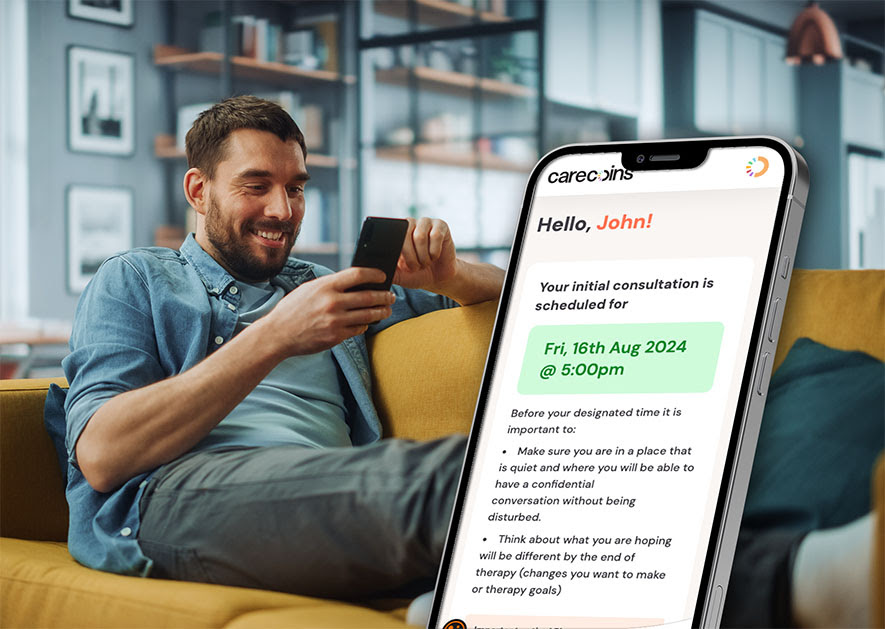
New Online Therapy Platform CareCoins Revolutionises Access to Mental Health Support for Employees This World Mental Health Day 2024.

(image: Carecoins)

This World Mental Health Day 2024, the focus is on mental health at work- it’s time to prioritise mental health in the workplace. As the Mental Health Foundation say, ‘Work can have a huge impact on our mental health. It can be good for our mental health, giving us a sense of purpose, boosting our self-worth, and providing opportunities to connect with others. But it can also be a source of stress and anxiety and contribute to developing or worsening mental health problems. ‘

Introducing Carecoins, a pioneering new mental health platform, which is set to transform the landscape of employee mental wellbeing, offering employers a unique support system for their staff this World Mental Health Day 2024 and beyond.

Designed to connect individuals with qualified mental health therapists in an entirely flexible, hassle-free way, Carecoins ensures efficient and reliable access to professional care, Carecoins brings a unique proposition to the market.

Commenting on this exciting venture, managing director and founder, Tim Ladd, said:

Put simply, Carecoins gives employees access to the support they need to become a happier, healthier version of themselves.

We are all acutely aware of the growing mental health crisis in the nation, and the difficulty in accessing resources through the NHS. This means employers need to step up to provide that all-necessary support to staff.

Mental health is now a significant challenge for a large portion of the UK workforce, with surveys showing at least 63% of employees exhibit signs of burnout, and 91% have experienced high or extreme levels of pressure and stress in the past year.

Finding effective support structures to help combat these trends can be challenging for employers. Providing access to a large pool of BACP accredited therapists, comprehensive mental health and suicide prevention services, specialised support for trauma and bereavement and a number of other resources, Carecoins is a holistic solution for employers

Offering full flexibility, the platform gives access to multiple formats of therapy, ensuring services fit around the user’s life and work schedule and suit their individual needs. As part of its groundbreaking offering, Carecoins supplies every new user an innovative human-to-human consultation to assess their needs and preferences and then allocate a therapist that best matches those requirements.

“The element of personalisation is one that is of vital importance to us – everyone’s mental health journey is different and we wanted to build a platform that could honour that,” added Ladd.

We also understand that confidentiality is a key concern for many employees. Carecoins can be purchased and utilised anonymously, giving employees the freedom and peace of mind they need to take this important step.”

But the platform does not limit organisations to buying therapy services. It enables access to a wide range of mental health and wellbeing services including Mental Health First Aid training provided by Carecoins’ sister company Red Umbrella.

Using Carecoins is much more than just a means to an end. It showcases a visible commitment from employers to protect the mental wellbeing and resilience of their employees, making them happier, more engaged and more productive.

“More than that, it encourages a much-needed positive attitude towards mental health in the workplace, which benefits businesses and employees alike.”

So, this World Mental Health Day, definitely check out this platform!

5 Ways How Working Remotely Can Benefit Your Mental Health by Breanna Howell

(image: Kornel Mahl, Unsplash)

People are embracing working remotely; even tech companies are allowing their employees to decide whether they want to work from home indefinitely. There are several advantages of working remotely compared to working in offices, in person, but most importantly, remote work is valuable to your mental health. Here are five ways that working remotely can benefit your mental health.

1.   Flexibility and Work-Life Balance

When focusing on work, other aspects of life often end up neglected unless you have a healthy work-life balance. To be content and excited about work, employees also need leisure time to connect with their loved ones and pursue other talents and interests. Based on the time constraints, this becomes challenging with in-person work. Luckily, it is easier to find a balance when working from home; there is more time with family, and with proper management, more leisure time to pursue other interests.

If working conditions are more flexible, staff can find a healthy and effective work-life balance. Being able to work while still having a personal and social life makes them happier and improves their mental health. That is why more and more companies opt for time and attendance solutions to help their employees have a better work-life balance.

2.   Reduced Commute Stress

The daily commute is the least favourite part of a job for employees. Whether private or public transport, a lot of time is spent on the roads and you have to deal with traffic and overcrowding as everyone is in a hurry to get to their workplace. Thanks to remote work, you don’t have to worry about waking up early to beat traffic; simply prepare and start your day. You even have more time to establish an effective morning routine.

Commuting daily can take a toll on you, making you anxious and increasing your stress. You have to wake up early every day and deal with other people rushing to get to work on time. Working from home gives you a reprieve, allowing you to rest, have a good night’s sleep, and avoid traffic and congestion, which is a win for your mental health.

3.   Customisable Work Environment

With the traditional work setup, you get a designated space at the office, work with the same people, and have the same routine daily. You can also get interrupted by colleagues or have managers looking over your shoulders. The monotony and lack of freedom can negatively affect your outlook on life, sometimes even making you indifferent towards your job. Imagine working in your living room, your favourite cafe, or on the seafront. Being able to customise your space makes remote work exciting because it is not predictable; you can finally look forward to the day.

The power to control where and when you work makes you more productive because you are more relaxed and excited about your day. You can customise your workspace however you want, and that makes you happy and fulfilled, which is recommended for your mental health.

4.   Increased Autonomy

One of the advantages of working from home is that the staff gets the freedom to structure their day. Everyone knows what works best for them and can easily decide when and where they are more productive. Instead of a strict and stressful routine, you get the flexibility to choose, which has a massive positive impact on your work and overall well-being.

Autonomy allows you to prioritise the important while scheduling other activities that matter to you. Having control gives you peace of mind, calms you down, and makes you more productive, positively impacting your mental health.

5.   Opportunities For Healthier Habits

Between the daily commutes and extended office hours, there is little or no time for exercising, cooking, and eating healthy meals. Establishing a morning exercise routine becomes challenging, and many rely on calorie-rich snacks to help get them through the day. Fortunately, working from home gives you enough time to work out, cook proper meals, and develop healthier habits.

Eating healthy and exercising have a positive and lasting impact on your mental health. Being healthier can (along with other medical treatments) help issues like depression, ADHD, anxiety, memory loss, insomnia, and other illnesses that affect your productivity.

Conclusion

High stress levels are common in the workplace. There is quite a lot to deal with, from hectic daily commutes to strict schedules and a lack of time to pursue other interests and connect with loved ones. Before all these take a toll on your mental health, it is crucial to consider working from home. This way, you don’t have to worry about commuting, and you can customise your work environment and lead a healthy, happy life.

Breanna Howell is the public relations specialist at Claremont Diamonds living her dream of promoting positive public awareness of the company. As a freelance blogger and mom of two millennials, she’s also passionate about providing inspiration and support to everyone on their journey to a fantastic marriage.

This article contains a non sponsored link.

How Companies Can Help Their Employees Avoid Burnout.

(Image: Etienne Girardet: Unsplash)

Most modern workers are stressed out, with stress taking a toll on their relationships, sleep, and health, eventually affecting their work productivity. Add to that are the pandemic, job losses, and feeling isolated for those working remotely. 

Remember, employees are the backbone of a company. Without them, a company cannot function as it is. As an employer, you should not ignore their sense of well-being. While you cannot entirely alleviate stress, you can do some things to help minimise them. Here are some ways companies can help their employees avoid burnout.


  1. Prioritise Workplace Wellness 

Wellness should be a priority in every workplace, and there are many ways employers can make wellness a priority. Start by offering a quiet place for employees to unplug, meditate, and relax for a few minutes. A short break from work is one of the most effective ways to manage, fight, and eliminate workplace burnout. Encouraging your employees to take a short break can reduce unwanted stress that could affect their focus and hinder productivity.

Investing in a few aesthetics to improve the office environment is another way to invest in the well-being of employees. Instead of the usual dull white walls, put a splash of bright colour to positively impact the mood of your employees. Furnish the space with inviting chairs, plants, and beautiful pictures to establish a relaxed and carefree environment. 

In those days of high stress due to increasing workload, encourage employees to take a mental health day that can combat burnout. It’s a day to take a break from work and minimise work commitments and responsibilities. They can use this short break to focus on relaxing, relieving stress, and having fun, which are the most effective ways to prevent workplace burnout.


  1. Know How to Spot the Signs 

As an employer, you should be aware of how to spot the signs that your employees are stressed or suffering from burnout. While not everyone has this ability, you will find some great online courses about Safeguarding to help you determine the signs of a struggling employee, which may be related to workplace burnout or other factors. Whether work-related or not, employers should be aware of any employee suffering from burnout.

Some of the most common signs your employees are stressed include missed deadlines, decreased productivity, reduced work quality, procrastination, and lack of interest. Remember that failing to address workplace burnout can quickly cost your company money. The lower the productivity, the higher the percentage of profit you’ll lose.

Social withdrawal is another common sign of a stressed employee. It typically means a reluctance to participate in workplace activities and wanting to stay alone instead of mingling with co-workers. Workers suffering from social withdrawal often love to argue and cause chaos in the workplace. You can address the situation by talking to the employee, listening to complaints, and making the employee feel valued through rewards and incentives.


  1. Encourage Teamwork 

Another way companies can help employees prevent burnout is to encourage teamwork. Several studies have shown that it can positively affect the quality of work, productivity, and job satisfaction. Co-workers can serve as an essential line of emotional support for struggling employees. They understand how everyone feels at work and can help each other deal with stress.

One of the reasons teamwork can help prevent burnout is it can serve as a welcome distraction. If an employee is stressed due to reasons outside work, being part of a team can be a good distraction from these stresses. When surrounded by others, you can absorb their energy. So, if you’re feeling sad, you can be uplifted by the generally happier circumstances surrounding you, leaving you feeling better.

Thus, one of the roles of managers is to develop a work environment where people are happy to help and work with one another. An effective manager can establish a committed and highly cohesive team, encourage teamwork, and communicate frequently with everyone, welcoming their thoughts and ideas, regardless of differences.


  1. Maintain Communication

Companies must find ways to prevent burnout for employees with specialist roles, such as software developers, so they will not lose these team members. To help retain software developers and other vital positions, burn out prevention is essential. One of these is proper communication, which is even more essential for remote workers with specialist roles. Working from home has many benefits but could exacerbate burnout in some employees.

Proper communication with the team can also mean listening to work-related problems. Listening is essential in every situation, but many managers feel as though they are great in this area. Unfortunately, only a few managers prioritise frequent communication with employees. Studies show that employees with managers happy to communicate and listen to their work-related problems are 62% less likely to become burned out. 

If employees find that their managers are willing to communicate with them, they will feel at ease since their managers genuinely care about them. The most effective companies are those that demonstrate they value the employees by investing in them through time, attention, and communication. They value employees, celebrate their achievements, schedule performance discussions, and show respect to their employees.


  1. Create Reasonable Workloads 

If employees deal with an incredible workload, they will always have to play catch-up. It can cause them to become overworked, often the main reason behind workplace burnout. Pre-empting your team’s workload is one of the best ways to prevent them from getting overworked, and this is especially true for companies with unpredictable workloads.

Using workload forecasting tools is one way to pre-empt your team member’s workload. These tools rely on historical data and AI algorithms to determine the amount of workload at a specific time frame. Knowing the reasonably accurate estimate of a team’s workload can help companies evenly distribute workload, preventing workplace burnout. 

Workload forecasting can also help to ensure that a workplace is not overstaffed or understaffed and that the team will always remain productive. Companies should also encourage managers to monitor employee productivity and performance. If they notice that performance is slipping down, it could indicate that such a particular employee is stressed and needs help.

If an employee becomes burnt out and needs help with their mental health, you can encourage them to reach for support. Consider also putting in place workplace counselling services too. Wellbeing in the workplace is extremely important and making sure your employees avoid burnout, taking care of their mental and physical health so they can be more productive, healthier and happier.

This article was written by a freelance writer.

5 Effective Strategies To Manage Stress As An Entrepreneur.

(image: Radu Florin, Unsplash)

We all know that being an entrepreneur comes with its fair share of exhilarating highs and daunting lows. The constant pressure to innovate, meet deadlines, lead, and overcome obstacles can take a toll on our mental and emotional wellbeing. 

This is where stress management comes into play. It is important for entrepreneurs to manage their stress, as stress can affect creativity, energy and judgement. If you are an entrepreneur who needs guidance with stress management, read these five effective strategies below: 

Strategy 1: Prioritise Self Care

Self-care is anything you do to take care of yourself – mentally and physically. By taking care of yourself, you promote relaxation. Although relaxation cannot take your stress away entirely, it sure helps. 

Self-care can come in the form of walking around the block, meditating in your garden, taking a warm bath, or even picking up your guitar and pulling some strings. 

To prioritise self-care, you must set up a self-care routine and stick to it; for example, every day after work, set aside an hour for meditation. 

Strategy 2: Delegate And Outsource

As an entrepreneur, you might be used to doing everything independently. It is after all the hard work that got you to the point of owning a business. But you do not have to do everything anymore. 

An overload of work causes an overload of stress, so start delegating and outsourcing tasks – it can be anything from delegating administrative tasks to outsourcing Content Marketing

To give you peace of mind, find trustworthy people to handle these tasks for you. Hire the right team members and research and compare outsourcing partners to ensure you have the best. 

Strategy 3: Improve Your Time Management Skills

Time management is a word that often gets entrepreneurs running in the opposite direction. It can seem like an insurmountable task to take on, especially when so many responsibilities come with running a business. 

However, time management is essential for handling your stress. To better your time management skills, create a to-do list, set up a time-blocking system, and prioritise your daily tasks. 

Luckily this is the modern age, so you can use many online time management tools – Trello or Asana are just two of them. So please don’t let stress get the best of you just because your day is filled with tasks; utilise these tools! 

Strategy 4: Develop A Support Network

People need people, no matter their personality. If you are going through a tough time, reach out to your family members, your friends, or even a trusted business partner/employee. 

Talking about how you are feeling is known to reduce stress because it gives you an outlet to vent. 

So leverage the support of those closest to you; you will be surprised at how much better you feel. 

Strategy 5: Adopt Stress Reduction Techniques

Stress reduction techniques are daily practices you can implement to help reduce your stress. Popular stress reduction techniques include deep breathing exercises, visualisation, and journalling. 

Deep breathing exercises can help you relax by focusing on controlled, long breaths that slowly move in and out of your body. Visualisation involves visualising a calming scene or activity, such as a beach or a walk in the park. And journaling your thoughts and feelings can provide an outlet for difficult emotions. 

You can always contact a professional if you’re unsure about these techniques. They have the necessary skills and knowledge to teach you how to effectively use each technique. 

Start innovating, meeting deadlines, leading and overcoming obstacles with a healthy mindset.

By following these five effective stress management strategies, you will be an unstoppable entrepreneur! 

This article was written by a freelance writer,.

How To Reduce Your Stress Levels After Work by Rose Morley

(pexels: Andrea Piacquaido)

Work-related stress catches up to us all eventually. Whether you are experiencing anxiety due to large workloads, or you are finding it hard to adjust to a new role, it is very normal to experience bursts of stress now and then. Knowing how to deal with stress is not common knowledge for many of us, and it is unheard of for workplaces to encourage mindful practices to reduce the symptoms of stress.

Chances are if you are reading this you have hit rock bottom, or at least the levels of stress are starting to have impacting effects on your life. Reducing stress in all areas of life might seem impossible, but we can at least take steps toward minimizing its impact on us by starting healthier habits when we get home from work. Home is for comfort and stepping away from the workload of the day.

If you are looking for the telltale signs of work-related stress and habits you can start when you return home from work, take a look at our following suggestions.

Symptoms Of Work Stress

First of all, you need to come to terms with how stress is showing up in your life. You may have been experiencing work-related stress symptoms for some time now, but you might just have ignored the signs. If you have experienced the following symptoms you might have beginners signs of work-related burnout and stress:

● Work-related thoughts when falling asleep

● Insomnia

● Regular headaches

● Fast heart rate when thinking about work-related tasks

● Susceptible to regular illness

● Lack of sleep

● Frequent sweating

Whilst many of these symptoms may be the results of many other things, you should consider which of your symptoms were not present before you become stressed with your work.

Steps You Can Take

If you are looking for habits you can start to implement to reduce your stress levels after work, consider taking action with the following:

Write Down Your Worries

First of all, the best way to remove ruminating thoughts from your head is to take the time to write everything down. This may feel uncomfortable at first, however, this is a great way to be present and list all of your worries, instead of letting them overpower your thoughts back to back. Seeing exactly what is stressing you out on paper has a way of taking the power away from each worry, and helps with the process of minimizing these stressors.

Prioritise You Time

Also, after work, you should make sure that at least an hour of your evening is spent doing exactly what you want to do. This hour should not be impacted by any other responsibilities, it may feel easier to do this after you have done your other priority tasks such as cooking and preparing for the next day. This self care time might be spent having a relaxing bath, or maybe watching a feel-good film. Spend time with yourself and make sure you enjoy it.

Speak With Your Support Network

Speaking with our loved ones is a great activity to complete when we feel like things are getting too much. Keeping ruminating thoughts to ourselves is what causes dangerous levels of stress and burnout, so spend some time speaking with your support network about what you are struggling with most. They may not be able to offer a solution, but at least feeling like you have someone to vent to is a healthy way of releasing stress.

Remember Why You Are Working Hard

Getting caught up in the hustle and bustle of work can often lead to a lost cause and forgetting the purpose of why you are doing what you are doing. For example, you might be feeling stressed at work due to working hard for a pay bonus, and this bonus might be to pay for a diamond ruby ring to propose to your loved one. It is so easy to lose sight of what you are working hard for, but always keep the purpose at the forefront of your mind.

Treat Yourself

Finally, work-related stress can often bring up the feeling of being in a lack of mindset and can make you feel at your lowest. Every so often you should concede treating yourself after work with something to show your appreciation for yourself. It could be as simple as treating yourself to your favourite takeaway food or booking a treatment at the spa after work. Remind yourself that you deserve to feel peace and appreciation for yourself.

Final Thoughts

Work-related stress can feel inescapable at times, but taking the steps to implement mindful practices after work can beat the anxiety that appears when we least want it to. Self-care can go a long way so make sure you follow this guide to help you reduce stress levels after work.

This article was written by freelance writer Rose Morley.

6 Tips To Keep Your Morale High While Job Hunting by Rachelle Wilber

Job hunting is never easy, and it can be especially challenging in this current climate. With more people competing for fewer jobs, the pressure to find a job can really take its toll on your mental health and morale. But there are steps you can take to help keep your spirits up during your job search. Here are six tips to help you maintain a positive outlook while job hunting. 

Maintain Your Physical Health 

Ensure you eat healthy meals, get enough sleep, and exercise regularly. Taking care of yourself physically will give you the energy and strength you need to stay motivated throughout your job search process. Plus, the dopamine you get from exercising helps stabilise your mental health. 

Set Realistic Expectations 

Setting goals for yourself when job searching is important, but it’s also important to set realistic expectations for what you want out of the process. Setting unrealistic expectations can lead to frustration and disappointment when things don’t go as planned. Keeping realistic timelines, salary goals, and more in check will help you in this process. 

Stay Connected with Friends and Family 

Reaching out to friends and family during your job search can provide much-needed support and helpful advice from those who know you best. Staying connected with people who care about you will boost your morale and remind you that people in your corner are rooting for you. 

Develop Networking Skills 

Networking is key when it comes to finding a new job, so focus on building strong relationships with those in your industry or field. You never know who might have connections or insights into potential opportunities that could be perfect for you. Attend conventions, group meetups, or whatever is available to you to further your network. 

Stay Organised 

Keeping track of all the applications, resumes, emails, interviews, etc., can be overwhelming at times. Make sure you stay organized throughout the process by creating systems that work for you. This could include keeping notes in documents, making spreadsheets tracking your progress, or whatever works for you. Having things in order will help reduce stress levels associated with searching for a new job significantly. 

Take Breaks 

While it’s important to remain focused on finding a new position, taking some time off every now and then is essential as well – even if it’s just one day per week where all you do is relax and enjoy some much-needed “me time.” Taking regular breaks from the search allows time for reflection which may lead to fresh ideas and perspectives on how best to tackle the next step in your journey. 

Searching for a new job can be stressful at times, but these six tips should help keep your spirits high. Remember that taking care of yourself physically, setting realistic expectations, staying connected with friends/family members, developing strong networking skills, staying organised, and taking regular breaks should put up in good stead throughout this journey – so don’t give up. 

Rachelle Wilber is a freelance writer.

4 Ways To Improve Employee Wellbeing.

(Image: Brooke Cagle: Unsplash)

Considering the wellbeing of employees has never been more important, or more timely. With world events like the coronavirus pandemic having a serious impact on global mental health, more and more employers have begun to more seriously consider the overall wellbeing of their employees, not simply their productivity in the workplace. 

In fact, many employers are beginning to understand how the two are intimately connected.Indeed, it is reported that healthy employees are 74% more likely to be satisfied with their current job than unhealthy employees.

It is therefore important for companies to consider ways to improve employee wellbeing. Below is a list of tips for improving the wellbeing of your employees.

Training and Long-Term Goals

The reason that many employees are unhappy at work is that they feel they have stagnated, spending years in a particular position without any opportunity for growth or new responsibilities. 

It is therefore important to understand the individual professional goals of your employees and how you might deploy training and development schemes to help them achieve those goals. An employee is much happier if they feel they are working towards a goal or new opportunity, not simply stuck in a 9-5 grind. 

It is well worth investing in personal development schemes to help employees recognise and develop their individual talents. These schemes can come in the form of lecture series or workshops, training schemes or bootcamps. 

Flexibility

It has been reported by several studies that allowing employees greater flexibility regarding when and where they work can greatly improve mental health. Allowing flexible working hours  and locations can help employees feel a greater sense of autonomy over their personal and professional lives. 

Obviously this involves a degree of coordination, since employees must still be able to work collaboratively throughout the day, but studies have shown that more flexible scheduling can lead to greater wellbeing and productivity.

(image: Stefan Stefanovic: Unsplash)

Social Engagements

It is important for the wellbeing of employees to work in a friendly and collaborative workplace environment. Creating opportunities for social, non-work engagements for your employees is not just a chance for them to let off steam, it can be a vital way of helping employees build meaningful and productive social relationships with their colleagues.

If staff are on friendly terms, they are more likely to look forward to coming into work, as well as more likely to collaborate successfully with their colleagues on work-related tasks. A social and amicable work environment almost always leads to a happier and more productive workforce.

Creating a healthy office environment, full of friendly social links, can be achieved in several ways. One way is the more informal route of arranging after-work social engagements (or weekend trips) for your employees. Or you could go the more formal route of arranging dedicated team-building days or afternoons. 

There are a myriad of ways of creating a friendly workplace environment, but it is inarguable that doing so will lead to greater wellbeing among all employees. 

Strategize and Focus on Mental health

Many people believe that their mental health issues can at least partly be attributed to the pressures and strains of their professional lives or because they require financial assistance. It is therefore essential for employers to focus on creating an inclusive environment where mental health issues can be discussed and tackled in an open, honest and compassionate way. 

There are many ways in which employees can address mental health issues in the workplace. One is to create, and follow, a comprehensive wellbeing policy. The policy should signpost ways in which the company works to address mental health issues as well as the resources that the company provides for employees in regards to mental health management. 

Creating a workplace environment in which mental health is clearly seen to be a priority will foster a greater sense of emotional security and wellness for your employees.