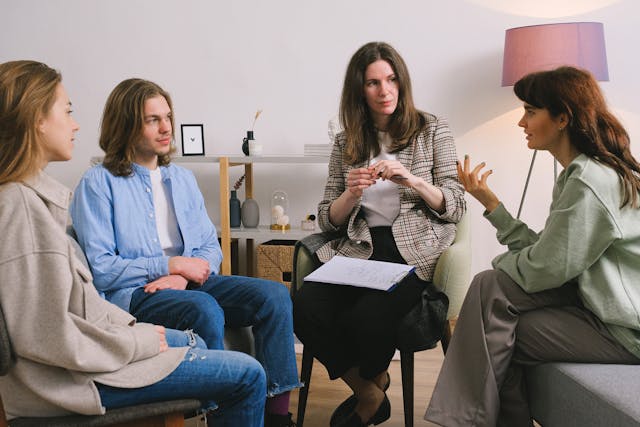
So many aspects of life can impact your mental and physical health and overall wellbeing. In this blog, we will be focusing on relationship stress, seasonal changes and our homes and how they can impact our wellness.
Your Relationship
Your relationship is one of the things that can impact your health the most. Of course it has the ability to impact your mental health, though we’re also talking about the physical side of things. This is especially apparent if your relationship is full of stress and causing you to struggle mentally. Stress from relationships can trigger skin conditions such as acne and break outs. It can be a reaction that your body is having, to tell you that it needs to slow down and heal.
Relationship troubles can lead to arguments and isolation and cause emotional difficulties. If you’re worried that your relationship is not good for your health, try talking to your partner calmly and in a safe environment. If this is not possible, reach out to a therapist or support network too.
The Season
Time of the year has a huge effect on our mental health, the season changes everything. In the fall (autumn) and the winter it’s far more common for people to be ill with depression due to the weather, than it is in the summer months. People also become more physically unwell too. This could be for a number of reasons, but it’s partially because people’s immune systems are weaker when it’s colder outside.
So, if you notice that you are getting poorly, that your joints are hurting, that you’re generally feeling unwell, it could be because of the colder weather and season.
Your Home
Your home doesn’t mean to harm you, but sometimes a build up of dust or toxic material, a leaking roof or something else can really cause you problems you can’t avoid. You can try cleaning, making repairs, and even throwing out old furniture and replacing it with new pieces. Oak dining chairs and tables are in fashion right now, so why not consider it?
At the end of the day, there are so many different things that can impact your health and you have to be ready for all of them. It’s important that you remain vigilant, and if something seems to be causing you any issues with your health, you have to work on it asap and reach out for support from your doctor.
A few years ago, I was delighted to discover this incredible charity- Christmas for CAMHS through a post by its founder Ro Bevan. This charity means a lot to me because 20 years ago this festive season, I was a very unwell 16 year old on a NHS child and adolescent (CAMHS) in patient psychiatric ward in the Priory North London, struggling with a bipolar mixed episode. I had psychosis and hadn’t yet been diagnosed with bipolar. Although I am Jewish and don’t celebrate Christmas, I remember that the ward gave us small presents and that other children/adolescents wrote me lovely messages of kindness and hope wrapped up in seasons greetings. Being away from home and especially during the festive season is filled with loneliness and sadness, especially if you are in hospital. In 2004, Christmas for CAMHS did not exist but their work now is vital.
So who are this amazing charity?
Christmas for CAMHS is a small charity who gives gifts and goodies to children and young people in hospital for their mental health over the festive season. This is our 9th year of giving gifts to young people in CAMHS (children and adolescent mental health services) inpatient units across the UK and this year we’re giving over 1300 gifts!
Christmas For CAMHS was originally set up because Dr Ro Bevan saw a huge disparity in the way CAMHS units were treated over the festive period compared to other NHS services for children and young people.
In 2015 Ro was working in a children’s hospital for those with a physical illness. That Christmas the children’s hospital had tons of presents donated, mostly from corporate donors – so many presents that there was enough leftover for patients’ birthdays until June of the following year! A year later, she was working in child and adolescent mental health and, in stark contrast, they had no presents donated at all. The patients had one present each, chosen by the therapy team and paid for by the ward – scrimped and saved from the NHS budget that is meant to cover therapeutic activities and other expenses.
Ro posted about the inequality on Facebook and before she knew it, her post had gone viral with 1,032 shares and so many supportive comments. It inspired her to start Christmas For CAMHS the following year to support these children and young people who would otherwise be forgotten by the generous public.
When the charity first began in 2016, they set up a simple fundraiser online which raised £1000 and managed to send around 300 gifts to young people in units that year. Since then, they have grown to be able to reach every CAMHS unit in the UK, but still work in a pretty similar way! There is the online fundraising page running each year where people donate either as individuals or on behalf of fundraisers they have run in their local community or with work colleagues. Additionally, there are corporate donations and people setting up their own fundraising pages to do amazing challenges to raise money (a couple of years ago one fundraiser ran a marathon around a Christmas tree!).
There is also a wish list where people can donate specific chosen gifts for children who may be feeling very alone.
(image: Christmas For CAMHS)
The charity reaches out to every CAMHS unit in the UK to ask the staff that work there how many young people they might have over Christmas. They also ask them what they think their young people might like, picking from a list of tried and tested categories, and the age range of their young people. The elves then work night and day to ensure that gifts are bought that align with what each CAMHS unit has requested and that are safe for young people in hospital for their mental health to be given.
Once the gifts have arrived there is a major ‘packing weekend, in Bath. During this, volunteers come and help pack up massive boxes with all the assigned gifts, some Christmas decorations, some activities (such as colour in paper chains or blank cards), a Wellbeing Advent Calendar, some fidget toys and an extra ‘ward gift’ for each ward to enjoy together. We don’t wrap the gifts, so the wards can check them, but we do provide wrapping paper and sticky gift tags. We also provide a bigger gift, when requested, for young people on the wards who may not receive a gift from anyone else this Christmas, such as young people who have no family support. The gifts then get delivered to each CAMHS ward ahead of Christmas day.
This year, the charity is also sending wards some paper chain ‘strips’ with cheesy cracker jokes written on them, made by members of the public and assembled by young people on the wards, providing a tangible reminder that we are all still connected despite what the young people are going through. Young people loved these last year.
It is always so nice to receive messages from young people about the gifts that they’ve given. A young person recently told the charity:
“The gift made me smile so much. I’d had such a bad day and it was an utterly terrifying time in my life – I was about to turn 18 and had never felt more alone. It was so weird but lovely to think that people who didn’t know me cared enough to make me and my friends feel special and connected. You really do such an amazing job. You’re so kind, thank you.”
The whole team and all donors are thinking of every child and young person who will be spending the Christmas period in hospital due to their mental health, which is exactly why Christmas at CAMHS does what it does – we want them to know that we’re thinking of them and that lots and lots of people are holding them in their hearts.
Parenting is a journey filled with countless moments of joy, laughter, and pride. However, it also comes with its fair share of challenges, especially when you encounter behavioural issues in your child. Seeing a child struggle can be a source of stress and worry for any parent. It’s essential to remember that you are not alone; many parents face similar obstacles and there are resources available to help both you and your child navigate these challenging times. In today’s blog post, we’ll explore practical steps you can take to support your child through behavioural issues effectively.
Understanding the Situation
The first step in addressing behavioural issues is understanding that they are often a part of normal development. Children go through various stages as they grow, each accompanied by different behaviours. It’s crucial to recognise the difference between typical developmental behaviour and behaviour that might signal an underlying issue. Observing patterns over time—such as frequency, intensity, or duration—can provide valuable insights into whether a child’s behaviour is part of their growth or indicative of something more complex.
Patience
Once you’ve identified that your child may need additional support beyond typical parenting strategies, it’s essential to approach the situation with empathy and patience. Open lines of communication can make all the difference in understanding what might be causing certain behaviours. Encourage your child to express their feelings and thoughts without fear of judgment or punishment. This open dialogue not only helps build trust but also provides you with clues about any underlying issues such as anxiety, bullying at school, or difficulties with academics.
Professional Help
After establishing communication, it’s beneficial to seek professional guidance, like that offered by Infinite Healing & Wellness, if needed. Consulting with paediatricians or mental health professionals who specialise in children can offer clarity on whether there are specific needs requiring attention. These professionals can conduct assessments to determine if there are psychological or neurological factors contributing to the behaviour changes in question. They may suggest therapy sessions tailored specifically for children which could include play therapy, cognitive-behavioural therapy (CBT), or family therapy sessions.
Effective Techniques
In addition to seeking professional help for your child, consider equipping yourself with effective parenting techniques specifically designed for managing challenging behaviours. Parenting classes or workshops often provide valuable strategies for positive reinforcement and setting consistent boundaries while maintaining a nurturing environment at home. Learning how best to respond during difficult situations helps minimise stress for both parent and child alike while fostering an atmosphere where constructive change is encouraged.
Self-Care
Lastly but vitally important is self-care for parents during this process; supporting a child through behavioural challenges requires emotional resilience from caregivers themselves! It’s easy sometimes amid caring duties to neglect one’s own needs. However, taking time out regularly ensures you’re not just physically present but mentally equipped to handle whatever comes along the next day together stronger than before!
Supporting a child through behavioural issues is no small feat but rest assured knowing every step taken towards understanding them better brings hope closer within reach! Remember being proactive makes all the difference; stay informed, communicate openly, lean upon experts, adopt new strategies whenever necessary, and don’t forget to look after yourselves along the way too.
A happy, healthy, balanced family dynamic benefits everyone involved in a long-term success story worth striving toward together!
This article was written by Brooke Chaplan, freelance writer.
A new film by the charity Nip in the Bud exposes the hidden dangers of social media and smartphone use among children. A Stolen Childhood provides startling insights from children, headteachers and doctors, shedding light on the everyday harm caused by digital platforms.
Launching today, the film highlights several alarming statistics. A shocking 90% of girls and 50% of boys report receiving explicit pictures or videos they did not want to see. Additionally, 1 in 5 children have experienced online bullying, with 24% of those bullied resorting to self-harm and 22% altering their appearance as a result.
Furthermore, boys as young as 13 have been targeted for sextortion scams, and 80% of teenage girls feel pressured to provide sexual images of themselves.
Emma Robertson, co-founder of Digital Awareness UK, emphasises the hidden nature of these issues: “The thousands of children we talk to in schools tell us that their parents often don’t know how much time they’re spending on their devices overnight, or what they are doing online. This is a new and hidden world which adults can find hard to penetrate.”
MRI scans show screen time reduces brain areas responsible for visual processing, empathy, attention, memory and early reading skills.
In response to these findings, many psychologists, headteachers and GPs are advocating for stricter guidelines:
No smartphones until age 14
No social media until age 16
These recommendations aim to protect children from various online risks, including increased loneliness, exposure to harmful content, access to strangers, behavioural addiction and cyberbullying.
At Nip in the Bud we produce free, evidence-based films and other resources aimed at parents, carers and teachers of primary-aged who may be struggling with mental illness or unmet neurodiverse needs.
Our mission is to empower families and communities around our children to recognise and respond to early signs of mental illness or challenges in a neurotypical world, with resources made in conjunction with mental health experts, educationalists and families going through similar experiences – facilitating early intervention, so that problems can be “nipped in the bud”, allowing our children to blossom.
In an environment where life’s hectic pace can strain family relationships, family therapy seems like a ray of hope for preserving relationships and promoting comprehension. Although the phrase “family therapy” can conjure up ideas of resolving disputes, the advantages of this approach go much beyond that, including enhanced relationships, better communication, and emotional healing.
Enhancing Communication Skills for Stronger Connections
Healthy relationships are based on effective communication, and family counseling services are essential for improving this ability. Communication failures are a common cause of miscommunication, conflict, and emotional distancing in families. Families can acquire and hone skills that enhance their capacity for eloquent and sympathetic thinking and emotional expression via counselling. Therapists help family members express their needs and actively listen to one another via various techniques, including role-playing and guided conversations. A family’s ability to communicate better can result in more meaningful and fruitful relationships. For instance, activities aimed at recognising and resolving communication patterns that fuel conflict are often included in counselling sessions. Family members can lessen the number of disagreements and misunderstandings by learning to have talks with more empathy and understanding.
Addressing and Resolving Conflict Effectively
Family life will always include conflict, but if unsolved concerns are not properly handled, they can become serious difficulties. Family therapy offers a neutral, safe environment for discussing and working through issues. Family members can share their opinions and feelings in talks led by therapists without worrying about being judged. Families are better able to resolve disputes in a way that fosters understanding rather than hate in this controlled setting. Families that get treatment concentrate on improving their ability to solve problems and resolve conflicts. Counselors often teach family members conflict-resolution strategies like compromise and negotiation, which help them identify points of agreement and strive toward amicable resolutions.
Strengthening Emotional Bonds and Family Cohesion
Family therapy has a crucial role in strengthening emotional ties and promoting unity within the family. Emotional distance often results from unsolved problems, unfulfilled desires, or traumatic experiences in the past. Family members can examine and resolve these underlying difficulties in therapy, which promotes emotional healing and fortifies bonds between them. Families might better comprehend one another’s experiences and viewpoints by using facilitated conversations and therapeutic activities. Activities intended to improve emotional connection, including telling personal tales or expressing appreciation, are often included in the therapy process. Through deeper connections fostered by these activities, family members can develop empathy and trust.
Improving Family Roles and Dynamics
Redefining and addressing family roles and dynamics is another aspect of family therapy that can have a big influence on relationships and family functioning. Rigid or dysfunctional role structures are a major source of discontent and conflict in many households. For instance, a family member can take on an emotionally taxing caregiver role, or there can be tasks that are not evenly distributed, leading to conflict. The chance to assess and modify these responsibilities to better suit the needs and abilities of each family member is offered by therapy. In order to recognise and treat problematic patterns in roles and dynamics, therapists collaborate with families. Families can investigate and reinterpret roles in a manner that fosters harmony and respect for one another via therapy. As an example, family members might work together to create new rules about who gets what or help each other adapt to new positions within the family.
Fostering Resilience and Coping Strategies
The development of resilience and useful coping mechanisms is yet another important advantage of family therapy. Families often deal with a variety of pressures that might harm their relationships and mental health, such as health problems, financial hardships, or life changes. Families that get therapy are given the skills and techniques to deal with these pressures and keep a good attitude. Therapists assist families in creating coping strategies that improve their capacity to deal with difficulties and adjust to changes. Teaching stress management strategies, developing problem-solving skills, and promoting healthy lifestyle choices are a few examples of therapeutic approaches. Families develop resilience, support one another through trying times, and manage to stay stable in the face of outside challenges.
Finally…
The advantages of family therapy for improving family dynamics and relationships are immeasurable. A family that receives family therapy can become more cohesive, resilient, and supportive—a place where people feel empowered to face life’s obstacles as a unit.
Sometimes, I get emails about stories and they really stand out to me. This was one of them. A friend of mine knew about this suicide prevention charity in Israel, called Gila’s Way. The Hammer family in the Jewish community sadly lost their daughter Gila z’l to suicide when she was just 18. Gila had mental health issues and the family want to save lives in her name and make sure it doesn’t happen to another family. Rabbi Shalom Hammer, Gila’s father and a world renowned lecturer, started sharing his insights from Gila’s tragic story in order to raise awareness, teach empathy, and promote dialogue regarding suicide in order to ensure its prevention.
Gila’s Way is a non-profit organisation which implements, educates and presents programs regarding mental health awareness and suicide prevention in order to save lives.
I asked Rabbi Shalom Hammer a few questions about his life saving mission:
Your charity Gila’s Way has such an important mission. Please can you tell me more about Gila as a person, her mental health struggles and how you as a family coped in the aftermath of her tragic death/ how the charity got set up?
Gila was an unbelievable girl, vibrant, vivacious, social, hilarious and extremely sensitive. She was a leader of her peers socially and she loved to have fun. She also saw the world in a very innocent wholesome way, she was not capable of harming anyone nor did she believe that people would harm her. Tragically she experienced a sexual episode which was obviously extremely traumatising for her. She also did not wish to or know how to openly communicate the degradation she felt and the pain she was experiencing. Consequently, a swell of anxiety and depression built up inside of her and she eventually began to lose hope which ultimately lead to her passing away.
After Gila died, we decided to take the inexplicable pain and the unfathomable loss to as much of a positive place as possible. My wife and I feel that Gila should be alive and the reason she is not is largely because of the lack of knowledge with mental health and certainly suicidal ideation that we had and that so many others have as well. Gila’s Way is an organisation therefore, who’s primary concern is education via seminars, lectures, interactive workshops and presentations, understanding that the more we educate and inform the greater chance we have of lowering the numbers and preventing suicide.
(image of Gila z’l: Gila’s Way and Hammer Family)
2. What would you like people to know about teen suicide and suicide prevention in Israel and globally?
The most important vital point that I cannot emphasise enough, is that the vast majority of people who die from suicide, do NOT want to die. Particularly when we are speaking about adolescents who are experiencing so much pressures and may impulsively make a decision within a few seconds and not realising that it is finite. When people understand that most people who die from suicide, did not want to die, they also understand that this means we are capable of saving that person.
3. What is your message to other parents coping with children with mental health issues or who have also experienced bereavement?
There are a number of very crucial messages for parents. Firstly, don’t be afraid or ashamed to talk and converse, secondly don’t converse with just everyone. Dealing with mental health and a child who is challenged, is very procedural and therefore exhausting. Make sure to speak to the right people and save your energies for those people. Don’t speak to just anyone because you will grow more confused and more exhausted; make sure to find those/that people/person who can be helpful and focus on speaking to them.
In addition, pay attention to what your child is “saying”. A child (or anyone for that matter) who is dealing with mental health challenges or experiencing a crisis, will not necessarily explicitly say “I need help”, but they will often send “cries for help” and share those signs because they really want help. Some of those “warning signs” can be familial/social isolation , spending long hours in their bedrooms and refusing to join the family for activities which they normally enjoyed. In addition, they may be exhibiting exhaustion, or become physically unkempt, and they also might desist from performing normal expectations (like going to school, doing their homework, participating in events etc.)
Finally, and this is something that I consistently emphasise, trust your parental instincts. We were blessed with instincts and often a Dr or professional might suggest something and our instinct is saying “this just does not sit well with me”…trust that instinct and pay attention to it, because it is there for a reason.
(image: Gila’s Way)
4. What do you at Gila’s Way want to achieve through your charity and how are you doing this through programmes/events?
Our primary focus is on education. We don’t want any parent or any significant other, to be in situations where they “don’t know” or “didn’t know enough” because knowledge is power and empowers us with the capacity to be aware, respond and even save a life. We do so through the many programs, presentations, seminars and interactive workshops and exhibitions that we offer for diverse groups (parents, educators, adolescents, leaders, professionals, here in Israel in the army and pre-military academies). Engaging audiences in the conversations breaks stigmas and allows for knowledge and consideration.
Finally, Gila’s Way offers a consultation service (NOT a hotline). Navigating the mental health system, especially in Israel, isn’t simple. If one knows someone struggling with their mental health, they can schedule a consultation with us to help guide them through initial steps towards healing and recovery.
‘Whoever saves a single life is considered to have saved an entire world’ (the Talmud)
So, you’ve decided to take the reins and guide yourself toward personal growth? That’s great news! Crafting a personal development plan isn’t just about lofty goals; it’s about mapping out your journey to becoming the best version of yourself. Think of it as creating a personalised roadmap that highlights both the routes and the scenic stops along the way.
Understand Your Current Situation
First things first: where are you at right now? Take a good, hard look at what you’ve accomplished and where you might be spinning your wheels. It’s all about self-awareness. Do you feel like you’re killing it in some areas but maybe lagging a bit in others? This step is your foundation—it’s all about knowing your strengths and poking at your weak points a bit. Remember, honest self-evaluation is the first step to genuine growth.
Define Clear, Relevant Goals
Now, let’s talk about your goals. And not just any goals—SMART ones. Specific, Measurable, Attainable, Relevant, Time-bound. That’s the secret sauce. Whether it’s climbing up the career ladder, enhancing your health, or just learning how to whip up a good meal, knowing exactly what you want to achieve gives you a clear target to hit. Setting these goals will also infuse your daily routine with purpose and direction.
Identify The Skills You Need
Got your goals? Great! Next up: figuring out what skills you’ll need to bag these goals. If you’re aiming for a promotion, maybe you need some extra leadership flair or tech skills. If it’s about health, understanding nutrition or workout plans might be your focus. List what you need to learn, then plan how you’re going to learn it. This planning should also include identifying any potential barriers to your learning and thinking about ways to overcome them.
Allocate Resources And Time
Resources—time, money, tools—it’s what you’ll need to get where you want to go. Planning is key here. Maybe carve out a few hours each week for studying, or set aside some cash for courses or books. Knowing what you have and what you need to get is crucial. Also, consider the less tangible resources like emotional support or professional networks.
Action Plan
Time to break those big dreams down into smaller, bite-sized tasks. Add some deadlines to keep you motivated. If you’re learning a new language, maybe you’re practising daily, chatting with a native speaker weekly, and subscribing to a language app. Each small step should align with your larger goals, creating a path forward. Consider using tools like digital planners or apps that can help you manage these tasks and keep you on track. R
Remember, the key here is consistency; by chipping away at your goals day by day, you’ll build momentum and see tangible progress. Plus, scheduling regular check-ins with yourself to assess the week’s successes and setbacks can keep you honest and adaptable.
Monitor Your Progress
Keeping an eye on how you’re doing is essential. It’s like giving yourself a mini-report card. Are you smashing those targets? Great! Falling a bit short? Time to tweak your plan. This step keeps you motivated and on track. Regular reviews can also help you understand if your goals still resonate with your aspirations or need adjustment.
Be Flexible And Adjust
Here’s the thing: life happens. Your goals and methods might need a quick shuffle as you face new challenges or opportunities. Stay flexible and keep your plan fresh. Flexibility can also help reduce the stress of unexpected changes and keep you resilient against discouragement.
Seek Feedback
Don’t shy away from feedback. Whether it’s from friends, family, or a mentor, a fresh pair of eyes can offer new insights and help you stay the course. Use that constructive criticism—it’s gold! Plus, engaging regularly with your feedback sources can build stronger relationships and open up more support networks.
Incorporate Wellness And Recovery
Taking care of your overall well-being is non-negotiable. If life’s stressors are piling up, it’s vital to incorporate strategies to manage them. Organisations like AUK can be a tremendous help if you’re struggling with addictions or related stress. Remember, a healthy you is a more productive you. Incorporating mindfulness practices into your daily routine can also play a significant role in maintaining your mental health.
Reflect And Celebrate
Take a moment to pat yourself on the back. Celebrate every win, no matter how small. It’s not just about cheering yourself on; it’s about reinforcing the habits that got you there. Celebrating your progress not only boosts morale but also helps anchor your achievements in your mind, reinforcing the behaviours that got you there. Create a ritual around your celebrations—maybe it’s a monthly ’victory dinner’, or writing down accomplishments in a journal. This can help turn reflection into a habit, which not only boosts your self-esteem but also enhances your motivation to continue striving towards your goals. Such moments of reflection allow you to see how far you’ve come, which is essential when the road ahead seems daunting.
Harness The Power Of Visualisation
Imagine yourself succeeding. Really, picture it! This isn’t just feel-good fluff; it’s a powerhouse technique to keep your eyes on the prize. And why not throw together a vision board? It’s a fun, visual reminder of where you’re headed. Using visualisation regularly can effectively bridge the gap between your current state and your goals, making them feel more attainable.
Establish A Support System
It’s easier to climb mountains with a little help. Build a network of cheerleaders who believe in your journey. They can offer a shoulder to lean on, an ear for your plans, or even a nudge when you need it. This support network can become your go-to resource during challenging times or when you need a bit of inspiration.
Stay Curious And Keep Learning
And finally, never stop learning. As you grow, so will your interests and goals. There’s a whole world out there filled with books, courses, and people to learn from. Keep that curiosity alive, and you’ll never stop growing. Staying engaged with new ideas and continuous learning can also prevent stagnation and keep your mind sharp.
A personal development plan isn’t just a checklist; it’s a living, breathing blueprint for your growth. With the right planning, a bit of flexibility, and a whole lot of gumption, you’re well on your way to becoming your best self. Keep pushing, keep learning, and most importantly, keep enjoying the journey!
I am delighted to be collaborating with Twinkl on their mental health resources for children in schools.
Twinkl say , ‘We must recognise the need to improve understanding of children’s mental health. A person’s mental health is determined by a complex cocktail of different factors interacting. Some of these factors come from a person’s biology, while others come from external factors. Further complicating things, young children don’t always have a full understanding of why they feel they way they do. They can also be reluctant to talk about it, which only adds to the challenge if you’re a teacher trying to support good mental health care at your school. Ultimately, though, if you have concerns that one of your students is struggling with something related to mental health, you should report your concerns to the appropriate authority.’
Twinkl creates resources for teachers and their students, to provide excellent mental health education. This includes resources such as a morning physical and mental health check in, mental health discussion cards, mindfulness colouring pages, and the emotions iceberg to help children understand their feelings.
(image: Twinkl)
Sometimes children come to school unable to express their emotions or what is going on at home. That’s why its so important for teachers to use these tools to help children at school.
Click here to look at the amazing resources and read this blog by Twinkl.
Today’s teen girls are growing up in a time that’s very different from when their parents and grandparents were young. They’re surrounded by new technology and social media that consistently exposes them to unrealistic beauty standards, cyberbullying and constant comparison to others.
This is why it’s so important for educators and parents to teach teen girls resilience – the ability to cope with challenges, bounce back from failures, and develop a strong sense of self-worth. This will then boost their mental health.
Challenges Encountered by Teenage Girls During Adolescence
The path to adulthood for adolescent girls is often lined with various challenges that significantly influence their development. While each girl’s experience is unique, there are some common struggles they frequently encounter:
Regular Use of Social Media
Building connections with family and friends is crucial for individuals of all ages. Social media has revolutionised the way we maintain these relationships, particularly over great distances. However, this constant online presence has a downside.
Many teenagers find themselves grappling with the pressure to maintain a certain persona on these platforms. Influenced by the glorified lives of young celebrities and popular influencers, as well as the need to keep pace with peers, this pressure can take a toll on their self-esteem and lead to a skewed perception of themselves.
Expectations From Friends and Family
The role of education in developing an individual’s skillset is undeniable. However, the stress of excelling academically, often influenced by lofty expectations within the family, can create significant strain on teenagers’ mental health. Comparing themselves to their peers, parents, or siblings sets high standards that can be challenging to meet.
If academic pressures aren’t managed well, they can harm a teenager’s self-esteem, particularly when they don’t meet their own expectations. It’s important for teenage girls to realise that their worth and intellect aren’t just measured by their grades or school performance.
Unhealthy Desires to Fit In
Despite the current portrayal of young online influencers as champions of self-expression, the struggle to conform to their ideals can be a significant issue for many teenage girls. Being part of a social circle can offer comfort and a feeling of belonging, which is often an essential aspect of their growth.
However, this pursuit of fitting in can lead girls to sacrifice their own beliefs and values. This may take various forms, such as changing their appearance significantly or adopting harmful eating habits, all in an effort to gain acceptance within a particular social group of peers.
The Importance of Resilience in Overcoming Challenges
Adolescent girls often draw strength from their relationships with friends and family. However, they frequently confront some of their toughest challenges when by themselves. This underscores the importance of resilience, giving them the ability to respond or recover from difficult situations.
Resilience goes beyond simply picking yourself up after setbacks. It encourages learning from these experiences and using them to build character, ultimately coming out stronger from going through various challenges in life.
Overcoming Personal Setbacks
In their formative years, young women often encounter various personal hurdles, including dealing with rejection, managing failures, or going through traumatic life events. If they don’t have strong coping mechanisms, these challenges can have lasting effects, shaping their self-confidence and future relationships.
Developing resilience equips these young women with the necessary skills to confront and overcome these challenging moments, growing stronger and more self-assured.
Learning From Success and Failure
Learning from life’s challenges doesn’t need to be a solo journey. Engaging with a mentor or participating in a support group can offer young girls new insights and different perspectives they might not have considered alone.
In situations that are more complicated, consulting with professionals in settings such as anxiety therapy or trauma therapy can provide a secure space for teens to work through their experiences effectively. These forms of support can also help young women build self-awareness of how their experiences may be having a lasting impact on their mental health while also discovering helpful coping mechanisms.
Improving Decision Making
Young individuals often possess a feeling of invulnerability and belief that they have all the answers. This combination of perceived invincibility and limited experience can result in hasty, impromptu choices, some with lasting impacts.
Teen girls who focus on building their resilience are more inclined to consider the long-term implications of their actions. They become experienced at evaluating the advantages and disadvantages beforehand, leading to wiser choices and avoiding potential mistakes.
Begin Cultivating Resilience Today
Developing resilience isn’t a one-off task – it’s an ongoing journey that demands persistence and dedication. By actively engaging in resilience-building activities and learning from both their successes and setbacks, young girls can cultivate effective coping mechanisms that will benefit them throughout their lives and help their mental health.
This article was written by Dr. Hannah Yang.
Visionary and healthcare entrepreneur by passion, Licensed Psychologist by training, Dr. Hannah Yang loves creating new possibilities in the world of mental health and wellness. Dr. Yang established Balanced Awakening in 2015 as a niche psychotherapy practice for women. As Balanced Awakening flourishes in Chicago, and soon Miami, she also loves to tap into her passion for design and Feng Shui to create fabulous environments for herself, her team, and clients.
Trichotillomania is a condition where you have an uncontrollable urge to pull out your own hair. This is usually hair from your scalp but may also involve other areas of your body such as your eyelashes, eyebrows, genital area, legs, armpits, or face. Pulling out your hair may help to relieve feelings of stress or anxiety. It is also known as “trich” or TTM.
What are the symptoms of trichotillomania?
Symptoms of trichotillomania vary from person to person. They may be automatic, meaning you pull out your hair without being aware that you are doing it; for example when you are studying, reading, or watching TV, or focused which involves hair-pulling on purpose to relieve anxiety or stress.
Hair-pulling is usually done in private, and many people with trichotillomania feel ashamed or embarrassed about their condition and try to hide it from others. It is commonly accompanied by other behaviours such as biting your nails, picking your skin, or chewing your lips or cheeks.
Symptoms of trichotillomania may include:
Frequent, repeated episodes of pulling out hair from your scalp or other parts of your body
Increased tension before pulling out your hair, followed by a feeling of pleasure or relief afterwards
Visible hair loss, thinning or bald areas on your scalp or other parts of your body
Irritated or sore skin around the area
Damage to your hair follicles
Rituals such as pulling out specific types of hair, following the same steps or pulling out your hair in certain patterns
Playing with pulled-out hair, such as rubbing it across your lips or face, biting, chewing, or eating pulled-out hair
Repeated failed attempts to stop hair-pulling
Avoiding situations where people might find out about your hair-pulling such as sleepovers, visiting hair salons, swimming, or sexual relationships
Problems or conflict with family and friends as a result of your hair-pulling
Pulling fibres from blankets and clothing or hair from pets or dolls
What causes trichotillomania?
The cause of trichotillomania isn’t fully understood. It may be a way of dealing with stress, strong emotions anxiety, a habit, or a hormonal or chemical imbalance. Trichotillomania may also be genetic and often runs in families.
What should I do if I have symptoms of trichotillomania?
If you have symptoms of trichotillomania, remember that you are not alone, and help is available. Make an appointment to see your GP.
How is trichotillomania treated?
The main treatment for trichotillomania is a type of cognitive behavioural therapy (CBT) called habit reversal training. Habit reversal training aims to replace a bad habit with something that isn’t harmful, and may involve:
Keeping a journal of your hair-pulling to identify triggers and learning how to avoid them
Learning to replace hair-pulling with another action that isn’t harmful, like squeezing a stress ball
Getting support from loved ones and support groups
Some self-help tips for trichotillomania that may help include:
Relieve stress by squeezing a stress ball or using a fidget toy
Wear something over your hair such as a bandana or a tight-fitting hat
Cut your hair short
Exercise
Practice relaxation techniques, such as deep breathing or meditation or take a soothing bath to ease stress or anxiety
Exercise
Put plasters on your fingertips
Other possible treatments for trichotillomania may include:
Acceptance and commitment therapy — can help you learn to accept your hair-pulling urges without acting on them
Cognitive therapy — works by changing negative thoughts and beliefs, and learning healthy ways to manage your condition
Medication — trichotillomania isn’t usually treated with medication, but you may be prescribed medication such as antidepressants to treat an underlying condition like depression or anxiety.
Further help and support
Many people withtrichotillomania feel isolated and try to hide their condition from others. Talking to people you trust as well as your GP and joining support groups can help you feel less alone and often helps to reduce your anxiety and hair-pulling.
For further information, advice, and support on living with trichotillomania, contact:
Trichotillomania Support
OCD UK
Anxiety UK
Alopecia UK
This article was written by HealthPrem. Features sponsored links.