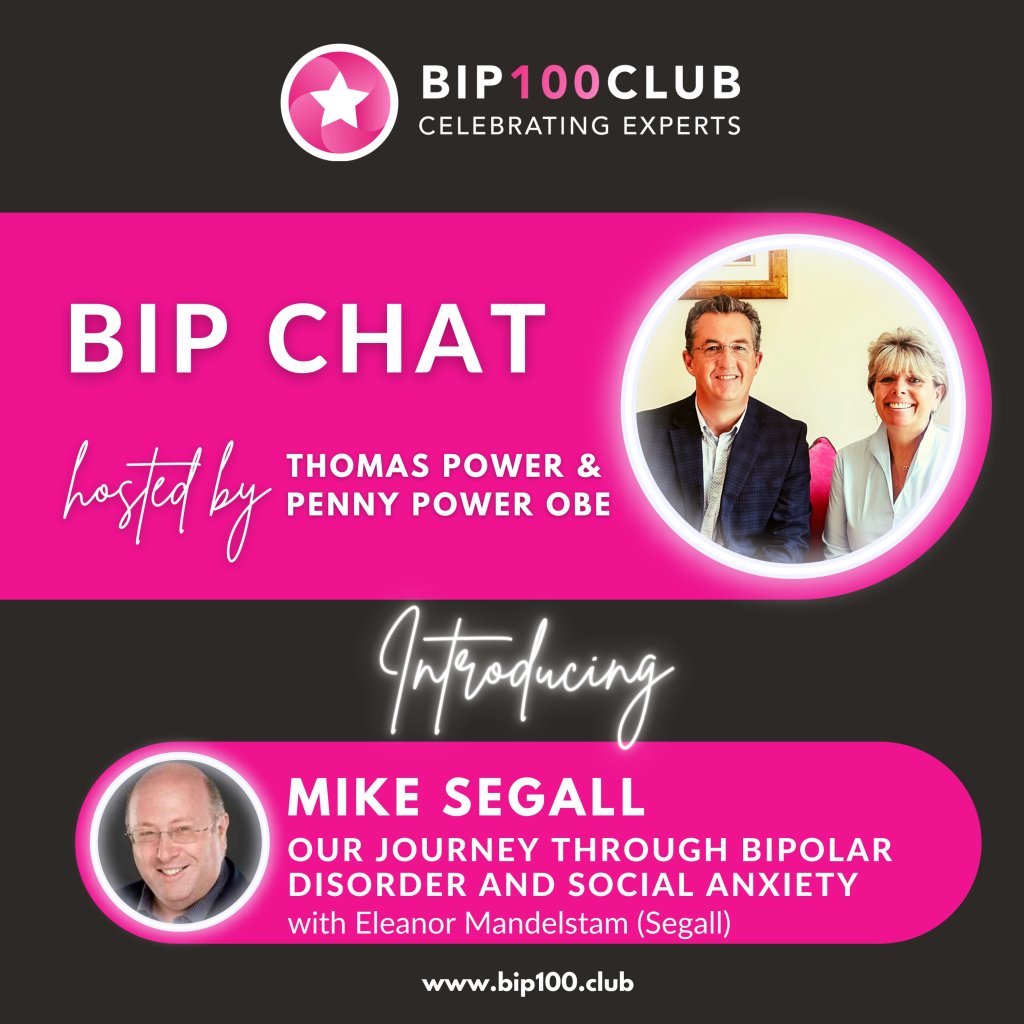
Yesterday, 9th Feb, my dad Mike and I were honoured to be interviewed by his friends of many years, Penny Power OBE and Thomas Power of Business is Personal- live on Linkedin, Youtube and Facebook.
They asked us to come on their weekly show to talk about our hereditary journey with bipolar disorder and anxiety and shed light on all things mental health.
It was a real pleasure to talk all about our lives and how my Dad was diagnosed with bipolar just 4 years before me. Trigger warning: discusses suicidal ideation and psychosis.
Breaking into the fitness industry might seem like a bit of a challenge, especially if you are switching careers. But if you know that nothing is exciting as lacing up your sports shoes and getting started, then here are a few tips for you to break into fitness as a career. It can help your mental health as well as your physical health!
Education
Even if you are an avid runner, you shouldn’t be giving others running tips beyond anecdotal stuff. This is because the body is a finely tuned machine, and a step out of place while running at full speed, even if it works for you, can cause damage to others. Equally, things like nutrition should be handled by a professional.
So one of the most important things that you can do alongside enjoying your fitness is to make sure that you have the education and training to do the best job possible. Thankfully there are plenty of options for online courses, and you can even take a test now to kickstart your career.
Options
You have hundreds of options within the fitness umbrella. As you invest in education and put that education into improving your own fitness routines, you can explore multiple options.
You can talk to other fitness professionals about how they got to the point that they are at; most often, they’re so passionate that they’ll be happy to talk to you about it.
One of the things that are an overriding subject in the professional fitness community is that they want to do the best for their clients.
Passion
If you have only been running, jogging or taking part in yoga for a short time; you might still be riding high on that new hobby energy. Once that new hobby energy starts to wane you might not find it as enjoyable as you did?
However, if you have been doing it for years, and the passion is still there, then the chances are that you should be going into a fitness career and enjoying a natural feel-good glow.
Within fitness, you’ll find things like writers, fitness instructors, teachers, coaching, sports and fitness photography, gym owners, personal trainers and more.
You’ll need to decide which one you’re passionate about drives you towards and which one you can picture yourself doing for the long haul.
Experience
Once you have your certification, it’s time to get some experience; you might find it a little bit difficult to get paying clients immediately.
This is where your friends and family can help you out; ask them if they can be your guinea pigs for a short while and see if you can help them meet their fitness goals.
And of course, one of the most incredible things about helping people with their fitness journey is that you might become part of their recovery and support.
Looking after their mental health, as well as their physical health is so important and it is proven that fitness has a huge positive effect on mental wellbeing too.
If you have elderly parents, family members, or those that you care about, you want to make sure that they are living in a home that is able to support their needs and to make sure that they are safe, secure, and comfortable. If your loved one is living alone, they may not be as likely or able to keep up with all of the home maintenance tasks necessary and may have some needs that they haven’t fully considered that their home could help them meet. Here, we’re going to look at a few ways you might be able to help with just that and increase their wellbeing.
Securing the household
While neither you nor your loved one should be in a panic about potential threats out there without any reason to be, considering the security of your loved one is worth the time. If they live alone, then they are somewhat more vulnerable than most people, so you may want to look at ways to secure the home, whether it’s investing in strong new doors and windows with tamper-proof locks, or in things like more external lighting to make the area around the home more visible and thus deter those who might think to lurk around the home. This will also improve their mental health- knowing they are secure and cared for will help their general wellbeing.
Inspecting the heating and looking after wellbeing
If there’s one season we should be careful to make sure that we’re equipped for: it’s winter. A particularly cold winter can be a health hazard, and older people can be some of those most affected by them. As such, before winter rolls in, you should make sure that you arrange for a servicing and inspection of the heating appliances in your loved one’s home. If there are any problems found, you might be able to cut some costs such as by sourcing a replacement part here yourself, but you should rely on a professional to make sure they’re taken care of in the safest way possible. Make sure that your loved one doesn’t have any problems with insulation and check for any air leaks so you can keep the home comfortable and toasty in the winter.
Make sure you visit your loved one regularly and check in with them, a chat and a smile will really help them feel settled and improve wellbeing too. Check ins to their overall health are so important, both mentally and physically.
Check the wet areasso they feel safe and comfortable
The “wet areas” such as the bathroom and kitchen are some of the most important areas to inspect on a somewhat regular basis. For one, you should check for any signs of leaks that could be fixed with the help of a plumber. But you should also keep an eye out for things like spreading mould and damp, which could affect your loved one’s health over time. In many cases, mould can simply be cleaned away from the area, but if it has spread too far, you might need a mould remediation team to come out and replace the affected surface areas.
It is important that your loved one doesn’t slip in their home due to water and that you regularly check that their home is safe and comfortable for them so they feel secure.
Making the home more accessibleto help any anxieties around safety
A lot of people begin to face mobility issues as they reach old age, and disability becomes much more common. For that reason, you might want to look at some tips for making the home more accessible. You can talk to your loved about any specific issues they might have, such as answering the door, going up and down the stairs, or using the bathroom safely and comfortably. There are many changes that can be made to a home to mitigate the risk of injuries such as slips, trips, and falls, and to help your loved one live independently for longer, feeling comfortable going about all the usual daily tasks in the home.
In many cases, setting up alarm systems in the home can help too. For instance, a pulley that alerts someone if they have trouble accessing the bathroom can be a great idea. This functions similarly to the best nurse call systems, allowing someone with the most authority attend to the issue appropriately.
This will also calm any anxiety they have about these things and give them peace of mind. Their mental health is equally as important.
Considering whether they should remainat home
You can do all of the checks necessary to make sure that your loved one is getting along well in their own home. However, if the home is no longer fit to keep them safe and comfortable, or they are unable to make the adaptations necessary to suit it to their needs, then you may need to think about other options. There are a lot of assisted living facilities that can make sure that their individual needs are seen with the care of attentive professionals. If your loved one is no longer able to live independently and to see to both their own and their home’s needs, then you need to think about ways to have those needs better fulfilled for them.
Talk to your loved one about how they are getting on in their own home. Ask about how cold it gets, any leaks or issues they’ve noticed, or simply any issues they have using the home. Help them live in the comfort and security they deserve to improve their wellbeing and see if they have any mental or physical health issues which are preventing this too.
Spending more time outdoors will do wonders for your mental health. While research has shown that being outdoors helps alleviate stress and the symptoms of emotional illnesses, you can easily discover these benefits by interacting with nature. You will benefit from being outdoors when you sit on your porch, but you’ll keep your leisure time more interesting when you engage in a variety of different outdoor activities and boost your mental health.
Take a Weekend Camping Trip
You can rough it in a tent or enjoy a glamping excursion by renting a fully equipped cabin for the weekend. As you search for available campgrounds in Mississippi (or the country you live in), look for a location that’s near the water or offers a variety of activities. You should try to plan a camping trip that offers plenty of amenities for you and your companions. Swimming, fishing, snorkelling, hiking, and bird watching are a few of the outdoor activities you can enjoy over the weekend.
Be sure to bring your phone or a camera. You will probably see plenty of wildlife that you’ll want to capture in pictures or on video. Even if you rent a comfortable cabin or take your RV, you’ll find enough activities to keep you outside and in nature throughout your camping excursion.
Go For a Walk
You can spend more time outdoors without leaving home when you plan to take a walk each day or evening. This is an opportunity for you to get outside and clear your head away from work, family, and other obligations. As you walk, let your mind wander. Many people find this to be an effective way of subconsciously working out stressful problems. By the time the walk is over, you might find that they have a solution to a particular problem.
You can keep your walks interesting and distracting by taking a different route each night. Find a different park, road or walk to a different convenience store each time. In addition to helping you explore different parts of your community, you will also have the opportunity to interact with different people, if you want to.
Rent a Boat
There’s no reason you should feel bound to land when you look for outdoor activities to enjoy. In fact, renting a boat and spending a few hours on the water can have a soothing effect on the mind. You may feel more tranquil as you’re surrounded by the sights, sounds, scents of the water. This is a great opportunity to get together with friends or bond with your family.
When you’re on the water, you’ll be removed from distractions and have the chance to enjoy deeper conversations. You’ll also have a chance to see your city from a different perspective. By the time you return to the dock or shore, you’ll feel more peaceful and less stressed.
Start a Garden
There are many hidden health benefits of starting a garden, and it will provide a way for you to improve the landscaping of your own property. Working with your hands as you plant and maintain a garden will help you strengthen your hands and fingers, reducing your risks for joint pain. As you tend to your garden, your mind will wander and you’ll enter into a type of meditative state. This will help you set aside your daily worries and concerns for a brief period. That will be enough to relieve stress and help you enjoy a lighter mood.
Climb a Mountain
If you live near a mountain range, consider taking up climbing as a means of getting more outdoor exercise. The act of climbing will help you strengthen a variety of muscle groups throughout your body. As you climb, you’ll see your community and the surrounding region from a different perspective. The air will be more exhilarating as you reach higher points on the mountain.
While you should start slowly and work with a guide, you may eventually find that mountain climbing can be a competitive sport that allows you to improve your performance over time. Achieving new climbing goals will cause a release of endorphins in the brain, helping you to enjoy a happier mood.
There are many more ways you can enjoy the outdoors and benefit your mental health. Look for things you like to do outside even if that just involves sitting under a tree and reading a good book. The fresh air will benefit your physical health as well as improve your wellbeing.
Recovering from cancer is a long, challenging process that takes a lot out of you mentally and physically. Even when you achieve remission and start to regain your energy, the negative effects on your mind can persist. If you’re not sure how to deal with the emotional and psychological aftereffects, it’s easy to become overwhelmed or despondent. However, with the right approach, you can overcome that mental distress and regain a sense of contentment.
Talk to a Professional
If you’re dealing with mental distress during cancer recovery, seeing a therapist or counsellor could be helpful for your mental health. Some professionals specialise in assisting people in coping with major illnesses, and they can often give you beneficial insight. Sometimes, getting a fresh perspective from an outside source can be effective for solving problems that you’re struggling with. You don’t have to commit to monthly or weekly sessions, but it’s worth at least trying out with a session or two, and you can decide at that point if it’s right for you- and what you need.
Find a Wig to Match You
For many patients, chemotherapy is an effective treatment method for achieving remission, but it also comes with several negative side effects. One of the most well-known of these side effects is the thinning or loss of your hair. For some people, this is a difficult change to get used to, and some of the wig options available aren’t particularly appealing. However, there are places where you can purchase custom made lace wigs, which can give you back the look you prefer and help restore that self-confidence.
Find a Creative New Outlet
If you don’t have much to do with your free time during cancer recovery, it leaves a lot of opportunities for your mind to drift toward negative thoughts. This can become a powerful cycle in which the depression can fuel itself and worsen over time. To combat this, try finding a new hobby or creative pursuit that you can develop a passion for, when you have the energy to do so. Having something to do each day that you’re genuinely looking forward to will make a massive difference for your outlook, and it’s also good for the brain in general to keep you occupied. Some days you may just want to lie on the couch and rest- thats OK and listen to your body.
There will always be challenging days when you’re recovering from something as traumatic as cancer, but a positive mindset is still achievable. Try not to let the rough days define you and be kind to yourself. You could try something good for your mental health like meditation, art or reading if you have the concentration.
Remember that it always seems darkest before the dawn, and you will get through it- reach for support from a therapist, partner, friends and family.
Rachelle Wilber is a freelance writer living in the San Diego, California area. She graduated from San Diego State University with her Bachelor’s Degree in Journalism and Media Studies. She tries to find an interest in all topics and themes, which prompts her writing. When she isn’t on her porch writing in the sun, you can find her shopping, at the beach, or at the gym. Follow her on Twitter and Facebook:
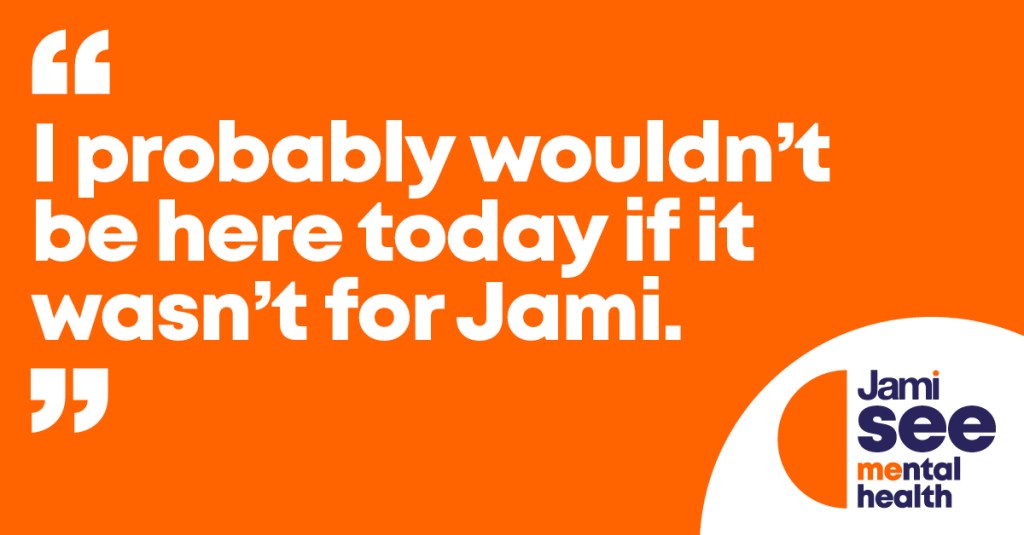
My dad Mike and I have been fundraising in the past day for a cause which is close to our heart. Jami mental health charity serves our community, the Jewish community here in the UK and beyond.
We have been asking people to donate to Jami’s match funded campaign to raise £1 million to support existing services and also to pilot a new service for secondary school age children. Referrals during the pandemic have risen and mental health support is much needed for under 18’s too.
We are fundraising because we ourselves have been affected by mental health (bipolar disorder) in our family. I was diagnosed at just 16 and had good NHS care in hospital but at the time, there was little support in the Jewish community available for me as a child. Mike was diagnosed at 44, a few years before me, and was thankfully helped to recovery.
We are both great supporters of Jami’s work (I am a Jami volunteer and we have both spoken at the mental health shabbat) and we believe this service will be vital for caring for secondary school children. Services are stretched and children are put on long waiting lists.. this is where Jami would come in to support a child and their family.
Today,, the campaign hit over its £1 million pound target and it is just incredible to see our community funding (badly needed) mental health support ! Its been wonderful to play a small part in this campaign- we have hit over £2000 of funding on our page!
This is so very close to our hearts due to our experiences and those in our community who are struggling. We want to raise as much as we can to support this service- every pound you donate will be doubled so please give as generously as you can. Thank you so much!
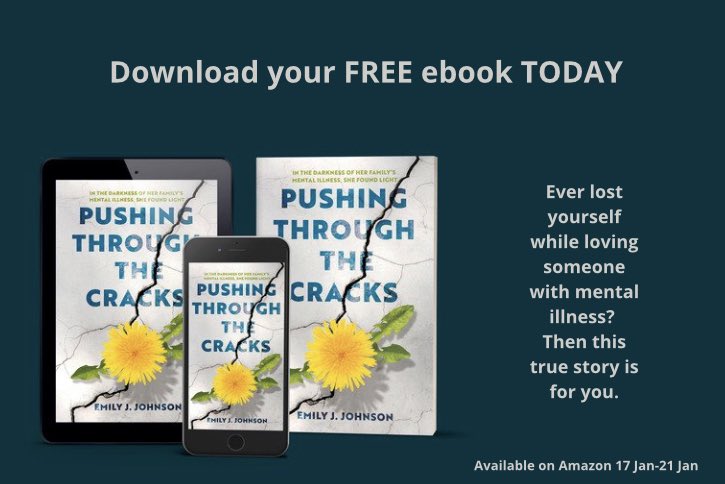
Pushing Through The Cracks: In the Darkness of Her Family’s Mental Illness She Found Light by Emily J. Johnson is an incredible book. It is a story that I don’t believe has ever been written about before in such a way in the mental health space, I have certainly never come across it. Its a true memoir that occurred here in the UK during lockdown.
Emily wrote to me and kindly sent me a free copy of her book. I was hooked from the first page- this is a story of survival against the odds, of how mental illness can rip a family apart but how healing and hope are possible. Of strength through immense difficulty. Of light winning over darkness.
Four years ago, in the UK, Emily, a divorced mother of two, was living her best life with a new partner and blended family of six. But then addiction and mental illness entered her home uninvited, threatening to tear the whole family apart.
With an alcoholic husband and two teenage sons – one a depressed gambler and the other with chronic obsessive-compulsive disorder (OCD)– Emily is left to cope alone. And when the Covid pandemic hits, Emily, a ‘serial people-pleaser, enabler and born rescuer’, almost breaks too.
This true story delves into the darkest sides of mental illness and addiction with raw, often harrowing honesty. It shines a light on taboo subjects including self-harm, suicidal feelings, gambling, alcoholism, depression, severe OCD and eating disorders, all exacerbated by an unprecedented global pandemic and dwindling support services.
This is a story of remarkable strength, self-realisation and reclamation of a lost identity. This is a story of finding hope, pushing through the cracks in the darkness. It is also a story that touches on the difficulties of accessing UK NHS mental health services at times, especially CAMHS.
I found Emily’s strength through such severe adversity – dealing with a husband and two sons with severe mental illness, whilst carrying on with her own life when mental illness permeated every part, to be so inspiring. Her marriage falls apart, her children are unable to attend work and education, the family embarks on several different recovery journeys- navigating NHS mental health care and all its difficulties. Her sons addictions and acute OCD worsen and add to the pressures for Emily. How does she as a mother fix it all? She realises.. she can’t fix anyone and its not her job too.
The front cover features a dandelion pushing through the cracks of the ground. Emily describes the moment she hits rock bottom but then saw a dandelion poking through- which symbolised hope and light for her,
‘(image: Emily J. Johnson)
‘I pick up my phone and call a crisis support line…I desperately want someone to listen to me, to ease my pain, to hear my stories…(of mental illness at home)
I throw my phone across the path in frustration… something catches my eye, a beautiful yellow dandelion is growing through a crack in the concrete. Its golden yellow petals cut through the greyness of the broken path and it overshadows the filth and discarded cigarette butts around it. Despite its surroundings, it has found ways to push up through that crack, to have life. it is. not complaining or giving up, it’s surviving and it will go on to finish flowering. One day soon, the wind will carry its dainty seeds somewhere else to carry on the cycle of its life.
Just like that dandelion, I have pushed through adversity and survived. …I close my eyes and raise my face to the sunshine… Even in the midst of all this chaos, this darkness, there is warmth and light. There is hope.” (from chapter Dandelion) (Emily J. Johnson)
This is also a book which exposes the difficulties and realities of living with mental illness. I will add a trigger warning- it doesn’t hold back on the reality of mental illness including self harm, addiction, alcoholism, suicidal thoughts etc- so please read with care.
Thank you Emily for letting me read and follow the journey of your family. I hope your husband and sons are able to fully battle their demons and recover or stay in remission. Pushing Through the Cracks by Emily J. Johnson can be bought from Amazon and good book shops.
Its nearly here everyone! Just 4 days until our country (the UK) stops and celebrates Christmas (or uses the day as a chance to see family because they’re off work, like we do!).
The pressure is taken off for me during this period because its just a chance for relaxation for us as we’re Jewish, we don’t have the same expectations for the day as others. However, I know for many people Christmas is a stressful time where they see family they don’t normally see and may feel they have to hide how they are truly feeling with their mental health. The pressures are also on for the cost of food and gifts during this time and many people get into debt too.
We already have less daylight during this time and with the Covid pandemic a lot of people are feeling lower and more anxious . This has been the new normal for us all for over a year and particularly here in England where we have record numbers of Omicron Covid cases- but aren’t yet in lockdown.
I know I have been feeling a bit more anxious lately to do with Covid and other things… but I am also going to be kind to myself and give myself a break and time off work to relax also! I love sitting eating Quality street or a Terrys chocolate orange (yum) with loved ones and watching a good film like The Holiday… thats my favourite. Second is the Muppets Christmas Carol. Third Love Actually. Whats yours?
(image: lilartsy: Pexels)
I am lucky my bipolar is in remission and I am stable on medication. So I don’t have to worry about severe depressive or manic episodes right now. But, I still need to look after myself or practise self care- lots of sleep, not too much sugar, and check in with myself or my therapist if needed if my anxiety flares.
Obviously, over Christmas lots of NHS mental health professionals aren’t available but you can reach out to helplines such as Samaritans 116 123 (UK) if you need someone to talk to who will just listen.
You can also text SHOUT to 85258 if you’re in crisis and need support.
In an emergency, if you have a phone line to a hospital outpatient crisis team that are working over Christmas, call that and if not in an emergency you may have to go to Accident and Emergency (but there could be long waits).
Wishing you all a very happy holidays, a peaceful festive season. This time can also be hard for people with alcohol or drug addictions or eating disorders, as Christmas is often a time with plenty of alcohol and triggering things.
Remember that its OK to be struggling but tell people you trust and reach for support. May your Christmas/ holiday season be merry and bright- and if it isn’t, remember things can get better from here, you can recover and you can be helped. Always tell someone you trust if you feel suicidal or want to harm yourself, so you can be protected and helped through these feelings.
I am absolutely delighted to read and review this incredible childrens book from the Sophie Says series by author and award winning campaigner Esther Marshall (with illustrator Buzz Burry).
Esther’s story is close to my heart as not only is she from my own community but her late sister Rebecca z’l was a doctor who had bipolar disorder and sadly passed away a few years ago, while Esther was writing her second book. Esther has shared that it was her sister who encouraged and inspired her idea to write the childrens books that she couldn’t see for her own child (in terms of positive messages, inspiring rolemodels and diverse characters in terms of both race and gender). Through her sister’s struggles, Esther also began to include positive mental health messages on talking and sharing emotions, self belief and self esteem too.
Esther has said,
“I knew from the second my son was born I wanted to teach him that girls were just as strong and powerful as boys, that people from different backgrounds to him could teach him things and he should listen and be kind to everyone. The problem was, all the books I could find to read to him had:
Mostly male characters (even the animals)
Little to no diversity or representation
No female role models he could look up to
So I decided that if I couldn’t find the book I wanted to read to my son, I’d better write my own.
I want all children to know and believe that they can achieve their dreams regardless of gender, race, religion or class”,
Esther at Sophie Says has not only thought about what stories she wants to tell through the books, but what messages children reading them will take and absorb. She has partnered with illustrator Buzz Burry and comments, ‘we are helping children bypass harmful stereotypes before they set in by changing the face of children’s literature. Our mission is to enable all children to grow up feeling equipped and empowered to face their futures. To learn more about themselves, others and the world around them. We are helping parents to teach their children positive messages and providing a toolkit to navigate some of the trickier conversations.‘
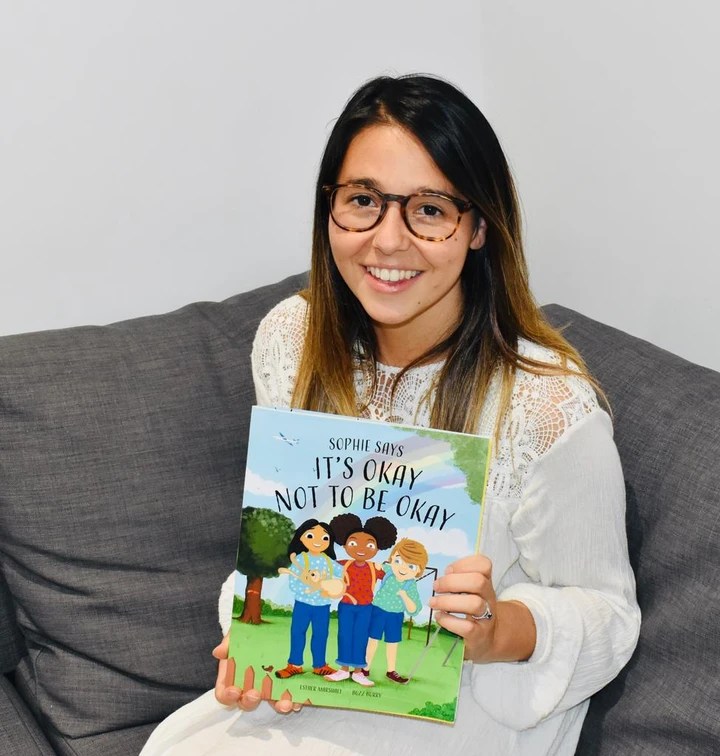
Esther very kindly gifted me copies of her first two books- Sophie Says I Can I will– which is about a little girl Sophie with big dreams and no limits. and Sophie Says It’s Okay Not To Be Okay which focuses on Sophie, Jordyn and Jamie on their journey as they learn that it’s okay to talk about their feelings and it’s okay not to be okay. The books are for children in the early years, ages 3-7 years and reading the books with either parents, carers or teachers is recommended. Esther told me she has ‘tried to create books which cater to both home and school so that it can be embedded in both parts of a child’s life and become the foundation of them building resilience at an early age.’
Sophie Says It’s Okay not to be Okay is a very special book- and one of the first I have seen to address children’s mental health in an age appropriate way, to teach children about their emotions and that it’s OK to feel sad, scared or worried. The book follows Jamie who is looking down and feeling sad but whose best friends Sophie and Jordyn help him through and Sophie tells him ‘its okay not to be okay’. They take him to the zoo to help him feel better and speak to Sophie’s older sister Meghan who is wise and will give good advice. Esther named the character after Meghan, Duchess of Sussex who she met with Prince Harry and other young leaders and was inspired by (she gave them a copy of the book too!)
Meghan (the character) says this important message,
”It’s okay to be sad and okay to feel down. Just make sure you have good friends around. There may be days when you feel you’re alone but around us, you’ll always be at home. Its Okay not to be okay”
The book also reinforces self belief and esteem , reiterating that ‘YOU are enough!’ and encourages children to talk about their feelings because it can help. Jamie then says he will speak about his feelings in a place he feels safe in the zoo,
‘I don’t really know how to describe how I feel As I can’t work out what’s in my head and what’s real.
He said ‘ a smile may be what you see, but that’s not what I feel inside me
There are times I feel quite alone because these feelings are unknown
Some days I’m happy and some days I’m sad and other days I just feel so bad’
(image: Esther Marshall/Buzz Burry/Sophie Says)
His friends then show him support and love, take him to the funfair, all while reinforcing positive kindness and support- ‘Yes we can!” . The book talks positively about the kindness of friendships always being a safe space to talk. This is so important for children particularly in the early years who are learning to understand their feelings.
Esthers writing is beautiful- on one of the last pages of the book she says ‘Whatever you do, be kind, you never know what’s going on in someone’s mind’.
The book was informed by her sister Rebecca’s struggle with mental illness (bipolar disorder). Esther has said, ‘I had always planned to write another book all around mental health to help children understand their feelings and talk about them more openly, and I sadly lost my sister, Rebecca, to mental illness as I was writing it. So the second book Sophie Says It’s Okay not to be Okay is dedicated to her memory’.
Esther wanted to amplify the message and so it was released on World Mental Health Day. The book provides a toolkit for parents who want to help their children to express their own emotions.
She has been visiting schools and doing zoom readings of her book to share the messages for her. Esther told me, I would love that as a result of children reading the Sophie Says books that children understand these vitally important lessons through a fun way of learning and it helps them build resilience and confidence to go out and achieve their full potential whilst being able to understand and manage both their physical and mental health. .’.
Esther is a true force of nature and someone who inspires me so much. She has just released a third book in the series Sophie Says Be Proud of Who You Are which is about Sophie and the rest of the Sophie Says crew on their exciting seaside adventure as they help their friend Priya build her confidence, as they guide her through believing in herself and being proud of who she is. The perfect book to help your child build their confidence and self esteem!
I would recommend the Sophie Says books to all parents, teachers and carers of young children. I can’t wait to see how this brand grows and what Esther achieves (she has achieved so much already!). She should be rightly proud of her work and all she has created.
To learn more about Sophie Says and buy the books click here
Hi, I’m the founder of Sophie Says and the author of the books within the series. The idea for the first book (Sophie Says I Can, I Will) came to me after having my son, Asher (who is the first and most important reader of all the books!).
I knew I wanted him to grow up understanding that both girls and boys could achieve anything that they set their minds to, but I couldn’t find any books that featured a female lead character (a human one, not an animal one!) that really represented the message I wanted to teach him. So I thought, if I can’t find the story I want to tell, I’d better write it myself.
I was gifted two books in exchange for an honest review. Any links are unpaid. These books are incredible.
When you think of older people, what comes to mind? Most likely, you think of a frail older man or woman sitting in a rocking chair on the porch with his or her grandchild. This image is often comforting, but it’s not always accurate. As life expectancy increases, so will the number of seniors needing support as they navigate this time in their lives.
Let’s take a look at the five ways you can support mental wellness for the elderly through compassion and care.
Mental Health: Dementia and Depression
Mental health is defined as a state of well-being in which every person realises their unique potential and can cope with the everyday stresses of life. It encompasses our emotions, beliefs, thoughts, and behaviours related to our physical and spiritual health.
Studies have found that over 50 per cent of older adults with dementia experience depression. This figure becomes even more striking when considering that depression rates are higher in women than men. Depression can lead to loneliness and feeling disconnected from society, which might be exacerbated for those who aren’t familiar with mental health issues.
Depression can also lead to poor self-care behaviours like eating poorly or not taking care of personal hygiene because they cannot enjoy their day-to-day activities such as cooking or cleaning. People may find it challenging to socialise during this time because they’re trying so hard not to feel negative emotions like sadness or anger that might come up unexpectedly during a conversation.
It can be worth discussing how they can get support from a care facility such as Oakland Care where they will have round the clock care and support for their mental and physical wellbeing.
5 Ways to Support Mental Health
1. Be a friend
One of the most important things you can do to support mental health in the elderly is being a friend. It’s easy to think of someone who is elderly as being alone, but they don’t want to be. They rely on friends and family members more than ever before. This can help provide them with some comfort and companionship during difficult times.
2. Have compassion for them
It’s good to show seniors compassion when they need it the most. Not only will this improve their mental health, but it will also give you the chance to see a side of your loved one that you might not know about otherwise.
3. Offer loving care
It’s essential for all people in your life, including elderly family members, friends or caregivers, to remember that every person is different and deserves love on their terms. The elderly need specific forms of care and various types of love depending on their circumstances.
4. Send cards or gifts
Gifts sent with care can help people feel less alone and know they have support. Choosing something special to them.
5 Get help
Sometimes, the best thing you can do is to contact a medical professional such as a GP or hospital doctor who can get them the proper care.
Above all, make sure they are well supported and cared for.
This article was written by a freelance writer and contains affiliate links.









 beurownlight.com