Autumn (or if you’re in the USA, Fall) is one of my favourite seasons. Beautiful autumn leaves, the weather getting gently cooler, cosy hot chocolates and pumpkin spice, the autumn harvest of pumpkins, snuggling in blankets with a good book or TV show and for some- walks in nature with the orange and yellow trees and landscapes. However, did you know that the clocks going back and the change in light and dark, with nights drawing in, can affect your mental health? Studies have shown that when its darker, people are more prone to depression and anxiety and some (like myself at times) struggle with Seasonal Affective Disorder.
There are many ways to take care of yourself if you feel your mood dipping or you are becoming more anxious. If you feel it is affecting your daily functioning, please reach out for support from your doctor (and if you have one, a therapist or psychologist). Here I talk about a few tips to help support your mental health this Autumn.
Make sure you rest as well as play and work
Work can become all consuming, but if you prioritise rest this season too, your body will thank you. Autumn is all about slowing down, recovering, resting (and for animals (and some humans) hibernating). Yes you can work and play hard if you prefer, but make sure you find that balance to support your wellbeing. In our busy lives and for those who are parents or just struggling with their mental health, self care can slip. Practising good self care- eating well, resting, gentle exercise, can really help our minds.
2. Release Control- Give Stress Over
Gabby Bernstein, my favourite spiritual teacher, often says ‘Release control to find peace, surrender it to the Universe’. Surrendering means not obsessing about what we can’t control, but giving it over to a higher power or the universe. This can really help when we feel overwhelmed and stressed, to pray and meditate or simply write down how you are feeling and then ask the universe to take it from you. Journalling thoughts and feelings can help too.
3. Nature walks
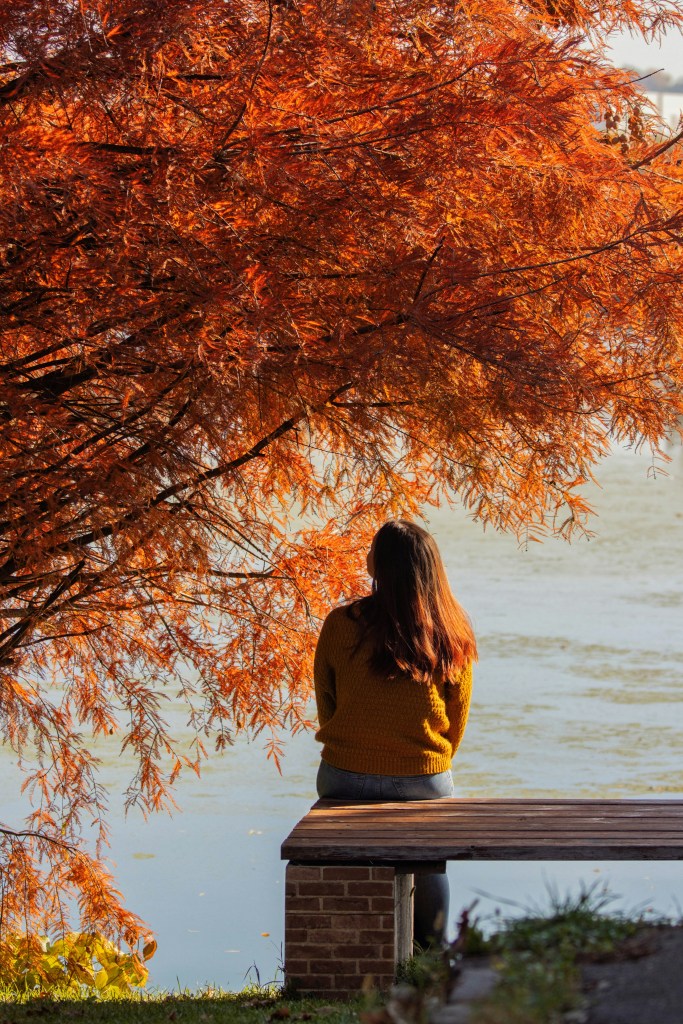
Despite the cold, this Autumn, walking in nature can help get the blood pumping and our minds to reset. Sometimes going with a friend, spouse or family member can cheer you up- there is something about the colours of nature, the soft greens that is truly calming.
(image: Erika Mendes, Unsplash)
4. Make your home cosy
Whether its getting some new cushions or blankets, fairy lights or lamps, investing in cosy and light interiors for the darker seasons is a must! I like to use lamps when the nights draw in.
5. Get enough sleep (but not too much!)
During the Autumn/ Winter period, most of us naturally want to hibernate in the evenings. Sometimes this period can make depression and anxiety worse. I know with my bipolar that sometimes I feel lower or more anxious. Getting enough daylight and if you struggle with seasonal affective disorder, use an SAD lamp, which can help you to wake up gently in the mornings. Similarly, make sure you get enough sleep for you to keep your mental and physical health at its best. Depression can cause us to sleep longer hours and hide away- I find daytime distractions can help me not to sleep too much.
6. Take your medication as prescribed
If you struggle with mental health in winter and are prescribed antidepressants or other meds, do not suddenly stop them as this can cause a relapse in your mental health. Make sure you speak to your doctor first!
7. Treat yourself
Treat yourself to a hot chocolate (or pumpkin space drink) and a good book or TV show, wrapped in a cosy hoodie or blanket. You deserve it!
Wishing you all a wonderful and well Autumn/Fall season.
“Winter is the time to snuggle up in blankets and sip on hot cocoa.”
It is official, I am totally over Winter! I cannot wait until the days are longer, the cherry blossoms are on the trees, the sunshine is shining, the baby animals are around, the daffodils are nodding. Yes, Spring is much needed.
I find that the Winter season makes me want to hibernate and I definitely feel lower in this season. Some people like me may have seasonal affective disorder.
So despite the cold winter darkness, I know the days will lengthen soon (and then I will be saying its too hot when its summer!),
This is just a short post to remind myself to enjoy the rest of winter (and find a lovely Cotswolds cottage like the photo to go to!)
More and more people are putting time and effort into looking after their mental wellbeing, and rightly so. Most of these efforts focus on stress-reducing hobbies and social activities, but have you ever wondered if your interior design choices are influencing your mental health?
If the answer is no, it might be time to start considering how your home decor can be altered to achieve peak wellness. If you’ve no idea where to start when trying to turn your home into a sea of tranquillity, we’ve picked out a few areas of your home that could contribute towards your mental wellbeing.
Colour
(image: Unsplash: Marc Jodoin)
Blue
As the colour of the sea and sky, blue is seen as a calm, soothing colour. It’s also an easy colour to incorporate into your home if you’re trying to make your home have a more relaxed vibe.
Darker shades of blue work perfectly for a feature wall and allow the colour to be the main focal point of the room. If you want to paint your whole room blue, lighter shades of blue work great and can promote an airy, outdoorsy feeling.
Purple
In some cultures, purple represents royalty whilst in others it is associated with peace and spirituality. However you see purple, it’s important to note that it’s becoming an increasingly popular colour in the interior design world.
When it comes to incorporating purple into your home, it’s often a case of less is more. Consider ways in which you can add a touch of purple rather than creating a fully purple room. Rugs, lampshades and cushions are a great way to introduce purple without overdoing it.
Green
Green is similar to blue in the sense that it can help bring the outdoors to your home, due to how we associate the colour with nature and greenery. Forest green and jungle green are great options if you want to go overboard on the green interior as they are less subtle shades.
Brighter greens should be reserved for kids’ bedrooms or playrooms. Alternatively, shades like lime can be used for smaller decorative ornaments that aren’t the main focal point of your home.
Nature
Nature and wellness go hand in hand. In fact, most mental health therapists would agree that spending time outdoors is great for our mental wellbeing. According to studies, there is a positive correlation between happiness and our connection to nature.
Obviously, we can’t spend all of our time outdoors so it’s important to consider ways we can bring nature into our homes. Adding plants throughout our home can improve style but can also improve air quality. Improving the air quality in your home can have positive implications for your mood, stress levels and sleep quality – all of which contribute to healthy mental wellbeing.
When choosing plants to add to your home, there are a number of factors to consider including how much sunlight and water different types of plants require. In addition, you’ll want to decide what size of plant works for your home. Larger plants work great in the corner of a room while smaller plants should be added to coffee tables and shelves.
Layout
A clear home can lead to a clear mind so it’s important to stay on top of your home’s cleanliness levels. It can be a good idea to focus on minimalism and create large open spaces in your home that are easy to keep on top of in terms of tidiness.
Be careful of adding too many items that only serve decorative purposes as this simply gives you more things to keep on top of and could easily be the start of your home becoming cluttered.
Our home can affect our wellbeing, so for positive mental health, its good to implement calming colours and layouts for a wonderfully relaxing home.
With the nights drawing in, The Works have teamed up with the mental health charity, Mind, to raise awareness of the mental health benefits of crafting.
The winter can be especially difficult for many, with darker, colder days and prolonged periods of rain affecting energy, mood, anxiety and stress levels. Some people may experience Seasonal Affective Disorder, which is a type of depression experienced during different seasons or times of year.
Stephen Buckley, Head of Information at Mind said,
“We know that crafting can be a powerful way to support mental health and wellbeing. Creative activities like card-making or knitting require focus, which may help us disconnect from daily pressures and find a welcome distraction. Learning a new skill can also bring a sense of accomplishment, which can be especially rewarding as the nights draw in. The repetitive motions of these crafts can feel meditative and calming, making them a helpful tool for managing stress, depression, and anxiety. Different things will work for different people and the main thing is finding a craft you enjoy and which fits into your life.”
Mind and The Works have produced a blog post with some ideas for easing stress and anxiety, boosting concentration, focus and memory.
Lynne Tooms, Chief Commercial Officer at The Works said, “Channelling your emotions into creativity can have a huge impact on us as adults, with various craft types having a big impact on our mood and sense of achievement, as well as providing us with skills and hobbies that can turn into passions to enjoy all year round.”
Seasonal Affective Disorder (SAD) is a type of depression during particular seasons of the year (most commonly winter and summer). For me personally, I know the cold, dark early nights do not help as I will just want to hibernate! I find that during winter I am much more prone to depression/anxiety and I know others are too.
Mind says that, ‘ if your feelings are interfering with your everyday life, it could be a sign that you have depression. And if they keep coming back at the same time of year, doctors might call this seasonal affective disorder (SAD) or ‘seasonal depression’.
SAD symptoms can include lack of energy, feeling sad and tearful, withdrawing from friends and family, feeling anxious or agitated, sleeping too much or too little and suicidal thoughts.
Luckily there are ways to improve your mental health with SAD:
Talk to someone or a helpline about how you are feeling
These helplines can listen to you and provide a kind, one to one, listening ear if you are stuggling with depression, low self esteem, feelings of unworthiness or suicidal ideation.
2. Track your symptoms
It might be good to see what times of the month you are feeling worse too and how the weather is. A daily diary can be really helpful to show to your Dr or therapist.
3. Manage Stress
Speak to your therapist or find some mental health support locally if you can. Speak to a trusted loved one and make sure you don’t become too stressed or overwhelmed.
Look at mental health relaxation techniques such as mindfulness and make sure you are not over working and taking time to rest.
4.Walk and exercise
Exercise can help to boost your mood when you have SAD. Maybe a brisk walk or even some dancing around your room to a youtube video, any exercise can boost those endorphins and set you up for a good day.
5. Self Care
Watching a good TV show, having a bubble bath and planning other relaxing activities can really help. Especially on dark, cold and miserable nights. Look after yourself.
6. Speak to your GP
If your depression is worsening and you need medical help, please reach out to your GP or psychiatrist as they may be able to help with further treatment eg anti depressant medication if suitable.
SAD can be really challenging but making sure to take time for yourself, practise self care, talk about it and reach for help can go a big way in easing the depression’s effects this winter.
There’s nothing inherently wrong about staying at home. On the contrary, it’s the perfect opportunity to focus on your work without the typical office interruptions. Besides, you don’t need to get up early to get ready for work anymore. Bliss!
Or at least, that’s what you used to tell yourself during the first lockdown. But half-way through the second British lockdown, you’re finding it hard to stay positive about the situation.
A simple chain of emails with a coworker makes your blood boil. They’re asking if you can edit your previous report. They don’t like the way it is written. They’d prefer a more energetic text. You roll your eyes. It’s an informative document, not a piece of poetry, you think to yourself.
You bite through your lips during the next video call, trying to contain your frustration. Why are clients changing their minds again? They already gave the green light for the project, but now, they want everything redone again. You cheekily pretend the doorbell rang to escape the call for a few minutes while you try to calm down.
Why is everything so unbearable these days? The answer is simple: Lockdown takes its toll on your mental health. Don’t be harsh on yourself.
Feeling tired, stressed out, and angry is a normal reaction during the pandemic. In any other situation, you would plan a relaxing vacation away from the hecticness of everyday life. Unfortunately, there is nowhere else you can go. So how do you take a break when you can’t go anywhere to recharge your batteries?
#1. Book a few days off
You may not be able to go anywhere, but turning the laptop off for a few days can already make a big difference. Working from home means that you can’t truly compartmentalise work in the way you used to. There’s no way you can leave your office worried at the door when coming back home. The home office has brought work inside your home. A lot of professionals tend to check their emails on their phones, long after their working hours.
On top of that, you’re more likely to work longer hours at home, as there’s no rush to leave the office on time. Compared to the typical 8-hour day, it’s easy to see why you’re exhausted! Don’t be afraid to book some holiday away from the screen.
Also its important to check with your office about their vaccination policy even if you are working from home or having time out. It is important to be safe and well.
#2. Reach out to an expert
Sometimes a short break isn’t enough to take your mind off work stress. Working from home makes you more vulnerable to mental fatigue, as you’re more likely to work overtime. However, when the fatigue reaches such a level that you feel emotionally empty and powerless, you may want to reach out to a doctor. Indeed, what you may be experiencing is burnout, the sensation that there is always so much to do and that you can’t meet the expectations that your work has from you.
You may not be ready to reach out to a therapist to discuss your issues, or perhaps you are not sure what you should be talking about. But you can reach out to an online doctor service to find tools and tips that can help you cope. You can consider treatment for anxiety, for example, which can help you relax.
#3. Create a strict schedule
According to a LinkedIn study, many home-based employees feel the pressure to appear busy. Many are worried about how coworkers and managers perceive them. As a result, overtime has become the new normal. Britons working from home are doing the equivalent of 4 extra whole working days per month.
It is exhausting, both to the mind and the body. You need to create a schedule that respects your work/life balance. Reduce overtime by blocking time in your calendar for yourself and your family. For instance, if you’re unlikely to stop working at 5:30 PM, book an appointment for yourself after work. Why not schedule your home workout at 6 PM? Make sure as well to book lunchtime away from the desk, even if you’re only going to the kitchen to heat leftovers. You need to reclaim your spare time.
#4. Introduce a soothing routine
How do you soothe the mind when anxiety won’t disappear? Making time for your mental health can transform your perception of lockdown, and also improve your productivity at work. Yoga is an excellent tool to let go of stress and clear your headspace. You can start noticing positive effects after only a few minutes of exercise. Making yoga a daily practice can help gradually take back control of your emotions and regain your peace of mind.
Admittedly, yoga if not for everyone. Perhaps, you’d prefer a different kind of workout to alleviate stress. Or a relaxing bath after work. It doesn’t matter what you choose as long as you stick to it.
#5. Seek new interests
Lockdown is shrinking the world around us. After a few weeks, your entire life revolves around your home office desk, the bedroom, and the couch in the living room. You feel trapped in a tiny routine. While going out is not an option, you can consider introducing new things in your daily life. Something as trivial as reading a book or watching a new TV show on Netflix can bring a sense of renewal and excitement.
#6. Allow yourself to be lazy
The art of doing nothing is a complex skill to acquire. We live in a society that believes that productivity is the only way to create value. We reject unproductive and passive activities because we’ve been conditioned into thinking that doing nothing is bad. The truth is that doing nothing can give you the time and space you need to recharge your batteries. Sit on the couch and let time pass without checking your emails or reading the news. Your mind doesn’t need constant stimulation. On the contrary, the absence of intellectual engagement is necessary. The hyper-productivity race is destroying your sense of self and your mental health.
(image: Unsplash)
#7. Stay in bed a little longer
Do you wake up feeling refreshed? No? You’re not the only one. A whopping two-thirds of people have been struggling with sleep quality since the beginning of the pandemic. The combination of pandemic anxiety and long working hours creates a sleep deficit. Ultimately, it affects your mood, your mental focus, and your energy levels. Why not go to bed a little earlier today? Don’t be afraid of changing your sleep routine to find what works for you.
#8. Have realistic goals
In lockdown, I’ll learn a new language.
I’ll get fit.
I’ll repaint the bedroom.
Don’t overdo it. Staying at home doesn’t mean you’ve got more time at your hands. Setting unrealistic lockdown goals will only stress you out.
#9. Laugh
As silly as it sounds, laughing is still the best medicine when it comes to releasing stress and anxiety. Sit back and watch your favourite comedian on TV. Zoom with friends for an online quiz or an escape room game. Laughing your heart off is not just good for your mood. It helps to break the cycle of stress and self-guilt that leads to burnout.
#10. Make time to go out
In winter, the seasonal affective disorder is at its worst. Even without lockdown, you’d be naturally getting less exposure to sunlight. But right now, it’s important to make time to go out of the house and walk in the sun. Whether you’re just going to add some seeds on the bird’s table in the garden or walking down the street to your local shop, you don’t need more than 30 minutes a day to regulate your mood. It can make a huge difference.
Feeling drained, tired, and irritable is a normal reaction to lockdown. As more and more people are reporting mental health symptoms, it’s important to take preventive steps to avoid Covid burnout. Take back control of your routine and your mood as you’re staying at home.
Trigger warning: talks about self harm, anxiety, depression and mental illness
For 10 or so years, throughout adulthood, I have battled on and off with something invisible and something I still don’t fully understand myself.
Generalised Anxiety Disorder.
I’m now 29 but my illness started at about the age of 21. In my third year of University, I started to dread things, I started to worry about everything I said, did and I started to question if anyone liked me. I have always been apologetic but this was different. I felt like apologising for walking into a room.
I was unable to switch off, unable to focus on my University work and I withdrew a lot socially. Life moved quite slow back then.
For me I knew this was out of character. I’ve always been fun loving and outgoing, with a smile on my face. I became confused about who I was. I developed an uneasy feeling that would take almost 8 years to learn to sit with.
During the first few years of my disorder, I definitely still achieved a lot. I often feel my disorder makes me thrive more, sort of like overcompensation, a little bit like proving people and myself wrong. I graduated with a BSc in Psychology and at the age of 24, I went on to gain my MSc in International Development.
I don’t think I truly recognised these achievements until about the age of 27.
Whilst studying my MSc life changed quite a lot for me. I had gone through a bad break up in my younger years but then I finally met someone who lifted me back up, who challenged my thoughts, someone who was completely different to me in every way. This was oddly comforting for me, a bit like escapism from my own ruminating thoughts.
Then I entered the world of professional work. I started out as a fundraiser, and in my most recent role I tried my hand at facilitating group therapy. In 5 years I have moved through 4 jobs within the charity sector. Sometimes part time.
During this time my anxiety disorder would often become too much. I often sunk low and developed bouts of depression. I would cry and sob. I was back and forth to the GP, often teary, often red in the face and always a bit embarrassed, even though I didn’t need to feel embarrassed.
At one point I was signed off sick from work, bed bound for 3 months, with no motivation at all, just me, myself and my catastrophic thoughts. I was pretty exhausted, shaky, drained and more confused than ever. My physical symptoms manifested as sweating, chest pains, palpitations, shortness of breath and the odd panic attack.
One thing I started to do was open up, I began to share things with my partner and colleagues. They let me cry if I needed and at the same time my GP was stabilising and finding the right medication to suit me. But I was clearly still unwell.
I quit another job I enjoyed through my inability to cope and my lack of self esteem. My Imposter Syndrome led me down another uneven path. Always overworking. Always overthinking. Always overcompensating. I didn’t slow down until I was forced to.
Another behavioural symptom of my anxiety is skin picking and nail biting. In early adulthood I would sit for 3 hours picking at my face and over the years I have made the skin around my thumbnail so sore it would bleed. It is now scarred.
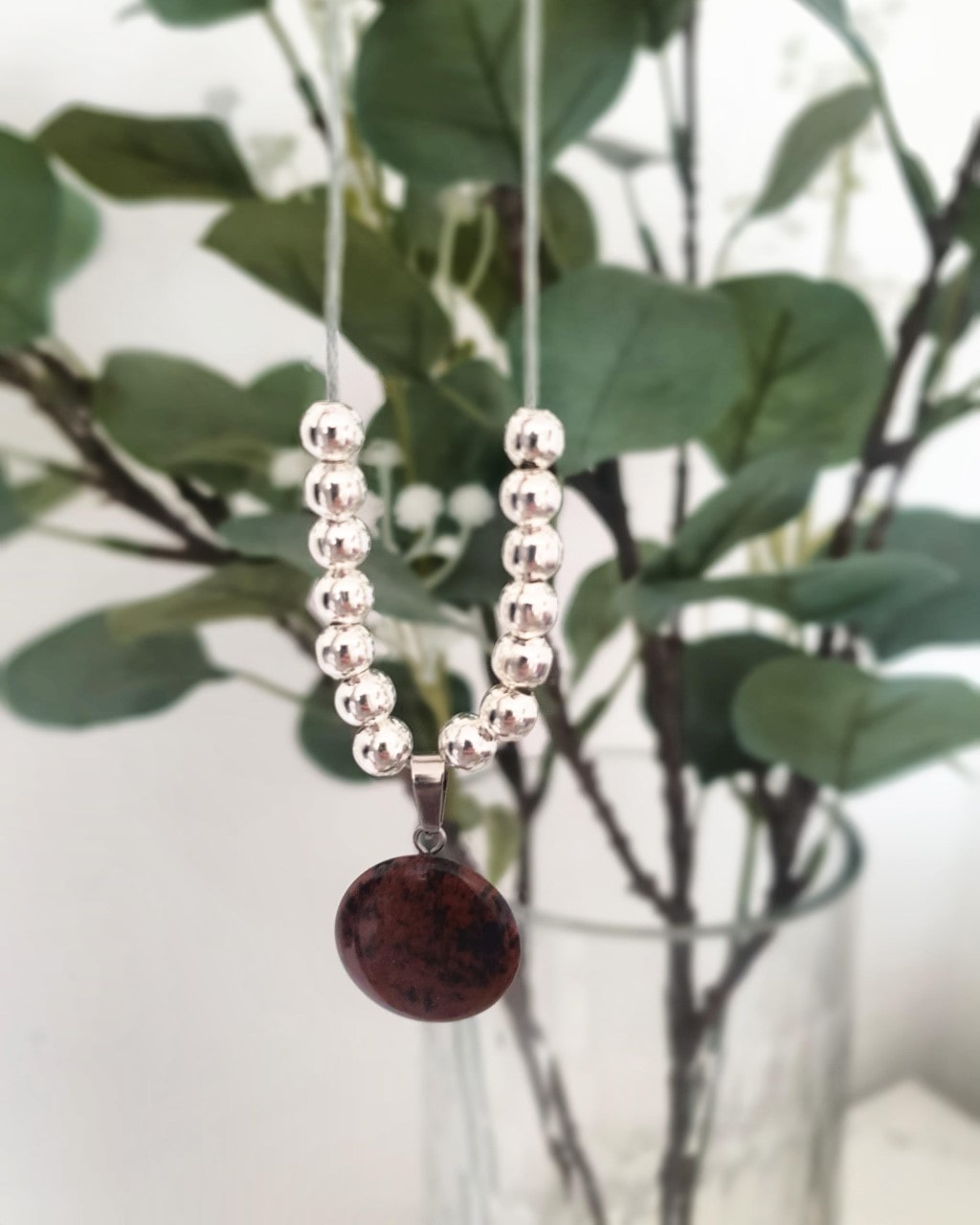
My need to fiddle with something to ease anxiety is always apparent. Earlier this year, I was talking to my friend about making jewellery and how cool it would be to make my own. I have always been into accessories, fashion and jewellery so I said I’d love to make something I can wear and carry with me discreetly but also fiddle with, to stop me from picking so much.
She mentioned worry beads and I was intrigued. I wanted to make my own twist on them. A prettier version, merging them with jewellery design that I would more likely wear, so I did and my life has changed. I have started a small business called Worry Knot.
(image: Emma Johnson at Worry Knot)
Alongside selling calming jewellery, I’m blog writing. I’m advocating more widely about the importance of opening up when confusing and sometimes debilitating symptoms develop. Not only is it therapeutic for me to make my jewellery but it’s extra therapeutic playing with this jewellery a few times a day.
Having something to focus on, things to make and to write about has been crucial in managing my own anxiety, especially at such an anxious time for the world. I hope my jewellery can go on to help those feeling anxious not only now but going forward into the future too.
You can also find me @worryknotuk on Facebook and Instagram.
Emma Johnson is a writer with lived experience of mental health issues. She is the founder of Worry Knot, a jewellery brand to help others who have anxiety.
It has been a while since I have written a personal blog as there has been so much going on here that I was just focusing on getting through it all. Robs dad had surgery to remove a second brain tumour and is thankfully recovering well, the surgeon amazingly got all the cancer. Success.
Alongside this, I have been in therapy since November with a wonderful therapist and we are doing EMDR (Eye Movement Desensitisation and Reprocessing therapy). This therapy helps to process trauma that can get ‘stuck’ in the brain if not processed. That trauma can stem from childhood upwards- I was an anxious child from an early age even though I had a good childhood! I have also been through a lot due to my bipolar episodes and hospitalisations. So, I am working with my therapist to process memories and we are doing it slowly.
My therapist will either ‘tap’ on the side of my legs while I recall the memory to help process it or my eyes will follow a light or her finger as we process. Understandably, there has to be a lot of trust in this type of relationship as well as me being protected and not triggered by the therapy. For this, we have developed a ‘safe place’ memory that I go to when we bring up anything too distressing. We have just started to go deeper with this and I will update you with our progress. I am far less anxious than I was and it has been really helpful to build a positive, working relationship with my therapist.
The reason I started therapy was because I was having intense panic attacks and finding it difficult to manage my life due to it. I hope that by working on these triggers that I can react differently and live a healthier and better life. Stay tuned!
A month or so ago, I also went to see my psychiatrist for the first time in 2 years, mainly as I had worries about my weight and physical health. My medications means I have put on a substantial amount of weight and this is worrying me health wise more than anything. I have been advised to diet and exercise and maybe work with a nutritionist. So, this will also be a new journey and I will try my best with this, not easy as the meds may stop me losing weight due to slowing metabolism or encouraging cravings. We considered reducing my Quetaipine, a mood stabiliser and anti psychotic to help but because I have been more mentally stable, I have decided to keep it at the same dose for now.
Rob and I have also started to look at new homes, which has been good. There is a lot happening right now and important that I rest, look after myself and keep calm.
Life with bipolar disorder can be uncertain. I have some fears about the future, which I will talk about in another more detailed post. My medicines thankfully keep me mentally well, but coming off them for future life changes eg pregnancy could be a big risk for me and one I am not sure I should take due to being bipolar 1 (risk of mania and psychosis). This is not currently imminent, but is still a future fear, especially as I love children. A decision for a later date.
Overall though I am hopeful and excited about life and will keep you all updated with my therapy and health journey and news.
Thanks for reading and following Be Ur Own Light as we come up to our 4th anniversary,
Thank you for supporting Be Ur Own Light blog and our mental health mission this year. We wish you all- from Rob and I, a wonderful festive season- whether you celebrate Christmas or Chanukah (like us), whether you get together with family and friends for magical, cosy nights, good TV and a glass of wine, I hope you enjoy it!
We will be spending time with family and friends, lighting our menorahs and eating doughnuts. This year we will be visiting my in laws, which should be lovely.
If you need help because you are struggling with your mental health, the Samaritans line is always open for free,non judgemental listening: 116 123 is the UK number.
Wishing you all a wonderful break, a cosy, happy, safe and peaceful one,
Self-care is a topic that often comes up when discussing mental health. Whilst taking a bath or reading a good book might provide a short term boost to your mood, a bit of self-care will rarely provide long-lasting improvements to your state of mind.
Spending time in nature is one of the most effective ways of boosting your mental health. In fact, the benefits of the outdoors for your mental wellbeing have been scientifically proven in a range of different studies. Something to consider if you’ve been suffering from consistent low mood recently is whether you’ve been spending enough time outdoors.
Especially during the winter months, it’s easy to miss the few hours of daylight whilst in the office or at school. It may not seem like a big deal, however, not getting enough sunlight exposure can be very detrimental to your mental health and over time, you will start to feel the effects. Some common symptoms of Vitamin D deficiency include fatigue, sore bones and muscles and low mood.
Simply getting outdoors for a bit of time every day can have a profound effect on your wellbeing. Here are just some of the ways you’ll see your mental health improve by spending more time outside.
You’ll Feel More Creative
Creativity is often sparked by putting yourself in unfamiliar environments, which is the perfect excuse to get outside the next time you find yourself in a creative rut! Being in the outdoors is a great way to get away from other distractions to your creative process such as TV or social media, so you can properly focus on coming up with those brilliant ideas! In fact, one scientific study showed that being immersed in nature can boost your creative problem-solving abilities by 50%.
Better Concentration
If you are someone who tends to have your head in the clouds, getting outdoors is a brilliant way to improve your concentration. Science has shown that the effects of a natural environment are huge for concentration. In fact, spending as little as 20 minutes in residential parks has been proven to help ADHD children focus.
If you’re ever struggling to concentration on studying or work, maybe consider taking your work outside and see whether it’s easier to get your head down. Not only will there be fewer distractions, but the calming effect of your environment will put you in a more positive state of mind.
Better Memory
Our brains are very receptive to the natural environment, making it easier for us to memorise information. One scientific study showed that participants in a memory assessment who had been in nature prior to taking the test performed 20% better than those who hadn’t. The next time you have a big test coming up or need to memorise something important, spending some time outdoors could be a great way to focus your mind. You’ll be surprised by how much it helps!
Reduces Stress Levels
Being in a stressful environment will increase your blood pressure, anxiety and stress whilst being in a peaceful environment ha the reverse effect. For this reason, a natural setting such as a forest, the beach or park is one of the best places to relax because it completely removes you from the distractions of modern society. Being in nature lowers your blood pressure, heart rate and muscle tension. Studies have shown that even just a view of nature is often linked to lower stress levels and higher job satisfaction.
Regular Sleeping Pattern
We need natural light and darkness to regulate our circadian rhythm (natural waking and sleeping patterns). Using our phones and computers exposes us to artificial light components that interfere with our ability to sleep. Getting a good night of sleep is critical for your mental health and factors such as stress can quickly make it difficult to maintain a good sleeping pattern. Spending time in nature is the best way to reset your natural circadian rhythm and get a better night of sleep.
If you’ve been feeling down or anxious, it can be even more difficult than normal to find the motivation to get outside. However, here are a few ways that you can fit some time in nature into your schedule without making too much effort. We promise it will make a huge difference!
Take a walk on your lunch break
Get out for a run in the morning
Go hiking with friends
Take a book to your local park
Try and walk to work or school if you can
Try and spend your day in a room with lots of natural light or large windows
Try and incorporate more plants into your living space
This contributed post was written by freelance writer Katherine Myers.







 beurownlight.com