How to Manage Insomnia when you’re planning a Wedding- (blog extract) for Metro.co.uk by Eleanor

bridestress
(image: Irish Wedding Blog)

Last month, my fiancé proposed to me at the Shard with a beautiful London sunset as the backdrop. We had been dating for 18 months and had talked about marriage and future plans, so it wasn’t a huge surprise. But it was still very exciting when he went down on one knee. As I accepted his proposal, we both felt huge excitement as we started this new chapter.

We were buzzing to share the news with our nearest and dearest. In the days following, I had so much adrenaline that I found it hard to sleep. I was regularly lying awake at 4am reading messages or trying to absorb the occasion. I found it hard to switch off. I wondered whether others had gone through something similar following their engagement, and how best to deal with the stress.

Alison Gardner, a psychologist and sleep expert at Sleep Station, which provides cognitive behavioural therapy and has been commissioned and approved by the NHS, tells Metro.co.uk: ‘Insomnia varies in how long it lasts and how often. It can be short-term (acute insomnia) or can last a long time (chronic insomnia). Acute insomnia can last from one night to a few weeks.’

Insomnia is defined as chronic when a person has trouble sleeping at least three nights a week, for a month or longer. For many people, a stressful event could be the trigger that stops them sleeping. This is normal, until insomnia becomes chronic.

Mental health problems and insomnia often come together. It’s been estimated that 60% of people who meet the criteria for major depressive disorders complain of insomnia. But life events, such as the stress of an engagement and planning a wedding, can lead to missed or poor sleep.

Cat Phillips, a blogger and writer, says: ‘I had sleep issues when planning my wedding. I had months of bad anxiety dreams about everything going wrong, and a reccurring dream where I needed to go to the church but one drama after another kept stopping me.

Cat says she was keen to make sure everything was thoroughly planned and set up so that the day would run smoothly. The stress was heightened by a recent addition to the family.

‘I also had a newborn baby while organising the wedding, so I desperately needed sleep all the time,’ she explains. Starting a fitness routine proved to be a positive step. An exercise plan can help to ease the stress of wedding planning.

Exercise really helped with my baby blues, it was great for relieving depression. Most important to remember, for me, was that its not about the wedding, but about the marriage.’

Read the rest of the article : https://metro.co.uk/2018/06/30/i-had-months-of-anxiety-dreams-how-to-manage-insomnia-when-youre-planning-a-wedding-7587582/?ito=cbshare

Twitter: https://twitter.com/MetroUK | Facebook: https://www.facebook.com/MetroUK/

A Guide to Mood Disorders: Guest blog By Ellie Willis

Mood disorders encompass many disorders of how you feel from day-to-day, whether that is abnormally elevated (mania) or depressed and in low mood. They can include depressive illness such as major depressive disorder, dysthymia, postnatal depression and the bipolar spectrum disorders. They also feature anxiety and panic disorders. These are often down to brain chemistry and sometimes environment.

mooddis1

(image: Pinterest/ Healthyplace.com)


Major Depressive Disorder

Major depression is defined as a depressive illness where you experience a significantly lowered mood and a loss of interest in activities that you would normally enjoy. While it is normal to feel sadness and grief when your life significantly changes, such as when a loved one passes away, when it doesn’t go away or gets worse, it may evolve into major depression. Some of the symptoms of depression are:

• Feelings of helplessness or hopelessness • Feeling guilty over insignificant things • Withdrawing from family and friends • Drinking alcohol or taking drugs as a coping mechanism • Having problems with concentration • Being unproductive • Having a lack of confidence • Feeling irritated or frustrated • Having a lack of interest in sex.

While sometimes a depressive episode seems to come out of the blue, there are often things that can trigger them. These may include: Genetic risk factors • Alcohol or other substance abuse • Medical problems such as thyroid issues or chronic pain • Certain medications such as steroids • Sleeping problems • Stressful life events 

Studies have shown that there appears to be a genetic component to depression. That is, if one of your parents has a depressive illness, you may end up suffering from depression yourself.

Dysthymia is a chronic form of depression that occurs when you suffer from a mild to moderate depression for at least two years. Although dysthymia causes problems in everyday life, dysthymia is often not severe enough to warrant hospitalisation. The chronic nature of the disorder means that you may believe that you have always felt like this.

The good news is that there are a wide range of medications to treat major depressive disorder, such as antidepressants. There are many kinds of medications around, and you may have to try a few until you and your psychiatrist find the perfect one with little to no side effects.

As of the time of writing, the antidepressants most commonly used are SSRIs and SNRIs (selective serotonin reuptake inhibitors and serotonin-norepinephrine reuptake inhibitors). These refer to the types of neurotransmitters (chemicals in the brain that affect mood, among other things) that they affect.

With antidepressants, it is extremely important not to stop medication all at once, unless there are serious side effects and even then, only under medical advice. This is because of discontinuation syndrome. Simply put, this means that your body gets used to the medication being in your system (different to addiction where you crave the drug) and you experience symptoms such as nausea, dizziness and insomnia, to name a few.

Another important way to treat depression is psychotherapy in one form or another. This can help you by learning coping skills to deal with depressive thoughts and negative thinking, as well as having someone to speak to with complete privacy. There are a few other ways for you to combat depression in adjunct to medications or therapy.

These are: • Maintaining good sleeping habits • Exercising more • Seeking out activities that bring you pleasure • Being around caring and supportive people

Postnatal Depression

Postnatal depression is a depressive illness where a new mother experiences depression in the first few months after giving birth to a child.

Some of the symptoms of postnatal depression include:

• Feeling sad or empty • Lowered self-esteem • Changing appetite (usually a decrease) • A loss of enjoyment in everyday activities • Changes in sleep patterns such as insomnia • Not being able to concentrate • Feeling cut off from the baby • A loss of interest in sex • Feeling ashamed, guilty or inadequate • Withdrawing from family and friends • Mood swings • Thoughts of harming yourself or the baby

There are a number of factors that make postnatal depression more likely. Some of these may include: • A history of depression, especially postnatal depression in the past • If the baby is sick or colicky • If you are in an abusive relationship • If you are suffering from stress • If you have little support from family and friends •

Treatment for postnatal depression is essentially similar to that for major depression, such as antidepressants and therapy and in some cases intervention from a psychiatrist or hospital team is required.


Bipolar Disorder Spectrum

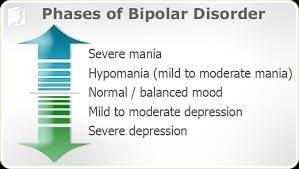
Bipolar disorder is a mental illness characterised by periods of extreme mood states known as mania and depression. It is one of the most serious mental illnesses and is the sixth most disabling condition in the world at the time of writing. It is chronic and potentially life threatening. However, those with it can go on to recovery and live happy and fulfilled lives between episodes. 

According to some studies, one in fifty people may suffer from a form of bipolar disorder. In many cases, there is a family history.

Mania is one pole of bipolar disorder – an extremely elevated or depressed mood, sometimes accompanied by psychosis. You may have racing thoughts or speak so quickly it is difficult for others to understand. You may also have trouble getting to sleep at night or suffer from insomnia. There is a danger of reckless behaviour such as overspending, unsafe sexual activity or aggression. You may feel a sense of grandiosity, making unrealistic plans. Despite mania feeling great at the time, the consequences of mania can be destructive.

Some of the signs of depression include a lowered mood, self-esteem or interest in enjoyable activities, pessimism, reduced energy and changes in appetite. Suicidal thoughts are also possible and must be monitored closely. As bipolar disorder is a recurrent illness and there isn’t any known cure, you may need to take medications to maintain your mood at a normal level.

Hypomania is the hallmark of bipolar II where the patient might feel euphoria or agitation. Hypomanic episodes are similar to manic episodes except they are less severe and sometimes pleasurable to you. There is never psychosis in a hypomanic episode. Despite hypomania increasing productivity, or making you feel increased self-esteem, the consequences can be major, especially as your mood goes down to depression.

A mixed state is a combination of manic and depressed symptoms. In a mixed state you may feel very sad or hopeless while feeling extremely energised. These can be dangerous, because of the suicide risk from being depressed as well as impulsive. If you feel you are heading into a mixed state, you should contact your psychiatrist as soon as possible.

Bipolar disorder type I is characterised by at least one episode of full-blown mania as well as depressive episodes. There is also a chance of psychosis (delusions/ hallucinations)  accompanying a manic episode. Bipolar type II features only hypomania and never mania or psychosis. While these manias are less destructive, the depression tends to be worse, and there is often a high suicide risk.

Cyclothymia is a bipolar spectrum disorder where you may have long periods of minor depression lasting at least two years alternating with hypomania. These depressive periods tend to be irritable and agitated rather than melancholic and lacking in energy.

Bipolar NOS (not otherwise specified) simply refers to bipolar disorders that do not strictly meet the criteria of any of the previously mentioned types of bipolar disorder.

The treatment of bipolar disorder involves medications such as Lithium carbonate, lamotrigine, sodium valporate, and quetiapine, as well as psychotherapy to help overcome negative thoughts that exacerbate depression or after effects of mania. 

As bipolar disorder is a recurrent illness and there isn’t any known cure, you may need to take medications for life to maintain your mood at a normal level. Despite this, many patients continue to do well as long as they stay compliant with treatment and keep aware of their changing mood states.

demilovato1

(image: MTVFORA: http://fora.mtv.ca/words-of-wisdom-celebrity-quotes-on-mental-wellness/)


Anxiety Disorders

The term anxiety disorder covers a wide range of illnesses from panic disorder to post-traumatic stress disorder (PTSD). Despite the wide range of diseases, many share similar treatment options. There is a stigma affecting some anxiety disorders due to stereotypes in the media.


Generalised Anxiety Disorder

It is normal for people to feel some anxiety over normal life events such as exams, work problems or family issues. However, when it causes problems in your everyday life or is particularly severe you may have an anxiety disorder. Generalised anxiety disorder involves having irrational fears, such as being afraid harm will come to you or your loved ones, financial issues, health, relationships and work.

Physical symptoms when experiencing anxiety may include: • Light-headedness • Becoming tired easily, or being unable to sleep properly • Feeling tense or restless, or losing your temper easily • Nausea • Shortness of breath • Headaches • Trembling • Muscle tension Treatment generally involves medications or therapy.

Psychological treatments may involve: • Learning relaxation techniques such as muscle relaxing exercises or meditation • Therapy to teach you how to solve problems that cause anxiety with anxiety disorders, psychological treatments are generally more effective than medication, however it can still be useful.

The most common treatments are antidepressants or benzodiazepines such as alprazolam or diazepam. Generally, benzodiazepines shouldn’t be taken long-term, as there is a risk of becoming dependent on them.

Anxiety disorders are relatively common in the population, with statistics that approximately 25% of the people suffer some kind of anxiety disorder that may warrant treatment in their lifetime. Anxiety is treatable, and therapy or medication may minimise the effects on your life and relationships.

Panic Disorder

Panic disorder is a mental health condition where you experience a feeling known as a panic attack recurrently.

Some of the symptoms of a panic attack include: • Shortness of breath • Dizziness or light-headedness • Tightness or pain in the chest • Trembling or shaking • Dry mouth • Muscle tension • Difficulty gathering thoughts or speaking • Tingling fingers or feet • A choking or smothering feeling • Hot or cold flushes • Nausea or butterflies • Blurred vision • Fear of dying, losing control or going mad

When you have panic disorder, you may also worry about the implications of a panic attack such as humiliation or feeling of going crazy.

You may try and flee from the situation hoping the panic attack will stop. Panic disorder is generally treated via therapeutic methods rather than medications. This may involve your doctor teaching you about panic disorder, for example, that a panic attack is distinguishable from other mental illnesses such as other anxiety disorders or psychosis – this is known as psycho education.

A therapist may instruct you not to avoid any situations where a panic attack may occur. This may be unpleasant at first, but slowly you will not feel anxious in the situation. This will help prevent agoraphobia and the disability it causes.

A common treatment for anxiety disorders is CBT – but there are many types too including exposure therapy and talking therapies. They can be incredibly helpful for you to overcome feelings of anxiety.

This guest blog was written by Ellie Willis, an expert in mental health.


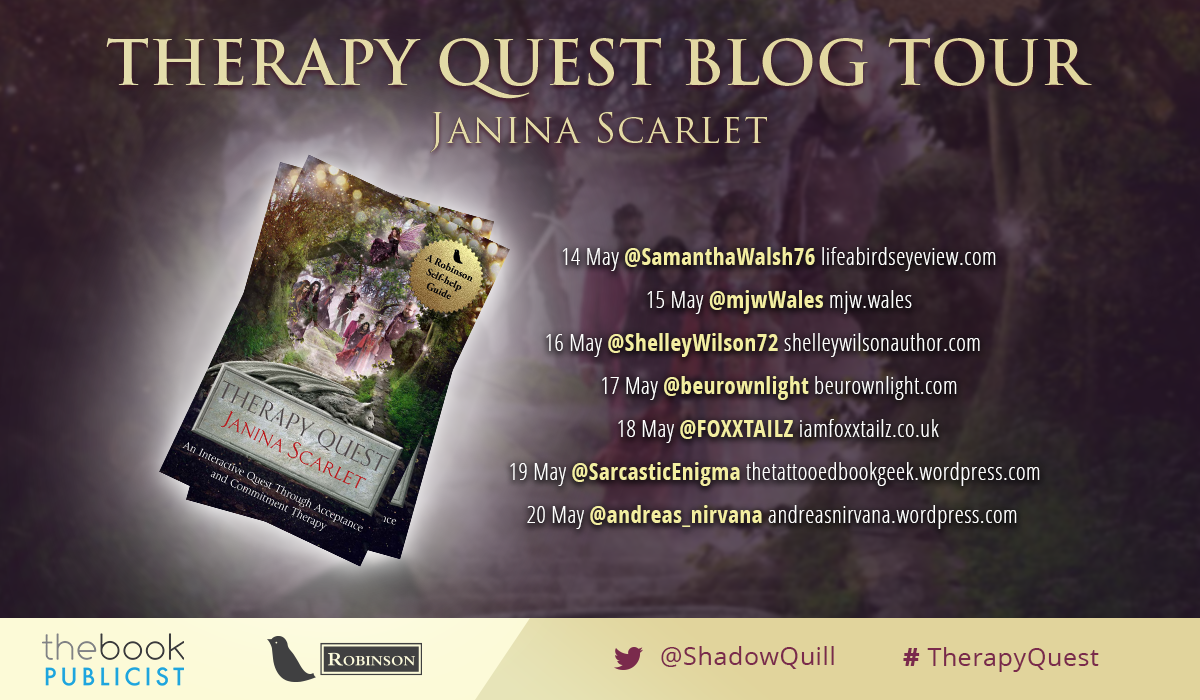
Guest Post: Interview with Dr Janina Scarlet, author of new book ‘Therapy Quest’

I have got to know Dr Janina Scarlet, psychologist as I have written more across the media. Janina writes about therapy and mental health in an approachable and meaningful way. She also loves superheroes and fantasy and incorporates them into her work!

This week for Mental Health Awareness Week, I spoke to her as she launches her  new book ‘Therapy Quest’.

bloggertour.png
(image: The Book Publicist/ Dr Janina Scarlet)


What is your new book Therapy Quest about?

Therapy Quest is an interactive fantasy book in which YOU (the reader) are the main character. You are transported to a magical world of Here and are the Chosen One to stop an evil sorceress, Mallena, from destroying the world. Only you don’t feel like a hero. Not at all. Your anxieties and insecurities nearly lead you to abandon your quest altogether. However, if you decide to partner up with some new friends, such as a vampire with an eating disorder, and an Ogre who struggles with obsessive-compulsive disorder, you just might be able to become a hero after all.

The book is written in a game-like format, which allows you to make choices along the way. Each choice you make will change the rest of your journey and can either allow you to earn or lose points. Some choices can kill your friends or your character, so you have to be careful.

Each time you make a choice, you will also learn a mental health skill, and you will need all the skills you can learn along the way to help you in your final battle.

What was your inspiration for writing it?

I knew I wanted to write a fantasy book with self-help elements in it, in which the reader could learn these skills through the characters they were reading about. My editor, Andrew McAleer, had the brilliant idea of having a similar format to “Choose Your Own Adventure” fighting fantasy books. This sounded like a very interesting challenge to me, and I am extremely honoured to have been able to work on it.

Could you explain a bit about what Superhero Therapy is and how it works in the book?

Superhero Therapy refers to incorporating elements of popular culture, such as fantasy and science fiction books, movies, TV shows, as well as video games, comic books (Superhero or otherwise) into evidence-based (research-supported) therapy to help clients to become their own version of a superhero in real life (IRL).

In Therapy Quest, the reader is the Chosen One, the Hero of their own journey even if they question their ability to do so. Through learning skills such as mindfulness, self-compassion, acceptance, and following their own core values, the readers are invited to take their own superhero journey and develop their own superhero skills, which can be utilized in their every day life as well.

Who could you recommend the book to?

I would recommend this book to anyone age 12 and up who might enjoy fantasy books and would like to learn skills to manage depression, anxiety, trauma, or other mental health struggles.

drjanina

Dr Janina Scarlet is a clinical psychologist and the author of Therapy Quest, a revolutionary self-help book which combines therapy with an interactive fantasy quest.

Fitness and how it can help Depression: Guest Post by Paul Matthews

fortaleza

(image: Fortaleza Fitness Center)

Dark times can come. When you reach your darkest days, the ones in which your thoughts are controlling you and you can barely do anything, you should try and keep yourself busy, if this is possible. Its not always possible for people who are unwell- but distractions and exercise are always helpful, especially if they benefit your overall health.

These are the top 3 reasons why taking exercise could help you if you’re suffering from depression:

1: Engage your mind and keep it busy

Last year was one of the worst periods of my life: I broke up with my girlfriend, changed my job and lost one of my best friends. I was that sad and my mind was not properly functioning, all my thoughts were invading me all day and I was barely able to do anything.

One day, I went for a 5 mile run, because it was sunny, right after work. During this time, no negative thought hit me. That was when I opened my eyes: if you don’t dwell on depressive thoughts, then you will be able to see the light at the end of the tunnel. I decided to get a gym membership and I started working out for an hour after work. It has really helped me manage my depression. I am happy right now: my life is busy, but I have plenty of energy every day and less dark clouds.

Keep active and you should hopefully see the benefit!


2: Your lifestyle can affect your mental health

One of my friends who had depression loved junk food. He was constantly sad and depressed. He also did hardly any exercise. I encouraged him to exercise more and go to the gym if possible. The exercise helped him feel more positive and like he was taking good steps back to wellness. 
3. Help Your Self Esteem and Do it for you 

Many people told me that they were embarrassed to do exercise and particularly going to the gym as they felt “ugly, insecure, overweight and not fit” and so on. The best advice I can give is: get yourself some good fitness clothing you feel comfortable in. This might sound a bit weird, but properly fitting exercise wear can boost confidence and promote positive mental health.

Its also important to note that you aren’t the only one feeling this way and most people feel the same about themselves. Take that leap today.

When you are approaching fitness, whether if it’s in the gym or outside, or even at home, you must not forget about why you are doing it, why it’s important for you and how this could help you with your mindset.

Gentle exercise includes swimming, walking and yoga. There is something for everyone.

Try and see over the wall and remember: after the storm, the sun will rise again. Keep it up!


paulm

Paul Matthews is a freelance business writer in Manchester, who has headed up several campaigns. His aim is to better inform business owners and professionals on the hidden dangers of the workplace. You can often find him mountain biking or at the local library.

You can contact him at : https://twitter.com/paulwritesalot

What happens during a Manic episode: Bipolar One Disorder Tales by founder Eleanor

healthyplace1.jpg

When most people think of bipolar disorder, they may think of the two opposing poles that make up the illness. High and low. Manic and depressed. Many also believe that all people with bipolar flit between these moods constantly and that the illness is severe or alike in everyone who has it. This is not the case.

There are two types of bipolar disorder. I have the first one – Bipolar affective One disorder, which means that I have serious manic episodes which include psychosis (loss of touch with reality). This has happened to me twice in my life and both times I have needed hospitalisation. Bipolar two is characterised by lesser manic episodes (hypomania) and more mixed states.

mania2

(image: https://www.34-menopause-symptoms.com/mood-swings.htm)

Being Bipolar One is very challenging. When I get ill, I get really really sick. Loss of insight, loss of reality, needing anti psychotic medicines now- ill. Ill to the point of being sectioned under the mental health act due to lack judgement and insight. Believing that my family are out to get me and people are going to harm me – ill.  Really unwell.

When one of these serious manic episodes strikes for me, my thoughts begin racing and I can’t concentrate. I don’t sleep, I am more creative in the short term but a gibbering wreck in the long term. I start believing I can do things that I can’t rationally. I am super vulnerable and I speak much faster. I may not make much sense and when the delusions begin, I start believing I am going to be harmed.

Luckily, these episodes are kept at bay by a host of excellent medications including Lithium and Quetaipine. I also take anti depressants to keep the low periods at bay in my life.

Full blown psychosis and mania for me are very rare but they do happen. In 10 years, from 2004-2014 I did not have a hospitalisation. I was depressed and anxious but I was able to recover at home.

I had no hypomanic or manic episodes for a decade! No psychosis. One therapist even questioned my diagnosis, before my 2014 hospitalisation.

Mania for me means danger. That danger means I am more vulnerable. I have to be very careful who I surround myself with during those times. I don’t drink alcohol to excess or take drugs, but some with this kind of mania do. Or they spend lots of money or engage in risk taking behaviours such as sexual activity.

I have learnt that as long as I take my medication regularly, get enough sleep, eat well (and don’t engage in long haul travel) that I can keep my symptoms at bay. If my medicines work! (this is always a fear.. that they could stop working).

Mania for me strikes out of the blue sometimes. I also have to be careful that my mood stabiliser medicine is holding me- as with high doses of anti depressants, mania can be triggered without it.

When in psychosis in hospital I have thought the following untrue delusions

– I am being harmed by my family
– There are CCTV cameras watching and filming me in my bedroom/ hospital room
– I have been abused in some way (my mind convinces itself)
– I am being held by a criminal gang (in hospital)

These delusions have always disappeared over time, with excellent care from psychiatrists and psychologists, anti psychotic medicine and good support from family.

I don’t get these when well, and rarely have to go through them. I am learning to accept that my brain chemistry is not the same as other people and having bipolar, a chronic illness, is not my fault. I just do the best I can to manage symptoms and keep myself as well as possible.
If you want to share your story of mania and bipolar, please do write below.

There is hope and recovery after mania. Thank you to all on the Facebook group who voted for this one.  

Love, Eleanor x


Guest Post: Making the Climb: 4 Tricks to begin the fight against Drug Addiction by Kara Masterson

Making the Climb, 4 Tricks to Beginning the Fight Against Drug Addiction (1).png

It all started at a party you attended a few months ago. You were feeling down after the big break up, and you just wanted to feel good again. Someone at the party offered you some pills, and they made you feel better than you had felt in a long time. Before you knew it, you were a regular user. At first the confidence and the euphoria were too irresistible to pass up.

Once hooked, you always knew how to get ahold of your drug of choice. It was always just a phone call away. Unfortunately, one thing lead to another and now the pills are not having the same effect they used to provide you with. In fact, you need more to get the same feelings, but coming down has been much more difficult on you than you ever imagined it could be. In a particular low moment, you started to think that it might be time to fight your drug addiction, but where do you begin?

Admitting Your Problem

As with most problems, fighting a drug addiction begins with admitting to yourself that you definitely have a problem with drugs. If you are not committed to this being the truth, then you will find it is difficult to see a commitment to overcome the addiction through to the end. When you are certain that you want to give up your addiction and will do anything to make that a reality, then you are ready to take the journey necessary to reclaim your life back from drug addiction.

Disassociate from Your Connection

As long as you can call someone to enable you to continue in an addiction, you will be driven by the addiction to do so. To fight and overcome a drug addiction, you must break all ties with the people who enable you. By making this commitment, you are getting rid of the source of your addictive behavior.

Build a Support Network

To give yourself the best chance at overcoming addiction, you need to identify the people you can trust that have your best interests in mind to confide in about your drug addiction. This could be friends, family members or even someone like a pastor or teacher.

The important thing is that you gather people around you who love you and are willing to help you see your recovery all the way through. Sure, some of these people may be disappointed to learn about your addiction at first, but ultimately those who have your best interests in mind will want to help you reclaim your life and will be there for you in times of weakness.

Get Professional Help

The next step in your treatment is to locate and visit a rehab facility that can help you to get clean from drugs. Detoxing from narcotic substances can sometimes be a difficult path to walk down, but it is best dealt with by working with professionals like Kick Recovery Coaching or someone similar who have helped countless people through this process. They will not only be able to help you know what to expect, but they can provide you with ways to get through the detox phase that are rooted in the latest drug addiction treatment options.

The road ahead may not be an easy one, but it is definitely better than not seeking any help at all. The simple reality is that drugs ruin lives, but you do not have to be a statistic or a willing victim. By taking up the fight to reclaim your life from a drug addiction, you will come out the other end of this journey a much stronger person for it.

Kara Masterson is a freelance writer based in the USA.

Dating with a Mental Illness: for Glamourmagazine.co.uk by our founder Eleanor

Here is an extract from an article I wrote for Glamour UK Magazine (online) which was a dream come true. It is my true story about what dating with bipolar and social anxiety is like. I hope it helps you. For full article see link at the end:

glamour
(image: from stock and Glamour)

According to the mental health charity, Mind, 1 in 4 people in the UK will experience a mental health problem each year. In England alone, 1 in 6 people report experiencing depression or anxiety every single week. Eleanor Segall is one of those six, having lived with bipolar disorder for 13 years. Here, she shares her candid account of what so many millennials struggle with every single day: finding love while secretly battling a mental health disorder. Eleanor reveals in honest detail the judgement she faced in her quest for “The One” and how she finally learnt to open up about the taboo illness and let herself fall in love.

“I sat on my bed with tears running down my face. ‘I have something to tell you’, I said to my boyfriend, two months into dating.

“It isn’t easy and I wanted to tell you sooner but I didn’t want to share it too soon. Three years ago, I was hospitalised for my bipolar disorder. I didn’t want to tell you, in case you saw me differently or thought I was ‘crazy’. I wanted you to get to know me for me and see my personality and who I really am without it.”

He looked at me with genuine care and said, “Eleanor it doesn’t matter. I want to be with you for you, the fact you have an illness doesn’t bother me in the slightest. I want to be educated on it. Tell me more.”

So, for two hours, I told him everything. I told him how I had been diagnosed at 16 with bipolar affective disorder and how it may run in my family. I told him there could be times when I would be unwell with severe depression or mania and would have to stop working, that I had had psychosis in the past – but that I was medicated with Lithium and anti depressants to hold my moods.

I told him I had been hospitalised as a teenager and, at aged 25, my life had been far from easy, but that the love of my family and support from my medical team, had saved my life. He listened, supported and held no stigma towards me or my illness. It was a revelation after many years of dating men that may not have always understood how best to support me or for whom I was not ‘the one’.

With disclosure of a mental health condition and because I was diagnosed so young, there were many years of dating fear for me. I feared others judgement of the fact I had bipolar and at times this turned into anxiety prior to going on dates.

I was worried that people would think I was different or not worthy enough and when I look back, that is because I was struggling to deal with how I saw myself. As a teenager, you don’t want to be different, you want to fit in and as I reached my early 20’s, I began to be very anxious about dating. My self esteem had taken a battering as well as I had had my heart broken in a past relationship, which led to depression and anxiety.

I survived the heartbreak, however, I knew that I wanted to settle down with someone and have a family, but I didn’t know if it would ever be possible. Particularly after I was in hospital, I had no idea whether there would be a man who could deal with my illness and all it can entail.

There were so many times when I cancelled dates (often blind ones set up through well meaning friends or family) because I would get so nervous, my heart would race and I would be terrified that they would see through the well cultivated veneer. On first and second dates particularly I always felt I was hiding something: my mental health past.

But I wasn’t alone. According to the mental health charity, Mind, 1 in 4 people in the UK will experience a mental health problem each year. In England alone, 1 in 6 people report experiencing depression or anxiety each week.

Celebrities including Stephen Fry, Britney Spears, Catherine Zeta Jones, and Demi Lovato have all talked about their struggles with bipolar disorder.

A year and a half after I left hospital and had recovered, I began to date again and signed up to an online dating website to meet new people, set up through acquaintances. The social anxiety was at its height and I often had to cancel dates two or three times before meeting. Some men gave up on me due to this, but some understood.

A year and a half after being fully back on the dating scene, I met my current boyfriend. We clicked from our first date in a coffee shop and our second date (drinks at a lovely local pub).

Read more and full article here: http://www.glamourmagazine.co.uk/article/dating-with-a-mental-illness

We are 2 Years Old! Blog Anniversary of Be Ur Own Light!

Cupcake mit Kerze und die Zahl 2
(image: Michelle Leigh writes)

Wow! I can’t believe that Be Ur Own Light has turned 2 years old! We celebrated our second blogiversary on 1st March so I am a few days late but it doesn’t matter.

This blog has provided me with so many amazing opportunities so far. I have met more and more people who are like minded and want to speak about their own mental health to battle stigma. I have met some incredible people online too and such wonderful contributors. I love also finding and telling untold stories.

The blog  has really grown this year into a good mental health resource. We have had lots of contributors which has been fab. I (Eleanor, founder of blog) have also started a new career as a mental health writer and journalist. That is largely down to the success of the blog and I have truly found a niche. Be Ur Own Light is also a shortlisted finalist in the Health and Social care individual category of the UK Blog Awards 2018! Thank you for all your support of the blog and what we do.

I have written this year for Metro.co.uk, Glamour Magazine (online), No Panic, Happiful Magazine and Happiful.com, Counselling Directory, Mind, SANE, Time to Change, STOP Suicide,  Jewish News, Equilibrium Magazine, World Union of Jewish Students,
and been featured in Cosmopolitan UK, Elle UK and Prima.

Thank you to all these amazing people who have provided guest blogs this year. I have been humbled to work with experts and people with lived experience, to provide information and tell others stories to help end the stigma and provide a resource on mental health.

So thank you to these guest bloggers who gave me such wonderful content. There is more to come. This year March 2017-18 thanks to:

Hannah Brown- Recovery from Anorexia
Time With-  Therapy queries
Charlotte Underwood- Recovery from depression/ suicide
Trysh Sutton- Pure Path Essential Oils

Ariel Taylor- Trichotillomania guide
Jon Manning- Mental health in schools
Channel 4 and Lloyds Bank- Get the Inside Out campaign
Stephen Galloway- Inspirational lyrics
Eugene Farell AXA PPP- Loneliness tips
Peter Lang- PTSD and recovery
Kaitlyn W- Light beyond self harm
Jess Harris- Organ donation
Sam- Recovery from bipolar disorder
Ryan Jackson- Reasons for drug and alcohol addiction stigma
Redfin.com- Seasonal Affective disorder
United Mind Laughter Yoga- Job and wellbeing
Christina Hendricks- on PTSD
Reviews Bee- Child Mental Health
Consumer Money Worries- Mental Health and money
Stephen Smith- OCD and nOCD app
Arslan Butt- University students and mental illness
Tony Weekes- Unity MHS
Ellie Miles- Fighting Health Anxiety
Hope Virgo- Anorexia and recovery
Ann Heathcote- Government and mental health
Jasmine Burns- Strategies to help Binge eating
Bill Weiss- Surviving Opiate withdrawal
Jessica Flores- Bipolar 2 – depression
Jay Pigmintiello- Mindfulness and Meditation
David Baum- 365 Challenge for PTSD awareness
Karen- Mental health professional with anxiety
Dr Stacey Leibowitz Levy- CBT
Lucy Boyle- Burnout Syndrome
Diamond G Health Informer- Technology and mental health
Juno Medical- Anxiety Disorders

Thank you to everyone! This year we aim to cover even more mental health issues and disorders in our quest to provide information and be a home for all.

This year I have also written personal posts about my fight with my anxiety disorder, bipolar disorder, mental health and dating, mental health and weight gain, NHS waiting lists and therapy,  book reviews for Trigger Press for Hope Virgo and Karen Mantons books, Workplace and mental health stigma, Reading as therapy and more! Time to Talk Day and Eating Disorder Awareness Week marked and many conversations had eg stigma about psychiatric medication.

We have won various awards from other bloggers- Liebster, Sunshine, Mystery and Top 30 social anxiety blog and Top 100 bipolar blog from Feedspot.com.

I am so excited that we have over 4,000 followers on Twitter, almost 600 on WordPress, over 2000 on Instagram and of course my loyal Facebook followers too.

Thank you friends and supporters! Heres to a great year talking about all things mental health and normalising it to all.

Eleanor x

Blog for No Panic on Living with Social Anxiety: by our founder Eleanor

nopanic
(image: No Panic)

I am delighted to collaborate and write a blog with No Panic, an amazing mental health charity for people with anxiety disorders. You can read it here on their website:   https://www.nopanic.org.uk/living-social-anxiety-story/  and also below:

nopanic1

(image: No Panic)

I have lived with my anxiety disorder for most of my life, but it really started at aged 15, when I was so acutely anxious I had to take six weeks off school during my GCSE year. I was suffering from an agitated depression, an episode that left me reeling. I was so young and so unwell. It was partly triggered by stressful life events but what I didn’t know at that time was that my anxiety and depression was part of a wider illness- bipolar disorder.

After several episodes of depression and mania, I was hospitalised at aged 16 at the Priory North London and diagnosed with bipolar affective disorder. Bipolar is a mood disorder where you fluctuate between episodes of depression, hypomania (a lesser manic state) or mania. It can run in families and can be triggered by life events. I am now 29, so have lived with this for almost 14 years.

I was hospitalised due to a severe depression that featured psychosis, where your mind loses touch with reality and can cause bad anxiety. I had delusions- false beliefs about the world and a lot of fear. Luckily, I recovered after four months of treatment, left and started taking regular medication which began to help, however, the anxiety seemed to be ever present.

As I had been so ill as a teenager with a whole host of symptoms due to my bipolar, I developed social anxiety and panic attacks. I was desperate to fit in and appear ‘normal’ as most teenagers are. I felt different, I was facing life with a chronic illness. There was so much uncertainty, they couldn’t just scan my brain to see what was going on. Taking medication was trial and error for me, some worked and some didn’t. The same with therapies.

The social anxiety was about feeling judged by other people, because I was judging myself wrongly for what had happened during my episodes. It impacted my self esteem- I felt low about myself and didn’t know why I had been given this illness and why it caused me so much embarrassment and shame at the time. There was a stigma back in 2004, that has lessened today

My social anxiety manifested a few years after I had left hospital. I began to fear attending parties, dates and social events with friends, in case I was judged negatively. As a teenager, there was a lot of stigma from other teenagers about my illness. This made me feel depleted, sad and angry. I didn’t choose my brain chemistry- so why were they spreading false rumours about me and making me feel worthless? It was a difficult time for me. I did also have a lot of love and support.

However, my heart would race and the event eg a birthday party in a club or bar, would trigger an absolute state of panic. What if I looked awful/ wore the wrong clothes? What if everyone was judging me when I got there and thinking badly of me? I often would cancel on friends and not attend, for fear of having to show up, however I felt. I felt so vulnerable and I didn’t want anyone to see it.

Part of the anxiety was because when you have bipolar episodes of mania and depression (particularly mania) it leaves you feeling ashamed of your behaviour. For me there was a certain sense of shame, especially with the manic episodes. However, I knew it wasn’t my true personality and I could not control my brain chemistry at the time it happened. Yet, my subconscious mind continued to trigger panic in social situations.

I was lucky and am still lucky to have a group of very supportive friends (and family) who helped me to get out more, through exposure therapy. My Mum or Dad would take me out in the car, or friends would come to the house and coax me slowly out into the world again. Exposure therapy, moving slowly to expose myself to the feared situations is so helpful to me, even today.

Aged 20, I began my first course of cognitive behavioural therapy (CBT) for the anxiety. I worked out with my therapist what the limiting beliefs holding me back were- fear of judgement, fear of being exposed negatively (as my illness made me feel so out of control) and I was asked to keep thought records of my negative thoughts at the time of a panic attack.

For me, panic attacks manifested themselves as feeling clammy, sick, tight chest, overwhelming negative thoughts about a situation and the fight or flight desire to run away and cancel the arrangement, removing myself from the feared trigger. Although the CBT did not stop the anxiety and panic, it gave me some tools at the time to understand it.

Over the years, I have completed three courses of CBT with a psychologist and another therapist, until I gave up on it, because my anxiety was so emotionally rooted and based in the subconscious that the cognitive approach was not working. For me a combination of the following helps.

Firstly, talking therapy about any past traumas (psychodynamic) with my current therapist is so helpful and makes me feel so grounded and safe. Secondly, when very stressed, I find meditation, particularly the Yoga Nidra meditation or apps like Headspace so helpful for breathing. Taking deep breaths can help relieve stress. Thirdly, exposure therapy is key to recovery. I find the more I go out accompanied, the more I feel able to do- it’s a slow process but helpful.

In 2014, after ten years out of hospital, I was hospitalised for a severe manic episode with psychosis. This hospitalisation caused a lot of trauma and anxiety and in hospital, I found art therapy incredibly helpful. Making a picture, collage or painting focused and calmed my mind. Even colouring in a book helped me to filter out the stress of being in hospital and kept my mind calm. I suppose this is a form of mindfulness too and I still love art today.

I very much support the work of No Panic and am so thrilled to write here. Since 2016, I have made a really good recovery from my bipolar and am now stable on medication. My anxiety is still there but I now have a career writing freelance for Metro Online, Happiful Magazine, Glamour and mental health charities such as Mind, Rethink Mental Illness and Time to Change. I have also written my mental health blog www.beurownlight.com, which is about my journey with bipolar and anxiety and those of others. It is currently nominated for a UK Blog Award.

Just know that if you currently experience anxiety and panic attacks, whatever triggers it- there will be something out there to help you- whether its therapy, medication, mindfulness, exercise, meditation, art or exposure to the feared situation in small doses. You are not alone.

For more on No Panic please see: https://www.nopanic.org.uk/

Life Whirlwind: Mental Health Writing, Blogging and Speaking, Bipolar Disorder and a trip to Romania.

michelle1

(image: Pinterest)

The past few weeks have been incredibly busy- but exciting. This month has been a bit of a rebirth in many ways. My writing and blogging have truly taken off and been published in various different places- this month my story is in Happiful Magazine, two articles for Metro on mental health (www.metro.co.uk), I shared my story in the Jewish News here in the UK and online at STOP Suicide. It has been Time to Talk Day (about mental health), Childrens Mental Health Awareness Week and I have also volunteered this month with Jami (Jewish Association of Mental Illness) Mental Health Awareness Shabbat, which this year came to around 97 Jewish communities in the UK. I attended the panel event at a local community centre and discussion was had on mental health here in the UK, by experts including my friend Jonny Benjamin.

This month, I have also been asked by a friend to come in and talk to his work place about living with anxiety and what it means. So that is hugely exciting for me! I am also writing a mental health article for a top womens magazine- which is a dream of mine. I hope to share that with you when its published.  I have been writing sample chapters for a book too and am in the limbo phase of waiting to hear what editors think.

So, its been a total whirlwind really as I have also been running my blog here and sharing peoples stories (and last month this blog was nominated as a finalist for a UK Blog Award). I was also asked last week if a social media editor could turn my story into a video for her 200 thousand followers so that is in process too. I had not ascertained how much interest there would be in my story.

Professionally, a lot is changing and I have to be very much aware to look after my mental health, to get enough sleep and rest, to make sure I take my tablets on time, to eat well and do some gentle exercise and to see and speak to my friends (and boyfriend of course). I have to keep grounded and rested in order to function effectively. Last week, the Jewish News article came out and I know it has had a positive ripple effect in my community- as my Mum was stopped in the pharmacy for people to talk to her about it. So thats exciting.

I am a shy person at heart and I have written extensively on having social anxiety. When my JN article came out, i actually felt very anxious at first and wanted to hide away. Mental health stigma is still present in my community and I felt scared. But I needn’t have worried as the reaction has been very positive!

michelle2

I am still processing all thats going on and I am lucky to have a really good therapist and family/ boyfriend support network to help me deal with the changes going on. I am still adjusting to the financial side of being a freelance writer and pitching to editors at different places. My latest Metro article on child grief came out on Friday and you can read it here: http://metro.co.uk/2018/02/02/children-often-get-sidelined-when-a-family-experiences-loss-why-its-important-we-talk-to-pupils-in-schools-about-grief-7270002/

Over the weekend, I went with my Dad to Iasi, Romania (on the border with Moldova) which is where my great Grandpa and his family were from. It was an eye opening trip- the city is grand and full of culture. However, as Jews we had relatives who died in the Holocaust and found this out using the Yad Vashem Holocaust database when we came back. It was great seeing Iasi but also sad as some of our relatives were taken from there to be killed – but an eye opening trip.

Today, I am feeling thankful and grateful for all thats going on and thankful for you who are reading and following and commenting- and enjoying my work.

With love, Eleanor x