The First all-in-one Stress and Mild Anxiety Formula has launched: by Nu Mind Wellness Ltd.

(image: Nu Mind Wellness Ltd)

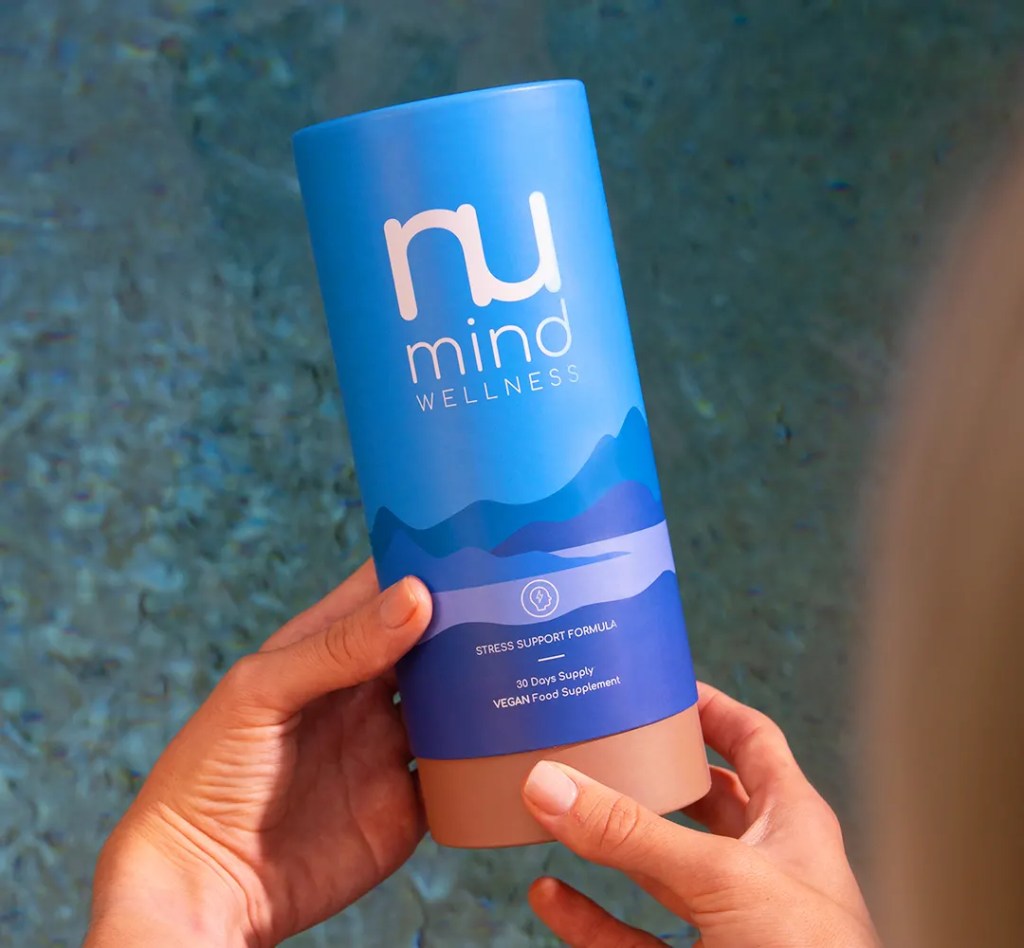
Nu Mind Wellness Ltd officially launched on October 25th 2021. The Nu Mind Stress & Mild Anxiety Support Formula (30 days) offers consumers 23 scientifically backed ingredients packed in 5 daily capsules to help alleviate symptoms of stressors on the mind and body. This all-in-one Stress & Mild Anxiety Support Formula is the first of its kind and is the most comprehensive supplement programme in the UK market for mental health.

Nu Mind Wellness Ltd will is offering free educational courses to its consumers on how to improve their mental health and overall wellness. Specifically, on how to improve nutrition, how to exercise correctly and how to improve one’s mental health. Each course has been written by experts in their respective fields.

A strong social mission is at the core of Nu Mind’s vision. Nu Mind Wellness Ltd has also partnered with 1% For The Planet. Nu Mind have pledged to donate 1% of their annual revenue to grass-root non-profits. In the first year these funds will be donated to One Tree Planted where they will be planting trees in vulnerable areas across the globe. As well as this, Nu Mind’s products are all 100% recyclable.

“We wanted to create the very best formula to help those busy individuals living a stressful life. Which is why we included 23 science backed ingredients to help you manage stress and recover from symptoms of anxiety”

  • Shona Wilkinson, RN, mBANT, CNHC

Shona is a registered nutritionist, specialising in the formulation and development of supplements. Shona is a member of the Professional Associations BANT (British Association for Nutrition and Lifestyle Medicine) and CNHC (Complementary and Natural Healthcare Council) as well as the Royal Society for Medicine

Features and benefits of the Nu Mind Stress & Mild Anxiety Support Formula include:

  • The first all-in-one stress supplement programme, packaged into 30 daily sachets
  • 23 scientifically backed ingredients, based on current scientific research
  • Free educational courses on how to improve mental health and wellness 
  • Charity partnership with a clear social mission
  • 100% recyclable packaging 
  • Vegan Friendly, Gluten Free, No Allergens
  • 50% cheaper than current alternative

The Nu Mind Stress & Mild Anxiety Support Formula (30 daily sachets) will be available from 25th October at £44.99. For more information, visit www.numindwellness.com. 


About Nu Mind Wellness Ltd

Let’s begin with our story. We are two brothers who have suffered from anxiety. From panic attacks, deliberately avoiding social situations and sleepless nights. For years we searched for ways to feel ‘normal’, only to find the internet’s answers unsatisfactory.

Given our personal experience and understanding of the battles of anxiety, we set out to give back and support those with similar struggles. Working alongside professionals, we have created the first all-in-one stress & mild anxiety support formula.

We aim to provide the first all-in-one stress and anxiety service; providing a supplement, educational wellness content and a like-minded community. This is the essence of Nu Mind.

Links to learn more:

This is a sponsored blog post from Nu Mind Wellness Ltd.

How are our Lifestyles linked to our Mental Health? by Anna Witcherley, Founder of Head Hacks

(image: Pexels)

Our health and wellbeing aren’t solely dependent on how our brains and bodies work; they’re also influenced by how we live. Making healthy lifestyle choices is key in supporting our mental health; influencing our self-esteem, confidence, energy, motivation, mood, and even our ability to sleep.

Want to know more about what you can do to support your health and wellbeing? Here are 5 key areas to get you started!

Get active

We know exercise is beneficial for our health and wellbeing; even being active for 30 minutes per day, 5 days per week can positively impact our mood, creativity, thinking and sleep. If going for a run or to the gym isn’t your thing there are so many other ways to get moving; including going for walks, climbing, cycling, dancing, surfing and table tennis (to name just a few). 

Check out Head Hacks, a new directory website, run by a qualified Occupational Therapist, where you can search for fun things to do, locally and online, to help you get active in a way that suits you!

Sleep

If you find yourself struggling to switch off at night, or you feel you’re not getting the quality of sleep you need to feel rested there are a number of things you can do to help yourself. These include:

  • Avoiding screens for at least 30 minutes before going to bed
  • Increasing physical activity and exposure to natural light during the day
  • Avoiding drinking caffeine for at least 6 hours before going to bed
  • Avoiding smoking for at least 2 hours before going to bed
  • Maintaining a general bedtime routine, for 30 minutes before going to bed (by doing things in roughly the same order around the same time each evening).

Mindfulness

When talking about mindfulness a lot of people may link it with meditation and yoga; however mindfulness comes in many different forms. If meditation or yoga aren’t your thing why not try ‘mindful doing’? The aim is to keep your mind present while doing an activity you enjoy or that fits into your routine, (like going for a walk, cooking, eating a meal, doing the washing up etc). Try to minimise distractions and instead focus on your current thoughts and feelings, and what you’re doing (using all your senses). 

Having purpose

Having a sense of ‘purpose’ is the feeling your life has some meaning or direction; without this we can feel anxious, low, bored and unmotivated. If this is something you feel you’re lacking here are some ideas to help you find more purpose in your life:

  • Voluntary work
  • Learn a new skill
  • Develop a sense of community by connecting with others over a shared interest e.g. joining a local activity group
  • Spend time thinking about what is important to you and form one or two goals around this (remember to break these down into manageable steps!)
  • Read (research has linked reading with feelings of purpose)

Connecting with others

Positive and meaningful relationships are vital to our health and wellbeing; providing us with a sense of belonging, self-esteem, and emotional support.  However you prefer to spend time with people, find a way to connect with others in a way that suits you; some of us prefer having one or two close friends, for others it’s family, and some prefer socialising in larger groups. 

To sum up

Research shows us that how we live; our relationships, how we spend our time, our sense of purpose and belonging, all vitally contribute to our health and wellbeing. Now that Coronavirus restrictions are easing, there are increasing opportunities, both in our local areas and online, to get involved in activities that are important to us, and that will help support our health and wellbeing.

Head Hacks is a new online directory, setup by a qualified Occupational Therapist, which aims to link people up with these activities and groups, as well as sharing useful information about managing health and wellbeing. Check it out to find fun things to do near you! Anna Witcherley is the founder of Head Hacks and wrote this article.

How to Feel Confident Going Back to the Office

(image: Pexels)

Going back to the office is becoming a common conversation for many companies. After spending more than a year and a half working from home, returning to the office seems like entering a whole new world. For those preparing to go back to the office, here are some tips for feeling confident and successful when going back to your desk. 

Manage your stress and anxiety

There can be a lot of anxiety around returning to the office. Whether it’s meeting new coworkers for the first time, realigning yourself with office culture, or even just getting used to being away from home, these changes can lead to major feelings of stress and anxiety. 

Creating some self-soothing and self-care habits that you can bring to the office can help you navigate being back in the office with ease. Consider using a fidget of sorts to help get out any nervous energy you may have as they are a great tool for calming. Journalling before the day starts or journaling at the end of the day as a way to reflect can also help you release any stress or anxiety you may have. 

For some people, starting back at the office means once again embracing their commute. It can be worth taking your car for a spin along that regular route just so you get used to the traffic and scheduling for a few days before you have to return. This may be a good excuse to once again renegotiate your insurance rates or take down the contact information of the best car accident lawyer in kind.

If you struggle with creating self-soothing habits that work for you or your lifestyle, seeking out guidance from a mental health counsellor can help you start the process. Putting an emphasis on your mental health is vital to any success you have personally, professionally, or otherwise. When you are in a good headspace, that often translates to the work you do. Making sure you take care of your mental health while returning to the workplace is a great way to set yourself up for success and will empower you to continue to always put yourself first. 

Upgrade your style

While working from home over the past year or so, you’ve been able to incorporate comfort into your work wardrobe. Wearing a top suitable for a zoom call while also wearing sweatpants has been a staple outfit for many work-from-home employees. Thinking about all the clothes that are sitting in your closet waiting for you to return to work can have you worrying that the clothes you have are a bit outdated, or they just don’t match the style you’ve adopted during the pandemic.  Refreshing your wardrobe for the office can help you return to your workplace with confidence and comfort on your side. Upgrading your staple items and adding some statement pieces that reflect your style and personality can help boost your excitement about going back to the office to see coworkers and friends.  

Returning to the office can make you feel like a kid going back to school, seeing old friends, excited to make new ones, and you want to make a good impression. Your style is more than just the clothes you have, it’s the hairstyle you choose, the accessories you wear, the makeup you put on, etc. Getting a haircut or dying your hair that color you’ve always wanted can have you feeling fresh and new. With your new hair, you may even consider ditching the glasses you’ve been wearing your whole life and wearing a pair of comfortable contacts to switch up your style. When you let go of your glasses, you can stop worrying about smudged lenses, crooked frames, or foundation buildup at the bridge of your nose. Making your style match you and your personality will make you feel confident during any staff meeting or water cooler conversation. 

Embrace wins big and small

Being back in the office is a big step in and of itself. Returning to the land of office politics can feel overwhelming fairly quickly. Listening to the drama of interdepartmental squabbles or feeling frustrated with how quickly the communal copier runs out of ink are all things that were distant memories while working from home and are now part of your day to day life again. With these frustrations, it is important to find the silver linings each day as they will help you feel motivated and successful even on days that don’t feel like they are. 

Finding ways to feel victorious even over small things throughout the day helps create a positive environment and empowers you to feel more confident in the work you are doing. Claiming a win each day, big or small, will help you feel accomplished and happy about something that happened at the office that day. Maybe that is going out to lunch with coworkers you haven’t seen in months or acing the presentation you had with your boss, whatever it is, that bright spot you find is important!

For some, working from home was and still is a comfortable thing to do. For others, they missed the office environment entirely. To those that thrived working from home, returning to the office gives you the opportunity to maintain the work ethic and confidence you built while working from home and even an opportunity to master it a step further. Just because you are back at your cubicle, or your office on the third floor, doesn’t mean you have to lose what makes you-you. Be sure to bring your confidence with you when you walk through those doors. 

This article was written by a freelance writer.

How to Identify and Deal with Imposter Syndrome.

(image: Pexels)

Do you ever sit down at your desk in the morning and think to yourself,

‘What am I doing here? I don’t belong in this job. Am I a fraud?’?

Well, if you do, you’ll be glad to know that you’re not alone. 

62% of UK adults experience what is more commonly known as ‘imposter syndrome’. But what is it? 

A feeling that your accomplishments have occurred due to luck or good fortune, as opposed to your natural talent and ability, imposter syndrome is a theory that was first identified back in 1978. 

Pauline Rose Clance and Suzanne Innes detailed in a psychology paper that imposter syndrome was something uniquely experienced within women. However, since then, further researched has noted that this is something felt in men too — as the previous value suggests. 

Different individuals experience imposter syndrome in different ways, purely dependent on the person and the circumstance which they find themselves in. 

In this article, we look at the different types of personalities which develop the aforementioned syndrome and go on to delve into five different ways it can be combatted, helping you don your black suit trousers with pride and confidence in the morning.

The ‘super’ person

These are people who continually push themselves to breaking point in an attempt to prove that they aren’t imposters. Success is the only measurement they know, and they begin to get stressed when they aren’t experiencing it. 

The ‘go-it-alone’ person

These people feel as if they have to do everything on their own as asking for helping is a sign of weakness, acceptance of defeat, and ultimately, admittance that they are a fraud. 

The ‘genius’

These people are accustomed to taking things in their stride. When they find something too difficult or struggle to complete a task, they automatically assume that they aren’t good enough.

The ‘expert’

They want to know everything and without it they are afraid to suggest their opinion or take otherwise calculated risks. They will refrain from putting themselves forward with task that sits beyond their level of guaranteed expertise in fear of looking stupid.

The ‘perfectionist’ 

With this group, it’s 100 per cent or nothing at all. There could be one suggested amendment to a 200-page document, and they would take this as a failed project, feeling unaccomplished. 

But, what causes these feelings of inadequacy? 

  • 38% assign impostor syndrome to self-doubt 
  • 23% assign it to criticism 
  • 20% assign it to asking for help 
  • 16% assign it to comparing themselves to colleagues 
  • 15% assign it to a lack of understanding in regard to what is expected 

How to combat these feelings of discontent?

Talk it through

The first thing you need to do is talk about how you feel. As we’ve previously noted, more than 60 per cent of the UK population experience the same feelings. A problem shared is a problem halved after all. 

Acceptance 

There is no denying that every once in a while, we get out of our depth — we’re only human at the end of the day. Realistically, you wouldn’t be able to learn if you didn’t have to, once in a while, step beyond the boundaries of your comfort zone. Accept that sometimes you will have to hold your hands up and say, ‘I’m stuck’, and things will get a whole lot easier. 

Learn to appreciate success

Sometimes, for someone with imposter syndrome, the difficulty is not being able to appreciate success and recognise when they have performed well. This is particularly true for those who fall into the ‘perfectionist’ category. In order to overcome this dissatisfaction, you need to take a step back every now and again, realise your achievement, and pat yourself on the back.

Create an image in your head of success  

Think of a changing room before a cup final. Beyond the 90 minutes, if we choose to focus our attention on football for example, the image in the mind of the players is one of glory. Visualise lifting the hypothetical trophy and don’t fixate on being branded as a ‘fraud’ along the way.

Ask for help

Do you think that the great leaders and winners of yesteryear, whether it be in business or politics, succeeded alone?

No, is the answer. Winston Churchill was backed by the support of a nation, while Bill Gates was aided by the creativity and innovation of a strong organisation. Asking for help is by no means an acceptance of defeat. On the contrary, asking for help is an identification within that means you understand you have more scope to learn. 

Professor Sir Cary Cooper is a psychologist on organisational and workplace psychology, and he points to the fact that imposter syndrome can have a particularly adverse effect on performance. 

Cooper proposes: “Imposter syndrome can inhibit productivity and seriously impact an individual’s career progression”. However, he follows up with: “By regularly reminding yourself of your achievements and recent wins, you can put your feelings of self-doubt into context.”

You will almost never find a situation where potluck is the sole reason behind your current position. 

Believe in yourself.

This article was written by a freelance writer.

On my Therapy Journey to Being Free: I Choose Life. By Eleanor

I started back in therapy consistently (weekly), 2 months ago in August after reoccurrence of panic attacks. I have been working with a really brilliant therapist for the past two years who is a specialist in trauma and EMDR therapy. EMDR stands for eye movement desensitization and reprocessing therapy and is a way to help you process and confront traumatic memories, with the aim of reducing their impact on your life. Its a very good therapy for people struggling from PTSD (Post traumatic stress disorder). Although I do not have the full disorder, I do have some PTSD symptoms according to a therapy questionnaire, from being sectioned and in hospital in 2014 and other traumas that occurred around the same time.

My PTSD symptoms include:

– Panic attacks (palpitations, sweating, negative thoughts, fight or flight adrenaline and needing to cancel feared event) triggered by certain situations which remind me of the past traumatic events. This includes fear of medical appointments now including going to hospitals for myself or the drs surgery.

– Social anxiety- what will they think of me?

-Other fears over traumatic events – i can get triggered and feel flooded with panic.

So, as you can see, a lot to deal with and unpack in therapy. And figuring out my identity as a 33 year old woman with bipolar disorder (thankfully stable) and what the future could hold.

I have to say that finding an excellent therapist has been a lifesaver. I look back to where I was 2 months ago and generally (without jinxing it) my nervous system has calmed down a lot, I have been anxious but able to enter certain situations I couldn’t have done 8 weeks ago. My medications keep my mind stable and my husband and family are a wonderful support too. I love my work and can do it from home. I am really lucky in so many ways.

It is still a major work in progress for me, getting back to the person I once was. I prefer to work from home and I also am unable to go out as much alone as I would want. However, I am starting to go out more with others and I will keep working to find freedom from fear for myself.

If you’re feeling stuck or alone or fearful, reach for help. I have been very lucky to have help with funding my therapy sessions (shout out to my incredible parents) but they are so needed. I know not everyone has this.. the waiting lists for the NHS are so long and I was on them for years without support. My local borough also does not fund trauma therapy which was frustrating at the time.

Thanks for reading the update, feel free to share your therapy experiences with me,

i feel quite emotional writing and sharing this with you! And remember- to keep reaching, growing, and above all healing. Healing is so important for our mental health if you can access it,

Eleanor x

PS- while writing this blog. I was listening to the Sugababes originals Mutya, Keisha and Siobhan (MKS) sing No regrets which has the lyrics.. ‘I choose life’ . Listen here to this live version (not an ad, genuine love): https://www.youtube.com/watch?v=MfdYE7BkEsw

Styling Tips to Boost Your Confidence

(image: Pexels)

Confidence is a complicated feeling; one that requires a strong sense of self and genuine pride in who you are. Some days, finding the motivation to feel your most confident can be challenging. On days like these, try a few new things to help improve your mental well-being and promote a day filled with self-love and positivity. 

Begin with your outward appearance. On those days where you can find the energy within yourself to feel confident, adopt the mentality of “fake it ‘til you make it.” Dress yourself to look your best. When your appearance is one that you are proud of, the positive inner thoughts are sure to follow. 

For those days when you want to spruce up your look to improve your overall mood, try out a few of these tips for putting together an outfit that promotes self-confidence:

Wear Your Favourite Piece Of Clothing

The best way to put together an outfit that makes you look good and feel good is to pick out one of your favourite, go-to clothing pieces. Something as simple as your favourite pair of comfy underwear is the perfect place to start. In fact, a comfortable foundation like your favourite pair of underwear can help you focus on how you’re feeling mentally rather than physically throughout the day.

The next time you want to create a confidence-building look, take time with each piece you choose, including the little things that you don’t think will matter. Your undergarments not only determine how you feel in your clothes, but they can impact how you look as well. Whether they’re the wrong size, style, or colour can play a role in your overall confidence.

Throw On a Statement Item

Once you’ve solidified your outfit with your favourite basics, try elevating your look with a bold statement item of your choice! If you want, try putting on a fun pair of earrings, wearing a pair of cool shoes you haven’t worn in a while, or simply painting your nails a bright color. Wearing one item that is attention-grabbing is a great way to brighten your own day and may even garner a compliment or two from a friend or stranger. External validation is never necessary, but it sure does help boost your confidence to receive a compliment every now and then!

Try Out A New Style 

Another great way to dress for your own confidence is to try out a new look that you’ve always wanted to. Sometimes you want to try out a unique way of dressing that is quite different from how you usually do, but you just haven’t had the opportunity to do so. If you’re willing to put the effort into looking a little extra put-together on a given day, why not try out that new style you’ve always wanted to wear. For example, if you’re someone who dresses very feminine on a daily basis, but have always wanted to go for a tougher, edgier look, why not seize the opportunity. You may find that you prefer the new style choice like an a line dress or outfit over the way you have been dressing for years, thus giving you a confidence boost!

Feeling confident every single day is a challenge all on its own. With so many things to consider when it comes to feeling your best, it can be overwhelming to decide where to start.

For those days that you want a sure-fire way to look and feel your best, simply put together one of your favourite outfits and strut your stuff! When it comes to building your confidence and boosting your mental health, your personal style is a great place to start. 

This article was written by a freelance writer.

How Sleep Patterns Affect Your Mental Health

(image: Pexels)

Sleep and mental health have a pretty close relationship that most people living with mood disorders may not know about. Sleep deprivation can mess up your emotional processing, increasing your odds of developing or worsening a mental health condition. Similarly, certain disorders can result in insomnia.

The Two-Way Link to Mental Wellness

People living with mental illnesses may need to understand the importance of sleep on their recovery journey. Sleep allows your brain to rest and recharge. Good sleeping patterns enable your brain to process and consolidate memories, emotions and process information. Poor sleep can negatively impact your mood and emotional reactivity, which can worsen mental health. Chronic sleep problems can also prevalent in patients with psychiatric conditions.

How Mental Health Problems Affect Your Sleep

If you are diagnosed with a mental illness, the condition may affect the quality of your sleep in multiple ways. For example:

Depression: Insomnia and other sleeping disorders can be a symptom of depression. Conversely, depression can cause people to sleep too much, extending their period in bed.

Psychiatric Medication: Your psychiatrist may have prescribed a list of medicines to help manage your condition. However, certain medications can have side effects that include disturbed sleep, hallucinations, and insomnia. However, stopping your medication may also result in sleeping problems.

Anxiety: Anxiety disorders can keep you up all night with thoughts and worries racing through your mind. Besides, stress can lead to panic attacks that can make it difficult to sleep through the night.

PTSD:  Trauma can cause flashbacks, nightmares, or night terrors that can push you to stay awake all night. You may also feel uncomfortable or afraid to sleep alone in the dark.  

Sleep deprivation patterns are also common in other mental illnesses, including psychosis, mania, and bipolar disorder.

How Sleeping Problems Can Aggravate Your Mental Illness

Research indicates that sleep-deprived individuals are more likely to feel depressed, anxious, or suicidal. Additionally, sleep paralysis can also trigger paranoia, mania, and other psychotic episodes. Struggling to concentrate or relate with other people can lead to bouts of depression.

Improving Your Sleep Can Help Improve Your Mental Health

You can fasten your recovery journey by getting enough sleep every night. Cognitive-behavioral therapy can help you identify healthy patterns that can allow you to sleep better without any prescription.

Your doctor or therapist can help you identify a sleep-wake schedule for you to follow. It may involve getting ready for bed at around the same time every night and waking up at a particular time.

You may also have a sleep journal that helps you document your sleeping patterns. You may also need to avoid staying in bed for more than fifteen minutes without sleep. If the period lapses, you should wake up and perform relaxing activities like listening to your favorite song or reading a book.

You may need to work with a mental health specialist to identify healthy sleeping patterns that you can adopt to help improve your mental wellbeing.

Conclusion

Your mental health and sleep may be more intricately linked than you’d like to imagine. You can work with a mental health professional to identify good sleeping habits that reduce the effects on your recovery.

This article was written by a freelance writer

Building Trust in a Relationship: Steps You Can Take

Image courtesy of Pexels CC0 License

In a relationship, distrust may spread like flames in an inferno if not carefully contained. Trust, from both sides, is the very foundation of a relationship, and if that is broken, it can be very difficult to stay on an even keel. Here, we look at how you can build trust in a relationship and fix it if it is broken. 

#1 Be open about how you feel and express your vulnerability

If you require reassurance from your partner, and are in a safe, healthy relationship, express your need for it. Tell them if you are experiencing feelings of insecurity. Engage them in getting to know you, how they make you feel, and how you would like to make them feel as well. Be honest with yourself and with them about your goals, anxieties, and ambitions.

#2 Give your partner the benefit of the doubt and assume their intentions are good

They may not have done it on purpose – people make mistakes all the time, and they may not have meant to upset you. Do not automatically assume that they are trying to upset you; it is acceptable to raise concerns about their motives, but be open to the possibility that they made a minor mistake.

#3 Communicate and talk through your issues

Spend some time each day checking in with one another and talking through any problems that you have. It is easier to deal with problems when they are smaller rather than letting them build into something bigger. Approach it from the ‘I’ rather than the ‘you’. 

#4 Recognise that the past may influence how you feel

Consider the following: Is your lack of trust a result of your partner’s actions, your own fears, or a combination of the two? Always be on the lookout for unsolved issues from your previous relationships that may be causing mistrust in the present. If it is something that your partner has done in the past, perhaps cheating, for example, consider talking to an infidelity therapist to help both of you come to terms with the issues and overcome them. 

#5 Listen to your partner and their perspective

Take a look from their perspective. Ask them how they feel and how did they perceive this situation? What are their thoughts on the situation? What emotions did it elicit in them? What was their personal reaction to this? Sometimes looking at it from their perspective and considering their feelings can help you to deal with the problem more objectively. 

#6 Trust your gut feelings

There is an awful lot to be said about trusting our gut instincts and paying attention to red flags that pop up. If your gut is telling you something is wrong, pay attention and do not let it fester. If you do not deal with it, it will continue to grow and destroy the relationship. There could be a simple explanation, or your feelings might be completely right. Either way, confirmation is always better. 

Trust is the very fundamental of a relationship. Without it, there can be no relationship. Work through these tips and you will be able to build the trust that you have.

This article was written by a freelance writer.

Wellbeing Tips and Activities for Children: Twinkl Blog featuring Eleanor

(image: Twinkl)

I was approached by childrens learning website Twinkl to contribute some tips and ideas for the wellbeing of children this Autumn. I am delighted to be featured in Twinkl’s recent blog – Autumn Leaves: Wellbeing Tips & Activities for Children.

Check out some of their resources for wellbeing and resources for mental health too, including in partnership with Mind charity.

Thank you so much to all at Twinkl and I hope my tips are helpful. I used to work as a teaching assistant and was trained in safeguarding too, so hope you enjoy reading the blog!

Treatment Options for Recovering from an Eating Disorder by Kara Masterson

(image: Pexels)

Treatment for an eating disorder depends on the type of disorder you are suffering from (such as anorexia, bulimia or binge eating disorder) and can vary with each individual. In most cases, treatment will include therapy, education about nutrition, and monitoring. There may also be medications prescribed that can help address a disorder as well as treatment for any health concerns that may have been caused by the disorder. 

Therapy for Eating Disorders 

The first step in treating an eating disorder is therapy sessions that may last just a few weeks or many years, depending on the severity of your illness. Therapy is designed to help you develop a good eating pattern and exchange unhealthy habits for healthy ones. Therapy will also help you understand how eating is connected to your mood as well as how to cope with stressful situations. You will be given the chance to develop problem-solving skills that are more constructive and that can better serve you going forward.

There are three types of therapy used to treat eating disorders and you may enter one, two, or all three of these types to manage your disorder. They include: 

  • Cognitive-behavioural therapy – this therapy focuses on behaviour, thoughts, and feelings as well as how to recognise and change distorted thoughts 
  • Family therapy – this therapy is designed to help your family help you establish healthy eating patterns as well as how to cope with a loved one who is living with an eating disorder 
  • Group cognitive-behavioural therapy – therapy conducted with others who are dealing with the same type of eating disorder in order to address thoughts, feelings, and behaviours 

Nutrition Program 

Another part of your therapy will include a nutrition program. You may work with a registered dietitian or other nutritional experts to help you better understand your disorder. They will create a program designed to help you work toward a healthy weight, practice meal planning, and take steps to avoid dieting or binge eating. As part of the treatment options for eating disorders, they will also help you recognise how your eating disorder negatively impacts your nutrition and health while helping you establish a realistic eating pattern you’ll be able to follow. 

Eating Disorder Medications 

There is no medication that can cure an eating disorder, but there are medications that are used in conjunction with therapy that may lead to better success. Antidepressants are the most commonly used, especially if your eating disorder includes binge eating or purging. Another drug that is sometimes used for binge eating disorders is Vyvanse which is thought to help impulsive behaviours that can lead to bingeing. 

Suffering from an eating disorder can be debilitating and it is an illness that is not only difficult for the person suffering from but also their loved ones who feel helpless. There are treatments available and it is critical that you get help for your eating disorder as soon as possible- reach out for support.

This article was written by freelance writer Kara Masterson