How To Stay Motivated At Times When You are Feeling Lost by Tracie Johnson

(image: T. Johnson)

Life is uncertain. Even in the best of times, something unexpected can happen. You may have a hard time getting out of bed or putting one foot in front of the other each day.

It can be a challenge to find the motivation to keep moving forward when you feel stuck or don’t know which way to turn. Don’t give up hope. You just need help finding your way.

You are Not Alone

Many people have faced struggles similar to yours, yet when you look at others around you, they may pretend everything is going well. Nothing could be further from the truth. Everyone has some sort of obstacle or bump in the road. However, we have been taught to hide our feelings. We avoid asking for help. Once you understand that others are involved in a struggle like yours, it will help you to feel like you are part of a community.

You are Stronger than You Realise

You may be under the misconception that you are ‘too weak’ to take on the world. Start looking for your strengths. Sit down with a piece of paper and jot down anything positive you can think of about yourself. List your achievements. Think of problems you have resolved in the past. Ask people you trust about the best things about you.

You can boost your confidence when you focus on what you can do instead of what you can’t. Focusing on your strengths may give you a sense of direction and shift your mindset.

A Helping Hand Can Make a World of Difference

Sometimes it simply takes new eyes to find the best part of you. You may be so caught up in all of your obligations that you’ve lost sight of who you want to be. You are probably like so many others who have sacrificed their own interests in order to take care of others. You may want to seek guidance or spiritual life coaching from helpful resources who can help you see yourself in a new light. 

It’s time to stop letting the rest of the world get in the way of your pursuit of happiness. Discovering the gems hidden inside of you can light the way to a brighter future as you realise your full potential.

Focus on What You Can Control in Your Life

While it’s true that there are many outside influences that are completely beyond your control, you can take charge of more than you realise. Don’t limit yourself with boundaries that have been established by others. Find your way to climb your mountains. Use the tools you have that will help you to open doors in your life. Don’t dwell on anything that has already happened. You can’t go back to the past.

Don’t let yourself get stuck in the mud of the problems of today. Tackle one small problem at a time. Don’t let your thoughts hinge on what will happen tomorrow. Stay in the present moment and celebrate your victories.

Work on Being the Best You Every Day

You’re going to make mistakes. The most important thing you can do is learn from them. If there is something that went wrong in the past, try to make a positive choice now. Wake up every morning determined to be better than you were before. Make a list of goals for the day. If you don’t achieve all of them, bump them to tomorrow. You’ll always have something to keep you going when you have more items on your to-do list. However, don’t pressure yourself and pace yourself.

Final Thoughts

You are a unique, remarkable individual. There is no one else like you on the planet. Celebrate your special qualities. Remember how important you are in the grand scheme of things. Choose something to shoot for, goalwise, on a daily basis. It will give you a reason to wake up every morning.

Think about something good in your life instead of the negative. Take two steps forward. Even if you slide back one, you are still headed the right way. Explore new opportunities. You never know when something will spark a new interest. It could pave the way to who you were always meant to be.


This article was written by writer Tracie Johnson, based in the USA.

Our Blog is 6 Years Old Today!

On the 1st March 2016, I started this blog as a way to provide therapy for myself- as I was going through panic attacks, (caused by trauma due to a hospitalisation for a bipolar manic episode). Since then I have had several years of EMDR trauma therapy and my life changed so much too- I met my husband, we got married and moved to our first home. I also found a career I love after many twists and turns due to mental illness. Life is never plain sailing especially with mental health and I still live with panic attacks/ social anxiety at times but am learning to manage them.

The blog has turned into a book Bring me to Light (with Trigger), writing for Metro.co.uk, Glamour, the Telegraph, Happiful, Rethink Mental Illness, Mind and other incredible organisations, I have partnered with large and small brands, charities, businesses, writers to create content that battles stigma on mental health. We have been awarded as a Top 10 UK blog by Vuelio since 2018 (thank you) and I love to share my story to help others and educate people about bipolar, anxiety, panic disorders, psychosis, mania and mental health in the workplace (amongst other mental health topics!). I have also recorded podcasts – most recently with Dr Rosena Allin Khan MP, shadow minister for mental health, Daniel Rosenberg at SodsPod and was also interviewed by Penny Power OBE with my Dad Mike (who is a mental health speaker).

When I started this blog I had no idea where it would lead and its been the most special, humbling and amazing journey- with so much more to do so watch this space!. I really want to help more people this year and also have a childrens book I would love to get out there to help kids with anxiety.

As always, I want to thank all my contributors and brands (sponsored or not), as well as the digital agencies and freelance writers who provide content too. I hope to keep it going for the next year at least! Let me know what you want to see.

This year heres what we have been talking about (and big thank you to everyone. If it doesnt have a name by it, content has been written by a writer):


How social distancing is affecting social anxiety in the pandemic- Anita Ginsburg

Book Review of the Smart Girls Handbook by Scarlett Clark- me (Eleanor)

Being kind to myself, social anxiety and life in recovery- me (Eleanor)

Self care ideas for positive change in 2021

How to cope with top 4 challenging life events

The Book of Hope launchme

Sending self care packages- a guide to sending gifts

Feel less trapped with these powerful ideas

6 Tips to stay positive and help mental health

Moving to our First Home and mental health- me

How to reach for help and not be ashamed

Whats the connection between mental health and addiction- Jennifer at Mandala Healing

We are a top UK mental health blog 2021- thanks Vuelio- Me

Can you still get health insurance cover if you have a history of mental illness?

The benefits of seeking mental health support and help

The link between debt and mental health

Start Up founders are 50% more likely to suffer from a mental health condition- Daniel Tannenbaum

How can mental health workers cope with the new normal?

Easing the burden of divorce- Brooke Chaplan

Stress and Panic Attacks Part two- Me

How to remain independent and look after your health as you get older

How selfie changed my life and mental health- Kathryn Chapman

The benefits of personal training for your mental health- Life Force Fitness

Recovery from alcohol or substance abuse: benefits of a sober living home

6 Ways Fathers can Assist New Mothers- Jess Levine

Work in progress- healing from trauma to find the light- me

Is stress affecting your skin? heres how to tell

Prioritising mental health on the world stage, Simone biles- me

Why privacy is critical for our mental health

Goal setting for mental health

Moving house? 5 tips to deal with moving stress

4 Ways to make mental health a priority in your life- Emma Sturgis

What you need to know about post Partum Depression- Kara Reynolds

The Midnight Library book review- me

5 interior design ideas to boost wellbeing

Steps to help aging and wellbeing

How to keep your children in mind during a divorce-Brooke Chaplan

Bryony Gordons mental health card collection for Thortful.com

The Inquisitive-a film on mental health and suicide- Kelvin Richards

Being self compassionate when I have anxiety- me

Keeping things stress free when selling an elderly family members home

7 Bipolar disorder facts everyone should know- Ronnie Deno

Recovering from an eating disorder- Kara Masterson

Wellbeing tips and activities for children- collaboration with Twinkl resources

Building trust in a relationship

How sleep patterns affect your mental health

Choosing life and freedom- my therapy journey- me

Dealing with imposter syndrome

Confidence on return to the office

lifestyles and mental health- Anna Witcherley at Head Hacks

Stress and mild anxiety formula- Nu mind wellness

Mental health problems in the pandemic- Webdoctor.ie

Patient transport helps anxious travellers- EMA Patient transport

How to stop signs of traumatic brain injury- Lizzie Weakley

Looking after mental health in a tense office environment

Dealing with anxiety as a mom/mum- Kara Reynolds

5 Self help books for 2022

Winter mental health and anxiety update- me

Tips to fight addiction- Lizzie Weakley

Lockdown, sleep, anxiety and mental health- collaboration with TEMPUR mattresses (ad)

Helping elderly people to live independently

Getting your loved one help for their addiction- Emma Sturgis

How to support your spouse with mental health issues- Kara Reynolds

Battling co occurring mental health and substance addiction- Holly

Festive season- me

Its Okay not to be Okay by Esther Marshall book review- me

The difference between a therapist and life coach- Lizzie Weakley

Managing mental health over christmas/ festive time- me

Reflecting on a new year 2022- me

Surviving trauma makes relationships difficult- self compassion helps- Taylor Blanchard

Window to the womb launches avocado app for perinatal wellbeing

Where to start when battling addiction- Rachelle Wilber

Mental health new year resolutions

Book review- Pushing through the cracks- Emily J Johnson- me

Depression meals when life gets hard- Kara Reynolds

Jami see mental health campaign blog

Recovering from cancer- the mental health aspect- Rachelle Wilber

Outdoor activities to improve your mental health- Elizabeth Howard

Mental health and eating disorder recovery journey- Emily J. Johnson

Fitness and mental health

Interview with Penny Power MBE, Thomas Power and Mike Segall on bipolar disorder

Self love for Valentines Day- with Kalms (ad)

Being debt free and in good mental health for 2022

Mental health medication- fighting the stigma- me

Overcoming alcohol addiction- Rachelle Wilber

Spiritual tips for helping mental health

Risk factors for post partum depression

Wow! Thank you for supporting me and the blog, for continuing to read and share it and to help battle the stigma around not only bipolar disorder and anxiety- but every mental illness.

Love,

Eleanor x

5 Risk Factors For Post Partum Depression.

(image: Fat Camera via Unsplash).

During the 2020 COVID season, UK health experts stated that new mothers were twice likely to experience postpartum depression. The report further stated that women with babies younger than six months were the most at risk of developing this mental health condition.

While 47.5% of women may seem on the high side, it is a reality some people have faced in their motherhood experience. While science is still at a loss for the exact cause of postpartum depression, the medical fraternity believes risk factors exist.

  1. Stress associated with new baby care

Without a doubt, baby care is a demanding responsibility. It can take a toll on your physical, emotional and mental wellbeing. Unfortunately, women who are unable to properly manage all these three elements may increase their risks of post partum depression. Feeding, diaper/nappy changes, and constant monitoring can take all your time.

This is why experienced parents believe it is necessary to adopt certain measures to ensure you do not push yourself to the backburner. One of these measures is to sleep when your baby naps. So, how long does it take to sleep train your baby? This question is an issue many new parents struggle with as they streamline their babies’ sleeping patterns.

  1. Preexisting mental health condition

Usually, a female with a preexisting mental health condition is believed to be at a higher risk of postpartum depression. Psychologists believe that the issue of brain chemical imbalances may significantly influence a person’s vulnerability. While the discussion on postnatal and postpartum depression continues to rage on, you may find it helpful to know the subtle difference. Postnatal depression is usually the mental health condition associated with a woman’s depressive mood in the first six weeks after birth. However, postpartum depression (PPD) refers to the period exceeding that.

According to a mayoclinic.org study, women with bipolar conditions may have a higher risk of PPD. Individuals in this category experience more depressive symptoms if the condition is left unmanaged. Additionally, a person with a history of Schizophrenia or Bipolar, may also have an increased chance of experiencing postpartum depression. Usually, women without a prior diagnosis of any preexisting mental health condition can have difficulty understanding why they have PPD.

  1. Family history 

A 2019 report by postpartumdepression.org claims a possible genetic and hereditary disposition to PPD. Although some medical circles believe the findings are inconclusive, there is a strong belief that this mental health condition can run in families. For example, if your mother experienced postpartum depression in her reproductive years, you may have inherited genes that put you at a higher risk. Indeed, this is not the kind of news people want to hear, but it is vital to be armed with this crucial piece of information.

It is worth noting that since specific genes run within biological families, the discussion of genetically inherited PPD cannot be a mere claim. PPD researchers claim that certain genetic alterations during pregnancy could indicate whether a woman would experience postpartum depression. Additionally, these researchers believe that the chances of it happening to a first-time mother may be higher than another who has had multiple births.

  1. A drastic change in image perceptions 

In many instances, women experience weight gain and other image alterations during pregnancy and after childbirth. While some women can bounce back to their former selves within weeks of birth, most take longer. For the latter group, the drastic change in physical appearance can affect their self-confidence and self-esteem. Unfortunately, the inability to embrace these physical body changes could contribute to postpartum depression.

A preemptive measure may be to embrace the fact that a changed appearance is a part of the pregnancy and childbirth journey. If you find that too hard to believe, you may find it helpful to be patient in the ‘waiting period.’ This is the phase when women’s bodies gradually return to the pre-pregnant state. If you can psych yourself up in this period, you can reduce your chances of developing an image-induced PPD.

  1. Absence of social support after birth

Contrary to public perception, single mothers are not the most at risk of absent support. Undoubtedly, the absence of a partner may double up the burden of baby care. However, this issue cuts across both divides. Whether you have a partner or not, the absence of a support group from family or friends can increase your risk of postpartum depression.

Post partum depression can be a difficult struggle, but it is one that can be overcome with support. Reach for help from your doctor or psychiatrist, friends and family and support groups/ other mums too. You may decide to take anti depressants or engage in therapy to help. There are also helplines and charities out there to help new mums with mental health issues, including PPD. You are not alone!


This article was written by a freelance writer and contains affiliate links.
5 Spiritual Tips for Coping With Your Mental Health

(image: Tatiana from Pexels)

Mental health is as important as physical health. Through life’s many challenges, it is hard to maintain one’s mental health. Often, people with mental health issues are not being taken care of properly by their community. That’s where spiritual practices come in. These practices help to bring mental peace and healing to the mind and body.

Here are five spiritual wellness tips that you can use today for better mental health.

Talking with Self via Meditation

Talking and listening to oneself is an excellent spiritual practice that can be done at any time. Whether you’re sitting in meditation or listening to a guided meditation, talking with yourself in terms of listening to your thoughts and feelings, is an effective way to clear your mind of thoughts and concentrate on the present moment. You may find your mind wandering and thats OK! Just keep checking in with yourself.

Avoiding Negative Thoughts Through Gratitude

It’s important to note when negative thoughts come up, like those of anger or negativity. Negative thoughts are not good for the mind and body, so it’s important to let these thoughts pass as best you can and don’t give them energy or power. One way to do this is by practicing gratitude in your daily life. Gratitude helps you keep positive vibes going and increases happiness levels and you can do this by keeping a gratitude journal.

Being Kind to Yourself

The best way to start living a healthy and happy lifestyle is by being kind to yourself. One of the best ways you can do this is by starting your day with a positive affirmation. For example, you might tell yourself that “I am capable, this will not be difficult,” or “today I am making good decisions.”

This simple act can greatly improve your mental health and give you a boost for the rest of the day. Treat yourself with kindness and care and don’t be too hard on yourself.

Cultivating a Loving Mind

We live in a world that is constantly giving us reasons to be angry. The news, the internet, and even people in our own lives can make us feel like we are surrounded by chaos. However, it’s important to cultivate loving thoughts and feelings.

This doesn’t mean that you always have to feel happy and cheerful. Sometimes, life calls for sadness or anger. But cultivating a love-filled mind helps prepare you for these moments when they arise. It also helps to keep your mind clear of worries and helps you see the good things in life more clearly.

Maintaining a loving mind is hard work. It means turning thoughts away from fear and anger as soon as they arise and replacing them with love instead. This is done through meditation or spiritual practices such as prayer or yoga. These practices help keep your body calm while helping your mind stay peaceful and open, allowing you to channel your Psychic Lights.


Letting Go of Anger

People often try to suppress their anger. However, this is actually a bad idea. According to the researcher Dr. Robert Firestone, “Anger is an adaptive emotion that can be used as a motivating force for good.”

When we suppress anger, it can lead to many mental health issues such as anxiety and depression. That’s why it’s important to let go of your anger in ways that are physically and emotionally healthy. You might want to write it down or hit a punching bag when you’re feeling angry. Expressing your anger in a healthy manner will help you feel better and reduce stress on your body.

All of these ideas can help to keep you calmer, more positive and feeling more tuned in with your mind and body. These can be used in conjunction with attending therapy or taking (prescribed) medication if needed. Look after yourself and find a wellness spiritual practice that suits you.


This article was written by a freelance writer and contains affiliate links.

Taking Mental Health Medication Doesn’t Make You ‘Weak’: Fighting the Stigma by Eleanor

(image: Matthew Ball for Unsplash)

Disclaimer: All medication must only be prescribed by a psychiatrist or GP dealing with you individually. Advice from medical professionals must be sought before taking any medication., Never take someone elses medication or try to cure yourself!

This week, I had a conversation with someone about being on mental health medication, in this case, anti depressants for clinical depression. We reminisced that as teenagers, we just weren’t taught properly by school or in society about mental illness. It wasn’t talked about here in the UK back in the 2000s and everything was really hushed up, cloak and dagger, as if you had to be ashamed of it. As if anything to do with our mind was shameful- no one really had much education, unless it happened in your family.

I know that for many people, even in 2022, taking medication for their mental health carries this sense of shame.

For me personally, I was so ill that there really was no choice for me as a 15 year old, but to be started on medication. My symptoms of bipolar disorder first appeared at the age of 15 with depression and anxiety episodes, followed by mania and psychosis. So, I was on anti psychotic medications as well as what is known as a mood stabiliser, a medicine for mood disorders that stabilises moods (in this case, the bipolar poles). I also took regular anti depressants and anti anxiety medications and still do daily. My medicine regime is pretty intense but it means that my bipolar is well controlled and in remission- and that I am stable. My family has a hereditary illness that can be severe- so medication was the right choice for me.

However, for those without a severe mental illness like bipolar or schizophrenia, you may be recommended to try anti depressants first. There are varying different types which work on seretonin reuptake in the brain and help to balance brain chemistry.(although scientists cannot pinpoint the cause for depression fully yet). These can be used in combination with therapy and exercise to help treat depression and anxiety.

Some families and cultures hold great shame to be seen taking mental health medication and so hide it from loved ones. Others stop taking it, believing they are stable and well because the medication has balanced them out- and then crash into depression. For some though, anti depressants are a shorter term thing. The point is, its all so individual and there is no one size fits all medicine- you must do what is right for your recovery but definitely do not suddenly stop them.

In my family, my Dad was already on mental health medication- Lithium for bipolar, when I became ill. So, I was lucky that I had a loving supportive and accepting family, including plenty of medical professionals who understood. It was a steep learning curve for everyone though. And yes, as a teenager, I did hold some shame for taking medicines because I just wanted to ‘fit in’ and be a ‘normal’ teen. Coupled with the fact no one openly talked about mental illness at school or in general (this was just before social media!) and I felt this overwhelming sense of shame that my brain chemicals had let me down. I never once skipped taking medication though.

The thing is with mental health is that you can’t see it. But, you can absolutely feel when something is wrong and when you feel chemically depressed or other mental illness. This is usually depression unlinked to a life event- you wake up with it and you know its back, you feel despondent and unable to cope.

Yet, because you can’t see it- shame is even greater because how do you explain it to others? And are you ‘weak’ or ‘crazy’ to need medication to function?

The answer is No. To have to take the correct prescribed medication for you daily is an effort. You have to commit to it and to seeing how some medicines go. To go through episodes of mental illness makes you stronger and more resilient, surviving each day. You are not weak, your brain just needs help (like helping diabetes or a heart problem) and the words ‘crazy’ or ‘unhinged’ just serve to reinforce stigma. There is no need to be afraid or filled with shame or self loathing- but it is valid to feel this way as you are human!

In 2017, it was estimated that 792 million people worldwide lived with a mental health disorder (one in 10 globally). 46 million of those had my disorder, bipolar. However, this is the tip of the iceberg because mental illness is often underreported due to stigma. So- you are not alone. There is treatment out there to help you.

Remember not to be ashamed of needing medication to cope with life’s challenges (alongside therapy etc). The stigma is slowly falling and I will continue to write and share to this end.

You are not weak! You are powerful beyond comprehension .

Do you take medication? Does it help you?


Love,

Eleanor x

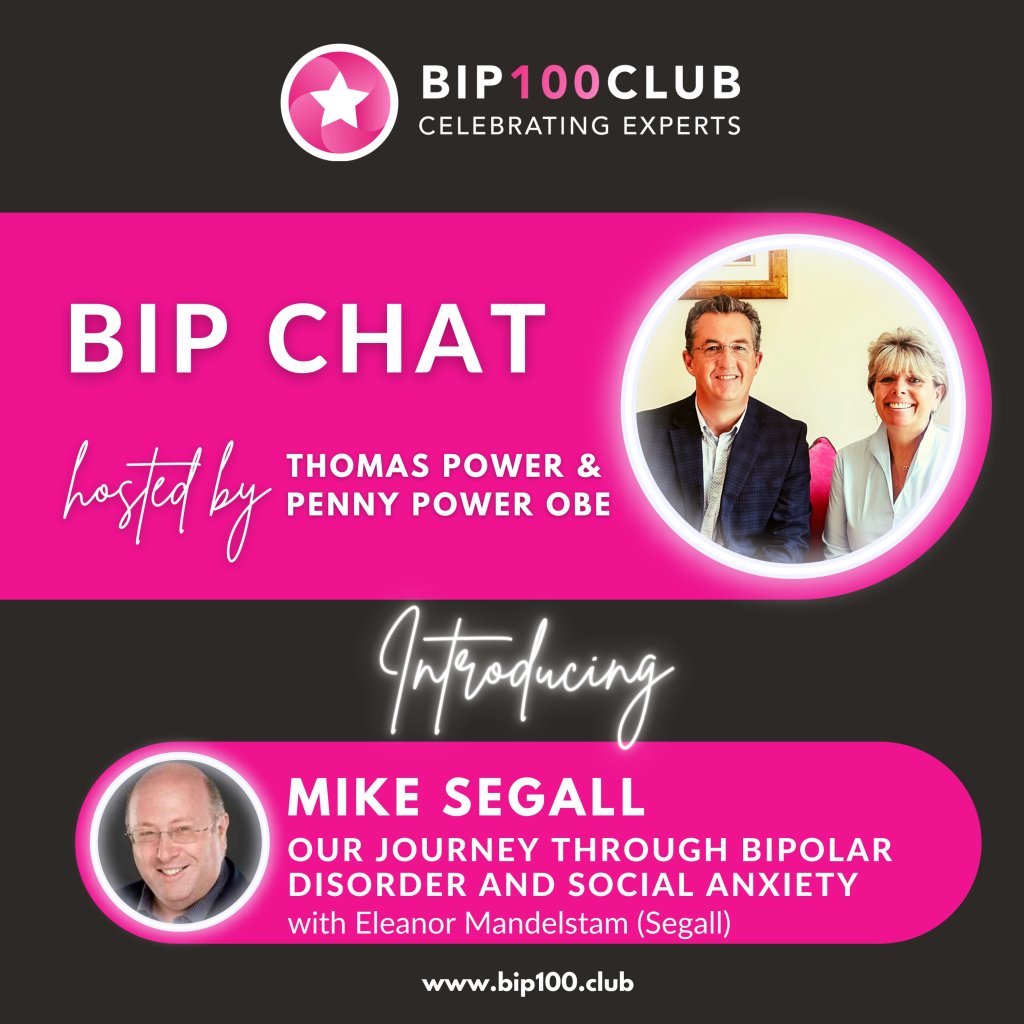
Mental Health Chat With Penny Power OBE and Thomas Power of Business Is Personal with Myself and my Dad Mike Segall. Our Journey With Bipolar Disorder and Anxiety.


Yesterday, 9th Feb, my dad Mike and I were honoured to be interviewed by his friends of many years, Penny Power OBE and Thomas Power of Business is Personal- live on Linkedin, Youtube and Facebook.

They asked us to come on their weekly show to talk about our hereditary journey with bipolar disorder and anxiety and shed light on all things mental health.

It was a real pleasure to talk all about our lives and how my Dad was diagnosed with bipolar just 4 years before me.

Trigger warning: discusses suicidal ideation and psychosis.


Thanks Penny and Thomas! We hope it battles stigma around this much misunderstood illness. Watch here:

https://www.youtube.com/watch?v=Fghp8RNTvX0

5 Outdoor Activities That Will Improve Your Mental Health by Elizabeth Howard

(image: Elizabeth Howard)

Spending more time outdoors will do wonders for your mental health. While research has shown that being outdoors helps alleviate stress and the symptoms of emotional illnesses, you can easily discover these benefits by interacting with nature. You will benefit from being outdoors when you sit on your porch, but you’ll keep your leisure time more interesting when you engage in a variety of different outdoor activities and boost your mental health.

Take a Weekend Camping Trip

You can rough it in a tent or enjoy a glamping excursion by renting a fully equipped cabin for the weekend. As you search for available campgrounds in Mississippi (or the country you live in), look for a location that’s near the water or offers a variety of activities. You should try to plan a camping trip that offers plenty of amenities for you and your companions. Swimming, fishing, snorkelling, hiking, and bird watching are a few of the outdoor activities you can enjoy over the weekend. 

Be sure to bring your phone or a camera. You will probably see plenty of wildlife that you’ll want to capture in pictures or on video. Even if you rent a comfortable cabin or take your RV, you’ll find enough activities to keep you outside and in nature throughout your camping excursion.

Go For a Walk

You can spend more time outdoors without leaving home when you plan to take a walk each day or evening. This is an opportunity for you to get outside and clear your head away from work, family, and other obligations. As you walk, let your mind wander. Many people find this to be an effective way of subconsciously working out stressful problems. By the time the walk is over, you might find that they have a solution to a particular problem. 

You can keep your walks interesting and distracting by taking a different route each night. Find a different park, road or walk to a different convenience store each time. In addition to helping you explore different parts of your community, you will also have the opportunity to interact with different people, if you want to.

Rent a Boat

There’s no reason you should feel bound to land when you look for outdoor activities to enjoy. In fact, renting a boat and spending a few hours on the water can have a soothing effect on the mind. You may feel more tranquil as you’re surrounded by the sights, sounds, scents of the water. This is a great opportunity to get together with friends or bond with your family. 

When you’re on the water, you’ll be removed from distractions and have the chance to enjoy deeper conversations. You’ll also have a chance to see your city from a different perspective. By the time you return to the dock or shore, you’ll feel more peaceful and less stressed.

Start a Garden

There are many hidden health benefits of starting a garden, and it will provide a way for you to improve the landscaping of your own property. Working with your hands as you plant and maintain a garden will help you strengthen your hands and fingers, reducing your risks for joint pain. As you tend to your garden, your mind will wander and you’ll enter into a type of meditative state. This will help you set aside your daily worries and concerns for a brief period. That will be enough to relieve stress and help you enjoy a lighter mood.

Climb a Mountain

If you live near a mountain range, consider taking up climbing as a means of getting more outdoor exercise. The act of climbing will help you strengthen a variety of muscle groups throughout your body. As you climb, you’ll see your community and the surrounding region from a different perspective. The air will be more exhilarating as you reach higher points on the mountain. 

While you should start slowly and work with a guide, you may eventually find that mountain climbing can be a competitive sport that allows you to improve your performance over time. Achieving new climbing goals will cause a release of endorphins in the brain, helping you to enjoy a happier mood.

There are many more ways you can enjoy the outdoors and benefit your mental health. Look for things you like to do outside even if that just involves sitting under a tree and reading a good book. The fresh air will benefit your physical health as well as improve your wellbeing.

Try These Simple Depression Meals When Life Gets Hard by Kara Reynolds

(image: Unsplash)

Being an adult is exhausting.  We’re expected to work, build a career, keep a house, feed ourselves, socialize…the list goes on and on.  When you have kids, that list doesn’t get any shorter — instead, it expands to include keeping small humans alive, healthy, entertained and happy.  Becoming a mom is supposed to be one of the most magical parts of your life, but what they don’t tell you is that it can also be the hardest. Mom life is hard. There’s no point in sugar-coating it.

When that massive list of things that you’re expected to do becomes overwhelming, here are some simple depression meals that can help you eat healthily and keep everyone fed without putting in too much effort or relying on takeout. 

Nutrients That Impact Depression Symptoms

Depression is one of those things that we tend to only talk about in reference to other people, but it’s more common than you might think.  According to the World Health Organization (WHO). around 5% of the global population suffers from depression or around 280 million people. There are a lot of different ways to manage your depression symptoms, all of which should be overseen by a medical professional, but there are some small changes that you can make at home that might have a positive impact.  This includes changing the foods that you eat.

Research has shown that some specific nutrients might help manage depression symptoms include; 

  • Amino acids like tryptophan (found in turkey and chocolate)
  • Omega-3 Fatty Acids (found in oily fish)
  • Selenium
  • Iron
  • Iodine

Switching your diet around to ensure that you’re including these nutrients can help make the job of managing your depression symptoms a little easier. Here are some of my favourite depression meals for those nights when nothing else seems to be helping but you’ve still got a house of little humans to feed.

Charcuterie 

If you were a kid in the 90s, you probably grew up having Lunchables for lunch during the week. They were quick, easy and had most of the nutrients a growing kid might need to get through the day — if you were content to subsist on crackers, deli meat and sometimes cheese. Okay, so they weren’t the healthiest option, but if you make them fancy, put them on a plank of wood and call them charcuterie, they’re one of my favourite depression meals. 

The nice thing about charcuterie is that there is no wrong way to do it.  Pick your favourite meats, crackers, dips, fruits and veggies, and arrange them on a plate or tray.  Then pick and choose what you want to eat. It’s simple, it’s fun, and it’s a great way to make sure that everyone is getting fed when all you have the energy to do is assemble things on a plate.

Fish

Fish might seem like a lot of hassle, but it doesn’t have to be.  It’s also a great option for depression meals because it tends to be high in magnesium which is another nutrient that can help with managing depression symptoms. 

This simple sheet pan haddock bake is a great way to get your nutrients without making a  big mess in the kitchen.   It’s 5 ingredients — haddock, crackers, butter, garlic salt and lemon — and five steps — and one of those steps is preheating the oven and I’m not even sure that counts. If you’re not a fan of haddock, swap it out for your favourite fish. 

Stir Fry

Stir fry is easily one of my favorite meals.  It’s easy, it’s cheap, it’s fast, and you can make it with whatever you have in the kitchen.  Start by picking your protein. Then, pick your stir fry veggies — these can be fresh, canned or frozen. Fry them up in the oil of your choice, top with your sauce, and serve over rice. 

The key to a good stir fry, regardless of your chosen ingredients, is the sauce.  My go-to stir fry sauce only requires a handful of ingredients, most of which you probably already have in your kitchen.: 

  • ½ cup soy sauce
  • ½ cup chicken broth
  • 1-2 tablespoons of cornstarch
  • 1 tablespoon minced garlic
  • 1 tablespoon minced ginger
  • 1 tablespoon brown sugar
  • 1 tablespoon olive oil
  • 1 teaspoon rice vinegar.

Mix and pour, and you’ve got the tastiest stir fry sauce this side of your favourite Chinese restaurant. 

Peanut Butter & Jelly (Jam)

It sounds basic, but that’s because it is.  Peanut butter — and other nut butters, if you have a peanut allergy in the house — are full of healthy proteins and other nutrients that will help you feel full longer.  Pair it with some natural fruit preserves and your favourite whole wheat or multigrain bread and you’ve got a halfway healthy meal that takes almost no time or effort to prepare. 

You can always spice up your PB&J if you have more spoons.  If you’ve got more of a sweet tooth you can add sliced bananas, honey, or even marshmallow fluff.  The possibilities are endless. 

Be Kind To Yourself

As long as you’re eating, it doesn’t really matter what you eat for dinner — but making healthier choices can help to make you feel better in the long run.  Try a couple of my favourite depression meals and see if they make it into your regular meal schedule.

Above all else, be kind to yourself. 


This article was written by Kara Reynolds, editor at Momish.

Book Review: ‘Pushing Through The Cracks: In the Darkness of Her Family’s Mental Illness She Found Light’- Emily J. Johnson by Eleanor

(image: Emily J Johnson)

Pushing Through The Cracks: In the Darkness of Her Family’s Mental Illness She Found Light by Emily J. Johnson is an incredible book. It is a story that I don’t believe has ever been written about before in such a way in the mental health space, I have certainly never come across it. Its a true memoir that occurred here in the UK during lockdown.

Emily wrote to me and kindly sent me a free copy of her book. I was hooked from the first page- this is a story of survival against the odds, of how mental illness can rip a family apart but how healing and hope are possible. Of strength through immense difficulty. Of light winning over darkness.

Four years ago, in the UK, Emily, a divorced mother of two, was living her best life with a new partner and blended family of six. But then addiction and mental illness entered her home uninvited, threatening to tear the whole family apart.

With an alcoholic husband and two teenage sons – one a depressed gambler and the other with chronic obsessive-compulsive disorder (OCD)– Emily is left to cope alone. And when the Covid pandemic hits, Emily, a ‘serial people-pleaser, enabler and born rescuer’, almost breaks too.

This true story delves into the darkest sides of mental illness and addiction with raw, often harrowing honesty. It shines a light on taboo subjects including self-harm, suicidal feelings, gambling, alcoholism, depression, severe OCD and eating disorders, all exacerbated by an unprecedented global pandemic and dwindling support services.

This is a story of remarkable strength, self-realisation and reclamation of a lost identity. This is a story of finding hope, pushing through the cracks in the darkness. It is also a story that touches on the difficulties of accessing UK NHS mental health services at times, especially CAMHS.

I found Emily’s strength through such severe adversity – dealing with a husband and two sons with severe mental illness, whilst carrying on with her own life when mental illness permeated every part, to be so inspiring. Her marriage falls apart, her children are unable to attend work and education, the family embarks on several different recovery journeys- navigating NHS mental health care and all its difficulties. Her sons addictions and acute OCD worsen and add to the pressures for Emily. How does she as a mother fix it all? She realises.. she can’t fix anyone and its not her job too.

The front cover features a dandelion pushing through the cracks of the ground. Emily describes the moment she hits rock bottom but then saw a dandelion poking through- which symbolised hope and light for her,

‘(image: Emily J. Johnson)

‘I pick up my phone and call a crisis support line…I desperately want someone to listen to me, to ease my pain, to hear my stories…(of mental illness at home)

I throw my phone across the path in frustration… something catches my eye, a beautiful yellow dandelion is growing through a crack in the concrete. Its golden yellow petals cut through the greyness of the broken path and it overshadows the filth and discarded cigarette butts around it. Despite its surroundings, it has found ways to push up through that crack, to have life. it is. not complaining or giving up, it’s surviving and it will go on to finish flowering. One day soon, the wind will carry its dainty seeds somewhere else to carry on the cycle of its life.

Just like that dandelion, I have pushed through adversity and survived. …I close my eyes and raise my face to the sunshine… Even in the midst of all this chaos, this darkness, there is warmth and light. There is hope.” (from chapter Dandelion) (Emily J. Johnson)

This is also a book which exposes the difficulties and realities of living with mental illness. I will add a trigger warning- it doesn’t hold back on the reality of mental illness including self harm, addiction, alcoholism, suicidal thoughts etc- so please read with care.

Thank you Emily for letting me read and follow the journey of your family. I hope your husband and sons are able to fully battle their demons and recover or stay in remission.

Pushing Through the Cracks by Emily J. Johnson can be bought from Amazon and good book shops.


(image: Emily J. Johnson)

Window to the Womb partners with BlueSkeye AI to launch Avocado App to support Perinatal Mental Wellbeing in the UK.

(image: avocadoapp.co.uk)

Window to the Womb, the UK leading provider of private Baby Scan Services for pregnant women, has partnered with BlueSkeye AI to launch Avocado.

Avocado is a brand new pregnancy App which uses cutting-edge AI technology to support effective mood management. Window to the Womb is rolling out the use of the Avocado App across all 44 clinics nationwide enabling women who attend for early and later pregnancy ultrasound services to access their scan images and scan reports digitally. In their drive to support women in early stages and throughout pregnancy, Window to the Womb has worked with BlueSkeye AI to provide a range of additional services within the App including the ability to log a pregnancy diary, access mindfulness or exercise material and order personalised baby scan photos.

(image: avocadoapp.co.uk)

Managing Emotional Wellbeing and Moods

Avocado provides women with the ability to understand and manage their mood and emotional wellbeing throughout pregnancy. Recognising that pregnancy and preparing to have a baby is such a big life event it is well understood that pregnancy can be an emotive time and a trigger for mental ill health. Pregnancy hormones can be a likely contributor to changes in mood, as well as other triggers including fatigue and sleep deprivation. 

The Maternity Mental Health Alliance, a UK charity that is focussed on addressing the needs of women during pregnancy reported that 1 in 10 women experience perinatal mental problems and more needs to be done to support women during pregnancy. The lived experiences of women, as documented and made available to listen to by MIND, who have experienced perinatal mental illness indicate there is more to be done to help raise awareness in society about the prevalence of anxiety and depression (and other mental illness) during pregnancy. 

Avocado enables women to track their mood alongside other key pregnancy metrics whilst managing their private scan appointments and much more. The app directs women to useful resources including the NHS’ Every Mind Matters mental health and wellbeing resource.

At Window to the Womb, we are privileged to meet and provide services to thousands of women at different stages of their pregnancies. We are committed to ensuring that women are well supported as they access our services and we are keen to ensure that women are empowered to self-manage their mental and emotional wellbeing during this time” said Managing Director of Window to the Womb, Tony Harrison.

BlueSkeye AI is a fast growth tech company based in Nottingham creating AI you can trust, and is on a mission to improve wellbeing and patient health outcomes by delivering accessible and objective services and products that help patients understand and manage their mental health and wellbeing. The ethical AI company’s technology is underpinned by Behaviomedics, pioneered by BlueSkeye AI’s CEO, Professor Michel Valstar.

“Our core technology automatically analyses and synthesises the face and voice to monitor mood and other medically relevant expressed behaviour. We are delighted to work in partnership with Window to the Womb to apply our technology to help perinatal women understand and manage their mental wellbeing” said Professor Valstar, CEO of BlueSkeye.

The App is available to download on Apple and Android devices. A premium version is now available for subscription and includes additional features that promote wellbeing during pregnancy.

Please visit www.avocadoapp.co.uk for more information.

This article is unsponsored- I am sharing it because i believe greatly in the mission of the founders to support perinatal mental health.