Transforming Bedrooms Into Anxiety-Reducing Spaces For Kids by Amy Jones

(image: Kenny Eliason: Unsplash)

There is nothing more heartbreaking than to see your child suffering. What’s more, when their mind is playing tricks on them, and they’re experiencing spells of anxiety, it can leave you feeling helpless as the parent/carer. While you may be doing all the right things such as taking them to therapy and encouraging them to talk about their feelings, sometimes their environment can play a huge role in their emotions. Children spend a lot of their time in their bedrooms, especially when they’re feeling anxious about the outside world. Transforming their bedroom into an anxiety-reducing space could be the key to allowing them an environment to disconnect from ruminating thoughts completely.

Be sure to listen to what your children want for their bedrooms before taking the design into your own hands. If they believe a Minecraft bedroom will make them feel happy and give them a sense of security in their space, listen! Otherwise, consider the following tips for designing your bedroom into an anxiety-reducing space. 

Colour schemes 

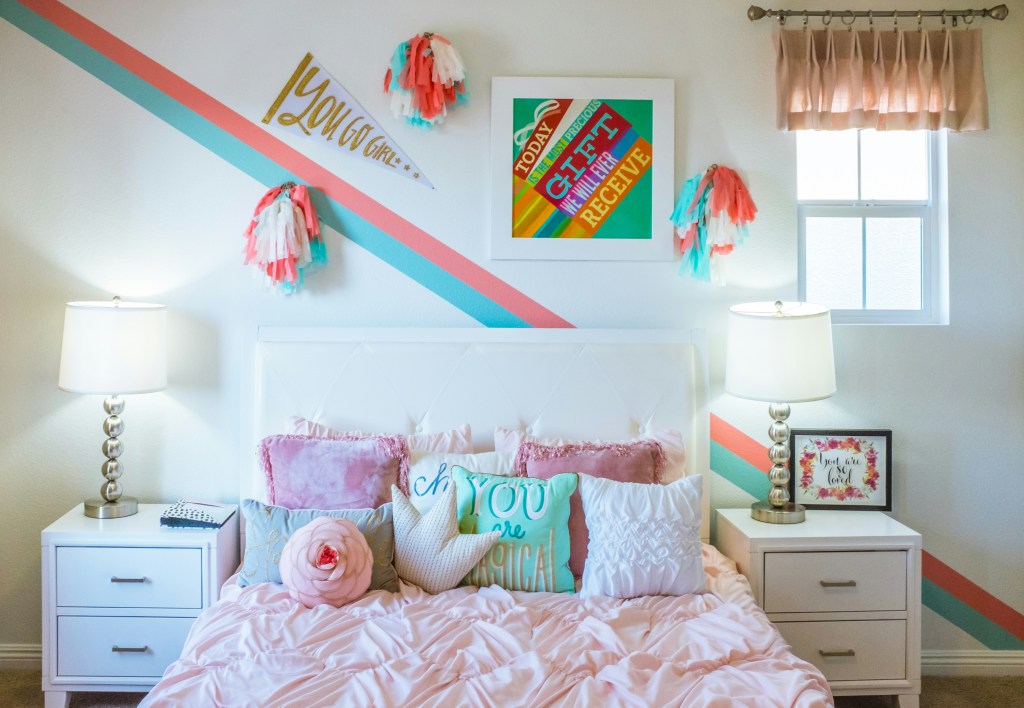
Starting with the room’s backdrop, consider painting your child’s room a colour that inflicts a sense of calmness and serenity. There are a number of colours that are proven to create this mood, for example, cool colours such as blue, green and lavender grey are known to create a relaxing feel. Also, pastel shades of favourites such as pink and green are perfect for creating a sense of tranquillity. 

Connections to nature 

Nature has shown to have immense benefits for reducing anxiety, from going for walks to playing in the park, if your child is struggling to face the great outdoors, consider bringing it to them. For example, add touches of greenery in the space. There can be faux versions of vines winding round their bed, or perhaps give them real plants to take care of and give them a greater sense of purpose. If your child has been begging for an animal, why not start small and get them a fish? It has been proven that watching fish swim back and forth can relax the mind and ease muscle tension.

Blue LED lighting 

Lighting can be a hard element of the bedroom to influence. If your child’s bedroom is currently brightly lit with fluorescent light this may not be helping their state of mind. Blue light therapy has been raved for its ability to influence mood and the body’s biological clock. Dimming their bedroom lighting with blue lighting may support their night of rest. Several sensory light appliances can create this experience, in addition to adding texture to the projection that mimics ocean waves. 

Create “safe spots”

Sometimes, your child just wants to be alone, and that’s okay. Creating a safe space away from the world can be simple with the addition of a children’s teepee, or if your child has a bunk bed with underspace, make this area more private with curtains. Fill this space with comfy seating, pillows, and games for your child to play. It can be tempting to buy them an Xbox or PlayStation to enjoy in their bedroom, but this can worsen your child’s anxiety and keep their mind active when it’s time for rest. Keep technology away from their bedroom, and keep it comforting and quiet. 

Keep schooling separate 

Another mistake parents make with their child’s bedroom is adding a desk for them to complete school work. When your child is suffering from anxiety, school can often inflict feelings of discomfort or remind them of unpleasant experiences. Allow your child to do their school work downstairs where you can support them and be there for them. Allocated places for different activities can help them feel a sense of security. Reserve the bedroom for sleep. Having a small table and chair for your child to do artwork can act as a place to explore their creativity. 

Encourage rest & relaxation

Encouraging relaxation is essential when transforming your child’s bedroom into an anxiety-reducing space. This involves creating an atmosphere that promotes comfort and signals to your child that their room is a sanctuary for winding down and recharging. Start by investing in high-quality, soft bedding and cosy blankets that make your bed an inviting haven. Add plush pillows or weighted blankets, which are known to provide a sense of security and calmness.

(image: Pexels: Vika Glitter)

An anxiety-reducing space

Transforming your child’s bedroom into an anxiety-reducing space can have a profound impact on their emotional wellbeing. By focusing on calming colours, natural elements, thoughtful lighting, and creating safe and comforting zones, you’re helping to create a sanctuary where they can decompress and feel at ease. Remember, every child is unique, so it’s important to involve them in the process and tailor the space to their individual needs and preferences.

Small changes in their environment can make a big difference in their ability to manage anxiety and feel secure. While this is just one piece of the puzzle, pairing it with emotional support, therapy, and open communication can empower your child to navigate their emotions with greater resilience. A cosy, peaceful bedroom can become their haven—a place to relax, recharge, and truly feel at home.

Author Bio

Amy Jones is a freelance writer and enjoys writing a range of topics, from mental wellness to home renovation and loves researching the latest news and updates. Having worked with a number of different businesses, including Petite Lumeire, Amy is now a freelance writer looking to specialise in children’s mental and physical wellness.
Custom Comfort This Christmas With The SIMBA Hybrid Pillow (Gifted Review)

(image: SIMBA)

I have been really lucky that this festive season, SIMBA beds have gifted me their Custom Comfort Hybrid Pillow to use to help support my head and neck and get a wonderful night’s sleep.

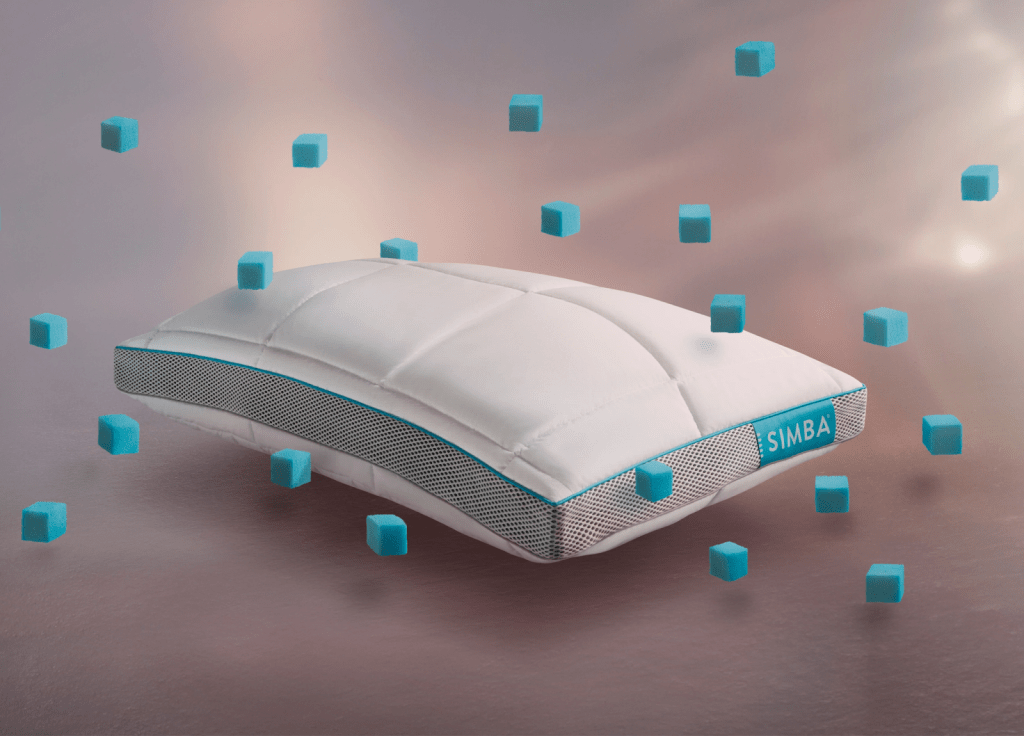
This pillow is designed for revolutionary, personalised comfort. A unique fusion of superb, down-like cushioning with innovative tech. The pillow contains a cotton cover with cool touch tech to support better sleep. It has adjustable height and firmness with a supportive core and a mesh border for maximum air flow, once opened! Plus, it has a washable cover (always a bonus!). SIMBA have truly thought of everything to give you excellent comfort.

I received the pillow in the post, it is large (about A3 size) and SIMBA have said that it has special foam Nanocubes® technology! The turquoise cubes mean its not too soft, not too high, not too firm… always ‘just right’. I find it so comfortable!

SIMBA describe this as, ‘Thanks to the knitted, inner pillow of tiny, squishy, foam Nanocubes® you’ll find at the heart of every Hybrid® pillow; not only does this clever system encourage greater airflow, but you can also remove/add cubes to achieve the height and firmness you prefer in your pillow.’

(image: Unsplash)

I often find also that I get hot at night or it is just too warm from the central heating to sleep in winter. So what could be more helpful than the cooling aspect of this pillow? . It dissipates excess heat and provides instant coolness! This is due to its Stratos® cool-touch tech similar to the innovation that keeps astronauts cool in space! This pillow is also Menopause friendly, so great for any hot flushes at night time.

The pillow feels firm yet comfortable with a definite softness that makes me want to sink right in to it. I love the fact it is adjustable and helps me feel cool at night too. SIMBA say that ‘A soft, cloud-like fill is key to the superb comfort and quality of our pillows and duvets. It consists of springy polyester fibres gently combed and folded into airy, cushioning layers.’

For good sleep hygiene and having a cool, calm bedroom with good support for your head, I really recommend the SIMBA Hybrid Pillow. After one night, I am already loving it and I cannot wait to use it for many more nights for a gentle and comfort filled sleep. Good sleep is so integral to good mental health- thanks SIMBA for letting me have and review this pillow!

I was gifted a SIMBA Hybrid Pillow, in return for an honest review. This article contains non-sponsored links.


Best Ways to Redecorate your Bedroom to improve Mental Health: Guest blog by Rosette.

rosette2

(image: Pinterest)

In recent years, mental health has been in the spotlight because society has been starting to learn about how important it is. This is welcomed progress, as more people are now educating themselves and looking for ways to help themselves achieve good mental health. Amidst your search, you will find that small things can help, such as redecorating your room.

Creating your own space is a good opportunity to check on your well-being. Your environment has an effect on your mood and emotions. Arranging and fixing what surrounds the place where you spend most of your time at home is a simple way of focusing on yourself especially in times when you need to do so.

In times where you need to take a break and rest your mind, your room is the nearest place you can go to. If you’ve been feeling down, mentally exhausted, or feeling some unrest, how about you tweak your own space a little?

Here are the best ways to redecorate your room to improve mental health:


Declutter

If your room is messy, it’s highly likely that you haven’t done some organising in a while. I know some people like the way their room is arranged, but let’s face it, it’s a good feeling when clutter is taken away from your own space. A simple step to take to reorganise your thoughts is to reorganise your room. At times when you feel confused, try decluttering. Get rid of the stuff that you don’t need and save your brain from the distraction that a mess creates.


Let the light in

The amount of light inside your room also affects your mood. Research suggests that sunlight is thought to reduce stress and to relax the body. Keeping your space in tune with the natural rhythms of the day aids the body in maintaining the circadian clock, our internal 24-hour clock that keeps our sleep and wake cycles running regularly and smoothly. 

So move your curtains aside and open your windows to allow some natural light in your room. In addition, make sure that your curtain set lets you see the sun and if not, you can search for a DIY hardware store around your area where you can purchase the parts that you need.

Display a centerpiece that will lighten up your mood

There is something about seeing something as a centerpiece of a room that affects how you feel. A focal point inside your own space gives off the vibe that you would want to feel once you enter it. According to author Stephanie Roberts, creating a focal point that makes you happy will help you feel relaxed from the get-go. Display something that does that in your bedroom where you tend to always tend to look so you can always see it.


Get plants

Houseplants have been linked to many psychological benefits including reduced anxiety and lower blood pressure. In addition to that, plants also remind you of self-care and can give you an appreciation of the little things. Watering plants is like a reminder to take good care of yourself, while watching it grow makes you feel a sense of accomplishment and that the simple stuff that you do matters.


Make a useful layout

You should not feel lost in your room. It should be easy to navigate and see where everything is. Moreover, designate space for the stuff that you do. Declutter to find space for a desk where you can use your electronic devices at. Using your phone or laptop on your bed can interrupt your sleep cycle. Design everything to optimise your hours of rest separated from the other activities that you do inside your room and place items where it needs to be.

Wrapping up

Redecorating your room benefits your mental health and helps you feel calmer, while you are decorating and with the finished result. It’s a great way to build positive thought patterns and reduce stress. It also proves that we should not overlook the simple and normal tasks for they can serve as a form of  small therapy for when we need it the most.


rosette1

Author’s Bio:

Rosette has a knack for anything DIY. She spent her younger years learning about the different hardware tools and equipment in the hopes of establishing a hardware business in the future. Her career options may have changed, but today, she continues to write so passionately about her first love.