Life is often a rollercoaster of positive and negative experiences, interspersed by the normal every day that we can take for granted. But what happens when life throws a curveball that you hadn’t foreseen- health worries, financial stress or maybe a relationship breakdown? Sometimes, all of these can happen at once. Heres some ideas that can help when life gets tough.
Don’t bottle up your feelings and keep it to yourself. Make sure you talk about your feelings with a trusted loved one, therapist or helpline. You can also journal your feelings as writing can be really healing.
2. Nourish yourself daily with healthy food and do gentle exercise. Some delicious protein, healthy carbs and a little walk, yoga or a swim can really help.
3. Treat yourself to some self care or do something creative that you love- whether its creating art, writing, vlogging. performing- if it makes you smile and distracts you from troubles then do it! I find that washing my face and using my favourite skincare products also helps with self care.
4. Scale back the difficult demands on you if you can and be kind to yourself- Don’t punish yourself or try to do too much when things are challenging. Reach for support around you especially if you are a parent, pet parent or have caring responsibilities.
5. Watch something comforting or funny- a good movie or TV show is distracting and can work wonders.
Most importantly- if you feel yourself spiralling into anxiety, depression or crisis point please reach for help from mental health services . Call NHS 111 for help in a crisis.
Coping when life gets difficult isnt easy. These are just a few tips to help. If you are facing worsening or severe mental health issues, please reach out to professionals to help you- GP, psychiatry or a therapist. In an emergency in UK, dial 999.
This weekend was World Mental Health Day, an important day to shine a light on mental health and people with lived experience of depression, anxiety disorders, bipolar, psychosis, eating disorders, schizophrenia, OCD, PTSD, BPD, EUPD and many other conditions.
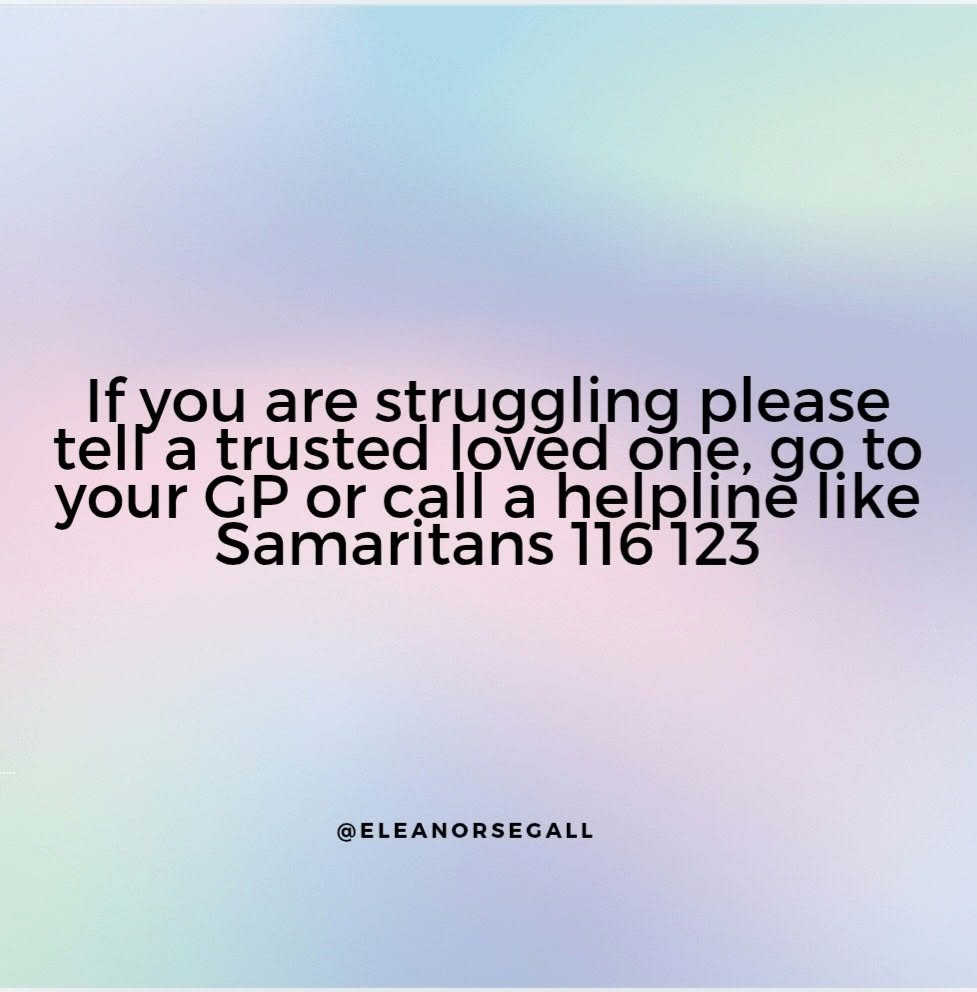
Today I want to tell you- do not suffer in silence. If you are struggling please tell a loved one, a therapist or a trusted GP. There are also incredible helplines including Samaritans (116 123 in UK), JTeen, SHOUT and UK charities running services including Noa Girls UK, Jami, SANE, Mind Charity, Bipolar UK and Rethink Mental Illness.
(image: E Mandelstam)
Ive written about my journey with Bipolar 1 and PTSD/Panic disorder. Please make sure you do not suffer with painful feelings or dark thoughts alone. Talking saved my life and I hope it will help you on the road to recovery. You matter and you are not alone.
You can also call NHS 111 option 2 for urgent mental health support and call 999 for emergencies.
Remember the theme this year is for those of us with lived experience to talk safely and make change where we can.
This week I was on a call with a very special friend, the talented illustrator of Arabella and the Worry Cloud (our kids book on anxiety)- Shelley. I was speaking to her about the challenges of being a self-employed independent writer- financial and as a founder, everything being on you. She told me to believe in myself and my writing and not give up! Those kind words have meant everything during a challenging time.
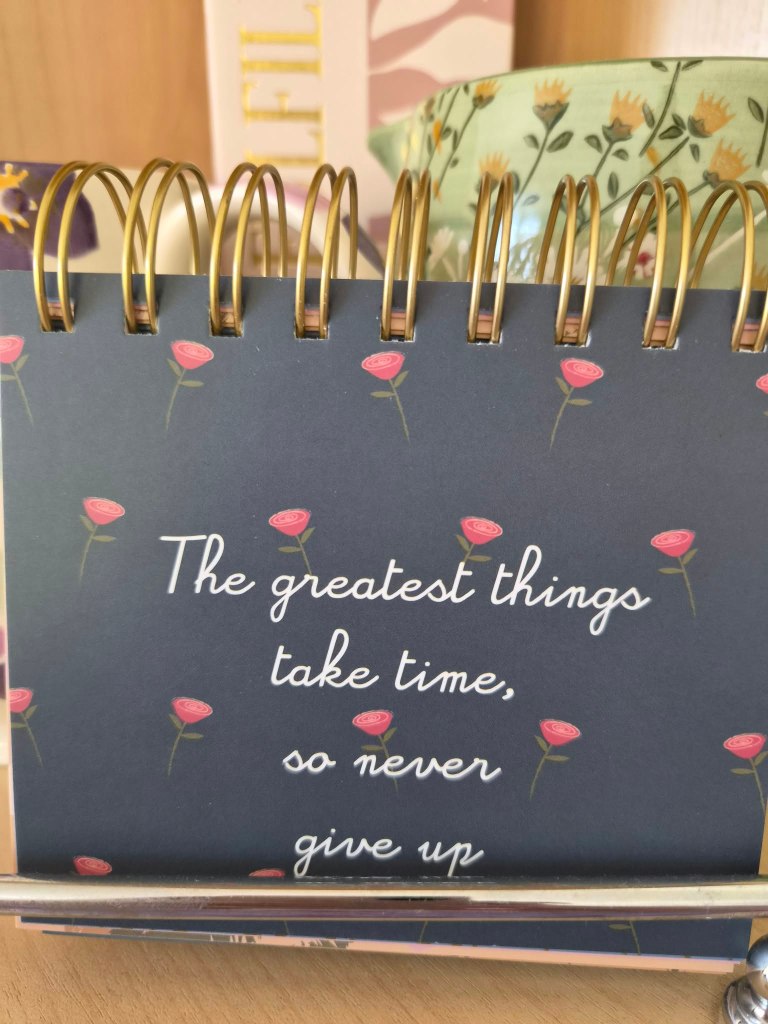
Then, today, I decided to pick an affirmation from my flip chart (that another lovely friend had got me for my birthday) without looking. I flipped the chart over and not only does it have pink roses (a special flower to me that is a positive sign I asked for) but I received the message,
‘The greatest things take time so never give up.’
And so, even though being a writer, a creative can be exhausting when you aren’t famous with lots of money coming in- I remember why I wrote Arabella, the children I wrote for and who need to hear its message. And because I have had this message twice this week, I will not give up. On my writing, on my journey through life and its ups and downs. I won’t give up on my first book either.
Living with bipolar 1 from the age of 16 meant living with deep depressions, of which suicidal thoughts were a part. Being able to safely share these with family and psychiatrists in the past saved my life and helped me hold on in the dark moments of bipolar episodes. I am not alone in feeling this way- millions are struggling now, today. Medication, therapy and support keep me well.
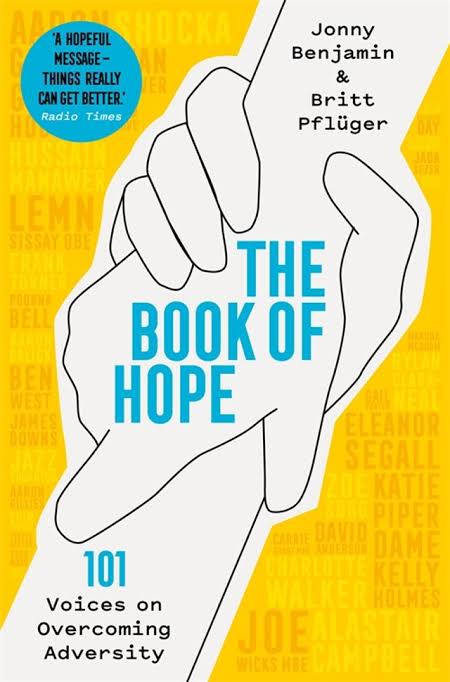
So today I read from my essay in this very special book to tell you- ‘You will feel the sun and smell the rain again, even after suicidal depressions when you lay in bed wanting to disappear. ‘
Please reach for help when you start getting these thoughts and hold on- a better day is coming. Helpline numbers includingSamaritans at 116 123 are available if you need to talk and feel in crisis.
I also know the devastation of losing a loved one to suicide and conversely, to help people through these thoughts. Their stories are not my own so I am not sharing them today but I hope that today and every day we focus on suicide prevention and support for all who are struggling.
Shana Tova U’Metuka, a happy and sweet new Jewish year to everyone celebrating and marking Rosh Hashana this weekend. Rosh Hashana is an important Jewish festival where we gather with family and friends, pray at synagogue or home and reflect on our relationship with G-d and what we need to change in the coming year ahead. It’s also time to ask for things, to dream and to plan- oh and to eat honey cake or apple and honey for a sweet year too!
This year has had many blessings but also many difficult moments that I will reveal at the right time. So, I pray for a happy, healthy, sweet, prosperous, joyous New Year with all dreams manifesting if meant to be. I am grateful to still be running this blog after a decade and to be able to share my thoughts and emotions here. I am grateful for all my blessings- 2016 me who set up this blog would not quite have believed what happened in the past 10 years!
Thank you all for reading this blog and for supporting it. We are here to help people feel less alone, to promote recovery and healing and good treatment for all who live with mental illness or are in remission from episodes.
If you are struggling with your mental health this Rosh Hashana (or feeling at risk of harm)-to save your life, please reach out to mental health services or helplines like Samaritans (116 123)
Many people die every day and every hour from suicide in the UK and globally. 7000 lives lost a year on average in the UK to suicide and 75% of these are men according to research by CALM charity.
Taking their own lives is often the only way they can see to end their own deep pain and suffering- whether as a result of trauma, mental health issues and life circumstances (abuse, addiction, divorce, parenting struggles being just a few).
If you feel suicidal or very low, please tell a trusted person or if in the UK call Samaritans on 116 123.
Today’s blog is about a very special calming self care gift box – The Steady Box that was kindly sent to me by post to review from James Marchant at The Little Box of Mindfulness here in the UK.
I chose the Steady Box to review as someone who lives with an anxiety disorder at times and I wanted to see this self care box and how it can help calm anxiety by being mindful. The Steady Box is created for ‘people navigating anxiety, worry or emotionally overwhelming periods. A thoughtful gift designed to bring grounding, reassurance and gentle moments of calm.’. The Steady Box creates space for pause, presence and the feeling of being supported.
I opened the little black box and on the packaging it says ‘You are in someone’s mind this moment is yours‘. So already as you open it, you are feeling loved and welcomed. Each box also includes access to digital mindfulness practices, extending the feeling of care long after the gift is received. When you open the little box which is compact and fits through a letter box easily, you open to a winking face and a message- ‘You are not your thoughts, this moment is yours. Breathe. You’ve got this.‘ and some beautiful resources nestled within:
(image: The Little Box of Mindfulness)
A painted blue and cream handcrafted ceramic thumb stone (created by a local potter) to help with mindfulness and slow breathing when anxious. You hold it between your thumb and finger, focus mindfully on its texture and weight and then breathe slowly, returning to the present. The stone feels so calming and will make a lovely gift to a friend or loved one who needs to practise calming anxiety through mindfulness and breathing.
A Little Mindfulness box- a ‘Pause Pack’ containing items to help you ‘reconnect and reflect’, exploring at your own pace. These contain reflection cards with calming photos, affirmations about dealing with anxiety and lifes challenges( and finding strength and peace) and on the back, mindfulness prompts. They remind you to be in this moment, be still, breathe, name and ground yourself in the present;
There is also a leaflet teaching you how to ground yourself in the present (eg 5 things you can see, 4 things you can heal, 3 things you can hear) and a QR code for digital mindfulness resources that James has curated online.
Lastly, the box includes a Mindful Checklist card where you can tick off activities to help calm anxiety through mindfulness eg ‘I drank some water’, ‘I moved my body’, ‘I reminded myself I am safe’, I let go of one unhelpful thought’ , ‘I paused and noticed my breath.‘
(image: Little Box of Mindfulness)
This box retails at £15 and it makes the perfect letter box gift to send to a friend that needs to breathe, find a moment of peace to steady and ground themselves. I would recommend it as someone who lives with anxiety- I particularly liked the calming activity of slowing down and breathing with the thumbstone. As someone who has learnt a bit about how to practise mindfulness, I would say this box would be particularly useful at managing anxiety before it turns into a panic attack.
The Little Box of Mindfulness describes this as a’ refined letterbox gift for moments when words feel hard to find. A way to offer reassurance, presence and the quiet message that someone is thinking of them.‘. I would agree that it would make a lovely gift to send to reassure someone!
James Marchant, the founder and creator of the Little Box of Mindfulness, said to me, “I created these boxes with the simple hope of helping people feel remembered and supported during difficult moments, so it means a great deal to know the Steady Box resonated with you personally.” I truly love these products and the story behind them!
James created ‘The Little Box of Mindfulness’ due to his own battle with anxiety, stress and career burn out. He says, ” I’ve experienced anxiety in my own life and have seen first-hand how difficult moments can affect both individuals and families.The Little Box Of Mindfulness was created from a simple belief: when someone is struggling, small acts of kindness can make a real difference.Sometimes it’s hard to know what to say or how to help. My hope is that these letterbox gifts make it a little easier to reach out and remind someone they’re not alone.”
James’ story is so inspiring and I truly love these gift boxes and the concept. As well as the Steady Box there are two other boxes in the mindfulness range. They also sell beautiful self care mental health gift sets for thinking of you, bereavement, stress and burn out which are lovely and contain different treats. You can see all the mental health gift sets here: https://littleboxofmindfulness.co.uk/collections/mental-health-gift
Thank you James for gifting me this wonderful box to review!
(Image: Little Box of Mindfulness)
This article is a sponsored and gifted review. All thoughts on the product are my genuine review.
Thanks so much to Anuj at the team at FeedSpot for listing this blog number 12 out of 30 Best Bipolar Disorder Blogs to follow on the internet here ! Delighted to be nominated amongst many wonderful blogs.
Feedspot is an RSS Reader that lets you subscribe to blogs, news sites, and any website you want to keep up with.
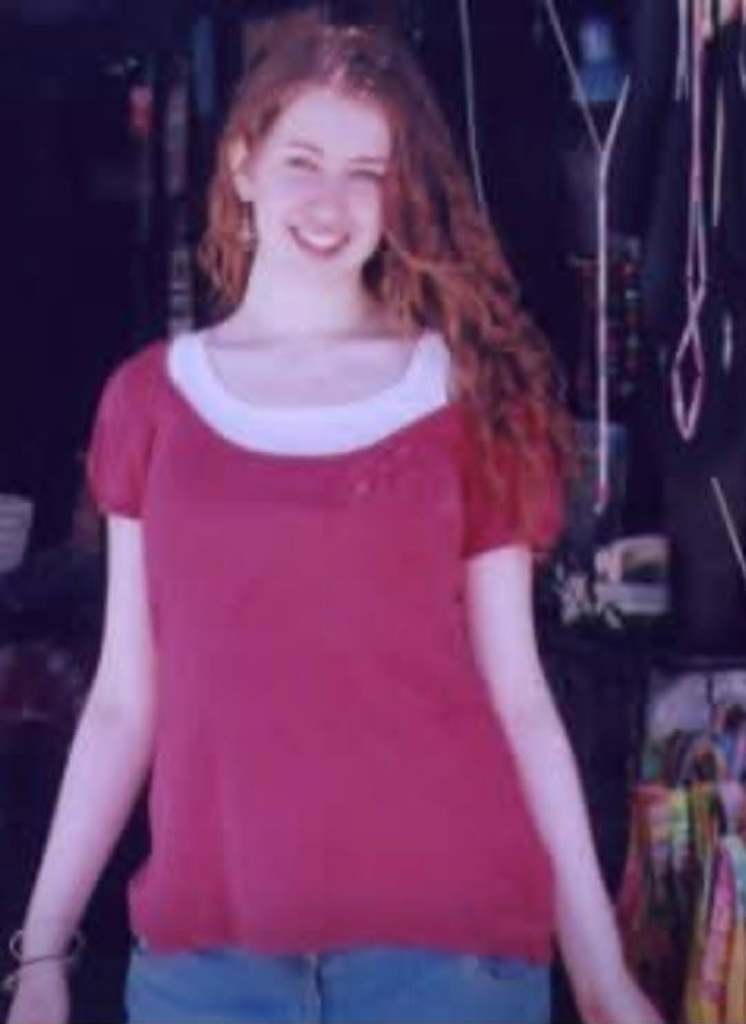
One year and a half after my bipolar 1 diagnosis and after a hospitalisation.
On holiday with friends in Spain and already on medication to stabilise my mental health. So many children now are on waiting lists for NHS CAMHS to even get to see a psychiatrist.
It is my hope and prayer that the government fund mental health services and improve access to healthcare. Or people will die from suicide or become hugely unwell.
I support the work of Mind and Rethink Mental Illness in highlighting and campaigning for this.
I was in the Priory North London adolescent unit in 2004 which was funded by the NHS and I had so much help after a mixed bipolar episode became psychosis. The psychiatrists were so caring.
We need more support for the next generation. Please to the UK government- fund CAMHS NHS services!
Bipolar disorder is often misunderstood as simply experiencing occasional mood swings. In reality, it is a complex mental health condition that exists on a spectrum, with several distinct types that affect individuals in different ways. Formerly known as manic depression, bipolar disorder involves extreme shifts in mood, energy, activity levels, and the ability to carry out day-to-day tasks. These are not ordinary ups and downs—they are episodes that can last for days, weeks, or longer, and they can significantly disrupt a person’s life, relationships, and sense of self.
Understanding the different types of bipolar disorder is the first step toward recognition, appropriate treatment, and long-term stability. Whether you are seeking answers for yourself or a loved one, clarity about these diagnoses can open the door to compassionate care and effective support. This article explores the three primary types of bipolar disorder—Bipolar I, Bipolar II, and Cyclothymic Disorder—and highlights the importance of comprehensive recovery pathways.
Bipolar I Disorder
Bipolar I disorder is defined by the presence of at least one manic episode that lasts for at least seven days, or by manic symptoms so severe that immediate hospital care is required. Mania is more than just feeling unusually happy or energetic. During a manic episode, individuals may experience a distorted sense of well-being, racing thoughts, rapid speech, a decreased need for sleep, and impulsive or risky behaviors such as excessive spending or unwise decisions. In some cases, mania can cause a break from reality, known as psychosis.
Depressive episodes often accompany Bipolar I, typically lasting at least two weeks. These episodes can be profound and debilitating, involving deep sadness, loss of interest in activities, changes in sleep and appetite, and difficulty concentrating. The manic episodes of Bipolar I can be severe and even dangerous, making this form of the disorder particularly challenging for both the individual and their support network.
Bipolar II Disorder
Bipolar II disorder is sometimes mistakenly viewed as a milder version of Bipolar I, but it is a distinct diagnosis with its own set of challenges. It is characterised by at least one
major depressive episode and at least one hypomanic episode, but never a full manic episode. Hypomania is a less extreme form of mania that does not cause the same level of impairment in social or occupational functioning and does not involve psychosis.
While hypomanic episodes may feel productive or even pleasant, they are still part of a pattern that can be destabilizing. The depressive episodes in Bipolar II, however, can be lengthy and severe. In fact, individuals with Bipolar II often seek help during depressive phases and may be misdiagnosed with major depressive disorder if hypomanic episodes go unrecognized. This makes accurate diagnosis essential for effective treatment.
Cyclothymic Disorder
Cyclothymic disorder, or cyclothymia, is often described as a milder but more chronic form of bipolar disorder. It involves numerous periods of hypomanic symptoms and depressive symptoms that last for at least two years in adults (or one year in children and adolescents), but these symptoms do not meet the full criteria for a hypomanic or major depressive episode.
For someone with cyclothymia, mood instability is a constant presence. The mood swings occur for at least half of the time during the two-year period, with no more than two consecutive months of stable mood. As one psychiatrist describes it, “It may seem like you’re just going through a string of good days and a string of bad days. But the mood shifts keep going, and there’s little neutral time in between”. While the symptoms are less severe than in Bipolar I or II, the persistent nature of cyclothymia can still significantly impact relationships, work, and overall quality of life.
The Importance of Bipolar Disorder Rehabilitation
Receiving a diagnosis is an important milestone, but it is only the beginning of the journey. Bipolar disorder is a lifelong condition that requires ongoing management. This is where bipolar disorder rehabilitation becomes essential. Rehabilitation goes beyond simply taking medication—it encompasses a holistic approach to rebuilding functioning, enhancing quality of life, and preventing relapse.
Evidence-based psychological interventions play a critical role in recovery. Approaches such as Cognitive Behavioural Therapy (CBT), Dialectical Behaviour Therapy (DBT), and Acceptance and Commitment Therapy (ACT) have shown promise in helping individuals develop emotional regulation skills, improve social functioning, and manage symptoms. Group-based programs and community re-entry initiatives can also support individuals in transitioning from inpatient settings to more independent living, enhancing medication adherence and global functioning.
Rehabilitation is not about “fixing” someone—it is about empowering individuals to live meaningful lives alongside their condition. With the right combination of medication, therapy, lifestyle adjustments, and social support, many people with bipolar disorder achieve stability and pursue their goals. The path may look different for everyone, but recovery is not only possible—it is the expectation.
Key Takeaways
Understanding the different types of bipolar disorder is vital for recognising the unique experiences of those affected. Bipolar I involves full manic episodes that can be severe and require hospitalisation. Bipolar II features hypomanic episodes alongside often-prolonged depression. Cyclothymic disorder is a chronic pattern of milder mood swings that persist over years. Each type requires a tailored approach to treatment and support.
If you or someone you love is navigating a bipolar disorder diagnosis, remember that you are not alone. Accurate diagnosis, compassionate care, and comprehensive rehabilitation can transform lives. Reach out to mental health professionals, build a support network, and take each step at your own pace. Understanding is the foundation—and from there, healing can begin.