Finding Your Center: Grounding Techniques For Stability And Balance by Bhavya Jain

(image: Genevieve Dallaire, Unsplash)

Let’s admit it- there are days when you just don’t feel like yourself, and even saying that does not quite capture it. It’s as if your body is here, but your mind has wandered off somewhere far away. Everything feels out of sync-your thoughts, your feelings, your surroundings- there’s a disconnect. You might find yourself overthinking, your nervous system overstimulated, reacting in ways even you can’t predict. The chaos of it all makes you feel heavy. Your mind races, your emotions spiral, and your body? Exhausted. Everything feels too much. That’s what being ungrounded feels like. 

We often hear about “finding your center.” But what does that really mean? It’s more than just a calming Pinterest quote. It refers to that deep, stable place within you, where you feel aligned with yourself-emotionally, mentally and spiritually. A place where your nervous system isn’t constantly fighting or fleeing, but finally resting. Your center is the part of you that remains unchanged amidst this chaos. It’s your home. And grounding is how you find your way back. 

Getting Grounded

Grounding is a technique to return to your body and the space around you. It involves activating your senses, engaging with the physical world and gently reminding yourself that- I am here. I am now. I am okay. It doesn’t have to be something extremely fancy. Sometimes, just placing your bare feet on the grass can calm your system. Your body knows. It’s just waiting for you to listen. 

One of the most helpful strategies is the ‘5-4-3-2-1 method’. It’s simple- you just look around and name five things you can see, four things you can touch, three things you can hear, two things you can smell and one thing you can taste.It might seem too simple to work, but it has helped people bring them back to themselves in powerful ways. A girl once shared how this technique helped her come out of an anxiety attack. She was disassociating, feeling far from herself, until this grounding practice slowly brought her back. 

Your body holds wisdom. Even something as basic as conscious breathing can help regulate your nervous system. When your breath becomes deep and slow, it sends a signal to your brain: “You’re safe now.” This is where Dr. Stephen Porges’ Polyvagal Theory comes in. It explains how activating the parasympathetic nervous system through breath, movement, cold water, or even humming can bring your body out of stress mode and into a state of calm. Grounding, in this sense, is not just emotional-it’s biological. You’re not just calming your mind, you’re regulating your entire being. 

There’s a reason we feel so held when we touch water or soil or walk barefoot. Our bodies remember their connection with the Earth. A study from The Journal of Environmental and Public Health even found that simply placing your body in direct contact with the Earth can regulate the autonomic nervous system and reduce inflammation. It’s nature, simply doing what it’s always known how to do-grounding us in the most quiet and comforting way. 

Slow Down

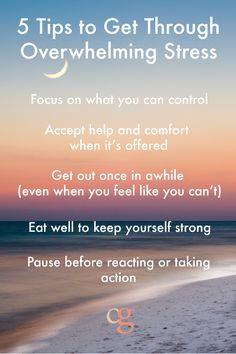
In a world that has always pushed us to do more and be more, simply slowing down and being present can feel rebellious. But it’s necessary! You cannot really pour anything from an empty cup. You cannot create anything from chaos. You cannot heal while running. You need to come back to yourself. 

And let’s not pretend it’s easy. Finding your center is not a one time thing. You lose it, often. Especially if you have trauma, anxiety or even neurodivergent experiences like ADHD. Your nervous system may be more sensitive. That doesn’t mean something is wrong with you. It just means you need tools to return-again and again. 

Return To Your Inner Child

The journey of grounding is also the journey of returning to your inner child. That version of you that existed before the noise, before the pressure, before the need to prove anything. Children live in the present. They are fully in their bodies, unfiltered in their expression, and completely immersed in the now. Maybe the healing is not in becoming something new, but in remembering who you were before the world told you who you had to be. 

You don’t have to fix yourself. You’re not broken. The goal isn’t perfection. It’s presence. It’s feeling at home in your own skin, even when the world feels unsteady. Sometimes you just need to sit still. To let the storm pass. To breathe like you’re filling your spine with stillness. To exhale like you’re letting go of static. 

This moment, right here, is all you truly have. So ground yourself. Look around. Breathe. You’re not late. You’re not lost. You’re just coming home.

About the Author – Bhavya Jain:

Bhavya is an I/O Psychologist and Integrative Psychotherapist committed to promoting positive mental health and breaking the stigma around therapy. She spearheaded a year-long pro bono initiative offering free mental health services, partnering with schools and nonprofits to make support accessible to underserved communities. Through her work, Bhavya continues to advocate for inclusive, unconventional approaches to mental well-being.

Anxiety Gremlins: Panic, Exhaustion and everything in between

anxiety1788

This post is probably the most honest one I have written (and as you all know I am pretty open about my mental health struggles).

I am completely and utterly exhausted, tired and fed up. I have been experiencing daily morning panic for 5 days, where leaving the house to go to work feels incredibly overwhelming.

This has happened to me before and I have got through it with exposure therapy and excellent support networks and medical team. I am incredibly lucky also that I work with supportive colleagues/ teams in my job, who go above and beyond to make sure I can be OK.

I am vulnerable to certain life stressors which can trigger my panic attacks and in particular morning anxiety. Due to the adrenaline and cortisol that is triggered during the panic, I feel like I have run a marathon but equally don’t want to sleep too much during the day so I am at home resting, recovering and recuperating. This may mean watching Love Island religiously, but I digress….

I feel like I am constantly on an emotional tread mill. The anxiety gremlins keep rearing their heads. This week has been particularly challenging due to the fact I have had panic attacks every morning. For me, my attacks are more emotional- I don’t tend to get palpitations or hyperventilate, I freeze like in fight or flight and then avoid. The avoidance temporarily stops symptoms but….

Avoidance is the worst thing you can do when you have an anxiety disorder. The worst. And yet we do it to feel ‘safe’ when really the feared event or trigger is not fearful at all.

I know that with support, I can get through this and feel much better. I have been recommended to the charity No Panic by a friend and yesterday I did the Yoga Nidra relxation meditation which calms the mind and body . I will keep trying to conquer the fears triggering my panic disorder- I have tried so much in the past but will have to keep going. I have been on the NHS waiting list for therapy for over a year. So I am having to do a lot of self help methods in the mean time.

Thank you everyone who has offered advice and support. Off to rest but will be back soon.

anxiety17

9 Proven Ways to Help Build Mindfulness and Meditation: Guest post by Jay Pignatiello

mindful1

This article is about ways to build Mindfulness for a happy and healthier life, by Jay Pigantiello.

At the age of 25, I began to feel the inevitable tides of change turn as they do, dimming the spark of youth I had grown quite accustomed to and cloaked myself with. I had hardly thought of a future to this point, but the reality finally hit me; the truth of which became a monster of sorts, leading me into a dark period of depression that followed. It wasn’t that I lacked confidence as much as it was simply that I hadn’t the slightest clue of what I wished to do for the rest of my life. The “rest of my life,” seemed daunting. I’m not sure to this day that there’s anything I would like to do for the “rest of my life.” But, through the suggestion of a friend turned mentor, I began to accept these feelings rather than trying to flee from them.

Meditation is an incredible tool. I was under the delusion that in order to be more mindful about things, I had to sit like a guru for two hours a day and eat nothing but kale and lentils. This couldn’t have been further from the truth, as it was suggested to start slow in the beginning. Each morning, for five minutes I would sit up in my bed and allow myself to be present. The coldness of the other pillow, the silky sensation of my sheets, and the warmth of the sunshine creeping over the hills began to be my anchors. Instead of fretting over what I needed to do that day, I allowed myself to be present upon waking. Most people are in such a rush that in the haze of their haste they actually make more mistakes and are less productive than if they were to take a few minutes to let their minds stay still.

Here are 9 proven and effective ways to help yourself become more mindful, and hopefully lead to a meditation practice:


  • Allow yourself to feel the feelings. It’s amazing how easily your mind can switch from negative thinking to more positive thinking when you stop fighting what you’re feeling. Humans are supposed to feel other emotions than happy or contentment. Feeling sad, feeling anxious, feeling depressed are actually positive experiences because they allow an insight into what needs to be changed.


  • Listen to your negative thoughts, and try to translate them. Many times when I’m depressed, I’ll start to see through a lens of darkness over everything in my reality, when the truth is that I’m unhappy because she didn’t text me back, or he didn’t tell me that I did a good job at work today. If I can translate these feelings of sadness into thoughts, I can allow them to pass or I can begin to make the proper changes that are necessary for me to grow.


  • Practice makes perfect. For me, there are times where I’ll pick up my guitar after having not played for a while and immediately dismiss myself as awful if I’m not as sharp as I once was. I forget how many hours went into practicing in order for me to reach a point where I was confident in my abilities. When I carry this mindset into other areas of my life, it allows me to accept where I’m at in my skillset and encourages me to practice a little harder. It also allows me to see my strengths and my weaknesses.


  • Strengths and weaknesses. This might not help me to become more mindful, but it’s made me a more confident person. In recovery from addiction, I’ve always been careful not to mention it to employers because I’ve thought of it as a weakness. The same could be said for my depression or anything else I suffer from. It wasn’t until I embraced the struggles I had gone through as a strength that I truly started to flourish in all areas of my life. In fact, most people didn’t see it as a weakness, and I’ve gotten several jobs simply because I’m reliable and trustworthy.


  • Pick one positive thing you experienced in your day and take time to appreciate it. Whether it’s the fact that your boss bought you coffee, or someone smiled at you, find one moment throughout the day and choose to be present for it. Gratitude is a powerful anti-depressant, and also helps to build mindfulness.


  • Pick one negative or uncomfortable experience in your day and take time to appreciate it. There’s a saying that goes something like, “you’ll never know a good day until you’ve had a bad one.” Negative experiences don’t need to define your entire day, but allowing yourself to feel it and be present without resistance can help you to see how many positive experiences there actually are. Discomfort is a catalyst for confidence.


  • Choose a mantra. Mantras can be powerful anchors, helping us to meditate while not traditionally meditating. Sometimes when I’m waiting in line I like to recite, “go with the flow,” which is from a song I like, as well as an appropriate mantra for me to live by. Often times I can be controlling, and so by reciting these words I remind myself that I’m not the most important person in the room, and everyone else had to wait in the same line. Your mantra can be whatever you choose, so find one that works for you.


  • Sit with your eyes closed. Sitting with your eyes closed in a more traditional form can truly help you to be more present throughout the rest of your day. Meditation is an incredibly powerful tool to help us to achieve mindfulness, as well as spiritual, mental, emotional, and even physical growth. When we allow ourselves to sit without judgement of our thoughts, letting them come and go freely without narrating the story of each, we’re allowing our minds to become tranquil; which in today’s day and age of computers and billboard ads, is a must.


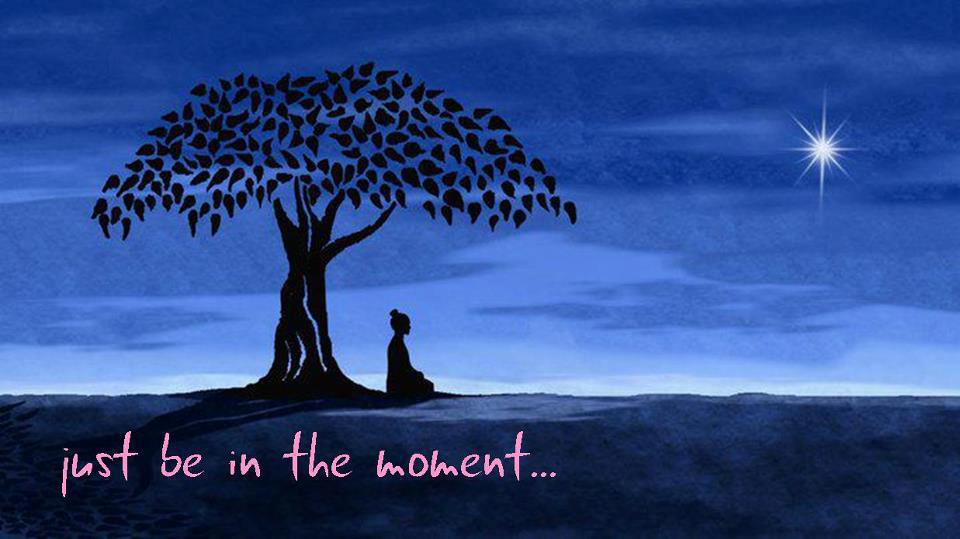
  • There’s only one Buddha. I like this saying, because I’m sometimes harsh on myself if I can’t sit for as long as I hoped for. Sitting for five minutes, and gradually building yourself up to sit for longer can help you to form a regular practice. There’s only one Buddha, and so there’s no right or wrong way to meditate, nor is there a right or wrong amount of time to meditate for. Be gentle on yourself, and acknowledge each day when you meditate that you’re taking time to do something positive and helpful for yourself.


I’ve suffered from depression and anxiety for most of my life, as well as recovering from various addictions. Meditation and mindfulness helped me to change my perspective, which in turn actually helped me to become a more hopeful and positive person. These 9 steps are proven to help you not only become more mindful, but to feel better about yourself and the world around you. We’re all in this life together, and I choose to be a more positive person for the world around me.


Jay is a writer and works with Crown View Co-Occurring Institute, a rehab for depression and other co-occurring disorders. He enjoys walking his two dogs, playing music, and being a figure in the recovery community in his freetime.

On Pacing Myself

pace1I am very much enjoying my work at the moment- however one thing has come to the forefront and that is balancing my work and social life. I have learnt how important it is to pace myself and take things at a slower pace in order to achieve what I would like. Also, my anxiety becomes triggered if I do too much and all at once and so its really important for me to have down time to balance out the other parts of my life.

My anxiety can strike randomly and I have to cancel arrangements, which I hate doing, but is sometimes essential. I try and do too much- so this is a reminder for me to be kind to myself and take things at the right pace for me.

I think this should be applied as a general rule. I can’t be everything to everyone. I must take time to breathe and slow down and appreciate. For only then can I be truly and optimally happy.