Eating Disorder Treatments to Consider if You Think a Friend May Be Struggling by Anita Ginsburg

(image: Hannah Busing: Unsplash)

Eating disorders are serious mental illnesses that affect millions of people worldwide. These disorders can have a devastating impact on a person’s physical health, mental well-being, and quality of life. If you think a friend may be struggling with an eating disorder, it is important to seek help as soon as possible. There are many different types of treatments available for eating disorders, and the right approach will depend on the individual’s unique needs and circumstances. This blog post will discuss some of the most effective eating disorder treatments to consider if you think a friend may be struggling.

Inpatient Treatment

Inpatient treatment is a highly specialised form of care that involves staying in a hospital or residential facility. This type of treatment is typically recommended for individuals who are experiencing severe eating disorders and need intensive support and supervision.This inpatient eating disorder treatment may include medical monitoring, individual and group therapy, and nutritional counselling. This approach can be highly effective in helping individuals regain weight, learn new coping skills, and develop healthier eating habits.

Outpatient Treatment

Outpatient treatment is another option for individuals who are struggling with an eating disorder. This type of care involves visiting a mental health clinic or hospital on a regular basis for counselling and other therapies. Outpatient treatment may be appropriate for individuals who are in the early stages of recovery, or who have a less severe eating disorder. It can also be a good option for those who need to balance treatment with work or other responsibilities.

Cognitive Behavioural Therapy

(CBT) Cognitive behavioural therapy (CBT) is a widely used form of psychotherapy that has been shown to be effective in treating eating disorders. This approach focuses on identifying and changing negative thought patterns that contribute to disordered eating behaviours. CBT can be used in both inpatient and outpatient settings, and may be combined with other types of therapies to create a comprehensive treatment plan.

Family-Based Treatment

(FBT) Family-based treatment (FBT) is a specialised approach to treating eating disorders in children and adolescents. This approach involves the entire family in the treatment process and is designed to help parents and caregivers support their child’s recovery. FBT has been shown to be highly effective in treating anorexia nervosa, and may also be used to treat other types of eating disorders.

Nutritional Counselling

Nutritional counselling can be an important component of eating disorder treatment. This type of therapy involves working with a registered dietitian to develop a healthy eating plan that meets the individual’s specific needs and goals. Nutritional counselling may be used in conjunction with other types of therapies, such as CBT, to create a comprehensive treatment plan.

Eating disorders are complex and challenging to treat, but with the right help, recovery is possible. If you think a friend may be struggling with an eating disorder, it is important to seek professional help as soon as possible. Inpatient and outpatient treatment, cognitive behavioural therapy, family-based treatment, and nutritional counselling are all effective options to consider.

Remember, recovery is a journey, and it may take time and patience to achieve lasting results. With the right support and treatment, your friend can learn to overcome their eating disorder and live a happy, healthy life.

If you’re in the UK please see the following charity to help too: https://www.beateatingdisorders.org.uk/ as we approach Eating Disorders Awareness Week.

This article as written by Anita Ginsburg and contains a non sponsored link.
How To Safely Treat An Eating Disorder by Lizzie Weakley.

(image: Annie Spratt: Unsplash)

Eating disorders are complex mental health conditions that require a multi-dimensional approach to treatment. They can affect people of all ages, genders, races, and backgrounds, causing severe emotional and physical distress if left untreated. The good news is that there are many safe and effective treatment options available to those struggling with eating disorders. This article will explore some of the most effective ways to safely treat an eating disorder, including therapy, medication, nutrition counselling, and support groups.

Eating Disorder Treatment Therapy

One of the most important aspects of care is eating disorder treatment therapy. There are different types of therapy available to those struggling with an eating disorder, such as cognitive-behavioural therapy (CBT), dialectical behaviour therapy (DBT), and family-based therapy (FBT). These therapies can help individuals identify and change distorted thoughts and behaviours around food, body image, and weight. CBT is particularly effective in treating individuals with anorexia nervosa and bulimia nervosa, while DBT can help those struggling with binge eating disorder and emotional dysregulation. FBT is a family-based approach to treating eating disorders in adolescents and children, which focuses on empowering the family to help the individual recover.

Medication

Medication may also be prescribed to individuals with eating disorders, particularly those with comorbid conditions such as anxiety or depression that are affecting their recovery. Antidepressants can help reduce symptoms of depression or anxiety, while antipsychotics may be prescribed for those with severe symptoms of body dysmorphia, or the distorted belief that their body is flawed. However, medication should be used alongside therapy and other forms of treatment, and under the close supervision of a medical professional.

Nutrition Counselling

Nutrition counseling can be an important part of eating disorder treatment, particularly for those with severe malnutrition or gastrointestinal problems. A registered dietitian can help individuals create a balanced and customized meal plan, learn about appropriate portions, and manage food fears and weight concerns. Nutrition counseling may also include education around mindful eating, intuitive eating, and healthy coping mechanisms. However, it is important to note that nutrition counseling alone is not sufficient for treating eating disorders.

Support Groups

Support groups can be a valuable resource for individuals struggling with eating disorders, as they provide a safe and non-judgmental environment for sharing experiences and gaining support. They can be particularly beneficial for those who cannot afford or access individual therapy, or who prefer a group format. Local and online support groups are available, and many are free or low-cost. Support groups can also provide a sense of community and belonging, which can be helpful in reducing feelings of isolation and loneliness.

Eating disorders can be devastating, but there is hope for recovery. Treatment may involve a combination of therapy, medication, nutrition counselling, and support groups, depending on the individual’s unique needs and circumstances. Recovery is a journey, and it may take time and patience, but with the right support and resources, it is possible. If you or someone you know is struggling with an eating disorder, reach out to a healthcare professional for help. Remember, you are not alone.

Lizzie Weakley is a freelance writer from the USA.

How To Know If You Have An Eating Disorder And What To Do About It by Brooke Chaplan

(image: Unsplash)

Eating disorders come in many shapes and sizes. They can be hard to identify, as they can develop slowly over time, or they can be immediately apparent. Knowing the symptoms of an eating disorder and understanding the best way to seek help is important in order to help those who are suffering from these illnesses.  

Signs of an Eating Disorder 

Eating disorders often manifest themselves through physical changes in appearance, as well as psychological changes such as mood swings, isolation, and feelings of guilt or shame. There are a few signs that may indicate someone is struggling with an eating disorder:  

  • Dramatic changes in weight or body shape (either gaining or losing weight suddenly)  
  • Avoiding social situations where food is involved  
  • Obsessive counting of calories or talking about dieting constantly  
  • Obsessive exercising (working out excessively even when injured)  
  • Preoccupation with food, body image, and weight gain/loss  
  • Negative self-talk (criticizing one’s own body image)  

If you have any reason to believe that someone you care about has an eating disorder, it’s important to get them help right away. The longer someone goes without treatment for an eating disorder, the more difficult it becomes for that person to overcome the illness

It’s also important to remember that a person doesn’t need to show all the signs listed above for it to be considered an eating disorder; if you suspect something is wrong, trust your instincts and reach out for help.  

Seeking Treatment for Eating Disorders   

If you think someone may have an eating disorder it’s important not to ignore the warning signs. The best course of action is always to seek professional medical advice. A psychiatrist or therapist will be able to diagnose any underlying issues and recommend treatment options based on their experience and expertise.

Treatment options for eating disorders vary depending on the individual but typically include some combination of psychotherapy, cognitive behavioural therapy (CBT) or other therapies, medication management, nutrition counselling, and lifestyle coaching. It’s essential that individuals receive support from family members during treatment so they can stay focused on their recovery journey.  

Eating disorders are serious mental health conditions that require professional medical attention in order to be treated properly. If you think someone might have an eating disorder it’s important not to ignore the warning signs but rather seek professional advice right away in order for the individual to receive a proper diagnosis and treatment plan tailored specifically for them.

With proper treatment, individuals with eating disorders can learn how to manage their mental health around food, body image, and emotional well-being so they can live a healthy life.

This article was written by freelance writer Brooke Chaplan.

Emotional Eating: How To Manage Triggers By Lizzie Weakley.

(image: Roamincolor at Unsplash)

Do you find yourself reaching for food to fill an emotional void? Do you often find yourself snacking out of boredom or anxiety? Emotional eating is a common problem that many people struggle with, but it doesn’t have to be something that controls your life. Here are some tips and strategies for managing emotional eating triggers and developing healthy habits.

Identifying Your Triggers

The first step in overcoming emotional eating is to identify the triggers that lead to it. Everyone has different triggers, so it is important to take the time and reflect on what causes you to turn to food when feeling overwhelmed or stressed. Some of the most common triggers include boredom, stress, loneliness, sadness, anger, fatigue, and anxiety. Once you have identified your particular triggers, then you can start taking steps towards addressing them.

Learning New Coping Mechanisms

The next step is to learn new coping mechanisms that allow you to manage these emotions without turning to food. This could be physical activities such as going for a walk or jog, doing yoga, or any other type of exercise that helps reduce stress levels.

It could also be trying out mindfulness techniques such as meditation and deep breathing exercises which can help centre your thoughts and help clear out negative feelings. Other methods could include talking with friends or writing down your thoughts in a journal in order to gain some clarity about why you are feeling certain emotions and how best to work through them.

Taking an Online Coaching Course

Finally, another great way of managing emotional eating triggers is by taking an online emotional eating coaching course designed specifically for this purpose. An online coaching course can provide the guidance needed in order to make meaningful lifestyle changes that will help overcome emotional eating patterns over time. The course will provide tips on how best to manage cravings and difficult emotions while also teaching techniques on how best to maintain healthy habits long-term while learning positive self-care practices along the way.

Emotional eating can be a difficult habit to break but with the right strategies in place, it can become manageable over time! Taking the steps outlined above such as identifying your triggers, learning new coping mechanisms, and taking an online coaching course are all great ways of helping manage emotional eating triggers while developing healthier habits along the way. With dedication and effort this problem can improve significantly!

Lizzie Weakley is a freelance writer.

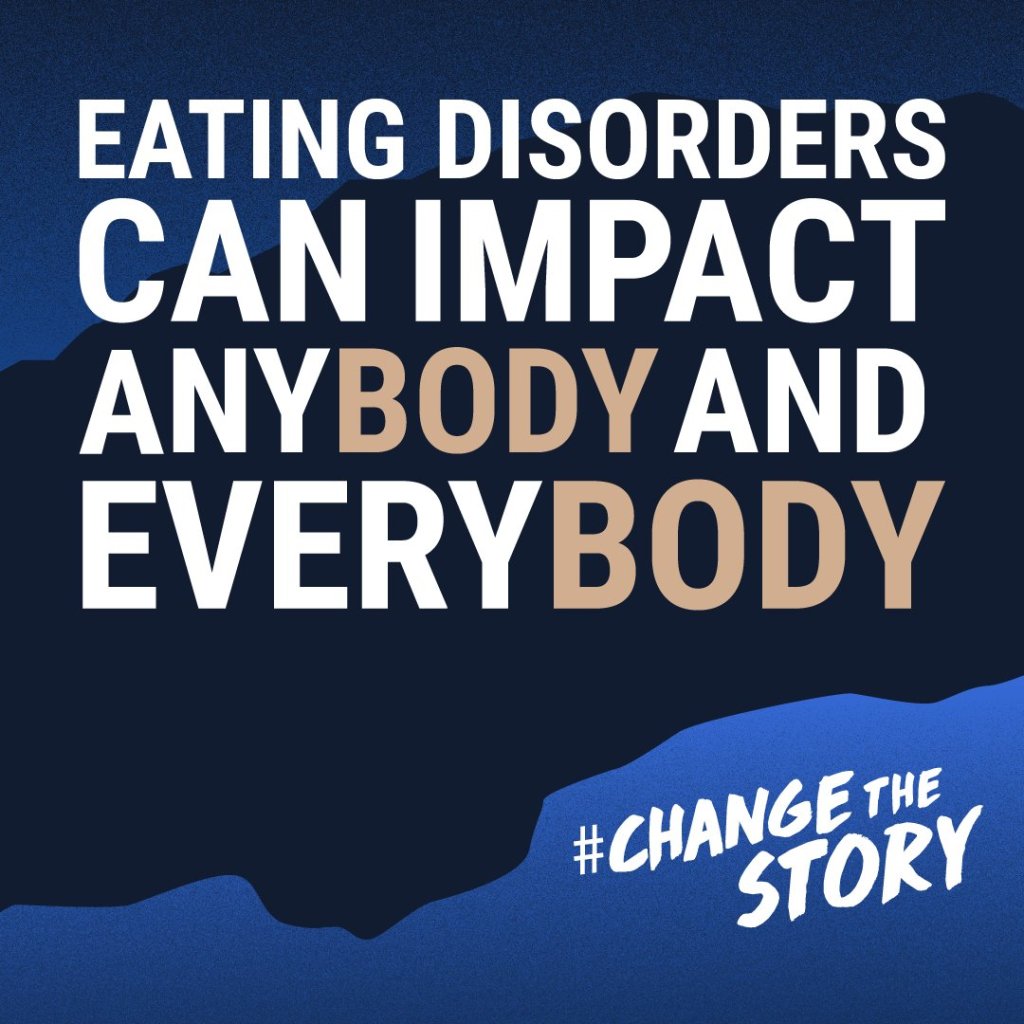
New #ChangetheStory Campaign by Hope Virgo and The Hearts Minds and Genes Coalition shows rise in Eating Disorder Stereotypes.

(image: Change the Story Campaign)

#ChangeTheStory and Anybody and Everybody is a new campaign launched this month by The Hearts Minds and Genes Coalition which is chaired by Multi-Award winning campaigner and Author, Hope Virgo. Hope is a friend of mine who has campaigned for years for help for those with eating disorders and she is a force to be reckoned with and an amazing woman!

Eating disorders are serious, biologically based mental illnesses deserving of equal clinical and research funding to that given to other complex diseases. They want to ensure that no-one with an eating disorder need experience shame or guilt, and everybody should have timely access to specialist services.

Author and Multi-Award winning campaigner, Hope Virgo who chairs the coalition says;“When we think of eating disorders we often immediately think of a white teenage, emaciated girl and fail to realise that eating disorders are so often hidden in plain sight amongst all ages, genders races, ethnicities, body shapes and weights, sexual orientations and socio-economic statuses. The campaign is working to remove the stigma and misunderstanding that surrounds these illnesses, ensuring that nobody should experience shame or guilt for suffering from an eating disorder and to make sure that everybody has prompt access to specialist services.”

(image on Twitter: Change the Story campaign, Hope Virgo and FEAST outside the Houses of Parliament)

Eating disorders are not new illnesses, but there has been a massive rise in cases during the pandemic. Unacceptable delays before treatment means we are also seeing a rise in avoidable chronic long-term illness and loss of life. We need to ensure that we are no longer hiding behind the global pandemic but ensuring that the right support is in place for everyone because no one should be dying of an eating disorder in 2022. They are working to remove the stigma and misunderstanding that surrounds these illnesses, ensuring that nobody should experience shame or guilt for suffering from a biologically based illness and everybody should have timely access to specialist services.

To raise awareness of the campaign they have created a video supported by Instagram. For a long time, people have used Instagram to challenge stereotypes about body size, share their journeys with overcoming body image issues, and celebrate different body types. 

 Renee McGregor, leading Sports and Eating disorder specialist dietitian said;“We need to change the images, narrative and practices presently associated with eating disorders in order to ensure that no further lives are lost to this illness in 2022 or beyond.” 

Suzanne Baker, CarerRepresentative for F.E.A.S.T. (www.feast-ed.org)in the UK, said;“timely access to sustained, specialist treatment is key to recovery from an eating disorder at any age or stage. Currently too many people are not able to access this treatment often due to misconceptions about what an eating disorder ‘looks’ like. There is no one look – eating disorders are serious biologically influenced illnesses and are often hidden in plain sight.

Dr Agnes Ayton, chair of the Eating Disorders Faculty at the Royal College of Psychiatrists, said: “No one chooses to have an eating disorder. An eating disorder can affect anyone at any age and can be caused by a range of factors including genes, mental or physical health conditions and social pressure. The stigma around having an eating disorder prevents many people from asking for help when they need it. No one should feel embarrassed to ask for help. An eating disorder can have very serious long-term effects on the body, but with treatment, people can fully recover. Raising awareness of this issue is an important first step in helping people to get the help they need. If you think you may have an eating disorder, speak to your GP who can refer you to a specialist counsellor, psychiatrist or psychologist. You can also visit the NHS Choices website to find out what additional support is available, including confidential helplines.”

Gerome Breen, Professor of Psychiatric Genetics at King’s College London says: “Research and its dissemination are essential to dispelling the unhelpful myths and stigma that surround eating disorders and compound their long-lasting and devastating impacts. By understanding more about why and how eating disorders develop we can improve society’s conceptualisation of these conditions and hopefully enable more people to seek and receive the support they need.”

(image on Twitter: Jeremy Hunt MP with Hope Virgo)

You can help by posting a selfie to support this campaign with the hashtag #changethestory.

Watch the video here to discover more about the campaign:

Treatment Options for Recovering from an Eating Disorder by Kara Masterson

(image: Pexels)

Treatment for an eating disorder depends on the type of disorder you are suffering from (such as anorexia, bulimia or binge eating disorder) and can vary with each individual. In most cases, treatment will include therapy, education about nutrition, and monitoring. There may also be medications prescribed that can help address a disorder as well as treatment for any health concerns that may have been caused by the disorder. 

Therapy for Eating Disorders 

The first step in treating an eating disorder is therapy sessions that may last just a few weeks or many years, depending on the severity of your illness. Therapy is designed to help you develop a good eating pattern and exchange unhealthy habits for healthy ones. Therapy will also help you understand how eating is connected to your mood as well as how to cope with stressful situations. You will be given the chance to develop problem-solving skills that are more constructive and that can better serve you going forward.

There are three types of therapy used to treat eating disorders and you may enter one, two, or all three of these types to manage your disorder. They include: 

  • Cognitive-behavioural therapy – this therapy focuses on behaviour, thoughts, and feelings as well as how to recognise and change distorted thoughts 
  • Family therapy – this therapy is designed to help your family help you establish healthy eating patterns as well as how to cope with a loved one who is living with an eating disorder 
  • Group cognitive-behavioural therapy – therapy conducted with others who are dealing with the same type of eating disorder in order to address thoughts, feelings, and behaviours 

Nutrition Program 

Another part of your therapy will include a nutrition program. You may work with a registered dietitian or other nutritional experts to help you better understand your disorder. They will create a program designed to help you work toward a healthy weight, practice meal planning, and take steps to avoid dieting or binge eating. As part of the treatment options for eating disorders, they will also help you recognise how your eating disorder negatively impacts your nutrition and health while helping you establish a realistic eating pattern you’ll be able to follow. 

Eating Disorder Medications 

There is no medication that can cure an eating disorder, but there are medications that are used in conjunction with therapy that may lead to better success. Antidepressants are the most commonly used, especially if your eating disorder includes binge eating or purging. Another drug that is sometimes used for binge eating disorders is Vyvanse which is thought to help impulsive behaviours that can lead to bingeing. 

Suffering from an eating disorder can be debilitating and it is an illness that is not only difficult for the person suffering from but also their loved ones who feel helpless. There are treatments available and it is critical that you get help for your eating disorder as soon as possible- reach out for support.

This article was written by freelance writer Kara Masterson

Identifying the Source of your Eating Disorder and Finding Recovery by Anita Ginsburg

(image: Mindful Eats Nutrition Counselling)

Few of us follow a healthy eating plan all the time. While you should try your best to keep a healthy diet, due to mental ill health and/or life trauma, some people go on to develop eating disorders as a result (such as anorexia and bulimia). 

There are a wide range of eating disorders that sprout from a wide range of mental, emotional, and environmental issues. If you have an eating disorder, it is important to get to the root of the psychological aspect and take steps to move towards recovery.

Here are some things you can do.

Keep a Journal

You may have already tried using a food journal to track everything you eat, your calories, your macros, your weight, your water intake, exercise, or any combination of the above. Unfortunately, many people feel that this type of journal causes them to obsess over what they’re eating. This can actually be detrimental to recovery unless carefully supervised by a doctor or therapist. 

However, journalling can still be helpful. Instead of focusing on calories or other factors in your food, take a look at yourself and how you feel about your food instead. For example, you might notice trends in your eating habits. Are there some foods or meals you’re avoiding altogether? Why? You can write about how you felt before, during, and after eating. This could include how you felt physically—hunger, pain—or emotionally. Finally, you might notice certain triggers that affect your eating habits.

With this information, you can get a good idea of whats going on, what might be causing the disorder, and what to do to help your mental health. Your journal should feel safe and supportive in your journey towards good health again.

Avoid parts of food journalling that make you feel unsafe. You may need to talk with your therapist to find a good balance.

Consult a Therapist

As mentioned above, a therapist can be very helpful in helping you provide insight and guidance in overcoming your eating disorder. If you can, try to find a therapist who specialises in eating disorders. They can help you identify emotional or environmental issues that may be triggering your eating disorder. Additionally, they will likely be able to recommend certain steps to help you break unhealthy eating habits. Not every tip or idea will work for everyone, so you and your therapist will have to work together to identify what works for you, what doesn’t, and what is counter-productive.

Talk to Your Doctor

If you don’t already know what category your eating disorder falls under, your doctor may be able to advise you. They will look at factors like your medical history, family history, and associated factors. The doctor might recommend certain types of testing or procedures to learn more about your eating habits- including blood tests and your BMI. They may also recommend certain diet changes or plans to help you reach healthier eating habits and improve your mental wellbeing.

Explore Treatment Options

As you learn more about your situation, you can look into possible treatment options for eating disorders that could help you to deal with and overcome the problem. Nutritional guidance, weight management programs, and support groups are common ways of helping people to recovery.

Eating disorders can cause many difficulties especially when you are feeling low or your mental health is declining. That is why its so important to find out the source of your eating disorder so it can be effectively treated and overcome. Learn all you can, consult professionals, and if it is available for you, join an eating disorder treatment program to achieve your goals back to health.

This article was written by freelance writer Anita Ginsburg

Living with an Eating Disorder: Guest blog by Sofie

successquote

(image: Pinterest)

This is a first person, brave and honest account by Sofie of her feelings about her eating disorder, which are her personal views. Trigger warning: please be careful as this discusses eating disorders and real emotions around them. We promote healing and recovery, where possible. So here’s Sofie….


I miss it every day! My first thought as I wake up in the morning and my last before I drift off for the night. It is a visceral longing. That’s the burden of an eating disorder. It’s an imposter that invites itself into your life and fulfills a need. It seemingly bestows upon you new abilities and strips you of weaknesses. However, with every freedom that it grants, there is a toll to pay.

My story doesn’t begin with a girl unhappy with her body, not many eating disorder stories do. My story starts with a girl lost within her own life. A girl who longed to feel she had a purpose and a direction — a child who yearned to feel an ounce of control. Anorexia gave me that control.

It gave me the power to defy human nature. It gave me a harsh look that proved I was oozing with discipline. Each bone like a spear warding off feelings and disappointments. I was never clueless as to why I starved myself. I never thought I was on a diet gone wrong. I wept many tears over the fact that my death-defying mission for control had made me so susceptible to vanity and left me a slave to the numbers on a scale, but how else was I to measure my discipline?

I miss it every day! I forget the aches, the pains, the fights, the hopelessness. I long for the feeling of achievement and forget the complete and utter sense of THIS IS NOT ENOUGH. STILL, I AM NOT ENOUGH. I long to go back almost every moment. To flee the life I have, to rewind and go back. For me, disappointment is much harder to face without the false comfort of the hunger, without the excuse of the failing body and protective blanket of a hazy mind.

So am I in recovery? I don’t know. I feel a sense of helplessness in my recovery like I have been dragged here by circumstance, and for now, my situation doesn’t sit comfortably with me. However, I know what I have to tell myself when it stings that my body no longer hurts: I can’t be a nice person while starving. I replay in my mind countless occasions where I behaved more like an animal than a human. I so desired to be successful, but I never wished to be a monster.

So, for now, this realisation is the guard I wear against the intrusive longing. It isn’t a bulletproof armour. The thoughts still wound, but for now, I am still standing, and I don’t need to judge the situation further than that.

And so, the greatest gift any therapy has given me is the clarity to place my love of others above my hatred of myself.

I can live a healthier life as a gift to those I love, who don’t deserve to be tortured by my demons. I must try and look after myself for my family and friends.


This blog was written by guest blogger Sofie, to discuss the truth around living with an eating disorder. If you are worried someone you love has an eating disorder, you can contact charities including Beat and speak to a GP or psychiatrist.

Guest Interview with Mark Simmonds: Author of ‘Breakdown and Repair’ mental health book.

mark1

(image: Mark Simmonds and Lucy Streule)


breakbook1


What inspired you to write a book about yours and your daughter’s journey with mental health?

It was July 2017 and I was attending a summer party, hosted by the Marketing Society, the organisation that brings together business people working together in the areas of marketing and advertising. Gemma Greaves, the CEO, was delivering a speech, during which she announced that the Society was going to join the mental health crusade. This seemed odd, slightly incongruous. But then it dawned on me that times had changed. Mental health was no longer the taboo topic it was when I suffered my mental breakdown back in 2001.

Everyone was talking about it now. I also had another 16 years’ experience under my belt, including caring for Emily, my daughter, who suffered from anorexia from 2012 until 2018. So, I had no excuse but to come out of the mental health closet and leave a legacy of sorts to the world. And even if that book helped just one person, then it would have been worth the effort.


How did you manage to recover from your stress, anxiety and break down, what helped you?

It was the 19th July 2001. Extreme stress at work had brought on the panic attacks, which were soon followed by a mental breakdown and the onset of severe agitated depression. I was no longer communicating with my wife or my three young children, even though we were all living under the same roof. That morning, I went cycling down a country road. My brain felt like a jumble of spaghetti when I collided with a 10-ton truck. It appears I tried to take my own life.

That’s how I recovered from the breakdown, because when I woke up in the John Radcliffe Hospital in Oxford a few hours later, the dense fog seems to have lifted. From that point onwards, I began to behave like a normal human being. No idea why. The physical impact caused by the accident to my brain? The awful realisation that I had come within a whisper of losing my life, my wife and my kids. There are far more conventional ways of recovering from breakdowns, but that was mine.

How did I recover from stress and anxiety? To be honest, I haven’t! I have simply learned to manage it over the years. I have put banisters in place that help keep me on the straight and narrow: I pick the right working environments, I manage my own expectations and set realistic goals. I satisfy my needs as an introvert. I take medication. I sleep well, eat well, exercise enough. But like all mental illnesses, be aware that it’s always lurking in the bushes, ready to pounce at moments you don’t expect.

mark2

(image: Mark Simmonds and Lucy Streule)

Did you find that Emily received good care and how did you help support her?

Yes, Emily received excellent help and support both from the NHS (Buckinghamshire Child and Adolescent Mental Health Services, the Highfield Unit and Cotswold House, Oxford) and from the Cardinal Clinic near Windsor. The dedication and professionalism of all the staff was outstanding and they did their absolute best to help Emily through the illness. But here is the thing. The quality of the support and the hours spent coaxing a patient back to health have little effect or impact until that patient wants to recover.

It took Emily 6 years to decide that she had had enough of anorexia. and it was only then she finally got better. Anorexia (or Ana as we ‘affectionately’ called her) was a brutal enemy, unforgiving and merciless. More than a match for even the most qualified, most experienced doctors, psychiatrists and counsellors.


As a father, what was it like to see Emily struggle with anorexia and to try and save her at the time?

I have suffered from depression at various stages in my life and have experienced living at the bottom of the dark pit where Emily found herself. So, it was painful to watch her suffer because I knew exactly what she was feeling. The upside was that I was able to empathise and sympathise with her. I got it. And the way in which I talked to my daughter and tried to support her was more in line with what she needed. People who are suffering from mental ill health don’t respond very well to rational or logical arguments because their brains are temporarily ‘broken’. The neurotransmitters are not connecting with one another. They need lots of hugging, hand holding, being listened to and loved. An irrational and emotional approach is more effective than a rational one.

Where are you both now in terms of recovery?

As far as my daughter was concerned, it was just 12 months ago when the full-blown Anorexia Wars came to an end. We are all fully aware that war could break out again sometime in the future. As a good friend described it, all we could hope was “that Ana will get incarcerated and gagged in small section deep in Emily’s brain, a high security area from which she can never escape.”

Thankfully, at the moment, our daughter is flying high. She is living and working in London for ITV, eating well, drinking alcohol in moderation (trust me that is a positive thing!), firmly back on track.

As far as I am concerned, life is great. As I mentioned earlier in this piece, I don’t think that you ever escape fully from either stress or anxiety, but I am determined not to let it get in the way of doing great things, trying new stuff, taking risks, saying things that you might regret, taking on people with whom you don’t agree. I want to make sure I end up under the right tombstone.


How has reaction to the book been and how was the writing process?

The writing process was a joy! I loved more or less every minute of it. Working closely with Kasim, my editor at Trigger to agree the overall shape and structure of the book, researching stories and expert perspectives/points of view to add colour, collaborating with the wonderfully talented graphic designer, Lucy Streule, around the illustrations. And spending hour after hour with my wife and family editing, tweaking, improving the book. A wonderful experience.

The reaction has been great, both from friends and from people I have never met.

Alastair Campbell comes into the latter category and he kindly agreed to endorse my book. This is what he said: “I loved this book and devoured it in a single day. Whether on his own illness, his mother’s or his daughter’s struggles, Mark writes clearly and without sentimentality. He is brutally honest about the reality of mental illness across the generations with important insights about how to survive it. Though it is filled with sadness and heartbreak, ultimately his story is a testimony to the power of love and of the human spirit.”


breakbook2

Mark Simmonds published his first book, Breakdown and Repair, with Trigger Publishing, in March 2019 (https://www.amazon.co.uk/Breakdown-Repair-Fathers-Success-Inspirational/dp/1912478994). It provides a full account of his daughter’s struggle against anorexia and is illustrated by Lucy Streule. It also talks candidly about his own experiences with mental ill health.

You can also follow Mark on Instagram (mentalhealthmark).


Loving Yourself: 4 Tips for Living a Body Positive Life: Guest blog by Emma Sturgis

bodypos

(image: Emma Sturgis)

Starting to live a body-positive life all begins with you, the individual. It can be challenging with so much pressure from society trying to dictate our lives. It becomes easier when you block out all negative forces and decide to start loving yourself and your body no matter what others have to say.

Loving yourself no matter what will increase your happiness and your overall peace in life. Here are four tips to help you down the body-positive life and feel total peace of mind about your body and physical appearance.

Work on Self-love

A significant number of girls have been through the trauma associated with body shaming, especially in high school. Some have taken the weight of the shame to our adult life where we lose our confidence and tend not to love ourselves as we should.

Many women and girls suffer from poor body image for years, or even through their entire life. The first step into living a body-positive life is by loving yourself first. We all come in different shapes and sizes, and no one is perfect. You just have to own your flaws and flaunt your strengths.

This can often be easier said than done, especially with years of social conditioning. You can achieve self-love through daily practices that make you feel your best physically and emotionally. Tell yourself every day that you appreciate your body and all it does for you.

Eat Instinctively and Respectfully

You don’t have to starve yourself to fit into that wedding dress within an unrealistic time-frame. Diets don’t work and neither does overfeeding any time you are stressed, sad or angry. Stop for a moment and ask yourself what your body desires to look great.

If you feel that you are struggling to keep an eating routine and your mental health is worsening, accept the problem and seek inpatient eating disorder treatment. under a psychiatry team or your local doctor.  


Change Your Perspective on Exercising

Most of us quit taking exercise and going to the gym because we hate working out. Exercise can be fun when we redirect the focus from it being a weight loss challenge to treating your body correctly and healthily.

You don’t have to attach any pressure or targets to your daily workout routines. Do exercises that are fun to you and even make it a social event with your friends. Once you start viewing exercise as healthy for your body , you will begin to love it. You will enjoy exercising because of how it makes you feel, endorphins from it will make us feel happy. You may even feel proud after a work out!


Pamper Your Body

After all the stress and pressure that your body endures, it deserves to be pampered and treated right. Get some good fitting outfits, wear the best lotions, go for therapeutic massages and take frequent hot tub baths. Fall in love with every curve while you look straight into the mirror.

This will allow you to connect with your body instead of feeling detached and negative toward it. You can make these things part of each day. Carve out some time from your busy schedule to pamper yourself, even if it includes simply putting on your favorite perfume. It will give you a simple confidence boost to carry through your day. Always take time for yourself and don’t let your daily tasks take priority over caring for your physical and mental health.

Once you change your mindset, the journey to living a body-positive life will be so much easier. You don’t have to lose 20 pounds to start loving yourself and your body. You are much more than your physical body.

Knowing your worth is a gift to yourself and your body. Eventually, it helps you rediscover your true self. You will be able to go forward in the world with confidence and give your amazing gifts and what you have to offer, to the universe.

This blog was written by freelance writer Emma Sturgis from the USA