You need daily habits in your life for mental clarity; these daily habits are often vital for wellbeing. Sometimes your mental health might take a dip, you might feel drained, depressed or feeling like you are left behind and cannot keep up. Here are some daily habits that can help to boost your mental health:
Practice Morning Mindfulness
Mindfulness can include simple tasks such as starting off the day on a positive note and setting good intentions by writing or speaking affirmations or engaging in prayer. Every day after you get up, you should make your bed as this is a small exercise that will only take two minutes of your day and prepare for a good day. As soon as you get up, do some simple, mindful stretches like swinging your arms in circles or doing the cobra pose to prepare your body for a focused day quickly.
Move Your Body
You should move your body and avoid sitting in one place, as moving around ensures that blood flows to your brain better and faster, providing it with oxygen, and activities like taking a stroll, especially early morning strolls when the weather is nice and there is calm in the air, are also good for you. You can breathe in fresh air and it makes you look at things from a new perspective. So, take morning or lunchtime walks so you may be prepared for the day. You can also do activities like yoga which boosts mindfulness and helps you get mental clarity. It can also calm your mood, and you can also do cardio workouts like cycling and running to give your brain the pump of blood it needs and help you think more clearly and better.
Fuel Your Brain
If you want your brain to think clearly, you must provide it with the right type of nutrients, too. You should make a list of foods that are good for your mental health and incorporate them into your daily routine. You can have fruits and vegetables, healthy carbs and proteins as your brain cells need nourishment to think better, too! You should also drink water and get yourself hydrated, as water makes your blood move around the body faster, wakes up your brain, and increases brain function. Also, you can take supplements like chlorella, a high protein plant. Some chlorella benefits include detoxification and improved focus, which are good for mental clarity.
Journalling for Emotional Release
There are some activities, like journalling, that you can do at the end of the day to let go of any stress that your body has. You can write about the things that went wrong in the day and what went well. Take your time to reflect on things so you do not end up overthinking things and overstimulating your brain. You should have a journal by your bed so if you feel like some unprocessed thoughts are coming to you, you can vent them out in your journal, which should help your mental health.
Sleep Better
Establish a bedtime routine for yourself that is unique to you so that you can look forward to it every night, and it helps you sleep better. You can read a book, lower the brightness of the lights in your room, and have decaffeinated tea or water. You should also avoid screens before going to bed, the LED light is not good for your eyes and does not let you sleep well. The use of screens has proven to have a strong link with less sleep time and delayed sleep.
Daily activities for your mental health require you to be consistent and true to yourself if you really want to see the results.. So, start with something small like making your bed and practicing mindfulness and then keep on adding some activities to your routine so by the end of a few days, you meet with a better, improved version of yourself, one with a clear mind and better health.
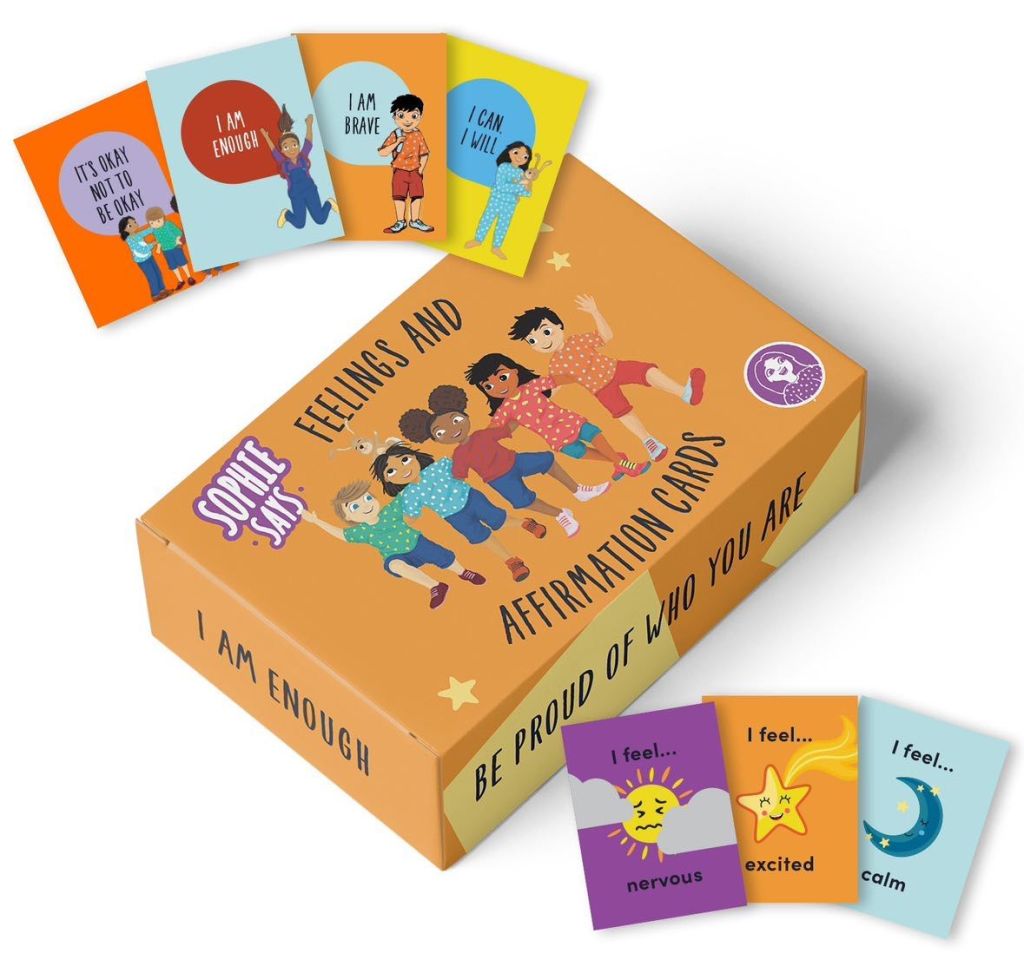
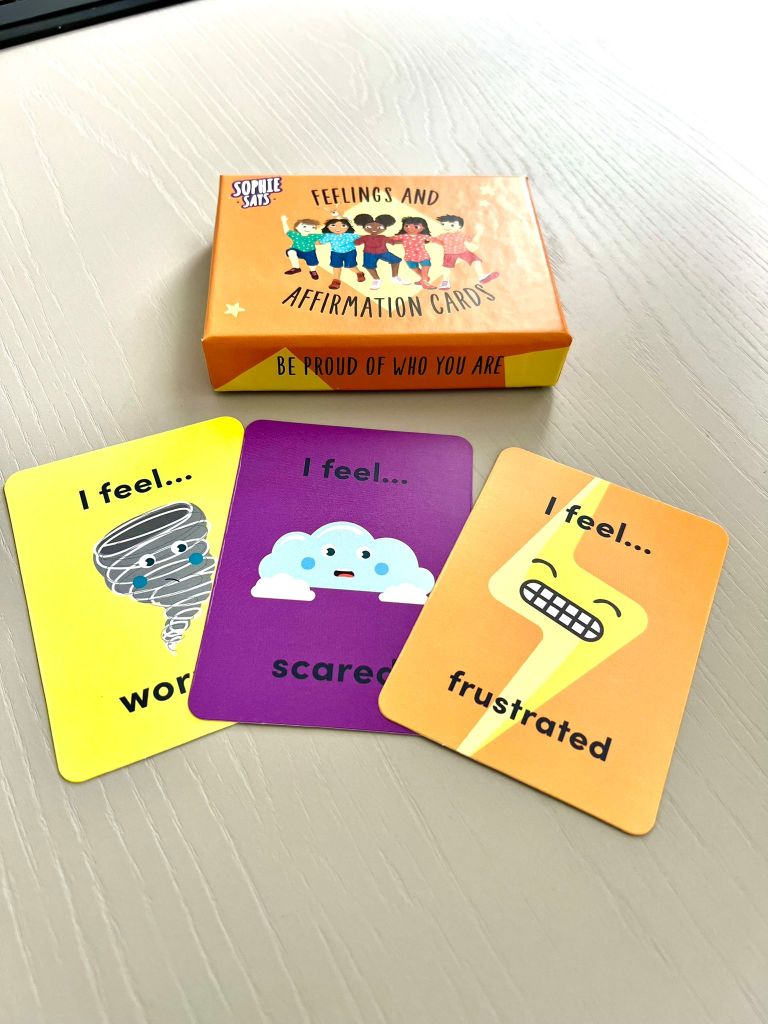
I have followed Esther Marshall’s journey for a while as a children’s author, speaker and mental health advocate for the next generation. On World Mental Health Day, Esther released a surprise and wonderful new product- Feelings and Affirmation cards to help children to communicate their feelings and emotions (and understand them).
420,000 children and young people in England are treated for mental health problems every month. Mum of three and author of the Sophie Says children’s book series is on a mission to make a positive impact on the world specifically for the next generation. The empowering children’s book series ensure critically important lessons in self-belief, mental health and gender equality are shown in an authentic and fun way.
Sophie Says Feelings and Affirmations Cards have been made specifically to help a parent or carer and child talk about their feelings together in a fun way through the much-loved Sophie Says characters. Affirmations and feelings cards are a proven tool for developing positive thinking, The Sophie Says affirmations cards have been designed to make exploring feelings a fun and interactive experience for children, parents, and carers, to empower self-belief and to help children believe they can achieve their dreams.
(image: Sophie Says)
Esther began her writing career with her debut book Sophie Says “I Can, I Will”, she wrote this during night feeds with her firstborn son as she wanted to teach him that girls were just as strong and powerful as boys, that people from different backgrounds to him could teach him things and he should listen and be kind to everyone.
The second book Sophie Says It’s Okay Not To Be Okay was written in memory of Esther’s younger sister Rebecca, who tragically took her life after her battle with mental illness at the all too young age of 28. The passion and driving force behind Sophie Says is to keep Rebecca’s legacy alive, teach young children about the importance of mental health, and talk about their feelings from a young age. The Sophie Says series now includes three books ‘I Can, I Will’, ‘It’s Okay Not To Be Okay’, and ‘Be Proud Of Who You Are’.
Esther Marshall says: “My mission is to help create a world where all children grow up feeling equipped and empowered to face their futures. Our new Sophie Says affirmations cards will help parents and carers communicate with their children and encourage them to express their feelings from an early age to help children, avoid harmful stereotypes before they set in.”
I love these cards and can’t wait to use them too!
Having emotions and expressing them is a part of the human experience. Regardless if they are positive or negative emotions, the most important things about your emotions is how you express them. The response to your emotions can help you in so many other areas of your life, it is important to know how to control your emotions well, to help your mental health.
If you know how to properly work with your emotions you will likely make better decisions, your relationships will flourish, your everyday interactions with people you pass by or coworkers will improve and you will be better equipped to take care of yourself.
If you are tired of being run by your emotions, we have practical tips that can help you manage your emotions no matter what life throws your way.
Understand The Impact Of Your Emotions
Your emotions are important. Intense emotions can remind you that you are alive. It is also common for emotions to overwhelm, whether something good happens or if something terrible happens. That is why it is important to have a strong understanding of the impact your emotions play in your life. Emotions can make life worth living or it can make things unnecessarily difficult.
Take some time to consider how your emotions impact your life. You may have a lot of conflict in your friendships or other relationships. You may have a hard time relating to other people, so you may isolate yourself. Unmanaged emotions can also lead you to have issues in your professional life at work and in your academic life in school. It is very likely that you will have emotional and physical outbursts. Spend some time with yourself and determine how your emotions are affecting your life up to this point. Where has it led you? Once you put a name to your emotions, it will be easier to keep track of your problem areas making it easy to track your progress.
Regulate Not Repress
Managing your emotions does not mean repress or suppress them. You should still be expressing your emotions. Expressing your emotions is healthy and imperative to stable mental health. If your goal is to not feel something, strongly reconsider. Sometimes you may subconsciously do it, not even realizing. Bottling up your emotions may seem like a quick fix, but it causes more problems down the line. Repressed and suppressed emotions can lead to things like anxiety, depression, lack of sleep, muscle tension and pain, stress management issues and substance abuse.
Remember that your goal is to control your emotions, not pretend they do not exist. You cannot shop it out, smoke it out, drink it out. You have to deal with your emotions head-on. That is the best way to take control of your emotions. The goal is balance.
Know What You Are Feeling
It can be difficult to control something you are unfamiliar with. Get familiar with your feelings. Constantly check in with yourself about how you are feeling. When you check in with your moods and feelings, you will be better equipped to respond to any and every emotional trigger you may face throughout the day. It could also stop you from making purely emotional decisions that may not be the best decisions to make.
Throughout your day, ask yourself how you are feeling. If you are feeling good or bad, ask yourself why you feel this way. Maybe you are having an emotional reaction to what someone did to you or for you. Before getting upset with them, consider if the inciting situation has a different explanation aside from the one you are currently telling yourself. Sometimes it is the stories we tell ourselves that are the main cause of our discomfort.
Once you have done all of that, ask yourself what is the best way to get out that emotion. Should you scream? Should you vent? Another question to ask yourself is if there is a better way to cope with your feelings. Sometimes screaming is not the best way to cope. Instead of screaming at your significant other, scream in a pillow at home instead. Maybe taking a few deep breaths is more appropriate.
As long as you are thinking about alternatives to your current situation and your feelings, it will be much easier to control your emotions instead of working off of your knee-jerk reaction.
Be Accepting Of Your Emotions
Avoid downplaying your emotions. Give yourself permission to feel those feelings. Do not feel about feeling those feelings either. Do not invalidate your experiences! If something makes you so happy you could leap into the air, do it! If something makes you feel super sad, express that. Do not tell yourself to “calm down” or “it’s not that serious.” It is serious to you and that is what matters.
Once you become more accepting of your emotions, the good ones and the bad, you will become more comfortable with them. The more comfortable you are with your emotions the less likely you will react to a triggering situation in a way that does not serve you best.
The impulse to judge your emotions is common and everyone struggles with this in different variations of difficulty. Remember that your emotions are not good or bad. They are neutral. They hold useful information that can help you improve, even if the emotion itself may feel unpleasant.
Journal
Before you cringe at the thought of keeping a journal, try it out. Writing down your emotions and the responses you have to those emotions can help you clearly see patterns. Often when something happens that triggers intense emotions, you may have the instinct to run through the situation in your mind over and over again. Take it a step further and put words on paper. Sometimes the act of writing something can help you reflect more deeply on your feelings and your triggers.
Think of journalling as a way to keep track of the things that trigger you. Once you know your triggers, you can catch yourself before falling back into those patterns that no longer serve you. If you want to truly reap all the benefits journaling has to offer, make sure that you stay consistent with it at least once a day. Make note of all your triggers and reactions to those triggers. Use your journal to explore different, more productive ways to express your emotions.
Remember To Breathe
That sounds too good to be true, but remembering to breathe can impact the way you process your emotions. Life happens fast. Sometimes it happens so fast, we barely have time to process. Taking some time to yourself to deeply breath can clear your mind in a moment of rage or it can help you fully enjoy a moment. Taking a deep breath gives you between the moment something triggered an emotion and your reaction to it. In between that breath you can check in with how you are feeling and why. You can ask yourself those questions like what is the alternative explanation that makes sense. All of that can happen in the time it takes for you to complete a few deep breaths.
If breathing deeply is not your thing, do not worry! It can be your thing! All you have to do is try. Get in a comfortable position and try deep breathing exercises before you start your day. When you take a few deep breaths, remember to breathe from your diaphragm as all deep breaths come from there. Once you have breathed in so much that your belly is rising, hold it in for three counts and release slowly. You can take it a step further and add a mantra that you say to yourself while doing your breathing exercises.
Understand That There Is A Time And A Place
Expressing your emotions is imperative to being able to control them, but you must understand that there is a proper time and place to express those emotions. There are some situations in which an emotional outburst is acceptable. Maybe you lost a loved one and are stricken with sadness and anger. Crying into your pillow, punching your mattress or screaming is a great way to express emotions.
The challenge comes when there is no space for you to do these things. You then have to determine if expressing your emotions in this way is the time and place. You cannot yell at your boss and expect to keep your job. You cannot slap the cash register because your card got declined otherwise you will go to jail. You have to be mindful of your surroundings and what the situation calls for. This can help you determine if this is the right time and place to express your emotions in this way.
Give Yourself Space To Process
Sometimes triggering emotions happen so fast, it can be overwhelming to process. That is why giving yourself space to process is so important. When you create a mental distance between yourself and your emotions by taking a walk, watching something that makes you laugh, talking to someone you love and spending a few minutes with your pet, you are better able to process those difficult emotions.




 beurownlight.com