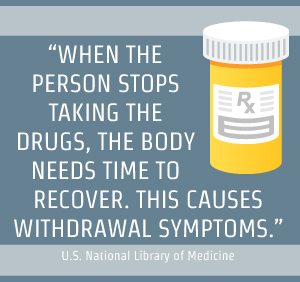
Guest Post: Making the Climb: 4 Tricks to begin the fight against Drug Addiction by Kara Masterson

It all started at a party you attended a few months ago. You were feeling down after the big break up, and you just wanted to feel good again. Someone at the party offered you some pills, and they made you feel better than you had felt in a long time. Before you knew it, you were a regular user. At first the confidence and the euphoria were too irresistible to pass up.

Once hooked, you always knew how to get ahold of your drug of choice. It was always just a phone call away. Unfortunately, one thing lead to another and now the pills are not having the same effect they used to provide you with. In fact, you need more to get the same feelings, but coming down has been much more difficult on you than you ever imagined it could be. In a particular low moment, you started to think that it might be time to fight your drug addiction, but where do you begin?

Admitting Your Problem

As with most problems, fighting a drug addiction begins with admitting to yourself that you definitely have a problem with drugs. If you are not committed to this being the truth, then you will find it is difficult to see a commitment to overcome the addiction through to the end. When you are certain that you want to give up your addiction and will do anything to make that a reality, then you are ready to take the journey necessary to reclaim your life back from drug addiction.

Disassociate from Your Connection

As long as you can call someone to enable you to continue in an addiction, you will be driven by the addiction to do so. To fight and overcome a drug addiction, you must break all ties with the people who enable you. By making this commitment, you are getting rid of the source of your addictive behavior.

Build a Support Network

To give yourself the best chance at overcoming addiction, you need to identify the people you can trust that have your best interests in mind to confide in about your drug addiction. This could be friends, family members or even someone like a pastor or teacher.

The important thing is that you gather people around you who love you and are willing to help you see your recovery all the way through. Sure, some of these people may be disappointed to learn about your addiction at first, but ultimately those who have your best interests in mind will want to help you reclaim your life and will be there for you in times of weakness.

Get Professional Help

The next step in your treatment is to locate and visit a rehab facility that can help you to get clean from drugs. Detoxing from narcotic substances can sometimes be a difficult path to walk down, but it is best dealt with by working with professionals like Kick Recovery Coaching or someone similar who have helped countless people through this process. They will not only be able to help you know what to expect, but they can provide you with ways to get through the detox phase that are rooted in the latest drug addiction treatment options.

The road ahead may not be an easy one, but it is definitely better than not seeking any help at all. The simple reality is that drugs ruin lives, but you do not have to be a statistic or a willing victim. By taking up the fight to reclaim your life from a drug addiction, you will come out the other end of this journey a much stronger person for it.

Kara Masterson is a freelance writer based in the USA.

Guest Post: 5 Tips for Boosting Your Immune System by Michelle Hannan, Nutritionist

Do you get sick and cough and sneeze a lot? You could have a weakened immune system. In this article, Michelle Hannan, Nutritionist shares her tips to improve your overall health, including within the mind. 

A weak immune system allows viruses and bacteria in your body to make you unwell. A strong immune system ensures that the body has the power to fight it all as best it can. Your physical health can also affect your mental health and make you feel low, despondent and not at your best.  

Here are some factors that weaken the immune system.

  • Harmful radiation
  • Smoking
  • Unhygienic lifestyle
  • Stress
  • Too much alcohol
  • Dehydration
  • Lack of sleep
  • Poor diet
  • No or little exercise
  • Obesity
  • Excessive medication

These are my tips for boosting the immune system:


  • EATING HEALTHILY


Most immune problems are due to unhealthy lifestyle or illness. Make yourself your priority and you will see the changes that occur in your life.

Unhealthy eating (high fat foods) can damage your immune system and affects your mental health  People consider healthy food as dull and complicated, but in fact, it is not. Check out some recipes for healthy yet delicious and easy food and stick to it to see the results.


  • EXERCISING


I understand that people have a hard time exercising due to many reasons. I was one of those people who hated exercising and opted for dieting whenever in need but a friend made me exercise for a month, and now I can’t think of a day without it.

When you exercise in adequate amounts, your immune system improves. Exercising also helps in making your memory stronger.

According to a Ph.D. candidate at the University of Canberra Research Institute for Sport and Exercise in Australia.

There is now a wide body of research showing that the benefits to the body with exercise also exist for the brain, when older adults undertake aerobically, we see changes to the structure and function of areas of the brain responsible for complex mental tasks and memory function.

-Joe Northey

He further said.

Each type of exercise seems to have different effects on the growth factors responsible for the growth of new neurons and blood vessels in the brain that may indicate why doing aerobic is of benefit to cognitive function.

-Joe Northey

http://time.com/4752846/exercise-brain-health/


  • RELAX MORE

When we worry more and relax less, our body`s immune system gets beaten up, and our mental health suffers.

Try to concentrate on the present rather than the future. This quote of Meredith grey from grey`s anatomy inspired me a lot.

We spend our whole lives worrying about the future, planning for the future, trying to predict the future, as if figuring it out will cushion the blow. But the future is always changing. The future is the home of our deepest fears and wildest hopes. But one thing is certain when it finally reveals itself. The future is never the way we imagined it.


  • VITAMIN D

 Sunshine is important for your immune system, promoting uptake of Vitamin D. Be careful to wear sun protection but get out a little every day into the light. This will help your mood too.


  • HOME REMEDIES

Home remedies are often misunderstood. People tend to think that home remedies do no good but in reality, the remedies below can give you long-lasting results. 

  • Avoid tobacco and alcohol
  • Drink as much water as possible to flush toxins
  • Eat garlic
  • Eat nuts and seeds as they contain healthy fats
  • Include more and more vegetables and fruits in your diet


Author bio: Michelle Hannan is a nutritionist, and she’s on a mission to give you all the information you need to lose weight successfully. She also blogs regularly at https://www.hcgdietinfo.net/


I Am Learning: Gratitude and Self Care for my Mental Health

Today on this cold, dark ,rainy, wintery day and past few weeks I am learning:

To be gracious

-To be more positive and to give thanks every day- either in my head to God
and the Universe or verbally through prayer. I also appreciate more and write down things I am grateful for. My friend Holly Matthews taught me this but I had also learnt it and felt it from various Jewish  and self development teachings.

To be kind to myself if I have a bad day and practise self care

If I am having a bad day with my anxiety or I am feeling low and tired because of the dark, cold weather, to feel better, depending on my mood I make sure I:

1)  Drink lots of water because my medications dehydrate me and so does the central heating  – and my skin gets all oily from the heating/ hair dries. So then I feel worse. Very important to keep drinking and try and get as much fresh air as possible.

2)  Take time to have a bubble bath or put on some facial or body moisturiser due to the above but pampering is also so important to self care when you are needing some.

3)  Nap, rest and take time to relax without feeling guilty. I have my go to blanket for this. Also, am learning how to practise good sleep at night because I often go to bed with my worries! I understand that for some people eg parents that this is harder. Grab rest when you can eg when your baby is resting.

4) Sometimes, writing or working on various projects can help as long as I don’t stress myself out. If I do feel overwhelmed then I have to cut back on things.

Today I am learning it is OK to feel anxious and overwhelmed but what is most important is to work on my mindset, work on positivity and embrace change. As well as following what I love and practising my passions.

What do you do for self care?

Guest post: 5 Tips to Survive Opiate Withdrawal by Bill Weiss

drugs1

Bill Weiss shares his knowledge about drug and opiate addiction and how to recover, talking us through the withdrawal process in a safe way. It must be done under medical supervision.

An addiction to heroin or one of the many prescription opiates, such as Vicodin or Percocet, comes with intense withdrawal symptoms. For many, the withdrawal symptoms are what drive them into an early relapse, in hopes of ending the symptoms rather than enduring them.

 The withdrawal process can be unbearable, but there are ways to make it easier. In order to prevent early relapse, let’s break down the opiate withdrawal timeline and how a person can alleviate some of those symptoms.

The Opiate Withdrawal Timeline

One thing that’s important to keep in mind is that each person’s withdrawal process will be a bit different from the other. Withdrawal symptoms fully depend on the individual, his or her habits while using, and the addict’s brain chemistry. Opiate withdrawal symptoms can range from mildly uncomfortable to severe and debilitating.

 The reason opiates cause such intense withdrawal symptoms is because of the effect they have on the user’s brain. Opiates impact the opioid receptors, which are found in the central nervous system. By targeting the opioid receptors, they adjust the brain’s response to pain while the drug is in the user’s system. This causes both physical and emotional effects, numbing the pain both physically and emotionally. Medically, this is why many doctors prescribe opiates as a pain killer.

 Unfortunately, if a person uses opiates long enough, it alters the chemistry of the brain. Eventually, the brain relies on the drug to control any amount of pain, big and small. When a person abruptly stops providing this supply of opiates to the brain, everything suddenly becomes unbearably painful as the body is no longer able to regulate pain. This sudden onset of pain signals flooding the brain is withdrawal.

 The early stage of withdrawal typically lasts for 24 to 48 hours, and it can start anywhere from a few hours to 30 hours after the last use of the drug. This can include muscle soreness, irritability, trouble sleeping, sweating, a rapid heartbeat and a lack of appetite.

 Fortunately, that earliest stages are the toughest. Later withdrawal symptoms can also be difficult, though, as cramping, shaking, nausea and vomiting may continue. The worst of these later withdrawals usually ends within a few days of sobriety, though for some may continue on for several weeks.

 Most people find that the majority of their withdrawal symptoms are gone after about a week. There may be some lingering anxiety and nausea afterwards, which can lead to a lack of appetite. Cravings for opiates, however, often last much longer.

Getting Through the Withdrawal Process

Opiate withdrawal is no picnic, but finding the right strategy to get through it can help. These are five of the best ways to get past those withdrawals for a successful detox and recovery.

1. Try Tapering

A popular method for people to stop using opiates is the taper technique. As the name suggests, it involves the person slowly tapering down the amount of opiates he uses. The benefit of this technique is that it causes less severe withdrawal symptoms than if the person simply decided to quit abruptly. However, it requires the mental discipline to keep reducing the amount of opiates used and eventually stopping use entirely.

 Just like a user will develop a tolerance for opiates and keep needing larger doses to get high, that process also works in reverse. If he can cut those doses down gradually, he’ll need less of the drug and his brain chemistry will start getting back to normal. For many, another option is to supplement the detox with Vivitrol. Vivitrol breaks the cycle of opioid addiction by lessening the symptoms of withdrawal.

2. Join a Support Group

One of the hardest parts of withdrawal is going through it alone. They can break a person down mentally and physically. A great way for the person to get support and stay on the right track is finding an addiction support group in his area.

 There are many ways that a support group can help with opiate withdrawal. Other members of the group can provide suggestions on what helped them get through the withdrawal process. Support groups also offer constructive activities, such as boosting self esteem during addiction recovery. These activities are crucial to surviving the withdrawal process and preventing relapse.

 Most importantly, being part of a group lets the person know that he is not alone in his struggle. If he has felt down on himself, a group of people who understand what he’s going through can help him maintain high self esteem.

3. Try Over-the-Counter Medications

Many of the most common symptoms of opiate withdrawal can be reduced by using popular over-the-counter medications. Tylenol and ibuprofen are two options that can help a person deal with the fevers, muscle aches, chills and sweating that come with withdrawal. Keep these medications on hand so that you can take them as needed.

4. Keep Getting Nutrients

Because of the nausea caused by opiate withdrawal, it’s often hard to eat or drink. This can make withdrawal even more difficult due to the lack of nutrients being consumed.

 Stocking up on foods that are easy to eat is a smart move before detoxing. Bananas are one option that tend to go down easy, or the person can purchase meal-replacement shakes. Multivitamins are a great choice for ensuring the person gets all the nutrients he needs even during withdrawals.

5. Set Up a Schedule in Advance

As the withdrawal process is an intense one, it is best to clear your schedule in advance. There are two key points to clearing your schedule during withdrawal.

 First, clear your schedule of any important responsibilities. Besides the fact that the symptoms will prevent you from doing anything at all, anything that you do during withdrawal will likely be of very low quality. If you are working then take time off of work, if possible. Find a safe, quiet, and secluded place in which you can focus on getting through the detox without any added stress.

 Second, is to set up a different daily routine. Routine is a problem when it comes to drug use because people often get used to their drug habits based on their daily routines. Many grow accustomed to using at a specific time of day, such as before bed or after getting home from work. Adjusting that daily routine can help the person avoid specific triggers that make him crave opiates.

 It may not be possible to avoid withdrawal symptoms entirely, but you can at least make them more bearable. With the right approach, you will be able to get and stay clean of opiates, rebuild your life and develop better coping habits to deal with life.

 Bill Weiss is an advocate of long-term sobriety. As a member of the recovery community, he feels it is important to spread awareness of alcohol and drug misuse in America and beyond. Being personally affected and having family members struggling, it is a personal quest of his to get the facts about substance misuse to light, ultimately enlightening people about this epidemic.
bill1

Summer Heat Wave and Mental Health Wellbeing

sunshine1
(painting by Yvonne Coomber)

Here in England, we have been experiencing a heat wave of over 30 degrees (yesterday was 34 and the hottest day in England for decades). Needless to say, we are not really set up for this type of weather and most homes don’t have air conditioning, just fans and open windows!

I have decided to write about this because heat and its effects can very much affect mental health wellbeing.

Heat can make you feel sluggish, tired and overwhelmed. It can make you more vulnerable to pressures and less able to cope. Add to that a mental health or physical health condition or  concern and you will find that many people struggle in this type of weather.

There are also the physical concerns of dehydration, exhaustion, sun stroke, sun burn and the impact this has on wellbeing and mental health. It is so important to keep out the sun and keep hydrated. The intense heat can also affect sleep- and stop one from falling asleep and getting adequate rest. Again this will impact on our overall wellbeing, making one feel low or anxious or extremely tired or in the case of mood disorders, has multiple implications.

I find that when its this hot and there is no air conditioning, I feel less able to cope and more tired. However I am proud of myself for doing my best in this weather.  Luckily, its going to cool off a bit now too.

On the positive side, the sunshine brings much needed Vitamin D and can be a mood booster too! Just make sure you stay safe in the sun, summer is well and truly here 🙂

Changes: Hopes and New beginnings

sun12

Sometimes in life, changes occur rapidly and you have to just go with them and the flow. These past few weeks I have been having a lot of positive changes in terms of employment and meeting new people. Its this that can provoke positive mindset but also fears and worries too. Change can be the most wonderful motivator or you can sink under pressures.

I am lucky that in my work, I have a good support network. Additionally, as Spring is here and the sun shines more, with lighter evenings, it is a very hopeful time.

I was reminded this week that Hope truly is the most important factor. Without hope, we are nothing. I have also found that getting adequate rest and relaxation time is key in keeping me feeling well and able to cope with lifes challenges.

Looking forward to a peaceful, sunny  weekend.

Guest Post by Juno Medical: 9 Things People with Anxiety Disorders Would Rather not Hear You Say

anxiety1

Anxiety disorders include generalized anxiety disorders, panic disorders, and social anxiety disorders. 1 in 12 people suffers from anxiety globally, and women are twice as likely as men to experience anxiety.

If you feel overwhelmed by the behaviour of a person with anxiety, try to put yourself in their shoes, and show understanding, not stigma.

For more see www.junomedical.com


Full Circle- From Bipolar and Mental Illness to Recovery

recovery1

It was summer 2014. I sat on a sadly impersonal green NHS couch in a quiet side room , my feet dangling over the edge, holding my wordsearch book and counting down the hours until I could leave the Day Unit. I had been feeling exhausted from my new medication, wobbly, teary and lacking in confidence all day and I had just started taking Lithium as a therapeutic medication. As such I had weekly blood tests as the Lithium level in my blood fluctuated between 0.4 and the optimum dose of 0.8, where you start to feel much better.  Lithium has to reach a certain amount in the blood to work on your brain (where it stops or tames mania and mood disorders).  They also had to check it didn’t become toxic in my blood and so weekly tests were needed which were exhausting at the time.

I had just received test results that day informing me that I was feeling a bit fragile because the Lithium was only at 0.4 in my blood. All I wanted to do was hide away from the rest of the therapy group in that little room, peacefully colouring in photos and doing wordsearches to keep me occupied. All I really wanted to do was go home, to where I felt safe and I didn’t have to face the reality of being ill.

This was at the beginning of my recovery journey in 2014. I had left hospital as an in patient after a manic episode and was a voluntary patient at an Acute Day Unit specialising in group therapies. Eventually, I grew to love it and the other people there- although I always wanted to leave faster than the Doctors thought I was ready! I stayed there 3 months in total and some people stay there 2 weeks. I very much needed the healing nature of the therapies even though I didn’t feel it at the time.

I realised these past few weeks how far I have come in my journey- from ill service user needing the support of my psychiatrist, nurses and OTs, to not needing that support currently (on 6 monthly psychiatrist meetings) and helping others in a similar setting in my new job.

I really have come full circle. There may be times when I am ill again in the future or not feeling at my best. I may need more support again. I may get panic attacks or mania or depression. However, for now I am feeling positive and hoping I stay well for a long time on my medication.

Recovery is possible. I am so thankful to all who have helped me on my journey and continue to provide guidance and love.

Guest Post by Richie: Dealing with anxiety, Live Your Now

everyday
(image:weheartit.com)

I was honoured to be asked to write a piece on anxiety for this wonderful blog.  I’m Richie, and I’m a mindfulness coach – one who happens to have had anxiety for as long as I can remember.  The thing is, I didn’t always know I had it.  I’ve been researching positive psychology methods etc for many years, but I wasn’t coping so headed to see a counsellor who referred me for a course of CBT after having pointed out – Sir, you have bad anxiety.

Me?

Yes I’d had panic attacks, people would describe me as quite reactive, amongst other things – and after all these years, to discover it was my “fight or flight” mechanism going into overdrive & attaching to situations in had no business being in, well, I was not impressed to say the least! How did I miss this? I felt initially extremely put out by this, I saw myself as a “fighter” – I got on with things, my panic attacks were just “stage fright” (I was in radio/music performance etc), my OCD a quirk of creativity and all that jazz! Right?

Wrong.

This is when I began to understand more fully the stigma associated to “mental health”. A somewhat wishy-washy term to people not familiar, or plain ignorant of the facts (as I myself was), as it’s often attributed to needing to just “chill out” or, “stop being so depressed” etc. At some point in life, many people will experience bouts of some kind of mental illness – after traumas, disappointments, or for some no seeming reason at all! But then, even the most healthy people can catch a cold.  And that’s the issue. Mental Health is a physical issue, that cannot be seen, and therefore for some is like trying to see oxygen.

My advice is simple on this matter; for brevity.

Acceptance & ownership

Firstly, accept it’s a physical thing, and take ownership and understand the physical things in the mind that are taking place. This helps separate you from the thought that you ARE your anxiety/depression etc. This is simply not the case.

If you catch a cold, you don’t say you ARE your cold. CBT helped me understand the mechanics of it, and have useful approaches, but for me (and we’re all different), I find mindfulness to have been the most helpful because it teaches to not identify as “being” depression/anxiety etc. This begins a process of dissociation of identifying as “being” depressed/anxious, and instead acceptance of what it is, how it functions, learning how it feels, and gradually gaining a level of understanding and feeling of when it’s occurring – and how it can shape/affect our feelings/emotions and therefore behaviours/reactions.

Experiment with techniques

Secondly, experiment with ways that can help you day to day – of course, seek professional help, but there’s also much that you can do independently. Breathing exercises (massively effective!), reminding yourself that the depression/anxiety doesn’t make you who you are, try things like mindfulness which teach us to detach from thought.

I also personally use meditations, guided or technological, hypnosis, even things like “EFT” (emotional freedom technique – or tapping), reading positive books, listening to uplifting music, and actively managing thought processes as and when I can.  Using mindfulness to compliment allows for being more in touch then, with which techniques are being more effective for you in the moment.

Is anxiety still there? Oh yes! But the more I practice these techniques (and you will find what works for you) and indeed, share them with others, the more aware I become of “anxiety”.

Reframing

Lastly; I have also reframed my anxiety, because without that fight or flight mechanism, our species would not likely still be here! So it’s important! It’s evolved in our species to protect us – and there are times that flood of adrenaline etc is critical. We certainly would not wish to be without it, but the chances a tiger is going to jump out and eat us are hopefully not too prevalent in your neighbourhood…

My experiences prompted me to begin @LiveYourNow & @Rmindrs on Twitter where I post daily mindfulness reminders, engage, and encourage others to talk – and hopefully create a few laughs too! (Laughter releases great neuro-chemicals!)

Be forgiving of yourself, understand you’re on a journey, and when you find things that help you, share them with others. The more we speak openly, the less stigma is attached, and the more others who may be suffering in silence may feel comforted and confident to speak out and seek assistance.  I have been witness to that now multiple times, and it’s truly a wonderful thing when we accompany each other, in compassion, on our healing journeys.

Thank you for reading! I hope it brings even just one person comfort/hope.

To your greatest life,

Richie – @LiveYourNow

Article for the Monologues Project- ‘People don’t always understand’

monologue3

monologueedit

Be Ur Own Light has teamed up with the amazing Monologues Project for this months #showandtell feature. In it they interviewed us about our journey with mental health and asked questions about our lives.

It is such a pleasure to be working with them. Thank you Monologues Project!

To read the in depth article, click here: http://www.themonologuesproject.org/features/003

monologuerar