
Top 10 Actions To Support Good Mental Health And Find Support- Mental Health Awareness Week 2026

(image: Mental Health Foundation)

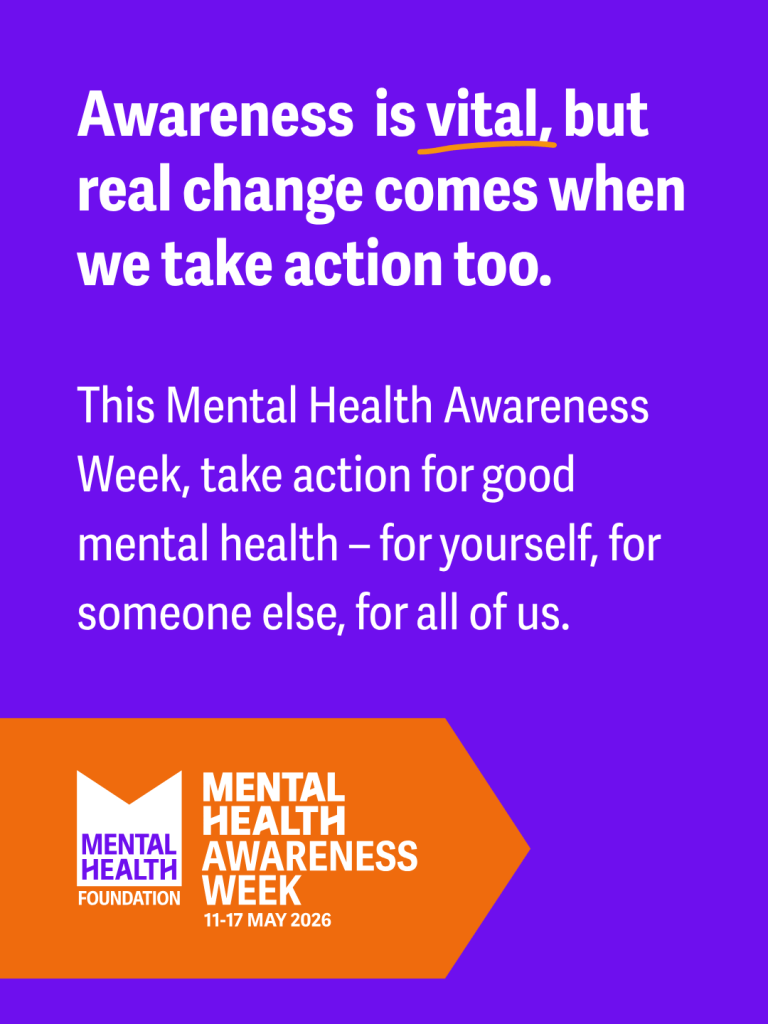
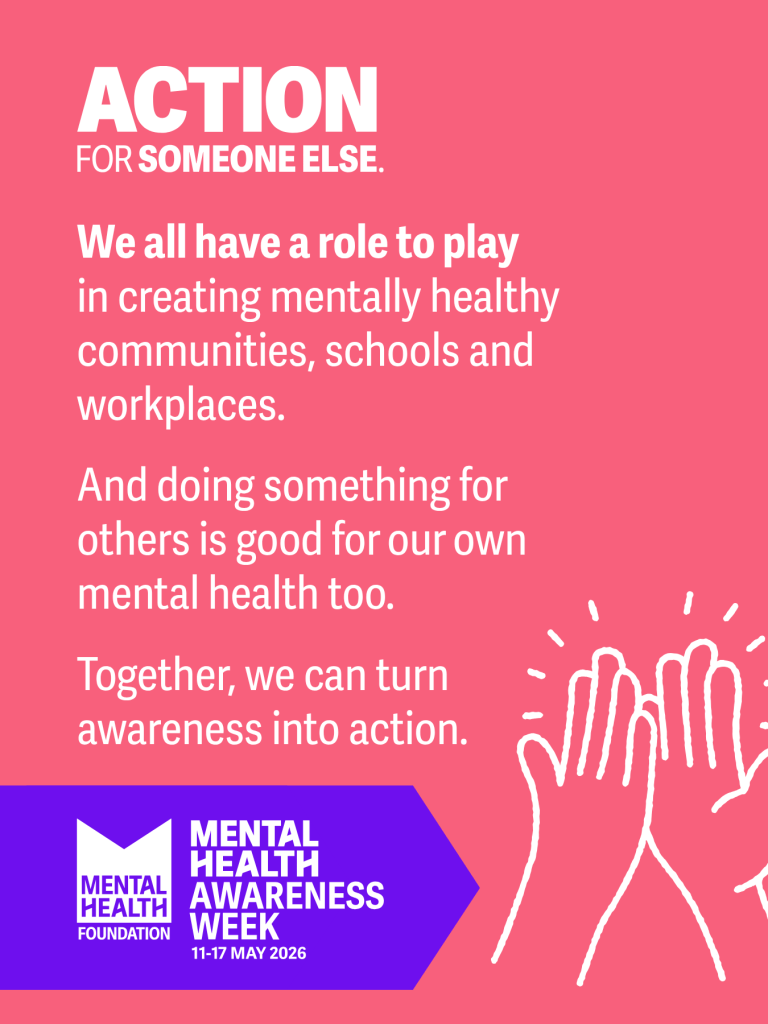
It’s Mental Health Awareness Week (with the Mental Health Foundation) and this year’s theme is Take Action for good mental health- for yourself or a loved one and for the wider community. They say, “we’re asking people to join us in taking action to support good mental health. Even small actions can help us feel hopeful and less powerless. And while our individual actions matter, when we come together we are even more powerful.”

Real change happens when we take action. Here’s some Top 10 tips from the Mental Health Foundation of simple actions to support good mental health, lift your mood and improve your ability to cope with life:

  1. Plan something to look forward to– Making plans for things we enjoy can increase our sense of hope, which is important for our mental health. It could be a plan to sit down with a cup of tea and take a quiet five minutes, or a long-term plan for an ambitious trip. Whether it’s a big or small goal, the important thing is to plan it.

2. Eat Well- One of the simplest ways to improve mental health is by eating a healthy, balanced diet. Not only can it support your emotional health, but introducing small habits, such as staying hydrated or having fruit snacks, can help make changes stick easier.

3. Get closer to nature- Spending time in nature can boost your mood, lessen stress, and help you concentrate.

4. Get good sleep- Good quality sleep helps your brain work better, lifts your mood, and is good for your overall health.

5. Get Creative– Spending time on creative activities is a great way to help ease stress and anxiety. Carve out some time to listen to music, paint, sing, or do whatever you enjoy most.

6. Move regularly- Being active can boost your mood and raise your self-esteem. It’s also an effective stress management technique. Whether you go for a walk, do some yoga, or vigorously clean the kitchen, it all counts.

7. Try Mindfulness- Being fully aware in the present moment can positively change the way you feel about life and how you approach challenges. Aim to notice the colour of the sky, the sound of leaves, or the feeling of your feet on the ground.

8. Friends- Having good relationships with others can help you feel like you belong, allow you to share experiences, and receive emotional support. It’s a great reason to have a catch-up with a friend on the phone.

9. Be Kind to yourself– Bad days happen to everyone. If you’re having a tough time, remember to treat yourself with kindness and understanding. You’re doing the best you can.

10. Talk things over with someone you trust- It can take a lot of courage to tell someone else how we’re feeling or what we’re finding hard. Just talking things through with a person we trust can feel like a relief and make us feel less alone.

(Source for Top 10 tips: Mental Health Foundation)

There are times when some of the above will be or feel too much, for example if facing a deep depression or a serious episode of mental illness. In these cases, the most important thing is to reach for help from your doctor or therapist (or both) and get referred in to mental health services to see a psychiatrist. Practising self care such as eating, sleeping and taking prescribed medication as well as simple things like showering and getting dressed can make a big difference on a day to day basis.

Remember that you are not alone and that you have so much to give and offer to the world. Take small achievable actions and reach for help and support from a trusted place, charity or helpline.

Support lines in the UK:

First port of call if a new referral (not already known) is to call 111 or request an urgent GP appointment

  • call 116 123 to talk to Samaritans, or email: jo@samaritans.org for a reply within 24 hours
  • if you’re under 19, you can also call 0800 1111 to talk to Childline – the number will not appear on your phone bill
  • There are other specialist organisations if needed for specific communities.
(Image: Mental Health Foundation)
11 Most Effective Ways for People to Protect Their Mental Health- A Guide by The Mental Health Foundation.

(image: Mental Health Foundation)

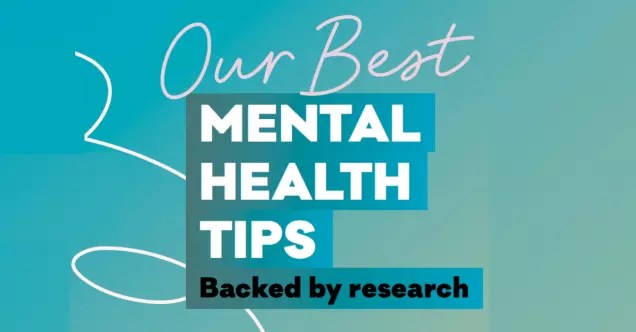
The 11 most effective ways for people to protect their mental health are revealed in a guide launched today by the Mental Health Foundation. 

The free guide, Our Best Mental Health Tips is based on the Foundation’s own ground-breaking study on what protects people from common problems such as anxiety and depression.  

The innovative study on which the new guide is based combined existing evidence about how we can protect our mental health with experts’ views, alongside the opinions of members of the public. 

Dr Antonis Kousoulis, who led the research and is a Director of the Foundation, said: ‘Our new guide encourages us to take care of the fundamentals of life – our relationships, our experiences, our bodies and our finances.  

‘The evidence shows that this is far more likely to keep us mentally healthy than the gimmicks and miracle cures promoted by some in the ‘wellness’ industry, who prey on our vulnerability. 

‘The truth is, there are no quick fixes for good mental or physical health. What works is developing healthy habits in our daily lives, that help us to feel OK and able to cope with everything. 

‘For example, in our new guide we talk about getting more from our sleep, learning to understand and manage our feelings, planning things to look forward to and getting help with money problems.’ 

The full list of mental health-promoting actions suggested by the new guide is as follows: 

  • Get closer to nature 
  • Learn to understand and manage your feelings 
  • Talk to someone you trust for support 
  • Be aware of using drugs and/or alcohol to cope with difficult feelings 
  • Try to make the most of your money and get help with problem debts 
  • Get more from your sleep 
  • Be kind and help create a better world 
  • Keep moving 
  • Eat healthy food
  • Be curious and open-minded to new experiences 
  • Plan things to look forward to 

Most members of the public involved in the study had experienced their own, or family members’ problems with mental health, so had the benefit of hindsight when assessing what helps most with prevention.  

The study was published in the peer-reviewed American Journal of Health Promotion

The new guide (and the research on which it is based) acknowledges that people may be unable to follow some of its suggestions, for instance because the place they live makes it impossible to sleep well or spend time close to nature. 

Dr Kousoulis added: ‘Enjoying good mental health should be an equally accessible goal for all of us, yet it is often out of reach for many. Government action is needed to create the circumstances that solve problems that are beyond individuals’ reach, and help prevent people having problems with mental health in the first place.’ 

You can download the new guide free of charge from the Mental Health Foundation website. You can also order hard copies by post, with a small charge.

About the Mental Health Foundation   

Our vision is of good mental health for all. The Mental Health Foundation works to prevent mental health problems. We drive change towards a mentally healthy society for all, and support communities, families and individuals to lead mentally healthy lives with a particular focus on those at greatest risk. The Foundation is the home of Mental Health Awareness Week www.mentalhealth.org.uk   

This is a non sponsored article written by the Mental Health Foundation.

Mental Health Awareness Week: The Mental Health Foundation: Body Image 13th-19th May 2019

mentalhealthawarenessweek

(image: Mental Health Foundation)

This week, starting today is the Mental Health Awareness Week by the UK charity the Mental Health Foundation. Its theme is looking at Body Image, how we think and feel about our bodies.

Mental Health Foundation say ‘Body Image can affect us all at any age- during this week we are publishing new research and campaigning for change’    .

They continued,

Last year we found that 30% of all adults have felt so stressed by body image and appearance that they felt overwhelmed or unable to cope. That’s almost 1 in every 3 people.

Body image issues can affect all of us at any age and directly impact our mental health.

However there is still a lack of much-needed research and understanding around this.

As part of Mental Health Awareness Week:

  • We will be publishing the results of a UK-wide survey on body image and mental health.
  • We will look at body image issues across a lifetime – including how it affects children and young people, adults and people in later life.
  • We will also highlight how people can experience body image issues differently, including people of different ages, genders, ethnicities and sexualities.
  • We will use our research to continue campaigning for positive change and publish practical tools to help improve the nation’s relationship with their bodies.’
  • The good news is that we can tackle body image through what children are taught in schools, by the way we talk about our bodies on a daily basis and through policy change by governments across the UK.’

For more on how you can get involved see : https://www.mentalhealth.org.uk/campaigns/mental-health-awareness-week