MENtion Health: A Panel event and Campaign for Men’s Mental Health by Superdrug

On Wednesday 4th November, National Stress Awareness Day, Superdrug invited me to a zoom virtual panel event highlighting men’s mental health.

They said, ‘The event will aim to break taboos and increase the conversation around the mental health challenges that men have faced during the current coronavirus pandemic. ‘

We had a chance to listen to some famous and insightful panelists, including

Professor Green – Award winning musician and patron of CALM charity

Chris Hughes– TV personality

Matt Johnson– Broadcaster and mental health advocate

Alexander Leon– Writer and social change advocate

Dr Amir Khan– Doctor and best selling author

(image: Superdrug)

In October 2020, Superdrug conducted research to find out how the pandemic is currently affecting people’s mental health.

The research was conducted among 3419 of its customers. Key findings are highlighted below:

● 86% of people believe men find it more difficult talking about mental health issues than women

● 82% of people believe there’s still too much stigma attached to mental health problems

● 71% don’t think employers take mental health problems seriously enough

● 80% of people would like to see mental health services being made more accessible to people

● 66% people said that their mental health is still being impacted by the pandemic.

As a result, Superdrug decided to launch a new service, known as Mind Care Superdrug. There will be an online doctor for people to find mental health support, with a video consultation and people will be referred to appropriate services. This will be a huge step forward and is an amazing thing to do!

Matt Johnson opened the panel, introducing each pannelist in turn to discuss men’s mental health. For me as woman, I recognise how important it is for men to speak out about their feelings after generations of stigma around mental health.

Professor Green talked about his battle with life long anxiety, saying ‘You just want to get out out of your own skin’, anxiety can be difficult but in life we encounter difficulties and learn to build resilience. Prof Green experienced anxiety as a child and teenager and still deals with it to this day and promotes talking about men’s mental health. He also spoke later in the discussion about self harm in men, to include drug and alcohol abuse and his familys own experience of suicide.

Chris Hughes then spoke about his anxiety and panic attacks, saying he was ‘proud to discuss it openly now‘. He said that before he became well known, he would get anxiety in the workplace that he tried to distract from by going to the gym. However, it didn’t work as well and now he is in the limelight, he has experienced panic attacks, which would manifest as pins and needles in his body and hyperventilation. Hughes shares about his mental health to help others, especially men, through it so they stop bottling feelings up.

Alex Leon told us that he was (in his words), ‘gay, brown and didn’t fit in’. He reminded us that LGBTQ and minority communities often have poor mental health due to a lack of acceptance. He said that 75% of suicide rates in the UK are men and that the narrative that ‘big boys don’t cry and men should just get on with it‘, should be addressed. Leon asked ‘what forms of stigma do men face?‘ and said often it is ‘Be stoic’ ‘be unemotional’ or ‘here is what a man or boy should be‘ – which all lead to poor mental health outcomes.

Dr Amir Khan also introduced himself and his work as a doctor in the UK- a GP working with mens mental health. He agreed with a lot of what Alexander Leon said and offered some profound insights.

The discussion then came back to Professor Green, who told the discussion that sadly his Dad and uncle had died by suicide and he felt mental illness ran in his family. He has struggled with depression and said, ‘ We all chase happiness. You should feel highs and lows- when I don’t feel anything is when I worry’.

Chris Hughes said we must normalise the conversation around mental health and Alex Leon added that self compassion is so important.

I very much enjoyed the panel discussion and really appreciated the chance to hear from great speakers on mens mental health. Superdrug are definitely ahead of the game!

I wasn’t paid for this article but Superdrug sent me a box of wellbeing goodies including Vitamin D tablets, vitamin tea, lavender and peppermint essential oils, sleep aids, moisture socks for feet with marula oil and a pampering skin and body set. Thank you!

Our wellbeing and mental health is so important. You can learn more about Superdrugs mental health campaign here: https://onlinedoctor.superdrug.com/mental-health-and-relationships/

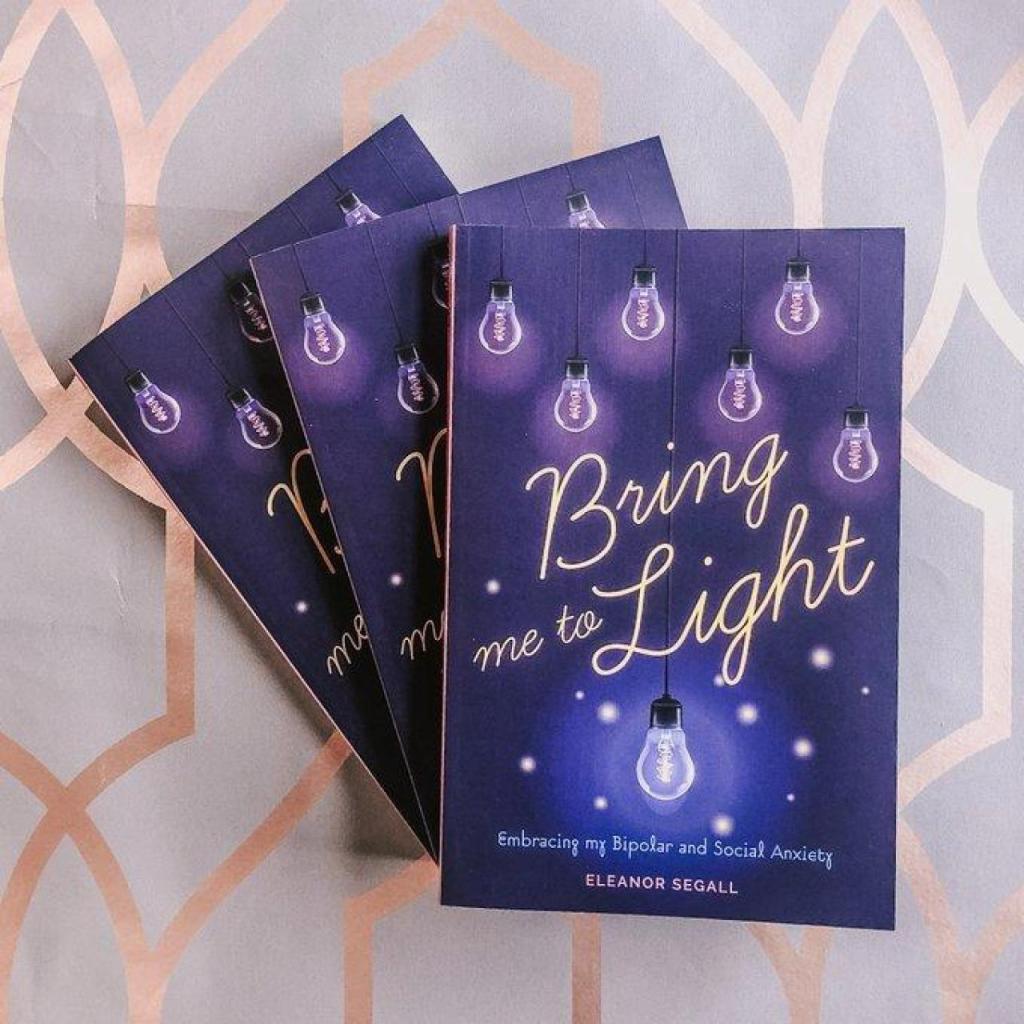
My Book Bring me to Light turned 1!


Yesterday, on 5th November, my book Bring me to Light: Embracing my Bipolar and Social Anxiety (with Trigger Publishing) turned one!

Today, I got this lovely review from a Twitter follower Robin so I thought I would share it here:

It is an amazing book, really enjoyed reading it. An honest and open account of life with bipolar, your strength of character shone through. Thank you for being so open and writing it. – Robin Josephs

I wrote my book to help others and dispell the stigma about severe mental illness. Everyone is human and everyone has mental health. Whether you have never suffered or whether you have depression, anxiety disorders, eating disorders, schizophrenia, bipolar, OCD, BPD or EUPD, self harm, addictions, PTSD etc- I would love everyone to be more open if they feel able.

I hope my book explains what being in hospital can be like but that you can recover.

You can get your copy on Amazon and in all good book shops now 🙂

Happy bookversary to me! Thank you to YOU for supporting my blog, reading this and helping get my book deal. To everyone who has bought a copy and to my fab editors Stephanie and Katie.


‘Out of Office Ditch the 9-5’: An Outstanding new book by author Fiona Thomas.

(image: Fiona Thomas/ Trigger Publishing)

Out of Office: Ditch the 9-5 and Be Your Own Boss, by my friend and author Fiona Thomas is an incredible read! I have known Fiona for some time as our writing careers overlapped. We both became freelance journalists for publications including Metro.co.uk and Happiful magazine at the same time. We then got book deals around the same time with Trigger Publishing and released our first books within a year of one another. Fiona is one of the loveliest humans in the mental health writer world and so I eagerly anticipated reading her new book.

Ostensibly, the book is a guide to ditching the 9-5 traditional workplace and going freelance! This is something Fiona has great knowledge of, having left the 9-5 after a breakdown in her 20s and being diagnosed with depression and anxiety. It took her a year to recover from this and as she had previously worked as a Manager, she knew she couldn’t go back to the pressure cooker. You can read more about this in her first book Depression in a Digital Age.

Instead, like me, she found solace in blogging online about mental health, then writing and becoming a freelance writer for many publications. Now, she is not only an author but a writing coach, journalist and in demand speaker!

Freelancing is booming for people who want a more flexible lifestyle or have found themselves out of work too. All you need is a laptop, phone and internet connection!

(image: Fiona Thomas)

Now, to the book Out of Office. The book is full of Fiona’s trademark wit- I felt like she was talking directly to me as I read it. She has so much knowledge to impart on how to navigate the freelance world, avoid its pitfalls and make a successful career (and what to do when things can go pear shaped too!).

Whether you are just thinking about going freelance, just starting out or a few years down the line, this guide addresses all the questions you might have about working for yourself and making the most of life. Designed to help you attain and enjoy a self employed career, the book challenges the misconceptions around freelancing and offers the pros and cons of taking the plunge.

Fiona covers topics such as how to raise an invoice and submit a tax return, how to sell yourself, coping with imposter syndrome (aka I’m just not good enough to be here), as well as why working from home is proven to have a positive impact on productivity and mental health.

Fiona is a mental health advocate and always strives to help others on their journeys. I loved how engaging the book was, how I couldn’t wait to read the next chapter and learn more. As a freelance writer/blogger/author myself, I knew this book would help me too (especially with the finances) and it is sitting in pride of place on my book shelf as I devoured it. I will definitely re read and use Out of Office as a reference point in the future too.

This is a must read and you can get a copy here and in all good bookshops.

About Fiona:

Fiona Thomas is a freelance writer who was born in Glasgow but now lives in Birmingham. She has been published in Metro, Reader’s Digest, Happiful Magazine and Grazia. Her passion is working with female-led businesses and shining a light on the positive impact that freelancing can have on our wellbeing. This is her second book. She blogs at fionalikestoblog.com

Self Care Activities to do for Those Who Love to Be Alone: by Regina Thomas

Finding ways to spend a little time with just yourself without worrying about the stress of what others are needing of you can be a little challenging at times. There are many ways that you and others can enjoy a few hours of solitude with different activities for those who like to be alone.

There are also plenty of reasons why you may want to enjoy a private retreat where you have your own space to unwind. Perhaps you are just too much of a workaholic or you find your days too hectic. Or perhaps you’re not ready to settle into a committed relationship yet. Whatever the reason, there are many ways to get some time alone.

A Little Private Getaway

You can enjoy your own space without having to make other arrangements to do so, such as renting a quiet place to stay. You can do this at times when you feel most comfortable and if you don’t mind a short nap in between activities. Of course, you can also find homes that are full of amenities that will provide everything you need to relax.

Get Out in Nature

You can take part in a variety of activities such as yoga or other types of exercise that allow you to get out in the fresh air and enjoy the outdoors. Or you might enjoy fishing, hiking, boating, or swimming. Many people even find ways to get involved in activities like taking hikes around the lake, camping out in the woods, or enjoying the ocean.

Whether it be camping in Pennsylvania or enjoying the sunset on Cannon Beach by yourself. Being in nature can also just improve your mental health and lessen the distractions of everyday life for a little while. 

Spend Some Time at Home

If you have children, you might find it easier to relax and have your own space. Many parents find it difficult to leave their kids at home alone so they have to choose ways to make sure that they can be left alone. But, many other times, you’ll be able to have the peace of mind that comes from knowing that you are doing the best you can to keep your family safe and healthy.

In addition, you can also find a way to relax by watching television. A lot of families have a set schedule for watching television and it’s a common practice to have each member of the family to watch a different show during the day while relaxing in the same room. Of course, there’s no set amount of TV you can watch but in some cases, you might find a favorite show to watch on weekends so that you and others can enjoy some quality time together.

It’s a good idea to have a book nearby as well. Reading can help you unwind and allow you to feel like you are part of a world where nothing is really important. Whether you are reading a good book about nature, history, psychology, romance, or any other subject, you can learn a lot of valuable things from reading, while keeping yourself busy.

Take That Time for Yourself

It can be exciting to explore different activities for those who like to be alone. It can be easy to get caught up in the hustle and bustle of everyday life and forget how great it feels to be able to just sit back and enjoy the fresh air and let it all pass you by. You don’t have to always have to be an active person to enjoy the quiet and solitude of a retreat – simply taking the time to focus and read your favorite books can be an enjoyable way to relax in the privacy of your own home.

These are just a few ideas to think about when it comes to activities for those who like to be alone. By spending some time doing different things that you enjoy, you can make sure that your mental health and self love are at an all time high.

Identifying the Source of your Eating Disorder and Finding Recovery by Anita Ginsburg

Few of us follow a healthy eating plan all the time. While you should try your best to keep a healthy diet, due to mental ill health and/or life trauma, some people go on to develop eating disorders as a result (such as anorexia and bulimia). 

There are a wide range of eating disorders that sprout from a wide range of mental, emotional, and environmental issues. If you have an eating disorder, it is important to get to the root of the psychological aspect and take steps to move towards recovery.

Here are some things you can do.

Keep a Journal

You may have already tried using a food journal to track everything you eat, your calories, your macros, your weight, your water intake, exercise, or any combination of the above. Unfortunately, many people feel that this type of journal causes them to obsess over what they’re eating. This can actually be detrimental to recovery unless carefully supervised by a doctor or therapist. 

However, journalling can still be helpful. Instead of focusing on calories or other factors in your food, take a look at yourself and how you feel about your food instead. For example, you might notice trends in your eating habits. Are there some foods or meals you’re avoiding altogether? Why? You can write about how you felt before, during, and after eating. This could include how you felt physically—hunger, pain—or emotionally. Finally, you might notice certain triggers that affect your eating habits.

With this information, you can get a good idea of whats going on, what might be causing the disorder, and what to do to help your mental health. Your journal should feel safe and supportive in your journey towards good health again.

Avoid parts of food journalling that make you feel unsafe. You may need to talk with your therapist to find a good balance.

Consult a Therapist

As mentioned above, a therapist can be very helpful in helping you provide insight and guidance in overcoming your eating disorder. If you can, try to find a therapist who specialises in eating disorders. They can help you identify emotional or environmental issues that may be triggering your eating disorder. Additionally, they will likely be able to recommend certain steps to help you break unhealthy eating habits. Not every tip or idea will work for everyone, so you and your therapist will have to work together to identify what works for you, what doesn’t, and what is counter-productive.

Talk to Your Doctor

If you don’t already know what category your eating disorder falls under, your doctor may be able to advise you. They will look at factors like your medical history, family history, and associated factors. The doctor might recommend certain types of testing or procedures to learn more about your eating habits- including blood tests and your BMI. They may also recommend certain diet changes or plans to help you reach healthier eating habits and improve your mental wellbeing.

Explore Treatment Options

As you learn more about your situation, you can look into possible treatment options for eating disorders that could help you to deal with and overcome the problem. Nutritional guidance, weight management programs, and support groups are common ways of helping people to recovery.

Eating disorders can cause many difficulties especially when you are feeling low or your mental health is declining. That is why its so important to find out the source of your eating disorder so it can be effectively treated and overcome. Learn all you can, consult professionals, and if it is available for you, join an eating disorder treatment program to achieve your goals back to health.

This article was written by freelance writer Anita Ginsburg

Checking In On Your Elderly Loved Ones Mental Health during the Pandemic.

(image: Pexels)

This is a difficult time for many people’s mental health. The 2020 coronavirus and Covid-19 pandemic has been completely unexpected and has taken up the most part of most of our lives and conversations throughout the past year. Massive changes have taken place that can all impact mental health, ranging from fear of the virus to difficulties with social isolation, difficulties with social distancing and difficulties with job losses, financial instability, reduced income and troubles keeping up with financial commitments.

The list goes on and on. But chances are the people often hardest hit by this virus are the elderly. Even those who do not battle the virus itself have had to lead more sheltered and isolated lives since the start of the year and, if you have an elderly loved one in your life, it’s important to do your utmost to help them right now. Here are some suggestions that can help you to achieve this!

Make Sure They Have the Most Up to Date Information

The first step that you need to take for your loved one during this pandemic is to make sure that they have the most up to date information on the virus, current guidelines, current restrictions and any other useful information.

The rules and the regulations that we are living by are all changing on a really regular basis and it can be hard for the elderly to keep up. Bear in mind that many of us get our news updates from social media and online news apps. The elderly often rely on newspapers, which only arrive once a day and which they may not actually be able to get their hands on while they are isolating. The radio can help too. Make sure that they are in the know to make sure they feel comfortable and know what’s going on.

Check In On Elderly Relatives in Care Homes

Sure, many elderly people are in care homes where you are not able to visit them right now. This reduces virus spreading. But you should still check in on them. Most care homes will take care of your loved one well. But there have been instances of neglect or misconduct throughout this pandemic and you’re going to want to call your loved one and check everything is okay. If there are any issues, you may need to reach out to a nursing home abuse attorney.

Buy and Deliver Their Essentials for Them

If your loved ones still live in their own homes independently, you may need to get their essentials for them and drop them off on their doorstep. This minimises contact with them, but also ensures that they have the food that they need, the medication that they need, the toiletries that they need and the cleaning products that they need. Many are unable to head to the shops themselves – especially if it means taking public transport.

Now can be a hard time for the elderly and the pandemic could be taking its toll on their mental health. But by following the steps above, you can help to give them peace of mind and reduce their stressors.

This article was written by a freelance writer

8 Tips on Managing Your Emotions for better Mental Health.

(image: Pexels)


Having emotions and expressing them is a part of the human experience. Regardless if they are positive or negative emotions, the most important things about your emotions is how you express them. The response to your emotions can help you in so many other areas of your life, it is important to know how to control your emotions well, to help your mental health.

If you know how to properly work with your emotions you will likely make better decisions, your relationships will flourish, your everyday interactions with people you pass by or coworkers will improve and you will be better equipped to take care of yourself.

If you are tired of being run by your emotions, we have practical tips that can help you manage your emotions no matter what life throws your way.

Understand The Impact Of Your Emotions

Your emotions are important. Intense emotions can remind you that you are alive. It is also common for emotions to overwhelm, whether something good happens or if something terrible happens. That is why it is important to have a strong understanding of the impact your emotions play in your life. Emotions can make life worth living or it can make things unnecessarily difficult.

Take some time to consider how your emotions impact your life. You may have a lot of conflict in your friendships or other relationships. You may have a hard time relating to other people, so you may isolate yourself. Unmanaged emotions can also lead you to have issues in your professional life at work and in your academic life in school. It is very likely that you will have emotional and physical outbursts. Spend some time with yourself and determine how your emotions are affecting your life up to this point. Where has it led you? Once you put a name to your emotions, it will be easier to keep track of your problem areas making it easy to track your progress.

Regulate Not Repress

Managing your emotions does not mean repress or suppress them. You should still be expressing your emotions. Expressing your emotions is healthy and imperative to stable mental health. If your goal is to not feel something, strongly reconsider. Sometimes you may subconsciously do it, not even realizing. Bottling up your emotions may seem like a quick fix, but it causes more problems down the line. Repressed and suppressed emotions can lead to things like anxiety, depression, lack of sleep, muscle tension and pain, stress management issues and substance abuse.

Remember that your goal is to control your emotions, not pretend they do not exist. You cannot shop it out, smoke it out, drink it out. You have to deal with your emotions head-on. That is the best way to take control of your emotions. The goal is balance.

Know What You Are Feeling

It can be difficult to control something you are unfamiliar with. Get familiar with your feelings. Constantly check in with yourself about how you are feeling. When you check in with your moods and feelings, you will be better equipped to respond to any and every emotional trigger you may face throughout the day. It could also stop you from making purely emotional decisions that may not be the best decisions to make.

Throughout your day, ask yourself how you are feeling. If you are feeling good or bad, ask yourself why you feel this way. Maybe you are having an emotional reaction to what someone did to you or for you. Before getting upset with them, consider if the inciting situation has a different explanation aside from the one you are currently telling yourself. Sometimes it is the stories we tell ourselves that are the main cause of our discomfort.

Once you have done all of that, ask yourself what is the best way to get out that emotion. Should you scream? Should you vent? Another question to ask yourself is if there is a better way to cope with your feelings. Sometimes screaming is not the best way to cope. Instead of screaming at your significant other, scream in a pillow at home instead. Maybe taking a few deep breaths is more appropriate.

As long as you are thinking about alternatives to your current situation and your feelings, it will be much easier to control your emotions instead of working off of your knee-jerk reaction.

Be Accepting Of Your Emotions

Avoid downplaying your emotions. Give yourself permission to feel those feelings. Do not feel about feeling those feelings either. Do not invalidate your experiences! If something makes you so happy you could leap into the air, do it! If something makes you feel super sad, express that. Do not tell yourself to “calm down” or “it’s not that serious.” It is serious to you and that is what matters.

Once you become more accepting of your emotions, the good ones and the bad, you will become more comfortable with them. The more comfortable you are with your emotions the less likely you will react to a triggering situation in a way that does not serve you best.

The impulse to judge your emotions is common and everyone struggles with this in different variations of difficulty. Remember that your emotions are not good or bad. They are neutral. They hold useful information that can help you improve, even if the emotion itself may feel unpleasant.

Journal

Before you cringe at the thought of keeping a journal, try it out. Writing down your emotions and the responses you have to those emotions can help you clearly see patterns. Often when something happens that triggers intense emotions, you may have the instinct to run through the situation in your mind over and over again. Take it a step further and put words on paper. Sometimes the act of writing something can help you reflect more deeply on your feelings and your triggers.

Think of journalling as a way to keep track of the things that trigger you. Once you know your triggers, you can catch yourself before falling back into those patterns that no longer serve you. If you want to truly reap all the benefits journaling has to offer, make sure that you stay consistent with it at least once a day. Make note of all your triggers and reactions to those triggers. Use your journal to explore different, more productive ways to express your emotions.

Remember To Breathe

That sounds too good to be true, but remembering to breathe can impact the way you process your emotions. Life happens fast. Sometimes it happens so fast, we barely have time to process. Taking some time to yourself to deeply breath can clear your mind in a moment of rage or it can help you fully enjoy a moment. Taking a deep breath gives you between the moment something triggered an emotion and your reaction to it. In between that breath you can check in with how you are feeling and why. You can ask yourself those questions like what is the alternative explanation that makes sense. All of that can happen in the time it takes for you to complete a few deep breaths.

If breathing deeply is not your thing, do not worry! It can be your thing! All you have to do is try. Get in a comfortable position and try deep breathing exercises before you start your day. When you take a few deep breaths, remember to breathe from your diaphragm as all deep breaths come from there. Once you have breathed in so much that your belly is rising, hold it in for three counts and release slowly. You can take it a step further and add a mantra that you say to yourself while doing your breathing exercises.

Understand That There Is A Time And A Place

Expressing your emotions is imperative to being able to control them, but you must understand that there is a proper time and place to express those emotions. There are some situations in which an emotional outburst is acceptable. Maybe you lost a loved one and are stricken with sadness and anger. Crying into your pillow, punching your mattress or screaming is a great way to express emotions.

The challenge comes when there is no space for you to do these things. You then have to determine if expressing your emotions in this way is the time and place. You cannot yell at your boss and expect to keep your job. You cannot slap the cash register because your card got declined otherwise you will go to jail. You have to be mindful of your surroundings and what the situation calls for. This can help you determine if this is the right time and place to express your emotions in this way.

Give Yourself Space To Process

Sometimes triggering emotions happen so fast, it can be overwhelming to process. That is why giving yourself space to process is so important. When you create a mental distance between yourself and your emotions by taking a walk, watching something that makes you laugh, talking to someone you love and spending a few minutes with your pet, you are better able to process those difficult emotions.

Living with OCD during a global pandemic by Impulse Therapy

Managing OCD without the stress of a global pandemic is challenging enough. COVID-19 has presented some unique challenges for many OCD sufferers, forcing people to be restricted to their homes, encouraging obsessive behaviours like handwashing and limiting access to in-person therapy. 

In this article, we’re going to break down the challenges OCD sufferers face in the times of COVID, along with how to support loved ones and how to access support. 

What are the new challenges for OCD sufferers?

People with OCD typically have behaviours that fall into the following categories:

  • Checking: Repeatedly checking tasks that have already been done, such as locking a door or turning off the tap. Checking behaviours can also include believing you have a medical illness and repeatedly getting medical exams or visiting the doctor. 
  • Contamination: A compulsion to repeatedly clean yourself and the surrounding areas. Being in a dirty environment can cause feelings of fear or anxiety. 
  • Symmetry and Ordering: The need for things to be in order and/or symmetrical. Behaviours related to symmetry and ordering can be triggered if things are not organised. Some people with OCD may experience hoarding behaviours which also fall into this category. 
  • Ruminations and Intrusive Thoughts: These are common for people with OCD. Intrusive thoughts experienced by OCD sufferers can sometimes be disturbing and violent, directed towards themselves or loved ones.

New behaviours and triggers are being experienced by OCD sufferers in all of the above categories since COVID-19. 

New Checking Behaviours

With OCD sufferers being confined to their homes, they may be experiencing more frequent checking triggers, repeatedly turning off lights before bed, locking doors, even repeatedly checking the news for updates. People with OCD checking behaviours may also convince themselves they have COVID-19, with a desire to repeatedly get tested while also experiencing paralysing anxiety around leaving the house through fear of infecting others.

New Contamination Behaviours

As you can imagine, experiencing contamination behaviours and triggers as an OCD sufferer during a global pandemic is a complete nightmare. 

OCD sufferers who experience contamination triggers likely already experience anxiety soothing behaviours such as repeatedly washing hands, cleaning themselves and their surroundings. COVID-19 will only be worsening these triggers and behaviours for OCD sufferers. 

With more emphasis being placed on how we wash our hands, the frequency of handwashing and using hand sanitiser, OCD contamination sufferers will likely be triggered whenever they are reminded of COVID-19 to do these behaviours compulsively. 

New Symmetry and Ordering behaviours

Spending more time at home in lockdown and isolation may be triggering symmetry and ordering behaviours for some OCD sufferers. They are constantly surrounded by their triggers, resulting in more frequent behaviour indulgences to ease anxiety. Frequent changes in COVID regulations could become a new trigger for OCD sufferers with symmetry and ordering behaviours. 

During lockdown, a lot of people have been inspired to ‘Marie Kondo’ their homes, organising and discarding items that no longer ‘bring joy’. Many OCD sufferers will be organising and reorganising their homes compulsively to ease anxiety. 

New Ruminations and Intrusive Thoughts

During a global pandemic, OCD sufferers could start to have intrusive thoughts about loved ones being infected with COVID-19. These thoughts can quickly spiral, with sufferers believing they are the cause of their loved one being infected, even if they are not showing symptoms or have tested negative.

People with COVID-19 can be asymptomatic, meaning they can have COVID and be infectious without showing any symptoms. Due to this fact, many people with OCD will convince themselves that they have COVID and are asymptomatic, causing them to isolate themselves possibly unnecessarily. 

How to support loved ones during these challenging times

As unfortunate and uncomfortable as it is, one of the best treatments for OCD is exposure and response prevention, a type of therapy that exposes the patient to the situations that make them anxious as a way of normalising these moments and learning ways to cope with the anxiety without resorting to the usual anxiety soothing behaviours. 

For the OCD sufferer, this means facing a lot of discomfort throughout treatment. If you’re living with an OCD sufferer who is struggling with frequently being triggered, possibly even by things you are doing, it may be tempting to stop what you’re doing that is triggering your loved one. However, it could be more beneficial long-term to behave normally, continuing whatever action you are doing that may be triggering, as a way of exposing your loved one to their trigger to normalise it. If you live with someone with OCD and are triggering them and don’t know how to behave around them, it could be worth speaking with a therapist to get some advice. 

Talking things through can always be helpful for anyone suffering from any mental health issue. If you can talk to your loved one about their OCD struggles in a patient, calm and empathetic way, this is a great way to support. 

How to access support as an OCD sufferer

Access to in-person therapy is currently limited worldwide due to COVID. If you’re looking for a way of accessing support, either for yourself or a loved one, there are online options. 

Online therapy is becoming more and more popular, with users enjoying the ease and accessibility without having to leave their homes.

The best form of treatment for OCD is therapy treatment using CBT (Cognitive Behavioural Therapy) and ERP (Exposure and Response Prevention). This type of treatment can be done in-person or online. 

Alongside therapy, there are many other tools that someone suffering from OCD can use to reduce and manage symptoms, such as worksheets, meditation, journaling and more. Each OCD sufferer is individual and has a unique experience. One person with OCD may struggle with contamination behaviours, while another could only ever experience ruminations. This is why everyone’s treatment plan will look a little different. 

When speaking with a loved one about getting help, remember to approach the conversation with patience and empathy. Seeking help for OCD is tough, and the person struggling may need time to come around and ask for the help they need. Discuss options with them in an open-minded way without any expectations. 

This blog was written by Impulse Therapy

We are a Top 10 UK Mental Health Blog 2020- Thanks Vuelio!

Today I received the most amazing news that top PR and communications company Vuelio have listed us as a Top 10 UK Mental Health blog for the second year in a row!

It is such an honour to make this list with other amazing blogs- everyone who runs them works so hard to provide content and keep updating them. Congratulations to everyone else on this list 🙂

We are at number 6 and you can check out the list here!

Thanks Vuelio!

How to Minimise Stress for the Elderly moving into Senior living facilities: by Johny Kershaws

A move into an assisted living facility or institution is very challenging. While family members and involved individuals would feel the challenge and difficulty, as well, keep in mind that the seniors would feel the same but, in a much more intensified way.

They may feel excited about moving into the new chapter of their lives. Some would even feel happier than ever before. However, anxiety and grief will still reportedly be part of the process. And stress can be very apparent during these times. Some people prefer to have carers in their own homes and this is a possibility if assisted living is too difficult – accordingly, you can learn more about some of these different options on the Care For Family website here: https://careforfamily.com.au/

But, even so, you, as an involved family member, may help minimize these “stresses” amid the transitioning. Here are some ways that you may want to check:

·         Empower

One of the best ways to reduce and minimize the stress of the seniors amid the transition is to empower them. There are actually several ways that you can do to make them feel empowered. But, among all, involving them in all of the processes is the best.

Whether it is a simple or a huge matter in your family circle, always make sure to include them in the discussions. The truth is, letting them know that their views and opinions are still valued, even though they are already living in an assisted living facility, will help empower them.

·         Respect Them

Moving into a senior care facility or even in an assisted living for seniors with pets will certainly involve a few stresses from here and there. This is very much apparent amid the downsizing processes as most seniors would not want to throw any of their valuables away.

If certain issues or disagreements arise in the middle of it, try to understand where they are coming from. As much as possible, respect their decisions, especially when the matter involved their belongings and valuables.

·          Continuity

Continuity is another great way to minimize the stress and anxiety that seniors might feel during the transition. One great example of this is the family’s agreement to allowing certain things in their old home to be moved or carried into the facility, which will serve as their new home.

For seniors, stress can be much less when they see something familiar around them. If applicable, try to bring things that will make them feel that the continuity is still there despite their move to the facility.

·         Keep the Familiar

There are cases that family members would feel the need to buy new things, like furniture and accessories for seniors upon their move. If so, try not to do it, especially just right after the relocation to the assisted living facility.

This might only cause further stress and isolation to the senior since moving altogether is already an event that may likely cause the feeling of being alone and isolated from loved ones.

·         Prepare

As always, failure to prepare will always result in unwanted instances and events. Accordingly, more stress will certainly rise in the middle of the transitioning. This is why making preparations days or even weeks prior is a huge must.

When seniors are already scheduled to move, say in an assisted living for religious seniors, help them make all the preparations before the actual day of the move. You may help with the packing of their things or do an outline of the schedule for smoother movements going to the facility.

Whatever you choose to do, just ensure that it will make things much easier on your and your loved ones’ part.

·         Stay Involved

When seniors move to an assisted living facility, there is a huge possibility of feeling overwhelmed, isolated, and vulnerable. This is why it is very important for family members to stay involved in almost all aspects of the transition.

This guest article was written by writer Johny Kershaws.