
Guest Post: ‘Don’t count the days it may take for Recovery, make the days count’- On PTSD by Christina Hendricks at www.mentalhealthzen.com

Ptsd
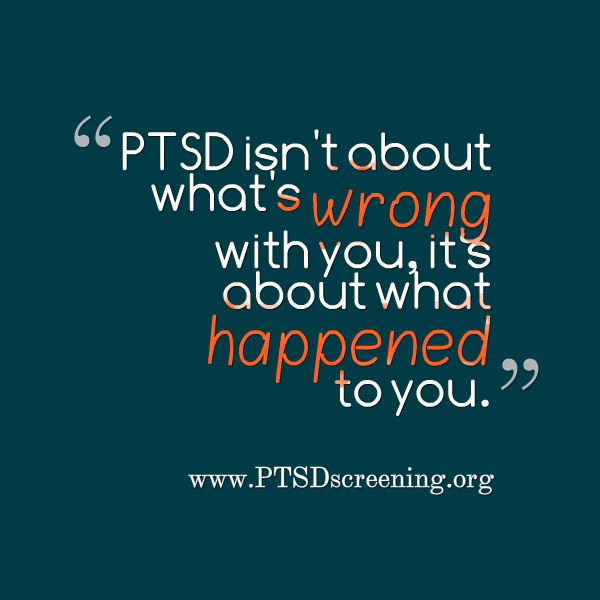
(image: PTSDscreening.org)

Trigger warning: contains descriptions of PTSD symptoms

“Don’t count the days it may take for recovery, make the days count. Seeking timely professional help boosts healing, instills hope and ensures recovery,” said 51-year-old Michael Hughes (name changed), a highly decorated firefighting veteran from New York as he stepped out of the therapy room after an intense session of trauma-focused psychotherapy. “Mental health issues are just like any other disease where recovery takes time. You need to have faith, be positive and stay strong,” he said with a smile.

Michael revealed that his job gave him post-traumatic stress disorder (PTSD) and that he got the problem from what he had seen. His 25-year stint as a firefighter with the Homeland Security and Emergency Services fetched him multiple laurels, but at a great price, which he continued to pay for years. After 22 illustrious years of service, he was diagnosed with PTSD because of which he was discharged from service.

Years of attending innumerable incidents of horrendous fire and fatal high-rise blazes gave him nightmares later. Frequent flashbacks of infernal flames engulfing entire blocks of buildings, scenes of the injured and dying being pulled out of the debris, and thick, choking clouds of black smoke adding to the mayhem became an inevitable part of his life. The impact of his job was so powerful that even watching television shows involving fire accidents would send shudders down his spine, waking him up in either cold or hot sweats.

Soon the mental agony made him feel as though the entire world was crashing down on him. Moreover, the fear of becoming an object of scorn and ridicule was so overpowering that he hesitated to express what was going on in his mind. He feared what seemed very real to him, may seem illogical or unreal to others around him. He knew that each traumatic experience of the past was gradually taking its toll on his mental health. The truth was the post-traumatic stress was wreaking havoc on the inside, while he still managed to look seemingly fine on the outside.

But it was a matter of time that he reached a stage when he completely lost all control over his emotions. Even the smallest of fire sparks or the sight of someone hurt or injured would make him upset and depressed. Nevertheless, what was controllable once, had become uncontrollable. Even the smoke coming from a cigarette would trigger a series of vivid flashbacks of a major fire accident, evoking painful memories of the past.

However, it was one ear-deafening Fourth of July, which blew the lid off. The non-stop pompous bright flashes and earth-shattering aerial fireworks all around him became unbearable. The petrifying sounds brought gut-wrenching scenes repeatedly to his mind. The ghastly flashbacks unleashed chronic unrest and panic attacks. He felt so low he contemplated his own life and what it meant. But as fate had ordered it otherwise, a well-timed intervention by his wife Amy (name changed) made him rethink his decision. “Sometimes it’s okay not to feel okay,” were the precise words she used. Her comforting words encouraged him to fight his condition by seeking support. He finally felt assured that his wife wouldn’t view his vulnerability as a disgrace.

Michael’s involvement with numerous emergency situations in both natural and man-made disasters during the course of his career compelled him to bottle up an ocean of emotions, anger, sadness, losses and grief. Finally, on hitting rock-bottom, it was in the mental health rehab that he was diagnosed with depression and anxiety, in addition to PTSD. Besides, the most important lesson which he learnt was to speak his mind. He realized that his family needed to know what he was going through so that they could help in some way or the other. Secondly, he realized that any mental problem should be viewed as a chronic mental health condition, requiring regular visits and check-ups, monitoring of treatment adherence, effectiveness and tolerability, and spreading awareness about the disorder.

The mental health specialists at the rehab, recommended Prolonged Exposure (PE), Cognitive Processing Therapy (CPT) and Eye-Movement Desensitization and Reprocessing (EMDR), in addition to a PTSD K9, to help Michael cope with his condition. Additionally, he was advised to workout with a personal trainer six days a week. Michael knew that it would take a long time to heal the scars of more than two decades, but he was confident that soon the damage will no longer be able to control his life.

Factors that prevent individuals from seeking help

“The brave men and women, who serve their country and as a result, live constantly with the war inside them, exist in a world of chaos. But the turmoil they experience isn’t who they are; the PTSD invades their minds and bodies” – this excerpt from Robert Koger’s 2013 bestseller Death’s Revenge is probably what Michael experienced during a significant chunk of his firefighting years. Apart from the existing confusion and lack of awareness, other reasons that force most individuals employed in emergency services battling similar mental conditions to not seek professional help are:

  • Seeking help could lead to undesirable consequences: The fear of being denied promotions or being ignored due to the stigma surrounding mental health could be a major reason for many to keep quiet.
  • Avoiding any form of discreditable dismissals: Studies suggest that being branded as mentally ill could lead to dismissal, negatively impacting the benefits of such individuals, including their chance to secure employment elsewhere.
  • Being cut off from access to treatment: Postings of emergency services staff across isolated locations worldwide could be another reason.
  • Screening for mental health is viewed in poor light: Popular notions of stigma, guilt and shame that surround mental disorders can prevent many individuals from seeking the required support.
  • Facing problems is a manly thing: “PTSD affects only non manly men,” is one of the biggest misconceptions nurtured by most men in uniform. This attitude need to change completely or else things could blow up to devastating proportions.

Acknowledging mental disorders is the first step to recovery

Living in a socio-cultural set-up where any symptom of mental problem is viewed as a sign of weakness often tends to reinforce the stigma surrounding mental ailments. In fact, even near and dear ones, including family members, don’t seem to prioritise mental health disorders as they would other physical illnesses. According to the National Alliance on Mental Illness (NAMI), around one in five adults (approximately 43.8 million people) in the United States experiences mental health disorders in a given year. Moreover, one in 25 American adults (approximately 9.8 million) is also known to experience a chronic mental health problem, interfering with major life activities.

But the support of family members can work wonders in eradicating the stigma linked to mental health. In fact, studies suggest mental health disorders, such as depression and anxiety, have their own way of hoodwinking even the most cheerful of people into believing that their existence is good for nothing and disgraceful. It can drain energy and happiness, shatter sleep patterns, eat up vigour and vitality, disrupt concentration and hamper functioning, leaving the individual in a constant state of dejection.

Mental health professionals insist on managing mental illness just like other chronic physical health ailments like hypertension and diabetes. The need of the hour is to encourage family members to stand with their loved one’s in providing the support and strength. Acknowledging the truth that there is a serious problem, and that their loved one is fighting a battle within is the first step to recovery. In fact, it is another way to direct people to professional mental health care services.

This article was written by mental health blogger Christina Hendricks at www.mentalhealthzen.com . Featuring case studies of real people with Post Traumatic Stress Disorder.

The 365 Challenge: Raising Awareness of PTSD By David Baum with Mind (Guest Post)

davidbaum1

What is The 365 Challenge?  www.the365challenge.org.uk

The 365 Challenge was created by David Baum, a 58 year old business man from Bushey, Hertfordshire. It evolved out of the 22 x 22 x 22 challenge, which started in the US about a year ago, to recognise that 22 ex-service men and women commit suicide every day due to Post Traumatic Stress Disorder.

David worked out that this equated to 8030 ex-service personnel, this however did not take into consideration the thousands of men, women and children who are diagnosed every year with PTSD. So he decided to extend the Challenge from 22 days to 365 days.

What makes The Challenge so important?

Many of the thousands of men, women and children diagnosed with PTSD go untreated. So much so that in addition to the 22 ex-service personnel who commit suicide every day, in the UK a further 473 service personnel are discharged every year through PTSD. However, this doesn’t include life events such as cancer, murder, bullying or other attacks that can bring on PTSD. Unfortunately, the list goes on.

David’s own story is typical of a large number of sufferers own story:
When I was at school I was bullied mercilessly, it could have been because I was Jewish or not very tall or slightly chubby or wore glasses or that I wasn’t brilliant at football. Unfortunately, bullies never tell you why they are physically attacking you, other than they think it is funny or even a bit of banter. When I left school, I thought I would move on, but whenever I saw one of the bullies, I would come out in a cold sweat and want to walk the other way. I then had a number of car smashes, a couple which were my fault, the others I just happened to be in the wrong place at the wrong time. I tried to get on with my life, however, every time I heard the sound of a car smash or saw a fight I would break out into a cold sweat.

It was only after my wife Mel was diagnosed with Breast Cancer 20 years ago – fortunately she is in remission – I realised that I had to tackle the demons that were haunting me. Through counselling I came to realise that the bullying wasn’t my fault and accidents happens. Through a number of sessions, I was able to shake myself free of the traumas of my younger self. However, many are not so lucky. This is the reason why I created the 365 Challenge, and that I ask that people to like and share my efforts, to draw attention to the fact that you don’t have to be a member of the armed forces, a member of the Police or emergency services to develop PTSD, ANYONE CAN.”

Once David decided to create The 365 Challenge he approached MIND and The Gym Group who readily agreed to back the 365 Challenge.

davidbaum2

So how does The 365 Challenge work?
The Challenge is very simple and split in to 4 parts:

– Part 1 is from day 1 to 99 when the participant has to perform 22 reps of an exercise every day, preferably a different one as this adds to the challenge.
– Day 100 to 199 the number of reps increases to 30.
– Day 200 to 299 it’s 40 reps a day.
– For the final 65 days it’s 50 reps.

Unlike other charity challenges or dares, nobody is asked to make any donations or nominate anyone else. The person undertaking the Challenge is asked to commit to spending 1 to 2 minutes a day for 365 days film the session and post films on social media asking their connections to ‘like’ and ‘share’ – the most effective way to increase awareness of PTSD.

Since David launched The 365 Challenge, it has been taken up by people in the UK and the US, each has their own reasons for taking part and each is finding that spending 1 to 2 minutes a day very therapeutic. However you don’t have to go in to a gym or perform a physical exercise to take part a number of people are just walking 22 paces. To date the uploaded videos are being viewed around 10,000 times a month!

Now we are looking for more people to take up The 365 Challenge. Are you up for a Challenge?

Once you have made the decision to take up the Challenge, it is very simple to take part. The first thing to know is you can take part anywhere, in the gym, at home, at work or in the park. There are only two rules, the first is the Challenge in four parts:

– Part 1 is from day 1 to 99 the participant performs 22 reps of an exercise every day, preferably a different one as this adds to the challenge.
– Day 100 to 199 the number of reps increases to 30.
– Day 200 to 299 it’s 40 reps a day.
– For the final 65 days it’s 50 reps.

The second part is to upload the film you have taken on to social media. You should say in the film “Today is (whatever number day) of The 365 Challenge in association with MIND & The Gym Group, raising awareness of the effects of PTSD. Now that I’ve completed my 22 reps (or 30 or 40 or 50) can I please ask that you like and share my video.” When you upload the film you should also write the same.

If you are unable to upload the film on to social media then please email it to me & I will upload to Facebook & Twitter, as well as to the 365 Challenge website.

For more information contact:
David Baum Tel: 07985 991773 Email: busheybaums@ntlworld.com
www.the365challenge.org.uk

The 365 Challenge can be followed on: Facebook: http://www.facebook.com/The365Challenge/PTSD or Twitter: @Bogfather & @Bimbom

Guest Post by Adar: Relationship Abuse and PTSD (Post Traumatic Stress Disorder)

abuse1

Adar talks about the relationship abuse and PTSD they have suffered and how they are near recovery, with a combination of therapies including EMDR treatment. 

PTSD (Post Traumatic Stress Disorder) and I have been in each other’s lives for past 10 years. Yet, up until 3 years ago, it was my secret…that I had no name for.

I am very close to my recovery (yes, recovery), which is why I feel I can write this blog now, to highlight the following:

A. I was 18 when my abusive relationship started, he was also 18, and yes…he was Jewish, and known within a circle of Jewish people (I am Jewish). Abuse can happen to anyone, at any age, of any race.

B. PTSD: Because I have it now, doesn’t mean I will have it forever. I am getting the help I need to treat it, and my PTSD isn’t triggered 99.9 percent of the time. Be kind to everyone you meet, as that person may be going through a secret struggle.

C. There are varying degrees of PTSD, yes some people are affected enough to not leave the house. I am fortunate enough this isn’t my case, but a lot of people can get out, everyone’s triggers are different, and everyone reacts differently when triggered.

D. My message to anyone with PTSD: please please please get help, or please put a close one in touch with help. The treatments work, you can get the treatments on the NHS (and maybe even through your work), and via Private facilities. I have put two links below to two very helpful websites:

http://www.nhs.uk/Conditions/Post-traumatic-stress-disorder/Pages/Treatment.aspx

http://www.ptsduk.org/

So, here is my story:

I was in an abusive relationship from the age of 18 for 3 years. If you google abuse, you will find five types; I experienced four- emotional, physical, religious, sexual…and I assume if my relationship had entered into marriage…financial.

When it comes to expressing my feelings about what happened to me, I became the master at making people think that everything was ok. But behind closed doors, I was in shock, mentally and physically… for years.

Friends that were around at time, had no idea what was happening to me, and neither did my own parents. In the aftermath, I buried everything, out of protection for the people around me, and because I was still trying process what had happened me. Physically, I was already showing signs of my mental state; being diagnosed with a lung condition because acid had mysteriously tipped into my lungs (looking back, potentially caused by the fight or flight, cortisol/stress, or something similar).

During all of this, I somehow managed to completed 2 degree’s (to a high standard), completed a summer on Camp as a leader in America, and Produced a year-long theatre production ….however, I was secretly drowning, and I couldn’t find a way to swim back to shore.

Fast forward, and 3 years ago, I started having panic attacks (4 years after I was well clear of the danger). At first these happened during the day, then started happening during my sleep. At times, this also came with an inability to speak, which there no physical explanation was for. It culminated in a trip to A & E, as my brain basically broke down. Before all of this, I had never had a panic attack, and I was not an anxious person.

A few months later, I was formally diagnosed with PTSD by my consultant, and after a wait, because of a bipolar 2 disorder diagnosis at the same time, I started EMDR treatment.

EMDR is AMAZING. FULL. STOP. It works by processing traumatic images that are stuck on one side of the brain, which couldn’t process themselves. When triggered, these images are like reliving the trauma (the image pops back up in your head). My therapist grades my disturbance on a scale of 1-10, and then uses my eye movements to process the images (by waving her fingers in front of my eyes). The idea is that the disturbance level decreases each time/ over time. It seems to be working for me; my therapist went over the list of problems I came to her with 2 months ago, and we checked a lot off the list! J

My therapist has also cleared up something important for me, which I want to pass on. I walked around trying to understand why I froze…why I just froze. My therapist said:

‘When things we cannot process at the time are happening to us, there is a survival instinct that makes us freeze…. After years of trying to figure it out, why someone so strong natured…just froze… now I understand. I hope that thought helps someone else out there, still trying to understand. We were trying to survive.’

With all the help I have been given, and the support of everyone close to me, I have managed to find a way to forgive my abuser, not for his sake, but for mine. I was carrying around a lot of hate and anger, and it was taking me down, from the inside. I am not suggesting this will work for everyone, but it has for me. I can move on now knowing that karma will one day kick in…and God is watching everything.

To conclude, yes, sometimes I feel like a ticking time bomb, and yes, I have to be vigilant of potential triggers right now, (I carry a bottle of cinnamon with me, in case I feel overwhelmed: using a sense to distract the brain), and I think I will always struggle to tell my friends what really happened (but they have been amazing), but I can see the light at the end of the tunnel.

I didn’t think I’d be able to say this 3 months ago, but bring on my knight in shining armour…ok ok…. maybe just a date, with a nice boy…in Nandos restaurant and a life full of my fulfilling dreams. Bring.it.on.

‘Back from the edge, back from the dead

Back before demons took control of my head

Back to the start, back to my heart

Back to the [girl] who would reach for the stars’

– James Arthur

The best way to support a friend or family member through anxiety and depression.

I have been asked by my friends to write an article about how best to support someone through a mental health issue. There is not a one sized fits all answer, due to the fact that every illness and person is unique with their own brain chemistry and life experience. However, I am  going to offer a few tips on what you can do if someone is suffering from an anxiety disorder or depression (for this article I am going to leave out other illnesses eg bipolar, schizophrenia, psychosis, addictions but will speak about them at a later date)

So what can you do if your loved one is suffering from  an anxiety disorder/ depression?

Anxiety disorders are a group of multi faceted disorders which can include things like generalised anxiety, social anxiety, health anxiety, OCD, PTSD and more. Your loved one may be suffering from lack of sleep, nightmares, inability to sit still, palpitations, racing or obsessive thoughts, panic attacks and hyperventilation. They may feel more on edge, or in the case of OCD- be checking and analysing everything. Anxiety disorders run in certain patterns and all are unique to the individual- what one person with anxiety may have will be different to another, however there are some general patterns to anxiety.

When a person is suffering from anxiety, they may also have physical health symptoms as above due to the increase in adrenaline and the stress hormone, cortisol.

Depression or depressive disorders are sometimes caused due to a chemical imbalance in the brain (not enough seretonin) and can require medication to return the brain to its usual state. Some are a mixture of chemical imbalance and challenging life experiences or brought on from a period of stress eg divorce, moving house, losing a baby, having a baby, being unemployed etc . Symptoms typically can include loss of motivation, feeling tearful, low and hopeless, not wanting to engage socially or be involved with activities one enjoys.

If your loved one is suffering from anxiety or depression the best way you can help is by speaking and interacting with them calmly- not judging them or accusing them of anything bad, but simply being a laid back, supportive friend or partner. If someone can’t socialise, its best to just text once in a while and check up on how they are doing- or send a hand written note or card. Most importantly, do not pressure the person to see you, talk to you or go out.. but just be there for them calmly as a listening ear and encourage them to do small achievable things for themselves.

It is good to encourage your friend to go out with you but not to pressurise. Similarly, getting a bit of fresh air can help. If your friend or loved one is at crisis point ie threatening to take their own life, feeling suicidal, not eating or sleeping and being involved in self harming or risk taking behaviours, it is very important to do the following:

1) If a friend is suicidal, listen to them but do not promise to keep it a secret. You must tell their nearest relative/ best friend/ someone they trust if you believe they are in danger of a suicide attempt or at harm to themselves . Encourage them to see their GP immediately or speak to a help line and the GP will be able to tell you if a psychiatric referral is needed. A psychiatrist and team known as the Crisis Team will then  step in to help.

2) If a loved one you live with is suicidal, go with them to the Doctor or get a doctor to come out to you. There is stigma around this BUT if your loved one is really ill and their brain is effectively temporarily ‘broken’ much like a broken leg, it needs fixing. Your loved one needs help and support to recover whether its medication, counselling or more support at home. Do not blame yourself. This is an illness- not something you have done.

Ultimately, be loving, caring and supportive and CALM- however angry or frustrated you feel. Being frustrated to someone who is unwell can cause them to have feelings of guilt, low self esteem or worthlessness which the depression/ anxiety may perpetuate.

Be there as a support and listening ear but make sure you have a break and take time for you too.