Fashion is a powerful force. It has the ability to make people feel confident, empowered, or at its worst horrible about themselves. It can have a positive impact on mental health and self-esteem if you find something pieces that make you feel good about yourselves. On the other hand, fashion can also have a negative impact on self-esteem and mental health if you’re constantly exposed to images and messages that make you feel inferior or unhappy with who you are. Especially with the inward turn of the pandemic, its hard for people to feel happy and confident about themselves.
The Psychology of Fashion
Fashion is a multi-billion-dollar industry and a big part of many people’s daily lives. It’s a subculture that’s easy to invest in. And, like any other trend, fashion comes and goes, so you’re always in control of how much you invest in it. The psychology of fashion reveals the different aspects of how fashion impacts people’s self-esteem. From the way people perceive others based on the way they’re dressed, to how people present themselves to the world by choosing outfits, fashion has a strong psychological effect on everyone.
Body Image
Our bodies are such an important part of life, and it’s normal to have some insecurities about them. Still, as you grow older, many people struggle with body dysmorphia or an unhealthy obsession with one’s appearance. Constant exposure to images of other people’s bodies that are unrealistic and unattainable can be harmful to your self-esteem, especially in young people who are still forming their self-image. This can lead to eating disorders, body dysmorphia, low self esteem and depression and anxiety. Looking at images of gorgeous models wearing clothes you can’t afford or fit in can makes you feel left out or confused. It’s fun to keep up with trends, but try to avoid getting stuck in a rut of hype culture.
(image: Hannah Morgan at Unsplash)
So what should I do?
You can’t ignore fashion and societal trends- but it’s important to not let fashion (or what is popular to wear) become something that defines who you are. It’s a fun accessory, something you should do for enjoyment, creativity, and confidence. For people who have found themselves struggling with their mental health due to the psychological effects on body image, it’s important to seek help. Talk to your friends and family members, or seek professional help if you need it. There are many ways to find happiness in style- whether you’re into vintage clothing, a specific designer, or a particular style like athleisure. You can read blogs with good recommendations, and wear things that you love, like that pair of perfect trainers or Men’s Off-White Hoodies. There’s something for everyone, and it’s important to have fun with it!
Fashion and societal expectations of how one should look can have a big impact on mental health, so it’s important to be mindful of it. It is also hard to be bombarded with negative messages on body image via social media. The body positive movement has sprung up because of this narrative- showing curvier models and embracing your flaws as beautiful.
There are also many ways to wear your favourite clothes in a way that makes you feel good about yourself, without negatively impacting your mental health. Focus on what makes you feel like the best version of yourself!
This article was written by a freelance writer and contains do follow links.
As I started opening this page to write this blog post, on youtube, the Jessie J live concert I was listening to flicked on to one of my favourites of hers, ‘Who You Are’.
The lyrics:
‘Don’t lose who you are
In the blur of the stars
Seeing is deceiving
Dreaming is believing
its Ok not to be OK
Sometimes its hard to follow your heart
Tears don’t mean you’re losing
Everybody’s bruising
Just stay true to who you are.’ (Jessie J)
I wanted to write a post on what to do when you feel alone. This sums it up- self care and staying true to yourself.
Its ok to cry. Let the emotion out, feel the grief/fear/sadness/anger. Allow it to be present and wash over you. Crying can be healing.
2. Seek support from a loved one, someone you trust or a helpline like Samaritans. You are never truly alone even if you don’t have a supportive family or friends- though it is harder.
3. Write out your feelings on paper in a journal or talk about them with a therapist if you can access one.
4. Do a little activity to make you feel a bit happier– talk to a friend, sing, paint, write, do sport- whatever your thing is- do it.
5. Find a support group- Mind run good ones or a local charity to you.
6. Remember – these emotions, these feelings will pass like clouds eventually. This too shall pass. make sure you keep speaking, sharing and healing yourself.
7. If you are feeling very depressed or at crisis point, call a helpline or go to your GP.
8. Make sure you eat, drink and look after yourself. If this isnt possible- see point 7.
Sometimes we can all feel alone or lonely in the world. Its a part of being human. But taking small steps towards looking after ourselves and our mental health can be really helpful.
Social anxiety is quite common but it affects people in different ways, situations and circumstances. Some people may find they have anticipatory anxiety before certain events, like interview days, big events like weddings and public speaking. But for those that suffer with everyday social anxiety this can be equally debilitating.
Living with social anxiety can be tough because it literally affects everything we do. From the choices we make, activities we participate in, opportunities that are presented to us and naturally, the way we live our lives. It can also have a huge impact on the direction of our life and how it unfolds.
For many people living with social anxiety, it can range from mild to very extreme. It’s often triggered due to particular circumstances. Big events such as:–
Going on a date
Meeting new friends
New job interview.
It can also be triggered by everyday events. For example:-
Going to the supermarkets or the shops
Speaking with the cash register assistant
Asking for directions
Walking around in public places.
In order to address the many challenges of social anxiety, we need to understand the specific causes.
Causes
Social anxiety manifests itself as tension in the body, elevated heart rate, paranoia, awkwardness, inhibition, not being able to express ourselves in certain moments where we want/need to. This is often caused by the beliefs and the ideas that we hold in our mind. When these are triggered, or we are provoked/threatened by the particular circumstance, this is when the anxiety kicks in.
In our everyday existence, we have two types of thinking.
One type of thinking is known as logistical thinking. This is simply our organisational logical thinking such as, today, I need to get the train. Or we may have thought when we go to the shop, I’m going to buy apples today, they are on the list, together with potatoes and rice. It’s very logistical. This kind of thinking holds no real emotion and is more matter of fact.
However, most people living with social anxiety describe themselves as self-conscious and this is an accurate description of the second kind of thinking, known as self-referential thinking.
Self-referential thinking is where we are referring back to ourselves.
For example… we might have the logistical thought, OK, I need to get the train. But then self-referential thinking would come in, making us consider, what happens if I miss the train? What happens if I’m late for work? What happens if the train is delayed? What will people on the train think of me? Should I be getting the train to work rather than driving?
This is where we apply personal meaning to our circumstances and to the logistical tasks of the day. We give it meaning that relates back to our self-image and identity. Within this, self-referential thinking is where a lot of anxiety is created.
Examples of self-referential thinking
Note: everyone is unique and everyone has their own thought patterns, leanings and identity. Here are some examples of self-referential thinking that can provoke anxiety in people:-
What will people think of me?
What if they don’t like me?
I hope I don’t come across as being awkward.
What if I embarrass myself?
Are they looking at me?
What if I make a mistake?
All of these thoughts can be considered seeds. The first domino in the sequence triggers the momentum of catastrophizing self-referential thinking. This can lead to a sense of anxiety, dread, panic or embarrassment.
(image: Cloudlead blog)
Struggle with social anxiety
I actually used to really struggle with social anxiety and this would prevent me from speaking in front of groups. It would make me feel very self-conscious and on edge when I was in supermarkets, when I was around people in public places. I’d often worry about what other people were thinking of me or how I was coming across and I really used to beat myself up over this. It made me feel as though I was somehow inferior or there was something wrong with me.
In my quest to beat social anxiety, I tried a lot of things to try and overcome this. Some of the things I found most impactful were part of my own professional therapy training.
During our practice sessions with my colleagues, we would get to work through many of our fears and anxieties. That provided me with a great deal of relief and clarity.
Another thing that really helped me was the concept of self-acceptance. Because it’s often the things that we reject about ourselves that we then project onto other people. So if we don’t like the shape of our body or the way we look, we will assume that perhaps other people won’t like that either. But that is a projection of our mind onto these people.
It’s none of our business what other people think, it matters more about what we think and self-acceptance is a beautiful concept. A practice where we draw in the things that we feel such great resistance to. Then we seek to embrace it, accept it and claim ownership over it. That way we take back our power and finally give ourselves permission to exist as we are, without judgement or criticism.
After all, this is about reclaiming your sovereignty, your identity, your freedom from these thoughts, insecurities and worries. These are the things holding you back from living your best life, enjoying your life and fulfilling your potential.
Comedians have social confidence
Take comedians for example, they often talk about embarrassing moments and they talk about all the taboo topics such as farting and other awkward encounters whilst everyone in the audience cringes with laughter at the shock factor.
But whilst the audience cringes with laughter, the comedian stands there proudly and boldly, proclaiming to the world. They take ownership of their so-called insecurity or embarrassing moments and they do so with confidence. That’s because a confident person is a self-accepting person. They have claimed ownership over their embarrassing moments and taken their power back from them.
Bringing self-awareness into your thoughts
The first stage of transforming your anxiety is bringing self-awareness to your thought process. The question you need to ask yourself is: What is making me feel anxious?
Some people are afraid of judgement, criticism, embarrassment, drawing attention to themselves, being the odd one out, being rejected.
Whatever it is to you will be unique and if you spend time thinking about this, you will begin to get a clearer understanding of what’s really generating all of this anxiety. It can be helpful to use a notepad and pen for this exercise.
Social anxiety is just a symptom of an unconscious behavioural response. The good news is that it can be changed because all behaviours can be changed. This isn’t something that you’re born with. This isn’t something that you’re destined to live with for the rest of your life. It is something that can be resolved and there are many ways to do this.
Taking the right path for you
Some people feel inspired to take the route of exposure and setting themselves social challenges. This is done in the way of, OK, if I’m afraid of talking to people or more afraid of what people think, I’ll set myself a challenge. Every time I go out in a social situation, I’ll ask someone for the time or ask the shop assistant, how are you doing today?
But whilst that’s all very well for a lot of people living with social anxiety, it can be very intense and confronting, even just getting to that stage can be challenging. So for that reason, professional one to one therapy can be really helpful for this.
Some recommendations would be to first find a therapist that you trust, that you feel a genuine connection with them. Always check to see if they have a proven track record for helping people get results, and that they really are an expert in their field.
Once you find that connection, build that trust and learn to enjoy your unique character, your anxiety levels will fall as you take back control.
Social anxiety is an unconscious behavioural response that’s generated by our beliefs and thought processes, all of which can be challenged and changed..
Conclusion
At some point in our lives, the vast majority of humans on this earth will experience a degree of anxiety in certain social settings. How we react, adapt and behave within these settings is dictated by our attitude and perception of the experience.
We all have been through it or at least heard about the term ‘retail therapy’ before. To many, retail therapy is the act of shopping to relieve stress. It is a coping mechanism that can be used to deal with emotional issues.
A study by the University of British Columbia found that people who shopped when they were feeling sad or angry were more likely to feel better afterward. Shopping may be a way for people to temporarily forget about problems and focus on something else. For many, getting over a bad day could be as easy as going to the online shop adidas offers or visiting your local retail store.
Retail Therapy does not work for everyone, and some may find it counterproductive because it can lead to feelings of guilt and shame after spending money on items that are not needed or wanted. So, what benefits can we get from retail therapy, and is it something that can work for you?
What are the Benefits of Shopping as Therapy?
Shopping is a great way to improve mental health. It can be a form of physical and emotional therapy. Shopping in store can be a form of physical therapy as it allows people to get up, walk around and explore new places.
It also provides an opportunity to take care of oneself by indulging in self-care. Shopping can be an emotional therapy as it allows people to express themselves through buying things they want or need, while getting rid of the things they don’t want or need anymore.
Relaxation
There are many ways to improve your mental health. Many people choose retail therapy as a way to relieve their stress and improve their mood. Retail therapy is an effective way to unwind because it helps people to change the focus of their thoughts from negative thoughts, such as worry or anger, towards positive thoughts, such as excitement or anticipation.
Sleep Improvement
It is important to note that retail therapy has been shown to have positive effects on mental health, but it should not be used as a replacement for professional help. There are different types of sleep deprivation, and insomnia is one of them.
Sleep deprivation can lead to mood swings, irritability, trouble concentrating, and more serious problems like obesity or diabetes. In a similar way, Insomnia can lead to depression or anxiety disorders, which can lead to other problems such as substance abuse or an eating disorder.
Improved Mood and Happiness
There are many reasons why retail therapy can help you improve your mood. One of them is that it makes you feel like you have accomplished something, which boosts your self-esteem. Another reason is that retail therapy is seen as self-care and an easy way to distract yourself from negative thoughts or feelings.
Self Control
Retail therapy provides you with a sense of control and relief. You can use it to distract yourself from your negative thoughts and feelings. While retail therapy is not always a good idea, it can be helpful in some situations. For example, if you are feeling frustrated or lonely, retail therapy might provide you with the joy and excitement that you need to feel better about yourself. It’s important to remember that the benefits of retail therapy are temporary and that this technique should be approached with care.
Disadvantages of Retail Therapy
While there are many advantages and benefits to retail therapy, there are many ways that it could have a negative effect on you. So, it’s essential to remember that retail therapy is not for everyone. It has been proven to be helpful for people who have depression and anxiety, but it also has its downsides. People who have a shopping addiction can find themselves in a difficult situation when they feel the need to buy something new every time they are feeling down or sad.
The person will not be able to control their shopping habits because of their addiction and wants the feeling of gratification from buying something new. They may also buy things impulsively without thinking about what they need or even if they have the money for it. When this happens, the person might start making poor financial decisions which could lead them into debt or bankruptcy.
It’s important that you lookout for signs of shopping addiction while taking part in retail therapy.
Signs of Shopping Addiction
Shopping addiction is a serious problem that is becoming more and more common. It can lead to numerous mental health issues, such as anxiety, depression, and stress. It’s important to be able to tell the difference between the occasional shopping spree and a full-blown addiction. Signs of shopping addiction include:
Spending too much money on clothes or other items for yourself or others
Having difficulty controlling your spending
Spending hours at a time looking for things to buy
Feeling guilty or ashamed after shopping
Putting off, paying bills, saving money, or doing other important tasks in order to spend money on things you don’t need
Once you find yourself showing signs of your addiction, it is important to get help because it can lead to mental health issues. It can also lead to a lack of self-control, which in turn can lead to other problems.
Knowing When To Getting Help
So, to answer the question: Can retail therapy help with your mental health? The answer is yes, but that yes comes with a warning beside it.
While retail therapy can be great for helping your mental health. It’s important for you to remember that everything should be taken in moderation. Retail therapy is great for helping you to get over a bad day today. However, when it starts to have a negative effect on your mental health instead of helping, it’s time for you to get professional help.
Don’t ever spend more than you have and if you find that you are regularly. support is available for you. You are not alone.
This article was written by a freelance writer and contains affiliate links.
According to new data from Mental Health Statistics, during 2020, 58% of workers experienced some kind of work-related stress, while 63% were experiencing moderate levels of anxiety.
Health experts have warned, that if these mental health issues are left untreated, it can impact our day-to-day lives, including the ability to do our jobs.
That’s why the team of experts at Delamere, have shared five ways to open up the conversation about mental health with your employer:
Find the Right Time and Place to Talk
When approaching the conversation of mental health with your employer, one thing that will help is finding the right time to talk. Talking to your boss on a day when they seem overwhelmed might result in you not getting the best response, so make sure to schedule a call or an in-person conversation with them ahead of time.
As well as the right time, it’s also important to find an appropriate place to have the conversation. Find a place that will allow you to talk in a professional and calm way, and is a quiet space in your workplace. If somewhere suitable isn’t available you could also suggest meeting outside the office or even going for a walk.
Plan what you are going to say ahead of your meeting
Before speaking to your manager one of the best ways you can prepare is by planning what you want to discuss ahead of time. This will not only calm any nerves you might be having ahead of the conversation but will also ensure that you are only sharing what is needed to frame how your mental health is impacting your work.
Points you can prepare in advance could include, identifying tasks within your current role and workload that is making you stressed, reminding your boss of your achievements so that they remember you are more than capable, explaining what factors might need to change in order to help you.
Decide Who To Speak To
If you decide to open up to your employer about your mental health, consider who you will feel most comfortable having the conversation with.
If you have a good relationship with one of your managers, it might be helpful talking to them about what you are going through. However, if you find that they aren’t very approachable, consider speaking to someone within your HR department that will be able to help you.
Consider That Your Boss May be More Receptive Than You Think
Though talking about your mental health with your employer may feel like an uncomfortable situation, they may actually be more understanding than you anticipate them to be.
Mental illness is very common illness and a lot of people, unfortunately, suffer from this in the workplace. So when you start the conversation, the chances are your boss or employer will have already had direct experience with dealing with it or even experienced it themselves.
Focus on Your Productivity and Ability to Work
To get the most out of your conversation with your employer, think beforehand about how your mental health is impacting your productivity and ability to work.
If you go into the meeting with this already prepared, the chances are you will have greater success coming up with solutions on how your employer can support you and what you need to get better. Whether it’s more flexible working hours or a lighter workload.
This article was written by Delamere residential addiction care.
To anyone that needs a song to inspire them, pick them up, that they can relate to.. see this beautiful performance by Nicolina Bozzo, an American idol contestant, covering the Sara Bareilles song She Used to be Mine.
This gives me goosebumps as it builds.. the lyrics are beautiful but Nicolina puts even more emotion into it…
She’s imperfect but she tries
She is good but she lies
She is hard on herself
She is broken and won’t ask for help
She is messy but she’s kind
She is lonely most of the time
She is all of this mixed up
And baked in a beautiful pie
She is gone but she used to be mine
……..
For the girl that I knew
Who be reckless just enough
Who can hurt but
Who learns how to toughen up when she’s bruised
And gets used by a man who can’t love
And then she’ll get stuck and be scared
Of the life that’s inside her
Growing stronger each day
‘Til it finally reminds her
To fight just a little
To bring back the fire in her eyes
That’s been gone but it used to be mine
Remember you are a survivor and you can do anything you want in life.Thank you Nicolina for this performance.
Life is uncertain. Even in the best of times, something unexpected can happen. You may have a hard time getting out of bed or putting one foot in front of the other each day.
It can be a challenge to find the motivation to keep moving forward when you feel stuck or don’t know which way to turn. Don’t give up hope. You just need help finding your way.
You are Not Alone
Many people have faced struggles similar to yours, yet when you look at others around you, they may pretend everything is going well. Nothing could be further from the truth. Everyone has some sort of obstacle or bump in the road. However, we have been taught to hide our feelings. We avoid asking for help. Once you understand that others are involved in a struggle like yours, it will help you to feel like you are part of a community.
You are Stronger than You Realise
You may be under the misconception that you are ‘too weak’ to take on the world. Start looking for your strengths. Sit down with a piece of paper and jot down anything positive you can think of about yourself. List your achievements. Think of problems you have resolved in the past. Ask people you trust about the best things about you.
You can boost your confidence when you focus on what you can do instead of what you can’t. Focusing on your strengths may give you a sense of direction and shift your mindset.
A Helping Hand Can Make a World of Difference
Sometimes it simply takes new eyes to find the best part of you. You may be so caught up in all of your obligations that you’ve lost sight of who you want to be. You are probably like so many others who have sacrificed their own interests in order to take care of others. You may want to seek guidance or spiritual life coaching from helpful resources who can help you see yourself in a new light.
It’s time to stop letting the rest of the world get in the way of your pursuit of happiness. Discovering the gems hidden inside of you can light the way to a brighter future as you realise your full potential.
Focus on What You Can Control in Your Life
While it’s true that there are many outside influences that are completely beyond your control, you can take charge of more than you realise. Don’t limit yourself with boundaries that have been established by others. Find your way to climb your mountains. Use the tools you have that will help you to open doors in your life. Don’t dwell on anything that has already happened. You can’t go back to the past.
Don’t let yourself get stuck in the mud of the problems of today. Tackle one small problem at a time. Don’t let your thoughts hinge on what will happen tomorrow. Stay in the present moment and celebrate your victories.
Work on Being the Best You Every Day
You’re going to make mistakes. The most important thing you can do is learn from them. If there is something that went wrong in the past, try to make a positive choice now. Wake up every morning determined to be better than you were before. Make a list of goals for the day. If you don’t achieve all of them, bump them to tomorrow. You’ll always have something to keep you going when you have more items on your to-do list. However, don’t pressure yourself and pace yourself.
Final Thoughts
You are a unique, remarkable individual. There is no one else like you on the planet. Celebrate your special qualities. Remember how important you are in the grand scheme of things. Choose something to shoot for, goalwise, on a daily basis. It will give you a reason to wake up every morning.
Think about something good in your life instead of the negative. Take two steps forward. Even if you slide back one, you are still headed the right way. Explore new opportunities. You never know when something will spark a new interest. It could pave the way to who you were always meant to be.
This article was written by writer Tracie Johnson, based in the USA.
During the 2020 COVID season, UK health experts stated that new mothers were twice likely to experience postpartum depression. The report further stated that women with babies younger than six months were the most at risk of developing this mental health condition.
While 47.5% of women may seem on the high side, it is a reality some people have faced in their motherhood experience. While science is still at a loss for the exact cause of postpartum depression, the medical fraternity believes risk factors exist.
Stress associated with new baby care
Without a doubt, baby care is a demanding responsibility. It can take a toll on your physical, emotional and mental wellbeing. Unfortunately, women who are unable to properly manage all these three elements may increase their risks of post partum depression. Feeding, diaper/nappy changes, and constant monitoring can take all your time.
This is why experienced parents believe it is necessary to adopt certain measures to ensure you do not push yourself to the backburner. One of these measures is to sleep when your baby naps. So, how long does it take to sleep train your baby? This question is an issue many new parents struggle with as they streamline their babies’ sleeping patterns.
Preexisting mental health condition
Usually, a female with a preexisting mental health condition is believed to be at a higher risk of postpartum depression. Psychologists believe that the issue of brain chemical imbalances may significantly influence a person’s vulnerability. While the discussion on postnatal and postpartum depression continues to rage on, you may find it helpful to know the subtle difference. Postnatal depression is usually the mental health condition associated with a woman’s depressive mood in the first six weeks after birth. However, postpartum depression (PPD) refers to the period exceeding that.
According to a mayoclinic.org study, women with bipolar conditions may have a higher risk of PPD. Individuals in this category experience more depressive symptoms if the condition is left unmanaged. Additionally, a person with a history of Schizophrenia or Bipolar, may also have an increased chance of experiencing postpartum depression. Usually, women without a prior diagnosis of any preexisting mental health condition can have difficulty understanding why they have PPD.
Family history
A 2019 report by postpartumdepression.org claims a possible genetic and hereditary disposition to PPD. Although some medical circles believe the findings are inconclusive, there is a strong belief that this mental health condition can run in families. For example, if your mother experienced postpartum depression in her reproductive years, you may have inherited genes that put you at a higher risk. Indeed, this is not the kind of news people want to hear, but it is vital to be armed with this crucial piece of information.
It is worth noting that since specific genes run within biological families, the discussion of genetically inherited PPD cannot be a mere claim. PPD researchers claim that certain genetic alterations during pregnancy could indicate whether a woman would experience postpartum depression. Additionally, these researchers believe that the chances of it happening to a first-time mother may be higher than another who has had multiple births.
A drastic change in image perceptions
In many instances, women experience weight gain and other image alterations during pregnancy and after childbirth. While some women can bounce back to their former selves within weeks of birth, most take longer. For the latter group, the drastic change in physical appearance can affect their self-confidence and self-esteem. Unfortunately, the inability to embrace these physical body changes could contribute to postpartum depression.
A preemptive measure may be to embrace the fact that a changed appearance is a part of the pregnancy and childbirth journey. If you find that too hard to believe, you may find it helpful to be patient in the ‘waiting period.’ This is the phase when women’s bodies gradually return to the pre-pregnant state. If you can psych yourself up in this period, you can reduce your chances of developing an image-induced PPD.
Absence of social support after birth
Contrary to public perception, single mothers are not the most at risk of absent support. Undoubtedly, the absence of a partner may double up the burden of baby care. However, this issue cuts across both divides. Whether you have a partner or not, the absence of a support group from family or friends can increase your risk of postpartum depression.
Post partum depression can be a difficult struggle, but it is one that can be overcome with support. Reach for help from your doctor or psychiatrist, friends and family and support groups/ other mums too. You may decide to take anti depressants or engage in therapy to help. There are also helplines and charities out there to help new mums with mental health issues, including PPD. You are not alone!
This article was written by a freelance writer and contains affiliate links.
There is a strong correlation between debt and mental health which is often overlooked. According to the Royal College of Psychiatrists, 1 out of 2 adults with debts, also struggle from mental health and therefore it is something that certainly should be discussed more openly.
Not only can people with mental health such as anxiety or depression face difficulty with managing finances, but parallely, those with debt can often suffer anxiety or depression as a consequence.
Debt can start with basic credit cards or types of personal loans and get out of control due to shopping online, gambling or by being unable to keep up by losing your job or form of income.
With 1 out of 10 Britons suffering with debt problems, circa 6 million people, it is something that we need to be more conscious about and today we offer some useful guidance and support to be debt free and have good mental health for 2022.
Speak To Your Creditors
The stress of having debt starts with the letters demanding payments and it is remarkable how such a small piece of paper can cause so much stress and anxiety. Also just the feeling of having debt in itself is a painful and uncomfortable feeling.
But one of the worst things you can do is avoid any communication with the creditor. In fact, just speaking to the creditor or company that you owe money to, can ease things. There are always options available to you if you are struggling to pay back a credit card or you are behind on a loan.
For instance, credit card companies can offer you a minimum payment, which is 10% of the balance and you can recur this each month until you want to pay in full. The fees for doing so are very, very small and there is just a tiny negative impact to your credit score – but it offers huge breathing space.
For lenders, they are likely going to be able to freeze interest, delay payment for several weeks and months or spread your repayments over a longer period of time, via something called an arrangement to pay. So whilst you will still owe the repayment, it will certainly help by being able to delay repayment until you can get back on your feet.
And just having some repayment schedule in place can stop any calls, texts or letters coming through the door and take some stress off your shoulders.
(image: Unsplash: Towfiqu Barbhuiya).
Speak To a Professional
If you are struggling with debt and are unsure where to turn, consider speaking to a debt professional. Not only are there lots of forums online, but there are charities who will answer you and help you for free, such as StepChange and Citizens Advice Bureau. These establishments will be very used to the types of debts and problems that you are having and they will know very quickly the best ways to calm things down and help limit any further fees and charges being applied.
Speak to Your Family and Friends
Whilst many people are too embarrassed to speak to their close circle of friends and family about their debt or their mental health, you will find enormous strength and support from the loved ones around you.
If you have some debts to pay off, you may find that borrowing money from family and friends can be a simple way to elevate this. It is common for parents to help with any debt problems and not request any interest back. You should always be planning on paying your family back though, because this is always healthy for a relationship. But certainly if you have lost your job and just need some breathing space, this can always be a viable option for you.
Don’t Be Shy to Ask For Help
Being strong in times of mental health or financial problems can sometimes add even greater stress, by just having to hold everything in or still be required to attend birthdays, pay for gifts or go to restaurants with people you love.
But being open and honest with the loved ones around you, can be one step closer to helping with your current problems and getting back on your feet.
Just Realise That Everything is Temporary
You might feel like your debt is taking over, but in reality, it may only be temporary. After all, debt is something that can be wiped out once you have repaid or part repaid.
You may want to avoid selling important things in your life, such as your house and your car, but do not be surprised how much junk is lying around the house that people are willing to pay money for. Whether it is books, CDs, DVDs or clothes, there are people on various apps, Facebook Marketplace or even car boot sales who are interested in buying these things and you could quickly gather a few hundred pounds in very little time.
You will be surprised how quickly you can get your debt sorted – and one step closer to financial freedom and better mental health.
This article was written by a freelance writer and contains links.
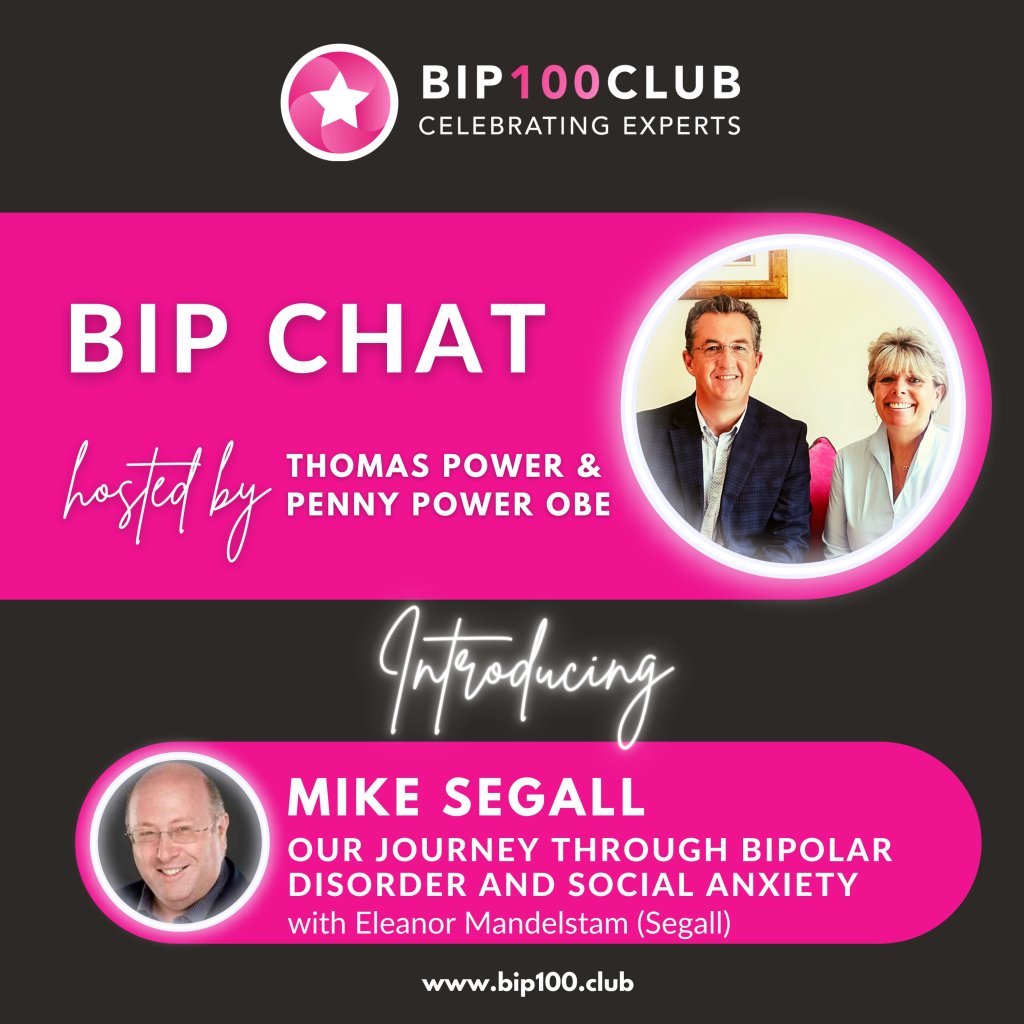
Yesterday, 9th Feb, my dad Mike and I were honoured to be interviewed by his friends of many years, Penny Power OBE and Thomas Power of Business is Personal- live on Linkedin, Youtube and Facebook.
They asked us to come on their weekly show to talk about our hereditary journey with bipolar disorder and anxiety and shed light on all things mental health.
It was a real pleasure to talk all about our lives and how my Dad was diagnosed with bipolar just 4 years before me. Trigger warning: discusses suicidal ideation and psychosis.











 beurownlight.com