My dad Mike and I have been fundraising in the past day for a cause which is close to our heart. Jami mental health charity serves our community, the Jewish community here in the UK and beyond.
We have been asking people to donate to Jami’s match funded campaign to raise £1 million to support existing services and also to pilot a new service for secondary school age children. Referrals during the pandemic have risen and mental health support is much needed for under 18’s too.
We are fundraising because we ourselves have been affected by mental health (bipolar disorder) in our family. I was diagnosed at just 16 and had good NHS care in hospital but at the time, there was little support in the Jewish community available for me as a child. Mike was diagnosed at 44, a few years before me, and was thankfully helped to recovery.
We are both great supporters of Jami’s work (I am a Jami volunteer and we have both spoken at the mental health shabbat) and we believe this service will be vital for caring for secondary school children. Services are stretched and children are put on long waiting lists.. this is where Jami would come in to support a child and their family.
Today,, the campaign hit over its £1 million pound target and it is just incredible to see our community funding (badly needed) mental health support ! Its been wonderful to play a small part in this campaign- we have hit over £2000 of funding on our page!
This is so very close to our hearts due to our experiences and those in our community who are struggling. We want to raise as much as we can to support this service- every pound you donate will be doubled so please give as generously as you can. Thank you so much!
Being an adult is exhausting. We’re expected to work, build a career, keep a house, feed ourselves, socialize…the list goes on and on. When you have kids, that list doesn’t get any shorter — instead, it expands to include keeping small humans alive, healthy, entertained and happy. Becoming a mom is supposed to be one of the most magical parts of your life, but what they don’t tell you is that it can also be the hardest. Mom life is hard. There’s no point in sugar-coating it.
When that massive list of things that you’re expected to do becomes overwhelming, here are some simple depression meals that can help you eat healthily and keep everyone fed without putting in too much effort or relying on takeout.
Nutrients That Impact Depression Symptoms
Depression is one of those things that we tend to only talk about in reference to other people, but it’s more common than you might think. According to the World Health Organization (WHO). around 5% of the global population suffers from depression or around 280 million people. There are a lot of different ways to manage your depression symptoms, all of which should be overseen by a medical professional, but there are some small changes that you can make at home that might have a positive impact. This includes changing the foods that you eat.
Amino acids like tryptophan (found in turkey and chocolate)
Omega-3 Fatty Acids (found in oily fish)
Selenium
Iron
Iodine
Switching your diet around to ensure that you’re including these nutrients can help make the job of managing your depression symptoms a little easier. Here are some of my favourite depression meals for those nights when nothing else seems to be helping but you’ve still got a house of little humans to feed.
Charcuterie
If you were a kid in the 90s, you probably grew up having Lunchables for lunch during the week. They were quick, easy and had most of the nutrients a growing kid might need to get through the day — if you were content to subsist on crackers, deli meat and sometimes cheese. Okay, so they weren’t the healthiest option, but if you make them fancy, put them on a plank of wood and call them charcuterie, they’re one of my favourite depression meals.
The nice thing about charcuterie is that there is no wrong way to do it. Pick your favourite meats, crackers, dips, fruits and veggies, and arrange them on a plate or tray. Then pick and choose what you want to eat. It’s simple, it’s fun, and it’s a great way to make sure that everyone is getting fed when all you have the energy to do is assemble things on a plate.
Fish
Fish might seem like a lot of hassle, but it doesn’t have to be. It’s also a great option for depression meals because it tends to be high in magnesium which is another nutrient that can help with managing depression symptoms.
This simple sheet pan haddock bake is a great way to get your nutrients without making a big mess in the kitchen. It’s 5 ingredients — haddock, crackers, butter, garlic salt and lemon — and five steps — and one of those steps is preheating the oven and I’m not even sure that counts. If you’re not a fan of haddock, swap it out for your favourite fish.
Stir Fry
Stir fry is easily one of my favorite meals. It’s easy, it’s cheap, it’s fast, and you can make it with whatever you have in the kitchen. Start by picking your protein. Then, pick your stir fry veggies — these can be fresh, canned or frozen. Fry them up in the oil of your choice, top with your sauce, and serve over rice.
The key to a good stir fry, regardless of your chosen ingredients, is the sauce. My go-to stir fry sauce only requires a handful of ingredients, most of which you probably already have in your kitchen.:
½ cup soy sauce
½ cup chicken broth
1-2 tablespoons of cornstarch
1 tablespoon minced garlic
1 tablespoon minced ginger
1 tablespoon brown sugar
1 tablespoon olive oil
1 teaspoon rice vinegar.
Mix and pour, and you’ve got the tastiest stir fry sauce this side of your favourite Chinese restaurant.
Peanut Butter & Jelly(Jam)
It sounds basic, but that’s because it is. Peanut butter — and other nut butters, if you have a peanut allergy in the house — are full of healthy proteins and other nutrients that will help you feel full longer. Pair it with some natural fruit preserves and your favourite whole wheat or multigrain bread and you’ve got a halfway healthy meal that takes almost no time or effort to prepare.
You can always spice up your PB&J if you have more spoons. If you’ve got more of a sweet tooth you can add sliced bananas, honey, or even marshmallow fluff. The possibilities are endless.
Be Kind To Yourself
As long as you’re eating, it doesn’t really matter what you eat for dinner — but making healthier choices can help to make you feel better in the long run. Try a couple of my favourite depression meals and see if they make it into your regular meal schedule.
Above all else, be kind to yourself.
This article was written by Kara Reynolds, editor at Momish.
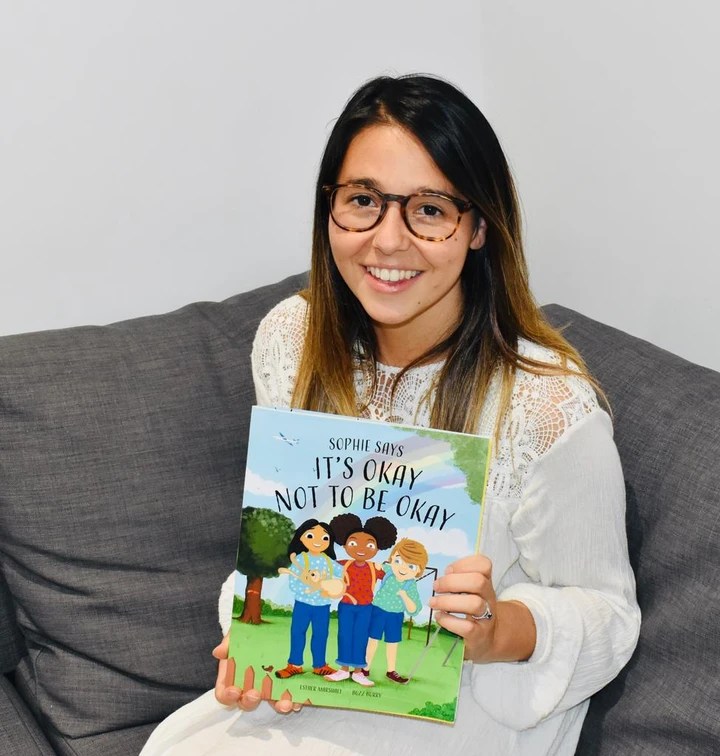
I am absolutely delighted to read and review this incredible childrens book from the Sophie Says series by author and award winning campaigner Esther Marshall (with illustrator Buzz Burry).
Esther’s story is close to my heart as not only is she from my own community but her late sister Rebecca z’l was a doctor who had bipolar disorder and sadly passed away a few years ago, while Esther was writing her second book. Esther has shared that it was her sister who encouraged and inspired her idea to write the childrens books that she couldn’t see for her own child (in terms of positive messages, inspiring rolemodels and diverse characters in terms of both race and gender). Through her sister’s struggles, Esther also began to include positive mental health messages on talking and sharing emotions, self belief and self esteem too.
Esther has said,
“I knew from the second my son was born I wanted to teach him that girls were just as strong and powerful as boys, that people from different backgrounds to him could teach him things and he should listen and be kind to everyone. The problem was, all the books I could find to read to him had:
Mostly male characters (even the animals)
Little to no diversity or representation
No female role models he could look up to
So I decided that if I couldn’t find the book I wanted to read to my son, I’d better write my own.
I want all children to know and believe that they can achieve their dreams regardless of gender, race, religion or class”,
Esther at Sophie Says has not only thought about what stories she wants to tell through the books, but what messages children reading them will take and absorb. She has partnered with illustrator Buzz Burry and comments, ‘we are helping children bypass harmful stereotypes before they set in by changing the face of children’s literature. Our mission is to enable all children to grow up feeling equipped and empowered to face their futures. To learn more about themselves, others and the world around them. We are helping parents to teach their children positive messages and providing a toolkit to navigate some of the trickier conversations.‘
Esther very kindly gifted me copies of her first two books- Sophie Says I Can I will– which is about a little girl Sophie with big dreams and no limits. and Sophie Says It’s Okay Not To Be Okay which focuses on Sophie, Jordyn and Jamie on their journey as they learn that it’s okay to talk about their feelings and it’s okay not to be okay. The books are for children in the early years, ages 3-7 years and reading the books with either parents, carers or teachers is recommended. Esther told me she has ‘tried to create books which cater to both home and school so that it can be embedded in both parts of a child’s life and become the foundation of them building resilience at an early age.’
Sophie Says It’s Okay not to be Okay is a very special book- and one of the first I have seen to address children’s mental health in an age appropriate way, to teach children about their emotions and that it’s OK to feel sad, scared or worried. The book follows Jamie who is looking down and feeling sad but whose best friends Sophie and Jordyn help him through and Sophie tells him ‘its okay not to be okay’. They take him to the zoo to help him feel better and speak to Sophie’s older sister Meghan who is wise and will give good advice. Esther named the character after Meghan, Duchess of Sussex who she met with Prince Harry and other young leaders and was inspired by (she gave them a copy of the book too!)
Meghan (the character) says this important message,
”It’s okay to be sad and okay to feel down. Just make sure you have good friends around. There may be days when you feel you’re alone but around us, you’ll always be at home. Its Okay not to be okay”
The book also reinforces self belief and esteem , reiterating that ‘YOU are enough!’ and encourages children to talk about their feelings because it can help. Jamie then says he will speak about his feelings in a place he feels safe in the zoo,
‘I don’t really know how to describe how I feel As I can’t work out what’s in my head and what’s real.
He said ‘ a smile may be what you see, but that’s not what I feel inside me
There are times I feel quite alone because these feelings are unknown
Some days I’m happy and some days I’m sad and other days I just feel so bad’
(image: Esther Marshall/Buzz Burry/Sophie Says)
His friends then show him support and love, take him to the funfair, all while reinforcing positive kindness and support- ‘Yes we can!” . The book talks positively about the kindness of friendships always being a safe space to talk. This is so important for children particularly in the early years who are learning to understand their feelings.
Esthers writing is beautiful- on one of the last pages of the book she says ‘Whatever you do, be kind, you never know what’s going on in someone’s mind’.
The book was informed by her sister Rebecca’s struggle with mental illness (bipolar disorder). Esther has said, ‘I had always planned to write another book all around mental health to help children understand their feelings and talk about them more openly, and I sadly lost my sister, Rebecca, to mental illness as I was writing it. So the second book Sophie Says It’s Okay not to be Okay is dedicated to her memory’.
Esther wanted to amplify the message and so it was released on World Mental Health Day. The book provides a toolkit for parents who want to help their children to express their own emotions.
She has been visiting schools and doing zoom readings of her book to share the messages for her. Esther told me, I would love that as a result of children reading the Sophie Says books that children understand these vitally important lessons through a fun way of learning and it helps them build resilience and confidence to go out and achieve their full potential whilst being able to understand and manage both their physical and mental health. .’.
Esther is a true force of nature and someone who inspires me so much. She has just released a third book in the series Sophie Says Be Proud of Who You Are which is about Sophie and the rest of the Sophie Says crew on their exciting seaside adventure as they help their friend Priya build her confidence, as they guide her through believing in herself and being proud of who she is. The perfect book to help your child build their confidence and self esteem!
I would recommend the Sophie Says books to all parents, teachers and carers of young children. I can’t wait to see how this brand grows and what Esther achieves (she has achieved so much already!). She should be rightly proud of her work and all she has created.
To learn more about Sophie Says and buy the books click here
Hi, I’m the founder of Sophie Says and the author of the books within the series. The idea for the first book (Sophie Says I Can, I Will) came to me after having my son, Asher (who is the first and most important reader of all the books!).
I knew I wanted him to grow up understanding that both girls and boys could achieve anything that they set their minds to, but I couldn’t find any books that featured a female lead character (a human one, not an animal one!) that really represented the message I wanted to teach him. So I thought, if I can’t find the story I want to tell, I’d better write it myself.
I was gifted two books in exchange for an honest review. Any links are unpaid. These books are incredible.
Providing support to anyone with a mental health issue is challenging, to say the least. But when that person is your spouse, the situation is even more complicated. At worst, it’s confusing and overwhelming. At best, you might be walking on eggshells. However, being there for your partner during this difficult time will ultimately bring you closer together.
Here are a few ways to support your spouse so you both can emerge from this stronger than you were before.
1. Help Them Help Themselves
In the United States, nearly half of those with clinical-level mental health issues don’t seek help. Instead, they try to handle their illness on their own or simply give up hope, both of which can quickly send them into a downward spiral.
Therefore, if you notice potential symptoms of a mental illness in your spouse, it’s important to encourage them to seek help. Work together to find a therapist, counsellor or physician (doctor) who can provide medical advice or guidance.
2. Understand the Diagnosis
Once they see a professional and receive a diagnosis, read up on their condition. Maybe you’ve noticed some of the accompanying symptoms but failed to attribute them to their mental illness. Now that you’re more aware, you can stay calm and avoid feeling triggered or attacked when these symptoms show up in everyday life.
On the other hand, if your partner hasn’t visibly shown signs of depression, anxiety or other issues, you might have been unaware of their suffering. Understanding their diagnosis will help you notice symptoms in the future so they don’t have to go it alone any longer.
3. Implement Support Tactics
Now that you know what to look for, you might notice more mental health flare-ups, so what should you do when things start going south? Implement support tactics specific to their condition.
For instance, if your spouse is dealing with depression, you might notice they’ve neglected to wash the dishes or do the laundry. In this situation, consider offering to complete these chores yourself or suggest doing them together.
4. Be a Good Listener
Sometimes, your loved one will want to talk about their experiences or past trauma that may have prompted their mental illness. When they express interest in discussing things, create a safe space for them by being a good listener.
Pay attention to every detail in an effort to better understand their perceptions and beliefs. Let them talk it out without worrying about how to respond. Then, when you do react, try to do so not from a place of judgment, but of empathy and compassion. Validate their feelings to help them accept their emotions and move on.
5. Be Patient
It may be difficult to hear, but certain mental illnesses can ebb and flow for years without reaching a resolution. There’s no magic timeframe for recovery.. Therefore, it’s best to let go of idealised timetables and take things day by day.
This is when love becomes a choice and your commitment to one another carries you through — for better or worse. Instead of running away, resolve to stay steadfast and patient. Instead of holding their illness against them and growing bitter, choose to see it as yet another challenge you can overcome together. No matter how long it takes, you’ll be there to give them support, encouragement and affection.
6. Practice Self Care
If you’ve ever been on an aeroplane, you know the flight attendant recommends putting on your own oxygen mask before helping others. After all, you can’t assist others if you don’t take care of yourself first. The same is true in your marriage — and every other relationship, for that matter. Therefore, it’s incredibly important that you practice self care and take care of your own mental health before trying to help your spouse with their issues.
Take time to be alone each day. Revisit an old hobby or pick up a new one like knitting or journaling. Mind-body exercises and autoregulation techniques can also relieve stress and help you tune into sensations you wouldn’t have otherwise noticed. Engaging in these activities will help you stay healthy and better support your spouse during this difficult time.
7. Keep the Love Alive
Mental health issues and the symptoms that accompany them can become all-consuming. However, it’s important to focus on your relationship apart from this conflict to keep your bond strong and the love alive.
Spend quality time together, go on dates and continue to communicate openly. Do things that bring you both joy and focus on enjoying each other’s company. Doing so will remind you why you fell in love in the first place and give you more reason to fight for your spouse’s mental health and your relationship as a whole.
Communication Is Key
After some time, you and your spouse may begin to resent the patient-caretake dynamic. When these sentiments arise, communication is key. Talking about your feelings will help you understand one another better and may put you on a level playing field again. Once you realise that it’s you two against the world — and not against each other — you can take on mental illness together and emerge on the other side stronger than ever.
This article was written by freelance writer Kara Reynolds, Editor in Chief at Momish.
If you have a loved one struggling with addiction, you know how it can be an arduous task to get them on the right path. It is imperative to try as best as you can to get your loved one or a friend out of the dark path. It takes commitment, endless struggles, and unconditional love to help a loved one out of their drug usage habit. However, it is imperative to know your approach and approach them with care and kindness. Show that you want to help, and don’t be judgmental. Your loved ones could count on your support during this difficult moment. There will always be obstacles that you can overcome together. You can use these few tips to help your loved one recover from addiction.
Expect Challenges
Helping a loved one struggling with addiction can be pretty hard. It can be tough if they are not ready to open up or seek help. Convincing them that they have a problem and should seek help should be a challenge to expect. They may also feel embarrassed discussing their problem and fear negative judgment. Your loved one may lack the will to change or do something about their drug usage. They may also have an underlying issue forcing them to seek salvation in drugs. Your loved one may also have a problem talking to a specialist or a counsellor about their drug problem. Be ready to face such challenges to determine your approach to help the recovering addict to seek help.
Know Your Approach
Your loved one is also human, and drug addiction shouldn’t change your feelings towards them. Please don’t treat them cruelly due to their addiction. It is imperative to note that drug usage is a habit that is an illness, and they need your help. . Approach them with care and keep their best interests at heart. Show them that you’re all about helping them, and drug rehab is not a bad idea for helping them get back on track.
Offer Support and Encouragement
Try and reason with your loved one in a calm and friendly manner. Show that they can count on you and that you care about them. You can only help a recovering addict through immense support and personal intervention. Encourage them to seek help and attend sobriety meetings. Ensure your presence throughout their journey as you handle the setbacks and challenges together, if they would like this.
Don’t give up even when the journey becomes difficult. Stay strong even when your loved one gives you enough reasons to quit or lose hope. Your efforts count in helping them cope with addiction and attempting to pave a successful path to recovery.
Many of you know that I support a charity very close to my heart- Christmas For CAMHS. I volunteered with social media and raising awareness. A few years ago, it got charity status and this is so exciting but it still needs your help and donations, so read on as to why its so important to me and those children in hospital!
In 2004, when I was just 16, i was admitted to an NHS CAMHS (children and adolescent mental health unit) at the Priory Hospital North London for depression and psychosis- part of my bipolar disorder on Christmas Eve. Even though I am Jewish, I remember opening a wrapped present (can’t remember what it was) that the staff had organised for us out of their budget. The other patients also left me notes and cards. But the truth is there was no charity giving us presents and we were away from our families, all very ill- so the staff just did the very best they could under the circumstances.
Then, in 2018, I heard about a charitable enterprise set up by a lovely doctor and trainee child psychiatrist called Ro who wanted to do something about the lack of equality children in mental health units had. She and her volunteers were sending presents to children on CAMHS wards across the UK and asking for donations.
Christmas For CAMHS is a registered charity who provides special Christmas gifts every year for children and young people who are inpatients in child and adolescent mental health (CAMHS) wards across the UK over the Christmas holiday period.
They want to make children and young people who are inpatients over the festive season feel thought-about, special and included – our individual gifts for each young person to keep, as well as gifts for their ward, help us to do this.
They have been hugely supported over the past few years by generous donations from the public and have received much gratitude as a result from inpatient units. However, they are only able to provide gifts with your charitable donations.
To find out how you can donate money or gifts please visit their donations page to see the Justgiving page and Amazon gift list.
They say:
Christmas For CAMHS was originally set up because volunteers saw a huge disparity in the way CAMHS units were treated over the festive period compared to other NHS services for children and young people. They wanted to do something to change that.
Children are admitted to CAMHS units to receive support and treatment for mental health issues, such as psychosis or depression or eating disorders like anorexia. There are no official figures for how many children will spend the festive season in CAMHS units across the UK, though we often give gifts to over 1500 young people. While many members of the public and corporate donors give Christmas gifts to children’s hospitals or children’s wards in general hospitals, CAMHS units, which are usually based away from other services, are often forgotten, or not known about. We don’t think this is right.
Every year they talk to every CAMHS unit in the UK to see what gifts their young people would like. Then, with your generous donations, they buy beautiful and thoughtful gifts for young people in almost every unit across the country.
We also include, where possible, some small fidget toys, a gift for the ward like a board game or sports equipment, some activities to do during the festive period and extra gifts for particularly vulnerable young people who are looked after children or who have a refugee background. We also send them an advent calendar full of inspiring quotes and pictures of cute pets. Sometimes we’re able to include a homemade card or two too.
The gifts are assembled at a packing weekend in Bath by our volunteer elves and then whizzed around the country in plenty of time for Christmas! As a charitable organisation, we rely 100% on fundraising and your generous donations. Each penny goes directly to making the magic happen.
(image: Christmas4CAMHS)
So please, support Christmas For CAMHS- if you can donate a gift or money that would be incredible. As a former child patient, the loneliness you feel is unbearable-lets work together to stop the inequality and forgotten children!
Living with an anxiety disorder can be hard and part of it is insomnia, lack of a good night’s sleep. It can be really debilitating to be up at night, sweating, pumped with adrenaline and feeling awful and then not feel comfortable enough in my bed to drift off to sleep. My anxiety did get worse during the Covid 19 lockdown too due to the uncertainty of the situation and I had been worrying as I had just started a new career, changes can make us more anxious! So that would keep me up at night as well. I found that the more tired I would get, my memory became affected too.
I was so tired and walking around in a bit of a daze, feeling foggy! I needed to rest and recharge. Sleep is so important to all of us, to help us recall memories, refresh and learn new things. Poor quality sleep negatively affects our health and I have learnt how important it is to have back support and neck alignment- to have proper sleep posture and feel well rested.
Then, I found the TEMPUR® Comfort Original pillow (above in my white pillowcase) with memory technology that helped me, amongst other self care, to get a good night sleep. It has special memory foam material by TEMPUR®, who are the original patented memory foam company. The Comfort pillow is a traditionally shaped pillow, with a medium feel and is classic and rectangular shaped. It also has a soft, textured cover! The inside is described as containing thousands of TEMPUR® material micro cushions, to provide plush comfort while maintaining pressure relief.
The memory foam inside was originally developed for NASA astronauts and the pillow (and their mattress material) provides proven pressure relief, to give your body total comfort and support. Incredibly, It also responds to your exact weight, shape and warmth!
(image: Tempur/ Eleanor Segall Mandelstam)
The pillow and mattress reduces tossing and turning and also absorbs motion from your partner ,if you have one, so you don’t disturb each other. It helps you sleep better, longer and deeper- so that you feel rejuvenated and restored!
I began trialling this new pillow and the more I use my Comfort original pillow, the more I really love it and it helps me to drift off more comfortably these days too. Its so soft and I feel less anxious and more cocooned in bed, ready to take on the next day! My neck and back feel supported and my mental health and memory have improved too – sleep is so vital to good health.
I felt that the pillow moulded to my body shape well too. At the end of a working day, I often get stiffness in my back and neck, and this definitely relieved that pressure as I got some shut eye under the duvet. I know that as we now move forward from the Covid lockdown, that I will continue to have less stressed nights and a good nights sleep.
This sponsored post (paid partnership) is in conjunction with TEMPUR® but all thoughts are my own. I received a gifted pillow and trialled it for review.
I have spent a number of months avoiding and not taking action on one of the main issues that has. been happening in my life.
As you know, I have spent many years living in the shadow of having bipolar disorder and panic disorder (social anxiety and panic attacks) and possibly also PTSD symptoms from my last hospitalisation.. that I didn’t realise that my panic disorder is essentially agoraphobia too. (Oh got to love my overly anxious nervous system and imagination that creates panic!),.
Agoraphobia is a type of anxiety disorder in which you fear and avoid places or situations that might cause you to panic and make you feel trapped, helpless or embarrassed. You fear an actual or anticipated situation, such as using public transportation, being in open or enclosed spaces, standing in line, or being in a crowd.
For me, this means that I can struggle to leave home alone at times, socialise, go out on public transport, go out to eat, go into a shop, travel anywhere alone including walking and that I panic and avoid and retreat from situations.. When I am going through a period of low mood, the agoraphobia/panic disorder can worsen.
I am managing my panic attacks through therapy and speaking to my therapist works. However, being indoors all the time through Covid and changing my working patterns to working from home meant that my agoraphobia got heightened. I didn’t want to be around crowds because I could get Covid. I didn’t want to go on public transport in a mask- because I might get Covid. I didn’;t go in a shop because people were there- but once vaccinated, this hasn’t changed. Really this was masking deeper anxiety and fear of the world in general- feeling uncertain after a job loss and starting a new career and feeling intensely self conscious too about weight gain on my medication.
Today on facebook, I had a memory from 12 years ago (when I was 21) which informed me that I had been on a night out at Ministry of Sound nightclub in London for a gig and I was also coordinating London Booze for Jews ( a Jewish student bar crawl) – despite the fact I didn’t drink. I have always been social but nights out in bars and clubs are just not my thing these days at the grand old age of 33 (grandma alert).
I know my panic is not the whole of me. In the past I have completed a degree and masters at drama school, travelled to India, Israel, places all over Europe and volunteered in Ghana for 7 weeks. Despite my anxiety, I run two small businesses, have managed to release a book, written for well known publications and achieved many of my dreams. I also met my wonderful husband and am not only proud to be a wife, but an auntie (and hopefully one day a mother too).
I am still Ellie and still the person I was inside before trauma hit.
Despite all of the amazing things above, I have been struggling with getting out of my 4 walls. So this is a diary entry to say: I will get better and get out the flat more. I will try and expose myself to feared situations. Above all, I will be kind to myself and take slow steady steps. I will lose the weight too!
All friends/fam are welcome to try and coax me out and help too!
According to research from mental health charity MIND, 1 in 6 adults suffer from depression or anxiety in any given week in England¹.
The prevalence of mental health conditions in the UK is on the increase, not helped by the physiological and financial pressures caused by the COVID-19 pandemic. Fortunately, this also means awareness is growing.
When it comes to life insurance, insurers now better understand the need to provide financial protection for those with less than perfect mental health.
If you need to arrange life insurance to protect your loved ones’, but you suffer from depression or anxiety, you may wonder how this will affect your application.
If so, continue reading as UK life insurance broker Reassured explain all in this 2021 guide…
What is life insurance?
Life insurance is simply an insurance policy that pays out a cash lump sum to your family should you pass away whilst the cover is in place.
The proceeds can be used to cover mortgage/rental payments, provide an inheritance, as well as meet family living costs. If you have dependents who rely on your income, then life insurance ensures that they would be financially secure if you were not around to provide.
You pay a monthly fee, known as the premium, in order to benefit from the cover protection. Premiums start from approximately 20p a day for £200,000 of cover (or sum assured).
Can depression or anxiety affect your life insurance application?
Yes, if you have been diagnosed with depression or anxiety then this can affect your life insurance application. But do not worry, this does not mean you cannot secure cover or that you will definitely pay a higher premium.
The challenge is that you may need to answer some questions about your condition before your application is accepted. Your responses to these questions will help the insurer better understand your individual circumstances and provide you with a suitable quote.
If the insurer thinks you are more likely to make a claim on your policy due to your depression or anxiety, then they may increase the cost of your monthly premium to mitigate this perceived risk.
Questions you may be asked include:
When were you diagnosed?
What treatment are you receiving?
What are the severity and frequency of your symptoms?
Have there been any instances of self-harm, attempted suicide or hospitalisation?
The only exception to this is over 50s plans. If you are aged 50-85 you can take out an over 50s plan; these policies guarantee acceptance and do not ask any medical questions during the application.
However, whereas standard cover (such as level term and decreasing term) can pay out up to £1,000,000, an over 50s plans maximum is £25,000. As a result they are commonly used to cover rising funeral costs and/or provide an inheritance (not cover larger debts such as a mortgage).
Does depression or anxiety affect the cover itself?
No, if you have been diagnosed with having depression or anxiety before taking out a life insurance policy, then this will not affect the cover itself.
Your policy will be the same as for anyone else who takes out the policy – the only difference being that you may pay a loading on your premium due to your condition.
What will stop me from getting life insurance?
It is very unlikely that you will be declined life insurance due to depression or anxiety alone.
When sourcing quotes, you will also need to provide the insurers with other information about yourself such as your age, health, weight and smoking status.
These factors are more likely to impact your life insurance options than your mental health condition. Nonetheless, you may be declined life insurance if your depression or anxiety is deemed too high risk. For example, your diagnosis is recent or you’ve self harmed/been suicidal on more than one occasion.
As someone with depression or anxiety, you may struggle with the process of applying for life insurance and therefore, put off getting a quote. This is understandable as you will need to discuss the details of your condition with a person you do not know.
However, it is important to understand that insurers are very familiar with assessing applications for people with a mental health condition.
Once your life insurance is in place, you can have peace of mind that your family are financially protected if you are no longer around to provide.
How to get the cheapest premiums
If you suffer from a mental health condition such as depression or anxiety, it is really important to compare multiple quotes before securing cover.
Every insurer will assess your application differently and therefore premiums will vary in cost, so shopping around will ensure you can get the best available price.
You can do the research yourself, use a comparison website or enlist the help of a specialist FCA-regulated broker.
Whichever method you choose to compare quotes, rest assured the vast majority of those suffering from a mental health condition can in fact secure affordable life insurance.
In fact, the most influential factor affecting the price of premiums is likely to be your age – so why not seize the day and secure your loved ones financial future?
I think we can all agree that the last couple of years were never in our plan. Whether we were at the best or the worst place in our lives by the end of 2019, a wide-spread virus and quarantine put just about everything on hold. Jobs, businesses, and routines all over the world were brought to a sudden halt—and one that has lasted for nearly two years. However, while many of our practical, everyday needs were unable to be met, this two-year pause did help to shine a light on our society’s immediate need for mental health resources.
Whether you were facing pandemic-induced anxiety or depression, or you were fighting an old battle with any existing diagnoses, many of us had no choice but to ask for help. Luckily, with some time surrounded by loved ones and away from our busy lives we were able to truly care for our health. But now that we are finally seeing the light at the end of the tunnel, the question is, ‘how do we maintain our mental health post-pandemic?’ Well, here are some tips to help you do just that.
Normalise Your Needs
One of the biggest stigmas we often face when battling with mental health is the misconception that asking for help is considered weak. When in fact, that couldn’t be farther from the truth. Whether your struggle requires therapy, emotional support, or prescription medicine, asking for help and tending to your needs are the strongest things you could ever do for yourself. Specifically after the pandemic, this is the type of mindset we all need to adopt. By normalizing our natural, human need for assistance in times of need we can slowly eliminate this stigma, not only within ourselves but within our society as well.
We can see how normalising our needs can even impact companies like Gopuff, who recently piloted prescription-based services in Philadelphia to support its consumers’ health throughout the pandemic. Similarly, BetterHelp, an online therapy service has created some buzz during the pandemic because of its on-the-go accessibility that has normalised therapy and integrated it into our daily lives.
Stay Connected
Along the same lines as asking for help, we need to make the point of staying connected post-pandemic as well. Many of our mental illnesses thrive in isolation; making it so important to establish a healthy lifestyle and surround yourself with a support system.
Not only will a support system help you appreciate the good times, but they can also hold you accountable when you are struggling. And I know what you’re thinking but accountability is actually not as scary as it sounds. It is simply allowing your loved ones to call you out when you are living a life that is less than what you deserve. Luckily, when the accountability is coming from someone you trust, it can be the driving force that makes you want to be better mentally and emotionally and maintain your health for the long haul.
Find Your Passion
Oftentimes we hear that distraction is the best way to keep your mind off of the negatives in life. However, distraction is temporary and will only promote diversion, not growth. Passion however, will encourage you to go after the best things and life and in return, will promote mental wellness stability as well.
A passion is whatever you deem it to be. It can be as simple as a love for reading or even a full-time job in teaching. In any case, it can allow you to step outside of your struggles and feel your impact on the world. Passions are also much more sustainable than distraction because they are not rooted in a temporary escape but instead, they are based in a love for a particular thing or idea. Exploring your passions can provide you with a sustaining peace that can get you through whatever feelings of uncertainty may arise after the pandemic.
Take a Break
Lastly, don’t forget to take a breather! Given the lax lifestyle that the pandemic brought on, many of us may rush back into the busy and overwhelming lives we once lived. However, we often underestimate the power of mental and emotional strain. We think that since we’ve had so much downtime these last couple of years, we no longer need a break. However, whether you are working a job or working on yourself, your mind is constantly going and is still in need of a break. Taking care of yourself is not selfish, so if you can find some time to go for a walk in nature, visit a spa for a relaxing massage/facial (you can search online for ones in your location, just look up phrases such as facial near me in Peoria, AZ for assistance), or even just spend some time with a dear and trusted friend, you can give yourself that well deserved break that all of us need from time to time to help us get through the days.
Pandemic or not, don’t forget to prioritize yourself. Meet your own needs, stay connected with those you love, explore your passions, and as always, take a break and you’ll be sure to find some stability in your life.









 beurownlight.com