5 Ways Therapy Can Heal your Family: Guest blog by Samantha Higgins

5 Ways Therapy Can Heal Your Family (1)

Therapy can be very helpful for families, and your family could benefit from therapy, too. Professional counselling is a proven method to help with all kinds of issues impacting families, and any issues plaguing your family could also be addressed.

To help you pinpoint just how therapy could help your family, you should look into the various situations where therapy might be useful. In particular, you should consider these five ways therapy can heal your family.

1. When Having Marital Issues

You can get assistance with all types of marriage issues when you get help from a therapist. If you have entered a new marriage, you can learn how to adjust to the roles that come along with that. If your marriage is on the rocks, you can get assistance, too.

If cheating has become an issue and you need an infidelity therapist, professional help is without a doubt a good idea. Therapy can help you deal with all of the emotions, assist you with any grieving, and provide guidance on how to move forward.

2. Dealing with the Loss of Loved Ones

The loss of loved ones can impact your family to the point where professional help is needed. If your family has lost someone, you can have short-term effects and long-term effects. When your family loses a loved one, you always run the risk of issues developing further. This is especially the case if it was your family member who died.

You will not be the only one to benefit from help. Children can learn to grieve and deal with the new family structure. Parents can learn how to better take on leading a home by themselves, and other family members can sound off and get feedback, too. Often a loss of a loved one requires people to take on new roles and responsibilities. Therapy can help your family if dealing with those situations.

3. Help with Children with Behavioural difficulties

If you have a child or children that are struggling with poor behaviour, you should consider therapy. Not only can bad behaviors be stopped and corrected, but they can also be prevented from impacting your family in the future.

Your children will be assessed by a therapist and reasons for their behaviour can be identified. Then, your family can heal. You all will be able to prevent more poor decisions from taking place, and you will have all kinds of resources to make sure this happens.

4. New Family Dynamics

If you have introduced a new dynamic to your family eg a blended or step family or new sibling or spouse, you might need some professional help. Failure to make sure there is a smooth transition could have horrible consequences for you. You run the risk of family members feeling lost in the new dynamic. 

Whether you have a new spouse or a new child, these changes could cause issues for your family. Seek out professional services through therapy to mitigate issues from harming those you love. Your family can morph into the new family you know it is capable of becoming. You all deserve this.

5. Substance Abuse and Mental Health

Substance abuse and mental health are issues that definitely warrant therapy at times. Both of these issues can ruin your family’s well-being. If you are dealing with substance abuse or mental health matters impacting your family, you do have options for help. Therapy will help you unlock those options.

Did you know that around 20 million Americans deal with addiction issues? And did you know that almost 44 million Americans deal with mental health issues? If you and your family are dealing with either or both of these problems, you are not alone whether you live in the USA or not. You should consider turning to therapy to help your family overcome these issues.

Your Family Can Indeed Heal

If any of the five issues above touch close to home for you, you have a way out. You do not have to let these issues tear apart your family that you love. Your family does not have to hurt so much anymore.

Each of the aforementioned five areas can be assessed, addressed, and improved when problems are there for your family. There is hope for your family with therapy, and your family absolutely can heal.


This blog was written by freelance writer Samantha Higgins.


How to deal with a Breakup when you have OCD: Guest blog by Brooke Chaplan

iamenoughnew

(Image: )

Your OCD symptoms may be triggered by situations that feel out of your control, and breakups can easily throw your life into a tailspin. On top of dealing with the hurt that comes with ending a relationship, you may also be dealing with serious anxiety about what your future holds. This is especially true if you find yourself blaming yourself for your flaws and inadequacies and holding yourself solely responsible for the breakup. These tips will help you begin to heal by dealing with your breakup in healthy ways that allow you to see this as an opportunity for growth.

Stick to Your Wellness Plan

The first thing that you need to do is practice self-care. Although your heart may be too broken to want to get out of bed, it is important to follow your normal daily routine. Exercise helps to release endorphins that make your symptoms more manageable. Eating a healthy diet also helps to reduce the symptoms of anxiety and OCD. Following your wellness plan sends signals to your brain that you will overcome this temporary life event. It’s important to know that while exercise and self-care will not cure either your mental illness or your broken heart, it will strengthen your body and give you the tools you need to handle the strain.

Seek Advice About the Future

When you have OCD, the realization that you have no idea of what will happen next can make your symptoms worse. Seeking relationship advice that addresses your current circumstances along with how they influence your future gives you a sense of control. Talk to a therapist, counselor, spiritual guide, religious leader, or family member. This advice can then be used to begin putting together a new life plan that helps you feel confident and mentally strong.

Find Healthy Distractions

Once you know that the future is bright, you can begin finding ways to overcome your pain in the present moment. Explore new hobbies and set goals that help you build for your better future while also avoiding the tendency to obsess over the past. Try taking a class or doing an activity that you’ve always wanted to explore. You’ll feel stronger and more excited about what the future has in store.

Take Note of Your Progress

During your breakup, you can expect to experience some high and low moments. When you feel down, try to recognize how much progress you’ve made. For instance, you might have made a new friend who helps you get through this rough patch. You might have managed to avoid checking your ex’s social media pages. These little signs of progress mean that you are moving forward, and recognizing them helps you see that the breakup truly is a chance to grow. Remember to not beat yourself up over slipping up. It is likely that an emotional moment like this could bring up past compulsions and obsessions you thought you had gotten over. This does not mean you have failed or somehow destroyed your past progress, because progress is not linear.

Your relationship might be over, but you can use this moment as an opportunity for personal growth. When you feel like your OCD symptoms are taking over, reach out to people who care. Soon, you’ll have this whole painful event behind you and be looking at the future with a positive perspective.

If you need further support, speak to your therapist doctor or psychiatrist.


Brooke Chaplan is a freelance writer and blogger. She lives and works out of her home in Los Lunas, New Mexico. She loves the outdoors and spends most of her time hiking, biking, and gardening. For more information, contact Brooke via Facebook at facebook.com/brooke.chaplan or Twitter @BrookeChaplan

Looking to the Future and Life Dreams: by Eleanor


Dream big lettering on watercolored background

(image: 123RF.com)

Hi friends,

It has been a while since I have written a personal blog as there has been so much going on here that I was just focusing on getting through it all. Robs dad had surgery to remove a second brain tumour and is thankfully recovering well, the surgeon amazingly got all the cancer. Success.

Alongside this, I have been in therapy since November with a wonderful therapist and we are doing EMDR (Eye Movement Desensitisation and Reprocessing therapy). This therapy helps to process trauma that can get ‘stuck’ in the brain if not processed. That trauma can stem from childhood upwards- I was an anxious child from an early age even though I had a good childhood! I have also been through a lot due to my bipolar episodes and hospitalisations. So, I am working with my therapist to process memories and we are doing it slowly.

My therapist will either ‘tap’ on the side of my legs while I recall the memory to help process it or my eyes will follow a light or her finger as we process. Understandably, there has to be a lot of trust in this type of relationship as well as me being protected and not triggered by the therapy. For this, we have developed a ‘safe place’ memory that I go to when we bring up anything too distressing. We have just started to go deeper with this and I will update you with our progress. I am far less anxious than I was and it has been really helpful to build a positive, working relationship with my therapist.

The reason I started therapy was because I was having intense panic attacks and finding it difficult to manage my life due to it. I hope that by working on these triggers that I can react differently and live a healthier and better life. Stay tuned!

A month or so ago, I also went to see my psychiatrist for the first time in 2 years, mainly as I had worries about my weight and physical health. My medications means I have put on a substantial amount of weight and this is worrying me health wise more than anything. I have been advised to diet and exercise and maybe work with a nutritionist. So, this will also be a new journey and I will try my best with this, not easy as the meds may stop me losing weight due to slowing metabolism or encouraging cravings. We considered reducing my Quetaipine, a mood stabiliser and anti psychotic to help but because I have been more mentally stable, I have decided to keep it at the same dose for now.

Rob and I have also started to look at new homes, which has been good. There is a lot happening right now and important that I rest, look after myself and keep calm.

Life with bipolar disorder can be uncertain. I have some fears about the future, which I will talk about in another more detailed post. My medicines thankfully keep me mentally well, but coming off them for future life changes eg pregnancy could be a big risk for me and one I am not sure I should take due to being bipolar 1 (risk of mania and psychosis). This is not currently imminent, but is still a future fear, especially as I love children. A decision for a later date.

Overall though I am hopeful and excited about life and will keep you all updated with my therapy and health journey and news.

Thanks for reading and following Be Ur Own Light as we come up to our 4th anniversary,

With love,

Eleanor x


Living with an Eating Disorder: Guest blog by Sofie

successquote

(image: Pinterest)

This is a first person, brave and honest account by Sofie of her feelings about her eating disorder, which are her personal views. Trigger warning: please be careful as this discusses eating disorders and real emotions around them. We promote healing and recovery, where possible. So here’s Sofie….


I miss it every day! My first thought as I wake up in the morning and my last before I drift off for the night. It is a visceral longing. That’s the burden of an eating disorder. It’s an imposter that invites itself into your life and fulfills a need. It seemingly bestows upon you new abilities and strips you of weaknesses. However, with every freedom that it grants, there is a toll to pay.

My story doesn’t begin with a girl unhappy with her body, not many eating disorder stories do. My story starts with a girl lost within her own life. A girl who longed to feel she had a purpose and a direction — a child who yearned to feel an ounce of control. Anorexia gave me that control.

It gave me the power to defy human nature. It gave me a harsh look that proved I was oozing with discipline. Each bone like a spear warding off feelings and disappointments. I was never clueless as to why I starved myself. I never thought I was on a diet gone wrong. I wept many tears over the fact that my death-defying mission for control had made me so susceptible to vanity and left me a slave to the numbers on a scale, but how else was I to measure my discipline?

I miss it every day! I forget the aches, the pains, the fights, the hopelessness. I long for the feeling of achievement and forget the complete and utter sense of THIS IS NOT ENOUGH. STILL, I AM NOT ENOUGH. I long to go back almost every moment. To flee the life I have, to rewind and go back. For me, disappointment is much harder to face without the false comfort of the hunger, without the excuse of the failing body and protective blanket of a hazy mind.

So am I in recovery? I don’t know. I feel a sense of helplessness in my recovery like I have been dragged here by circumstance, and for now, my situation doesn’t sit comfortably with me. However, I know what I have to tell myself when it stings that my body no longer hurts: I can’t be a nice person while starving. I replay in my mind countless occasions where I behaved more like an animal than a human. I so desired to be successful, but I never wished to be a monster.

So, for now, this realisation is the guard I wear against the intrusive longing. It isn’t a bulletproof armour. The thoughts still wound, but for now, I am still standing, and I don’t need to judge the situation further than that.

And so, the greatest gift any therapy has given me is the clarity to place my love of others above my hatred of myself.

I can live a healthier life as a gift to those I love, who don’t deserve to be tortured by my demons. I must try and look after myself for my family and friends.


This blog was written by guest blogger Sofie, to discuss the truth around living with an eating disorder. If you are worried someone you love has an eating disorder, you can contact charities including Beat and speak to a GP or psychiatrist.

How to find a way forward and heal when you have an Eating Disorder: Guest blog by Lizzie Weakley

eating1

(image: Unsplash.com)

Overcoming and managing an eating disorder is often a challenging process. It requires a lot of self-motivation and determination, as well as a healthy and robust support network. However, it will be worth it in the end because you will be able to heal yourself and move forward. Many people may not know where to start when it comes to moving on, but there are many general tips that will apply to most situations. For example, it can be helpful to create new and healthy habits, maintain a positive mindset, and plan for a better future.

Creating New Habits

Many people find it helpful to create new habits after recovering. You should recognise what your triggers are and try to avoid them or learn new coping mechanisms. You might also want to learn more about proper nutrition and how to properly care for your body.

Often, eating disorders can cause negative health effects, and it can be beneficial to adopt a better lifestyle in order to safeguard your future health. You might want to look into working with a nutritionist who will be able to guide you in the right direction. Also, if you feel yourself losing control at any point, you should speak with your doctor right away and potentially consider inpatient eating disorder treatment before things get out of hand.

Maintaining a Positive Mindset

Many people with eating disorders may think negatively about themselves. It is important to avoid this so that you don’t relapse. Instead of dwelling on things you don’t like, if you are able, you might want to focus on your positive attributes. For example, if you enjoy helping others, you might want to consider doing volunteer work. Working with the elderly, under-privileged, and animals can be an excellent way to show you that you have self-worth and purpose, and you will be making a huge difference in the world.

If you are struggling with your mindset and are too unwell to do this, thats OK. Look after yourself and see your medical team.


Planning a Better Future

It can be easy to sometimes get caught up in the past and eating disorder thought patterns. However, you might find it helpful to focus more on the present and the future than the past. You could think about all the things you would like to experience and achieve and make a list of attainable goals. Investing in yourself and your future will give you something to look forward to and will motivate you to push forward.

Also, creating a better life for yourself can help to protect you from relapsing because you won’t want to throw away everything you have worked so hard for.

Overall, moving past an eating disorder can take some time. It is important to be kind to yourself and optimistic. Taking the aforementioned tips into consideration and working with professionals, such as a psychiatrist, therapist and nutritionist can help you along the way. They can provide you with beneficial insight that you need to succeed and can help to ensure you are making positive decisions.


This guest post was written by freelance writer Lizzie Weakley,


Living with PCOS and Managing Mental Health: Guest blog by Jasveer Atwal

pcos1

(image: Jasveer A)

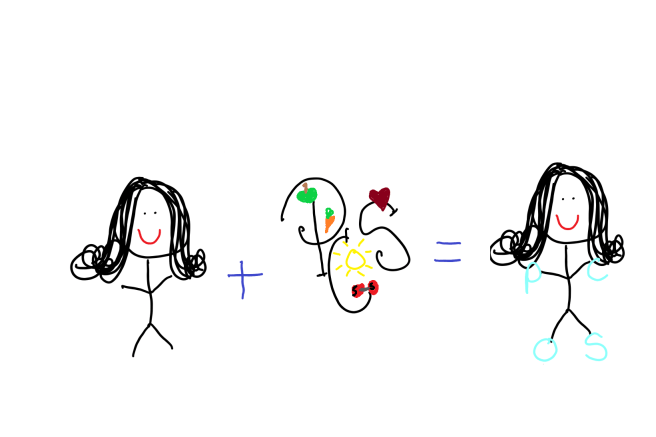
I have lived for over 2 decades with PCOS (Polycystic Ovary Syndrome), yet I had not been diagnosed until in my 30’s. PCOS means you have many follicles on your ovaries, which are underdeveloped sacs. These sacs are unable to release eggs and so ovulation does not occur. There is no medication to cure PCOS but there are alterations, you can make to your life, to make it somewhat manageable.

The indicators for PCOS normally follow the lines of acne, excess hair and irregular periods. All of which I have had since my teenage years (quite obviously). These symptoms were considered separately and the dots were not connected until I went to India to see a dermatologist. As soon as I discussed the aforementioned symptoms, she asked me whether I had been diagnosed with PCOS to which I said no and looked completely dumbfounded. She asked me to get this checked out and to cut out dairy and sugar, as this was part of the cause of my acne and also helped in my diet. Luckily, I don’t like cheese anyway (how could I not? I know) and so this wasn’t too taxing on me.

Diagnosis

I, then returned to the UK and insisted on having an ultrasound and within 30 seconds it was quite clear I had PCOS. I didn’t really look into it much further, as I was told the only way to look into managing it was with birth control and being active. I didn’t want to use any medication and I was already considering going to the gym. There wasn’t much around PCOS at the time except for the NHS diagnosis.

Little did I know that there was more to PCOS, than the anxiety inducing symptoms of acne and excess hair. For years, I had always had trouble losing weight from my belly and this was after changing my diet to include more wholegrains and less sugar.  But, even after making these changes I had always found that it was really easy for me to put on weight and then extremely hard to lose it. Which I know, is a common problem for most but I found this, even when I was really conscious of what I was eating.

Management and Mental Health

I started going to the gym but this was really hit and miss, as I found it really hard to be consistently active. There would be some points where there wouldn’t be much difference to my weight that just led me to give up. But after some time I decided, I wanted to strengthen my body and started going to the gym to work on my strength.

Working on my strength meant, I was also losing weight as I was more active, however I have still not been able to shift the belly fat. This started becoming extremely frustrating and after looking into it more, PCOS also impacts weight because another symptom is insulin resistance. In short, this means that the body doesn’t respond properly to insulin it makes. Which in turn raises your blood sugar levels and your weight is then affected. It is more common that PCOS sufferer’s bellies, want to hold onto the fat more dearly!

I am now on a mission to get those highly coveted abs. It is a tougher journey than someone without PCOS but it’s about figuring out what works well for your body. I have found that overall exercise is an integral part of my everyday life.

I currently exercise many times a week, which is excessive for some but I find that I need it to manage my mental health and weight. I am finding this difficult at the moment for a number of reasons:

  1. It’s the winter and I suffer from SAD
  2. PCOS also means I have anxiety, low mood and fatigue
  3. Its cold outside and sometimes have to spend 10 minutes scraping my car

So I am trying to battle through these hindrances by going as much as I am able because the exercise helps with my low mood. Trying to be consistent is the best thing for me, otherwise I become entangled in a catch 22 situation which derails the work I have put in place to manage my PCOS.

However, I have also realised that listening to my body and taking a break now and again may be all I need to ease the impact on my mood/anxiety. You constantly have to be aware of how you are feeling which I have found difficult as, I don’t always want to give into the low moods. But sometimes staying in the duvet longer in the morning, may help my mood more than dragging myself to the gym.

Living

Though I am able to manage the effects of PCOS on my body, changing my diet made changes to my body and skin. With my hair I have had to resort to laser treatment. I have recently started to look more into managing my stress, a lot of the stress when I was younger was due to the acne and excess hair.

There were days my acne would cause me not to go out or really dread it. Constantly having to get rid of hair which is conventionally not seen as ‘ladylike’ became tiring. And there were many days, which turned into weeks where I didn’t want to have to manage this anymore. I slowly started making changes and started to see some results. My acne reduced and I was able to work off the weight. However, my anxiety and low mood remained.

For this, I realise I need to manage my stress more intentionally and work on what affects me, my triggers and how I can reduce stress and anxiety. It’s different for each individual. I have found it is something you can manage and I have become more persistent and resilient as a result of having anxiety and low mood related to PCOS.


This guest blog was written by blogger Jasveer Atwal, who lives in the UK. She blogs at https://shelved.blog/ and you can find her on Instagram  @shelvedblog .

9 Years Undiagnosed: My Life with Bipolar Disorder, for Time to Talk Day: Guest blog by Mike Segall

timetotalkdaydad1

(image: Time to Change)

*Trigger warning: discusses thoughts of suicide and mania, please read with care *

This blog has been courageously written by my Dad, Mike, about his journey with bipolar disorder and the hurdles he faced in getting a diagnosis. For those of you who have read my book, you’ll know some of this. This is the first blog that Mike has written for us and I want to share it on today, Time to Talk Day by the charity Time to Change.  So here is Mike’s story….


My experience of Bipolar 1 Disorder was that I was undiagnosed for 9 years. I was never sent to a psychiatrist and was put on the wrong medication (I hadn’t heard of mood stabilisers and seemingly neither had my doctor).

So- What is Bipolar Disorder? (formerly known as Manic Depression)

To me, Bipolar symbolises the two extreme poles of mood- mania and depression. The North Pole is Mania. Mania is wonderful for me- you think you can be anyone, you think you can do anything, achieve anything, You are flying. You think ‘why can’t everyone be like this and experience everything?’. You are much more uninhibited. You may shop more, you spend more money, You think you can FLY!

But you can’t fly and you fall, you fall off a cliff into varying degrees of  deep, dark depression, which can last for months.

Bipolar disorder is  a chemical imbalance in the brain that causes periods of depression and periods of abnormally elevated mood, mania. The elevated mood is significant, known as mania or hypomania depending on its severity and whether symptoms of psychosis are present. Psychosis means when your mind lose touch with reality, with delusions or hallucinations.

During mania, someone feels abnormally, happy, energetic, irritable and not requiring sleep they often appear to be bouncing off the walls, starting new projects, trying to achieve too much. In some cases, addictions during mania may also present.

During depression, someone with bipolar disorder may be crying, experiencing negative thoughts and giving poor eye contact. You will notice this if you ever have a conversation with someone who is depressed. They may also be suicidal or talk about self harm.

My Story:

My first manic episode occurred in 1991 and I went to the doctor and was prescribed Valium (an anti anxiety calming medication), which was handed out like sweets in those days.

The Valium didn’t do me any harm but they certainly didn’t do me any good. In the next 9 years, I had three manic episodes followed by three increasingly devastating depressive and suicidal episodes, the last of which lasted 5 months.

In my first manic episode I was going out a lot late at night to clubs and bars and spending too much money. My second and third manic episodes were much more controlled as I recognized what was going on but I was still much more outgoing than usual and spending too much money.

My depressive episodes were serious and eventually suicidal and lasted 3, 4 and 5 months respectively. I often stood on the edge of a London Tube platform thinking about ending it all. I would drive down the motorway at speed not turning the corners until the last possible moment. I would stand in the bathroom with hands full of tablets thinking about overdosing and ending my life. Mostly, I was at home in bed doing nothing but sleeping , eating and surviving.

The person you would meet today is not the person you would have come across at that time.

Looking back there was no real connection made between these episodes and I wonder 1. Why I was never hospitalised and 2. Why I wasn’t diagnosed more quickly.

First of all, 30 years ago far less was known about Bipolar Disorder so the doctors weren’t quick to diagnose it. Secondly, it was only after 9 years that my GP reviewed my file and noticed that I had never been referred to a psychiatrist.

This was the breakthrough that changed and saved my life.

I went to The Priory hospital to see a psychiatrist, describing my episodes. Within 45 minutes I had a diagnosis,

”You have a mental illness. It has a name, It is Bipolar 1 Affective Disorder. You have it for life and it is treatable with the drug Lithium.”

Lithium balances out the chemical imbalance so you end up between the poles and mood is then stabilised. I am pleased to say that in the past 20 years, the medication has worked for me and has stabilised my bipolar disorder, so I no longer get episodes of mania or depression.

I am also pleased to say that as quite an emotional person I still experience the normal feelings and emotions that come with everyday life.

Starting on Lithium is not easy as you have to be weaned onto it. There are side effects, the most common being weight gain and you have to have regular blood tests to make sure the level of Lithium in your bloodstream is correct (non toxic) and it is not affecting your kidneys.

I do wish that I had been diagnosed earlier and not had to suffer manic and depressive episodes as I did.

These are the 4 takeaways I would like you to have from reading this, this Time to Talk Day:

1. With mental health it’s good to talk about it , It’s good to fight stigma and it’s good for your own healing.

My journey started in 1991 and I would hear things like ”you’ve got a weakness. Why don’t you pull yourself together?”, which were unhelpful

2. Think about how you can help people in your community by recognizing the signs that someone has depression or mania.

3.  Live a positive life- I am an example of a bipolar sufferer who can maintain a positive life. Bipolar is an illness that needs treating. It is treated with medication but it can take time for the medication to be right as each person has individual brain chemistry.

4. Listen to those who are struggling. Most of us listen to reply. If you watch two people deep in a conversation or you are in one yourself your focus will be very much on the other person and you will be listening at 90%.

But if you are listening to understand and you are feeling and sharing their emotions then you are truly listening at 100%. Check out the Samaritans help line too.


mikesegall

(image: Mike Segall)

Mike Segall is a professional speaker and mental health advocate, sharing his lived experience with bipolar disorder to groups in the UK. He is also the father of the founder of this blog, Eleanor.

Talking for the Jami Mental Health Awareness Shabbat 2020 by Eleanor

jamimhas1

As some of you will be aware, back in 2017-2018, I helped as a volunteer with fellow volunteers (Lisa Coffman and others) to found the Mental Health Awareness Shabbat (Jewish sabbath) in our communities across the country here in the UK. The initiative, led by the mental health charity Jami and conceived by Rabbi Daniel Epstein, now runs in 150 Jewish communities.

This year, my dad Mike and I were delighted to be asked to share our father and daughter journey with bipolar disorder to Chigwell and Hainault Synagogue.

I have social anxiety- which includes at times a fear of public speaking. In December, I had a breakthrough, where I spoke for a short time at a conference called Limmud alongside my Dad and read from my book Bring me to Light. So, when we were asked to do this talk at Chigwell, I felt it could be possible.

I armed myself with the fact that I knew kind people in the community including the Rabbi and his wife and friends of my husband Rob (its the community he grew up in). I also wanted to share my story to help other people.

So, we stayed with a lovely lady in the community and had friday night dinner with the Rabbi and his family. On Saturday morning, I woke up feeling a little nervous but took my trusted anxiety medication for when I need it- Propranolol, and walked to the synagogue with Dad.

I managed not to have a panic attack and the thought of speaking to help others got me through (as did distraction, deep breathing and drinking a glass of water).

So, at the end of the service, we were called up to speak. Dad went first and talked about his journey with bipolar disorder from when it started for him in 1991 to finding recovery. Then, it was my turn.

I stood up there in the pulpit speaking to a packed audience with a prepared speech. I felt scared but also empowered and began to relax into the talk. I knew that by sharing what happened to me, being sectioned and so ill and talking openly, that I could break stigma and touch others. I was also so proud of my Dad for speaking so openly.

It was only after, when talking to people after the service, that we realised that about 150 people came to listen to our talk! We had some important conversations with people after our talk including someone very newly diagnosed and someone else whose niece had bipolar and is currently very ill.

I couldn’t and still can’t believe I was able to do that. However, since I have been very tired so trying to de-stress and rest as much as I can!

We just want to thank everyone who came to hear our talk and supported us, to every person who thanked us for coming and shared their stories with us. We are so grateful for such a positive reception and thank Rabbi Davis and the Chigwell community for having us.

The Mental Health Awareness Shabbat has had events in communities all across the country. It runs yearly and you can find out more here 

When Therapy Isn’t Enough–How to Handle Physical and Mental Health Issues: Guest post by Brooke Chaplan

johngreen2

(Image: Pinterest)

Therapy is the first line option that most people choose when they are dealing with a mental health issue. While therapy is undeniably important, many people struggle with it, even giving up if they feel it isn’t meeting their needs. This isn’t because therapy isn’t important, but because therapy can only do so much when you are physically and financially in situations where you have no power to make lasting change in your life. Dealing with chronic pain and other physical issues can leave you worn out mentally as well, and learning how to deal with both physical and mental issues at the same time is the best way to find relief. True wellness must come from understanding and addressing physical and mental concerns together.

Understand the Connection Between Physical and Mental Health Issues

Chronic pain is exhausting to deal with on a daily basis. Over time, dealing with your pain and the loss of your normal activities can cause you to feel depressed and even anxious about your future. People often develop anxiety about their pain, especially when it seems to worsen without warning and at the worst possible times. Your mental health can also make pain worse. For instance, dealing with PTSD or anxiety causes tension within your body that affects the muscles. It is the same reason why people find that their shoulders ache after a long and stressful day. Understanding this connection will help you to articulate just why you are feeling the way you are, and allow you to talk to both mental health and physical therapists about your unique situation in ways that will let them best help you.

Choose a Program That Focuses on Your Mind and Body

Injuries that leave you unable to do many physical activities, such as spinal or leg injuries, have an impact both on your body and your mind. The best type of back pain treatment involves helping both your mind and body to heal. While you may participate in special exercises and other forms of therapy for your back, you’ll also receive counseling and support that helps you to feel better mentally. For instance, identifying mental health issues that require treatment can help you to learn techniques that help you to avoid focusing on the pain. Meditation and mindfulness are two solutions that often work well with traditional back pain strategies.

Commit to Following the Program

As with any type of therapy, your involvement makes a big difference in the outcome. Although you may feel depressed and in pain, you need to commit to working through it all. Choosing to show up for your treatment even on a bad day helps you to make continuous progress. It might not happen all at once, but you’ll soon begin to see how your treatment plan is working. Committing to physical (physio) therapy programs has also been shown to have positive impact on your ability to handle mental challenges. Remember, you may see your body and mind as two separate things, but your body interprets them both together.

Take Steps to Reduce Stress in Your Life

This is the time to take care of yourself. Take a time out from stressful activities so that you can focus on the treatment. You can also use relaxation strategies to help stop stress from affecting your physical health such as using deep breathing to work through an anxiety attack.

Your mind and body are connected, and you’ll find that each one influences the other. When one type of therapy isn’t enough, it is time to explore new options. Continuing to work on improving both your physical and mental health helps you manage pain and regain control over your life.


Brooke Chaplan is a freelance writer and blogger. She lives and works out of her home in Los Lunas, New Mexico. She loves the outdoors and spends most of her time hiking, biking, and gardening. For more information, contact Brooke via Facebook at facebook.com/brooke.chaplan or Twitter @BrookeChaplan

5 Steps to help your Mental Health, Depression and Anxiety: Sponsored by Core Wellness Maryland

pexels1

(Image: Pexels)

Depression and anxiety can feel totally overpowering and overwhelming. It can consume you in ways in which it controls you. Your thought patterns, emotional responses, physical energy, and even your short term memory are all affected by depression and anxiety. And because it can feel so dominating, it is vital that you do not try to deal with it alone. Therapy, counselling and all the help that you can possibly get, should always be your first plan of action.

However, there are small yet effective steps that you can practice to cope and manage the severity of your depression and anxiety. Below I’ve listed 5 actions and activities that you should implement into your life daily, while also sticking to an action plan as explained above.

  1. Do something spontaneous, random and out of your usual routine. Depression can make life feel monotonous and mundane to say the least. You do the same things again and again, every day. Or you literally do nothing at all. Duvet days are no longer a Sunday treat, but a compulsion of the mind as you lack the motivation or energy to even leave the bed. That is why forcing yourself to do something spontaneous and different can feel like a breeze of fresh air. And it absolutely does not need to be a demanding task. Keep it simple, keep it easy, and then slowly build up on it on days you feel slightly better. Some ideas are:
  • A quick walk in the morning around the block.
  • Cooking an easy meal.
  • Tidying up something you’ve been procrastinating on.
  • Playing with your pet.
  • Doing easy home diys or even a bit of gardening.

The choices are endless, so feel free to add your own ideas. But just bare in mind that you should start off by keeping it simple and easy so that it doesn’t burn you out or mentally drain you. The feeling of doing something out of your routine, mixed with the feeling of satisfaction of completing a motive, can be a powerful and revitalising feeling.


2. Practice gratitude. Make a list.

Grab a pen and paper and write down all the things you own, love and appreciate. All the good things that you have experienced. All the happy memories. The good nostalgia. Things you find beautiful. Add the weirdest or silliest of things – if they make you smile then they should be on this list! Do this daily, even if you don’t feel like it, or even if you can only think of one thing on some days. Trust me, it all counts when you look back on your list a week later, a month later, 6 months later and so on.


3. Hold on to that pen and paper because I want you to play a game.

Write the first word that comes to your mind without thinking about it. Then write another word, and then another. Carry on adding to this list for a minute or two. No matter how random, or weirdly nonsensical the words that pop up in your mind are, just carry on writing it and adding it to your list. Once you’re done, analyse your list. Some might actually have absolutely no meaning or weight to your emotional state, but you will definitely find a good bunch that will shed some light to two things: feelings and thoughts that are hidden in your subconscious mind. Additonally,  feelings that you have been suppressing.

If you try to do this daily, you should begin to notice a pattern. Same words might pop up. Or similar words. Or words that are more negative/positive then the days before. It’s a good and unique way of tracking your thought patterns and emotions, while releasing pent up thoughts and feeling that you might’ve not even realised are there. Plus it’s fun!


4. Create a positivity board.

Get yourself a board and pin up things that signify your dreams and goals, things that you love and that make you happy. Photos, newspaper or magazine cut outs – anything and everything that defines you or who you want to be. Keep adding to it, and every time you feel your worst, look at this board and think of each thing you have included on it. And remind yourself why.


5. Train yourself to be more aware of your surroundings.

Use your 5 senses to their potential. This is practicing mindfulness. Depression can  numb our senses down. Noise can feel like just noise. When really it could be laughter, trees rustling, birds chirping, baby’s cooing, rain tapping, and so many other beautiful things. Depression tells us it’s noise and chaos.

Be more mindful no matter where you are, and you’ll begin to notice things you otherwise wouldn’t have, you’ll see the beauty and peace where you normally see chaos and mental exhaustion. Listen to the rain, notice the beautifully formed clouds above you, look how the trees sway with the wind, feel the rain on your skin. It’s the little things that are the most impactful. And being mindful can calm the heart and soul.

That’s my 5 steps for you. Remember no one and nothing can define you except yourself. Not even depression, not even anxiety. Celebrate this day, and use these steps to improve the quality of your life, even if you don’t suffer from a mental health disorder. If you have any steps of your own, then comment below! 


This sponsored post was written for you by Core Wellness Maryland CEU, who can be found at https://corewellceu.com/