Letter to my MP: On Mental Health and Talking Therapy Waiting Lists

house1
(image: Imperial College)

I have just responded to a letter that my MP replied to me today. The other day I wrote to my MP here in London about the Mental Health Units (Use of Force) Bill which aims to stop dangerous restraint in mental health hospitals. This was a campaign through the charity Rethink Mental Illness.

I was sadly less than impressed with the response I received even though it was quick, my MP quoted a lot of figures at me. Now, one of these figures, ‘750,000 more people accessing talking therapies since 2009/10’ really got to me. In 2015, I had a short course of NHS cognitive behavioural therapy which was useful but didnt help my anxiety. However, since late 2015/ early 2016, I have been on the therapy waiting list for talking therapy to help me process the trauma I have been through, Almost 2 years later, I am still on the list and have had to go privately which is less than ideal as you will see in my letter below. I hope it resonates with you and that my MP will use my case study in parliament ( one can only hope):

Dear MP,

Thank you for your swift response to my letter regarding the Mental Health Units Use of Force Bill. In your letter to me, you stated ‘more people accessing mental health services every day….as well as around 750,000 more people accessing talking therapies since 2009/2010’.

As someone with Bipolar disorder who was hospitalised (and sectioned) in 2014 for 4 months, with another 4 months in day hospital due to psychosis and mania, I have been on the waiting list for talking therapy since 2015- almost 2 years ago. When I recently went to a review with my psychiatrist, he said he would speak to psychology for me but that because the service is over stretched I may have to seek therapy via local charities or go privately. Being that I am currently waiting to start work and on ESA, I couldn’t afford private therapy without help from my family and I have had to go private which is grossly unfair due to the trauma I have faced. However, as you state, more people are accessing mental health services meaning that even in someone with a case such as mine, I have had to wait for talking therapy and effectively given up on NHS support in that regard.

I hope you will use my case study as an example in parliament when discussing mental health with Theresa May and your party and would appreciate a response. 

Yours sincerely,

Eleanor Segall

Life Mental Health Update and the Liebster Award!

Its been a really interesting week for me. I firstly decided after not getting the right NHS therapeutic support that I had to take life into my hands in two ways. Firstly, I needed to see if I could get funding for private therapy to help my anxiety and panic attacks about work. I was able to and then I have booked an appointment to see a recommended psycho-dynamic counsellor. I am hoping that my counselling sessions will help the anxiety and fear around certain things.

Secondly, I decided that if I want to live my dreams and have a life that is fulfilling and true to myself, I have to pursue them. Obviously I have to make my dream achievable too so I have been applying for jobs that feel right for me. My dream has been to be a teacher and I hope to get there one day. I have been interviewing for various positions in schools and hopefully the right one for me will come up soon. I will leave it to God and the universe to decide and do all I can.

So, its been quite a whirlwind for me this week and definitely being pushed a little outside my comfort zone, putting my heart and dreams on the line. However, I am really proud of myself for doing this. I have wanted to seek therapeutic help for years and while its a shame I can’t get it for free on the NHS, I hope it helps me to change my life. My family are a great support for me with this. I am starting this week and will see what happens.

So I have been going to job interviews and its really scary being asked so many questions and waiting for feedback. I know though that I can do it and make myself and my family proud (I hope anyway!)

As well as the above, I am very excited to be going to see Aladdin the musical at the theatre with my boyfriend for our anniversary. He is a wonderful support to me and I love disney!

Lastly, a blog friend, the Happiness Hunter https://thehappinesshunt.wordpress.com   has nominated me for the Liebster Award which celebrates new blogs. My blog has been going almost 2 years but I feel so thrilled to receive the award. Thank you so much! Due to time constraints I can’t nominate other blogs for the award but dedicate it to all my blog followers who are battling mental health stigma and writing so amazingly.  

Go and visit the above blog too, its wonderful! Thanks again 🙂

liebster

Guest Post by Arslan Butt: The Invisible Crisis: College/ University students coping with Mental Illness

EFTO
(image: EFTO)

“College/ university life,” young, enthusiastic individuals freshly out of school are either excited for this new phase of their lives or tend to think of it as another societal hurdle they need to overcome.

There’s a lot of stress that new students end up experiencing because they’re going into a different educational setting and they want to prove themselves.

Whether it’s worrying about academics or their college-related social life, college/university affects everyone in different ways and thus, comes with its own set of pros and cons. Students are subject to varying levels of stress and other mental illnesses that need to be addressed.

There’s just so much pressure when you’re a first year student. You have this drive to prove yourself but at the same time you don’t want to stand out the wrong way. There’s nothing more stressful than being the student everyone jokes about,” said Stacey Wilson (Film and Digital Media student at Santa Cruz, California).

“Dealing with college/university life is tough enough. Add in the drama that goes on at home and everything just gets tougher for any student,” said Janene Secor (English Major from The Ohio State University)

Youth Are Vulnerable to Mental Health Issues

Parents and students might not have mental illness on their mind when they start college; however, such a period of young adulthood is a crucial one for mental health. According to the Substance Abuse and Mental Health Services Administration, 75% mental illnesses are triggered by the age of 24. Some are triggered in adolescence and some start in college/university.

Furthermore, in 2012, one in five people from 43.8 million adults experienced some type of mental illness. That’s why knowing about mental illness and how it is triggered is important especially when it comes to students.

Around 95% of the directors of the college counselling centre have stated that the number of students with psychological problems in an increasing concern on campus. About 70% of the directors also believe that the number of students who are a victim of major psychological problems has increased in recent times.

Similarly, the rates of depression and anxiety have also increased compared to the previous decade. According to a survey involving college students, being conducted in 2013, found that 40% of men and 57% of women experienced overwhelming anxiety while 27% of men and 33% of women experienced episodes of severe depression that made functioning difficult for them.

Studies also suggest that almost one-third of students fulfill the criteria for depression or anxiety while they are in college.

The Importance of Mental Health Awareness

Depression is stated as the biggest reason of disability across the world which affects around 300 million people globally. Yet, mental health is still stigmatised greatly in our society.

When people talk about their mental illness in society, they can face stigmas although these are starting to fall.

Many studies also agree that to end the discrimination against those with mental ill health, it is important that people are provided with the right education about mental health conditions. 

Furthermore, increasing the accessibility of treatment and screening of psychological problems is crucial for college going students.

In some cases, children that are diagnosed with mental health disorders end up with poor educational outcomes and thus, poor economic outcomes as well. This varies from person to person. 

Offering Students the Support They Need

Research quite clearly states how strong behavioural and mental health supports can improve the life of a student.

When the students get help for psychological problems, then counselling can have a big impact on personal well-being, retention, and academic success.


Offering Mental Health Facilities in Colleges

It is being observed that students have started to utilize the counselling services provided by colleges/universities in a much more positive manner and more frequently. However, there has been a stigma-based backlash from a few college administrators and professors that call their students less resilient and needy because the students use these services.

This attitude is the reason why a majority of students refrain from asking for help, and this is what colleges exactly need to eradicate.

Many colleges/universities have started introducing programmes that directly challenge the prejudice and ableism by not discriminating against students that are struggling with mental illness. Colleges should aim to make mental health care accessible to everyone just like UCLA in America has.

Colleges should aim to provide free mental health treatment and screenings for all of their students. UCLA has started off their efforts of educating their faculty and students about mental illness by holding a voluntary sessions for students to determine if they need help with their mental health.

If a student shows signs of depression, UCLA will provide them with therapeutic services for free, according to the chancellor Gene Block. UCLA has also decided to provide their students with an eight-week programme on cognitive behavioral therapy (CBT) which is  a goal-oriented, focused, and short-term therapeutic treatment that asks for collaboration between the therapist and patient. This doesn’t work for everyone, but is a good start. 

Due to the kind of burden a lot of students feel by starting college, it is important that those vulnerable students with mental health issues have the tools and resources they need to cope with stress, anxiety, depression or other psychological issues.

The treatment program, as well as the online screening, is considered as the first campus-wide screening program for mental health conducted at any university. By catching depression in the early ages, officials of UCLA hope to significantly reduce the damage that the illness does in the early-adult years.

Garen Staglin, the co-chair of the leadership council of the Depression Grand Challenge, hopes that the efforts made by UCLA encourage other institutions and businesses to also focus on mental health issues.

The efforts made by UCLA in Los Angeles, USA have not been futile; Larry Moneta, the vice president of the student affairs at Duke University is quite interested in how UCLA will help its students.

I’m incredibly glad about UCLA’s mental health screening initiative. Mental health issues need to be destigmatized, especially in academic settings so students can comfortably seek the help they’re in need of. I hope other’s implement such programs too,” said Katherine Bracken (English and Theatre student at The Ohio State University)


Sources:

http://time.com/4473575/college-mental-health-guidebook/

https://www.psychologytoday.com/blog/theory-knowledge/201402/the-college-student-mental-health-crisis

https://hpi.georgetown.edu/agingsociety/pubhtml/mentalhealth/mentalhealth.html

http://www.apa.org/about/gr/education/news/2011/college-campuses.aspx

https://www.bustle.com/p/ucla-will-offer-free-mental-health-checks-to-students-heres-why-its-so-necessary-2360904

https://www.thefix.com/all-incoming-ucla-students-receive-vital-mental-health-assist

http://newsroom.ucla.edu/releases/ucla-to-offer-free-mental-health-screening-treatment-to-all-incoming-students

###

Arslan Butt currently works for https://www.CanadianPharmacyWorld.com, has a passion for keeping up-to-date regarding the latest health and lifestyle trends. He likes going on long walks, trying out new healthy eating regimes, and working out.

We have won the Sunshine Blogger Award!

sunshineblogger

Thank you to Sue at http://www.myloudbipolarwhispers.com for nominating Be Ur Own Light as one of their Sunshine Bloggers! Sue wrote, ‘I believe this great group of people and their blogs bring a lot of joy and sunshine and education into the lives of many people and I also pray these lovely people have a lot of joy and sunshine in their lives every day.’

Thank you so much Sue for this beautiful accolade and for paving the way in battling stigma against bipolar disorder and mental health in general! You are a star in a dark world 🙂

So these are the rules except I can’t think of 11 people to nominate, so I will do 4!

Rules for “The Sunshine Blogger Award”

  1. Thank the blogger who nominated you and link to them.
  2. Answer the eleven questions asked.
  3. Nominate 11 other bloggers. (I am doing 4)
  4. Create 11 new and different questions for them to answer.
  5. List the rules.
  6. Include the “Sunshine Blogger Award” logo in your post somewhere

    Sue has asked me to provide answers to the following questions:

    How old are you?  29

    How old were you when you were diagnosed with mental illness, or other type of chronic and/or invisible illness or grief?  Diagnosed with bipolar affective disorder at 16, lived with anxiety disorder from 17/18

    Where do you live? London, UK

    What makes you happy? Sunshine, sunflowers, autumn leaves, chocolate, Reading books and of course my boyfriend, friends and family.

    What makes you angry: War, refugees still having to flee, terrorism and mental health stigma

    When was the last time you experienced mental illness stigma or any other type of stigma or discrimination? A few years ago when someone refused to set me up on a date with someone they knew due to my illness being disclosed.

    What is your favorite kind of candy?  Cadburys chocolate

    What is your favorite season and why? Autumn (Fall)- because its so cosy and I love fairy lights, hot chocolate, snuggling in blankets, autumn leaves etc.

    How long have you been blogging? Here on WordPress for almost 2 years and before that on Blogger and elsewhere for 2 years. I am a writer so am always blogging.

    Do you prefer a sunny or a cloudy/rainy day? Usually sunny but there is something very cosy about watching the rain from inside.

    I nominate the following because they are rays of light in the blogging world, sharing, writing and wearing their hearts on their sleeves. They sparkle in tackling mental health stigma and I am so proud to have them as Followers of my blog.

    Alexis Rose-  https://atribeuntangled.com/

    Paul McGinley- https://paulmcginleymentalhealth.wordpress.com/

    Christina at Sea of Words- https://seaofwordsx.wordpress.com/

    Happiness Hunt Blog      https://thehappinesshunt.wordpress.com

    These are the following questions they must answer:
    1) Why did you start your blog?
    2) How long have you been blogging and what is your passion?
    3) Which country are you based and what is mental health care like there?
    4) What is your favourite movie?
    5) If you could chose one actor to play you in the film of your life who would it be?
    6) What has helped you on your recovery journeys?
    7) Where would you most want to travel to?
    8) What is your favourite food?
    9) Why do you like writing?
    10) Which song makes you smile?
    11) If you could pick a spirit animal who would you pick?

    Congratulations on the award !

Monday Motivation: Update on Mental Health Life

neverlose
(image by blossom and leap via Pinterest)

Last week, I saw my new psychiatrist. He is the kindest man and so helpful. He signposted me to several private mental health services as I very much need therapy for my anxiety disorder. What was sad to see though that these services are not provided by the National Health Service NHS- they are provided by charities, as the NHS service where I live is at breaking point. This is because there are so many people needing psychological input and not enough staff and money. Ultimately it comes down to funding I think. In the past, I have had excellent NHS therapy- although it did not seem to help with the anxiety long term.   So far, I have been on the waiting list for therapy for almost 2 years and I have realised I can’t rely on the NHS for therapy, which is sad.

However, I am grateful I was able to sit down with my new consultant (and Mum) and discuss my life and where I go from here. I am looking into various options for my health and which psychotherapy can help me move forward, get back to work and feel good again.

I am trying to be as positive as I can and think about a happy future. My priority is working on myself so that I can truly thrive. Have a great Monday friends.

Achieving positive change in Mental Health: Guest post by Tony Weekes of Unity MHS

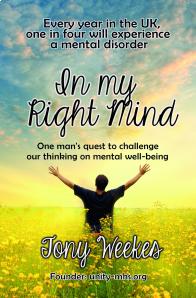
inmyright

My name is Tony Weekes. I feel honoured to have been invited to post on Be Ur Own Light. I have witnessed at first-hand the mental suffering of close family members. In trying to ease their suffering, I have tried, sometimes succeeded, other times failed, to surmount the problems – which they have faced – caused by the current care system’s serious lack of funding and the resulting lack of cohesion.

I am not a professional in the field of mental health but I could not sit back and do nothing. So, I founded Unity MHS, a grassroots movement to revolutionise mental health care in the United Kingdom through education, recognition and intervention.

As a not-for-profit Company limited by guarantee (not a charity), Unity has no shareholders. Therefore, our driving force is the commitment we maintain on our mission rather than personal or financial gain. Our mission is two-fold:

  • To challenge the way society views mental health.
  • To facilitate vast improvement in access to ongoing care and socio-economic empowerment for those suffering with any kind of mental ill health.

I strongly believe that when mental health is viewed with the same level of importance as physical health, the funding necessary for the care system to operate as one unified force will be made available in an instant. Additionally, considering the component parts of the current system, I believe that most of the logistics required for UK mental health care to shine already exist. It is the consistent lack of investment which has allowed the system to show great strain under the pressure it faces.

The general-public are only now becoming aware of the possible mental health crisis we face as a country, or even as a planet. The conversations are becoming increasingly more open. However, it is only a widespread shift in public opinion, which will give the greatest burden of illness in the UK the priority status and corresponding national investment it desperately needs.

Hence, I set-off on my mission by writing In my right mind – a book which seeks to tackle this crisis from angles which may never have been considered in the public domain – to instigate that shift in the public’s perception of mental health.

Moving onto the second part of our mission, we aim to facilitate improvements through ongoing education, recognition and intervention in mental health. How can this be achieved?

Education:

There are two social entities which represent what should be the front line on a proactive approach to mental health. These are our schools and our families. The teachers at the school which my children attend actively promote working in educational partnership with parents. We believe this should and will also be the case with their mental well-being. Schools and parents will be given the tools they need to build resilience and notice signs of mental distress in youngsters at home and in the classroom. This will also give us all the knowledge to observe and act accordingly in the case of adolescents or even adults showing the signs of mental illness.

At Unity, we have developed a program with this aim and are in talks with a number of schools about implementation.


Recognition:

The earlier that the possibility of any form of illness is recognised, the sooner it can be diagnosed and the more effectively it can be treated before it gets more serious. The importance of early-  recognition for the whole system, cannot be over-estimated. Once we have the knowledge required to notice what may be the early signs in any setting, with a good treatment plan in place then arguably any form of mental illness can be managed over time with persistence.


Intervention:

In many instances, in-patient care will be necessary. Arguably, this is the area where the current system is showing the greatest signs of strain as there are simply not enough beds available. This results in patients sometimes being discharged before they have received the level of care needed or in other instances, people being admitted for care hundreds of miles from home, away from their all-important support network.

For any form of serious illness, varying degrees of rehabilitation are needed to ensure that recovery from the illness can be sustained once a patient is discharged. Our greatest challenge is to generate all the resources necessary for these beds and the other resources necessary, to be made available sustainably. With the right treatment, for the right amount of time, followed by ongoing care and support in the community, social and economic empowerment would make positive long-term recovery more likely and hopefully minimise the risk of relapse.

The NHS is a world leader, Unity will also make mental health care here world renowned.

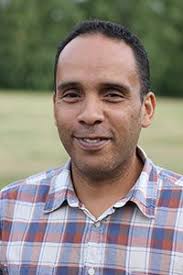
tonyw

Tony Weekes is a mental health activist and founder of grassroots movement Unity MHS and author of the book, ‘In My Right Mind’. He campaigns for better mental health and can be found at www.unity-mhs.org  and his book at www.unity-mhs.org/book. Tony can be contacted at progress@unity-mhs.org

Looking after Mental Health as a Student and Beyond: for World Union of Jewish Students on World Mental Health Day

This blog is one of a series of blogs that Eleanor, founder of Be Ur Own Light, wrote for the World Union of Jewish Students- www.wujs.org.il/blogs . It was prepared for World Mental Health Day written by young Jews about their experiences dealing with mental health.

eltwitter

In 2007, when I was 19,  I started my BA (Hons) in Drama and English Literature at Goldsmiths, University of London. Goldsmiths is a quirky, art school with an area of excellence in the arts. It was the perfect place for me to study, despite the distance to South London!

Having grown up and gone to primary and secondary school in Bushey, Hertfordshire in a close knit Jewish community, leaving my comfort zone behind was both nerve wracking but exciting. I was thrilled to be studying what I loved and being on a new journey. In my first year, I lived in halls and made lots of new friends .

However, it had only been 3 years since I had been diagnosed (at the age of 16) with bipolar disorder. Bipolar is a serious mood disorder where you can get low, depressive moods and at the other end of the spectrum- high, manic moods. Bipolar can be medicated with mood stabilisers and anti depressants, and I was very good at keeping to my medicine regime and of course avoiding alcohol, not so easy in a student environment!

Throughout my 3 years at Uni, although my Bipolar symptoms were largely kept at bay, I did suffer from social anxiety which impacted slightly on my Drama degree. Anxiety is something that I have lived with for a long time. When you are diagnosed with a mental illness as a teenager, you don’t want to be different. As I had been in hospital as a teen due to a bipolar episode and had to go down a year at school to catch up, getting to university was a victory for me. In fact, just three years before I began my degree, doctors had told my parents that due to the severity of my illness, I may not make it to university. I was so pleased to prove them wrong!

Yet, I did still feel different and although I loved my course, I did have times when my anxiety impacted. Studying Drama was (and is) a love and passion of mine. I loved creating characters, learning acting theories and forming performances with my fellow drama students. However, when I was feeling at my worst throughout my 3 years at Uni, there were times when I felt I couldn’t perform on stage.

In those times, my university tutors were hugely supportive and I disclosed to them that I was struggling with my anxiety disorder. I only ever had positive support and was set an alternative writing assignment instead, which meant I could still get my degree.

My advice if you are struggling with anxiety, depression or other mental health conditions at university is to do the following:

  1. Disclose your condition to your tutors (and particularly a supportive form tutor) if your illness is impacting on your work. It is not weakness to disclose, rather if you do, then the University can help. University has a duty of care to you to make sure you are safe and well. Once disclosing, you will often find that you will be highly supported by staff. Sometimes too, the University pastoral department can get involved to help you and refer you to counselling If needed. You are not alone.
  2. Be honest and kind to yourself. If you are living away from home, there is temptation not to tell your family or friends what is going on. You may think that you will be worrying them but actually having a strong support network really helps, so speak to those who are supportive and get some advice as to what you should do.
  3. If you are really struggling and cannot continue on the course, speak to University about it and see if you can defer a year. Also, make sure you make a GP appointment to discuss what is going on with your mental health- or if you are under a psychiatrist- go and see them.
  4. Try not to isolate yourself. At uni, I found strength from joining Goldsmiths Jewish society and later becoming President of it, working with local Rabbis and meeting Jewish students from all over the world. Its important if you can and are feeling well enough, to make new friends and try out new clubs in the Student Union. In London, we have UJS- Union of Jewish students, which I found really helpful to join. In my third year, I was on the events committee and organised a bar night, Booze 4 Jews London. Having those connections was really helpful to me and I enjoyed my time at university even more.
  5. Remember there will be times when Uni can be challenging. Whether its being away from home, meeting new people, having difficult assignments and lots of independent work, writing a long dissertation… know you can and will get through it but make sure you have the right support in place.
  6. If you are really struggling ie feeling very depressed, suicidal or want to harm yourself- please do share this with your doctor, family or someone you trust, so you can get the right support. You can also call Samaritans and various helplines.  It may help you to take time out of university to get well.

In my experience, my universities (after Goldsmiths, I did a year at Royal Central drama school) really supported me with my anxiety and mental health. Remember to speak out, get help and support and know you can still get your degree despite your health challenges – you are not alone.

Eleanor Segall is a mental health writer, blogger and advocate. She went to Goldsmiths University from 2007-10 and did her masters at the Royal Central School from 2011-12. She lives and works in London, England.

http://www.wujs.org.il/blogs/looking-after-mental-health-as-a-student-and-beyond-eleanor-segall

Living with Bipolar Disorder: my True story- for Counselling Directory Website

elliesegall

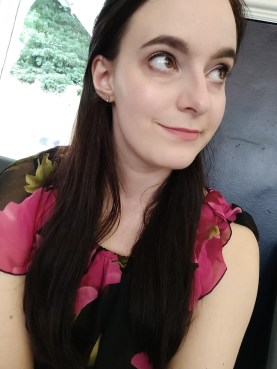
Be Ur Own Light author Eleanor tells her story for Counselling Directory. 

Article: http://www.counselling-directory.org.uk/experience_236.html

I was diagnosed with bipolar affective disorder at just 16 years old. I had been admitted to hospital after a year of depressive and anxious episodes, followed by a hypomanic episode (a lesser episode of mania). People with bipolar have a mood disorder which means our moods can become extreme and oscillate between low and high.

After a year of not understanding what was happening, I finally came to accept the diagnosis. You see, bipolar runs in my family. There is evidence it can be genetic but, as I was so young, no one suspected that my depression and hypomania could be bipolar disorder. I was hospitalised as a teenager in 2004 due to a mixed state of depression and psychosis (where your mind loses touch with reality).

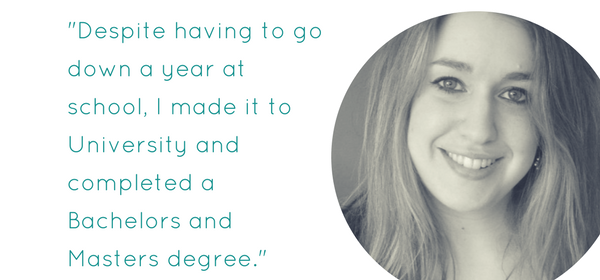
Luckily, with medication and support, I was able to live a fairly ‘normal’ life for several years. Despite having to go down a year at school, I made it to University and completed a Bachelors and Masters degree. I went travelling with friends to India and Ghana, regularly took my medication – mood stabilisers and antidepressants – and was supported by various psychiatrists and therapists, as well as my wonderful family and friends.

But the trauma of what I went through caused an increase in my anxiety levels and I developed social anxiety, fearing what others thought of me. I also became slightly agoraphobic and suffered from panic attacks. Bipolar is such a complex disorder and sometimes anxiety can be a part of the depressive side of the illness.

Over time, I believe that my main medication stopped working. This coupled with several life events, meant I became unwell fast. In 2013, I began to sink into a very low depressive state which led to suicidal thinking. I became very unwell, but supported by my family and upped dosages of medicine, I got better again. However, this was short lived.

In 2014, I spiralled into the worst manic episode of my life. I had racing thoughts and pressured speech, was very fearful of those around me and began to experience delusions (false beliefs about the world). I was incredibly vulnerable and unwell. Unfortunately, the episode happened very quickly and although I hadn’t been in hospital for 10 years, suddenly I found myself there, waiting to be treated.

Being in hospital this time was hard; it took a while for the psychiatry team to bring me down from the manic state. I was in hospital for four months, attending therapy groups (I loved art therapy) and working with occupational therapists, nurses and a wonderful psychiatrist who believed I would get well again.

I did get better again in time. I had a further four months of support when I left hospital, where I was put on the correct mood stabiliser for me – Lithium – which has helped keep the moods at bay. I attended day therapy sessions on anxiety management, recovery, art and social groups and I slowly came out of my shell again. I was in shock and quite traumatised at what had happened to me. However, over time and with support, I accepted it and began to recover.

Since that difficult time, I have worked for and volunteered with mental health charities and supported communal projects. I also started my blog, Be Ur Own Light, in 2016 to explain to family and friends about my mental health. It has been read worldwide and its aim is to tackle mental health stigma and share real-life stories.

I also began to write for the Huffington Post UK, Rethink Mental Illness, Time to Change and Bipolar UK, amongst others. Writing is therapy for me.

My message would be that the right medical team, coupled with support networks, psychotherapy, medication and doing things you love to do, can help you feel much better and find recovery. I, like so many with mental health issues, am still a work in progress but to reach any form of recovery is a big milestone and I will fight to remain well. You can too.

Reading as therapy: A Lifelong book journey and Mental health

booknook
(image: The Tiny Life)

I have always loved reading books as an escape, as a way to jump into someone elses world and on a journey with a character- whether they fall in love, travel, have difficulties in their lives and overcome them. I often have two or three books on the go and more books than shoes! My book shelves are full- and although I have a Kindle,  I still love having the actual paper book in front of me.

This led me recently to start a Book Instagram blog (bookstagram) to share what I am reading and chat with like minded people! I share what I have been reading each week and yes I am a book geek 🙂 but it fills my heart to read and share. You can join my book journey at @elsbookshelf

I studied English and Drama at University and I have always loved stories. And creating my own too. For me, reading is a kind of therapy. It helps me take my mind off my own mental health struggles and it allows me to discover new authors, new characters and get inspiration in my own writing. Mostly though, I just love the creativity and joy in reading.

Thats what its all about, finding joy in the little things.

In terms of my health, I am stable at the moment but waiting a week to see my new psychiatrist. I feel like I can’t job apply at present because I don’t know fully what I can cope with and I want to make sure I get some proper support and psychotherapy.

Will write an update at some point with it all, but in the mean time, you will find me curled up with a book or spending time with my boyfriend, friends and family. And hoping I will get better and be able to hold down work fully soon.

How I’ve Learnt to Fight my Health Anxiety: Guest Post by Ellie Miles

anxietygirl1

(image: Natalie Dee)

Imagine the scene: you’ve woken up with a banging headache, a sick feeling in your stomach, and a fever. You take a paracetamol and return to bed with a strong cup of tea, and decide to make the classic mistake of Googling your symptoms. You know you shouldn’t do it, you know that an Internet search engine can’t give you an accurate diagnosis, but it’s just so easy and tempting! You put your symptoms into an online checker, and read through the dozens of conditions that could be causing them. It could be a cold, a stomach bug, some kind of virus, or… malaria?! Brain cancer?! That’s it. This is the end. You’ve somehow contracted a rare but swiftly fatal disease, and should begin saying your goodbyes. It must be true: the Internet said so!

At this point, a neurotypical person would probably question the logic of the I’m-going-to-die thought train They’d dismiss the fear, accept that they’ve probably just got a cold, and move on with their day. However, when you have health anxiety, it’s not that simple. The kind of panicked thoughts outlined above refuse to budge, and obsessive worry can take over your mind for hours on end.

I’ve suffered from health anxiety for as long as I can remember, relating to both myself and others. For me, symptoms of illness can’t possibly be the result of a mild ailment: they must signal cancer, or sepsis, or some other severe and life-threatening condition. The same goes for the people I love. I’ve spent nights sobbing because I’m convinced that my nearest and dearest are facing imminent death. Just last week, I was hit by a crippling fear that my boyfriend had a brain tumour because he’d been suffering from sickness and a headache for four days. This morning, I decided that my cat was clearly on the brink of death because she didn’t use her litter tray overnight. Looking back, these thoughts seem ridiculous. At the time, however, they were gripping and all-consuming.

While health anxiety still hits me pretty much any time I or my loved ones fall ill, I’ve got a lot better at dealing with it over the years. What used to be days of endless worry has been reduced to maybe a couple of hours of panic that I can eventually fight off. I’ve learned techniques that tame this distressing and frankly irritating beast. The first of these is avoiding the previously aforementioned trap of Googling my symptoms. Nothing good is EVER going to come of it, because the Internet is utterly obsessed with convincing everyone they’ve got cancer. Why would I put myself at risk of seeing this when it’s only going to increase my anxiety ten-fold? It can be pretty hard to resist the temptation to hit the search engines, especially when I’m feeling really rotten, but it’s for the best.

Secondly, I’ve come up with certain rules for myself when I feel ill to stop me from freaking out and needlessly heading to the GP. If my symptoms are minor, I only go to the doctor if they persist for a few days or start to worsen. If I feel myself starting to panic, I seek the opinion of someone rational, who usually confirms that whatever I’m suffering from probably won’t kill me. If I am genuinely poorly, I of course go to the doctor and get any medication that I need. However, I try not to pander to my anxiety by telling my GP about every little twinge or sniffle I experience. It only wastes their time, and it’s a temporary fix that only serves to reinforce rather than break my vicious cycle of panic. It’s important for me to address the source of the anxiety, rather than use my doctor as a mental and emotional crutch.

Finally, I try to remind myself that I can’t control the health or the actions of other people. When I get health anxiety about the people I love, my first instinct is to frogmarch them immediately to a doctor, whether they want to go or not. However, I’m trying to teach myself that I have to leave others to make their own choices regarding their health. Freaking them out by telling them I think they have a tumour isn’t exactly going to help them to feel better- in fact, it’s probably going to have the opposite effect. While acknowledging a lack of control seems terrifying to my anxious brain, it’s necessary. While I would love to be able to constantly protect everyone I care about, I can’t. Trying to do so is only going to leave me- and others- stressed out. Relinquishing that responsibility can actually be quite liberating! I’m not saying I don’t acknowledge when my loved ones are ill: I just try to give them the support they want, and not the smothering attention that my anxiety demands.

I don’t know if I’ll ever fully be free of my health anxiety. I think the only thing that could completely cure it would be my loved ones and I never getting sick again, which isn’t very likely! However, I’ve managed to minimise its impact on my life by challenging my anxious thoughts and stopping them from controlling my actions. I’m sure my poor, long-suffering doctor will be thrilled!


Author bio

elliemiles

Ellie Miles is a freelance mental health writer and blogger based in the United Kingdom. When she isn’t writing about her experiences with depression and anxiety, she’s probably playing with her cat. You can find more of Ellie’s work at www.elliemileswrites.com, or follow her on Twitter (@elmiles_) for life updates and copious cat photos.