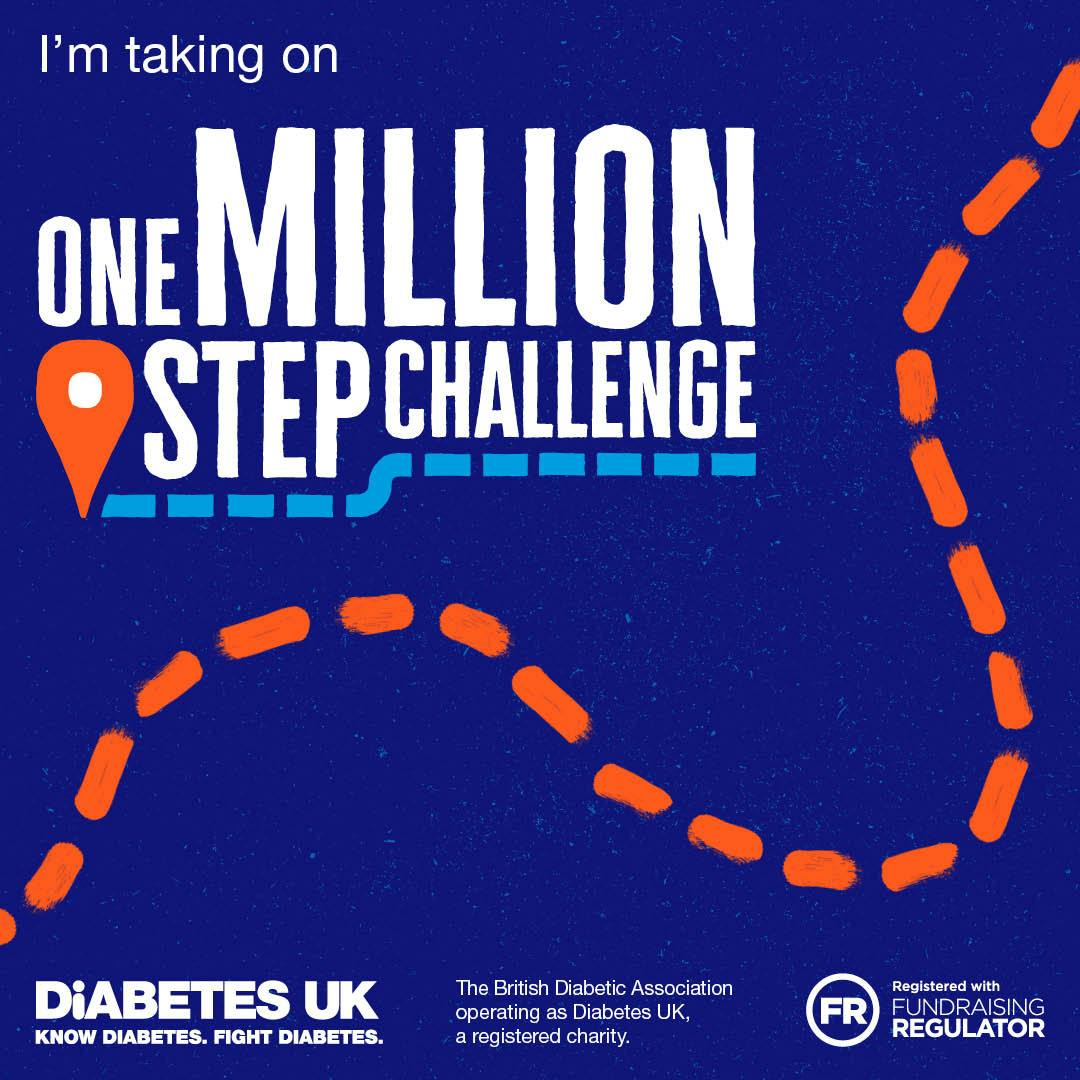
This is scary but here goes! This summer, I’m stepping up for Diabetes UK in their Step Challenge (I will be aiming to do 500,000 steps between my birthday 1st July and September).
I am doing this challenge to not only support the 5 million people in the UK who live with diabetes (including my dad Mike) but also to get fit, healthy and lose weight after being diagnosed with polycystic ovarian syndrome (pcos) last year. With pcos there is a future risk for diabetes as well as fertility challenges- I’m not diabetic currently and want to get healthier.
Those who know me well know this is a big deal for me as I am not a gym goer! I will be aiming to do 5000 steps a day starting on my 36th birthday 1st July- through to 30th September to total 500,000 steps which is one of the challenges.
Please sponsor me if you can afford to fund life saving treatments/research into diabetes and get me off the couch so I am healthier too!
Click sponsor me in previous sentence to donate or learn more!
Most of us have bad habits that we’re aware of, whether it’s smoking, excessive drinking, or eating unhealthy foods. We may think that the only consequence of these habits is the occasional guilty feeling or a bit of embarrassment. Still, bad habits have far-reaching and unseen repercussions that can significantly affect our health. In fact, poor habits such as these can lead to various physical and mental health issues, such as depression, insomnia, and heart disease. The good news is that we can make changes to improve our health and overall well-being by understanding the unseen consequences of our bad habits.
Premature Ageing
Premature ageing is one of the most significant and often unseen consequences of bad habits. Smoking, for example, has been linked to premature wrinkles, age spots, and an overall aged appearance. The same applies to excessive drinking and unhealthy eating habits, contributing to poor skin health and general ageing.
Research has shown that bad habits can also contribute to accelerated ageing of the brain. Studies have found that excessive drinking, smoking, and other unhealthy habits can increase the risk of developing dementia and other age-related cognitive issues.
Decreased Mental Health
Bad habits can also have a negative impact on our mental health. Studies have found that smoking, excessive drinking, and unhealthy eating habits can all increase the risk of developing depression and anxiety. Additionally, poor habits can lead to an increased risk of developing insomnia, which can harm our mental health.
Additionally, unhealthy habits can also lead to an increased risk of developing stress and other negative emotions. Studies have found that smokers and excessive drinkers are more likely to experience emotions such as anger and frustration, which can lead to further mental health issues.
Reduced Motivation
Bad habits can also have a negative effect on our motivation levels. People with unhealthy habits often feel lethargic and lack the energy and drive to complete tasks or take on new challenges. This can sometimes be attributed to poor nutrition, as unhealthy foods leave us feeling sluggish and unmotivated. Similarly, those who smoke often feel tired and lack the energy to exercise, which can further decrease motivation levels.
Bad habits can increase the risk of developing chronic conditions like diabetes and heart disease. These conditions can cause fatigue, which can further reduce our motivation levels. Additionally, those who consume excessive amounts of alcohol are more likely to experience difficulty concentrating, which can decrease motivation and mental health.
Lifestyle Changes
Bad habits can lead to a dependence on these substances which could significantly alter your lifestyle. Just like you can lack motivation, you may also replace things you should do with bad habits, despite knowing it is not good for you.
If you develop a dependence on alcohol or drugs, you may ignore responsibilities, such as work, spending time with friends, or even parenting, to indulge in your bad habits. While any bad habit can affect your life and be a problem, these instances are where you have arguably hit rock bottom because you care more about the habit than you do anything else.
In these cases, seeking help through therapy or drug rehab is crucial. It can take time to accept you need help, but taking steps to find this support is the first stage of getting your life back.
Increased Risk of Health Conditions and Diseases
Finally, bad habits can increase the risk of developing severe health conditions and diseases. Those who smoke are more likely to experience a stroke, lung cancer, heart disease, and an increased risk of developing COPD and other respiratory conditions. Similarly, excessive alcohol consumption can lead to liver cirrhosis, pancreatitis, and an increased risk of certain types of cancer.
Furthermore, those who engage in unhealthy habits are more likely to develop obesity and type 2 diabetes and an increased risk of developing high blood pressure and high cholesterol. These conditions can lead to an increased risk of stroke and heart attack and even reduce our life expectancy.
Conclusion
In conclusion, ‘bad habits’ can have far-reaching and unseen consequences that significantly affect our health and overall wellbeing. However, by understanding the unseen effects of our bad habits, we can make changes to improve our health and wellness for good.
This article was written by a freelance writer. If you need help for addictions or eating disorders, please reach for help from qualified professionals.
Today is a slightly different post than normal, but just as important. My friend Jess writes a blog called Waiting for Kevin and has recorded this video to get people to sign up to the NHS Organ Donation register .
Who is Kevin I hear you ask? Kevin is the name of Jess’s new kidney, one she is waiting for in hospital while on dialysis (a machine that helps with kidney function- to keep you well). Jess was diagnosed with diabetes as a teenager and found out she would need an organ transplant last year.
She dreams of working, getting a pet, travelling, living life to the full– things most of us take for granted. Jess is only 30 and she is the most amazing, strong, wonderful human being- I am proud to be her friend.
Understandably, physical health issues can also impact on our mental health too and that is why I am sharing this. In the video, you will see that Jess’s incredible art works, help her when she is waiting around in hospital and she is incredibly talented.
So please watch and share this video and blog and if you can and live in the UK- sign up to the Organ Donation Register.
Jess is on Twitter @waitingforkev where you can find her blog too. She has previously commented on this issue on major radio stations and on BBC Breakfast TV.




 beurownlight.com