Anxiety is something that continues to affect Britons with over 8 million people in the UK suffering with some kind of anxiety on a daily basis.
Whilst the battle is difficult for many, sufferers have found a range of remedies and exercises to help with the daily anxiety.
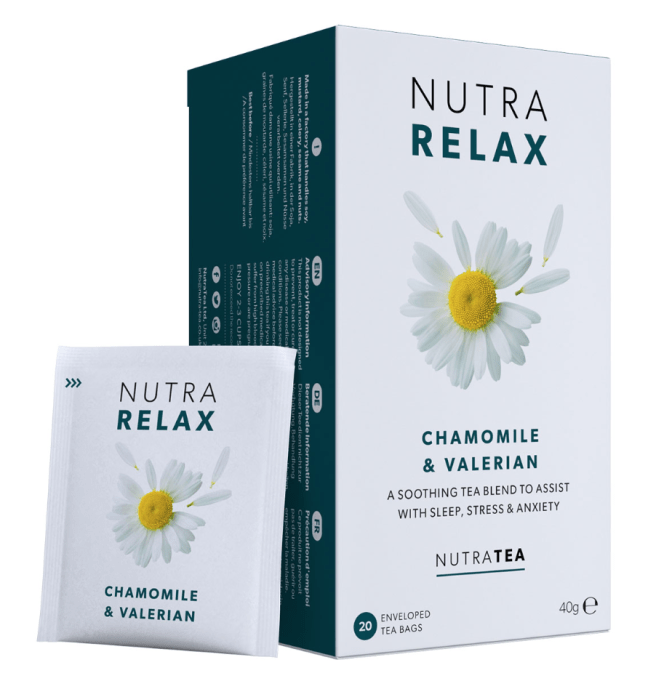
One brand in particular called Nutra Tea, based in London, has launched a range of teas to help with anxiety.
What does Nutra Tea provide?
Nutra Tea has spent the last 3 years creating a soothing tea blend called NutraRelax, made from ingredients including chamomile, valerian extract, St John’s Wort and lemon balm.
The tea has been carefully crafted with ingredients sourced from over 20 countries in order to create a flavour-some brew that is also nutritious too. What’s more, every tea in the range is made up of 100% raw ingredients with zero additives, meaning that you know you are consuming only the very highest quality tea.
The company’s founders explained: “You can go to the supermarket and get lemon tea or ginger tea, but the amount of product in it is actually very small – it is mostly made up of additives and flavours to make better to consume.”
“At Nutra Tea, we are including 100% of the main ingredient and we have worked years to perfect the taste, so it is a delicious product.”
How does the tea have health benefits?
● Help relax the body: by encouraging the alleviation of tension in the muscles, nerves and brain
● Reduce aches and pains in the body: due to anti-inflammatory properties of the tea, which gives blood pressure relief and decreases cardiovascular strain.
● Improving mental wellbeing: the tea can help to increase mental clarity, restore focus and clear the mind.
● Improving overall mood: due to the natural sedative effect of the tea, it can help to induce feelings of calmness and reduce anxiety.
Note: The tea should be drunk in addition to other medical treatment
NutraRelax is available from £4.99 per box of 20 bags and delivers to anywhere in the UK.
This sponsored blog was by NutraTea, a tea brand based in the UK.
Formerly called manic depression, bipolar disorder is a condition involving chronic changes in mood. It oscillates between a manic high, a depressive low, and a normal functioning state. People with this condition often find themselves at the mercy of extreme changes in mood.
However, it is worth noting that this condition is far from untreatable. In fact, with the help of a good clinical psychologist, medication, and a healthy lifestyle, a person with bipolar disorder can lead a happy, productive life.
If you know someone living with bipolar disorder, it helps to be mindful of offering them your care, understanding and support. Here are four things you can do.
Knowing the Facts
Learning about bipolar disorder is the first step in helping a friend with the condition. This is the best way to understand what they are going through.
Like other mental health concerns, there are a lot of misconceptions surrounding bipolar disorder. Differentiating the truth from the false assumptions can add to your knowledge and understanding and, ultimately, help you in providing the right kind of support that your friend needs.
Here are some of the common myths about bipolar disorder that have been debunked by experts:
Myth #1: Bipolar disorder is a grave mental illness
In the past couple of decades, experts have established that there are mild forms of bipolar disorder which are, in fact, much more common than severe conditions.
The two main types of this disorder are bipolar I and bipolar II. Bipolar I is characterized by severe episodes of depression and mania while bipolar II entails severe depression but milder manic attacks.
Beyond these two, a bigger group of people experience other forms of mania that occur in shorter periods.
Myth #2: Mood swings automatically mean a person is bipolar
This is completely false. Mood swings can be caused by several different circumstances, such as a woman’s menstrual cycle, use of drugs and other substances, and even the weather. In some cases, hormonal imbalances, neurological issues, and autoimmune diseases also wreak havoc on a person’s mood.
What sets bipolar disorder apart from these reasons for moodiness is the significant change in a person’s attitude, behaviour, and personality over several days at a time.
Compassion is crucial for your friend’s recovery. However, many people find it hard to differentiate compassion from pity.
Avoid showing your friend that you feel sorry for then. Instead, recognise the challenge of living and let them know that you are always there for them no matter what.
Not Telling Your Friend What to Feel or How to React
Saying “cheer up” to a person with depression, or “calm down” when manic highs occur, are not the correct approaches to communicating with loved ones with bipolar disorder. In fact, telling them what to do may only cause them to feel antagonized.
Instead, ask them what you can do to help, or offer to do things that can help them feel calmer or happier. When they are no longer feeling distressed, talk about potential strategies that you can try together to help them get better next time.
Lending Your Ears
Listening to a friend in need can do wonders for people living with bipolar disorder. Lending your ears means you should listen sympathetically.
Let your friend know that they do not have to put on a brave face in front of you and that you are ready to listen whenever they need you. You should also take their words seriously, especially if they speak about self-harm or suicide.
Being There for a Friend in Need
Admitting that you need another person’s help or support is not always easy for everyone. It may be especially difficult for people who are being treated for psychological conditions. If someone close to you is living with or has a history of bipolar disorder, make sure to let them know that you are always ready to be there for them.
AUTHOR BIO
Justine Corry is a clinical psychologist and enjoys helping people get to the heart of what is not working in their lives. Along with Dr. Gemma Gladstone, she is co-director of the Good Mood Clinic in Sydney and has 10 years of experience within private practice.
In our age of information, choice and variety, there are hundreds of different types of therapy and counselling available. As a starting point, one of the most common questions asked is, what is the difference between counselling and psychotherapy?
The answer is much debated as the boundaries are not always clear, especially in the UK. However, it is generally stated that counselling is typically a shorter undertaking that focuses on the present and on current behaviours. On the other hand, psychotherapy addresses deeper, longer-term issues by exploring all experiences including those from childhood and with clients undergoing therapy for longer periods of time.
To get a fuller understanding, it helps to look at both the similarities and differences.
Blurred lines
The terms counselling and psychotherapy are frequently used with overlap and flexibility. Certain therapists offer both. Some psychotherapists choose to use the term ‘counsellor’ simply as a softer, more approachable title, some use counselling as part of a psychotherapy process. There are also counsellors who adopt psychotherapeutic approaches. You can see where the confusion arises.
There are many individuals and practices offering counselling, but less that offer a full range of therapies including in-depth psychotherapies (for example, Brighton and Hove Psychotherapy who also happen to discuss this topic on their site). Reputable practices share the interests, approaches and qualifications of their therapists and will be happy to discuss their compatibility with clients.
The similarities – what you get from both
Counselling and psychotherapy are both focused on creating an open, non-judgmental, safe space to help people improve their mental wellbeing and to remove distress from their lives. The majority of therapies across the board are talking or communicative therapies where participants aim for a better understanding of themselves, and often their relationships with other people, through guided discussions with a therapist.
In talking therapies people explore their feelings and thoughts and often look at their choices. Both counselling and psychotherapy have different branches and specialisms and both can work with individuals, families, groups or particular focus areas. But there are some general distinctions that can help people decide which is most appropriate for them.
Counselling
Counselling addresses present problems and current personal issues such as a relationship breakdown, anxiety or confidence or behavioural issues. Often with some kind of structured process, the counsellor helps alleviate symptoms and current behaviour patterns that are causing distress. It may offer practical tools to break down negative feelings and habits, and it can often be goal or action based.
As it generally deals with more surface level ‘life’ issues, clients are usually involved in therapy for shorter timeframes. The Counsellor’s Guide is a good source of information for those wanting to know more.
Psychotherapy
Psychotherapy is a deeper and longer term approach. It looks not only at the present situation, but how someone’s childhood and past may be affecting and shaping emotions they have now. The therapist may help someone delve into their past to reveal hidden experiences that have affected them. Psychotherapy looks to identify the roots of an issue as part of the process.
As such it can address more complex mental health problems. It is a much more in-depth exploration of a person’s emotions aiming to bring buried issues to the surface to deliver a more profound understanding of who they are and their relationships.
Training
The training a therapist undergoes is often stated as another key difference. A counsellor or psychotherapeutic counsellor requires a diploma or degree, along with a number of hours of work placement experience. Psychotherapists are required to undergo postgraduate level specialist training of around 4 years. It is often noted too, that most psychotherapists are required to undergo therapy themselves as part of their training and so that they have experience from both sides.
However, counsellor and psychotherapist are not legally protected titles and further specialisms may often entail more training for both. A good therapist will openly share their training details and should be a registered member of one of the appropriate industry bodies such as the British Association for Counselling and Psychotherapy.
Which therapy is right for me?
The distinctions made here are broad ones to give a general guide. There are counselling and psychotherapy options to suit different types of problem, different types of people and different levels of previous experience. The therapies on offer will vary and some people undergo counselling for a long time, and some find a psychotherapy that offers a shorter solution.
It depends massively on the person seeking therapy and their needs, and the important thing is for a client is to find a therapist that they feel comfortable with. Many experts say that much of the healing comes from the positive experience of the therapist to client relationship and this can be down to a personal match.
This guest blog was written by freelance writer Aaron James, based in the UK.
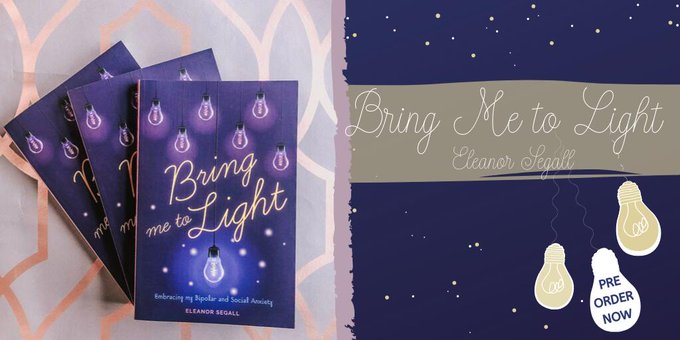
This week is publication week for my book ‘Bring me to Light’!
I can’t quite believe that it hits the shelves tomorrow! I started writing the manuscript in early 2018 and now here we are! I am lucky to have had my book reviewed by two great bloggers this week.
The first is by Rachael Stray, a UK based blogger. Rachael received a free copy of the book in exchange for an honest review and she said:
” Eleanor is extremely honest as she tells her very personal story of being diagnosed with bipolar 1 disorder and her journey from adolescence to adulthood. In this book we are taken through Eleanor’s struggles with her mental health and what a profound impact it has had on her life.
She really opens up about her struggles with her mental health and the inner turmoil she was facing. Eleanor clearly has a great support network of family and friends who have been such a support for her which she acknowledges.
I found her honest account of struggling with medication, institutionalisation following hospital stays and feeling lost in her own life extremely difficult to read but so educational and inspirational.
Eleanor hasn’t let her mental health stop her from being successful, finding a career she loves, she’s got such a strong faith, a great network of family and friends and now a loving husband.A lot of what she talks about within this book really deeply personally resonated with me.” (Rachael Stray https://rachaelstray.com/bring-me-to-light-review-ad/)
Thank you Rachael for your kind review. The second was by Nyxie who is based in Northern Ireland and is also a book blogger (at Nyxie’s nook). She also received a free copy in exchange for an honest review:
“Eleanor began blogging while in outpatient treatment as both an outlet for her thoughts and to provide education to others. Like many of those with mental and physical illness, Eleanor’s writing became like therapy. When the words are placed on page or screen, they’re less likely to be bouncing off the walls of our brains. It’s a perfect example of how art, of any kind, can release built-up tension.
She has also successfully worked with mental health organisations such as Time to Change, Mind and SANE, and has even written for publications such as The Telegraph, Glamour and Happiful Magazine.
“Bring Me To Light” is a wonderful and brutally honest account of living with Bipolar Disorder. For anyone who lives with any illness, chronic or mental, should read this book. Like me, you’ll find yourself identifying with parts of Eleanor’s past.
I found it quite difficult to read some chapters as I empathised quite a bit with her emotions and thought patterns. With that being said I do love a book that makes me feel strong emotions, as many memoirs usually do.” (Nyxie at Nyxies Nook: https://www.nyxiesnook.com/bring-me-to-light/)
Thank you both for your kind reviews.
Want to order a copy of my book? Click here for Amazon (but also in other book shops):
For many people, feelings of anxiety are a regular occurrence. Anxiety can be a motivator to do better in work, school, and to become better at nurturing healthy relationships. However, if the anxiety you’re experiencing lingers for longer than it should and paralyses you, more profound issues are at play. If you are using drugs and alcohol to deal with anxiety, you are likely doing more harm than good.
At best, drugs are only a short-term solution to anxiety. If you aren’t dealing with the underlying issues that give rise to your anxiety, you will be plagued with this condition over the long haul. The problems only compound if you become increasingly dependent on drugs to deal with anxiety, you can develop a co-occurring substance abuse problem which further complicates matters.
Getting professional help for your addiction to drugs and alcohol will, in most cases, involve receiving treatment for the “co-occurring” anxiety. Through the help of experienced treatment staff and proven programs, you can become healthy and happy.
In What Ways Does Drug Treatment Save You From Anxiety?
As already stated, drug and alcohol use provide a temporary reprieve from the anxiety you experience. While you may experience short periods of relief, your anxiety returns. If you aren’t taking the time to address the root causes of anxiety in your life, your anxiety will worsen over time. Additionally, your substance use will increase over time, increasing the likelihood of developing an addiction to substances that allow you to “self-medicate.”
Through comprehensive physical and psychological evaluations and intensive drug treatment, you will get the tools and support you need to address these issues head-on. As you get better, staff will provide you the tools you need to deal with your anxiety healthily.
What Tools Can I Learn to Deal With My Anxiety Without Drugs?
As you progress through treatment, you learn of ways to deal with your anxiety without resorting to substance abuse. Many treatment centers teach mindful meditation techniques such as focused breathing and simple yoga poses. These techniques help to ground you, calm the mind, and focus on the present moment. A significant benefit of mindful meditation is that techniques are relatively easy to learn, and you only need 15-20 minutes a day to see results.
Another tool that you learn in treatment that helps you alleviate anxiety is through simple lifestyle choices such as regular exercise and healthy eating habits. Exercise helps release dopamine which is the brain natural feel-good chemical. You become more relaxed and at ease, and regular exercise helps you look and feel your best. Likewise, a healthy diet nourishes the body and brain and provides the nutrients it needs for optimal functioning.
Additionally, you can effectively deal with anxiety without illegal drugs in the long run through the use of ongoing therapy. With the help of an experienced mental health professional, you can address any recurring anxiety in a safe and supportive environment. Through the use of effective therapies such as CBT, talking therapies or EMDR, you can actively work to address root issues that give rise to your anxiety. When those are addressed, you will get the tools you need to manage your anxiety at different times in your life.
The decision to quit drugs and alcohol is a significant life decision. While it may seem overwhelming and makes you feel anxious, the support and encouragement you receive in treatment will go a long way in helping you leave your addiction and your anxiety behind.
About Robert Tropp
Robert Tropp is a functional nutrition practitioner whose primary focus is substance abuse and mental health disorders. Robert uses a functional medicine approach to help clients regain mental and physical well-being. Robert is an advocate for the importance of nutrition in addiction recovery and works as the health and wellness director at Nuview Treatment Center in Marina Del Rey, California, USA.
Today I am writing because I have had enough with the NHS mental health services. Firstly, I was told that in my area of London, the NHS- national health service doesn’t fund EMDR (rapid eye movement processing therapy- for trauma and PTSD). Why, I have no idea as it is desperately needed. However, I was referred to IAPT wellbeing service (still under NHS), who do have EMDR therapists. Some telephone questionnaires later and I have found that I have been discharged from IAPT – to another team that doesn’t provide the therapy I so dearly need.
I have had years of therapy- CBT x3 and psychodynamic- most had to be privately funded due to the waiting lists in NHS. I need vital treatment for the trauma I faced of becoming so unwell,being in hospital and all I faced during mania and psychosis. My trauma comes out in anxiety and panic attacks which disrupt my daily living. EMDR helps process trauma and I am hoping it will help me to live fully again.
Due to this, the only option with therapy may be to go privately- which is expensive and not ideal for me- I can’t afford it alone. However, I have found an accredited therapist online so this will have to be the route I go down I think. I will speak to the psychiatrist in the other team but don’t hold out any hope as they don’t fund EMDR and there is a 2 year psychology waiting list. Yup, you heard that correctly, 2 years.
I am not doing so well- I have been feeling lower in the mornings and more anxious since having to leave my job. This was another blow today.
Yet….
I am trying to keep myself positive and focused and going. But some days, I just feel like hiding away.
Some positives- I am grateful for:
My new bright pink cardigan is making me smile
Our wedding photos and video come back today
Finding a therapist
Bipolar UK sharing about my book
Love and support from others
Job interviews and book promotion
When people say fund our NHS mental health services, they mean it. People like me are denied access to vital support and put on waiting lists or fobbed off. Its not OK.
If you find yourself at a point in life where you think you might need to seek some professional help, then the decision as to which therapy is right for you can be a daunting one. At its worst, depression and anxiety related disorders can take away our ability to make rational, informed decisions, so how could you possibly know which one is right for you?
There’s no definitive way of knowing, and even if you start one course of therapy, only to discover it isn’t for you, it’s important to remember it’s not a one-size-fits all decision. If you’re trying to take a long-term approach to taking care of your mental health, then you need to take the time and effort to find the appropriate course of treatment to meet your needs.
So here’s a basic guide to some of the most common therapies, and how they might be able to help you (although it’s worth bearing in mind that this isn’t an exhaustive list).
Counselling
This might sound like a catch-all term to describe all of the therapies below, but actually counselling is subtly different from other types of therapy. Counselling can often be a useful short term strategy to cope with events in our lives which can, quite understandably, cause mental health stresses. These can include bereavement, miscarriage, sudden redundancy, relationship problems or problems with infertility. Counselling sessions normally last for 6-12 weeks, though they can of course be tailored to every individual person’s needs.
Psychotherapy
Psychotherapy is primarily a talking therapy, but may also utilise art, writing, music or drama. Psychotherapy can help with a range of conditions, including anxiety, stress, depression, eating disorders, post-traumatic stress disorder, obsessive compulsive disorder. This therapy aims to teach you to manage painful emotions and relationships more successfully.
Psychotherapy basically involves talking with the patient, discussing strategies to solve problems and changing behaviour.
It’s worth noting that most of the other therapies in this post are forms of psychotherapy.
Psychodynamic therapy
This is a form of psychotherapy which focuses less on the patient-therapy relationship. Patients are told to speak freely and openly about any issues that come to mind, whether it be fears, anxieties or desires. It is a more short-term incarnation of psychotherapy. It’s often used to treat people with serious depressive disorders, or who may struggle to forge meaningful relationships in their lives.
Interpersonal Psychotherapy
Interpersonal psychotherapy is a short-term form of psychotherapy treatment. It’s very structured, and includes a lot of homework and continuous assessment. It primarily looks at ways depression can be triggered by changes in relationships to others, such as bereavement, or relocation.
It will usually start with a 1-3 week assessment of symptoms, as wells as social history and the patient’s relationships. The therapy aims to come up with treatment strategies to deal with problem areas in a patient’s life; over the course of the treatment the emphasis of these problem areas might change, as will the therapist’s strategies. IPT is a relatively young form of psychotherapy treatments.
Cognitive Behavioural Therapy
Cognitive behavioural therapy is a short-term form of psychotherapy which puts its focus on problem solving as a way of breaking certain thought patterns and modes of behaviour. It’s very much a therapy which focuses on the here and now, as opposed to trying to look for explanations of present day behaviour in past events. CBT has proven to be effective in the treatment of anxiety and panic disorders, depression, post-traumatic stress disorder, phobias and obsessive compulsive disorder.
CBT works on the concept that a person’s perception of a certain situation determines their and feelings, and hopefully break free of unhelpful patterns of behaviour.
Mindful Based Cognitive Therapy
This is another form of cognitive therapy which incorporates mindfulness strategies and breathing exercises into courses of treatment. Mindfulness techniques use breathing and meditation to place people in the present moment, and MBCT uses these techniques to encourage patients to deal with overwhelming or stressful situations. Again, it aims to break unhelpful thought patterns which can lead to recurrent episodes of depression or anxiety. As well as mindfulness, patients are taught to understand the relationship between how you think and how you feel.
Neuro-Linguistic Programming Therapy
Neuro-linguistic programming focuses on behaviour modification techniques to help improve a client’s sense of self-awareness, confidence and communication skills. Again, it helps people to understand that the way they operate in the world is in turn affected by how they view of the world.
It’s often used to treat phobias, help people deal with self-esteem problems, post-traumatic stress disorder and is designed to help patients understand the workings of their own mind.
Couples and Family Therapy
The title of this therapy is relatively self-explanatory, but basically it encourages individuals to resolve problems in the context of family units, or as part of a couple. This helps people to better understand their role within a group dynamic, and how their actions affect the other person within a family or couple.
During the therapy, family members are encouraged to work together to solve a problem which may be directly affecting a family member, with each person encourage to express their thoughts and feelings in an open and supportive forum. Family and couples therapy is geared towards making different family members empathise with one another, understand each other’s point of view, and switch roles where necessary.
The ultimate goal of family and couples therapy is restore healthy relationships. This branch of therapy essentially believes that family life is like being part of a system, which is only as strong as the individual within it. Family and couple therapy ultimately aims to restore balance to this system.
These are, arguably, the most well-known and high-profile forms of therapy. As outlined at the beginning of this article, it’s not an exhaustive list; there are many more specific types of therapy which may prove to be the right one for you. It’s also worth mentioning that it’s perfectly normal to try a few of the therapies on this list, as it might take a few referrals before you find the right one for you.
The Worsley Centre offers counselling and psychotherapy sessions for couples, individuals and groups in the Greater Manchester area.
Be Ur Own Light is supporting the incredible initiative from the Duke and Duchess of Cambridge and Sussex- Shout UK, a new text support line in the UK for people in mental health crisis- anyone who is struggling. They have teamed up with Crisis Text line to reach vulnerable people.
I feel privileged to live in a country where stigma is beginning to fall and where mental health issues are beginning to be understood better. Texting would have helped me as an ill teenager with bipolar!
Shout are looking for volunteers too to man the text lines as crisis counsellors.
Thank you to the Duke and Duchesses for the incredible profile they are giving mental health. #GiveUsAShout
When people abuse drugs and alcohol, it is often the sign of a deeper underlying issue. For many people struggling with addiction, the source of their addiction is due to mental illness that often has gone undiagnosed. One of the most common co-occurring disorders seen with substance abuse is anxiety. The following article will outline what defines anxiety, and the connection between anxiety and substance abuse.
What is Anxiety?
In general, anxiety is an important emotion to have. While it may be normal to feel fear, apprehension, and nervousness from time to time, it becomes an issue when people experience these emotions at excessive levels. When anxiety takes over a person’s thought process, it manifests itself into physical symptoms such as the following:
Increased and constant restlessness
Increased and uncontrollable feelings of worry
Irritability
concentration difficulties
sleep problems
Anxiety can be grouped into several types of disorders. These can include generalized anxiety disorder (GAD), panic disorder, post-traumatic stress disorder (PTSD), phobias, social anxiety disorder, and selective mutism among others. The leading causes of anxiety include work and family stresses, financial worries as well as underlying medical issues. The roots of anxiety can also be traced to past traumatic events that are unresolved.
How Anxiety and Substance Abuse Connect
When people suffer from anxiety, mental and physical symptoms can be very intense and can wear on the body and mind. To get some form of relief, people may turn to substances that stimulate dopamine in the brain to help numb the feelings of discomfort. Self-medicating oneself to take the edge of off anxiety only works in the short-term and can have a rebound effect that makes anxiety worse over time. Without addressing the roots of anxiety, their condition will worsen over time—along with their substance use.
The connection between anxiety and substance abuse can also trace back to the teenage and young adult years. During adolescence, the brain is still developing and forming. If people used drugs as a teenager, it could alter the development of the parts of the brain that govern reasoning and impulse control. Drug and alcohol use early in life can increase the likelihood of anxiety and substance abuse as that person gets older.
Another reason for anxiety disorders and substance abuse connection is because of one’s genetics. Some people may be more predisposed to both anxiety and drug and alcohol dependence through genetic factors shaped by one’s environment.
Getting Help
For those dealing with co-occurring disorders, they must seek specialised help from a dual diagnosis treatment facility specializing in mental health and addiction disorders. The first step in getting help is undergoing medical detoxification. During detox, patients will undergo medication-assisted therapy to help better tolerate the physical and psychological symptoms associated with withdrawal. Additionally, staff will perform physical and mental health evaluations to pinpoint any underlying issues that may impact recovery.
For those suffering from dual diagnosis, treatment will include mental health services in addition to addiction treatment services. Dual diagnosis facilities feature mental health professionals working alongside addiction treatment personnel in creating an individual treatment plan that fits each client’s specific needs.
In addition to therapy, 12-step counselling, life, and coping skills training and other forms of treatment, patients will receive mental health treatment with a focus on ongoing counselling and medication-based therapies that will give them the tools to handle anxiety.
This guest blog was written by Nu View Treatment Center
Frequently asked questions and useful information for you to know:
Low self-esteem and insecurity are common issues that weigh on people’s minds daily. Some people experience harmful effects of insecurity more severely than others and seek various methods of self-help. On the other hand, those don’t know how to safely deal with these emotions turn to more harmful methods of relief.
If you have tried countless self-help fads or simply try to continuously block out internalized negativity, hypnotherapy may be the solution for you.
What is hypnotherapy?
There are many hypnotherapy techniques, but they all involve inducing a state of hypnosis, or relaxed focus, to connect with your subconscious mind. This creates an open and reflective state of mind that addresses negative emotions and visualizes change. In other words, you can use hypnotherapy to bring about an intense awareness and focus for the change you desire in your own life.
Is there any science behind it?
Hypnotherapy relies heavily on the science of brainwave patterns. The brain is always experiencing a level of electrical energy. And when those waves are occurring within a certain frequency range, you’re relaxed, but awake – your subconscious is receptive to new behavioural suggestions. This is when a hypnotherapist can use visualisation exercises to guide you to a more positive outlook.
How can hypnotherapy help my self-esteem?
Low self-esteem is caused by a constant spiral of negative thoughts. These thoughts could be caused by negative emotions culminating from childhood trauma. Thoughts like, “I’m not good enough” and other harmful subconscious judgements will keep you down.
Low self-esteem also causes or increases the side effects of mental health issues like depression, anxiety, and internalised emotional blockages.
Hypnotherapy for self-esteem creates new neural pathways that foster positive thoughts and emotions. Use hypnotherapy to rewrite negative mantras, from “I can’t” to “I can.” With hypnotherapy, you can change your harmful thoughts into positive thoughts about yourself and your surroundings. If you are looking for more resources A Time For Change hypnotherapy has incredible resources to help with issues ranging from vocational skill improvement and motivation, to managing unwanted behavior.
Can hypnotherapy cure my insecurity?
Like self-esteem issues, insecurity about one’s self and surroundings is common. Insecurity manifests in a variety of ways. You have insecurity if you experience a daily lack of confidence, have trouble speaking to strangers, or authority figures, can’t articulate what you need from your romantic partner, or experience paranoia that people are judging you.
Although hypnotherapy is not a cure-all, it can significantly turn around those negative thoughts and emotions related to insecurity. Seek out hypnotherapy for insecurity for help in choosing a romantic partner, performing work tasks with more confidence, and approaching life with a more positive outlook.
How many sessions do I have to attend to see results?
Hypnotherapy is a way for you to be in control of your subconscious mind. It helps you connect with subconscious memories, trauma, and negative thoughts in order to break old patterns and manifest positivity.
Some people might notice results within a few sessions, while others will need to work more at length with a hypnotherapist. Patience will lead to a continuation of positive thoughts.
Is there anything else I need to know about hypnotherapy?
Before your first visit with your hypnotherapist, make sure you are ready to see the change in your own life. Hypnotherapy is a powerful tool that is used to change the negative to the positive. However, always ask your healthcare provider for more information if you are dealing with serious mental illness.
This guest blog was written by A Time to Change hypnotherapy, based in the USA




 beurownlight.com