

(image: WiseUp)
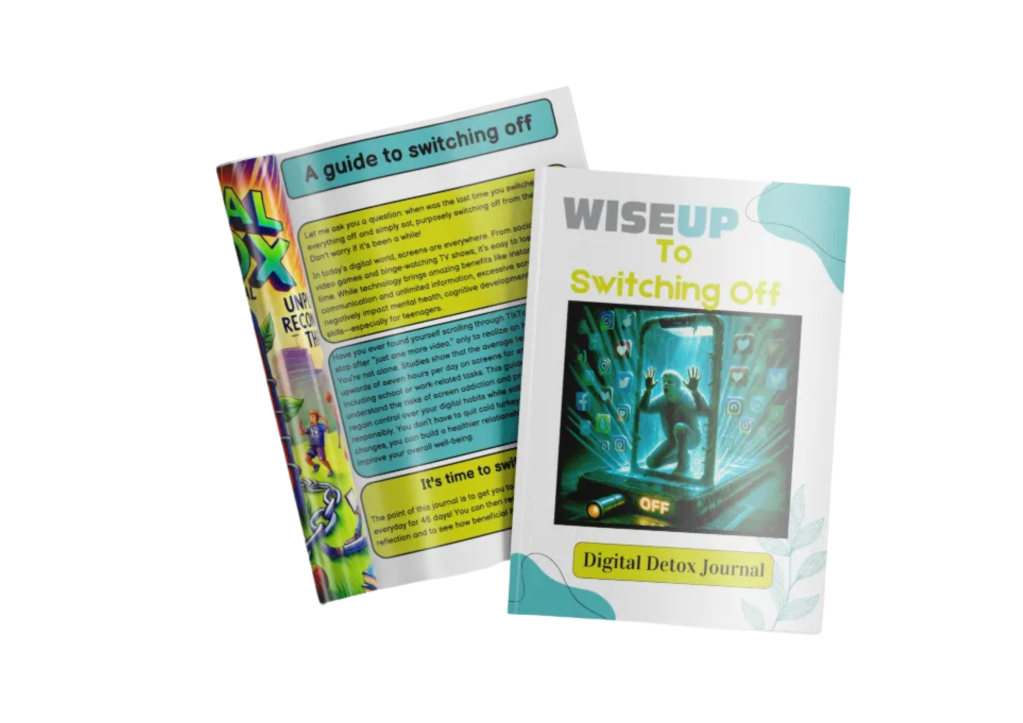
WiseUp Team Building, the multi award winning, UK Youth wellbeing and resilience organisation, has launched WiseUp to Switching Off – a guided programme designed to help young people and families build healthier relationships with screens and technology.
This launch comes at a time when children’s digital wellbeing is at the centre of national discussion, with the UK government recently consulting on measures inspired by Australia’s ban on social media for under-16s as part of wider online safety reforms.
With evidence mounting globally – recent World Health Organization data shows that rates of problematic social media behaviour among adolescents increased from 7% to 11% between 2018 and 2022 and that more than one in ten teenagers may struggle to control their use and experience negative consequences such as disrupted sleep and lower wellbeing – WiseUp’s journal is positioned as a practical alternative to purely restrictive approaches.
A significant proportion of young people report a negative impact on mental health from digital and social media use; a UK Digital Youth Index indicates that approximately 17% of young people aged 8–25 say their internet and digital device use harms their mental health, with the prevalence rising among older teens equating to around 2.5 million young people across the UK.
Richard Wise, CEO of WiseUp, said: “We created WiseUp to Switching Off, a digital detox guide, because families, teachers and young people are increasingly telling us they want positive and practical tools – not more tech bans – to make sense of their digital lives. Screens are now woven into education friendships and culture but when usage becomes compulsive it can undermine sleep focus and emotional wellbeing. Our journal helps young people become aware of their patterns reflect on their experiences and make incremental sustainable changes.”
He continued: “Screens themselves aren’t the problem – but the way they pull young people in can be. When scrolling becomes a coping mechanism, when anxiety, loneliness or pressure drive screen use the impact on wellbeing can be profound. WiseUp to Switching Off exists to break that cycle. It gives young people permission to pause, space to breathe and the tools to reconnect with themselves and the world around them — while empowering schools and parents to put wellbeing back at the centre of everyday life.”

(image: Izzy Park: Unsplash)
The WiseUp to Switching Off digital journal combines evidence-based education about technology and the brain, practical habit-building tools, daily reflection prompts and offline challenges designed to improve focus sleep and connection with others. It is intended for use both at home and in educational settings complementing Personal Social Health and Economic (PSHE) learning.
Parents and wellbeing leads in schools have reported that the journal has helped young people reduce conflict over screens. It has also improved sleep routines and helped them rediscover offline interests, reinforcing WiseUp’s belief that self-directed change (rather than coercive restriction) is both sustainable and empowering.
WiseUp encourages parents, teachers, practitioners and policymakers to explore the journal and join the ongoing effort to support a balanced digital future for young people. To download your free copy visit the WiseUp website.

(image: WiseUp)






 beurownlight.com