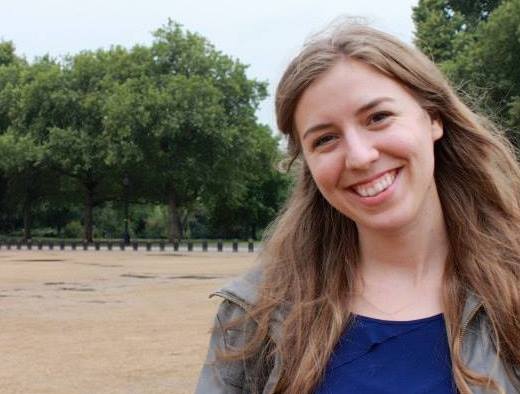
Finding Purpose- my journey to survive Anorexia. Guest post for World Mental Health Day by Spela Kranjec

spela1
(image: Spela Kranjec)


Please note; Trigger warning, this post discusses Anorexia and thoughts during it. Read with care.

Do you sometimes feel useless and unneeded? You wake up in the morning, lethargic with the thought that you truly don’t know why this upcoming day would be important? You watch other people, everyone with some task of their own, busy and running around with determination. How is it that the world is passing you by? “Is it my fault?” you ask yourself. You become bogged down with these thought, only making the situation worse. You unintentionally focus on the thought that you’re not worth anything! And you forget about everything that you’re good at, things that make life worth living.

You have destroyed yourself. You pushed yourself down into nothing. What’s worse is that you believe others see you as such, too. That’s why you need something that has a purpose, as otherwise you soon lose a will to live. The human mind is a very complex thing, and when it wants something it’s willing to take it by itself if you fail to provide it. But it takes the thing that it finds first. It doesn’t choose. As the whole body is surrounded by negativity, it latches on to that – and that’s how I developed anorexia.

Yes, I was a young girl who couldn’t find her way in this big world. I tried to fit in, but I was rejected. I thought I was intelligent, but I had to try much harder than others at school to get an A. I believed a good job was waiting for me, but was disappointed to discover that there are so many other people in greater need. I constantly trained, but never made the team. I looked at myself in the mirror, but I never became a beauty. I saved money when others were spending it, but they now probably have more than me.

In all my drive to become something, to be something, I started disappearing. And I wasn’t even aware of it. My mind convinced me that I would be appreciated, desired, only if I were thin. Very thin. As I was willing to do anything to be accepted, I started starving myself. Very quickly, scales become my only friend, and the only daily task was to exercise and reject food. The more I succeeded in this, the greater power I had over my own life. I was becoming something. Finally!

It didn’t take long before I heard the first comments, “Špela, you’re so thin!” My heart leaped! All my hunger and the dizziness during excessive exercise finally paid off. Obviously, it really was my own fault. Obviously, all I had to do was try harder. With this victory, I really couldn’t stop. So I kept going. I wanted to be even skinnier, just in case I ever gain back some weight, so that things didn’t change back to their old ways.

But as I never really defined this limit of losing weight, this “just in case”, I never knew when to stop. So I didn’t. There was one other boundary line. A sort of point of no return, before which I could still come back. Back to that old Špela, still knowing that I matter, that I belong somewhere. I’ve passed that point some time ago, and I wasn’t even sure that old Špela ever truly existed.

I was suddenly in a situation where everything was confusing and unclear. Before, I never belonged anywhere, then the world was in the palm of my hand, and now everything was falling apart, even more so than at the beginning. And I fell apart… Anorexia finally conquered me.

Now I faced a truly difficult task, which required from me a tremendous amount of mental and personality changes. A task that would be completed once the world stopped passing me by, and I would walk in step with the world. A task to find recovery.

spela2

I wrote a book about my mission to save myself. And for this book, my brother and I are launching a Kickstarter campaign, NOTICE ME: My 9-Year Struggle against Anorexia.

Why? Because I know there are too many like me in this world, and this has to change. And because we want to show that we matter, that we have a mission in this world, even though I believed otherwise for many years.

Because I want to help you, I’m giving you opportunity, to start reading my book totally for free on this link: https://www.notice-me.net/free-chapter/.

Spela Kranjec is a mental health writer, documenting her 9 years of living with anorexia.

Suicide Prevention on Social media: Guest post by Dan Brown at MyTherapy for World Mental Health Day

helpme1

I recall reading a story last year about two teenage students from a town in Denver, both of whom lost their lives to suicide within two days of one-another.

In both cases, the students had made their intentions known on social media.

Countless similar stories can be found online. In many cases, such as the one above, people did attempt to reach out to those in need. In other cases, online cries for help were ignored or not taken seriously.

Teen Suicide Rates are Rising

Between 2010 and 2017, the number of teenage suicides in England and Wales increased by 67%.

In London, the figure is rising at an even greater rate, while a similar trend is occurring on the other side of the Atlantic, with the suicide rate of children and teenagers between 10 and 17 years old increasing by 70% in a decade since 2006.

The Role of Social Media in Suicide Prevention

While many believe social media is at least partially responsible for the rising rates of teenage suicides – due to matter such as cyber-bullying – it can be used as an effective tool for suicide prevention. This goes for any user of social media, not just teenagers.

The major platforms themselves are actively engaged in suicide prevention, but much of the onus is on individuals to respond should they encounter a post pertaining to suicide from a friend, family member, or anybody else.

Contacting the Emergency Services

First-and-foremost, you should not hesitate in contacting the emergency services if you believe someone’s life is in imminent danger. Any indications that someone is preparing to take their own life should be treated as a medical emergency. If need-be, contact closer friends or relatives of the person in question as well, to ensure help can arrive as quickly as possible.

In such situations, particularly if the person has made their intentions clear, the danger is obvious.

However, it is not always so easy to spot when a person needs help, or to differentiate between someone simply ‘venting’ after having a bad day and a more serious mental health issue.

The Warning Signs

Spotting the signs that a person may be contemplated suicide based on their social media activity can be difficult, given the absence of body language or tone of voice in many posts, especially those that are purely text rather than photos or videos.

However, there are some warning signs you can look out for.

  • Tone
    While tone of voice by not be present in a lot of social media posts, you will probably be familiar with the tone your friends and family members take on social media. A negative change in tone may be subtle or happen gradually over time, but it should not be overlooked. If you start to notice more posts that strike you as odd or out-of-character, it could be that person’s way of expressing negative emotions.
  • Signs of Anger or Lashing Out
    “Anger turned inward” is how Sigmund Freud described depression, a characterisation that is debated to this day. What seems beyond debate is that anger often coexists with depression, and that it can be outward as well as inward. Therefore, if you see someone reacting angrily or lashing out online, it could suggest they are struggling mentally. Again, this should be particularly alarming if it is out-of-character for that person.
  • Sad Posts
    Of course, sadness is the most obvious emotion to link with depression. When it comes to social media, this could be shown in sharing sad memes and pictures, or posts discrediting their own self-worth. Frequent posts of this nature could be a cry for help and should not be ignored.


It is also worth paying attention to the time of day the person is posting, as insomnia is a common symptom of depression. As such, regular posts late at night or in the early hours may be another warning sign.

Reaching Out to Someone You Are Concerned About

If you are concerned about someone’s wellbeing, raising your concerns with them is usually far from easy and must be done sensitively. However, many people struggle to talk about their mental wellbeing, be it through embarrassment, fear of ridicule, or any other reason perpetuated by the stigma surrounding the topic.

If you are the one to raise the issue, it can help break that barrier immediately.

There is also the myth that talking about suicide is a bad idea and could encourage a person to take their own life, which has contributed in making suicide taboo subject. Again, being the one to raise the topic, if appropriate, can help make a person feel more comfortable in discussing their concerns.

This article from Helpguide.org does a superb job of explaining the steps you can take in opening the dialogue.

Contacting Someone Closer to the Person

You do not have to be a close friend or family member to raise your concerns with a person. Given that we are discussing social media, you can even be the other side of the world.

However, you may ultimately decide that you are not the best person to speak directly to the individual you are concerned about.

That, however, does not mean you are unable to help.

Contacting someone closer to them – either physically or emotionally – clearly and considerately explaining why you are concerned, may encourage that person to bring the issue up. Perhaps they too have noticed the signs but were unsure whether to address them. Your message could be the push they need to do so.

You Can Help a Person in Need

It is quite likely that nothing in this article is new or surprising to you. However, many cries for help on social media go ignored. In the most tragic of cases, lives are needlessly lost. So, if you do find yourself in a situation where a friend or loved one is using social media in such a way, just remember: you can be the one to help. You may even save a life.


This article was contributed by Dan Brown from MyTherapy (free for iOS and Android).

On Complex PTSD and my recovery: Guest post by Lydia for World Mental Health Day

ptsdlydia

Hi there, I’m Lydia a 20-year-old youtuber and film maker, I’ve been battling my mental health conditions for a little over five years. This article is about C-PTSD (Complex Post Traumatic Stress Disorder) and how I’ve found recovery, but first, what is C-PTSD?

C-PTSD, is a type of post-traumatic stress disorder that stems from repetitive exposure to a traumatic experience, it is also commonly diagnosed alongside BPD (borderline personality disorder), I was diagnosed with C-PTSD around 3 years ago after witnessing a suicide and multiple suicide attempts, without going into too much detail it was really hard, and has taken me until this year (2018) to even begin to process what happened.

So, let’s talk about recovery, there a massive misconception that it isn’t possible to recover from any type of PTSD, however it totally is possible to  find recovery. My recovery really got started this year when I made the decision to privately access EMDR (Eye Movement Desensitization and Reprocessing) which was without question the most beneficial type of therapy I’ve tried.

Following this there was a major incident in which my mental stability declined rapidly I was subsequently detained in a psychiatric hospital for a little under a month, following my release, I decided to take control of my mental health and help myself.

The first thing I did to help myself was cut off from everybody negative, which I realised I had to do, because I really was at a point where I could have reached crisis point if things didn’t change. I moved from one end of the country to the other, I blocked everybody’s number, Facebook and Twitter, it was a drastic move but so important and to anybody who struggling with their mental health I’d wholeheartedly recommend doing this, just cut yourself off from everybody negative, you don’t have to justify it, your health and welfare should be the most important thing in your life.

The next thing I did was go to my GP and re-start my medication. Sometimes you just need an extra push, psychiatric medication can’t change your life circumstances, but it can help you heal. This was a pretty big decision but it was one I needed to make.

The final thing I did was to take a break and find a hobby.  I went on holiday with my family, I started creating more positive content on YouTube while also documenting my recovery which has been one of the most helpful things I’ve done/ This is because I’m a part of a really supportive community on YouTube, and just reading comments like “you gave me hope” means so much.

The big move I made this year was to write and release my own book on the journey I’ve been on, and I wouldn’t change it because it’s made me who I am today.

After a few years of complete hell, I’ve turned my life around and I’m certainly in a much more positive place, things change and life changes for the better. My overall message for you all would be to never lose hope, just hold on because if you put in the time and work things will change, however don’t expect people to change things for you. Hold on and find recovery.


Lydia is a youtuber and film maker, talking about her mental health. You can see her channels here:

www.youtube.com/lydiisadinosaur

www.twitter.com/Lifewithlydia


The Social Anxiety Diaries by Eleanor

biglife

This blog started as a way for me to express my innermost thoughts and feelings, the state of my mental health and write it all out on the page. I would like to continue this and so asked people on my Facebook group what they would like to hear about.

This blog on my social anxiety was voted for and here it is.

I must start by saying that I am quite a social person and love my friends. A lot of us with social anxiety are. I have lived with this form of anxiety since I was about 18 years old. It essentially is an anxiety disorder that is hard to control- and where you begin to fear being around people, crowds, small talk and socialising for fear of being exposed or judged negatively. This has impacted how I work too and sometimes how often I leave the house.

My anxiety disorder started in my teen years because my unmedicated bipolar disorder led me to act in ways I didn’t recognise. I became hyper, everything was heightened and I wasn’t my usual self. And so the fear of acting like this again or being judged for it, was what triggered my social anxiety.

11 years later, a lot has changed for me for the better. I am finally on the right medication. I have a loving partner, family and friends. However, yes I do still have social anxiety. It does cause panic attacks, especially in the mornings and it can stop me from attending work or social events. .

It is frustrating to admit this. As I have been in a lot of very helpful therapy and I have learnt what coping mechanisms can help me- but they are often hard to implement mid panic. However, I do think I will always have a certain level of panic which will restrict certain parts of my life. This is why I work freelance and from home. Writing has helped me heal.

What I do know is on the good days, I make sure to keep busy and see people/ go out as the more I do this, the fear lessens. If I am feeling low, the anxiety rears its head too. When I am depressed, I can become slightly agoraphobic and won’t want to leave the house. Its something I have to monitor and work on. Set myself achievable goals eg walk down the road, see a friend, call someone etc.

Some of my friends have been so kind and understanding about living with this and having to cancel certain arrangements. There are times I  have to force myself into doing things although it takes so much energy and can also make me have more panic attacks so its a fine line. I have to do whats best for me and my mind. If it is spiralling into panic, the rational self finds it hard to drown it out.

In general, I am doing OK but I have to do what is best for me in order to manage my anxiety disorder. If that means a night in or less time seeing people then sometimes this is what is needed.

However, I will continue to be an anxiety warrior and do all I can to expose myself to any feared situations when possible. It takes lots of energy!

What have I tried to manage this?

– Group sessions on managing anxiety, meditation and journalling
– Talking therapy for 6 months (which worked) and CBT three times (which didn’t stop the panic attacks)
– Exposure therapies with those I love helping me

Do you have this and how do you cope?

Love, Eleanor x 

Why Writing therapy helps : Guest Post by Amy Hutson, Counsellor

writing therapy
(image: Amy Hutson)

I first started using writing therapy without really knowing what it was when I was having a tough time at school. There was something valuable about getting my thoughts down on to a page, instead of spinning around my head that helped to make sense of everything.

Since training as a counsellor many years later, I came across writing therapy and took some training in how to use it with clients. I’ve found it can be very powerful, alongside therapy or even on its own.

But what is writing therapy?

Writing therapy or expressive writing is basically writing as fast as you can without worrying about grammar or whether it makes sense. It might sound a bit odd, but it taps into your unconscious thoughts and can be cathartic writing things down, as well as helping to come up with answers to something you’ve been struggling with.

In the 1980s James W. Pennebaker was the first person to research how writing therapy helps and he set the challenge of asking people to write about their most traumatic experiences over four consecutive days. The results of the study were staggering, people felt much better both mentally and physically. So much so that people made less visits to the doctor at about half their usual rate, after the experiment.

So how can you use writing therapy?

There are lots of different techniques I use with clients, depending on what issue it is we’re discussing or what I think might be helpful to them. But here are a few things you could try at home and if it ever feels a bit too painful what you’re writing, you can stop at any time or write about something that feels safer.

Journalling

If you’ve never tried writing in a stream-of-conscious style of writing in a journal, I’d recommend starting here. Some people like to buy a lovely notebook and find a quiet space to write, sometimes at the beginning or at the end of the day. Then the idea is to write about whatever comes to mind. Even if you start by just writing ‘blah blah blah’, you will probably find something insightful will come up if you just keep writing and don’t stop to think. If writing every day feels too much, you could try writing whenever you feel you need to – it could be you’ve had a really rough day and want somewhere to vent or maybe something incredible happened and you want to record and remember it.

The unsent letter

The unsent letter can be powerful when you want to say something to someone but feel you can’t. It might be you’re angry or upset with someone and you’re holding on to those strong emotions, because you feel unable to share them. So, you simply write everything you want to say to this person in a letter without worrying about hurting anyone’s feelings, because it’s not going to be sent. Writing it alone can really help, but it can also be used as a way of getting your thoughts together before confronting someone in a less emotional state.

If you want to take this one step further, you could write a letter back to yourself from the other person. The results can be surprising, as they can offer another perspective to the situation you might not have thought of.

Quick lists

Writing lists quickly and without editing them can be helpful and used in lots of different ways. Say you’re feeling anxious, you could start a list like:

I’m really anxious about:

  • My new job
  • Lack of sleep
  • Bad diet

Rather than just focusing on the anxiety, writing a list can sometimes help uncover what might be causing it, which you could then explore further in a journal, with a friend or a counsellor.

Another example of a quick list which can help if you’re feeling low is:

Three good things that happened today:

  • I got through the day at work despite little sleep
  • I met a friend for coffee
  • I went to the gym

Writing therapy really helps my clients and it could help you too!


Amy Hutson is a counsellor and writing therapist, who offers therapy in Hove and worldwide on Skype. For more details visit www.amyhutsoncounselling.co.uk


What’s Family therapy really like? Guest post by Christine H

Family therapy 1
(image: Christine H)

Therapy is growing more and more accepted as a mainstream practice, rather than a scary, stigmatised ordeal. After all, it’s important to take care of mental health, and sometimes, we could all use a little extra help.

However, when it comes to any kind of therapy, it can still be scary. We don’t know what to expect, and we worry that we’ll be forced into something that makes us too uncomfortable. This can especially true in the case of family therapy. Often, family therapy is utilised when one or more family member confronts a serious mental health challenge (such as, for example, bipolar disorder, addiction, or major behavioural issues) that affects the rest of the family.

So, in order to dispel some of the misunderstandings surrounding family therapy, and to perhaps help people become more comfortable with it, here are some important things to know:


There May Be a Mix of Alone and Together Time

Contrary to popular belief, family therapy isn’t just going to be your family talking in a circle with a therapist the whole session. Well, maybe sometimes it will be. But other times, “family therapy” refers to a lot of different compilations of relationships within your family. Parents may talk with the counsellor separately, and then a child who has been the primary subject of therapy will talk with the therapist, and then perhaps the counselor will enable a conversation between the child and parents in order to share information that needs to be shared.

Additionally, family therapy is most effective when all family members are utilising therapeutic tools to get what they can out of the experience. For example, often in the case of addiction, support groups are available for both the person struggling with addiction, and for the family members who are affected by it. In these separate group therapies (which you can learn more about here) family members can gain new perspectives which will empower them to return to family therapy with the information they need to make it a productive venture.


Information that You Want Confidential Can Be Confidential

During all the mix-match of family therapy modules, many individuals are wary about sharing information with the counselor if they don’t want it to be shared with the whole group. And although this might sound kind of shady, it’s not just about keeping major secrets. Often, it’s about protecting family members’ feelings, or being embarrassed or worried about our own feelings.

Since family systems therapy is ultimately about repairing relationships and empowering healthy communication and cooperation, a counsellor can help individuals identify what information is important to share, and how to go about it in the best way. However, there are some challenges that are best talked out one on one with the therapist, and not in the group as a whole. It’s important for all parties involved to understand that they can still control the information that’s shared, and the way they choose to do it… or not.


It’s Not All Talk Therapy

Although sometimes all that’s needed in order to strengthen a family’s power to communicate and cooperate is an outsider guiding the conversation, other times talk therapy can be frustrating for families, as they’ll find themselves going around in the same old circles and arguments that they would on their own. That’s why most counsellors will utilise other techniques and approaches to achieve family goals.

For example, sometimes it’s useful to utilize experiential therapy, which could include anything from a cooperative ropes course, to role playing exercises. You can learn more about those options here.


Practicing Outside of Therapy Sessions Is Vital

One common assumption of family therapy is that the work will get done in therapy sessions, and it doesn’t have to change the way things are outside of therapy. Family therapy can only be successful when it creates changes to habits and systems within the family dynamic that aren’t serving individuals as well as they should.

Most of the time, a therapist will give family members assignments and goals that they can do–both by themselves, and as they interact with the rest of the family–in order to improve family relationships. Often, these are small habits in the way that we talk and the way we share duties in and out of the house.


This article was written by expert on family therapy Christine H:

christine

Christine is a professional writer and an avid reader who’s passionate about storytelling in any form. At any given moment, she’s in the middle of at least three books on anything from psychology to ninjas. Although she’s a marathon swimmer and enjoys camping in the mountains, she believes there’s nothing better than a carton of ice cream and a Dawson’s Creek marathon. She blogs about marketing here. Follow more of her writing on Twitter @readwritechill.


Autumn leaves and Mental Health tales. (by founder Eleanor)

autumnhyg

(image: http://www.thechakrahouse.co.uk/chakra-hygge-fairy-lights/)

I wanted to write this blog today because I have been reflecting. Over the years, I have come to really love the Autumn (Fall) season, despite being born in summer. Its cosy and calming at times, however these months can bring on some anxiety again for me.

I think that we are all human and are affected by the changing seasons. I know that my bipolar goes in phases, but is largely controlled and stabilised by medicines. However, sometimes hormones can make me feel lower at times of the month or life events can make you feel a bit sadder than normal, and in some cases, provoke depression.

My anxiety arrives in the form of morning panic and I can find it harder to do certain tasks. However, I am lucky that I am not depressed currently but the anxious thoughts are getting worse again.

I will worry about being around crowds, travelling far or socialising en masse with people I havn’t seen for a while. I live within a community where we all gather together for religious festivals and it can be harder to do this when I am more anxious. I particularly find early mornings hard- and don’t want to leave the house before 10am usually!

Working from home is both a blessing as I can work my own hours but I go out less. I am really trying to work on going out more- even down the road, especially before it gets too cold and dark.

Despite the increase in anxiety in the past few days, I am feeling thankful. There are so many good things to look forward to. There are so many exciting projects I can be a part of. When one door closes, I know that another will open.

I am still writing my book, still running my blog and have some articles being published soon. I also do social media management. I hope that my career will continue to diversify and bring joy.  I also need stability and the life of a freelancer, though fulfilling at times, is never easy.

There is a lot to be grateful for- family and friends, my fiance and life- despite the fears, anxiety and catastrophising that I do at times and am trying to limit. Positive mindset is so important- I am working on it!

Autumn can make us feel sadder or more anxious, or cause other mental health symptoms.  However, like now, it can also feel comforting- as I write on my computer, sipping a cup of tea as the darkness is falling. (Is it too new age of me to use the word ‘hygge’)?

As the leaves begin to fall and the frosts come its so important we find our lights in the darkness.

How are you doing? Let me know below!

Love,

Eleanor

Mindfulness and Unplugging: Digital Detox

sunflower

(image: Gizmodo)

In my life, I have found that what is truly important is having time away from work, fears, worries, busy-ness in general and unplugging. If I am feeling overwhelmed or anxious or like things are too much, I take an hour or two in the week (and sometimes a day at weekends) to really, properly switch off.

I love social media and  I am always checking my email but sometimes its really good not to have to answer emails or mindlessly scroll through feeds. I love Instagram, but it is an excellent distraction from what I probably should be doing too!

Every Saturday in the Jewish world is Shabbat, the sabbath. I have a complete digital detox and find that I am a lot calmer and more present in the world. I go for walks and look at trees and flowers, without the distraction of my phone. I sleep without the radio (normally at night its on). I am not checking each notification, each app for something new.

I feel free for those 25 hours. I often curl up with a book, sleep and just relax. However, any longer and I really would miss the outside digital world- its a fine balance.

For me I want to be more mindful and appreciative and not live life constantly by social media. It is how I promote my work and stay in touch with people. I love that contact but I also like to unplug my mind and rest.

What about you?

Love,

Eleanor x 


Can Animals and Pet Therapy help our Mental Health? Guest post by Dawn Prime

pettherapy2
(image: http://www.usatherapydogs.org/)

Can animals help our mental health? Approximately one in four people in England will experience a mental health issue each year (YouGOV). Every mental health issue is individual, and every situation is different; this can be shown in many forms including stress, anxiety and depression. Living with a mental health condition can affect many aspects of our daily life, with many describing it to be a lonely and isolating experience, whilst others withdraw from social interaction.

So, can animals help with mental health? In my experience they certainly can, and the therapeutic power of pets has been well documented. I believe that this is done in a number of ways, from improving mood, to calming down and giving a sense of purpose.

Whether it’s dogs, cats, rabbits or fish – each animal has a way to help and offer great companionship to those experiencing and overcoming mental health.

Mental health benefits associated with pets include:

* Decreased anxiety

* Reduced loneliness

* A known sense of comfort and safety

* A greater improvement of self-esteem and confidence

* Help in depression

At the best of times a pet can be a great source of comfort, companionship and motivation, and in many ways they can help us all to live mentally healthier lives.

Caring for a pet gives our day a purpose and reward, similar to that sense of achievement in say, looking after a child. For example, owning a pet – especially a dog – means you will need to go for walks, which can often lead to conversations with other dog owners along the way, so simply put, it’s helping someone with mental health stay connected and less withdrawn in a social circle. Social anxiety can be a major hurdle to overcome but by having a dog, you have a ready-made conversation, as dog owners like to talk to other owners about their dogs!

Pets can also give owner’s incentive to remain calm – most pets are generally cute or cuddly and have the ‘awww’ factor, however our pets’ mood, at times, can very much reflect our own, so if we feel sad, our pet could be too.

Commanding and teaching our pet brings confidence and reassurance, and in time this will naturally train our own brains to let go of any negative stress. Unlike people, pets won’t judge your illness, so many people find it therapeutic to talk to animals as they listen – remember they are non-judgmental, and who knows they might just understand!

We can take stroking our pet as something we sub-consciously do whilst we watch the TV or read a newspaper, but did you know that stroking a pet can, at the same time, stop our minds drifting into negative thoughts.

Our mind releases feel good endorphins, so can make us feel better and calmer. The simple act of stroking a pet is also well known to lower blood pressure, as well as reducing physical and emotional stress.

Therapy animals also have a valuable role to play; often in a professional setting they provide comfort, support and can help to engage people. Therapy animals are trained to help people with mental health conditions such as depression and provide a calming atmosphere – with a typical therapy session involving the therapist, the animal and their handler.

Therapy pets can include “dogs, cats, rabbits, birds, guinea pigs, rats, miniature pigs, llamas, alpacas, horses, donkeys and mini-horses,” as long as they’re at least a year old and have lived with their owner for six months (Pet Partners).

Personally, I have known people whose anxiety has improved since having a pet. They find it very comforting in having some company which isn’t human, and someone they know who will love them unconditionally. It is re-assuring to know that they have a responsibility for looking after someone else that takes their mind off their own problems, whilst having a positive impact on their own well-being – helping them cope with everyday life.

Finally, it’s important to remember that every pet is different and it’s vital to be aware of the commitments they bring, for example a dog will need good walks at least twice a day and a horse will need to be ridden out. If you are not sure about taking on a pet but want the benefits that are associated with being around animals, then there are many local animal sanctuaries which would value a volunteer.

Animals can be wonderful creatures and really therapeutic for our mental health.

This article was written by animal nursing assistant, health advisor and writer Dawn Prime. 

Mental health stigma and drug addiction Guest post by Bill Weiss

stopstigma1
(image: https://understandinginternationalmentalhealth.wordpress.com)

The stigma that some people see looming over drug addiction and drug abuse disorder will prevent thousands of people from getting the help they so desperately need and deserve. Viewing drug abuse as a disfigurement of one’s will and self-worth is very harmful and can leave people in active addiction.

The fear of admitting that they are struggling and the judgment that will face afterward can be catastrophic. It has been scientifically proven that drug abuse disorder and addiction is a disease of the mind and body. There should not be any negative views toward someone when they decide it is time to get help for this issue.

During active addiction, many users will take part in actions that the clean/sober them would never think about doing. From the outside looking in, these decisions and behaviors can seem unusual, most of the time they are.

Watching someone absolutely self-destruct is very difficult. You may just want to shake the person struggling and scream “WHY CAN’T YOU STOP?!”. If only it was that easy.

Drug abuse and addiction is a surface issue, it’s the problem the whole world can see, but over 80% of drug addicts struggle with underlying mental health issues.


Mental Health Issues and Drug Addiction  

Far too many of those currently in active addiction have never received proper care to help them with their mental health issues. Anxiety, depression, PTSD and bipolar are the most common underlying mental health issues that can easily influence drug abuse. When one does not receive proper therapy and/or medications to help them with these problems they may turn to drugs for relief. Self-medicating the problem provides temporary relief, but nothing is actually being done to resolve and work on the issues.

The longer someone uses the worse their mental health issues will become. Depressive episodes can turn into suicidal thoughts and ideations. Anxiety can turn into panic disorder. Drugs do not solve the problem, but for someone struggling with mental health issues will find a level of mental peace from the drugs. Even as their life spirals out of control, they may accept it and continue to get high.

This isn’t their fault. Long-term abuse of any narcotic substance will alter the way one’s brain reacts to and handles certain situations. The chemical balance has been thrown out of whack, the drugs now have near complete control.

Breaking free from the powerful grip of these drugs is not easy, especially if the person struggling believes they will be harshly judged as the stigma around addiction follows them.


Breaking the Drug Stigma

Accidental drug overdoses are now the number one cause of accidental death in the USA. We are facing a drug epidemic like never before, more US citizens passed away due to a drug overdose in 2017 than in the entire Vietnam War.

As a country we must help remove this stigma, it is literally a matter of life and death. Millions of people are currently struggling with drug addiction, tens of millions of families will be affected. How can you do your part of getting rid of the addiction stigma?

Educating yourself and others about drug addiction statistics and facts will help one truly understand the impact that drugs have had and will continue to have in this country. Drug addicts are not how they are commonly depicted in movies.

Addiction can affect anyone, any sex, religion and financial background can fall victim to substances and mental health issues. It is not just something that destroys the lives of the homeless and the poor. These are mothers & fathers, brothers & sisters, friends, aunts and uncles who are being destroyed by these terrible substances.

If someone you care about is currently struggling with drug abuse/addiction the best thing you can do for them is to let them know that you are there for them whenever they are ready to get help. While you may not 100% understand what they are going through, you know that they need help and that’s all that matters.

It is strongly suggested by most medical professional that anyone struggling with drug abuse or addiction issues gets professional help from a drug treatment center.