7 Ways To Care For Yourself And Your Mental Health This Autumn/ Fall.

(image: Ella Ivanescu, Unsplash)

Autumn (or if you’re in the USA, Fall) is one of my favourite seasons. Beautiful autumn leaves, the weather getting gently cooler, cosy hot chocolates and pumpkin spice, the autumn harvest of pumpkins, snuggling in blankets with a good book or TV show and for some- walks in nature with the orange and yellow trees and landscapes. However, did you know that the clocks going back and the change in light and dark, with nights drawing in, can affect your mental health? Studies have shown that when its darker, people are more prone to depression and anxiety and some (like myself at times) struggle with Seasonal Affective Disorder.

There are many ways to take care of yourself if you feel your mood dipping or you are becoming more anxious. If you feel it is affecting your daily functioning, please reach out for support from your doctor (and if you have one, a therapist or psychologist). Here I talk about a few tips to help support your mental health this Autumn.

  1. Make sure you rest as well as play and work

Work can become all consuming, but if you prioritise rest this season too, your body will thank you. Autumn is all about slowing down, recovering, resting (and for animals (and some humans) hibernating). Yes you can work and play hard if you prefer, but make sure you find that balance to support your wellbeing. In our busy lives and for those who are parents or just struggling with their mental health, self care can slip. Practising good self care- eating well, resting, gentle exercise, can really help our minds.

2. Release Control- Give Stress Over

Gabby Bernstein, my favourite spiritual teacher, often says ‘Release control to find peace, surrender it to the Universe’. Surrendering means not obsessing about what we can’t control, but giving it over to a higher power or the universe. This can really help when we feel overwhelmed and stressed, to pray and meditate or simply write down how you are feeling and then ask the universe to take it from you. Journalling thoughts and feelings can help too.

3. Nature walks

Despite the cold, this Autumn, walking in nature can help get the blood pumping and our minds to reset. Sometimes going with a friend, spouse or family member can cheer you up- there is something about the colours of nature, the soft greens that is truly calming.

(image: Erika Mendes, Unsplash)

4. Make your home cosy

Whether its getting some new cushions or blankets, fairy lights or lamps, investing in cosy and light interiors for the darker seasons is a must! I like to use lamps when the nights draw in.

5. Get enough sleep (but not too much!)

During the Autumn/ Winter period, most of us naturally want to hibernate in the evenings. Sometimes this period can make depression and anxiety worse. I know with my bipolar that sometimes I feel lower or more anxious. Getting enough daylight and if you struggle with seasonal affective disorder, use an SAD lamp, which can help you to wake up gently in the mornings. Similarly, make sure you get enough sleep for you to keep your mental and physical health at its best. Depression can cause us to sleep longer hours and hide away- I find daytime distractions can help me not to sleep too much.

6. Take your medication as prescribed

If you struggle with mental health in winter and are prescribed antidepressants or other meds, do not suddenly stop them as this can cause a relapse in your mental health. Make sure you speak to your doctor first!

7. Treat yourself

Treat yourself to a hot chocolate (or pumpkin space drink) and a good book or TV show, wrapped in a cosy hoodie or blanket. You deserve it!

Wishing you all a wonderful and well Autumn/Fall season.

Eleanor

Suicide Prevention Lessons In UK Secondary Schools- Congratulations 3 Dads Walking!

(image: Robinson/Tim Owen/Mike Palmer/Andy Airey)

With everything going on in the world today, some stories can get missed in the flurry of competing news. However, when I saw a post by the Oli Leigh Trust, a charity in my community dedicated to suicide prevention, that suicide prevention lessons are going to be made compulsory in secondary schools, I was so happy. Department for Education (DfE) announced on Tuesday that lessons discussing suicide prevention would be compulsory in secondary schools from September 2026.

Growing up, when I had my own issues with depression and suicidal ideation as part of my bipolar disorder, mental health was not spoken about openly in schools. We know that sadly, the suicide rate in the UK and worldwide has been rising. A group of Dads, Andy Airey, Mike Palmer and Tim Owen, 3 Dads Walking, who lost their daughters Sophie, Beth and Emily to suicide came together to campaign to Sir Keir Starmer and the UK government. Heres what they told the BBC,

Lives will be saved. Our Voices have finally been heard. ‘ He said the trio began campaigning shortly after their first walk to raise awareness in 2021 and admitted it had at times felt “like we were swimming through treacle uphill”, but now their “voices have been heard”.

We have covered a lot of ground, literally and figuratively, over the last few years, but to come to a point where a significant change is going to happen still feels quite unreal. I’m stunned.”

We are really proud of what we have achieved.”

Suicide is the biggest killer of under 35’s in the UK. In their first walk, they raised nearly 1 million pounds for Papyrus charity. In their second, they walked to all 4 UK parliaments to ensure every child was taught the skills to cope with suicidal thoughts. They then met with MPs to discuss how suicide prevention could be embedded in the curriculum.

“If this is the biggest killer of our young people, why aren’t we talking about it?”

So today I say thank you and congratulations to Andy Airey, Mike Palmer and Tim Owen- three courageous men spreading light and goodness in memory of their beloved daughters. Suicide prevention is so sadly needed.

For more on 3 Dads Walking please visit their website here: https://www.3dadswalking.uk/

Please note: This is not a sponsored post, I have been inspired by the heroism of these 3 Dads.

5 Steps to Finding Deeper Inner Peace by Miranda Spears

(image: Amy Treasure: Unsplash)

In a world of continuous alerts, daily stresses, and the need to be effective, inner peace can be a distant, even impossible idea, but there are still moments- tiny, little corners that speak of peace. The difficulty is to get back to that silence when life is noisy.

These are five easy and considerate steps that can be used to guide the path towards inner peace. All of them need perfection, but most importantly, they need willingness.

1.   Make Room to Pause

The sound of daily life usually overshadows what is important. It does not mean that one has to retreat or change drastically to slow down. Other times, it is just a choice of sitting down and taking a few minutes before rushing out the door or taking a walk without music or any other distractions.

Space is the process of letting the mind breathe. It is in silence that thoughts can settle. The ever-rotating motion starts to decelerate. This is where the foundation of peace is made by creating space in your busy lives.

2.   Listen to the Body

In many cases, the body narrates before the mind can comprehend. The tight shoulders, shallow breathing, and clenched jaws are indications that something is wrong inside. Peace is not only about having the right thoughts, but it is also about feeling safe and being in the body.

That is why physical awareness is important. Observing posture, breath, or tension may be a way to come back to the present. In case you live in the region/USA, somatic healing Orange County specialists can lead this type of body-based consciousness in a more comprehensive, supported manner. They are concerned with making people realise that emotions and experiences are stored in the body, and this can be the gateway to healing and permanent peace.

3.   Make Things as Simple as Possible

It is not possible to have peace in a filthy environment. Whether it is a cluttered room or a cluttered calendar, what fills your space and what fills your time is what defines your feelings on the inside. Simple does not imply giving up everything.

It is a matter of making decisions that can really promote well-being.  It can be as easy as removing two or three items that you do not need, like saying no without feeling guilty, or emptying the small drawer that has been cluttered up long ago.

All small streamlining gestures say something that life does not need to be hectic, and in most cases, there is peace beyond the clutter.           

Each small act of streamlining says something: Life does not need to be busy, and in many cases, there is peace on the other side of the clutter.

4.   Gentle Self-Honesty

Peace does not imply evading harsh realities. Actually, one of the most obvious ways to become whole is honesty, which is said in a kind way to oneself. This type of honesty is not judgmental. It is about the soft question of what you really need, or if this is how you want to live.

Truthful contemplation can raise painful feelings. It also brings clarity. And in that clarity, peace may start to grow.

5.   Find Time for Others

Life has its moments of greater meaning, the sunrise, laughing with a loved one, or doing something nice to a stranger without any reward. These are the times that make you remember that you are more than the to-do list.

Inner peace can be found by looking at meaningful moments, not urgent moments. It is the act of paying attention to what is joyful, awing, or connecting. These experiences satisfy something within that nothing in terms of productivity or distraction ever can.

The more meaningful moments are embraced, the more they increase, and in them, there comes a feeling of peace that does not rise and fall with the day.

Conclusion

Inner peace is not a place to visit. It is a soft manner of getting around in the world, of being with yourself in a kind and openhearted way.

The small moments are the beginning of peace. It is fed by being there, fed by telling the truth, and cultivated by being in touch with the body, with others, and with what is most important.

This blog was written by Miranda Spears

Men Four Times More Likely To Be Very Satisfied With Their Body Image by Cosmetic Surgery Solicitors.

(image: Unsplash- Sam Moghadam)

survey conducted by Cosmetic Surgery Solicitors of over 1,468 respondents highlights a clear gender gap in body image satisfaction. Men are more than four times as likely to report being very satisfied with their body image (16%) compared to women (4%).

Body Image Satisfaction

Men: 16.37% very satisfied, 32.46% somewhat satisfied, 28.65% neutral, 16.67% unsatisfied, 5.85% very unsatisfied.

Women: 3.87% very satisfied, 26.45% somewhat satisfied, 23.60% neutral, 33.67% unsatisfied, 12.41% very unsatisfied.

Men were also more likely to feel their body image had remained the same or improved over time, while women were more likely to report a decline in satisfaction.

Impact of Social Media and AI

Nearly half of all respondents (49.89%) cited social media as a key influence on body image, with Instagram (62.42%) being the most frequently mentioned platform. AI technology, including filters and editing apps, was noted by 31.23% of respondents as a factor shaping body image perceptions.

Men were less affected by social media’s impact on body image (9.36% strongly agreed) compared to women (21.16%). AI technology also had a greater effect on women’s self-perception, with 22.18% agreeing that it made them more critical of their appearance, compared to 11.99% of men.

Cosmetic Procedures and Future Trends

While 15.36% of women reported undergoing cosmetic procedures, only 4.68% of men said the same. Among those who had undergone procedures, the majority expressed a positive impact on their body image.

Despite the influence of social media and AI, only 19.88% of respondents felt these technologies made them more likely to consider cosmetic surgery.

The findings demonstrate a clear disparity in body image satisfaction between men and women, influenced by social media and AI,” said Michael Saul, Partner at Cosmetic Surgery Solicitors. “Understanding these trends helps to address unrealistic beauty standards and promote a healthier self-image.”

The data underscores the gender differences in body image perception and the influence of digital media. These insights may inform discussions on promoting healthier self-perceptions and mitigating unrealistic beauty standards.

About Cosmetic Surgery Solicitors

Cosmetic Surgery Solicitors is the UK’s leading law firm specialising in cosmetic surgery negligence claims. 

From Farm To Face: The Rise Of Herbal Skincare For Wellness by Amy Jones

(image: Pexels)

Skin care is more than just a simple product in 2025., it’s become a non-negotiable for those hoping to achieve youthful, blemish free skin that looks plump and clear at all times. The makeup gurus have come clean. The key to great looking makeup is great skin. Not only that, chemical free, ‘kind’ skin care is the key to great skin. This level of untoxic, less processed and natural skin care can be best found through the means of herbal skin care.

This type of skin care is great for general self-care and improving wellness in body and mind. If you understand the benefits of herbal teas for your gut health and overall bodily functions, just consider how great herbal skin care might be for your face? 

Let’s get into the ins and outs of what herbal skin care is, and how it’s been the answer to clear skin for perhaps the last few centuries, yet we’ve been marketed to think otherwise!

Is Herbal Skincare Considered ‘New’?

Not at all. In fact, herbal skincare is one of the oldest beauty secrets in existence. Ancient civilisations, from Egyptian royalty to Chinese dynasties, relied on herbs, flowers, and plant oils to maintain their youthful glow. Cleopatra was known for her rose and honey-infused skincare rituals, while Ayurvedic practices have long used turmeric and neem to treat skin concerns.

The real question is why did we ever stop? The rise of mass-produced, synthetic skincare created a shift away from traditional herbal remedies, replacing them with chemicals and preservatives that promised instant results. But fast-forward to today, and we’re circling back. People are finally recognising that natural, plant-based skincare is not just effective but also safer for both our skin and the environment.

How Does Herbal Skincare Differ from Conventional?

The difference is simple: herbal skin care relies on nature, while conventional skin care relies on labs.

Conventional skincare products often contain synthetic ingredients, parabens, sulfates, and artificial fragrances, many of which can be harsh, irritating, or even harmful to long-term skin health. Herbal skincare, on the other hand, harnesses the power of botanical extracts, essential oils, and natural minerals to nourish and heal the skin from within.

It’s not just about what’s in the product but also about what’s not in it. Herbal skincare skips the fillers and preservatives, focusing instead on nutrient-rich ingredients that your skin can actually recognise and absorb. The result? A healthier, more balanced complexion without the risk of toxins.

The Most Common Herbal Ingredients & What They Do

Nature has given us an abundance of skin-loving ingredients. Here are some of the best herbal powerhouses and what they bring to your skincare routine:

  • Aloe Vera – Deeply hydrates, soothes irritation, and speeds up skin healing.
  • Chamomile – Calms redness and inflammation, perfect for sensitive skin.
  • Rosehip Oil – Packed with vitamins A and C, promoting collagen production and skin renewal.
  • Green Tea – A powerful antioxidant that protects against environmental damage and premature aging.
  • Calendula – Known for its antibacterial properties, great for acne-prone and sensitive skin.
  • Turmeric – Brightens skin tone and fights breakouts with its natural anti-inflammatory properties.

These ingredients have been used for centuries, proving that skincare straight from the earth is more than just a trend—it’s a lifestyle. It’s also brilliant if you want to care for yourself and your skin.

The Sustainable Benefits of Herbal Skincare

Beyond its skin-enhancing benefits, herbal skincare is a game-changer for sustainability. Unlike mass-produced products that contribute to pollution and waste, farm-to-face skincare focuses on ethical sourcing, eco-friendly packaging, and minimal processing.

  • Biodegradable ingredients – No microplastics or synthetic chemicals washing into the ocean.
  • Support for small farmers – Many herbal skincare brands work directly with local growers, ensuring fair wages and ethical harvesting practices.
  • Reduced carbon footprint – No heavy industrial processing means fewer emissions and a cleaner planet.

Choosing herbal skincare isn’t just about looking good—it’s about doing good, too.

How to Add Herbal Skincare into Your Routine

Switching to herbal skincare doesn’t have to be complicated. Here’s how to make the transition effortless:

  1. Start with a gentle cleanser – Try a honey-based or aloe-infused cleanser for a refreshing, non-stripping cleanse.
  2. Use herbal toners – Rose water or witch hazel can balance your skin’s pH and tighten pores naturally.
  3. Hydrate with botanical oils – Jojoba, rosehip, and argan oil deeply nourish without clogging pores.
  4. Incorporate herbal masks – Try DIY masks with turmeric, yogurt, and honey for an all-natural glow.
  5. Check your labels – If a product claims to be “natural,” make sure it actually contains plant-based ingredients (and not just clever marketing).

Bottom Line

Herbal skincare isn’t a fad,  it’s a return to what our skin was always meant to thrive on. Boost your self care and mental health today with wonderful, natural ingredients. With cleaner, safer ingredients, sustainability benefits, and centuries of proof behind it, farm-to-face beauty is here to stay, and we’re excited to embrace it!

Amy Jones is a freelance writer.

Bipolar And Seasonal Self Care: Overspending This Festive Season by Bipolar UK

(image: Jeshoots.com: Unsplash)

Christmas can be a stressful time for many, but for those living with bipolar disorder, it is a time of year when symptoms may be exacerbated, and overspending can become an issue.

According to national charity, Bipolar UK, the increased pressure to attend social occasions alongside material pressures around Christmas/Chanukah can trigger manic or depressive episodes in some living with the condition, resulting in an increased risk of overspending.

Dr Thomas Richardson, clinical psychologist at Southampton University, who has lived experience of bipolar and has researched the topic of bipolar and overspending, “impulsive or compulsive spending means spending more money than you planned and regretting it.”

He added: “There’s definitely something about that sense of urgency that I must buy it right away – the feeling like you can’t stop yourself and it’s a little bit out of your own control.

There is a lot of guilt and feelings of being a burden associated with bipolar, and we know that people living with the condition can sometimes feel that excessive generosity is a way to pay back loved ones for their support. Overspending can also feel like a comfort at the time.

Christmas is a time where we’re surrounded by adverts encouraging us to buy things and there’s the additional pressure of feeling the need to socialise. All of this can potentially be very triggering for some people living with bipolar.

April Kelley, an award-winning actress and producer living with bipolar, has a history of overspending. She said: “My biggest achilles heel is spending money on others, and I think that’s a combination of buying love and the rush that buying things for others gives me.

Last Christmas I bought flights from my home in LA back to the UK at the last minute to surprise my parents, but I’ve also been known to buy an entire bar’s worth of Jager bombs for everyone.

“I now use digital banking as a way to help me budget by splitting money into pots and my parents are really supportive and help me to keep control of my finances.”

Dr Richardson says there are several ways you can protect yourself from overspending at Christmas and beyond. He says that digital banking is good to helo you budget, move money into different pots and set spending limits. He advises making a list of what you really need to buy, versus what you’d like to buy, unsubscribe from marketing emails if it helps you, be mindful of who you follow on social media, make gifts instead of buying and return unnecessary things you have bought.

(image: Bipolar UK)

Simon Kitchen, CEO of Bipolar UK, said: “Advance Choice Documents (also known as ACDs) are a great way to ensure your voice is heard during a period of relapse.

“The idea is to write an ACD with your loved one or doctor when you’re well to put into action if you recognise you’re experiencing the early signs of an episode. You can include a line to protect yourself from overspending – planning to have limited access to a credit card or only using a basic mobile phone without internet, for example.

“This is why it is so important to monitor your mood so you can be aware of the warning signs if you are heading towards a relapse when you might be more prone to overspending. Many people in our community say using our free Mood Tracker app is a simple way to notice early symptoms.

“Finally – please don’t feel that you’re alone. We provide 1-1 peer support, support groups, a 24/7 eCommunity that is open 24/7, 365 days a year, even on Christmas Day, and invaluable resources on managing common seasonal triggers of bipolar.”

(Image of Simon Kitchen: Bipolar UK)

Click to access Bipolar UK’s Mood Tracker apppeer support groups and eCommunity.

Watch Bipolar UK’s webinar about ‘bipolar and overspending’ here

With thanks to Bipolar UK for these excellent tips this festive season.

Seasonal Affective Disorder And How To Improve Your Mental Health by Eleanor

(image: Mira Kemppainen)

Seasonal Affective Disorder (SAD) is a type of depression during particular seasons of the year (most commonly winter and summer). For me personally, I know the cold, dark early nights do not help as I will just want to hibernate! I find that during winter I am much more prone to depression/anxiety and I know others are too.

Mind says that, ‘ if your feelings are interfering with your everyday life, it could be a sign that you have depression. And if they keep coming back at the same time of year, doctors might call this seasonal affective disorder (SAD) or ‘seasonal depression’.

SAD symptoms can include lack of energy, feeling sad and tearful, withdrawing from friends and family, feeling anxious or agitated, sleeping too much or too little and suicidal thoughts.

Luckily there are ways to improve your mental health with SAD:

  1. Talk to someone or a helpline about how you are feeling

This can include Samaritans, Sane line or CALM.

These helplines can listen to you and provide a kind, one to one, listening ear if you are stuggling with depression, low self esteem, feelings of unworthiness or suicidal ideation.

2. Track your symptoms

It might be good to see what times of the month you are feeling worse too and how the weather is. A daily diary can be really helpful to show to your Dr or therapist.

3. Manage Stress

Speak to your therapist or find some mental health support locally if you can. Speak to a trusted loved one and make sure you don’t become too stressed or overwhelmed.

Look at mental health relaxation techniques such as mindfulness and make sure you are not over working and taking time to rest.

4.Walk and exercise

Exercise can help to boost your mood when you have SAD. Maybe a brisk walk or even some dancing around your room to a youtube video, any exercise can boost those endorphins and set you up for a good day.

5. Self Care

Watching a good TV show, having a bubble bath and planning other relaxing activities can really help. Especially on dark, cold and miserable nights. Look after yourself.

6. Speak to your GP

If your depression is worsening and you need medical help, please reach out to your GP or psychiatrist as they may be able to help with further treatment eg anti depressant medication if suitable.

SAD can be really challenging but making sure to take time for yourself, practise self care, talk about it and reach for help can go a big way in easing the depression’s effects this winter.

Reaching Out For Help: How To Support Your Child’s Behavioural Issues by Brooke Chaplan.

(Image: Adobe)

Parenting is a journey filled with countless moments of joy, laughter, and pride. However, it also comes with its fair share of challenges, especially when you encounter behavioural issues in your child. Seeing a child struggle can be a source of stress and worry for any parent. It’s essential to remember that you are not alone; many parents face similar obstacles and there are resources available to help both you and your child navigate these challenging times. In today’s blog post, we’ll explore practical steps you can take to support your child through behavioural issues effectively.

Understanding the Situation

The first step in addressing behavioural issues is understanding that they are often a part of normal development. Children go through various stages as they grow, each accompanied by different behaviours. It’s crucial to recognise the difference between typical developmental behaviour and behaviour that might signal an underlying issue. Observing patterns over time—such as frequency, intensity, or duration—can provide valuable insights into whether a child’s behaviour is part of their growth or indicative of something more complex.

Patience

Once you’ve identified that your child may need additional support beyond typical parenting strategies, it’s essential to approach the situation with empathy and patience. Open lines of communication can make all the difference in understanding what might be causing certain behaviours. Encourage your child to express their feelings and thoughts without fear of judgment or punishment. This open dialogue not only helps build trust but also provides you with clues about any underlying issues such as anxiety, bullying at school, or difficulties with academics.

Professional Help

After establishing communication, it’s beneficial to seek professional guidance, like that offered by Infinite Healing & Wellness, if needed. Consulting with paediatricians or mental health professionals who specialise in children can offer clarity on whether there are specific needs requiring attention. These professionals can conduct assessments to determine if there are psychological or neurological factors contributing to the behaviour changes in question. They may suggest therapy sessions tailored specifically for children which could include play therapy, cognitive-behavioural therapy (CBT), or family therapy sessions.

Effective Techniques

In addition to seeking professional help for your child, consider equipping yourself with effective parenting techniques specifically designed for managing challenging behaviours. Parenting classes or workshops often provide valuable strategies for positive reinforcement and setting consistent boundaries while maintaining a nurturing environment at home. Learning how best to respond during difficult situations helps minimise stress for both parent and child alike while fostering an atmosphere where constructive change is encouraged.

Self-Care

Lastly but vitally important is self-care for parents during this process; supporting a child through behavioural challenges requires emotional resilience from caregivers themselves! It’s easy sometimes amid caring duties to neglect one’s own needs. However, taking time out regularly ensures you’re not just physically present but mentally equipped to handle whatever comes along the next day together stronger than before!

Supporting a child through behavioural issues is no small feat but rest assured knowing every step taken towards understanding them better brings hope closer within reach! Remember being proactive makes all the difference; stay informed, communicate openly, lean upon experts, adopt new strategies whenever necessary, and don’t forget to look after yourselves along the way too.

A happy, healthy, balanced family dynamic benefits everyone involved in a long-term success story worth striving toward together!

This article was written by Brooke Chaplan, freelance writer.

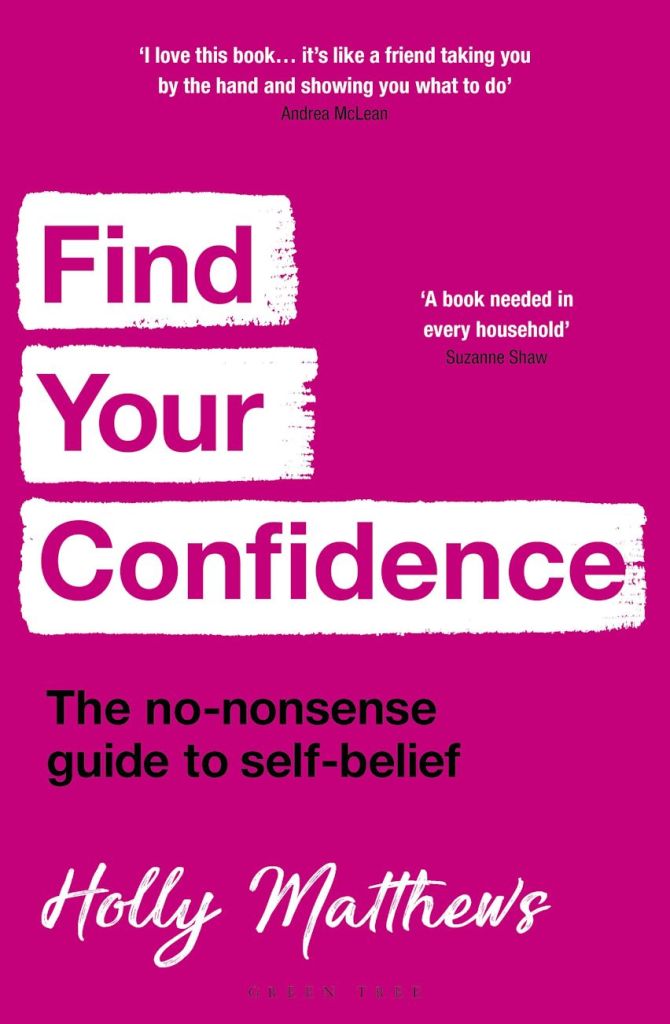
Find Your Confidence: The No Nonsense Guide To Self Belief: New book by Author and Life Coach Holly Matthews.

(image: Green Tree/Bloomsbury and Holly Matthews)

I had the pleasure of reading and reviewing Holly Matthew’s debut book ‘The Happy Me Project’ a few years ago. Holly became a friend when I met her online in 2017 and became one of the first people to sign up to her ‘Happy Me Project’ life reset, which included a workbook and online classes. Holly is one of the most inspirational people I know- not only did she decide to become a life coach and NLP practitioner after the tragic passing of her husband Ross, but she was also an award-winning TV actress and is Mum to two wonderful girls. Holly truly helps people going through difficulties in their lives and so when her new book ‘Find Your Confidence’ came out, I knew I needed to get myself a copy and review it.

The book talks about finding self belief in a wide variety of situations such as in the workplace, at job interviews, at home in every day life. The publisher says,

Each chapter is broken down to focus on a different everyday scenario as Holly provides simple and practical advice for tackling confidence head-on. Learn how to:
– Thrive in social situations
– Develop the tools to be a confident partner and parent
– Ace speaking in public and being assertive in the work place
.’

(image: Green Tree/ Holly Matthews)

The book’s premise is that ‘Everyone can access confidence – it’s just a case of learning how.‘ Holly says, ‘Confidence is not a skill that we’re born with or without but something that can be taught, practised and developed throughout your life. Focusing on both your inner and outer confidence, will help transform your self-belief from the inside out.’

I absolutely love this guide and tips to strengthen self belief at home and in public. Singer and actress Suzanne Shaw has said, ‘ This book is needed in every household for adults and kids. An absolute guide to help you eradicate self-doubt and give you a huge injection of confidence! 

Holly breaks down each chapter into ways to find and build confidence. I truly love the book and know it will be really helpful to me (and others) in specific life situations going forward. Self belief and confidence is something so many people struggle with and having these exercises, links and resources will be invaluable. Working with Holly is very special!

Find Your Confidence: The no nonsense guide to self belief by Holly Matthews is out now in all good book shops (and online).

For links and resources to help alongside the book please see Holly’s website: https://www.iamhollymatthews.com/findyourconfidence/

Book Review: Emily Katy – ‘Girl Unmasked: How Uncovering Autism Saved My Life’.

(image: Emily Katy)

Trigger warning: discussion of self harm/suicide attempts.

I was so excited when I saw my online friend Emily Katy’s brand new book coming out! Emily was one of the first reviewers of my book Bring Me to Light and had taken photos of her reading it with her dog and some horses :). I followed her on social media and saw that she was writing her own memoir on what it was like to live as a teenager with undiagnosed autism and mental ill health. This review is not gifted or sponsored- I just wanted to read Emily’s story.

I want to congratulate Emily and her team as this week it has become a Sunday Times Bestseller which is an incredible feat for any author, especially for their first book!

Emily says,

“Far too many autistic people – women and girls especially – fly under the radar, unseen and unsupported. Many of us reach crisis point and only then (if we are lucky) do we find out that we are autistic. I hope this book can add to the collection of autistic voices demanding change in how autism is understood and recognised”.

I bought this book because I wanted to understand what it was like to live as someone with autism undiagnosed and how that affected Emily’s overall mental health, leading her to be sectioned on a psychiatric unit as her health deteriorated. Although autism is not a mental illness and many see the positives living with a neurodiverse brain, it does impact on mental health, especially when it is undiagnosed by a system not set up to understand it in women.

To the outside world, Emily , who is from the UK like me, looks like a typical girl, with a normal family, living an ordinary life. But inside, Emily does not feel typical, and the older she gets, the more she realises that she is different. As she finally discovers when she is 16, Emily is autistic.

Girl Unmasked is the extraordinary story of how she got there – and how she very nearly didn’t. Still only 21, Emily, writes with startling candour about the years leading up to her diagnosis. How books and imagination became her refuge as she sought to escape the increasing anxiety and unbearable stresses of school life; how her OCD almost destroyed her; how a system which did not understand autism let her down; and how she came so close to the edge that she and her family thought she would never survive. We see how family and friends became her lifeline and how, post-diagnosis, Emily came to understand her authentic self and begin to turn her life around, eventually becoming a mental health nurse with a desire to help others where she herself had once been failed.

(image: Emily Katy)

Emily bravely navigates how being undiagnosed with her autism led to her struggling with OCD, anxiety, self harm and depression -which led to suicide attempts. Thankfully, once Emily was able to get a proper diagnosis of all her symptoms that felt right for her (autism and OCD), she found herself able to recover from her depression. In the book, Emily also discusses ways to help you if you are self harming or feeling suicidal. She talks about how being on a psychiatric unit was extremely distressing and as someone with autism, she found that things like loud noises, unpredictability, lack of normal routine or a schedule and new people coming, were just some of the things she struggled with. While at the unit, Emily was also misdiagnosed as having a personality disorder, as well as an anxiety disorder.

It is clear from reading this important book, that Emily feels one of the reasons she was misdiagnosed was because she was a girl. Autistic females tend to fly under the radar for longer due to assessment methods being developed for males, masking to try to fit in with others socially and their special interests being more socially accepted. As someone with bipolar, I have often been called ’emotional’ or ‘drama queen’ and Emily mentions these labels were given to her and other women with autism too. I found reading the lists of autism myths and facts really helpful to further my understanding.

What stands out to me in Girl Unmasked is Emily Katy’s courage. Not just in telling her own story of the perils of living with undiagnosed autism and how it impacted her mental health, but the fact that after surviving multiple self harm and suicide attempts and being sectioned on a psychiatric unit, she has now become a mental health nurse at just 21 (and now bestselling author) to help others. Emily has managed to move forward with her life and achieve huge things, despite living with the trauma she has faced and she has amazing friends and family too, who are there to support her.

I loved this book and read it in 2 days. Girl Unmasked is not an easy read – it is a meaningful, powerful real story of someone’s life. Please do read with care as it discusses mental health themes alongside autism. On the front of Emily’s book is a rainbow and to me that symbolises the hope with which she lives her life and is now bringing to others.

Girl Unmasked: How Uncovering My Autism Saved My Life is out now, published with Monoray.

Emily Katy, 21, lived as an undiagnosed autistic girl for nearly seventeen years. After completing her degree in 2022, she qualified as a mental health nurse. She has a large, highly engaged following on social media: @ItsEmilyKaty X (formerly Twitter) 68.4k followers, 21k Instagram followers and a blog www.authenticallyemily.uk, where she talks about autism and mental health. Emily is a Trustee of the charity ‘The Autistic Girls Network’