Guest Post: Learn How to cope with Postpartum Depression by Kayla Clough at ourstart.com

After having a baby, there are many women who find themselves suffering from postpartum depression. Postpartum depression can cause feelings of sadness, lethargy, anxiety, and hopelessness. It’s important to do everything that you can to treat the symptoms of postpartum depression as much as you can so that you can build an amazing bond with your baby and rest assured that you are being the best mother that you can possibly be. The following guide walks you through a few ways you can handle postpartum depression effectively.
kayla2.jpg

(image: Kayla Clough)

Talk About the Way That You Are Feeling

There are many women who feel ashamed of the way that they are feeling and try to hide it from their friends and family. This is not a good idea because it can lead to isolation and cause the sadness and feelings of hopelessness to become exasperated. It’s best to be upfront and honest with your friends and family about the way that you are feeling so that they can help you battle the feelings as much as possible.


Take a Break from Time to Time

Being a new mother can be overwhelming. There is so much to do, and it often feels as though everything you do is not good enough. Take a break from time to time to unwind and allow your emotions to reset. Taking a long bath or simply enjoying a cup of tea alone on the porch while reading a great book can help you to be able to feel less anxious and allow your body and mind time to relax so that you can go back to caring for your baby with less stress.


Get Plenty of Sleep

When you are not getting enough sleep, it can be hard to regulate your emotions. It’s best to get as much sleep as you can when you have a little one. Take naps when they take naps and realize that the house, laundry, and the dishes can all be taken care of during the day. You can lay your baby down next to while you fold clothes or carry them against your chest in a carrier while you wash dishes or clean the house.


Get Up and Move

After having a baby many women feel lethargic and do not realize that they need to get up and move around to make themselves feel better. Getting regular exercise has been shown to lift moods and can help you to lose some of the weight that you may have put on during your pregnancy. It’s important to realize that the better you feel about yourself, the better mother you can be with your little one.


Don’t Be Afraid to Get Professional Help

There are times when overcoming postpartum depression on your own is too difficult to do. You can seek professional help from a psychiatrist to get advice and medication to help treat the symptoms that you are experiencing. Being able to be less stressed, anxious, and sad can help you to be able to live a more fulfilling life.

Postpartum depression does usually go away over time. If you have suffered from postpartum depression before, there is a good chance that you will suffer from it with future pregnancies. Be sure to properly prepare for the situation so that you can treat it from the start so that you do not have to suffer from the feelings associated with postpartum depression for any longer than you have to.

 

kayla

Kayla Clough is the email specialist at OurStart. Kayla is a recent graduate of Eastern University in PA, USA where she majored in Marketing and Human Resources. Kayla loves all things fashion, her golden retriever Max, and coffee. When she is not working, you can find her binge watching Sex in the City and baking her latest find on Pinterest.

Facebook: https://www.facebook.com/OurStart

Blog: https://ourstart.com/
What happens during a Manic episode: Bipolar One Disorder Tales by founder Eleanor

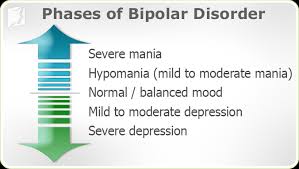
When most people think of bipolar disorder, they may think of the two opposing poles that make up the illness. High and low. Manic and depressed. Many also believe that all people with bipolar flit between these moods constantly and that the illness is severe or alike in everyone who has it. This is not the case.

There are two types of bipolar disorder. I have the first one – Bipolar affective One disorder, which means that I have serious manic episodes which include psychosis (loss of touch with reality). This has happened to me twice in my life and both times I have needed hospitalisation. Bipolar two is characterised by lesser manic episodes (hypomania) and more mixed states.

mania2

(image: https://www.34-menopause-symptoms.com/mood-swings.htm)

Being Bipolar One is very challenging. When I get ill, I get really really sick. Loss of insight, loss of reality, needing anti psychotic medicines now- ill. Ill to the point of being sectioned under the mental health act due to lack judgement and insight. Believing that my family are out to get me and people are going to harm me – ill.  Really unwell.

When one of these serious manic episodes strikes for me, my thoughts begin racing and I can’t concentrate. I don’t sleep, I am more creative in the short term but a gibbering wreck in the long term. I start believing I can do things that I can’t rationally. I am super vulnerable and I speak much faster. I may not make much sense and when the delusions begin, I start believing I am going to be harmed.

Luckily, these episodes are kept at bay by a host of excellent medications including Lithium and Quetaipine. I also take anti depressants to keep the low periods at bay in my life.

Full blown psychosis and mania for me are very rare but they do happen. In 10 years, from 2004-2014 I did not have a hospitalisation. I was depressed and anxious but I was able to recover at home.

I had no hypomanic or manic episodes for a decade! No psychosis. One therapist even questioned my diagnosis, before my 2014 hospitalisation.

Mania for me means danger. That danger means I am more vulnerable. I have to be very careful who I surround myself with during those times. I don’t drink alcohol to excess or take drugs, but some with this kind of mania do. Or they spend lots of money or engage in risk taking behaviours such as sexual activity.

I have learnt that as long as I take my medication regularly, get enough sleep, eat well (and don’t engage in long haul travel) that I can keep my symptoms at bay. If my medicines work! (this is always a fear.. that they could stop working).

Mania for me strikes out of the blue sometimes. I also have to be careful that my mood stabiliser medicine is holding me- as with high doses of anti depressants, mania can be triggered without it.

When in psychosis in hospital I have thought the following untrue delusions

– I am being harmed by my family
– There are CCTV cameras watching and filming me in my bedroom/ hospital room
– I have been abused in some way (my mind convinces itself)
– I am being held by a criminal gang (in hospital)

These delusions have always disappeared over time, with excellent care from psychiatrists and psychologists, anti psychotic medicine and good support from family.

I don’t get these when well, and rarely have to go through them. I am learning to accept that my brain chemistry is not the same as other people and having bipolar, a chronic illness, is not my fault. I just do the best I can to manage symptoms and keep myself as well as possible.
If you want to share your story of mania and bipolar, please do write below.

There is hope and recovery after mania. Thank you to all on the Facebook group who voted for this one.  

Love, Eleanor x


We are 2 Years Old! Blog Anniversary of Be Ur Own Light!

Wow! I can’t believe that Be Ur Own Light has turned 2 years old! We celebrated our second blogiversary on 1st March so I am a few days late but it doesn’t matter.

This blog has provided me with so many amazing opportunities so far. I have met more and more people who are like minded and want to speak about their own mental health to battle stigma. I have met some incredible people online too and such wonderful contributors. I love also finding and telling untold stories.

The blog  has really grown this year into a good mental health resource. We have had lots of contributors which has been fab. I (Eleanor, founder of blog) have also started a new career as a mental health writer and journalist. That is largely down to the success of the blog and I have truly found a niche. Be Ur Own Light is also a shortlisted finalist in the Health and Social care individual category of the UK Blog Awards 2018! Thank you for all your support of the blog and what we do.

I have written this year for Metro.co.uk, Glamour Magazine (online), No Panic, Happiful Magazine and Happiful.com, Counselling Directory, Mind, SANE, Time to Change, STOP Suicide,  Jewish News, Equilibrium Magazine, World Union of Jewish Students,
and been featured in Cosmopolitan UK, Elle UK and Prima.

Thank you to all these amazing people who have provided guest blogs this year. I have been humbled to work with experts and people with lived experience, to provide information and tell others stories to help end the stigma and provide a resource on mental health.

So thank you to these guest bloggers who gave me such wonderful content. There is more to come. This year March 2017-18 thanks to:

Hannah Brown- Recovery from Anorexia
Time With-  Therapy queries
Charlotte Underwood- Recovery from depression/ suicide
Trysh Sutton- Pure Path Essential Oils

Ariel Taylor- Trichotillomania guide
Jon Manning- Mental health in schools
Channel 4 and Lloyds Bank- Get the Inside Out campaign
Stephen Galloway- Inspirational lyrics
Eugene Farell AXA PPP- Loneliness tips
Peter Lang- PTSD and recovery
Kaitlyn W- Light beyond self harm
Jess Harris- Organ donation
Sam- Recovery from bipolar disorder
Ryan Jackson- Reasons for drug and alcohol addiction stigma
Redfin.com- Seasonal Affective disorder
United Mind Laughter Yoga- Job and wellbeing
Christina Hendricks- on PTSD
Reviews Bee- Child Mental Health
Consumer Money Worries- Mental Health and money
Stephen Smith- OCD and nOCD app
Arslan Butt- University students and mental illness
Tony Weekes- Unity MHS
Ellie Miles- Fighting Health Anxiety
Hope Virgo- Anorexia and recovery
Ann Heathcote- Government and mental health
Jasmine Burns- Strategies to help Binge eating
Bill Weiss- Surviving Opiate withdrawal
Jessica Flores- Bipolar 2 – depression
Jay Pigmintiello- Mindfulness and Meditation
David Baum- 365 Challenge for PTSD awareness
Karen- Mental health professional with anxiety
Dr Stacey Leibowitz Levy- CBT
Lucy Boyle- Burnout Syndrome
Diamond G Health Informer- Technology and mental health
Juno Medical- Anxiety Disorders

Thank you to everyone! This year we aim to cover even more mental health issues and disorders in our quest to provide information and be a home for all.

This year I have also written personal posts about my fight with my anxiety disorder, bipolar disorder, mental health and dating, mental health and weight gain, NHS waiting lists and therapy,  book reviews for Trigger Press for Hope Virgo and Karen Mantons books, Workplace and mental health stigma, Reading as therapy and more! Time to Talk Day and Eating Disorder Awareness Week marked and many conversations had eg stigma about psychiatric medication.

We have won various awards from other bloggers- Liebster, Sunshine, Mystery and Top 30 social anxiety blog and Top 100 bipolar blog from Feedspot.com.

I am so excited that we have over 4,000 followers on Twitter, almost 600 on WordPress, over 2000 on Instagram and of course my loyal Facebook followers too.

Thank you friends and supporters! Heres to a great year talking about all things mental health and normalising it to all.

Eleanor x

Extract from Cosmopolitan UK Article by Olivia Blair on Anti Depressants- featuring our founder Eleanor

I was so excited to be featured in Olivia Blair’s article for Cosmopolitan UK on anti depressants- 6 women share what its really like to be on Anti depressants.

I am so thrilled to be in this article with 4 other brave women. My first time in Cosmo! Thank you Olivia.

Below is my part of the article but please click here to read the others experiences too:  https://www.cosmopolitan.com/uk/body/health/a18720313/women-on-antidepressants-working/

I become suicidal when depressed, it’s vital I take medication for my health”

Eleanor Segall, 29, mental health blogger

“I started taking antidepressants when I was 15 after an acute depressive episode where I had to take time off school. A year later I was diagnosed with bipolar disorder and was hospitalised so I was prescribed a mood stabiliser as well to keep me on an even keel.

I was concerned about some of the side effects but the positives for my mind and brain chemistry outweighed the negatives. Over the years, I have been on different antidepressants including fluoxetine, duloxetine and now sertraline. I also continue to have psychodynamic therapy and have tried CBT, art therapy and meditation.

There is a big stigma around anti depressants, particularly against bipolar and other chronic conditions. But I think this new study offers proof that, for some of us, they are vital.”

Extract from my latest Metro.co.uk article: 6 people share their experiences of friendship during Mental Illness

metrofriends

(image: Ella Byworth for Metro.co.uk)

I have bipolar disorder and four years ago I was hospitalised for a severe manic episode.

Without the love, kindness and support of my friends, I definitely would not have recovered as well.

Their support reminds me I am not alone and helps me to feel loved and safe. But mental ill health can be frightening for those who do not understand it, and sometimes friendships can be lost when one person experiences a mental health condition.

Some people may find it hard to cope with symptoms of a friend’s illness and, as such, cut ties or back away.

Jessica Valentine, psychologist at the Brighton Wellness Centre spoke to Metro.co.uk. She says: ‘Sometimes having a friend with a mental health illness can be draining. ‘On the other hand, it’s good to experience the journey of mental health; the ups and the downs, from a personal level. ‘You really get to ‘feel’ your friend come out of the depression. And, it somewhat makes you feel that you are living it too, side by side, helping them.’

The Mental Health Foundation explains that friendship can ‘play a key role in helping someone live with or recover from a mental health problem and overcome the isolation that often comes with it.

It advises that many people who manage to hold onto friendships while experiencing a mental health condition can see those friendships become stronger as a result.

I wanted to see the role of friendships in other peoples’ lives, either when they were coping with a mental health condition, or when they had witnessed a friend in crisis.

Here six people explain their experiences:

Read their experiences and rest of article: http://metro.co.uk/2018/03/01/6-people-share-their-experiences-of-friendship-during-mental-illness-7343290/?ito=cbshare

Twitter: https://twitter.com/MetroUK | Facebook: https://www.facebook.com/MetroUK/

Blog for No Panic on Living with Social Anxiety: by our founder Eleanor

I am delighted to collaborate and write a blog with No Panic, an amazing mental health charity for people with anxiety disorders. You can read it here on their website:   https://www.nopanic.org.uk/living-social-anxiety-story/  and also below:

I have lived with my anxiety disorder for most of my life, but it really started at aged 15, when I was so acutely anxious I had to take six weeks off school during my GCSE year. I was suffering from an agitated depression, an episode that left me reeling. I was so young and so unwell. It was partly triggered by stressful life events but what I didn’t know at that time was that my anxiety and depression was part of a wider illness- bipolar disorder.

After several episodes of depression and mania, I was hospitalised at aged 16 at the Priory North London and diagnosed with bipolar affective disorder. Bipolar is a mood disorder where you fluctuate between episodes of depression, hypomania (a lesser manic state) or mania. It can run in families and can be triggered by life events. I am now 29, so have lived with this for almost 14 years.

I was hospitalised due to a severe depression that featured psychosis, where your mind loses touch with reality and can cause bad anxiety. I had delusions- false beliefs about the world and a lot of fear. Luckily, I recovered after four months of treatment, left and started taking regular medication which began to help, however, the anxiety seemed to be ever present.

As I had been so ill as a teenager with a whole host of symptoms due to my bipolar, I developed social anxiety and panic attacks. I was desperate to fit in and appear ‘normal’ as most teenagers are. I felt different, I was facing life with a chronic illness. There was so much uncertainty, they couldn’t just scan my brain to see what was going on. Taking medication was trial and error for me, some worked and some didn’t. The same with therapies.

The social anxiety was about feeling judged by other people, because I was judging myself wrongly for what had happened during my episodes. It impacted my self esteem- I felt low about myself and didn’t know why I had been given this illness and why it caused me so much embarrassment and shame at the time. There was a stigma back in 2004, that has lessened today

My social anxiety manifested a few years after I had left hospital. I began to fear attending parties, dates and social events with friends, in case I was judged negatively. As a teenager, there was a lot of stigma from other teenagers about my illness. This made me feel depleted, sad and angry. I didn’t choose my brain chemistry- so why were they spreading false rumours about me and making me feel worthless? It was a difficult time for me. I did also have a lot of love and support.

However, my heart would race and the event eg a birthday party in a club or bar, would trigger an absolute state of panic. What if I looked awful/ wore the wrong clothes? What if everyone was judging me when I got there and thinking badly of me? I often would cancel on friends and not attend, for fear of having to show up, however I felt. I felt so vulnerable and I didn’t want anyone to see it.

Part of the anxiety was because when you have bipolar episodes of mania and depression (particularly mania) it leaves you feeling ashamed of your behaviour. For me there was a certain sense of shame, especially with the manic episodes. However, I knew it wasn’t my true personality and I could not control my brain chemistry at the time it happened. Yet, my subconscious mind continued to trigger panic in social situations.

I was lucky and am still lucky to have a group of very supportive friends (and family) who helped me to get out more, through exposure therapy. My Mum or Dad would take me out in the car, or friends would come to the house and coax me slowly out into the world again. Exposure therapy, moving slowly to expose myself to the feared situations is so helpful to me, even today.

Aged 20, I began my first course of cognitive behavioural therapy (CBT) for the anxiety. I worked out with my therapist what the limiting beliefs holding me back were- fear of judgement, fear of being exposed negatively (as my illness made me feel so out of control) and I was asked to keep thought records of my negative thoughts at the time of a panic attack.

For me, panic attacks manifested themselves as feeling clammy, sick, tight chest, overwhelming negative thoughts about a situation and the fight or flight desire to run away and cancel the arrangement, removing myself from the feared trigger. Although the CBT did not stop the anxiety and panic, it gave me some tools at the time to understand it.

Over the years, I have completed three courses of CBT with a psychologist and another therapist, until I gave up on it, because my anxiety was so emotionally rooted and based in the subconscious that the cognitive approach was not working. For me a combination of the following helps.

Firstly, talking therapy about any past traumas (psychodynamic) with my current therapist is so helpful and makes me feel so grounded and safe. Secondly, when very stressed, I find meditation, particularly the Yoga Nidra meditation or apps like Headspace so helpful for breathing. Taking deep breaths can help relieve stress. Thirdly, exposure therapy is key to recovery. I find the more I go out accompanied, the more I feel able to do- it’s a slow process but helpful.

In 2014, after ten years out of hospital, I was hospitalised for a severe manic episode with psychosis. This hospitalisation caused a lot of trauma and anxiety and in hospital, I found art therapy incredibly helpful. Making a picture, collage or painting focused and calmed my mind. Even colouring in a book helped me to filter out the stress of being in hospital and kept my mind calm. I suppose this is a form of mindfulness too and I still love art today.

I very much support the work of No Panic and am so thrilled to write here. Since 2016, I have made a really good recovery from my bipolar and am now stable on medication. My anxiety is still there but I now have a career writing freelance for Metro Online, Happiful Magazine, Glamour and mental health charities such as Mind, Rethink Mental Illness and Time to Change. I have also written my mental health blog www.beurownlight.com, which is about my journey with bipolar and anxiety and those of others. It is currently nominated for a UK Blog Award.

Just know that if you currently experience anxiety and panic attacks, whatever triggers it- there will be something out there to help you- whether its therapy, medication, mindfulness, exercise, meditation, art or exposure to the feared situation in small doses. You are not alone.

For more on No Panic please see: https://www.nopanic.org.uk/

4 Things Holding You Back from Therapy and Why They’re Not True: Guest Post by Time With

Taking a leap into the unknown always requires bravery. Now think of that ‘unknown’ as yourself. All those dark, niggly or somewhat strange parts of ourselves we keep buried away in the hope that they might just disappear if we keep pushing them away for long enough. Yup, therapy is totally exposing – and frankly, terrifying. So it’s little wonder we find ourselves coming up with a million and one excuses to explain why it’s not for us. Avoidance runs through our veins – it’s human nature. But it also holds us back, and at its very worst, avoidance can stall us from moving forward and reaching our potential.


Sometimes it’s worth digging a little deeper to properly explore our reasoning. That way we can be sure we’re not standing in the way of our own progress. Below we’ve listed some of the most common excuses we hear when it comes to therapy (and why we think they’re mostly rubbish!)


“I don’t know where to start”

It’s true, in the past finding a therapist has been anything but easy. Sifting through directories packed full of conflicting approaches and unfamiliar terms… It’s hardly surprising we’re left scratching our head wondering what any of it means. But fortunately, those days are now firmly in the past. Searching for a therapist online is quick and easy. There’s no need to get carried away in lots of research, now you can just work your way through a few simple questions and be connected directly with the right therapists nearby. If you’re interested in finding a therapist best matched to your needs, TimeWith’s online questionnaire matches you with suitable therapists in minutes.


“I can’t afford it”

This is valid- there’s no two-ways about it, therapy isn’t cheap. But in reality, it’s a small price to pay when weighed up alongside its many benefits. Good therapy has the potential to completely transform your life. Whether you want to learn how to relate better in your relationships, manage stress and flourish in your career, or you simply want shed light on recurring behaviours or patterns… Therapy has the potential to do all those things (and more).


Also, it’s important to remember that therapy isn’t forever. It’s not about making a lifetime commitment. It’s an investment, and there’s a really wonderful feeling that comes with the decision to invest in your own mental and emotional wellbeing. If money’s an issue, never be afraid to ask your therapist about concessions. Lots of therapists offer what’s known as a sliding scale meaning they can offer a discount according to your financial situation.


“What can a stranger offer me that my friend’s can’t”

To think of therapy as a friendly heart-to-heart is to misunderstand it completely. There’s no doubt in the value of having a good, solid support system in our friends and family. But your therapist isn’t your friend – in fact, there are very strict rules around that in therapy. Your therapist will always remain neutral allowing them to take a uniquely objective standpoint. It can be easy to get so wrapped up in our own story that we don’t see the broader picture. By extension, friends and family are part of our story. They can be happy or sad for us, but they will always have something at stake in our life. It’s only inevitable that this colours their advice and approach, whether they mean to intentionally or not.


Habits, patterns, thoughts… Whether we like to admit it or not, we’re more alike than we think. Whilst our experiences in life will be completely different, the coping mechanisms we adopt to deal with what happens to us in life very often follow similar patterns. Therapists are trained to recognise these signals and guide us towards coming to our own realisations. The best moments in therapy are those a-ha moments – the kind that friends and family struggle to provide us with, no matter how much they love us.


“What’s going to change”

Everything, potentially. But of course, what you get out of therapy comes down to what you’re prepared to put into it – as with most things in life. Film depictions of therapy have done us a disservice for the most part. Despite appearances, therapy isn’t about rambling on Woody Allen-style about our neuroses. Don’t get us wrong, the talking part’s great! But what therapy’s really good at is finding solutions.

It’s all too easy to bulldoze our way blindly through life living out the same patterns time and time again. Good therapy is about taking accountability for the way we are. But that can only happen when we dig deeper and understand the whys. Far from self-blame, this process actually allows us to forgive ourselves for thoughts or behaviour we haven’t liked. To understand that it was the only way we knew how. But with this new awareness also comes the responsibility to change… There aren’t any excuses anymore.

This is the heart of therapy – we slowly peel back the layers to see ourselves in the clear light of day, no pretences. It might seem scary at first, but in reality, it’s liberating.

TimeWith is a service dedicated to helping people reach the right therapist. Run through a quick online questionnaire and connect with suitable therapists in your area.

Dispelling the Online stigma: Twitter, Antidepressants and #MedsWorkedforMe

I wasnt going to write a blog on this because it might feed the Twitter trolls. But I have decided that its really important that I speak out about whats been going on this week on there, in realm of mental health on social media. Theres been a lot of stigma against medication as well as much support for it.

This week, a study by Oxford University and published in the psychology medical journal the Lancet, found that anti depressants work and are effective in a large number of cases. It was hailed as the first major study to prove this. Some medications were found to be more effective than others, but it provided a fantastic proof- that anti depressant medications do help relieve depression in many cases. They are not just a placebo pill.

However, of course, there are a large number of people who have had bad experiences with anti depressants and want to make their voices heard- yet often at the expense of those of us who it works for.

On Twitter, using the trending hasthtag #antidepressants and #medsworkedforme, I shared that anti depressants coupled with my mood stabilisers, have very much helped my bipolar disorder. My brain chemistry and illness is such that unmedicated I can have episodes of suicidal depression, psychosis and mania. My medication keeps my moods balanced and well, so I can function and live a normal life. I have been on anti depressants for almost 15 years now. I have been on fluoxetine, duloxetine and now sertraline.

The only bad experience I ever had with them is when my previous mood stabiliser stopped working and due to an increased dose of duloxetine to relieve my depression (which it did), I tipped over into a fast and unpredictable manic episode. This is the risk that those of us with bipolar run.

Yet, by and large my experiences with meds have been hugely positive. They keep me stable and well.

Unfortunately, on Twitter, I got trolled for the first time by people sharing the following ‘helpful’ opinions (they were not helpful and highly stigmatised):

1) You should reduce your sugar intake as sugar causes highs and lows and is addictive as cocaine. If you reduce your sugar, your bipolar will improve.

(To this I had to reiterate that no medication and less sugar will make my illness worse… and that excess sugar does not cause bipolar 1 disorder.. i.e. it does not have that impact on my mood swings.. bipolar is a real illness in the brain. Reducing sugar may help with overall health but seriously you are going to tell me this?)

2) Others asked what alternative therapies I had tried- eg exercise instead of medication. I reiterated the above re psychosis and suicidal ideation. Which unfortunately cant be treated with exercise alone.

3) People shared their own stories eg the man who had multiple severe illnesses and takes no medication because ‘it shortens life span’ and its a medical fact apparently that these medications cause psychosis. (Some psychiatric meds cause side effects but psychosis- really? Also why would you tell me it will shorten my life?)

There was a lot of what I would call militant stigma against medication, either by people who fear it or have experienced negative effects.

While medication is not for everyone, we shouldn’t be shaming people for taking it. I shouldn’t be shamed for keeping my brain healthy and well through taking meds. And neither should any of you.

Make sure you fight this stigma (and the block button is always useful).

Love,

Eleanor

Tips to Relieve Social Anxiety for Happiful Magazine (March 2018 Issue)

Our founder Eleanor is published in this months Happiful Magazine, talking about social anxiety and tips to help. Below is a short part of the article- you can read the full article in the link:   https://happiful.com/tips-to-relieve-social-anxiety/

For some of us, it’s butterflies in the stomach. But for others, it’s a crippling fear of even leaving the house. Social anxiety can feel overwhelming, but you can take back control. Here, Eleanor Segall (founder of this blog) gives advice on overcoming social anxiety:

I have bipolar disorder – a mood disorder – and experience anxiety as part of this. When I was about 20, I started to have intense anxiety and panic attacks before social situations – so much so they would stop me from leaving the house.Anxiety has a large impact on so many people’s daily lives. Whether it’s anxiety about a job interview, dating, meeting new people, travelling, health, work or whether you suffer from a diagnosed anxiety disorder and have panic attacks, it can be incredibly overwhelming.

I was fearful of being judged negatively by other people, and this caused the physical symptoms of social anxiety – a racing heart, clammy and sweaty skin, negative and fearful thoughts, low mood and wanting to hide from situations by cancelling them to stay at home. The result was that I’d then feel guilty about upsetting others.

The difficulty is that anxiety can often be triggered by something you’re not conscious of. It took time for me to realise that my limiting beliefs about social situations were due to my reaction to being diagnosed with a mental illness as a teenager. Although I still have to work with anxiety in my life, together with my family and friends, I’ve found how to make the social anxiety more manageable – here are my four top tips to hopefully help you too:

I’ve learned that anxiety does pass, if you sit with it and let it be – for me, it takes about 45 minutes. Even five minutes of sitting with it can be incredibly difficult and takes practice, but knowing it will pass and can’t harm you is important. The anxiety symptoms are often worse than the event itself. I’ve learnt with social anxiety that if I can face the event, I can lean on my support network to help me through it.Remember it will pass

Use your support network – exposure therapy:

READ FULL ARTICLE:  https://happiful.com/tips-to-relieve-social-anxiety/

Guest Post: Using Essential Oils to help relieve the symptoms of Depression by Trysh Sutton at Pure Path Essential Oils

Essential oils are slowly becoming more and more popular for a number of reasons. They are known to have calming effects on a person and can provide a number of benefits along with it.

Essential oils are volatile compounds obtained from plants, usually through a process known as distillation, providing the purest form of the nutrients and benefits that the plant has to offer. The oils are extracted from various parts of the plant, right from the roots and stems, to the flowers and fruits.

Aromatherapy is an alternative form of medicine that can contribute to overall well being, and benefit the body in more ways than one. This science has been around for thousands of years, and some of the oldest known civilizations have used aromatherapy to help cure diseases, and to help people with different medical issues.

Still, many individuals are skeptical. Thankfully, there are many published studies which have proved and disproved various beliefs about the abilities of essential oils.

Their many uses and benefits are actually why they are so popular all over the world. That many people couldn’t be experiencing placebo, right?  

From relieving stress to helping improve energy levels, essential oils can be a huge plus in one’s life.

Essential Oils In The Treatment Of Mental Disorders

Essential oils traditionally have also been used for the treatment of a number of mental disorders. Aromatherapy has been known to help relieve the symptoms of things like anxiety and sleep disorders. One of the things that essential oils are also known to help with is depression.

Depression is a disorder which is characterized by the feeling of sadness and low mood which the person has no control over, and finds hard to remedy without help.

While it is essential to know that essential oils do not outrightly cure depression, they can help to reduce the symptoms that one experiences when they have been diagnosed with depression or depressive disorders.

Inhalation can take place in two ways – directly or by diffusion. As inhale, your body absorbs the chemicals in these oils, which then work on a cellular level.

They also get absorbed into the bloodstream and can work to stimulate different parts of the brain, thereby helping people who are prone to experiencing different symptoms when they are diagnosed with depression.

Essential Oils To Curtail Symptoms Of Depression

Depression can be a huge hurdle in the lives of people who are affected by it, which is why treating it correctly and getting the right medication for it is essential.

However, constantly taking medications can sometimes take a toll on the body, which is why people who are diagnosed with this tend to find some or the other means of alternative medicine that won’t cause as much harm to the body, but still is effective in treating symptoms. Medication can also be expensive, which can make matters worse if the patient isn’t in a position to buy them consistently.

People who are diagnosed with depression tend to experience a whole spectrum of symptoms, which may differ from person to person, and also depend on the severity of the condition. They tend to experience symptoms such as anxiety, restlessness, sadness, sleep disruptions, narcolepsy, loss of appetite and many more.

Here are just 3 essential oils that are commonly known to successfully tackle the symptoms of depression:

Lavender

Lavender is one of the most commonly used essential oils for the treatment of depression. The floral scent of lavender is known to have an incredibly calming effect on people, and helps relieve symptoms of anxiety and helps a person relax more.

Furthermore, lavender is known to help decrease stress in people, which is something those suffering from depression regularly experience.

Wild Ginger

There have been studies conducted that show that wild ginger may have antidepressant properties, but these claims haven’t entirely been set in stone.

There was a study  that showed that when under stress and exposed to wild ginger, the mice showed signs of relief. Wild ginger is also known to improve the serotonin generation in the brain, thereby making a person feel happier and more relieved.

Bergamot

Bergamot may be known for its brilliant citrus scent but it is also known for helping to reduce anxiety, according to a study that was conducted just a few years ago.

Even though people with depression don’t necessarily get diagnosed with anxiety disorder as well, it is a common symptom that people tend to experience.


Trysh Sutton is the author of this blog and an expert in aromatherapy and essential oils. She works at Pure Path