9 Years Undiagnosed: My Life with Bipolar Disorder, for Time to Talk Day: Guest blog by Mike Segall

timetotalkdaydad1

(image: Time to Change)

*Trigger warning: discusses thoughts of suicide and mania, please read with care *

This blog has been courageously written by my Dad, Mike, about his journey with bipolar disorder and the hurdles he faced in getting a diagnosis. For those of you who have read my book, you’ll know some of this. This is the first blog that Mike has written for us and I want to share it on today, Time to Talk Day by the charity Time to Change.  So here is Mike’s story….


My experience of Bipolar 1 Disorder was that I was undiagnosed for 9 years. I was never sent to a psychiatrist and was put on the wrong medication (I hadn’t heard of mood stabilisers and seemingly neither had my doctor).

So- What is Bipolar Disorder? (formerly known as Manic Depression)

To me, Bipolar symbolises the two extreme poles of mood- mania and depression. The North Pole is Mania. Mania is wonderful for me- you think you can be anyone, you think you can do anything, achieve anything, You are flying. You think ‘why can’t everyone be like this and experience everything?’. You are much more uninhibited. You may shop more, you spend more money, You think you can FLY!

But you can’t fly and you fall, you fall off a cliff into varying degrees of  deep, dark depression, which can last for months.

Bipolar disorder is  a chemical imbalance in the brain that causes periods of depression and periods of abnormally elevated mood, mania. The elevated mood is significant, known as mania or hypomania depending on its severity and whether symptoms of psychosis are present. Psychosis means when your mind lose touch with reality, with delusions or hallucinations.

During mania, someone feels abnormally, happy, energetic, irritable and not requiring sleep they often appear to be bouncing off the walls, starting new projects, trying to achieve too much. In some cases, addictions during mania may also present.

During depression, someone with bipolar disorder may be crying, experiencing negative thoughts and giving poor eye contact. You will notice this if you ever have a conversation with someone who is depressed. They may also be suicidal or talk about self harm.

My Story:

My first manic episode occurred in 1991 and I went to the doctor and was prescribed Valium (an anti anxiety calming medication), which was handed out like sweets in those days.

The Valium didn’t do me any harm but they certainly didn’t do me any good. In the next 9 years, I had three manic episodes followed by three increasingly devastating depressive and suicidal episodes, the last of which lasted 5 months.

In my first manic episode I was going out a lot late at night to clubs and bars and spending too much money. My second and third manic episodes were much more controlled as I recognized what was going on but I was still much more outgoing than usual and spending too much money.

My depressive episodes were serious and eventually suicidal and lasted 3, 4 and 5 months respectively. I often stood on the edge of a London Tube platform thinking about ending it all. I would drive down the motorway at speed not turning the corners until the last possible moment. I would stand in the bathroom with hands full of tablets thinking about overdosing and ending my life. Mostly, I was at home in bed doing nothing but sleeping , eating and surviving.

The person you would meet today is not the person you would have come across at that time.

Looking back there was no real connection made between these episodes and I wonder 1. Why I was never hospitalised and 2. Why I wasn’t diagnosed more quickly.

First of all, 30 years ago far less was known about Bipolar Disorder so the doctors weren’t quick to diagnose it. Secondly, it was only after 9 years that my GP reviewed my file and noticed that I had never been referred to a psychiatrist.

This was the breakthrough that changed and saved my life.

I went to The Priory hospital to see a psychiatrist, describing my episodes. Within 45 minutes I had a diagnosis,

”You have a mental illness. It has a name, It is Bipolar 1 Affective Disorder. You have it for life and it is treatable with the drug Lithium.”

Lithium balances out the chemical imbalance so you end up between the poles and mood is then stabilised. I am pleased to say that in the past 20 years, the medication has worked for me and has stabilised my bipolar disorder, so I no longer get episodes of mania or depression.

I am also pleased to say that as quite an emotional person I still experience the normal feelings and emotions that come with everyday life.

Starting on Lithium is not easy as you have to be weaned onto it. There are side effects, the most common being weight gain and you have to have regular blood tests to make sure the level of Lithium in your bloodstream is correct (non toxic) and it is not affecting your kidneys.

I do wish that I had been diagnosed earlier and not had to suffer manic and depressive episodes as I did.

These are the 4 takeaways I would like you to have from reading this, this Time to Talk Day:

1. With mental health it’s good to talk about it , It’s good to fight stigma and it’s good for your own healing.

My journey started in 1991 and I would hear things like ”you’ve got a weakness. Why don’t you pull yourself together?”, which were unhelpful

2. Think about how you can help people in your community by recognizing the signs that someone has depression or mania.

3.  Live a positive life- I am an example of a bipolar sufferer who can maintain a positive life. Bipolar is an illness that needs treating. It is treated with medication but it can take time for the medication to be right as each person has individual brain chemistry.

4. Listen to those who are struggling. Most of us listen to reply. If you watch two people deep in a conversation or you are in one yourself your focus will be very much on the other person and you will be listening at 90%.

But if you are listening to understand and you are feeling and sharing their emotions then you are truly listening at 100%. Check out the Samaritans help line too.


mikesegall

(image: Mike Segall)

Mike Segall is a professional speaker and mental health advocate, sharing his lived experience with bipolar disorder to groups in the UK. He is also the father of the founder of this blog, Eleanor.

Talking for the Jami Mental Health Awareness Shabbat 2020 by Eleanor

jamimhas1

As some of you will be aware, back in 2017-2018, I helped as a volunteer with fellow volunteers (Lisa Coffman and others) to found the Mental Health Awareness Shabbat (Jewish sabbath) in our communities across the country here in the UK. The initiative, led by the mental health charity Jami and conceived by Rabbi Daniel Epstein, now runs in 150 Jewish communities.

This year, my dad Mike and I were delighted to be asked to share our father and daughter journey with bipolar disorder to Chigwell and Hainault Synagogue.

I have social anxiety- which includes at times a fear of public speaking. In December, I had a breakthrough, where I spoke for a short time at a conference called Limmud alongside my Dad and read from my book Bring me to Light. So, when we were asked to do this talk at Chigwell, I felt it could be possible.

I armed myself with the fact that I knew kind people in the community including the Rabbi and his wife and friends of my husband Rob (its the community he grew up in). I also wanted to share my story to help other people.

So, we stayed with a lovely lady in the community and had friday night dinner with the Rabbi and his family. On Saturday morning, I woke up feeling a little nervous but took my trusted anxiety medication for when I need it- Propranolol, and walked to the synagogue with Dad.

I managed not to have a panic attack and the thought of speaking to help others got me through (as did distraction, deep breathing and drinking a glass of water).

So, at the end of the service, we were called up to speak. Dad went first and talked about his journey with bipolar disorder from when it started for him in 1991 to finding recovery. Then, it was my turn.

I stood up there in the pulpit speaking to a packed audience with a prepared speech. I felt scared but also empowered and began to relax into the talk. I knew that by sharing what happened to me, being sectioned and so ill and talking openly, that I could break stigma and touch others. I was also so proud of my Dad for speaking so openly.

It was only after, when talking to people after the service, that we realised that about 150 people came to listen to our talk! We had some important conversations with people after our talk including someone very newly diagnosed and someone else whose niece had bipolar and is currently very ill.

I couldn’t and still can’t believe I was able to do that. However, since I have been very tired so trying to de-stress and rest as much as I can!

We just want to thank everyone who came to hear our talk and supported us, to every person who thanked us for coming and shared their stories with us. We are so grateful for such a positive reception and thank Rabbi Davis and the Chigwell community for having us.

The Mental Health Awareness Shabbat has had events in communities all across the country. It runs yearly and you can find out more here 

When Therapy Isn’t Enough–How to Handle Physical and Mental Health Issues: Guest post by Brooke Chaplan

johngreen2

(Image: Pinterest)

Therapy is the first line option that most people choose when they are dealing with a mental health issue. While therapy is undeniably important, many people struggle with it, even giving up if they feel it isn’t meeting their needs. This isn’t because therapy isn’t important, but because therapy can only do so much when you are physically and financially in situations where you have no power to make lasting change in your life. Dealing with chronic pain and other physical issues can leave you worn out mentally as well, and learning how to deal with both physical and mental issues at the same time is the best way to find relief. True wellness must come from understanding and addressing physical and mental concerns together.

Understand the Connection Between Physical and Mental Health Issues

Chronic pain is exhausting to deal with on a daily basis. Over time, dealing with your pain and the loss of your normal activities can cause you to feel depressed and even anxious about your future. People often develop anxiety about their pain, especially when it seems to worsen without warning and at the worst possible times. Your mental health can also make pain worse. For instance, dealing with PTSD or anxiety causes tension within your body that affects the muscles. It is the same reason why people find that their shoulders ache after a long and stressful day. Understanding this connection will help you to articulate just why you are feeling the way you are, and allow you to talk to both mental health and physical therapists about your unique situation in ways that will let them best help you.

Choose a Program That Focuses on Your Mind and Body

Injuries that leave you unable to do many physical activities, such as spinal or leg injuries, have an impact both on your body and your mind. The best type of back pain treatment involves helping both your mind and body to heal. While you may participate in special exercises and other forms of therapy for your back, you’ll also receive counseling and support that helps you to feel better mentally. For instance, identifying mental health issues that require treatment can help you to learn techniques that help you to avoid focusing on the pain. Meditation and mindfulness are two solutions that often work well with traditional back pain strategies.

Commit to Following the Program

As with any type of therapy, your involvement makes a big difference in the outcome. Although you may feel depressed and in pain, you need to commit to working through it all. Choosing to show up for your treatment even on a bad day helps you to make continuous progress. It might not happen all at once, but you’ll soon begin to see how your treatment plan is working. Committing to physical (physio) therapy programs has also been shown to have positive impact on your ability to handle mental challenges. Remember, you may see your body and mind as two separate things, but your body interprets them both together.

Take Steps to Reduce Stress in Your Life

This is the time to take care of yourself. Take a time out from stressful activities so that you can focus on the treatment. You can also use relaxation strategies to help stop stress from affecting your physical health such as using deep breathing to work through an anxiety attack.

Your mind and body are connected, and you’ll find that each one influences the other. When one type of therapy isn’t enough, it is time to explore new options. Continuing to work on improving both your physical and mental health helps you manage pain and regain control over your life.


Brooke Chaplan is a freelance writer and blogger. She lives and works out of her home in Los Lunas, New Mexico. She loves the outdoors and spends most of her time hiking, biking, and gardening. For more information, contact Brooke via Facebook at facebook.com/brooke.chaplan or Twitter @BrookeChaplan

5 Steps to help your Mental Health, Depression and Anxiety: Sponsored by Core Wellness Maryland

pexels1

(Image: Pexels)

Depression and anxiety can feel totally overpowering and overwhelming. It can consume you in ways in which it controls you. Your thought patterns, emotional responses, physical energy, and even your short term memory are all affected by depression and anxiety. And because it can feel so dominating, it is vital that you do not try to deal with it alone. Therapy, counselling and all the help that you can possibly get, should always be your first plan of action.

However, there are small yet effective steps that you can practice to cope and manage the severity of your depression and anxiety. Below I’ve listed 5 actions and activities that you should implement into your life daily, while also sticking to an action plan as explained above.

  1. Do something spontaneous, random and out of your usual routine. Depression can make life feel monotonous and mundane to say the least. You do the same things again and again, every day. Or you literally do nothing at all. Duvet days are no longer a Sunday treat, but a compulsion of the mind as you lack the motivation or energy to even leave the bed. That is why forcing yourself to do something spontaneous and different can feel like a breeze of fresh air. And it absolutely does not need to be a demanding task. Keep it simple, keep it easy, and then slowly build up on it on days you feel slightly better. Some ideas are:
  • A quick walk in the morning around the block.
  • Cooking an easy meal.
  • Tidying up something you’ve been procrastinating on.
  • Playing with your pet.
  • Doing easy home diys or even a bit of gardening.

The choices are endless, so feel free to add your own ideas. But just bare in mind that you should start off by keeping it simple and easy so that it doesn’t burn you out or mentally drain you. The feeling of doing something out of your routine, mixed with the feeling of satisfaction of completing a motive, can be a powerful and revitalising feeling.


2. Practice gratitude. Make a list.

Grab a pen and paper and write down all the things you own, love and appreciate. All the good things that you have experienced. All the happy memories. The good nostalgia. Things you find beautiful. Add the weirdest or silliest of things – if they make you smile then they should be on this list! Do this daily, even if you don’t feel like it, or even if you can only think of one thing on some days. Trust me, it all counts when you look back on your list a week later, a month later, 6 months later and so on.


3. Hold on to that pen and paper because I want you to play a game.

Write the first word that comes to your mind without thinking about it. Then write another word, and then another. Carry on adding to this list for a minute or two. No matter how random, or weirdly nonsensical the words that pop up in your mind are, just carry on writing it and adding it to your list. Once you’re done, analyse your list. Some might actually have absolutely no meaning or weight to your emotional state, but you will definitely find a good bunch that will shed some light to two things: feelings and thoughts that are hidden in your subconscious mind. Additonally,  feelings that you have been suppressing.

If you try to do this daily, you should begin to notice a pattern. Same words might pop up. Or similar words. Or words that are more negative/positive then the days before. It’s a good and unique way of tracking your thought patterns and emotions, while releasing pent up thoughts and feeling that you might’ve not even realised are there. Plus it’s fun!


4. Create a positivity board.

Get yourself a board and pin up things that signify your dreams and goals, things that you love and that make you happy. Photos, newspaper or magazine cut outs – anything and everything that defines you or who you want to be. Keep adding to it, and every time you feel your worst, look at this board and think of each thing you have included on it. And remind yourself why.


5. Train yourself to be more aware of your surroundings.

Use your 5 senses to their potential. This is practicing mindfulness. Depression can  numb our senses down. Noise can feel like just noise. When really it could be laughter, trees rustling, birds chirping, baby’s cooing, rain tapping, and so many other beautiful things. Depression tells us it’s noise and chaos.

Be more mindful no matter where you are, and you’ll begin to notice things you otherwise wouldn’t have, you’ll see the beauty and peace where you normally see chaos and mental exhaustion. Listen to the rain, notice the beautifully formed clouds above you, look how the trees sway with the wind, feel the rain on your skin. It’s the little things that are the most impactful. And being mindful can calm the heart and soul.

That’s my 5 steps for you. Remember no one and nothing can define you except yourself. Not even depression, not even anxiety. Celebrate this day, and use these steps to improve the quality of your life, even if you don’t suffer from a mental health disorder. If you have any steps of your own, then comment below! 


This sponsored post was written for you by Core Wellness Maryland CEU, who can be found at https://corewellceu.com/

10 Signs that you may have an Anxiety Disorder: Guest post by Capillus

anxietyquote1

(image: Psych Central)

You might feel like a worrier—someone who is unable to let the little things slide, who becomes agitated by small shifts in your schedule, who is kept up at night at the thought of something you said earlier in the day. We all feel worry now and then, but there are people who have an inclination to feel concern and apprehension more than others. If you’re someone who often finds yourself feeling uneasy, fearful, stressed-out, and tense, you might have Generalized Anxiety Disorder (GAD)

Worrying over the Small Things 

Are the most basic daily tasks—brushing your teeth, taking out the garbage, commuting to work—stressing you out on a regular basis? Do you find that your usual routine is becoming burdensome, making you feel short of breath and unable to focus elsewhere? If so, it’s likely that you’re undergoing some form of GAD. This is a common symptom of GAD, in that people will become overwhelmed by activities that once were normal, leading them to feel stressed and burdened in the face of small tasks.   

Insomnia and Sleep Issues 

Whether it’s due to obsessive cyclical thinking or worrying about things that might have happened earlier in the day, there are many people who are kept awake, either unable to sleep at all or regularly disturbed from their sleep during the night. Insomnia can be brought on by various factors, either by an inability to quell your mind prior to going to sleep or increased cortisol levels, which will leave your body in its “fight or flight” mode even at night. 

Daily Fatigue 

Often as a result of insomnia or poor sleep, daily fatigue can be another symptom found in people with GAD. Without enough rest in the evening, the body and mind will feel sluggish during the day, leaving you exhausted and unable to focus.

Other factors can lead to such fatigue, but they might be wrapped up in other factors of anxiety, whether you are using stimulants such as coffee or alcohol to mentally balance yourself during the day or you are stress-eating unhealthy food as a reaction to increases in overall anxiety. 

Upset Stomach and Indigestion

GAD manifests itself in many different symptoms, and some of the most common ones are physical. A common side effect people have when struggling with GAD is stomach distress, including indigestion, constipation, diarrhea, ulcers, and more. Anxiety itself can lead to stomach issues, but, as said above, other lifestyle decisions made while struggling with anxiety can further exacerbate digestion issues, including poor diet, increased alcohol consumption, poor sleep, etc.

Difficulty Concentrating

A common side effect found in people dealing with GAD is the inability to focus during the day. Laboured by concerns, fears, and fatigue, those with GAD will sometimes find it difficult to completely focus on a task without being derailed by some other worrying quality or event. 

General Agitation and Discomfort

Quick to become aggravated by general unease and things not going your way? Do you feel ill when attempting to talk in public or in under-populated social scenarios? Are shifts in your daily routine cause for unease and panic? These can all be signs of GAD, as the mind becomes easily perturbed by occurrences and situations it might not expect or want. It’s a struggle to deal with such responses, and it can be difficult to break yourself out of such negative cyclical thinking under such circumstances, but you should do your best to be aware of when such thinking crops up. 

Muscle Pain and Discomfort 

One side effect of anxiety often not discussed is that of physical pain. Whether it’s muscle tension, tension headaches, hand tremors, chest tightness, or feeling as if you’re unable to breathe, anxiety can lead to detrimental physical responses that might be cause for concern. 

Hair Loss and Thinning 

Along with other physical effects that anxiety can bring about, one of the more common ones is an effect on hair. GAD can lead to hair becoming thin, brittle, and falling out, both on the head and around the body. For some people already struggling with genetic hair loss, anxiety can lead to hair loss and thinning becoming increasingly worse. Thankfully, there are treatment methods available to facilitate hair regrowth, so you shouldn’t be too worried if you notice the first signs of thinning. 

Panic Attacks

You’re likely to know a panic attack if you’ve ever experienced one. Brought about by an intense feeling of fear, unease, and physical symptoms, panic attacks can be a debilitating response to extreme anxiety. The level of response will depend on the person and the level of anxiety, but they are serious reactions to the feeling of a perceived threat. Please reach for medical support from a doctor, if you need it.

Self-Deprecation

If you are regularly feeling down on yourself, feeling as if you cannot meet the standards of perfection or do not match the image you have of yourself, you might be struggling with anxiety. GAD can often leave people obsessed with a self-described definition of who they should be, and anything beneath that can be a never-ending cause of compounding insecurity. If you feel as if you don’t look good enough, aren’t performing as well as you should, or are unsure of your general abilities at work, school, or elsewhere, these underlying feelings might be brought on by anxiety. 

While some of these signs can be symptoms of generalized anxiety disorder, it is important to remember that we shouldn’t self-diagnose ourselves with general mood disorders. If you’re concerned that you might have GAD, you should meet and discuss these symptoms with your primary care physician (in the UK, GP) or a therapist—someone who can provide you with a diagnosis and thus help you alleviate said symptoms for the betterment of your mental health.  


This unsponsored guest blog was written by Capillus at www.capillus.com , a hair loss treatment brand with medical expertise.


2020: New Year Round Up by Eleanor


(image: Prevention.com)

New year posts are always hard to write aren’t they? We start the year in a midst of optimism about goals and achievements and working towards our dream/s. But it can so easily get derailed as life gets overwhelming or busy. However, this post is to say ‘do not give up!’ (to me and to you).

2019 was an amazing, busy, emotional, whirlwind of a year for me. I started the year engaged and half way through wedding planning. In March, my step grandpa sadly passed away at the age of 96. Then, my father in law has stage 3 brain cancer and earlier this year was hospitalised for pneumonia (due to chemotherapy weakening the immune system), which then rapidly became sepsis (poisoning) which can be life threatening. We didn’t know if he would make the wedding and at one point we didn’t know if he would make it through the night.  There was a lot of praying, a lot of fear, a lot of emotion. That was April.

Thankfully, he survived and recovered over months at home. But he is still unwell- we are just lucky he is still here and he made our wedding too.

In May, I started a new job in PR and Communications and met the best colleagues ever. I also spent the year writing my book ‘Bring me to Light’ with Trigger editors Stephanie and Katie. I submitted the manuscript 2 weeks before our wedding.

In late June, I was bridesmaid for my best friends wedding and it was wonderful.

In July, I married my best friend in front of loved ones (including father in law), we moved in together and we went on honeymoon to Sicily, Italy in August to a beautiful place and made good memories. In September, Rob’s cousin got married and that was a lovely family wedding.

In October, I left my new job for personal reasons- although I loved it. The stress of the year, the changes of life had got to my mental health. I am currently working freelance as a writer but applying for jobs too.

Sometime in October/ November, I started EMDR trauma therapy with a wonderful therapist and I hope it continues to help me.

In November, my book was published and sent out to the world and I did some press for it, although I experienced heightened anxiety with it coming out which affected me for a while. Good friends got married too at this time.

In December, I went to Limmud Festival (a conference) with my Dad for our first talk about it and managed to speak, despite my anxiety.

Now, its 2020.

I have some goals for this year. Mainly to be happy, healthy and confident and to give to other people.

This year I would like:

To publish my children’s stories

-To seek out amazing opportunities to promote my book

-To work as a writer and in social media. I would also love the opportunity to work in schools again part time to develop my skills in early years. For me to be financially independent is something I would love again.

-Manage my panic attacks through therapeutic techniques.

-To raise more mental health awareness

-To be more healthy and look after my body

-To be kind and give to others more.


Here’s to a new year of health, happiness and prosperity. How was your 2019/ new year?

Eleanor x


Taking care of your child’s mental health: Guest blog by Chloe Walker

childmh1

(image: Power of Positivity)

Mental health is extremely important and has a significant impact on a person’s overall health and wellbeing. According to a recent survey by the NHS, one in eight 5 to 19 year olds had at least one mental health disorder when assessed. As a parent, you play a crucial role in your child’s mental health. Fortunately, you can help improve your child’s mental health by creating a supportive family environment at home and learning the early warning signs of common mental health disorders, for example. With this in mind, here are some top ways to care for your child’s mental health. 

Develop a good bedtime routine 

Sleep plays a vital role in a child’s mental health. Research shows that there is a strong link between sleep problems and an increased risk of developing certain mental illnesses. In fact, one study found that four-year olds with sleep disorders have a much higher risk of developing symptoms of mental health conditions as six-year olds, when compared with children without sleep problems. Experts at Little Lucy Willow add – “Sleep keeps you calm, your mind alert, and recharges your body to enable you to get up and face each day.” For that reason, you must try and get your child into a good bedtime routine from a young age. Here are some top tips to help your child sleep better:

  • Create an ideal sleeping space by providing a comfortable bed, installing blackout curtains, and minimising any outdoor noise. 
  • Encourage your child not to use electronics like smartphones before bed. 
  • Get your child into a consistent routine where they go to sleep and wake up at the same time each day. Try to keep this the same on school days and weekends. 
  • Make sure that your child avoids any caffeine in the afternoon or evenings. 
  • Visit your GP if your child has been experiencing sleep problems for more than two weeks, or if the symptoms are interfering with their daily life. 

Exercise as a family 

Exercise plays an important role in a child’s overall health. Along with the physical benefits, regular exercise can greatly improve mental wellbeing. This is because physical activity releases endorphins in the brain which creates feelings of happiness and alleviates stress and anxiety. According to advice on the NHS website, children should get at least 60 minutes of moderate intensity exercise every day.

To give you an idea, examples of moderate intensity exercise include walking to school, riding a bicycle, and playground activities. Exercising as a family is an excellent way to encourage your child to be active. It also allows you to spend quality time together as a family and build closer bonds. Playing games in the garden, going for a walk in the park, or going on a bike ride, are all fun ways to exercise together as a family. You could also encourage your child to start playing a team sport they’re interested in, such as football, rugby, or hockey. 

Encourage open communication

You must create a welcoming family environment that is built around trust and understanding. This will help your child feel comfortable telling you about any issues surrounding their mental health. Encourage open communication in your family and make sure you check on your child if you notice any changes in their behaviour i.e. they become distant or their eating habits change.

Remember that children tell people how they are feeling in several ways, not always verbally. A sudden change in behaviour may signal that your child is struggling and needs support. Always listen to your child and empathise with their feelings. Let them know that it’s natural to feel down from time to time and offer support in any way you can.

If you’re still worried about your child’s mental health, then speak with your GP or contact a mental health specialist for further advice. 

Final thoughts 

Mental health illnesses in children are becoming increasingly common and can lead to several serious long-term effects. Fortunately, there are plenty of ways for you to care for your child’s mental health. Encouraging healthy habits is a simple yet effective way to improve your child’s mental well-being. This should include exercising regularly, getting enough quality sleep, and following a nutritious diet. Along with this, you should also educate yourself on the symptoms of common mental health conditions in children and create a warm, trusting home environment that encourages open communication. Speak to a medical professional if you need to.

This guest blog was written by professional writer Chloe Walker.


6 Tips to lift you out of the slump of Seasonal Depression: Guest blog by Anita

winterpixabay1

(Image: Pixabay)

If you are feeling the pinch of Seasonal Affective Disorder (SAD), you don’t have to wait until next spring to get relief. There are several things most people can do to improve their mood and shake off seasonal depression. Check with your doctor about any of the following that may be a change in pace from your usual routine.

Take a Walk

Basic exercise like walking, biking, or swimming is not only good for people physically, but also helps to lift their spirits. Typically it works by improving circulation, getting the body in motion, and connecting them with the gym or the outdoors, all of which can improve the brain’s function and help to enhance your mood, reducing stress.

Listen to Positive Things

Being around good-natured people can also make you feel better. Anything that lifts you up and makes you feel good, even momentarily, is perfect to listen too. Enjoy music with positive lyrics and an energising beat. View comedy films and television programmes.

You might also want to listen to motivational things. Lectures on self-confidence and self-empowerment can help you learn ways to get to and keep yourself in a better mood. If you’re on the go, try listening to positive podcasts with inspirational or motivational messages. Continuous exposure to these will encourage ideas that can influence your mood and help you feel better.

Eating Healthily

With your doctor’s approval, follow an eating plan that will make you feel good as well as look good. Typically this involves three regular meals daily that total about 2,000 calories or however many your doctor recommends as well as a balanced approach with foods from all five basic food groups: dairy, grains, protein, vegetables and fruits, and healthy fats, unless your doctor stipulates otherwise. Avoid eating too much sugar, caffeine, and salt; eaten in large amounts, they may raise your blood pressure or cause bodily inflammation, which may negatively impact your mood.

Get Enough Sleep

Experts generally recommend getting between seven and eight hours of sleep each night, or sometimes as many as nine hours. If you are unable to get that much rest, take short afternoon naps of about thirty to forty-five minutes. Inadequate sleep can contribute to depression, while getting enough rest can help you to feel your best.

Try a New Hobby

When you feel down, sometimes it just means that you’ve fallen into a rut of routine, so try something new if you are able. Find a new hobby to exercise your creativity, whether that’s with dance, painting, photography, or sculpture. You could also take a noncredit class to learn more about a favorite interest or pastime. The goal is to exercise your brain and steer it away from negative thoughts while enjoying fun and different activities. 

Just make sure that whatever hobby you pick up is something you really are interested, not just something that you think you should learn. If you’re not truly interested in your new skill, you likely won’t maintain it in the long term.

Stay in Touch

Often, when we’re depressed, we isolate ourselves. However, while it may feel better in the short term, isolating from loved ones will actually worsen depression. Reconnect with distant family members or old friends. Take care of your current friendships, and be open to meeting new people who share your interests. 

Take a proactive approach to your mental health and reach out for help and support from a medical professional, should you need it. 


This blog was by Anita, a freelance writer from Denver, CO, USA. She studied at Colorado State University and now writes articles about health, business, family and finance. You can follow her @anitaginsburg on Twitter.


Anxiety, Low mood,Winter and Me. By Eleanor

fairylightwinter1

(image: Istock)

I have sat down many times in the past few weeks to try and compose this blog and I havn’t felt able, the weight of it felt too much to put down on ‘paper’. The past month has been a lot more challenging for me, I have had an increase in my anxiety, particularly the social anxiety, fear of judgement and the world in general.

This has meant I have had to cancel media appearances and my book launch for friends and family and I sadly missed an old friend’s beautiful wedding and another old friend’s hen weekend 😦  (as well as missing going to the theatre to see Waitress with a wonderful friend). I have been having panic attacks again about socialising when feeling so vulnerable. This has been really, really hard because I hate letting anyone down, I have just been feeling ill at times and having to cope with the heightened anxiety and its ‘fun’  accompaniment (insomnia, racing thoughts, negative thoughts and chest pain).

My book got published and while that was amazing and a lifelong dream, it also felt exposing as I revealed a lot about my life that many wouldn’t know. So I felt like hiding away because it felt scary (social anxiety again).

Additionally, I started therapy 7 weeks ago to give me tools to a) understand but b) deal with the underlying anxiety about life and while it is helping (I am doing a type of trauma therapy called EMDR), I think it might be bringing issues I have buried to the surface from past trauma. This could be why I am getting triggered in social situations at present. I have a fear of negative judgement and also of crowds. I am working on this in therapy as I have been through a lot so far in my 31 years on this planet!

This time of year is also not helping me at all- the nights drawing in and the gloomy mornings. I struggle with SAD (seasonal affective disorder) and I start feeling lower this time of year. I am well medicated so my depression is mild in comparison to what it gets like when my medication doesn’t work but it is the anxiety I need to work on and expose myself to feared situations slowly.

To my friends, thank you for your kindness and for trying to support me (and coax me out) through this difficult patch again- you know who you are. If anyone wants to come round for a Disney night with chocolate- please do! 

Despite the negatives, there have been some successes in the past few weeks- seeing family, going to the cinema with Rob to see Last Christmas, going to the garden centre with my sister and bro in law, attending my therapy sessions, promoting the book online, job applying (exhausting but I’ve been doing it), speaking to friends regularly and trying to socialise even if I don’t always make it. I am working on that.

Oh and I have been volunteering for Christmas4CAMHS charity- that provide presents for ill children on mental health wards. I have been helping them gain awareness and raise funds via social media. This has been one of the most rewarding things I have managed to do in the past 2 weeks. Thank you Ro for letting me be involved and giving me some purpose to help others.

Social anxiety and depression are hard things to live with, but I know it will pass again in time and to reach for support if I need it. I am already on anti depressants and anti anxiety meds (as well as the therapy), so will have to wait and see what helps. I have an SAD lamp so need to use it when I wake in the mornings. Perhaps I should push myself to go for walks, although I am currently enjoying being a doormouse. If anyone else is struggling, please reach out- we are stronger together.


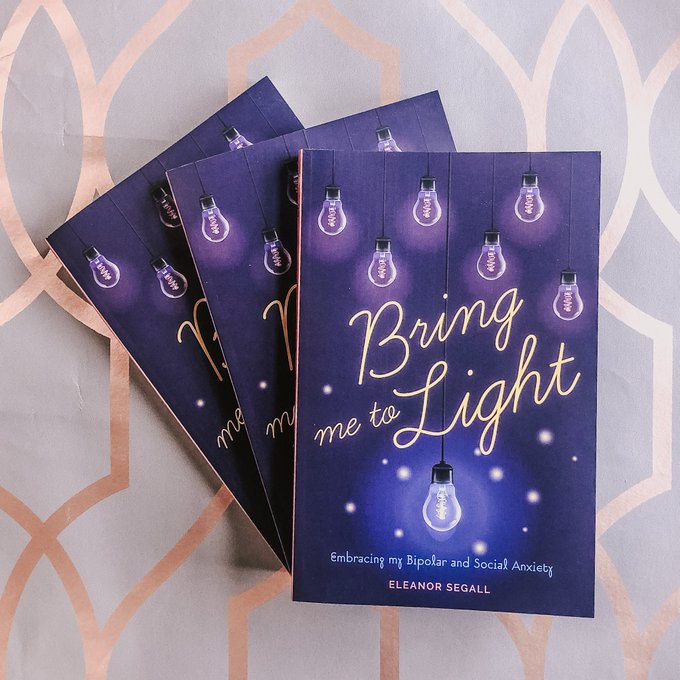
Why I wrote my book, ‘Bring me to Light: Embracing my Bipolar and Social Anxiety’ by Eleanor

bringmeinsta1

(image: Trigger Publishing)

This blog has been a long time coming. I have been so busy promoting my book on social media and in the press that I havn’t actually sat here and told you WHY I decided to write this book. So, here goes.

Firstly, can I just express so much gratitude to this here WordPress blog because without it, I would not have got commissioned at Metro.co.uk (thank you Yvette) or for other places online. This blog gave me the confidence to write and to expand my writing’s reach and for that I will be forever grateful.

In 2013/ early 2014, I sat on the couch, crying and living with a suicidal depression. My bipolar was unstable and all over the place- I felt so low and like there was no way out. However, as I sat and cried- a friend of mine’s face peered up from the newspaper. He was looking for the man that saved him from suicide and was launching a campaign called Find Mike to find him. That man was Jonny Benjamin (who now has an MBE). I had known Jonny for many years as a teenager through friends, but he became my inspiration and my hope that I too could do good things despite having mental illness. He very kindly has provided an endorsement too for my book- thank you Jonny!

With the help of my psychiatrist, I recovered temporarily from the depression but then spun very fast into mania and psychosis (possible due to a large dose of anti depressant). I was sectioned and in hospital for 4 months as an inpatient and a further 4 as an outpatient.

Throughout this time, I could not think about writing because my mind wasn’t stable enough. But as I pieced my life back together, started taking a new mood stabiliser to help control the bipolar episodes and started to recover slowly, I found the power of blogging about my social anxiety due to trauma of the bipolar, to be so helpful. I found that others would share their stories and would reach out to me about their mental health too.

Although life is not perfect and I am still living with an anxiety disorder, I have found a way to write and speak about mental illness. I was diagnosed with bipolar at 16 and there was a lot of shame for me about it back then in 2004. These days, I tell my story for other scared 16 year olds newly diagnosed but also to break down barriers and stigma against mental illness. To explain you can have bipolar or be sectioned or have psychosis but you can recover and you don’t need to spend life in hospital forever. To explain that while this cruel illness runs in families, that with the right healthcare, staying more stable is possible.

I started writing my book with Trigger Publishing because they believed in my story when I sent them my proposal. They are part of the mental health charity the Shaw Mind Foundation and royalties go towards the charity as well as some to me.

I hope that when you read my story, you won’t see it as a despairing ramble- but rather a story of hope, of life, of light triumphing over the darkness- but the darkness making the good times shine brighter. I also bring my bipolar to light, I share it with the world- as scary as this is, so that others can also tell theirs.

I wrote this book too provide a place to talk, start conversation and help heal myself through writing it but sharing that feeling of hope with others too. The book cannot change things that are so needed like urgent mental health funding of the NHS so we have parity of esteem. Yet, i hope it is a starting point about how important mental health treatment is for people to move forward in their lives.

Bring me to Light is out on 5th November 2019 in the UK and is available worldwide. It will be out in the USA in 2020. It can be purchased on Amazon, in book shops and at triggerpublishing.com

I will be sharing press articles and more about the book as it happens, but I hope this blog explains why I wrote my book. Thank you all for your ongoing love and see some of you at the book launch!

Love,

Eleanor x