Mental Health At Work: First Aid Products Have Surged In Popularity In 2022.

(image: MHFA England)

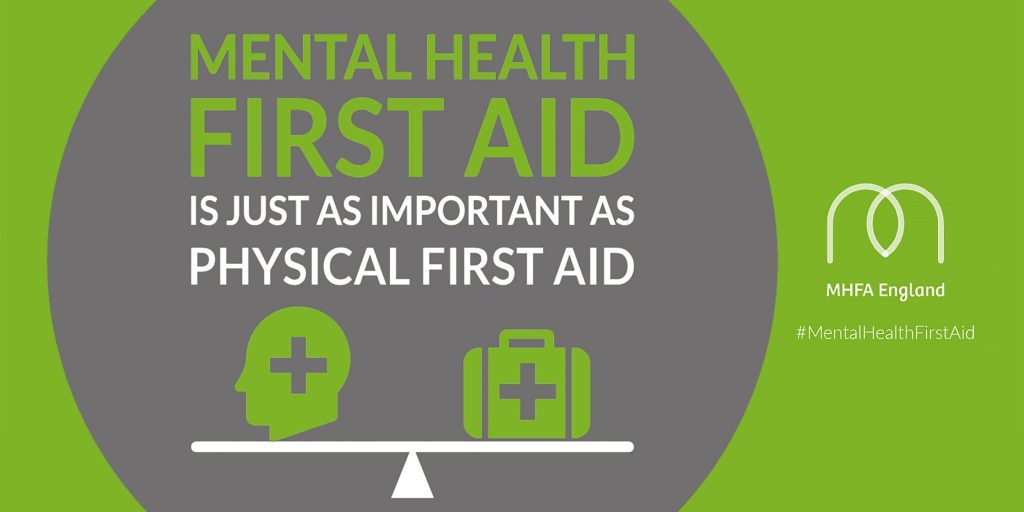
Awareness days, weeks and months have helped to familiarise people all over the world with the term “Mental Health First Aid”. Now, first aid retailer FirstAid.co.uk reports a 260% uplift in interest for MHFA products on their site, noting that an increase in work-related stress, depression and anxiety cases each year is the most likely driving force.

The retailer has now sold more Mental Health First Aid items this year so far than everyday travel and motoring first aid kits.

Data from the Health and Safety Executive shows that cases of work-related ill health (of which 50% are stress, depression and anxiety) have risen almost 28% since 2015, despite physical injuries being in decline since 2000.

Their data also shows that 820,000 people in Great Britain suffered from work-related stress, depression and anxiety in 2021, compared to 441,000 people who sustained a physical injury at work.

“According to Mental Health First Aid England, one in six people of working age in the UK is experiencing symptoms of mental ill health at any given time.” Says Mike Thakoordin, MHFA Instructor and Suicide First Aid Associate at FirstAid.co.uk“We know that around 81% of employers have increased their focus on employee mental health since the pandemic began, and it is fair to say that awareness days and events are doing their part to sustain that focus. 

“During the first week of Stress Awareness Month in April we had an 85% increase in the number of people visiting our stress-related products compared to 2021, and we’re anticipating a similar surge between Suicide Prevention Day in September and World Mental Health Day in October as individual and business shoppers research items and guidance that can support those who are struggling.”

(image: Unsplash)

While events and awareness days like these play a big part in the ongoing rise in interest around mental health-related products online, it’s the persisting growth in the number of people struggling with poor mental health that is likely the bigger factor at play. Despite several years of employers saying they’re taking mental health more seriously, the reality is that a huge number of people each year still find themselves with too much work, not enough rest, workplace politics issues and concerns over job security – among other things.

“For several years running now, the HSE has reported an increase in the number of people taken ill by work-related stress, depression and anxiety.”  Thakoordin goes on to say. “Poor workplace mental health has knock-on effects in many other areas, and we hope that this increase in people shopping for MHFA materials translates into a greater number of workplaces offering meaningful, consistent support.

“With the 2-day Mental Health First Aid course recently being updated, now is the time to get enrolled and play your part in making workplaces safer from a mental health perspective.”


For information on how to recognise stress in the workplace, and advice on dealing with stress,
visit FirstAid’s Stress In The Workplace page.

This article was written in collaboration with First Aid.co.uk

Are Workplaces Doing Enough for Mental Health in a Post-Covid Era?

(image: Mateus Campos Felipe at Unsplash)

The global coronavirus pandemic brought mental health and personal wellbeing to the forefront of our working life. As more companies return to the office, employers need to think about whether or not they are doing enough to make mental health in the workplace a priority. We speak to consumer finance startup, CapitalBean.com, to get some insight.

Workplace Mental Health Post-Covid

“The coronavirus pandemic highlighted serious concerns regarding mental health and personal wellbeing,” explains Richard Allan of Capital Bean.

“With ongoing uncertainty and a heightened sense of risk, it could be argued that we were experiencing an unprecedented global mental health crisis, often with no end in sight.” 

From a workplace perspective especially, many workers were facing uncertainty regarding their job stability, redundancies and, for some, navigating an entirely new way of working and interacting with colleagues.”

“In response, many companies started to take employee mental health more seriously and implement frameworks and best practices; however, now that we are returning to normal and trying to leave Covid-19 in the past, what is the extent to which companies are keeping up with their commitment to employee mental health?”

The Return to the Office

During the Covid 19 pandemic, the majority of workers were learning how to do their jobs remotely. This presented a range of new challenges to navigate and loneliness was widely reported. Not only were people missing the daily social interactions with their colleagues, but they were also finding the blurred lines between home life and work life difficult to navigate – with people’s homes doubling up as their offices, many workers were finding it difficult to switch off and reported working more hours. 

Now that people are starting to return to the office, after adjusting to nearly three years of remote working, they are being faced with new challenges. People are finding the return to work difficult and reporting a great deal of anxiety regarding social interaction. In addition, after working from home, they are now having to juggle their home commitments alongside going to the office. Whether it is squeezing in laundry, balancing childcare, or even factoring in an extra hour for the commute, the return to the office is proving more difficult than expected for many and is causing stress and anxiety for some. Others prefer working from home, so there is a balance.

The Employer’s Role

Millions of workers are returning to the office or workplace with changed attitudes and new expectations. In order to attract and retain talent, it is important for employers to acknowledge this and respond empathetically. Many companies have included mental health in their promises to employees on return to the office but now it is their time to demonstrate that this is not merely lip service. 

Employers need to proactively introduce programmes that are promoting workplace mental wellbeing and help employees with the challenges that they are facing. It is important for workplaces to create a psychologically safe space for workers and welcome conversations surrounding mental health and support.

(image: Luis Villasmil at Unsplash)

The Great Resignation And Mental Health at Work

After the pandemic, more people than ever before started evaluating their working life and what their main priorities were. With new focus on mental wellbeing and work-life balance, workers started to question what their expectations were and what they required from their place of work. The great resignation, the mass exodus of millions of workers in 2021, left employers having to think about what they needed to offer workers to not only attract talent initially, but retain it. 

 Workers who were asked about the great resignation pinpointed lack of workplace communication, sense of belonging, employee-manager relationship and toxic environments all as reasons to leave their jobs. 

In a post-Covid era (and what should have been before this), it will fall to the employer to make sure their staff feel looked after, not just financially but also emotionally.

Employers need to make their employees feel like they are taken care of, respected and acknowledged, and that their personal wellbeing and mental health is a top priority. Going forward, this will be more important for jobseekers than free office lunches or staff drinks.

We all have mental health and it is vital this is acknowledged and cared for, and not ignored in the workplace.

This article contains links to partner organisations.

4 Kinds Of Therapy To Consider by Rachelle Wilber

(image: free image)

Therapy can be a great way to work through personal issues, improve your mental health, and make positive changes in your life. But with so many different types of therapy available, it can be hard to know where to start. Many people find that a kind of therapy works well for them, while others may benefit from a combination of different approaches. This overview will help you learn about four of the most common types of therapy to make an informed decision about what might work best for you. 

Cognitive Behavioural Therapy 

Cognitive behavioural therapy (CBT) is a type of psychotherapy that helps some people change negative thinking and behaviour patterns. CBT is based on the idea that our thoughts, feelings, and behaviours are interconnected. Changing our thoughts and beliefs can change our behaviour and emotions. CBT is effective in treating a wide range of mental health conditions, including anxiety and depression, so its worth a shot to see if its right for you. 

Group Therapy 

Group therapy is a type of psychotherapy that involves meeting with a group of people who are dealing with similar issues. Group therapy can be helpful because it allows you to share your experiences and feelings with others who understand what you’re going through. It can also help you learn new coping skills and gain insight into your thoughts and behaviors. Many people find group therapy to be a supportive and helpful experience- but see how it goes for you as an individual too. 

Interpersonal Therapy 

When we have issues with our relationships, it can be challenging to know how to make things better. Interpersonal therapy (IPT) is a type of psychotherapy that helps people improve their relationships with others. IPT focuses on the here and now, helping you to understand and change patterns of behaviour causing problems in your relationships. Several studies have shown that IPT is an effective treatment for depression- so this could be one to try. 

Family Therapy 

Family therapy is a type of psychotherapy that involves meeting with a therapist along with your family members. Family therapy can be helpful because it allows you to address problems within your family system. It can also help improve communication and relationships within the family. Research by experts found family therapy to be a supportive and helpful experience. However, some have said that it wasn’t the right experience for them and their family, so it is trial and error too.

These are just a few of the many therapy types available. If you’re considering starting therapy, talk to your doctor or mental health professional about what might be right for you. Also, remember, there is no “right” type of therapy. What matters most is finding a therapist you feel comfortable with and who can help you achieve your goals. You may also try a few therapies before finding the correct one to help yourself, your relationships and your family.

This article was written by freelance writer, Rachelle Wilber, living in the San Diego, California area, USA. She graduated from San Diego State University with her Bachelor’s Degree in Journalism and Media Studies. Follow her on Twitter and Facebook: @RachelleWilber; https://www.facebook.com/people/Rachelle-Wilber/100009221637700/

A Lovely Review Of My Book ‘Bring Me To Light’ By Deb Wilk at Living Bipolar Blog.

(image: https://www.pauladennan.com/reviews/)

Sometimes, you receive amazing book reviews on the internet and don’t realise they are there!

Yesterday, I stumbled upon Deb Wilk’s blog Living Bipolar – Deb has lived with bipolar disorder for many years and very kindly reviewed my book last year. She lives in the USA and is a talented blogger, sharing about her life living with bipolar.

I don’t always know what to expect with reviews, but this was so positive so thank you Deb for reading, enjoying and recommending my book Bring me to Light: Embracing my Bipolar and Social Anxiety. Heres some quotes from the review:

Every word, paragraph and chapter of Bring Me to Light was utterly mesmerizing.  Eleanor Segall’s account of her battle with bipolar 1, panic attacks, and crippling social anxiety is so vibrant that the reader feels as though they are experiencing it right alongside her.

I would love to describe the book in detail, but I am not going to give anything away because this book is an absolute must-read.  Anyone who is bipolar or loves someone who is, should read this story.  It is a moving narrative that anyone, even those who do not suffer with mental illness, should read.  

She is now an extremely forceful voice in the mental health community, and this accolade is incredibly well deserved.  Please read this book.  You will find it well worthwhile and, I am certain, as enthralling as I did.” (Deb Wilk, living bipolar blog)

To read more of Debs review click here

Bring me to Light is available now on Amazon and in all good bookshops (including Waterstones, W H Smith and Blackwells and is available globally).

Sleep Expert Reveals How To Stay Cool On Hot Nights And What To Avoid.

Image: Unsplash

This summer has been one of the hottest on record. August has been no exception, with the Met Office predicting the hot weather will continue. As Britons all over the country look to stay cool at night, experts at Bed Kingdom share their advice to prevent overheating and to get a good night’s sleep throughout the warmer months. If you’re trying – and struggling – to keep your body temperature under control at night, try these tips:

Avoid strenuous exercise, alcohol and spicy food

Strenuous exercise before bed gets your blood pumping and keeps your heart rate and body temperature up. Doing this before bed will keep your body feeling warm and will prevent you from staying cool as you try to nod off. Instead it’s best to exercise in the morning when temperatures tend to be cooler. 

Alcohol will make you feel hot. Remember the ‘beer blanket’? It’s the warmth your body feels as it tries to manage alcohol consumption. While your body is not actually heating up, it will feel like it and may prevent you from feeling cool and comfortable at night.

Spicy food often contains capsaicin, which can increase your body temperature and interrupt your sleep. Also, eating spicy food before you go to bed may give you indigestion, making it difficult to feel able to drift off as your body battles discomfort.

Practice mindfulness and meditation

Anxiety can cause your fight-or-flight response, which can lead to night sweats in bed, which is a common stress symptom. Setting aside ten minutes for a mindfulness exercise before bed, such as meditation or journalling can relieve some worries and prime your mind for a good night’s sleep, helping you to stay cool throughout.

Turn off unnecessary electronics before bed

Electronic devices such as computers, games consoles and TVs can get hot after use, leaving rooms, especially smaller ones, feeling stuffy and trapped with heat. It’s best to switch these devices off an hour before you go to bed to let the room cool down. This also has the added benefit of preventing the blue light from devices interfering with your sleep cycle, letting you drift off to sleep easier at night.

(image: Sincerely media via unsplash)

Switch to breathable bedding – and avoid these

You may be using bedding that is not breathable enough for the summer months. Cooling bed sheets should wick moisture away from you and help you to regulate your core body temperature. 

Cotton is one of the more popular fabrics for bedding as it is breathable and versatile. It can keep you cool on hot summer nights and warmer in winter, depending on the weaving and thread count. Cooling cotton sheets are typically between a thread count of 250 and 300, and should not be more than 500. Cotton is also durable enough to last years of use.

Linen fabrics can keep you cool at night. Bed linen can absorb a fifth of its weight before beginning to feel damp, making it an effective choice to keep the fabric fresh if you often get hot at night. This fabric type can be less likely to stick to your body.

Bamboo fabric has become popular over the years as it is an eco-friendly alternative to synthetics. It can be more breathable than cotton, and the natural, soft and durable material is a good choice for those that have allergies.

Eucalyptus sheets, like bamboo, are another eco-friendly option made of natural materials, which can effectively wick moisture and stay breathable all night. It can dry quickly, deter dust mites and is hypoallergenic. 

Many people choose microfibre bedding as it is a low-cost option. However, it is made from synthetic fibres that aren’t very breathable. Other fabrics to avoid during the summer are polyester, nylon, rayon and silk. 

Have a light meal for dinner – avoid heavy fats and carbs

Eating a meal too close to your bedtime can be harmful to your sleep. The more food you eat, the more uncomfortable you may feel. Heavy meals tend to be high in fats and carbohydrates, which takes more energy for your body to break down. This could lead to feeling bloated and uncomfortable when trying to sleep at night.

The recommended space between your last meal of the day and your bedtime is about three hours, which gives time for your body to process any food eaten. Opting to eat fats and carbohydrates earlier in the day, and eating a light meal at night, will require less from your body while you drift off, as it has done the work to break food down earlier in the day.

Take a shower before bed

It’s a great feeling to wash the day away and then climb into fresh bed sheets at night. Showers can help to regulate our body temperature, which can ease us into a peaceful sleep. When it’s hot, a lukewarm shower can cool your core temperature down. A cool shower can be more beneficial than a hot shower to help you fall asleep faster. However, a hot shower can still help as your body temperature will change as you dry off. Whether you prefer to take a hot or cold shower, try to avoid extreme temperatures, as they can negatively affect how you sleep. 

The heat can cause stress both physically and mentally, so make sure you look after your health.

This article was written by a freelance writer and contains a link.

Thank you for sharing my book ‘Bring me to Light’!

(image: Norfolk and Suffolk Mental Health Trust)


The other day I was contacted over on Twitter by a senior mental health nurse who had read my book ‘Bring me to Light.: embracing my bipolar and social anxiety’. She felt that it should be read by her colleagues at Norfolk and Suffolk mental health trust, here in England, and so donated a copy to the staff library for them to read- and they shared this photo.

This was by far one of the most touching and special things to have happened on my book journey- while it may seem small, to me it means the world.

I wrote my book, my memoir about living with bipolar disorder and social anxiety to help other people going through it (and their families) feel less alone. However, to see it being used by mental health hospitals- where I have been twice in my life, though in London- brings me hope.

Hope that professionals will read it and learn from it (there were times in hospital that I wasn’t fully happy with my care but most staff were amazing).

Hope that we can make a change and help the stigma around mental illness to fall.

Hope that by sharing my story, it will encourage others to feel comfortable to share theirs without fear of shame or embarrassment.

So thank you to Dawn💕 and Norfolk and Suffolk mental health trust. If you’d like a copy of my book : https://lnkd.in/e3cheTw

How to Look After Elderly Parents And Assist Them To Be Healthy And Happy.

(image: Andrea Piacquadio: Pexels)

When you have aging parents there’s a lot that you need to consider. Getting them help and keeping them healthy as well as safe is usually at the top of most children’s priority lists. You also want to make sure that they are happy and enjoying their senior years. 

If you have been struggling to find ways to help your elderly relative feel more comfortable, there are a few things you can do to make sure they get the help that they need to stay healthy and happy. Take a look at the following steps.

Get Them Involved

As your parents age, they may need help in and around their homes. You may need to get them a live-in caregiver. A caregiver will help to ease any burdens you may be feeling and give your parents the chance to get assistance.

However, a caregiver can make your parents feel as if you are taking away their independence. This is why you need to make sure that you involve them in the process of finding someone to assist them. 

You will need to do interviews for live in care jobs, so get them involved. This can help them to feel less resentful and happier with the situation.

Sort Out Their Finances

Assisting your elderly relative in making sure that their finances are in order is something that you should do. 

Getting someone to assist them will cost money. Buying them the medication that they need or also call money. 

Take a look at their current financial assets and then decide if they need financial help. There may be some programs that you can apply to. 

Once you know how much money they are likely to need, especially in a month, you can ask family and even friends who are capable of assisting to do so.

Keep Them Safe

Another thing you need to do for your elderly relatives is to make sure you keep them as safe as possible. For elderly people, safety begins in the home. Be sure to declutter the floors and remove rugs and cords that can make them slip and fall. 

You can add grab bars in their bathroom and make sure they are railings on their stairs. Ensure that their homes are well lit especially if they live alone and that they have high-level security systems in their home to keep them safe.

Show Your Love

Part of taking care of elderly parents is making sure that they have all the things they need to be healthy and happy. It can be overwhelming sometimes because it may seem as if they need so much help. 

However, if you consider the points that have been given here and work on them you will be able to help your parent significantly.

Getting the right help, taking care of their finances, and keeping them safe are the main things you need to do to take care of your elderly relatives. 

This article was written by a freelance writer and contains links.

How To Create Healthy Daily Habits by Sierra Powell

Photo from  Pexels

Your mental attitude often influences your altitude. People who are happy and successful don’t get there by chance alone. To go where you want to go, you need to take deliberate action, practice self care, and bring energy to everyday activities.. To live the life you want, here are some good ideas to follow, if you are able:

1. Get Out of Bed Early

Even if you don’t have to get up at the same time as the sun every day, it’s still important to get up at a reasonable (early) time so your body can function at its best. The human body and brain have evolved to follow a circadian rhythm, which helps to regulate sleep and wake patterns set by our natural environment, specifically the sun’s rising and setting. This rhythm was set by the natural environment millions of years ago and passed down through generations of humans. This natural circadian rhythm also aligns with the natural cortisol levels inside the body.

Cortisol is a hormone widely recognized for its function in our metabolism, immune system, stress response, and overall energy levels. Cortisol levels start to increase 2-3 hours after the start of sleep and continue to climb until the early morning, which helps wake us up. This rise in cortisol levels occurs in a balanced condition. The cortisol levels in the body will reach their highest point between 8:30 and 9:00 in the morning, and then they will fall as the day progresses slowly. As a result, optimizing one’s energy levels, level of productivity, and general health may be accomplished by the simple practice of adhering to one’s natural circadian cycle and cortisol levels. Note: cortisol can also increase anxiety, which can explain why you may feel more anxious upon waking.

2. Establish a Set Morning Routine

Find out what gets your day off to a roaring start and make it your priority every morning. For instance, if you like to reflect before starting your day give self guided meditation a try. This is a  surefire method to help relieve tension, quiet a buzzing mind, and delve deeper inside yourself. Meditation can improve overall health and wellbeing. Doing a meaningful activity first thing in the morning will help you get off to a good start and be more proactive throughout the day. Rather than racing through the morning to make up for a lost time, beginning your day with a routine may help reduce stress, improve mental tiredness, and boost productivity. If you have no idea where to start then you may find it helpful to examine others morning routines and see what works for you.

3. Read

Reading books is one of the most effective ways to expand one’s horizons intellectually and creatively. Reading in a state of immersion enhances attention and has a relaxing impact similar to meditation. Moreover, reading before bed might help you sleep better. Books that are not works of fiction, in particular, are a great instrument for expanding one’s horizons, developing new ideas, and looking for inspiration. In addition, they give real-life examples of how to deal with a variety of tough situations and give advice on how to get through them.

4. Go on a Stroll

Step outside for some exercise and taking in some oxygen can lift your spirits immediately, help you think more clearly, and give you a break from working on your computer. It is also a very underappreciated exercise that may make your heart and lungs stronger, lower the risk of cardiovascular disease and stroke, alleviate high blood pressure and high cholesterol levels, soothe joint discomfort, and much more. It is an easy way to enhance your general health that is entertaining and has a minimal effect, to put it another way.

 5. Fuel Your Body with Healthy Food

It is becoming more common practice for medical professionals to suggest plant-based diets to all their patients, not only those suffering from conditions such as high blood pressure, diabetes, and heart disease. If one cannot wholly commit to a vegan or vegetarian diet, even making an effort to consume more plant-based foods whenever it is practical to do so may cause a significant improvement to one’s overall health.

If you make it a point to concentrate on developing wholesome routines that are manageable for you on a day-to-day basis and that you look forward to doing, you will have a better chance of sticking with them over the long run. Creating healthy routines for one’s daily life will require an investment of time, energy, and focus, but this does not indicate that it is impossible to do so.. Instead, steer clear of drastic solutions, focus on developing good habits, and take your time to help guarantee that your health and success will be long-lasting.

This blog was written by writer Sierra Powell

Reasons Why Group Therapy Might Be Your Next Step to Healing by Lizzie Weakley.

(image: Pexels: §§

Accepting help for mental health issues is an undeniably courageous step in the healing process. Individual counseling can provide you with many helpful tools for coping with your issues, but so can group counselling. Here are a few reasons why group therapy might be the next step in your healing journey. 

Groups Are a Sounding Board 

One of the most beneficial aspects of group counselling is that the group can act as a sounding board. Whatever dilemmas you are facing, whatever you’re struggling with in your mind, you can voice it to your group and get helpful feedback. Your group mates will likely come from diverse backgrounds and have had their own unique experiences. Their outside perspectives can give you insight into how to handle difficult situations and emotions. Whether it is, a group can give you guidance based on their own experiences, which can help yours. 

Group Therapy Can Be More Cost-Effective Than Individual Therapy 

Group therapy can be more budget-friendly than individual therapy. And, just because group therapy tends to cost less, that does not mean it lacks any of the quality you would get from individual counselling. Group counselling can be empowering and helpful in the same way individual therapy is, and it is a great option for those who will have to pay out-of-pocket costs. 

Groups Help You Learn About Yourself 

Each of your group’s members will figuratively hold up a mirror so that you can take a deeper look at yourself. You can only learn so much about yourself on your own; having those outside perspectives can make your self-introspection all the more intensive and meaningful. There are things about yourself you might not be able to see that others can help you uncover. 

Groups Can Help You Develop Social Skills 

Social skills are something many of us adults haven’t fully developed, especially as we struggle with our own psychological issues. In a group, you might feel less isolated, plus you will have the opportunity to engage with other people. Here you can learn how to better get along with others and express yourself in a group setting. Studies have found that adventure-based group therapy can particularly help people develop their social skills. 

Whether you choose to do group therapy due to finances or because you want to build your social skills, it is an option that works well for most people. You get a new support network of people who are going through similar things and are also looking for reciprocal support. Allow them to hold up the mirror so you can look in and see who is really there. 

This article was written by freelance writer Lizzie Weakley

How To Let Go Of Hurtful Memories And Live A Happier Life.

(image: Pexels)

Do you ever feel like your past is holding you back from being happy in the present? If so, you’re not alone. Many people find it difficult to let go of hurtful memories, especially if they’ve experienced a traumatic event. However, carrying around these negative memories can be incredibly damaging to your mental health and wellbeing. That said, this blog post will discuss how to let go of hurtful memories and lead a happier life!

Acknowledge your hurtful memories

The first step to letting go of hurtful memories is acknowledging them. This may seem like a difficult task, but it’s important to face your demons head-on. Once you’ve acknowledged your hurtful memories, you can begin the process of healing. If you’re not sure how to start this process, consider talking to a therapist or counsellor. They can help you work through your feelings and start the journey to recovery.

Understand that your past does not define you

One of the most important things to remember when trying to let go of hurtful memories is that your past does not define you. Just because you’ve experienced trauma or pain in your life doesn’t mean that’s all there is to you. You are so much more than your hurtful memories! Allow yourself to see the good in yourself and know that you deserve happiness.

Also, don’t forget that your hurtful memories don’t have to control your present or future. Just because something bad happened in your past doesn’t mean it will happen again. You have the power to create a bright future for yourself, no matter what your past may hold.

Focus on the present and build a positive future

Once you’ve acknowledged your hurtful memories and accepted that they don’t define you, it’s time to focus on the present. What makes you happy right now? What are your goals for the future? Start spending your time and energy on things that make you feel good. Fill your life with positivity and watch as your hurtful memories start to fade away.

It’s also important to forgive yourself for what happened in the past. Forgiving yourself doesn’t mean forgetting what happened or downplaying its importance. It simply means letting go of the negative feelings associated with the event and moving forward with your life. Remember, you deserve happiness!

Seek professional help if needed

If you find yourself struggling to let go of hurtful memories, don’t be afraid to seek professional help. There’s no shame in admitting that you need assistance to deal with your past. A therapist or counsellor such as from The Awareness Centre, can help you work through your feelings and develop healthy coping mechanisms. They can also provide support and guidance as you begin the process of healing.

Letting go of hurtful memories is a difficult but necessary task if you want to lead a happier life. However, by following the tips outlined above, you can start on the path to recovery and begin living the life you deserve!

This article was written by a freelance writer.