Living with Bipolar Disorder: my True story- for Counselling Directory Website

elliesegall

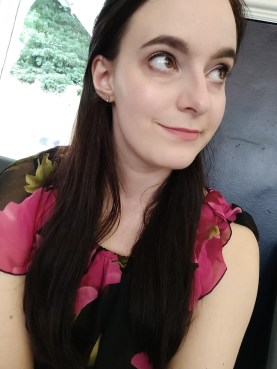
Be Ur Own Light author Eleanor tells her story for Counselling Directory. 

Article: http://www.counselling-directory.org.uk/experience_236.html

I was diagnosed with bipolar affective disorder at just 16 years old. I had been admitted to hospital after a year of depressive and anxious episodes, followed by a hypomanic episode (a lesser episode of mania). People with bipolar have a mood disorder which means our moods can become extreme and oscillate between low and high.

After a year of not understanding what was happening, I finally came to accept the diagnosis. You see, bipolar runs in my family. There is evidence it can be genetic but, as I was so young, no one suspected that my depression and hypomania could be bipolar disorder. I was hospitalised as a teenager in 2004 due to a mixed state of depression and psychosis (where your mind loses touch with reality).

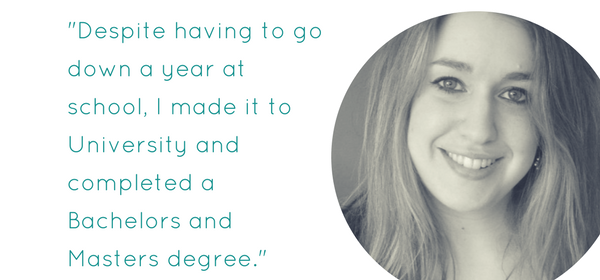
Luckily, with medication and support, I was able to live a fairly ‘normal’ life for several years. Despite having to go down a year at school, I made it to University and completed a Bachelors and Masters degree. I went travelling with friends to India and Ghana, regularly took my medication – mood stabilisers and antidepressants – and was supported by various psychiatrists and therapists, as well as my wonderful family and friends.

But the trauma of what I went through caused an increase in my anxiety levels and I developed social anxiety, fearing what others thought of me. I also became slightly agoraphobic and suffered from panic attacks. Bipolar is such a complex disorder and sometimes anxiety can be a part of the depressive side of the illness.

Over time, I believe that my main medication stopped working. This coupled with several life events, meant I became unwell fast. In 2013, I began to sink into a very low depressive state which led to suicidal thinking. I became very unwell, but supported by my family and upped dosages of medicine, I got better again. However, this was short lived.

In 2014, I spiralled into the worst manic episode of my life. I had racing thoughts and pressured speech, was very fearful of those around me and began to experience delusions (false beliefs about the world). I was incredibly vulnerable and unwell. Unfortunately, the episode happened very quickly and although I hadn’t been in hospital for 10 years, suddenly I found myself there, waiting to be treated.

Being in hospital this time was hard; it took a while for the psychiatry team to bring me down from the manic state. I was in hospital for four months, attending therapy groups (I loved art therapy) and working with occupational therapists, nurses and a wonderful psychiatrist who believed I would get well again.

I did get better again in time. I had a further four months of support when I left hospital, where I was put on the correct mood stabiliser for me – Lithium – which has helped keep the moods at bay. I attended day therapy sessions on anxiety management, recovery, art and social groups and I slowly came out of my shell again. I was in shock and quite traumatised at what had happened to me. However, over time and with support, I accepted it and began to recover.

Since that difficult time, I have worked for and volunteered with mental health charities and supported communal projects. I also started my blog, Be Ur Own Light, in 2016 to explain to family and friends about my mental health. It has been read worldwide and its aim is to tackle mental health stigma and share real-life stories.

I also began to write for the Huffington Post UK, Rethink Mental Illness, Time to Change and Bipolar UK, amongst others. Writing is therapy for me.

My message would be that the right medical team, coupled with support networks, psychotherapy, medication and doing things you love to do, can help you feel much better and find recovery. I, like so many with mental health issues, am still a work in progress but to reach any form of recovery is a big milestone and I will fight to remain well. You can too.

Reading as therapy: A Lifelong book journey and Mental health

booknook
(image: The Tiny Life)

I have always loved reading books as an escape, as a way to jump into someone elses world and on a journey with a character- whether they fall in love, travel, have difficulties in their lives and overcome them. I often have two or three books on the go and more books than shoes! My book shelves are full- and although I have a Kindle,  I still love having the actual paper book in front of me.

This led me recently to start a Book Instagram blog (bookstagram) to share what I am reading and chat with like minded people! I share what I have been reading each week and yes I am a book geek 🙂 but it fills my heart to read and share. You can join my book journey at @elsbookshelf

I studied English and Drama at University and I have always loved stories. And creating my own too. For me, reading is a kind of therapy. It helps me take my mind off my own mental health struggles and it allows me to discover new authors, new characters and get inspiration in my own writing. Mostly though, I just love the creativity and joy in reading.

Thats what its all about, finding joy in the little things.

In terms of my health, I am stable at the moment but waiting a week to see my new psychiatrist. I feel like I can’t job apply at present because I don’t know fully what I can cope with and I want to make sure I get some proper support and psychotherapy.

Will write an update at some point with it all, but in the mean time, you will find me curled up with a book or spending time with my boyfriend, friends and family. And hoping I will get better and be able to hold down work fully soon.

How I’ve Learnt to Fight my Health Anxiety: Guest Post by Ellie Miles

anxietygirl1

(image: Natalie Dee)

Imagine the scene: you’ve woken up with a banging headache, a sick feeling in your stomach, and a fever. You take a paracetamol and return to bed with a strong cup of tea, and decide to make the classic mistake of Googling your symptoms. You know you shouldn’t do it, you know that an Internet search engine can’t give you an accurate diagnosis, but it’s just so easy and tempting! You put your symptoms into an online checker, and read through the dozens of conditions that could be causing them. It could be a cold, a stomach bug, some kind of virus, or… malaria?! Brain cancer?! That’s it. This is the end. You’ve somehow contracted a rare but swiftly fatal disease, and should begin saying your goodbyes. It must be true: the Internet said so!

At this point, a neurotypical person would probably question the logic of the I’m-going-to-die thought train They’d dismiss the fear, accept that they’ve probably just got a cold, and move on with their day. However, when you have health anxiety, it’s not that simple. The kind of panicked thoughts outlined above refuse to budge, and obsessive worry can take over your mind for hours on end.

I’ve suffered from health anxiety for as long as I can remember, relating to both myself and others. For me, symptoms of illness can’t possibly be the result of a mild ailment: they must signal cancer, or sepsis, or some other severe and life-threatening condition. The same goes for the people I love. I’ve spent nights sobbing because I’m convinced that my nearest and dearest are facing imminent death. Just last week, I was hit by a crippling fear that my boyfriend had a brain tumour because he’d been suffering from sickness and a headache for four days. This morning, I decided that my cat was clearly on the brink of death because she didn’t use her litter tray overnight. Looking back, these thoughts seem ridiculous. At the time, however, they were gripping and all-consuming.

While health anxiety still hits me pretty much any time I or my loved ones fall ill, I’ve got a lot better at dealing with it over the years. What used to be days of endless worry has been reduced to maybe a couple of hours of panic that I can eventually fight off. I’ve learned techniques that tame this distressing and frankly irritating beast. The first of these is avoiding the previously aforementioned trap of Googling my symptoms. Nothing good is EVER going to come of it, because the Internet is utterly obsessed with convincing everyone they’ve got cancer. Why would I put myself at risk of seeing this when it’s only going to increase my anxiety ten-fold? It can be pretty hard to resist the temptation to hit the search engines, especially when I’m feeling really rotten, but it’s for the best.

Secondly, I’ve come up with certain rules for myself when I feel ill to stop me from freaking out and needlessly heading to the GP. If my symptoms are minor, I only go to the doctor if they persist for a few days or start to worsen. If I feel myself starting to panic, I seek the opinion of someone rational, who usually confirms that whatever I’m suffering from probably won’t kill me. If I am genuinely poorly, I of course go to the doctor and get any medication that I need. However, I try not to pander to my anxiety by telling my GP about every little twinge or sniffle I experience. It only wastes their time, and it’s a temporary fix that only serves to reinforce rather than break my vicious cycle of panic. It’s important for me to address the source of the anxiety, rather than use my doctor as a mental and emotional crutch.

Finally, I try to remind myself that I can’t control the health or the actions of other people. When I get health anxiety about the people I love, my first instinct is to frogmarch them immediately to a doctor, whether they want to go or not. However, I’m trying to teach myself that I have to leave others to make their own choices regarding their health. Freaking them out by telling them I think they have a tumour isn’t exactly going to help them to feel better- in fact, it’s probably going to have the opposite effect. While acknowledging a lack of control seems terrifying to my anxious brain, it’s necessary. While I would love to be able to constantly protect everyone I care about, I can’t. Trying to do so is only going to leave me- and others- stressed out. Relinquishing that responsibility can actually be quite liberating! I’m not saying I don’t acknowledge when my loved ones are ill: I just try to give them the support they want, and not the smothering attention that my anxiety demands.

I don’t know if I’ll ever fully be free of my health anxiety. I think the only thing that could completely cure it would be my loved ones and I never getting sick again, which isn’t very likely! However, I’ve managed to minimise its impact on my life by challenging my anxious thoughts and stopping them from controlling my actions. I’m sure my poor, long-suffering doctor will be thrilled!


Author bio

elliemiles

Ellie Miles is a freelance mental health writer and blogger based in the United Kingdom. When she isn’t writing about her experiences with depression and anxiety, she’s probably playing with her cat. You can find more of Ellie’s work at www.elliemileswrites.com, or follow her on Twitter (@elmiles_) for life updates and copious cat photos.

On being kind to myself: Mental health update

darling1

Life at the moment is much slower than normal as I am not in full time work. I have the time to write and blog and pitch articles, and to work on social media. I have the time to read and I have started a book blog (bookstagram) on Instagram. I can see friends and catch up with family.

However, for me, I am waiting to see my Doctor next week to discuss ways they can support me better with my morning panic. I desperately want to be working and be doing all I love. Its quite exhausting if I am honest, because I so want to be applying for jobs and doing and feeling 100 percent .

The key is being kind to myself and practising self care. I know I can get better again from the anxiety and be productive again but I need proper and sustained support from my medical team. I hope I can get it soon and that they will really help me. I have so much support from my family, boyfriend and friends but they can only do so much.

Life with this is not easy at all- but I know, like my other mental health challenges, that I will overcome this again. I just must have the support in place from my medical team and the right therapy. So lets hope that my almost 2 year wait for therapy will end soon!  I am reading self help books too in addition and trying to do all I can. I just hope that help for my anxiety disorder will finally arrive.

Guest Post: Hope Virgos amazing story about Anorexia and reaching recovery.

hope1

‘You are fat’

‘you are worthless’

‘No one really cares…’

‘You can’t possibly be going to eat that…’

…     I am not entirely sure when that voice in my head began to dominate me the most and when I stopped enjoying the company and the value that she brought me. She definitely was my best friend when we were 13 and she was ace. She helped me switch off from the real world. She gave me purpose and I loved her for that. She was my best friend, there when I needed her, and reassuring me when I felt lost or alone. The bond we had was incredible… or was it. After three years of being best friends I no longer seemed to do what she wanted. I wasn’t trying hard enough and I wasn’t losing enough weight. The cycle of happiness I had been living in for so long had disappeared. Instead of wishing I could do better and please my anorexia more I felt trapped. I would lay in bed for hours wishing that I would not wake up. Wishing my life away not knowing when I would feel better again. I hated what I had become and I felt lost and so afraid. Maybe that’s why part of me was secretly happy when my pre CAMHs routine got disrupted.

Every Tuesday my Mum would come and get me after registration to take me to CAMHs to get weighed and have a therapy session. I would get registered and then head to the locker room where I would have about 3 2 litre bottles of water. I would stand in the locker room downing the water. Stars in front my eyes, my head spinning as it took all my strength to keep drinking and full up on water. But one Tuesday she turned up and I hadn’t had time to water load. I felt agitated on the way to the hospital and as I reached inside my school bag to pull out the weights I realised that I had forgotten those as well. As I sat in the waiting room I felt in a complete mess and then I got weighed. My weight had dropped.

Two weeks later I ended up in hospital – my heart had nearly stopped and this was the last resort.

I spent the next year of my life recovering from anorexia. It was hard work and made harder that my weight seemed to go up and up and my mind couldn’t keep up. I had to learn the important of eating and the importance of talking about how I felt – both of these things seemed aliened to me. As I put on the weight, feelings that I had never felt flooded back through me. This was terrifying at the time and at times I do still panic when I feel too much. But learning to cope with my feelings in hospital helped me. I learnt the power of the words ‘I am not okay’ – and I gradually realised that people did care and want to help and sharing my feelings was much better than not eating. Like seriously, what had not eating ever done?

I spent a year getting intensive treatment and I was equipped with the resources to help me keep well but the reality was the battle was not over yet. I had to keep well and manage my recovery. I had to keep managing those voices in my head telling me I was fat, worthless and only good at anorexia.

Managing my recovery got easier. I had less fat days and began to switch off at meal times. I gradually began to accept that anorexia does not make me feel better or give me value but that I can get that value from those round me. I also realised how much better life is when I am not letting anorexia consume me. Yes, I didn’t think this was an issue when I was best friends with her but it was so true. I never could have gone travelling had I been friends with her still and I never could have done marathons or even had a more normal life. I was so lucky that I was given a second chance at life to conquer anorexia and start living again.

Please give it ago. If you are living with an eating disorder, please do seek help. Give beating anorexia a go.

I guarantee you it will be worth it – yes hard work but the best thing you decide to do.

Hope Virgo suffered with anorexia for 4 years before being admitted to hospital in 2007. She lived in the hospital for a year and since being discharged, has fought to stay well. Hope now lives and works in London, runs marathons and has a keen interest in exercise and maintaining good mental health. She is in a whole new place, taking each day as it comes and living life to its fullest. Hope has recently written her first book, Stand Tall Little Girl (https://www.amazon.co.uk/Stand-Tall-Little-Girl-Inspirational/dp/1911246151)

hope2

Jewish New Year Break: Mental health and more

shana1

I am just writing a really short blog to wish everyone celebrating Jewish new year, a Shana tova u’metuka, a good and sweet year ahead. Jewish new year starts tomorrow night and its a time of reflection, personal growth/ prayer and spending time with family and friends.

So the blog will be quiet for a few days while I celebrate with my family and go offline. This time of year is always a time of reflection for me and I hope that I haven’t upset or offended anyone and if I have, for that I am truly sorry.

Looking forward to a peaceful time of family and love and thinking about the year ahead for me and those I love.

There will be more collaborations being published soon, I have been writing a lot!

Love to you all.

Guest post: What can the UK government do to cultivate good mental health? by Ann Heathcote at Worsley centre of Psychotherapy

mentalhealthblogger
According to statistics revealed by mentalhealth.org.uk 65% of people in the UK have experienced a mental health problem in their lives at one time or another. What’s more revealing is that just a mere 13% of us say that we live with high levels of good mental health in our daily lives.

These stats suggest there is much to do to improve the state of our mental wellbeing, but to turn things around will require help from the powers that be, namely Government.

But is the UK Government doing enough to ensure that current and future societies have good mental health. And if you believe they could more, what action can be taken to fix this prevailing problem?

We reached out to some of the leading voices on mental health issues to get their opinion.

See full article at https://theworsleycentre.com/what-can-the-uk-government-do-to-cultivate-good-mental-health/


Ann Heathcote opened The Worsley Centre for Psychotherapy and Counselling in 2001, as a centre for the provision of professional psychotherapeutic services.

The Worsley Centre is a warm and welcoming environment for people wishing to undertake counselling and psychotherapy. The practitioners at the Centre care deeply about each individual’s mental health and well-being. They all share a passion for providing high quality therapeutic services.

Experts share strategies to stop Binge Eating. Guest post by Jasmine Burns

BED

Binge eating is a very serious disorder. Someone who has binge eating disorder will most likely be of normal weight, therefore making it hard to recognize if they have it by just looking at them. Signs and symptoms that you or someone you love have this disorder can include of the following:

  • Eating a lot of food in one sitting
  • Keep eating even when you are physically full
  • Dieting often without losing weight
  • Keeping food around you at all times

Binge eating can have vastly negative effects on your health and life. The impacts are not just physical but also emotional. Binge eating generates shame, guilt, anxiety and depression. These are emotional stressors that can cause your blood sugar levels to go awry.

We have sought out the expertise of professionals who share ways you can have control over this disorder. Please read through them to learn coping mechanisms.

https://www.thediabetescouncil.com/53-experts-share-life-changing-tips-strategies-stop-binge-eating/

Smiling through the rain: Early morning anxiety and life with bipolar.

heart1

Its been almost a week or so since I have written a blog and thats because life has been hard lately. Due to my early morning panic attacks and increased anxiety about leaving the house at that time, I couldn’t get in to work. Luckily, I can do online work on home doing social media and writing, so that is one major plus point. However, currently I am seeking extra support about my morning anxiety and fears.

I have lived with my anxiety disorder for most of my life- it comes in times of stress or times when I get triggered by something I can’t always explain- having to get up early and achieve, having to show up in the morning despite feeling so quivery and vulnerable, having to feel like I can cope- when inside I feel so scared. For reasons I can’t always pinpoint.

I have tried so many therapies and I would say with me, I have to use things in combination like breathing techniques, meditation, distraction, colouring and exposure therapy. However, now I would very much like  to find a psychological therapy that works for me. I have had 3 lots of cognitive behavioural therapy, which for me doesn’t seem to take away the fear. It is helpful for understanding limiting beliefs  like ‘I’m not good enough’  or ‘ I can’t do this, I will mess up’  and then understand where these fears come from and how they impact on life.

Briefly I will explain that I believe these limiting beliefs have come about because of trauma. The trauma of being hospitalised a few years ago for my bipolar disorder and having to learn to live life and get back to normality again despite disruption. The trauma of not feeling good enough, not feeling like I can live up to my perfectionist standards- not wanting to let people in my life down or me down . Feeling like I have to really achieve and be good at everything I do, because this belief has helped me fight, fight, fight for life and everything in it.

I, like many others with mental health issues, am hard on myself. I have a little voice though that won’t be tamed and is constantly pushing me to achieve and help people, help myself, be better. This is because I know the pain of setback. I know the pain of fear. and I know the pain of being confined to a hospital ward. So when I am well- nothing will stop me. The panic attacks may stop part of my life, but they won’t stop me from telling my story and reaching others. They wont stop me from being able to live and being able to touch peoples hearts through my writing (this is what I strive for).

Right now, I am dreaming about so much and hoping to put these dreams into reality. I will get therapy and I will get better with much effort and time. I will not let this keep me down- because I, like so many with my conditions, am a fighter and I will make sure that I live life to the full.

And part of this therapy is writing on my blog and being authentic, real and honest. And being blessed and thankful for my medical team, family, boyfriend, friends and support networks. Support is everything and I am so lucky.

Thanks for reading <3.

Nobody’s Perfect: An Update on life with Anxiety

wewere1

I have put off writing for several weeks just because its so hard to make sense of everything going on in my brain, in terms of my anxiety disorder.

I have had so many good things in the past few weeks but I am also battling anxiety around work. I love my job but past events relating to employment have made me afraid subconsciously. I very much need to unpack these fears with a therapist- I have been on the therapy waiting list for a year and a half. In a few weeks, I will be seeing my new psychiatrist (roughly the 12th/13th one in 13 years due to high staff turnaround!)  and I hope that he will escalate my therapy. I desperately need help with this as I get morning panic attacks around these fears. Despite using self help methods like meditation, these fears can be all consuming and stop me from going into work.

It is incredibly difficult for me to write about this because its so personal and because I love what I do. However, I have been struggling and I hope by writing that yes, I do get panic attacks about my fears, I can also make others feel less alone.

I did get some respite from these fears and work have been very supportive of me. I was able to go with my friend for a week on holiday to Madeira, a Portugese island off the main land near North Africa. Its a beautiful island, filled with terracotta roofed houses, turquoise seas, dolphins, whales and  turtles, friendly people, bright sunshine and palm trees. We went on a boat trip and got to see some spotted dolphins and relaxed in and by our hotel swimming pools. Not to mention the love for Cristiano Ronaldo on the island, as he is from there and the airport is named after him! It was a really restful and fun trip. I wasn’t anxious all week- as it seems to get triggered by specific fears and situations.

I just hope to get back to full health again and get some extra support around the fears that are fuelling my panic.

I tend to beat myself up about having an anxiety disorder and feeling ‘incapable’ of doing certain things. I am learning self love and to be calmer and to just see my anxiety as a hurdle to be overcome. I may be a perfectionist who hates letting others down
– but I am learning, like the Jessie J song, that Nobodys Perfect.Â