Bipolar And Seasonal Self Care: Overspending This Festive Season by Bipolar UK

(image: Jeshoots.com: Unsplash)

Christmas can be a stressful time for many, but for those living with bipolar disorder, it is a time of year when symptoms may be exacerbated, and overspending can become an issue.

According to national charity, Bipolar UK, the increased pressure to attend social occasions alongside material pressures around Christmas/Chanukah can trigger manic or depressive episodes in some living with the condition, resulting in an increased risk of overspending.

Dr Thomas Richardson, clinical psychologist at Southampton University, who has lived experience of bipolar and has researched the topic of bipolar and overspending, “impulsive or compulsive spending means spending more money than you planned and regretting it.”

He added: “There’s definitely something about that sense of urgency that I must buy it right away – the feeling like you can’t stop yourself and it’s a little bit out of your own control.

There is a lot of guilt and feelings of being a burden associated with bipolar, and we know that people living with the condition can sometimes feel that excessive generosity is a way to pay back loved ones for their support. Overspending can also feel like a comfort at the time.

Christmas is a time where we’re surrounded by adverts encouraging us to buy things and there’s the additional pressure of feeling the need to socialise. All of this can potentially be very triggering for some people living with bipolar.

April Kelley, an award-winning actress and producer living with bipolar, has a history of overspending. She said: “My biggest achilles heel is spending money on others, and I think that’s a combination of buying love and the rush that buying things for others gives me.

Last Christmas I bought flights from my home in LA back to the UK at the last minute to surprise my parents, but I’ve also been known to buy an entire bar’s worth of Jager bombs for everyone.

“I now use digital banking as a way to help me budget by splitting money into pots and my parents are really supportive and help me to keep control of my finances.”

Dr Richardson says there are several ways you can protect yourself from overspending at Christmas and beyond. He says that digital banking is good to helo you budget, move money into different pots and set spending limits. He advises making a list of what you really need to buy, versus what you’d like to buy, unsubscribe from marketing emails if it helps you, be mindful of who you follow on social media, make gifts instead of buying and return unnecessary things you have bought.

(image: Bipolar UK)

Simon Kitchen, CEO of Bipolar UK, said: “Advance Choice Documents (also known as ACDs) are a great way to ensure your voice is heard during a period of relapse.

“The idea is to write an ACD with your loved one or doctor when you’re well to put into action if you recognise you’re experiencing the early signs of an episode. You can include a line to protect yourself from overspending – planning to have limited access to a credit card or only using a basic mobile phone without internet, for example.

“This is why it is so important to monitor your mood so you can be aware of the warning signs if you are heading towards a relapse when you might be more prone to overspending. Many people in our community say using our free Mood Tracker app is a simple way to notice early symptoms.

“Finally – please don’t feel that you’re alone. We provide 1-1 peer support, support groups, a 24/7 eCommunity that is open 24/7, 365 days a year, even on Christmas Day, and invaluable resources on managing common seasonal triggers of bipolar.”

(Image of Simon Kitchen: Bipolar UK)

Click to access Bipolar UK’s Mood Tracker apppeer support groups and eCommunity.

Watch Bipolar UK’s webinar about ‘bipolar and overspending’ here

With thanks to Bipolar UK for these excellent tips this festive season.

World Bipolar Day 2024

Today is World Bipolar Day and its a day where we raise awareness globally about living with bipolar disorder and battling social stigma

When I had my first depressive and manic episodes in 2004; I was a teenager and had no idea what was happening to me. I was helped not only by family support (my dad was diagnosed 4 years before me) but also by some amazing psychiatry health professionals (shout out to Dr Mark Berelowitz at the Royal Free and the team at the Priory North London).

Bipolar changed my life as a young person in both good and difficult ways. It made me stronger; more resilient and more empathetic. But it also made me depressed, manic; anxious and fearful. There were times where I was scared of my own brain and didn’t know where bipolar started and Eleanor ended.

20 years later, I take daily medicines and engage in therapy and I go long periods between episodes due to finding the right medications. This is my own experience and some people with bipolar rapid cycle or have more regular episodes.

Remember it’s ok not to be ok but reach for support and never give up. There is a future and a way forward. I will keep talking about bipolar to help others and raise vital awareness and funds for our condition. Please also support charities like Bipolar UK and have a read of my book Bring me to Light.

5 Key Takeaways On Treatment Options For Bipolar Disorder by Maya.

(image: Samson Katt: Pexels)

Most people know at least a bit about bipolar disorder. It has come into the mainstream more in recent years and many people have it.

BPD treatment is available for those who want or need it. There are many clinics and doctors who are willing to help those who are showing signs of this disorder.

If you have a bipolar disorder diagnosis or you know someone who has, there are some takeaways on treatment options about which you should know.

More is Known About Bipolar Disorder than Ever Before

First, it’s crucial to know that medical science has advanced to the point where more is known about bipolar depression. The brains of individuals who have it have been studied. This has led to a wealth of information that doctors and clinicians can use when developing more advanced and effective treatments.  

Those Who Have It Can Often Live Normal Lives

It’s also true that those who have received a bipolar disorder diagnosis can usually live normal lives. They can often take care of themselves. However, there is a much better chance of this if the person who has received the diagnosis is willing to communicate regularly with a medical professional or team of professionals who can help them when needed.

Refusing Treatment Can Lead to Serious Problems for the Diagnosed Individual

It’s worth mentioning that if someone who has received this diagnosis does not want to get help, they could then become unwell. Part of bipolar disorder is that sometimes, those with it can suffer from the depths of depression. They can also experience dizzying highs of a manic phase.

Mania can be quite a dangerous time for the person with bipolar and treatment such as Lithium will be needed to return them to wellness.

A Medicine Regime Can Help

Most medical doctors agree that the medications that are available now can help someone who has received a bipolar disorder diagnosis. A mix of medicines including mood stabilisers, anti psychotics and anti depressants is usually what it takes to keep such a person on an even keel.

These medicines might not be the first choice of the person who has received the diagnosis. Sometimes, those who have bipolar disorder may not want to take medication.

Meeting with a Doctor Can Help as Well

Someone with bipolar disorder may find that medicines and therapies can help to manage the condition.

It is important to monitor your own moods and reach out to your GP or psychiatrist if you feel you are becoming unwell with an episode.

This article was written by a freelance writer.

World Mental Health Day 2023: Bipolar Disorder has the Highest Rate Of Suicide- Bipolar UK.

(image: Study Starter)

This World Mental Health Day, clinical experts in bipolar have today announced that successive failings in government policy could have led to a significant reduction in quality of care for those living with bipolar in the UK.

Despite vast improvements in key areas of mental health, the average age for people to get a diagnosis of bipolar is 34 if someone was diagnosed within the past five years, compared to 26 if someone was diagnosed 30 or more years ago.

It is shocking that today people are living with undiagnosed bipolar for longer than they were when the charity was formed 40 years ago. The current average delay to diagnosis is 9.5 years. That’s nearly a lost decade where people are struggling with confusing symptoms without getting the vital bipolar-specific treatment and support they need,” said Simon Kitchen, CEO of leading charity Bipolar UK.

This delay is having catastrophic consequences, with the Bipolar Commission finding that more than a third of the 2,458 people surveyed had attempted suicide because of this delay. This is backed up by research which shows that ‘time to treatment’ is significantly associated with hospitalisations and lifetime suicide attempts.

Tragically, global research estimates that up to 1 in 5 people will take their own life and 60% of people with bipolar will attempt suicide at least once during their lifetime.

It is well established that bipolar has the highest risk of suicide of any mental health condition, yet it is only mentioned once in the Government’s recently published national suicide prevention strategy.

CEO of Bipolar UK CEO, Simon Kitchen, said, “Since Bipolar UK was founded as a charity 40 years ago, we have never stopped campaigning on behalf of those living with bipolar and their families.

“To help prevent the high rate of suicide in those with bipolar and to reduce this unacceptable waiting time for a diagnosis, we are currently campaigning for the Government to commit to prioritising bipolar in the implementation of their national suicide prevention strategy and to commit to reducing the average delay to diagnosis to five year within five years.”

The Bipolar Commission’s Bipolar Minds Matter report launched in parliament in November 2022 includes several recommendations that experts in bipolar and clinicians believe will reduce diagnosis time, improve the quality of life and reduce the high risk of suicide for those living with bipolar.

Kitchen added; “The current care system for bipolar is broken, resulting in an ineffective and inaccurate pathway to diagnosis.

“It is shocking that diagnosis delays are worse now than when Bipolar UK was founded 40 years ago.

“Although we are providing as much support as we can, we desperately need the government to sit up and take action before we lose even more people to suicide.”

To find out more about Bipolar UK’s peer support services please visit: www.bipolaruk.org/get-support 

Bipolar UK- Suicide Prevention Webinar Video.

Please watch with care.

It was an honour to record this alongside Bipolar UK CEO Simon Kitchen and expert police officer Ashley Brice, who helps people who are suicidal.

On average, 1 person a day every day with bipolar dies by suicide.

If you watch this, I hope you find it informative and helpful.

Eleanor x

Finding A Sense Of Belonging, Where No One Wants To Belong: On a Psychiatric Ward by Katie

(image: Kelly Sikkema: Unsplash)

In 2021, I was hospitalised for the second time in my life, due to an acute psychotic episode as a result of my then-recent diagnosis of Bipolar Disorder (Type One). Hospitalisation is one of the scariest, most unsettling periods of time but – a sometimes – necessary stage to recovery. I was so deep within my psychosis for the first week of my admission that I was quite oblivious to my surroundings and the people I was sharing the space with.

However, when my psychosis started to subside and I began to return to my true self, more free from delusions and mania, I was struck with a strong feeling of not belonging. I felt truly and utterly lost. 

My ward was made up of around fifteen other women, with varying diagnosis, in differing mental states and from different walks of life. Yet, somehow I still felt like an outsider.

At first I was trying to think why. Was it because I was a Northerner in a Southern hospital? Was it because I was one of few that was the same ethnicity as myself? Was it that I was younger than most? There were so many factors that could have been the result of me feeling at a loss and not finding belonging.

Ultimately, no one wants to feel like they belong inside a psychiatric hospital. However, I believe there is merit in feeling like you have a place and in finding a sense of belonging helped me to have grounding and a base that wasn’t initially there. 

Here are a few factors, of which helped me to find belonging:

  1. Acceptance – A lot of my initial struggle was the complete denial, fuelled mainly by my delusional thoughts, that I wasn’t mentally ill and I was in the wrong place. The acceptance that I was a patient in a place that was designed to help me was a key turning point within my recovery. I belonged and thus was worthy of treatment and a future. 
  1. Routine – Although I grappled with feeling like I was becoming institutionalised, I think sticking to the routine of the ward was really important. Asides from the benefits of attending meal times, having the structure meant seeing familiar faces, both staff and patients and having positive interactions. 
  1. Involvement – Attending the therapy sessions that were available were so beneficial. My ward had a brilliant occupational therapist and other specialists that would come in to do structured sessions such as music therapy, cooking or yoga classes. Again, I got to see familiar faces and it brought with it a sense of community. 
  1. Authenticity – One of my biggest struggles throughout both manic, and depressive periods, is finding it hard to connect to my true authentic self. Reconnecting to myself and allowing myself to just be me meant that I felt more relaxed and at ease.

Finding this sense of belonging in a place where no one wants to belong ultimately gave me the grounding to go forward and look forward to a brighter future. 

Katie is a freelance writer who lives with bipolar disorder in recovery and has courageously shared her experiences of being hospitalised here.

A Letter to my 16 Year Old Self: by Eleanor

(image: E Mandelstam)

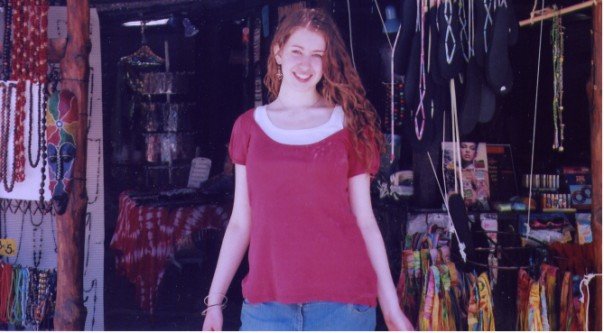
(image: Me aged 16/17 in Spain with friends)

She sits nervously clutching her GHD straightened hair. Its meant to look poker straight but her curly waves never seem to look like Avril Lavigne’s hair. Except for that time when her friend tried to tame it for her with straighteners and an iron!

She lives in a bedroom in the family home- half child, half adult, the wallpaper pink with pictures of little bo peep covered with music posters- Destiny’s Child (Beyonce, Kelly and Michelle in their Survivor jungle outfits peer down) and Joss Stone with her nose piercing. She looks up to these women and wishes she could be them, especially Joss, who is only a year or so older than she is. Mariah Carey is another huge influence and she listens to her Daydream and Greatest hits albums on repeat on her CD player, trying to sing like Mariah but failing to hit those notes.

At school, she loves Drama- she loves to perform as different characters and study theatre. She has a wonderful group of friends who she will remain friends with today. She dreams of going to drama school.. and she will achieve her goal!

She is me, aged 16 years old in 2004.

She is ‘baby Ellie’- the teenager who had no idea what was in store for her life or to come. Who should have been free to party, make mistakes, not worry about life. Who should have been discovering life safely but enjoying teen life.

She was given the diagnosis of a severe mental illness, bipolar disorder, when she was still a child.

She struggled with depression, mania and psychosis from the age of 15.

She has been medicated for 19 years (and had changes of medication).

She has been in therapy for longer.

but she survived and thrived.

And she still loves theatre and music and friends (although the GHD’s have been relegated to the back of the cupboard!)

So dear Baby Ellie,

Whatever happens – everything is going to be OK and you will achieve things beyond your imagination- except being able to sing like Mariah Carey.

When I look back at her, I hear the lyrics of the song ‘Looking in’ on Mariah’s day dream album that I used to play….

(image by me, lyrics by Mariah).

But I am proud of her.

Love,

35 Year old Me.

x

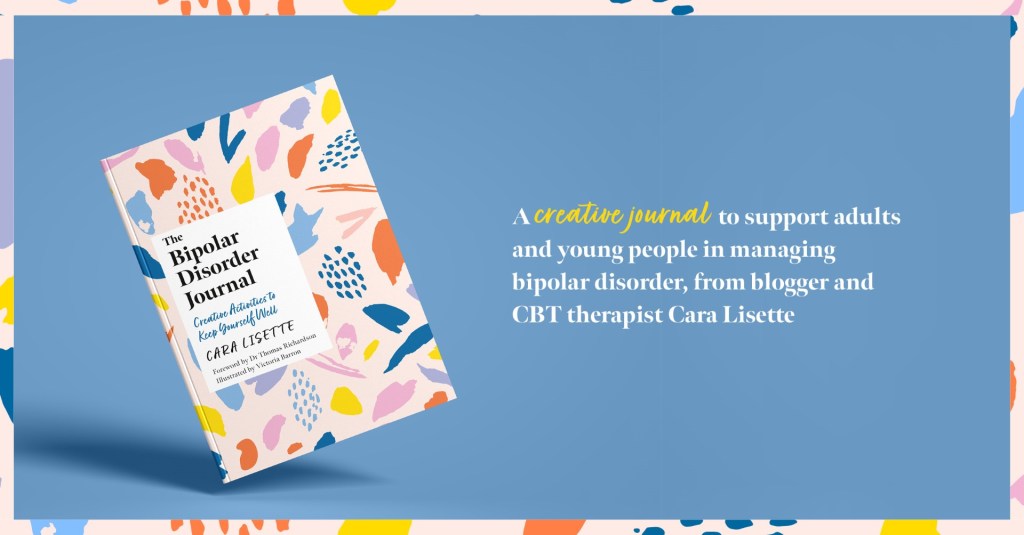
The Bipolar Disorder Journal: Creative Activities To Keep Yourself Well (by Cara Lisette and Victoria Barron).

(image: Jessica Kingsley Publishers and Cara Lisette)

I have followed the work of friend Cara Lisette for quite some time. Cara is not only a fellow mental health blogger, author (of the Eating Disorder Recovery Journal and Recovery Journal series) and advocate, but she lives with bipolar disorder and an eating disorder in remission. Cara is also a trained CBT Therapist and uses techniques that have worked for her and many others, to help people.

She created the Bipolar Disorder Journal: Creative Activities to Keep Yourself Well (with Jessica Kingsley Publishers) using evidence based techniques such as CBT and mindfulness with journalling prompts, creative activities, colouring pages and motivational quote pages to help you stay well and keep on track. It is designed to help those with bipolar disorder to understand and manage our condition, from someone with lived experience, who has learnt how to manage her condition.

Cara and the publisher say, ‘The techniques in this journal support those with bipolar in recognising and coping with episodes of depression, mania, and psychosis, understanding their triggers, and finding ways of seeking support. This journal is intended for those who want to learn more about themselves and live a full and happy life.’

Cara and Jessica Kingsley Publishers have very kindly gifted me a journal of my very own to use, thank you! It looks amazing and I will be using it and reviewing it very soon!

If you would like to get a copy of this amazing creative journal click here. and it can be found in all good bookshops.

Note: This is not a paid ad, I was gifted a journal and wanted to share about it as I believe in Cara’s mission to help others with bipolar disorder.

On World Bipolar Day I Hope For: The Road to Remission by Eleanor

(image: World Bipolar Day)

Today is World Bipolar Day and for those of us living with bipolar disorder we know that living with it every day, year round is more accurate. However today is our day to talk about life with mental illness and to try and eradicate the stigma around the illness… ‘crazy lady’ ‘nuts’ ‘drama queen’.

World Bipolar Day is designed to raise awareness worldwide of bipolar conditions and to work to eliminate social stigma whilst providing information to educate and help people understand the condition.

Even though I live in remission/recovery with the illness, I am medicated daily to be this way, and I have undergone years of therapy and learnt coping methods too, with support from family.

Well, before I found medication that stabilises my bipolar highs and lows, life looked very different.

There were times I couldn’t work. I was so depressed I lay in bed in all day, only getting up to eat. I was scared to have a shower and wash my hair.

Life looked bleak. All I wanted was my duvet and oblivion. I had intrusive thoughts about ending my life, I was in a lot of emotional pain and this would last for weeks, sometimes months on end.

Bipolar isn’t just a bit high or a bit low…. its depression and mania, suicidal ideation and psychosis, self harm thoughts, hypersexuality, hyper activity, believing delusions that aren’t real…..SO much. Its episodic but it can ruin your life. Some turn to drugs, alcohol, sex to cope. Some hear voices too.

I have been in hospital twice for fairly long stays. I have been sectioned under the mental health act and held in a hospital unit against my will. I have been injected with sedatives to calm my mind and body when I couldn’t consent. I have met people in hospital who were suicidal, anxious, depressed, high on drugs, in psychosis. I lived on a ward where I heard people being restrained.

So, not much fun really. Luckily this month I am celebrating 9 years of remission out of hospital! I also came out of hospital as a nervous wreck and thankfully, therapy has helped.

(Image: speakingbipolar.com)

This blog is inspired by one of my followers who asked me what was my ‘Aha’ moment in recovery.

As well as finding the medicine Lithium, a salt that controls the mood fluctuations, the biggest thing I did for my own healing was go through therapy for my panic attacks and PTSD like symptoms. This was done with the support of my husband and family and because I has been on an NHS waiting list for 2 years, I needed help. My therapist and I have done EMDR trauma therapy which has helped me to process things.

In fact, I still do get anxiety attacks – just less. I have been in a very good place generally in the past year. Finding support at home, at work and from friends and family has been the most stabilising part.

I have had bipolar since I was 15, I am 34 and can tell you that this has not always been the case and my mental health has and will fluctuate.

I learnt recently that bipolar brains are neurodiverse, meaning our brain chemicals act differently to a neurotypical brain. Always good to understand the biology behind it too as this illness can be inherited and run in families- my Dad and I and other relatives have it.

On World Bipolar Day I hope:

-Employers adhere to the disability act and make reasonable adjustments to help those of us with bipolar to work in a better way for them, including hybrid working.

-People with mental illness aren’t fired because they can’t get to a physical workplace.

-Mental health services need better funding, so that people with bipolar can get a correct diagnosis sooner and get the help they need.

-People not in the Western world will get access to mental health medication and therapies that they desperately need.

Thank you for your ongoing support,

Eleanor

x

Read more about my journey with bipolar in my book Bring me to Light

We are 7! On Be Ur Own Light’s 7th Blog Anniversary by Eleanor

On the 1st March 2016, I started this blog as a way to provide therapy for myself- as I was going through panic attacks, (caused by trauma). Can you believe that was 7 years ago?! I can’t! Since then I have had several years of therapy and my life changed so much too for the better- I met my husband, we got married and moved to our first home.

The blog has turned into a book Bring me to Light (with Trigger), writing for Metro.co.uk, Glamour, the Telegraph, Happiful, Rethink Mental Illness, Mind and other incredible organisations, I have partnered with large and small brands, charities, businesses, writers to create content that battles stigma on mental health. We have been awarded as a Top 10 UK blog by Vuelio since 2018 (thank you) and I love to share my story to help others and educate people about bipolar, anxiety, panic disorders, psychosis, mania and mental health in the workplace (amongst other mental health topics!). I have also recorded podcasts and have begun speaking in the community about bipolar with my Dad.

I cannot believe it has been 7 years since I opened up my computer to write- I was struggling. a lot. Writing has been such a therapy and a saviour to me.. and I hope this blog helps you too!

As always, I want to thank all my contributors and brands (sponsored or not), as well as the digital agencies and freelance writers who provide content too.

This year March 22- 23 we have featured (where it says my name, I wrote it!)

How to Stay Motivated When You’re Feeling Lost: Tracie Johnson

Change the Story Campaign- Eating Disorder Stereotypes- Hope Virgo

Performance of She Used To Be Mine (Sara Bareilles) by Nicolina Bozzo- Eleanor

5 Tips on How To Talk To Your Boss About Mental Health- freelance writer

Does Retail Therapy help your mental health?– freelance writer

9 Tips On Prioritising Your Mental Health while raising children- freelance writer

How to Keep a Good Mindset with Physical Therapy – Sierra Powell

Bipolar and Perinatal mental health- Eleanor

4 Types of Alcohol Addiction Services You can Turn To for Help- Rachelle Wilber

How to Transform Social Anxiety – Lewis McDonnell at Phobia Support Forum

What It’s Like To Go Through Severe Depression as a Bipolar Episode- Eleanor

What To Do When You Feel Alone- Eleanor

4 Reasons to Cook For Yourself- freelance writer

Learning to Embrace Schizoaffective Disorder -Mental Health Awareness Week- James Lindsay

Promoting wellbeing, good mental health and reducing stress in the elderly- freelance writer

Top 10 UK Mental Health Blog Award from Vuelio- Eleanor

Mental health, low self esteem, body image and fashion- freelance writer

What It Means To Have an NHS Perinatal Psychiatry Meeting- Eleanor

Unbroken- How Madeleine Black learnt to heal after sexual violence- Eleanor

What Tools Go Into Substance Abuse Treatment- Kara Masterson

Living with Anxiety- Promoting Mental Health and Success In the Workplace- Erin Hallett

How to know if you have an eating disorder and what to do next- Rachelle Wilber

How can I help an alcoholic or addict parent?- Chaye McIntosh

Boost Your Confidence- freelance writer

Taking Lithium for Bipolar Disorder- Side Effects – Eleanor

4 Effective Ways to Boost Your Mood- freelance writer

Knowing when its right to seek substance abuse treatment- Rachelle Wilber

Protecting mental health, a guide- The Mental Health Foundation

Letting go of hurtful memories to be happier- freelance writer

Group therapy and healing- Lizzie Weakley

Mental health medication and heatwave side effects- Eleanor

How to Create Healthy Daily habits- Sierra Powell

3 Journalling Techniques for Improved Mental Health- freelance writer

Looking after elderly parents- freelance writer

Thank you to a mental health nurse for sharing my book – Eleanor

Interview on Living with Bipolar with Best For You NHS- Eleanor

5 Tips for Communicating with Someone with Dementia- freelance writer

7 Tips to Help Your Personality Shine Through- freelance writer

Sleep Expert on how to stay cool on hot nights- freelance writer

Book Review of my book Bring me to Light by Deb Wilk- Eleanor

4 kinds of Therapy to consider- Rachelle Wilber

Coping with Borderline Personality Disorder and Obsessive Compulsive Disorder- Dr Joann Mundin

Are work places doing enough for mental health post-covid? – freelance writer

Mental Health at Work: First Aid products- writer

The Anxiety Train- a New Year- Eleanor

PTSD therapies and what is right for you- Kara Masterson

Managing mental health when you start college/university- freelance writer

Helping elderly relatives take care of themselves- freelance writer

How to Stay Emotionally Healthy during a Divorce- Lizzie Weakley

4 Ways EMDR Therapy can help you cope with Anxiety- Rachelle Wilber

Stuck in a Rut? Try These 4 Things- Dixie Somers

Non Traditional Therapeutic Activities to Try for Anxiety- Brooke Chaplan

Dealing with Dental Anxiety- Lizzie Weakley

Overcoming Seasonal Mood Changes- Brian Thomas

3 Years of my book Bring me to Light- Eleanor

5 Unbeatable ways to unwind- Dixie Somers

Speed Up Bipolar diagnosis to save lives- Bipolar UK- Eleanor

Losing a loved one- coping with anxiety- Hannah Walters

4 Ways to Treat an eating disorder- Lizzie Weakley

Bipolar UK commission announcement on government funding – Eleanor

How Living by the waterfront improves health- Rachelle Wilber

What football has taught me about life and mental health- Rose Atkinson-Carter

Anxiety and climbing, not carrying mountains- Eleanor

How Car accidents affect mental health- Stubbs Law Firm

How can EMDR therapy help you?- Brooke Chaplan

Tips for planning a sensory friendly wedding- Clay Reese

How to manage emotional eating- Lizzie Weakley

Methods for helping addiction recovery- Kara Masterson

How to tell if a loved one needs psychiatric help- Brooke Chaplan

What to do if you have an eating disorder- Brooke Chaplan

Navigating a divorce and preserving your mental wellbeing- Dixie Somers

January anxiety and burn out, how to avoid- Dr Catherine Carney at Delamere

How to cope with ADHD- freelance writer

My talk at the mental health awareness shabbat on bipolar- Eleanor

Tips to help seasonal depression- Obehi Iyobhebhe

How to help support your friends journey to sobriety- Anita Ginsburg

Why self care is so important- Brooke Chaplan

Coping with big life changes- Meghan Belnap

Befriending my brain, a new book on psychosis and recovery by James Lindsay- Eleanor

Thank you all for contributing and I am raising a glass to 7 years of this blog!!

Love and gratitude,

Eleanor x