5 Spiritual Tips for Coping With Your Mental Health

(image: Tatiana from Pexels)

Mental health is as important as physical health. Through life’s many challenges, it is hard to maintain one’s mental health. Often, people with mental health issues are not being taken care of properly by their community. That’s where spiritual practices come in. These practices help to bring mental peace and healing to the mind and body.

Here are five spiritual wellness tips that you can use today for better mental health.

Talking with Self via Meditation

Talking and listening to oneself is an excellent spiritual practice that can be done at any time. Whether you’re sitting in meditation or listening to a guided meditation, talking with yourself in terms of listening to your thoughts and feelings, is an effective way to clear your mind of thoughts and concentrate on the present moment. You may find your mind wandering and thats OK! Just keep checking in with yourself.

Avoiding Negative Thoughts Through Gratitude

It’s important to note when negative thoughts come up, like those of anger or negativity. Negative thoughts are not good for the mind and body, so it’s important to let these thoughts pass as best you can and don’t give them energy or power. One way to do this is by practicing gratitude in your daily life. Gratitude helps you keep positive vibes going and increases happiness levels and you can do this by keeping a gratitude journal.

Being Kind to Yourself

The best way to start living a healthy and happy lifestyle is by being kind to yourself. One of the best ways you can do this is by starting your day with a positive affirmation. For example, you might tell yourself that “I am capable, this will not be difficult,” or “today I am making good decisions.”

This simple act can greatly improve your mental health and give you a boost for the rest of the day. Treat yourself with kindness and care and don’t be too hard on yourself.

Cultivating a Loving Mind

We live in a world that is constantly giving us reasons to be angry. The news, the internet, and even people in our own lives can make us feel like we are surrounded by chaos. However, it’s important to cultivate loving thoughts and feelings.

This doesn’t mean that you always have to feel happy and cheerful. Sometimes, life calls for sadness or anger. But cultivating a love-filled mind helps prepare you for these moments when they arise. It also helps to keep your mind clear of worries and helps you see the good things in life more clearly.

Maintaining a loving mind is hard work. It means turning thoughts away from fear and anger as soon as they arise and replacing them with love instead. This is done through meditation or spiritual practices such as prayer or yoga. These practices help keep your body calm while helping your mind stay peaceful and open, allowing you to channel your Psychic Lights.


Letting Go of Anger

People often try to suppress their anger. However, this is actually a bad idea. According to the researcher Dr. Robert Firestone, “Anger is an adaptive emotion that can be used as a motivating force for good.”

When we suppress anger, it can lead to many mental health issues such as anxiety and depression. That’s why it’s important to let go of your anger in ways that are physically and emotionally healthy. You might want to write it down or hit a punching bag when you’re feeling angry. Expressing your anger in a healthy manner will help you feel better and reduce stress on your body.

All of these ideas can help to keep you calmer, more positive and feeling more tuned in with your mind and body. These can be used in conjunction with attending therapy or taking (prescribed) medication if needed. Look after yourself and find a wellness spiritual practice that suits you.


This article was written by a freelance writer and contains affiliate links.

Options for Improving Your Mental Health and Overcoming Alcohol Addiction by Rachelle Wilber

(image: R Wilber)

Alcohol addiction greatly impacts on your mental health and general wellbeing. Fighting addiction should be your ultimate goal, making it possible to take control of your life. There are numerous options available to help in overcoming addiction and improving your mental health. Here are several options.

Alcohol is extremely addictive and has the potential to ruin mental health and peoples lives. These are just a guide, please consult with professionals.


Connect with Others

A great place to start is it to get out and start meeting other people at support groups. It helps to share positive or similar experiences, which will aid your mental health and self esteem. . You can also consider others and build emotional support if able. Avoid people who want you to relapse back into addiction and who enabled it too! Seek support for you to move forward, even if slowly.

Be Active 

Exercising and getting involved in activities release the endorphin hormone, also known as the happiness hormone. This can also help your general health as you recover slowly. Get involved with community causes and help raise funds for 5k, to 10k walks once you feel able.

Learn New Skills 

Learning new skills helps connect with others and builds a sense of purpose. Try taking a responsible role when volunteering that has an immediate impact, be it at work or in the community like cooking for the homeless- as long as you are in recovery and feel able.

Be Mindful 

Getting into a male alcohol addiction treatment program (or a mixed program/ one for women) can help you in being mindful as it is one of the crucial aspects taught. It helps you consider yourself and the positive changes you have made while recovering from alcohol abuse. Being mindful helps you understand yourself better and take the necessary steps to ensure mental health is protected. 

Be Kind 

Being kind to yourself and placing your feelings first will make it easier to recover from alcohol addiction. Avoid comparing your progress with others and discard people’s opinions of your progress. Allow yourself to make mistakes while finding the right ways to be mentally free. 

Celebrate Your Small Wins 

Celebrate small wins even if you have milestone goals you want to achieve. Start with celebrating finishing the alcohol addiction treatment program. Celebrate your sober days!

Write it Down 

A great way to improve mental health and overcome addiction is by documenting everything. It helps in processing all emotions to gauge triggers to avoid them. It will also allow you to self-reflect on progress, relieve stress, and inspire creativity. 

Reach for Support

Remember to get into local support groups or even stay in touch with members of the alcohol addiction treatment program. Consult a professional (GP or psychiatrist) if the urge is unbearable to avoid relapsing into addiction and keep you on the road to your recovery.  

This article was written by Rachelle Wilber, freelance writer.

Taking Mental Health Medication Doesn’t Make You ‘Weak’: Fighting the Stigma by Eleanor

(image: Matthew Ball for Unsplash)

Disclaimer: All medication must only be prescribed by a psychiatrist or GP dealing with you individually. Advice from medical professionals must be sought before taking any medication., Never take someone elses medication or try to cure yourself!

This week, I had a conversation with someone about being on mental health medication, in this case, anti depressants for clinical depression. We reminisced that as teenagers, we just weren’t taught properly by school or in society about mental illness. It wasn’t talked about here in the UK back in the 2000s and everything was really hushed up, cloak and dagger, as if you had to be ashamed of it. As if anything to do with our mind was shameful- no one really had much education, unless it happened in your family.

I know that for many people, even in 2022, taking medication for their mental health carries this sense of shame.

For me personally, I was so ill that there really was no choice for me as a 15 year old, but to be started on medication. My symptoms of bipolar disorder first appeared at the age of 15 with depression and anxiety episodes, followed by mania and psychosis. So, I was on anti psychotic medications as well as what is known as a mood stabiliser, a medicine for mood disorders that stabilises moods (in this case, the bipolar poles). I also took regular anti depressants and anti anxiety medications and still do daily. My medicine regime is pretty intense but it means that my bipolar is well controlled and in remission- and that I am stable. My family has a hereditary illness that can be severe- so medication was the right choice for me.

However, for those without a severe mental illness like bipolar or schizophrenia, you may be recommended to try anti depressants first. There are varying different types which work on seretonin reuptake in the brain and help to balance brain chemistry.(although scientists cannot pinpoint the cause for depression fully yet). These can be used in combination with therapy and exercise to help treat depression and anxiety.

Some families and cultures hold great shame to be seen taking mental health medication and so hide it from loved ones. Others stop taking it, believing they are stable and well because the medication has balanced them out- and then crash into depression. For some though, anti depressants are a shorter term thing. The point is, its all so individual and there is no one size fits all medicine- you must do what is right for your recovery but definitely do not suddenly stop them.

In my family, my Dad was already on mental health medication- Lithium for bipolar, when I became ill. So, I was lucky that I had a loving supportive and accepting family, including plenty of medical professionals who understood. It was a steep learning curve for everyone though. And yes, as a teenager, I did hold some shame for taking medicines because I just wanted to ‘fit in’ and be a ‘normal’ teen. Coupled with the fact no one openly talked about mental illness at school or in general (this was just before social media!) and I felt this overwhelming sense of shame that my brain chemicals had let me down. I never once skipped taking medication though.

The thing is with mental health is that you can’t see it. But, you can absolutely feel when something is wrong and when you feel chemically depressed or other mental illness. This is usually depression unlinked to a life event- you wake up with it and you know its back, you feel despondent and unable to cope.

Yet, because you can’t see it- shame is even greater because how do you explain it to others? And are you ‘weak’ or ‘crazy’ to need medication to function?

The answer is No. To have to take the correct prescribed medication for you daily is an effort. You have to commit to it and to seeing how some medicines go. To go through episodes of mental illness makes you stronger and more resilient, surviving each day. You are not weak, your brain just needs help (like helping diabetes or a heart problem) and the words ‘crazy’ or ‘unhinged’ just serve to reinforce stigma. There is no need to be afraid or filled with shame or self loathing- but it is valid to feel this way as you are human!

In 2017, it was estimated that 792 million people worldwide lived with a mental health disorder (one in 10 globally). 46 million of those had my disorder, bipolar. However, this is the tip of the iceberg because mental illness is often underreported due to stigma. So- you are not alone. There is treatment out there to help you.

Remember not to be ashamed of needing medication to cope with life’s challenges (alongside therapy etc). The stigma is slowly falling and I will continue to write and share to this end.

You are not weak! You are powerful beyond comprehension .

Do you take medication? Does it help you?


Love,

Eleanor x

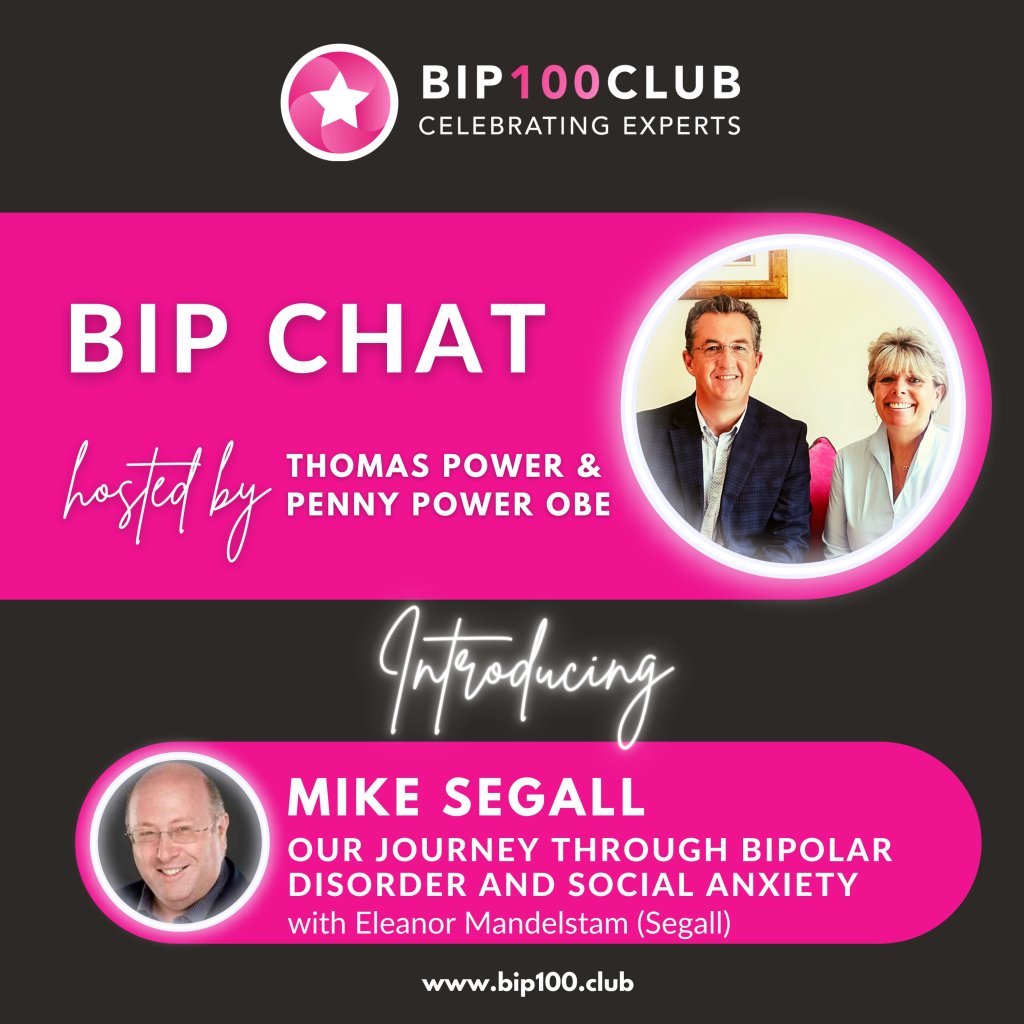
Mental Health Chat With Penny Power OBE and Thomas Power of Business Is Personal with Myself and my Dad Mike Segall. Our Journey With Bipolar Disorder and Anxiety.


Yesterday, 9th Feb, my dad Mike and I were honoured to be interviewed by his friends of many years, Penny Power OBE and Thomas Power of Business is Personal- live on Linkedin, Youtube and Facebook.

They asked us to come on their weekly show to talk about our hereditary journey with bipolar disorder and anxiety and shed light on all things mental health.

It was a real pleasure to talk all about our lives and how my Dad was diagnosed with bipolar just 4 years before me.

Trigger warning: discusses suicidal ideation and psychosis.


Thanks Penny and Thomas! We hope it battles stigma around this much misunderstood illness. Watch here:

https://www.youtube.com/watch?v=Fghp8RNTvX0

From Denial, To Acceptance and Recovery: My Mental Health and Eating Disorder Journey by Emily J. Johnson

(image: Jasmin Chew at Pexels)

Trigger warning: discusses eating disorders and OCD

It has taken me almost thirty-five years to acknowledge that I have struggled with mental illness myself. I’ve spent a lifetime in denial. It wasn’t until writing my memoir Pushing Through The Cracks in 2021 that I observed my life objectively. I witnessed the experiences I’d gathered since childhood and how they had shaped me into the woman I am today.   A woman of strength, but also one diagnosed with a mental health disorder – Binge eating disorder. A label I neither wanted nor could accept. Not until now.

This isn’t my first experience with mental illness. In my teens, my life was in turmoil. After my parents’ unexpected divorce, my mother remarried a gambler with a volatile temper within two years. My father moved to Australia, and with the upheaval of my home life and the onslaught of puberty, I felt lost. My body was changing, and I’d become uncomfortable with my new shape. What began as a diet to slim my blossoming body developed into anorexia. In the 1980s, treatment was non-existent, at least for me. Instead, my GP gave me a telling-off and threatened to put me in a hospital and force-feed me via a drip. His threats petrified me, and I gradually increased my food intake again. It took me two years to recover. Ultimately, my anorexia was untreated, so it left me with a legacy of disordered thoughts about my body and food throughout my adult life.

A few years after my father’s death in my mid-thirties, I became fixated on turning electrical items off – the cooker, iron, hair straighteners, television – anything that was plugged in. I would touch the switches whilst talking out loud to myself, repeatedly, trying to confirm they were in the ‘off’ position. I knew they were off, but somehow, I couldn’t accept that they were off. Additional obsessions snuck in gradually. I began checking the fridge door was closed, then every door and window in my home. What started as checking became an arduous set routine every night to ensure the doors and windows were locked multiple times. I was terrified someone was going to break in. Checking the doors eased that terror, temporarily.

It continued for several months, and I couldn’t stop the thoughts no matter how hard I tried. I moved back to the UK in 2010 and it appeared the huge disruption to my life interrupted the intrusive thoughts and checking behaviours, and they stopped. As the mother of a child with severe Obsessive-Compulsive Disorder (OCD), I now recognise what I experienced back in my thirties may well have been OCD.

Fast forward to my late forties, a divorce behind me, and a period of depression to follow, I remarried and began a new life with a blended family. But within a couple of years, both of my sons and my new husband began struggling with their mental health. Mental illness filled our once happy home with depression, anxiety, alcoholism, OCD, and gambling, and it turned my entire world upside down whilst I tried to care for them all. I was under immense stress and turned to something to help me cope – food.

It began with me ‘rewarding’ myself with chocolate bars late at night when everyone else had settled. Over time, the ‘reward’ became a buffet of junk — mostly heavily processed carbs and sugar. All eaten quickly, in secret, and shrouded in shame. Within a few months, I was eating around 5000 calories during a night-time binge. In-between the binges were days of restricted food intake. I gained a large amount of weight, which I hated myself for. The self-loathing was overwhelming.

I realised I had a problem in late 2019 and went to my GP, who referred me to an eating disorder clinic. They diagnosed me with Binge eating disorder (BED), and I began a recovery programme, which I stuck to until the Covid pandemic interrupted my sessions, and I threw in the towel. As a result, I slipped back into bingeing again when life overwhelmed me.

In 2021, I self-referred myself back to the ED clinic. I’m still on a waiting list, however, I’ve taken steps to get support and am in recovery now. I am 24 days binge-free at the time of writing this, which feels like such a huge personal triumph after a long period of relapse.

I think the toughest part for me has been accepting that I had a mental health disorder. I also felt overwhelming guilt that I had perhaps somehow genetically gifted my son’s mental illness to each of them. It’s taken me a long time to accept my diagnosis and our family’s situation. But from that place of acceptance, I have finally found peace….and recovery.


Emily J. Johnson is the author of Pushing Through The Cracks, her memoir of her family’s struggles with mental health. She lives in the UK and this is her first blog on this subject!

Try These Simple Depression Meals When Life Gets Hard by Kara Reynolds

(image: Unsplash)

Being an adult is exhausting.  We’re expected to work, build a career, keep a house, feed ourselves, socialize…the list goes on and on.  When you have kids, that list doesn’t get any shorter — instead, it expands to include keeping small humans alive, healthy, entertained and happy.  Becoming a mom is supposed to be one of the most magical parts of your life, but what they don’t tell you is that it can also be the hardest. Mom life is hard. There’s no point in sugar-coating it.

When that massive list of things that you’re expected to do becomes overwhelming, here are some simple depression meals that can help you eat healthily and keep everyone fed without putting in too much effort or relying on takeout. 

Nutrients That Impact Depression Symptoms

Depression is one of those things that we tend to only talk about in reference to other people, but it’s more common than you might think.  According to the World Health Organization (WHO). around 5% of the global population suffers from depression or around 280 million people. There are a lot of different ways to manage your depression symptoms, all of which should be overseen by a medical professional, but there are some small changes that you can make at home that might have a positive impact.  This includes changing the foods that you eat.

Research has shown that some specific nutrients might help manage depression symptoms include; 

  • Amino acids like tryptophan (found in turkey and chocolate)
  • Omega-3 Fatty Acids (found in oily fish)
  • Selenium
  • Iron
  • Iodine

Switching your diet around to ensure that you’re including these nutrients can help make the job of managing your depression symptoms a little easier. Here are some of my favourite depression meals for those nights when nothing else seems to be helping but you’ve still got a house of little humans to feed.

Charcuterie 

If you were a kid in the 90s, you probably grew up having Lunchables for lunch during the week. They were quick, easy and had most of the nutrients a growing kid might need to get through the day — if you were content to subsist on crackers, deli meat and sometimes cheese. Okay, so they weren’t the healthiest option, but if you make them fancy, put them on a plank of wood and call them charcuterie, they’re one of my favourite depression meals. 

The nice thing about charcuterie is that there is no wrong way to do it.  Pick your favourite meats, crackers, dips, fruits and veggies, and arrange them on a plate or tray.  Then pick and choose what you want to eat. It’s simple, it’s fun, and it’s a great way to make sure that everyone is getting fed when all you have the energy to do is assemble things on a plate.

Fish

Fish might seem like a lot of hassle, but it doesn’t have to be.  It’s also a great option for depression meals because it tends to be high in magnesium which is another nutrient that can help with managing depression symptoms. 

This simple sheet pan haddock bake is a great way to get your nutrients without making a  big mess in the kitchen.   It’s 5 ingredients — haddock, crackers, butter, garlic salt and lemon — and five steps — and one of those steps is preheating the oven and I’m not even sure that counts. If you’re not a fan of haddock, swap it out for your favourite fish. 

Stir Fry

Stir fry is easily one of my favorite meals.  It’s easy, it’s cheap, it’s fast, and you can make it with whatever you have in the kitchen.  Start by picking your protein. Then, pick your stir fry veggies — these can be fresh, canned or frozen. Fry them up in the oil of your choice, top with your sauce, and serve over rice. 

The key to a good stir fry, regardless of your chosen ingredients, is the sauce.  My go-to stir fry sauce only requires a handful of ingredients, most of which you probably already have in your kitchen.: 

  • ½ cup soy sauce
  • ½ cup chicken broth
  • 1-2 tablespoons of cornstarch
  • 1 tablespoon minced garlic
  • 1 tablespoon minced ginger
  • 1 tablespoon brown sugar
  • 1 tablespoon olive oil
  • 1 teaspoon rice vinegar.

Mix and pour, and you’ve got the tastiest stir fry sauce this side of your favourite Chinese restaurant. 

Peanut Butter & Jelly (Jam)

It sounds basic, but that’s because it is.  Peanut butter — and other nut butters, if you have a peanut allergy in the house — are full of healthy proteins and other nutrients that will help you feel full longer.  Pair it with some natural fruit preserves and your favourite whole wheat or multigrain bread and you’ve got a halfway healthy meal that takes almost no time or effort to prepare. 

You can always spice up your PB&J if you have more spoons.  If you’ve got more of a sweet tooth you can add sliced bananas, honey, or even marshmallow fluff.  The possibilities are endless. 

Be Kind To Yourself

As long as you’re eating, it doesn’t really matter what you eat for dinner — but making healthier choices can help to make you feel better in the long run.  Try a couple of my favourite depression meals and see if they make it into your regular meal schedule.

Above all else, be kind to yourself. 


This article was written by Kara Reynolds, editor at Momish.

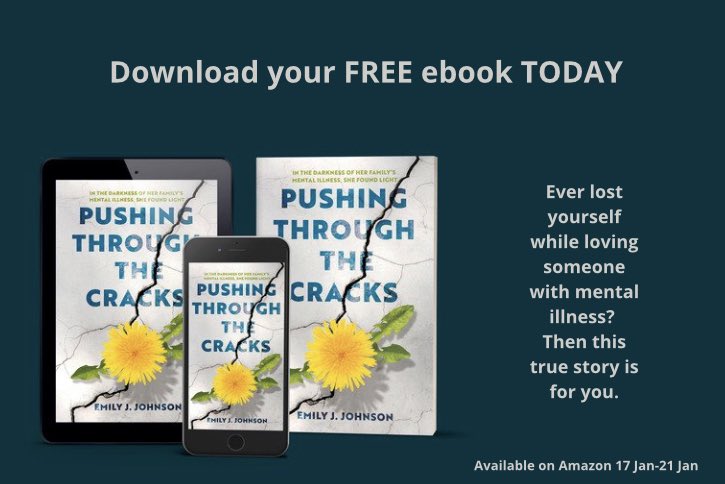
Book Review: ‘Pushing Through The Cracks: In the Darkness of Her Family’s Mental Illness She Found Light’- Emily J. Johnson by Eleanor

(image: Emily J Johnson)

Pushing Through The Cracks: In the Darkness of Her Family’s Mental Illness She Found Light by Emily J. Johnson is an incredible book. It is a story that I don’t believe has ever been written about before in such a way in the mental health space, I have certainly never come across it. Its a true memoir that occurred here in the UK during lockdown.

Emily wrote to me and kindly sent me a free copy of her book. I was hooked from the first page- this is a story of survival against the odds, of how mental illness can rip a family apart but how healing and hope are possible. Of strength through immense difficulty. Of light winning over darkness.

Four years ago, in the UK, Emily, a divorced mother of two, was living her best life with a new partner and blended family of six. But then addiction and mental illness entered her home uninvited, threatening to tear the whole family apart.

With an alcoholic husband and two teenage sons – one a depressed gambler and the other with chronic obsessive-compulsive disorder (OCD)– Emily is left to cope alone. And when the Covid pandemic hits, Emily, a ‘serial people-pleaser, enabler and born rescuer’, almost breaks too.

This true story delves into the darkest sides of mental illness and addiction with raw, often harrowing honesty. It shines a light on taboo subjects including self-harm, suicidal feelings, gambling, alcoholism, depression, severe OCD and eating disorders, all exacerbated by an unprecedented global pandemic and dwindling support services.

This is a story of remarkable strength, self-realisation and reclamation of a lost identity. This is a story of finding hope, pushing through the cracks in the darkness. It is also a story that touches on the difficulties of accessing UK NHS mental health services at times, especially CAMHS.

I found Emily’s strength through such severe adversity – dealing with a husband and two sons with severe mental illness, whilst carrying on with her own life when mental illness permeated every part, to be so inspiring. Her marriage falls apart, her children are unable to attend work and education, the family embarks on several different recovery journeys- navigating NHS mental health care and all its difficulties. Her sons addictions and acute OCD worsen and add to the pressures for Emily. How does she as a mother fix it all? She realises.. she can’t fix anyone and its not her job too.

The front cover features a dandelion pushing through the cracks of the ground. Emily describes the moment she hits rock bottom but then saw a dandelion poking through- which symbolised hope and light for her,

‘(image: Emily J. Johnson)

‘I pick up my phone and call a crisis support line…I desperately want someone to listen to me, to ease my pain, to hear my stories…(of mental illness at home)

I throw my phone across the path in frustration… something catches my eye, a beautiful yellow dandelion is growing through a crack in the concrete. Its golden yellow petals cut through the greyness of the broken path and it overshadows the filth and discarded cigarette butts around it. Despite its surroundings, it has found ways to push up through that crack, to have life. it is. not complaining or giving up, it’s surviving and it will go on to finish flowering. One day soon, the wind will carry its dainty seeds somewhere else to carry on the cycle of its life.

Just like that dandelion, I have pushed through adversity and survived. …I close my eyes and raise my face to the sunshine… Even in the midst of all this chaos, this darkness, there is warmth and light. There is hope.” (from chapter Dandelion) (Emily J. Johnson)

This is also a book which exposes the difficulties and realities of living with mental illness. I will add a trigger warning- it doesn’t hold back on the reality of mental illness including self harm, addiction, alcoholism, suicidal thoughts etc- so please read with care.

Thank you Emily for letting me read and follow the journey of your family. I hope your husband and sons are able to fully battle their demons and recover or stay in remission.

Pushing Through the Cracks by Emily J. Johnson can be bought from Amazon and good book shops.


(image: Emily J. Johnson)

Window to the Womb partners with BlueSkeye AI to launch Avocado App to support Perinatal Mental Wellbeing in the UK.

(image: avocadoapp.co.uk)

Window to the Womb, the UK leading provider of private Baby Scan Services for pregnant women, has partnered with BlueSkeye AI to launch Avocado.

Avocado is a brand new pregnancy App which uses cutting-edge AI technology to support effective mood management. Window to the Womb is rolling out the use of the Avocado App across all 44 clinics nationwide enabling women who attend for early and later pregnancy ultrasound services to access their scan images and scan reports digitally. In their drive to support women in early stages and throughout pregnancy, Window to the Womb has worked with BlueSkeye AI to provide a range of additional services within the App including the ability to log a pregnancy diary, access mindfulness or exercise material and order personalised baby scan photos.

(image: avocadoapp.co.uk)

Managing Emotional Wellbeing and Moods

Avocado provides women with the ability to understand and manage their mood and emotional wellbeing throughout pregnancy. Recognising that pregnancy and preparing to have a baby is such a big life event it is well understood that pregnancy can be an emotive time and a trigger for mental ill health. Pregnancy hormones can be a likely contributor to changes in mood, as well as other triggers including fatigue and sleep deprivation. 

The Maternity Mental Health Alliance, a UK charity that is focussed on addressing the needs of women during pregnancy reported that 1 in 10 women experience perinatal mental problems and more needs to be done to support women during pregnancy. The lived experiences of women, as documented and made available to listen to by MIND, who have experienced perinatal mental illness indicate there is more to be done to help raise awareness in society about the prevalence of anxiety and depression (and other mental illness) during pregnancy. 

Avocado enables women to track their mood alongside other key pregnancy metrics whilst managing their private scan appointments and much more. The app directs women to useful resources including the NHS’ Every Mind Matters mental health and wellbeing resource.

At Window to the Womb, we are privileged to meet and provide services to thousands of women at different stages of their pregnancies. We are committed to ensuring that women are well supported as they access our services and we are keen to ensure that women are empowered to self-manage their mental and emotional wellbeing during this time” said Managing Director of Window to the Womb, Tony Harrison.

BlueSkeye AI is a fast growth tech company based in Nottingham creating AI you can trust, and is on a mission to improve wellbeing and patient health outcomes by delivering accessible and objective services and products that help patients understand and manage their mental health and wellbeing. The ethical AI company’s technology is underpinned by Behaviomedics, pioneered by BlueSkeye AI’s CEO, Professor Michel Valstar.

“Our core technology automatically analyses and synthesises the face and voice to monitor mood and other medically relevant expressed behaviour. We are delighted to work in partnership with Window to the Womb to apply our technology to help perinatal women understand and manage their mental wellbeing” said Professor Valstar, CEO of BlueSkeye.

The App is available to download on Apple and Android devices. A premium version is now available for subscription and includes additional features that promote wellbeing during pregnancy.

Please visit www.avocadoapp.co.uk for more information.

This article is unsponsored- I am sharing it because i believe greatly in the mission of the founders to support perinatal mental health.

Transforming your Smile, Confidence and Mental Health in the New Year 2022.

Image Credit: Unsplash under Creative Commons

Self care of both our mind and our appearance can really boost our mental health. When it comes to looking after our smile, your teeth are important. Taking care of your teeth and gums is an essential part of taking care of your overall health, stopping you from becoming unwell, but it can also help improve your confidence too. 

Unlike other physical transformations, transforming your smile is something that can be simple and affordable, and you’ll be able to enjoy long-term benefits by doing it.

Could a new smile be on the cards for you in 2022? Take a look at these ways to transform your smile for a dazzling way to welcome in the new year.

Visit your dentist

The first place to go if you want to transform your teeth is the dentist. A lot of people have fallen behind on their appointments as a result of the pandemic, but it’s important that you visit your dentist regularly to make sure your teeth stay in good health. Your dentist will be able to recommend treatments that will improve your smile, as well as give you advice on how to take care of your teeth.

Take better care of your teeth at home

Improving your smile is something that takes time, and you’ll need to develop permanent habits to keep them looking their best. Some of the best practices for healthy teeth include brushing your teeth twice a day and making sure you use a quality mouthwash and flossing aid to keep plaque and bacteria at bay. Maintaining those good habits will help keep your teeth looking clean and polished for a smile you can be proud of.

Look at treatments that will transform your teeth

If you’re unhappy with your teeth, there are things you can do to change how they look. Invisible braces, teeth whitening and even dental implants at Dental Excellence’s clinic can make a big difference to your smile, with treatments able to transform your smile quickly and affordably. Cosmetic dental treatments are an investment worth making, making a big difference to your teeth and your confidence too.

Work on yourself to help put a smile on your face

Transforming your smile doesn’t just happen on the outside, you need to feel good about yourself to smile too. Some self-compassion and self-care could help you work on your inner confidence to give you something to smile about. Do things that make you happy, like seeing friends or your favourite hobbies – it will make a big difference to how you feel.

If you need to speak to someone about what you’re feeling, reach out – you don’t want to face mental health problems alone.

A lot of new year’s resolutions and plans fall at the first hurdle, but transforming your smile is a realistic goal you can stick to. Develop some better oral health habits and see your dentist regularly – it will help you keep your teeth and gums healthy and can impact the rest of your health too.

A new year means a fresh start, so get ready to start 2022 with a new outlook and a smile on your face.

This article was written by a freelance writer and contains links.

Managing Our Mental Health During Christmas And The Festive Season by Eleanor

(image: Jonathan Borba: Pexels)

Its nearly here everyone! Just 4 days until our country (the UK) stops and celebrates Christmas (or uses the day as a chance to see family because they’re off work, like we do!).

The pressure is taken off for me during this period because its just a chance for relaxation for us as we’re Jewish, we don’t have the same expectations for the day as others. However, I know for many people Christmas is a stressful time where they see family they don’t normally see and may feel they have to hide how they are truly feeling with their mental health. The pressures are also on for the cost of food and gifts during this time and many people get into debt too.

We already have less daylight during this time and with the Covid pandemic a lot of people are feeling lower and more anxious . This has been the new normal for us all for over a year and particularly here in England where we have record numbers of Omicron Covid cases- but aren’t yet in lockdown.

I know I have been feeling a bit more anxious lately to do with Covid and other things… but I am also going to be kind to myself and give myself a break and time off work to relax also! I love sitting eating Quality street or a Terrys chocolate orange (yum) with loved ones and watching a good film like The Holiday… thats my favourite. Second is the Muppets Christmas Carol. Third Love Actually. Whats yours?

(image: lilartsy: Pexels)

I am lucky my bipolar is in remission and I am stable on medication. So I don’t have to worry about severe depressive or manic episodes right now. But, I still need to look after myself or practise self care- lots of sleep, not too much sugar, and check in with myself or my therapist if needed if my anxiety flares.

Obviously, over Christmas lots of NHS mental health professionals aren’t available but you can reach out to helplines such as Samaritans 116 123 (UK) if you need someone to talk to who will just listen.

You can also text SHOUT to 85258 if you’re in crisis and need support.

In an emergency, if you have a phone line to a hospital outpatient crisis team that are working over Christmas, call that and if not in an emergency you may have to go to Accident and Emergency (but there could be long waits).

Mind have an amazing list of helplines, organisations and food banks such as Trussell Trust for over the Christmas period should you need, click here: https://www.mind.org.uk/information-support/tips-for-everyday-living/christmas-and-mental-health/useful-contacts/

Wishing you all a very happy holidays, a peaceful festive season. This time can also be hard for people with alcohol or drug addictions or eating disorders, as Christmas is often a time with plenty of alcohol and triggering things.

Remember that its OK to be struggling but tell people you trust and reach for support. May your Christmas/ holiday season be merry and bright- and if it isn’t, remember things can get better from here, you can recover and you can be helped. Always tell someone you trust if you feel suicidal or want to harm yourself, so you can be protected and helped through these feelings.

Thank you for all your support this year,

Love,

Eleanor