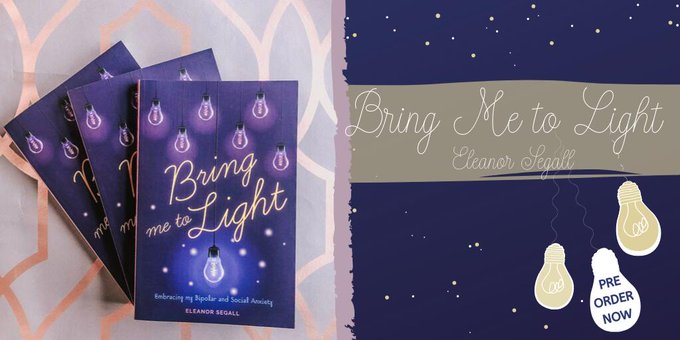
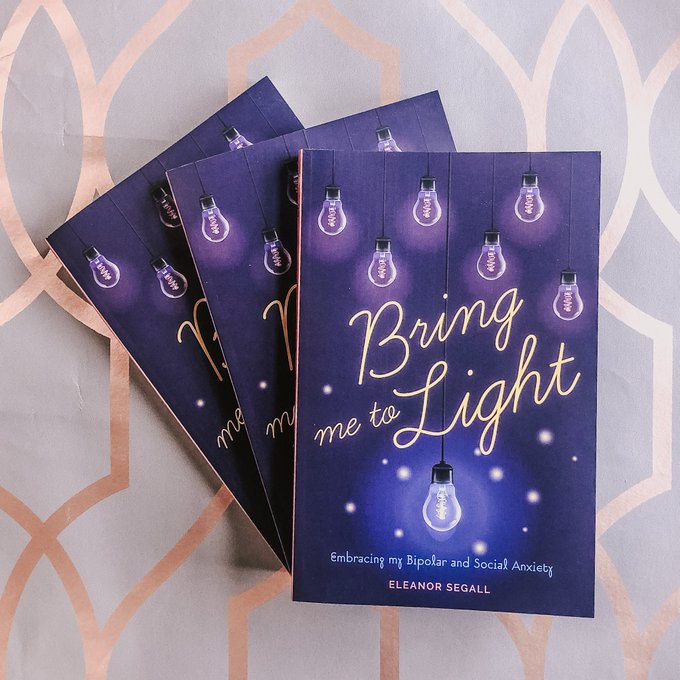
Book Interview for Bring me to Light: ‘Recovery is possible’ by Kat O’Connor at Shemazing

bringmetolightbook

My interview with Kat O’Connor at the wonderful Shemazing over in Ireland was published today. Thank you so much!

Here are some small extracts:

‘Eleanor Segall has penned a book about what it is really like to live with bipolar disorder. The inspirational author’s book Bring Me To Light is bound to open your eyes about a disorder that affects so many people across the globe.

Eleanor spoke to Shemazing about mental illness, becoming a published author and opening up about her personal struggles and being diagnosed with bipolar disorder at the age of 16.

Having dreamed of being a writer since she was a kid, seeing her book for sale is a true pinch me moment for Eleanor. “I couldn’t dream that I would write a book of my life story or its circumstances at 31. When I was ill in 2014, I knew I wanted to share my story to help people with bipolar disorder and mental health conditions. Helping others is the reason I have written the book and why I kept going with it. I want to break the stigma bipolar and particularly psychosis has. It is such an honour to be published and Trigger seemed like the perfect home for my book.

Read the full interview here: https://www.shemazing.net/recovery-is-possible-i-have-bipolar-disorder-but-it-is-not-the-end/

How stressed are UK Students in 2019? Guest post by the Natwest Student Living Index


natwest1

(Image: Natwest Student Living Index)

The NatWest Student Living Index 2019 has launched recently,  delving into both stress and mental health for students at university.
https://personal.natwest.com/personal/life-moments/students-and-graduates/student-living-index.html

University-age students are more engaged with mental health and wellbeing than ever, and the study found that 1 in 4 students are very satisfied with their university’s mental health support.

Other noteworthy findings from the survey include:
• 71% of students say that their university offers affordable health and wellbeing programs (gym classes, yoga, meditation, mindfulness)
• 40% of students are concerned about their financial situation following university
• 45% of students find their university degree stressful
• 1 in 4 UK students find managing money stressful

The 2019 NatWest Student Living Index revealed that close to half of all UK students feel
extremely stressed by their degree studies. 1 in 4 students in the UK described managing their money as extremely stressful, while only 6% felt they received sufficient money management support from their university on average.

NatWest’s Student Living Index 2019 asked students from 35 top university cities about all aspects of student life, including the amount of wellbeing and mental health support on offer for students at university in 2019.

Is their degree the cause of the stress? On average, 45% of students in the UK feel extremely stressed by their degree  Cambridge (60%) and Durham (57%) students are the most stressed by their degree studies.
Have Universities supported students with mental health resources?

1 in 4 students are very satisfied with their university’s mental health resources, while 71% said that their university offers affordable health and wellbeing programs.
Interestingly, while students in Poole feel the most stressed by money management, the city also came last when students were asked about the availability of affordable well-being programs:

 53% of students in Poole said their university offers affordable well-being programs, this is the lowest ranked city and 18% below national average.

 Less than 1% of Students in Reading and Stirling feel supported by their university when managing their finances.

 94% of students in Aberystwyth feel their university offers affordable well-being programs

Are you a student in the UK? Read more about the findings here:  https://personal.natwest.com/personal/life-moments/students-and-graduates/student-living-index.html

Coping with the Anxiety and Stress of Becoming a Single Parent : Guest blog by Emerson Blake

jordanwhitt1

(Image: Jordan Whitt at Unsplash)

About one-in-five children in the United States live with an unmarried parent; a percentage that has more than doubled since the late 1960’s and one that is slowly on the rise. While many people have children with the idea, and hope, that they will raise their kids alongside their partner, there are some situations in which parenting becomes a party of one. Whether the reason be due to the death of a spouse/partner, divorce, or in some cases, abandonment, the transition to taking over the job alone can be challenging. 

There are many stressors that can be faced by single parents, including: 

  • Visitation and custody problems 
  • Continuing conflict between the parents 
  • The grief of losing a spouse or partner 
  • Effects of the breakup or loss on the child’s peer relations
  • Less opportunity for the parents and children to spend time together
  • Potential problems when entering new relationships 

The increase in daily stressors can not only negatively impact the family relationships, but it can also cause an increased level of stress and anxiety on the parent that is now learning to navigate the new territory of single parenting. 

The fear of the unknown, the stress of trial and error and the anxiety about what the future holds can make the transition into single parenting emotionally stressful. While you may feel as if you are entering into a world full of the unknown, there are some ways you can aid in coping with the stress and anxiety that this major change can bring. 


Find Sources of Support 

Maintaining positive support systems will be a crucial part in transitioning to a single parent household. While many parents may feel as if they have something to prove by showing that they can handle the change on their own, they are likely to feel deeper effects of the stress if they choose to not accept the help of others. Welcome the help of your family and friends with open arms and don’t be afraid to vocalize when you feel like you need assistance. Whether that be asking a family member to help out while you run a few errands or taking the time to talk about your feelings with a close friend on your drive home from work; realizing you have the support of other people and utilizing that will help alleviate some of the stress and anxiety. 

There are also other forms of support available should you be interested in seeking them out. Finding a support group for single parents will allow you to find others who are in your same situation and understand the struggles, allowing you to build a friendship based on commonalities. Not only will this support group be good for you, but it will also assist in bringing other children into your child’s life that they can play with and learn from! 


Take Time for Yourself 

While becoming a single parent may give you the illusion that you no longer have time for yourself, it is important that you do make personal time a priority. Time spent away from your children is actually good for you and them. As parents, we constantly feel the need to put our children’s needs above ours; however, taking a little bit of time for ourselves occasionally is a healthy desire and can have a positive impact on our overall mental health. These don’t have to be costly, extravagant gestures. Here are a few simple ideas of things that you can do for yourself as a single parent: 

  • Indulge in a good book – set aside some time for yourself each night to escape into a completely different world by indulging in a book that interests you, inspires you and teaches you. 
  • Take a hot bath – there’s nothing nearly as relaxing as a long, hot bath at the end of a stressful day. Consider adding essential oils to your bath or using a bath bomb to really get yourself feeling calm and relaxed. Both of which are commonly used to alleviate stress and anxiety. 
  • Plan a dinner with friends – part of maintaining yourself is keeping a social life. Adult interaction is well-deserved after a day spent at home with the kids. Feeling like you have someone you can talk to who understands and relates to you is helpful in opening up about any stressors or anxiety you are currently feeling and need to get some advice on. 


Stay Consistent 

Sticking to a daily routine will keep the structure and will help you and your children feel more secure. While things don’t always go according to plan, maintaining a schedule is a healthy way to set expectations for your family. Focus on scheduling meals, chores and bedtimes at regular times – especially during the week days with school and work. Keeping discipline consistent across families that have divorced or separated parents is also a suggested way to remain consistent. Children that rotate between each of their parent’s houses likely experience a lot of inconsistency between schedules and routine; so, agreeing to discipline the children the same way will bring about some level of familiarity across each home. 

Much like many other times in life, learning to take on a new role and live a new kind of lifestyle can be anxiety and stress-inducing. The major change of becoming a single-parent can impact everyone in the family, so it is important to ensure efforts are made to make the transition a little bit smoother for everyone. As the parent, we will likely be affected in many different areas i.e. financial status, relationships, routine, schedule and workload, which is likely to make the stress and anxiety almost overpowering.

Welcoming the support of friends and family, making time for yourself and sticking to a routine are all natural and healthy ways to cope with the adjustment. The stress and anxiety that come along with change are common, but ensuring you take steps to aid them will benefit you, your family and your mental health in the long run. 

Guest blog written by Emerson Blake, Freelance writer from USA


My first review and Book tales.

bringmetolightbook

“Bring Me To Light by Eleanor Segall is published on November 5. The eye-opening and beautifully honest read will become one of the most beloved books of Winter 2019.”Kat O’Connor at Shemazing

Today, the lovely Kat O’Connor at Shemazing.ie, based in Ireland, wrote and published this early book review of my upcoming book ‘Bring me to Light: Embracing my Bipolar and Social Anxiety’ (with Trigger Publishing). You can read her review here

Thanks so much Kat! Since coming home from our honeymoon in Italy, me and fab marketing manager Beth at Trigger have been promoting my book, which is out in November. Thank you to all who have preordered the book so far and helped it go up the bestseller lists for hot new releases and in depression biographies/ psychology categories on Amazon. It is all so exciting and I feel so grateful that people are getting behind the book. I can’t wait too to hold the paperback copy!

This is a short blog to say thank you to everyone who is supporting Bring me to Light and me as I embark on this new journey with my debut book.

With gratitude,

Eleanor x

An Increase in Anxiety: Panic attacks and Therapy thoughts.

Hi friends,

It has been a while since I’ve shared a personal blog and I want to be as honest as possible.

It has been a whirlwind of a time- I got married to my wonderful husband in July- we really had the best day, I have been editing and finishing writing my book Bring me to Light and I also started a new job at a charity in May- which has meant I have been blogging less. I love my new job however I am much busier!

This has meant an increase in my anxiety levels and panic attacks in the mornings at times, related to social anxiety. I worry about the day ahead and sometimes don’t feel able to leave home. I have been trying to combat this but its been really hard and is still ongoing for me.

I have had a lot of CBT and talking therapies but believe my anxiety to be trauma based re what happened to me 5 years ago, being sectioned and in hospital. As such, I would like to have EMDR therapy, a type of therapy that helps to process trauma through focusing on images and rapid eye movement. It is hard to describe but I believe this is what I need in order to keep my anxiety disorder under control- and get rid of most of it.

In the mean time I have been leaning on my support network and have been prescribed beta blockers for when the anxiety is at its highest. I have also been referred back to psychiatry in order to get a referral for EMDR.

Except…. my NHS borough don’t fund EMDR therapy so the only route in is via a service called IAPT. It may be that I have to go privately if the NHS standard of therapy is not good enough but there we are. There is still a 2 year waiting list to even have an assessment for therapy, but via IAPT it is quicker, so I hope I can get some form of help for me. The funding for mental health in the UK is atrocious and I hope this will improve….

Having the support of my parents, Rob and family has been hugely helpful to me and my new amazing colleagues who believe in me and have been very supportive.

But, it has been exhausting.

Panic attacks make me want to sleep, blank out and sometimes you can’t do that. You have to face the day and fight. That’s where the beta blocker meds come in for me right now as they calm the body down when you need to show up to something (deep breathing doesn’t do it for me). Usually, I feel better once I don’t react to the anxiety negatively and try to dig deep and push through, but its not easy.

This week, we are going on honeymoon in Italy and I am looking forward to a relaxed, sunshiney break by and in the pool, beach and spa with Rob and eating lots of delicious Italian food. A break is desperately needed and I hope I won’t have any panic attacks on holiday, but have a restful time!

Here’s hoping I will find something that will help ease the panic. I have tried so many things for so many years and it’s still here.

Eleanor x


Mental health and the juggling act: New Job, My book and Wedding. by Eleanor

bringmetolightbook

(image: Trigger Publishing)

Nearly a month ago, I started my new job at a big Jewish charity here in London. I work in a small but lovely team in PR and Communications- helping run social media, write and distribute press releases and copywriting. I am enjoying it but its totally different from my other work and I am far less immersed in the mental health world than I was a few months ago. It is a juggling act. Trying to keep up with changes and all that’s occurring though. Hopefully soon I will find time to write articles again for my friends at Metro.co.uk and Happiful.

This has brought its own challenges as I havn’t been blogging here as much either, due to writing my book. My book  ‘Bring me to Light’  will be released in the UK on November 5th and the USA shortly after, with Trigger Publishing. The title references going from darkness to light, as I have done with my bipolar and anxiety since I was 16. I have written most of it (50,000 words!) but my very kind editor has extended the deadline for it so I can write everything I need too, whilst also doing my day job and wedding planning (!). I am really excited to see a printed copy and to promote it later this year- the hard work will be worth it I hope. I also hope you enjoy reading it and thank you all for your ongoing support.

So, wedding planning, we are 5 weeks away now until I marry Rob, my fiance. It has come round so fast especially as we have had a year and few month’s engagement, I am counting down the days until I am under the Chuppah (Jewish marriage canopy) and we are officially married in presence of those we love! This week I had my final dress fitting and it was super emotional. I still can’t believe its happening. Rob’s dad is recovering slowly at home but his condition is still serious as he has cancer.

Naturally, you will be wondering- how am I staying sane with my bipolar with everything going on and with Robs dad not being well? Firstly, as we know, stressors can make bipolar worse and trigger episodes. At the moment, my main mood stabiliser Lithium keeps me very grounded and stable. Despite the stress, I am not dipping down into  deep depression as I would have done in the past. Yes-  there are times when I might feel stressed, overwhelmed, exhausted or tired and just want to sit in my pyjamas watching Made in Chelsea or First Dates. There are also times when I am too tired to cook or do laundry and need support with those. I am lucky to have a very supportive family who look out for me too.

My work colleagues have been super supportive when I have been overwhelmed or anxious and I am finding the flexibility of my work helpful too.  I am having less anxious days now I am working too due to exposure therapy and going out a little more (taking the bus and cabs and talking to new people).

For me, I really need self care time, time to switch off and unplug. As we go into Shabbat  now is the perfect time to read and be quiet, come off my phone and computer and just be. I really promote looking after you and taking time to sleep and rest for optimum mental health and to feel better again. Sometimes it can help to let others know how you’re feeling too.

I have two weeks to give in my first book manuscript and five til my wedding day. These are dreams I have had for years and I can’t quite believe they’re happening. Staying sane while planning a wedding without a planner can be hard but we have worked as a team. Having a good cry has really helped also at times, when things get too much! But generally happy, wonderful things so not to complain. Everything at once can get a lot for anyone. Life at the moment is hectic but I am pacing myself as much as possible.

If you would like to preorder my book, you can do so on Amazon or the Trigger website and I would love to know if you do :).

Thanks for being there for me and for supporting my work too. I hope we end the stigma against mental health by talking, sharing and explaining.

Love,

Eleanor xxx

Mental Health Awareness Week: The Mental Health Foundation: Body Image 13th-19th May 2019

mentalhealthawarenessweek

(image: Mental Health Foundation)

This week, starting today is the Mental Health Awareness Week by the UK charity the Mental Health Foundation. Its theme is looking at Body Image, how we think and feel about our bodies.

Mental Health Foundation say ‘Body Image can affect us all at any age- during this week we are publishing new research and campaigning for change’    .

They continued,

Last year we found that 30% of all adults have felt so stressed by body image and appearance that they felt overwhelmed or unable to cope. That’s almost 1 in every 3 people.

Body image issues can affect all of us at any age and directly impact our mental health.

However there is still a lack of much-needed research and understanding around this.

As part of Mental Health Awareness Week:

  • We will be publishing the results of a UK-wide survey on body image and mental health.
  • We will look at body image issues across a lifetime – including how it affects children and young people, adults and people in later life.
  • We will also highlight how people can experience body image issues differently, including people of different ages, genders, ethnicities and sexualities.
  • We will use our research to continue campaigning for positive change and publish practical tools to help improve the nation’s relationship with their bodies.’
  • The good news is that we can tackle body image through what children are taught in schools, by the way we talk about our bodies on a daily basis and through policy change by governments across the UK.’

For more on how you can get involved see : https://www.mentalhealth.org.uk/campaigns/mental-health-awareness-week


The Connection Between Anxiety and Substance Abuse: Guest blog by Nu View Treatment Center

When people abuse drugs and alcohol, it is often the sign of a deeper underlying issue. For many people struggling with addiction, the source of their addiction is due to mental illness that often has gone undiagnosed. One of the most common co-occurring disorders seen with substance abuse is anxiety. The following article will outline what defines anxiety, and the connection between anxiety and substance abuse.

What is Anxiety?

In general, anxiety is an important emotion to have. While it may be normal to feel fear, apprehension, and nervousness from time to time, it becomes an issue when people experience these emotions at excessive levels. When anxiety takes over a person’s thought process, it manifests itself into physical symptoms such as the following:

  •    Increased and constant restlessness
  •    Increased and uncontrollable feelings of worry
  •    Irritability
  •    concentration difficulties
  •    sleep problems


Anxiety can be grouped into several types of disorders. These can include generalized anxiety disorder (GAD), panic disorder, post-traumatic stress disorder (PTSD), phobias, social anxiety disorder, and selective mutism among others. The leading causes of anxiety include work and family stresses, financial worries as well as underlying medical issues. The roots of anxiety can also be traced to past traumatic events that are unresolved.


How Anxiety and Substance Abuse Connect

When people suffer from anxiety, mental and physical symptoms can be very intense and can wear on the body and mind. To get some form of relief, people may turn to substances that stimulate dopamine in the brain to help numb the feelings of discomfort. Self-medicating oneself to take the edge of off anxiety only works in the short-term and can have a rebound effect that makes anxiety worse over time. Without addressing the roots of anxiety, their condition will worsen over time—along with their substance use.

The connection between anxiety and substance abuse can also trace back to the teenage and young adult years. During adolescence, the brain is still developing and forming. If people used drugs as a teenager, it could alter the development of the parts of the brain that govern reasoning and impulse control. Drug and alcohol use early in life can increase the likelihood of anxiety and substance abuse as that person gets older.

Another reason for anxiety disorders and substance abuse connection is because of one’s genetics. Some people may be more predisposed to both anxiety and drug and alcohol dependence through genetic factors shaped by one’s environment.


Getting Help

For those dealing with co-occurring disorders, they must seek specialised help from a dual diagnosis treatment facility specializing in mental health and addiction disorders. The first step in getting help is undergoing medical detoxification. During detox, patients will undergo medication-assisted therapy to help better tolerate the physical and psychological symptoms associated with withdrawal. Additionally, staff will perform physical and mental health evaluations to pinpoint any underlying issues that may impact recovery.

For those suffering from dual diagnosis, treatment will include mental health services in addition to addiction treatment services. Dual diagnosis facilities feature mental health professionals working alongside addiction treatment personnel in creating an individual treatment plan that fits each client’s specific needs.

In addition to therapy, 12-step counselling, life, and coping skills training and other forms of treatment, patients will receive mental health treatment with a focus on ongoing counselling and medication-based therapies that will give them the tools to handle anxiety.


This guest blog was written by Nu View Treatment Center

Charlie Waller Memorial Trust puts on a ‘Best of Musicals’ Event in Londons West End: Guest blog

I love theatre and mental health, so what better than to combine them!
The Charlie Waller Memorial Trust, an incredible UK mental health charity are putting on a spectacular Best of Musicals event in London, to raise money for their vital work educating about depression and suicide prevention.

Amazing talent from both West End and Broadway and hosted by Tim Rice at the Hammersmith Eventim Apollo!


charliewaller1
CWMT was set up in 1997 in memory of Charlie Waller, a young man who took his own life whilst suffering from depression. CWMT raises awareness of depression and other mental health problems, and provides education and training to schools, universities, GPs, nurses and employers, encouraging those who need it to seek help.
Our vision is of a world where people understand and talk openly about depression, where young people know how to maintain wellbeing, and where the most appropriate treatment is available to everyone who needs it.

If you book through me, you get a 15 % discount! Code is ELECTRODEAL

Tickets at http://bestofmusicals.com

How to Maintain Mental Health at Work: Guest blog by EM Training Solutions

workplacementalhealth1

(image: EM Training Solutions)

This article written by EM Training Solutions introduces some simple yet effective steps you can take in order to ensure your health and wellbeing remain a priority in the workplace.

There’s no ignoring the fact that as adults, we spend the majority of our time and lives at work. It’s where we make friends, earn our income and spend day to day so it’s no surprise that a massive 89% of workers with mental health problems reported an impact on their working life and nearly half of the people surveyed also admitted that they had considered leaving a job role because it negatively impacted their mental health.

These shocking statistics show that there is a clear correlation between mental health and our working lives, making it crucial that we take the necessary steps to maintain our mental health and wellbeing in the workplace. Here are some tips on keeping a positive and healthy mental attitude in work:

Keep Organised

One of the simplest things you can do to help you remain focused and stress-free in work is to try and be as organised as possible. When you feel on top of your tasks and are working in an organised environment, this make you feel calm and in control.

When you’re in control, you’re much less likely to panic or feel overwhelmed. Keeping your diary up to date with commitments and important reminders will allow for your days to run smoothly. Also try taking small steps such as arriving to work 15 minutes early to give yourself plenty of time to set up for the day ahead, make yourself a hot drink and tidy your email inbox.  Having this head start can help you clearly plan out your day and it also gives you a few extra minutes to yourself.

Speak up

Communication is key in any working environment. Whether it’s voicing your opinion on a situation that is negatively impacting you, or admitting when your workload is too much; speaking up to someone that is able to offer help and support is a great way to deal with any form of stress before it builds up into an even bigger issue. Although this may be daunting, especially if you suffer from anxiety it will bring a great sense of relief once you have got your feelings and thoughts off your chest. Your employer should also respect you for your honesty and will be able to come up with a plan on how to help you.

Practise Self Care

Self care comes in many different forms, and it can be something as little as taking your full lunch break and spending it alone in your favourite coffee shop in order to get some time to yourself. If you suffer from anxiety or depression in general, then recognising your limits and when you need a day off is also incredibly important.

Having a day off work to focus on your mental health is just as valid as having a day off when you have a sickness bug. Both require time to rest and recover and you don’t need to feel guilty for putting yourself and your mental health first.

Be Realistic

Constant demands, deadlines and pressure in the workplace can leave us feeling overwhelmed and stressed to say the least. Try your best to be realistic about the work you can cope with and don’t try and take on more than you can handle.

If your boss is giving you ridiculous amounts of work to do in a short space of time, or is asking too much from you then try and speak with them, or if they aren’t approachable book in a chat with a member of the HR team to explain and try to find a solution. You will feel better for being honest and getting the extra support you need.


This article was written by: 

EM Training Solutions are a Pearson Vue approved training provider for a number of different compliance and health and safety courses. They boast over 10 years of experience within the industry and specialise in first aid training as well as traffic and fire marshal courses.