
WiseUp Launches Groundbreaking Digital Detox Journal For Young People As UK Debates Social Media Safety Policy.

(image: WiseUp)

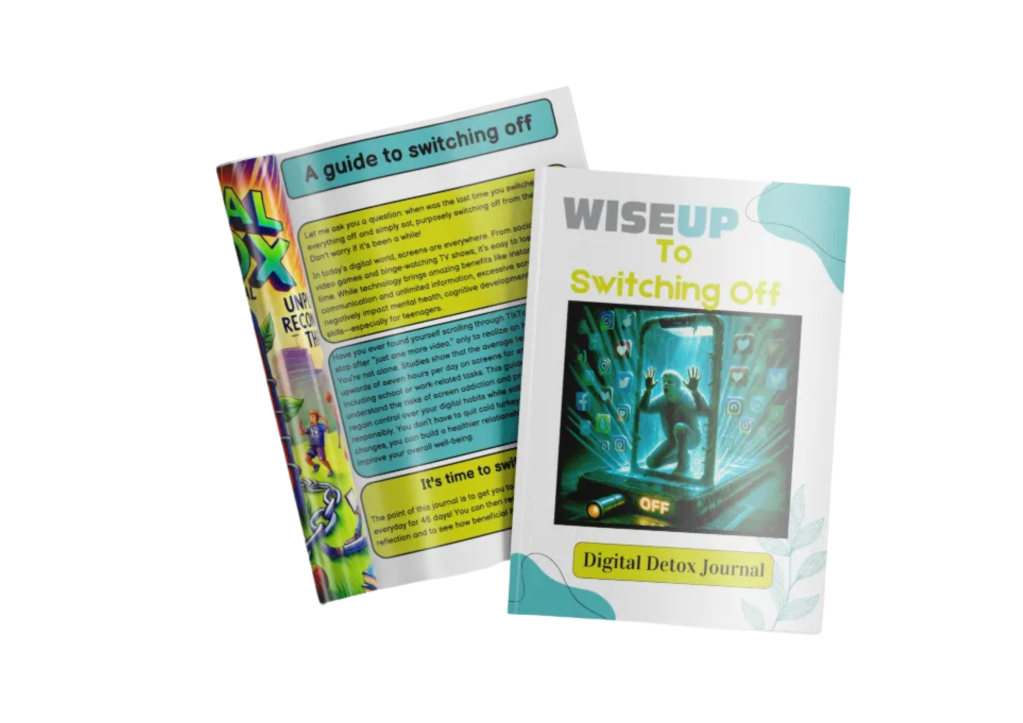
WiseUp Team Building, the multi award winning, UK Youth wellbeing and resilience organisation, has launched WiseUp to Switching Off – a guided programme designed to help young people and families build healthier relationships with screens and technology.

This launch comes at a time when children’s digital wellbeing is at the centre of national discussion, with the UK government recently consulting on measures inspired by Australia’s ban on social media for under-16s as part of wider online safety reforms.

With evidence mounting globally – recent World Health Organization data shows that rates of problematic social media behaviour among adolescents increased from 7% to 11% between 2018 and 2022 and that more than one in ten teenagers may struggle to control their use and experience negative consequences such as disrupted sleep and lower wellbeing – WiseUp’s journal is positioned as a practical alternative to purely restrictive approaches.

A significant proportion of young people report a negative impact on mental health from digital and social media use; a UK Digital Youth Index indicates that approximately 17% of young people aged 8–25 say their internet and digital device use harms their mental health, with the prevalence rising among older teens equating to around 2.5 million young people across the UK.

Richard Wise, CEO of WiseUp, said: “We created WiseUp to Switching Off, a digital detox guide, because families, teachers and young people are increasingly telling us they want positive and practical tools – not more tech bans – to make sense of their digital lives. Screens are now woven into education friendships and culture but when usage becomes compulsive it can undermine sleep focus and emotional wellbeing. Our journal helps young people become aware of their patterns reflect on their experiences and make incremental sustainable changes.

He continued: “Screens themselves aren’t the problem – but the way they pull young people in can be. When scrolling becomes a coping mechanism, when anxiety, loneliness or pressure drive screen use the impact on wellbeing can be profound. WiseUp to Switching Off exists to break that cycle. It gives young people permission to pause, space to breathe and the tools to reconnect with themselves and the world around them — while empowering schools and parents to put wellbeing back at the centre of everyday life.”

(image: Izzy Park: Unsplash)

The WiseUp to Switching Off digital journal combines evidence-based education about technology and the brain, practical habit-building tools, daily reflection prompts and offline challenges designed to improve focus sleep and connection with others. It is intended for use both at home and in educational settings complementing Personal Social Health and Economic (PSHE) learning.

Parents and wellbeing leads in schools have reported that the journal has helped young people reduce conflict over screens. It has also improved sleep routines and helped them rediscover offline interests, reinforcing WiseUp’s belief that self-directed change (rather than coercive restriction) is both sustainable and empowering.

WiseUp encourages parents, teachers, practitioners and policymakers to explore the journal and join the ongoing effort to support a balanced digital future for young people. To download your free copy visit the WiseUp website.

(image: WiseUp)

Journal Your Heart Out- 3 Journalling Techniques For Improved Mental Health.

(image: Pexels)

You’ve heard all the hype about journalling for your mental health, but you’re not sure where to start. Surely there’s more to it than simply writing down your thoughts?

Well, yes and no. There are multiple journalling tactics that offer different benefits depending on your needs, goals, and personal style. Some techniques work well for some, while others might find different systems fit better with their lifestyle.

Here, we’ll cover three journalling techniques that can help you with your mental health.

Free writing

One of the most common techniques in mental health journaling, free writing can benefit you in many ways. Also known as stream-of-consciousness journaling, all you need to do is pick up a pen and paper and start writing.

The goal with free writing is to get whatever is going on in your head onto paper – but without the need for structure, judgement, or reflection. You begin writing about the first thing that comes to mind, whether that’s exploring what you’re feeling or a random musing you’re having. You stop when you feel finished – it can go on for pages or be a few short paragraphs.

Through stream-of-consciousness journaling, you can better understand yourself. You can work through complicated thoughts and feelings or simply relieve your brain of them. Seeing your thoughts on paper can help you understand them more clearly and address them. Free writing is also associated with a boost in creativity and can be used as a way of brainstorming.

How do I know if free writing is right for me?

  • You want to try out journaling, but you’re not sure where to start
  • You don’t like exercises to be structured
  • You’re experiencing a mental block

Gratitude journalling

Practising gratitude has a lot of mental health benefits, and there are many different methods. You can tell your loved ones that you’re grateful for their contributions to your life, carrying out acts of kindness to convey your gratitude. Or you could observe the small things that make life worth living – like the colour of the sky or a beautiful green landscape. 

Journalling is a great way to solidify your practices of gratitude. By writing down the things you’re grateful for in your life , you can better visualise them and see just how much you have to be thankful for.

Gratitude can be especially beneficial if you’re prone to negative thoughts because it can help you appreciate the good in your life. But it’s important to understand that it’s not a catch-all solution. If practised incorrectly, gratitude could cross over into toxic positivity. To ensure it’s fully beneficial to you, make sure you can also acknowledge your current challenges while noting everything you’re grateful for.

How do I know if gratitude journaling is right for me?

  • You’re stuck in a cycle of negative thoughts, whether large or small
  • You want to get a better understanding of the good things in your life
  • You’d like to start your day off in a positive mindset

Cognitive journalling

This is a CBT technique turned journalling practice. If you’ve ever had CBT, you’ll know that thoughts, behaviours, and feelings are different, but they can all impact each other. A thought – especially an untrue negative one – affects your emotions and can influence how you react to something.

Cognitive journalling can be done once a day or whenever you experience negative thoughts and emotions with this ABC technique, you write down the event that triggered the thoughts you had (the activating event), how it made you feel (your beliefs), and the way it made you react (the consequences). By doing this exercise, you can begin to separate thoughts from feelings and understand how they affect your life and your behaviours.

Another version of this technique involves you writing down a negative thought and the evidence that supports it, as well as evidence against it. This helps you to understand that your thoughts aren’t facts and can undo unhelpful negative thought patterns.

How do I know if thought, behaviour, and feeling recording is right for me?

  • If you struggle with anxiety and constant negative thoughts
  • You want to understand and challenge your anxious thoughts and beliefs 
  • You struggle to separate thoughts and feelings

Journalling can help us with so many things, from inspiring creativity to helping us process our day. Some techniques are proven to support and improve our mental health, and the one that works best for you will depend on your goals and how you experience life. It’s important to note that it’s not a replacement for therapy, but it’s a supplementary activity that can boost you on a day-to-day basis. So get comfy in your favourite pyjama set, grab a pen and paper, and journal your heart out.

This unpaid blog was written by a freelance writer in collaboration with Cath Kidston, homewear brand.