National UK Inquiry Reveals 19% Increase In Suicide for People Living With Bipolar- With Bipolar UK

(image: Michelle Henderson: Unsplash)

Trigger warning: discusses suicide

The National Confidential Inquiry into Suicide and Safety in Mental Health (NCISH) released its Annual Report for 2025 last week, revealing that over the past decade, nearly 20% more individuals with bipolar disorder are dying by suicide due to shortcomings in the UK’s mental health system.

According to national charity Bipolar UK, the report provides stark evidence that specialist care is lacking, Lithium (an important mood stabiliser medication) is under-prescribed and suicide prevention measures are falling short.

The report highlights that from 2012 to 2022, there were 1,491 suicides by patients with bipolar, with an alarming 19% increase from 2019 to 2022. Despite Lithium being a clinically proven suicide prevention treatment for people with bipolar, only 39% of those who died were prescribed it and just 12% were receiving psychological therapy​.

This data echoes the findings and lived experience of Professor Tania Gergel, Head of Research at Bipolar UK, in her recent article in The Lancet Psychiatry where she said: “Globally, 15-20% of people with bipolar disorder die by suicide, with 30-60% making at least one attempt. These rates are not decreasing despite an overall decline in global suicide rates.”

According to the Nuffield Trust, there is set to be a £4.8 billion unfunded shortfall in the NHS England revenue budget for 2024/25, raising the prospect that without further funding, service cuts may be inevitable.

With bipolar increasing an individual’s risk of suicide by 20 times that of the general population, Bipolar UK is urging the government to commit to addressing health waiting lists and to invest money in creating a dedicated care pathway for bipolar to reduce suicide rates.

Simon Kitchen, CEO of Bipolar UK, said: “This report is devastating but not surprising. We’ve been shouting from the rooftops that people with bipolar aren’t getting the care they need and now the data lays it bare.

Bipolar carries one of the highest suicide risks of any mental illness, yet specialist services are practically non-existent, and Lithium – the gold-standard treatment for suicide prevention – is underused. The time for excuses is over. We need real action, and we need it now.”

The charity has heard from its community of people living with the condition, who are concerned that they are unable to access psychiatrists, have little to no continuity of care and are not being monitored adequately when at high risk. There is also a lack of bipolar specialists in the UK, leading to people not receiving a correct diagnosis or waiting too long to receive one – all of which add to the risk of suicide.

Professor Gergel said: “Neither bipolar disorder nor suicide in people with bipolar disorder are research priorities, resulting in major knowledge gaps in both. This can and must change. The shocking statistics might well underestimate the prevalence of suicide in people with bipolar disorder, given the probability of death by suicide before treatment or accurate diagnosis.”

Adding to that, Simon Kitchen said: “Suicide prevention in bipolar requires a shift in both research priorities and clinical practice. We know lithium saves lives, but it is still under-prescribed. We know specialist care works, but most services are generic and fail to meet the specific needs of people with bipolar. Bipolar suicide is not inevitable, but without urgent action, people will continue to die.”

(image of Prof Gergel, Bipolar UK)

The NCISH report also revealed broader systemic failures contributing to preventable deaths. Alarmingly, patients with bipolar were more likely to:

  • Die within three months of being discharged from inpatient care, highlighting dangerous gaps in post-discharge support​.
  • Miss vital clinical appointments, often due to social isolation or side effects from medication, with 15% identified as non-adherent before their deaths​.
  • Experience extreme distress without access to psychological therapies, with only 12% receiving talking therapies​.

With more than a million people living with bipolar in the UK, the figures from this latest inquiry represent lives lost and has led Bipolar UK to call for urgent action, including implementing:

  1. Specialist bipolar services in every NHS region to ensure timely diagnosis, access to evidence-based treatments and care tailored to the complexities of the condition.
  2. Increased lithium prescribing, in line with NICE guidelines, ensuring every person with bipolar who could benefit from it is given the opportunity.
  3. Enhanced suicide prevention measures, including better follow-up after hospital discharge and targeted support for those who miss appointments or struggle with medication adherence.

Simon Kitchen concluded: “We need all UK health authorities and departments of health across the nation to act now because lives depend on it. The evidence is undeniable, the solutions are clear, and the cost of inaction is catastrophic. Specialist care, Lithium, and targeted suicide prevention measures can and will save lives.

Bipolar suicide is a national emergency, and the upcoming 10-Year Plan is the critical opportunity to turn the tide. Bipolar-specific services are not optional; they are a lifeline.

“The government and NHS must act now, before more lives are lost to preventable tragedy. It is time to get it right.”

(image: Simon Kitchen, CEO, Bipolar UK)

For more information about suicidal thinking and bipolar, visit: Bipolar and suicide prevention

About Bipolar UK   

Bipolar UK is the only national charity dedicated to supporting people affected by bipolar. Bipolar UK provides a range of services, including information and advice, a network of support groups, an eCommunity, workplace training and telephone and email peer support. Bipolar UK also works in partnership with research organisations and campaigns for change to tackle critical issues. For more information, visit www.bipolaruk.org 

Jami Mental Health Shabbat 2025 by Eleanor

(image: Jami charity)

This weekend is the Jami Mental Health Shabbat 2025. This is an initiative very close to my heart as I was a volunteer with this project from its inception in 2017-2018, helping to get the shabbat into communities. The Shabbat grew from an idea to be more open about mental health across Jewish communities in the UK, with Rabbi Daniel Epstein at the healm (and the brilliant team at Jami), to a nationwide yearly initiative in synagogues, schools and homes. It raises awareness of mental illness and distress, encouraging conversations and breaking down the stigma in our communities by placing this discussion at the heart of them, through lived experience and Rabbis speaking about it in their pulpit.

The Shabbat has other initiatives including hosting a shabbat meal and asking guests to donate to Jami instead of a gift, a toolkit with resources to use, Challah makes and an open mic night on Sunday 3rd at the Head Room Cafe for the whole community.

As Jami say, “Jami Mental Health Shabbat coincides with Parashat Bo. On this Shabbat we read about the plague of darkness, which can be likened to the experiences of many living with mental illness and distress. The parasha also talks about how the Israelites, full of hope, could see through the darkness into the light. This special Shabbat is an opportunity for us to encourage conversations on mental health, raise awareness of mental illness and distress and share ideas on how to support ourselves and others within our community. 

Over the years, my Dad and I have given our talk about our lived experience of bipolar for this shabbat and in communities to hundreds of people including Bushey United and Chigwell United Synagogues, Belsize Square Synagogue and Edgware Yeshurun Synagogue. We also have spoken at Limmud Conference in Birmingham to share our story and had a question and answer session. This wasn’t easy for me with my anxiety as you can imagine!

This year, for personal reasons we are taking a break from speaking our mental health story, but we both support this shabbat and amazing charity. You can also read our story in my book ‘Bring me to Light: Embracing my Bipolar and Social Anxiety’

If you’d like to take part in the shabbat this year, please go to www.jamiuk.org/jmhs .

Let’s keep raising awareness of mental illness and distress and shine our light to the world. No one should ever feel alone in their community due to mental ill health.

Love,

Eleanor

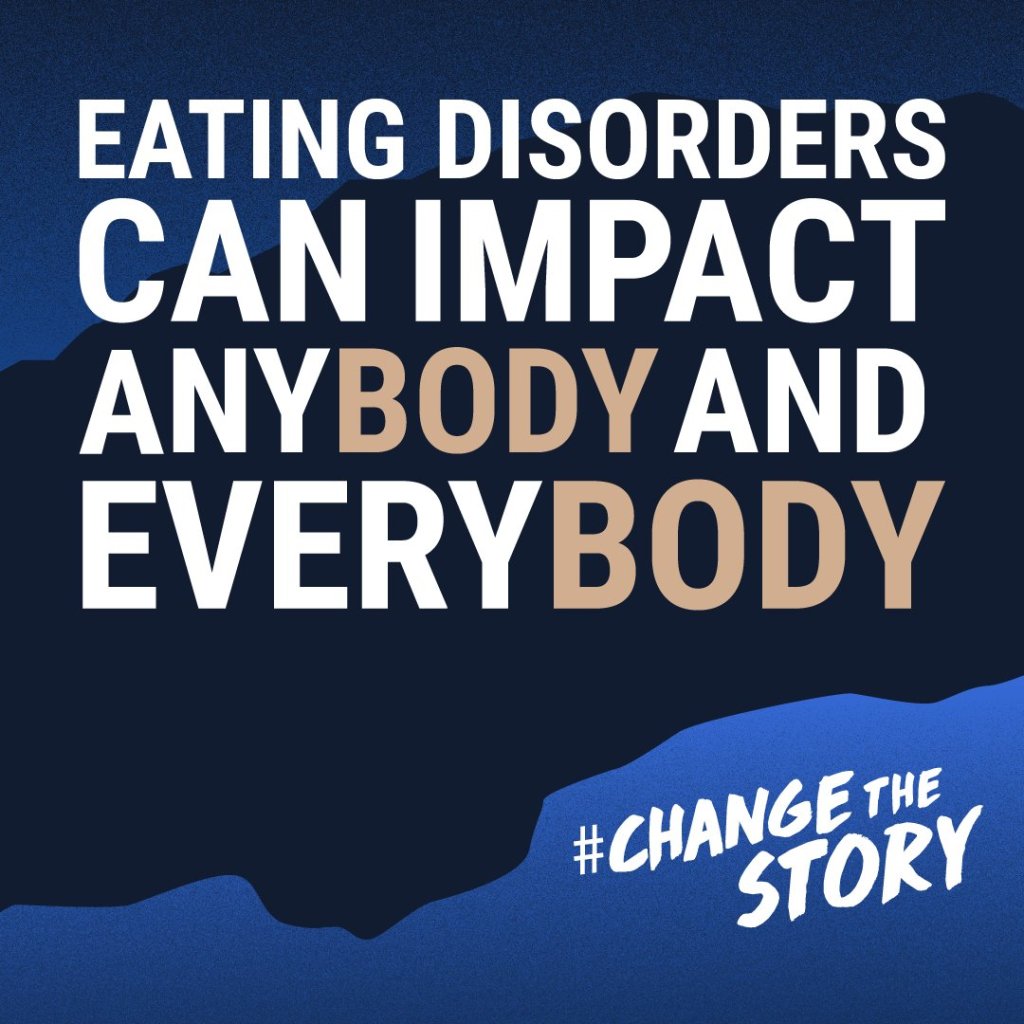
New #ChangetheStory Campaign by Hope Virgo and The Hearts Minds and Genes Coalition shows rise in Eating Disorder Stereotypes.

(image: Change the Story Campaign)

#ChangeTheStory and Anybody and Everybody is a new campaign launched this month by The Hearts Minds and Genes Coalition which is chaired by Multi-Award winning campaigner and Author, Hope Virgo. Hope is a friend of mine who has campaigned for years for help for those with eating disorders and she is a force to be reckoned with and an amazing woman!

Eating disorders are serious, biologically based mental illnesses deserving of equal clinical and research funding to that given to other complex diseases. They want to ensure that no-one with an eating disorder need experience shame or guilt, and everybody should have timely access to specialist services.

Author and Multi-Award winning campaigner, Hope Virgo who chairs the coalition says;“When we think of eating disorders we often immediately think of a white teenage, emaciated girl and fail to realise that eating disorders are so often hidden in plain sight amongst all ages, genders races, ethnicities, body shapes and weights, sexual orientations and socio-economic statuses. The campaign is working to remove the stigma and misunderstanding that surrounds these illnesses, ensuring that nobody should experience shame or guilt for suffering from an eating disorder and to make sure that everybody has prompt access to specialist services.”

(image on Twitter: Change the Story campaign, Hope Virgo and FEAST outside the Houses of Parliament)

Eating disorders are not new illnesses, but there has been a massive rise in cases during the pandemic. Unacceptable delays before treatment means we are also seeing a rise in avoidable chronic long-term illness and loss of life. We need to ensure that we are no longer hiding behind the global pandemic but ensuring that the right support is in place for everyone because no one should be dying of an eating disorder in 2022. They are working to remove the stigma and misunderstanding that surrounds these illnesses, ensuring that nobody should experience shame or guilt for suffering from a biologically based illness and everybody should have timely access to specialist services.

To raise awareness of the campaign they have created a video supported by Instagram. For a long time, people have used Instagram to challenge stereotypes about body size, share their journeys with overcoming body image issues, and celebrate different body types. 

 Renee McGregor, leading Sports and Eating disorder specialist dietitian said;“We need to change the images, narrative and practices presently associated with eating disorders in order to ensure that no further lives are lost to this illness in 2022 or beyond.” 

Suzanne Baker, CarerRepresentative for F.E.A.S.T. (www.feast-ed.org)in the UK, said;“timely access to sustained, specialist treatment is key to recovery from an eating disorder at any age or stage. Currently too many people are not able to access this treatment often due to misconceptions about what an eating disorder ‘looks’ like. There is no one look – eating disorders are serious biologically influenced illnesses and are often hidden in plain sight.

Dr Agnes Ayton, chair of the Eating Disorders Faculty at the Royal College of Psychiatrists, said: “No one chooses to have an eating disorder. An eating disorder can affect anyone at any age and can be caused by a range of factors including genes, mental or physical health conditions and social pressure. The stigma around having an eating disorder prevents many people from asking for help when they need it. No one should feel embarrassed to ask for help. An eating disorder can have very serious long-term effects on the body, but with treatment, people can fully recover. Raising awareness of this issue is an important first step in helping people to get the help they need. If you think you may have an eating disorder, speak to your GP who can refer you to a specialist counsellor, psychiatrist or psychologist. You can also visit the NHS Choices website to find out what additional support is available, including confidential helplines.”

Gerome Breen, Professor of Psychiatric Genetics at King’s College London says: “Research and its dissemination are essential to dispelling the unhelpful myths and stigma that surround eating disorders and compound their long-lasting and devastating impacts. By understanding more about why and how eating disorders develop we can improve society’s conceptualisation of these conditions and hopefully enable more people to seek and receive the support they need.”

(image on Twitter: Jeremy Hunt MP with Hope Virgo)

You can help by posting a selfie to support this campaign with the hashtag #changethestory.

Watch the video here to discover more about the campaign:

Stress and Panic Attacks Part Two- My Mental Health.

(image: https://society6.com/product/its-okay-not-to-be-okay1048684_print)

Hi friends,

8 weeks ago when I last wrote, we were about to move into our new home. We have now been settled in and been there 5 weeks. It is so exciting and we have been overwhelmed with love. Moving though is a big life change and has triggered my mental illness again.

Lurking under the surface is my Bipolar/ PTSD anxiety disorder. If I do a lot and am more active, I can’t cope. I always try and do more than I am able and then end up crashing into panic- insomnia, racing anxious thoughts mainly and having to cancel plans. Social anxiety becomes heightened. Last week, I went to my mother in laws in Essex three times and also went to a family wedding (which was so special!). Both were lovely, but on Saturday night, my anxiety was triggered, thinking about going back home and socialising the next day- and my body and mind said Enough. This is too much.

Being on your own when you’re anxious and can’t sleep (but everyone else is) is one of the worst places to be. I actually posted an Instagram message at 6am about how I was feeling because I didn’t want to wake anyone up. People were really kind. I slept for maybe 2 hours and felt teary and emotional on Sunday, but had support from Rob and my family too.

The past few days my anxiety has been unleashed and remains high. I am writing this from my Mums house today as I didn’t want to be on my own again working in our flat . I have booked a session in with my therapist too because I am waking up feeling panicked. Its like my body and brain are trying to protect me from something, an old fight or flight response. I keep having regular panic attacks where I shut down, cry and hide in bed. Speaking to my therapist I know will help me process and clear the triggers behind whats going on.

Living with this is debilitating- but I will not be beaten. I will keep doing all I can to improve my low mood and anxiety, to keep going despite any setbacks and to try to heal my mind and soul so I can feel more confident and happier again.

Thanks for reading, I send love to anyone struggling

Eleanor

x

Feeling Lost? Ease the burden by Handling your Divorce and your Mental Health: by Brooke Chaplan

(image: online)

Events in 2020 put a great deal of pressure on relationships and many marriages didn’t survive. If yours is folding or has already collapsed, do your best to treat yourself and your former spouse as fairly as possible. Focus on the safety and security of all, and make sure to give children the most caring and logical structure possible.

Prioritise Safety First

If either adult in the relationship is abusive in any form, including physically, financially, sexually, or emotionally, the first step must be to get them out of the house. Even if they continue to choose that behaviour, getting them out of the space where your children live will reduce the risk of further damage. Additionally, counselling for all parties should be sought.

The abuser may resist therapy. Talk to a family law specialist about supervised visits if they refuse to seek counselling.

If you can create an abuse-free space as a couple, you have a chance of handling your divorce as fairly as possible. Divorces can be emotionally draining for everyone involved, so it is important to control the situation in order to prevent potential problems in the future.

Be Smart About the Money

Too often, angry people set out to financially sabotage their ex. Ultimately this serves nobody, especially if you have dependent children in the household. To get to a better place in your mind and heart about this, you and your spouse may need to sit down and put together a budget for two households.

If you can’t make the numbers work on paper, you may need to make a different choice. For example, perhaps you could move into separate rooms and continue to maintain one household for a time. This isn’t ideal, but it can make it possible to avoid conflict while you make financial adjustments. It can also prevent the spread of your family’s environmental impact. Of course, you should not agree to any ideas that you are not comfortable with. Reaching an agreement that you are satisfied with will help make it easier to move on emotionally.

Stay Friendly

It’s hard not to resent your spouse as you work through the divorce process. This unfriendliness can force your loved ones to take sides. If you need to vent with a friend or talk to a therapist, do so. Having someone to talk to during your divorce can help you avoid feeling overwhelmed. However, forcing family and friends to take sides in your battle will probably not be healthy for any of you in the long run.

Divorce can be the toughest decision you’ll ever make. However, it can also be one of the best choices for you and your children. Be smart and do your best to keep your and your children’s best interests in mind.

This blog was written by Brooke Chaplan, freelance writer and regular contributor

How can Mental Health Workers Cope with the ‘New Normal’

(image: Unsplash)

Mental health workers have continued to take care of their patients even in the midst of the recent Covid-19 quarantines and lockdowns. However, there is no doubt that the pandemic has made their job a little more difficult; longer working hours, the threat of infection and redeployments have all placed enormous pressure on working conditions. In addition, due to the nature of their work, many mental health staff are worried about infecting their family members.   

How has Covid-19 affected mental health care?

If you are a mental health worker, you may be worried about how the pandemic will affect the way in which your patients can continue to receive high-quality care. For example, staffing levels may be reduced due to Covid-19 restrictions, sickness or self-isolation requirements. Meanwhile, community support is being cut back, which only makes failed discharges more likely.  

There may also be a fear that you or your patients may unintentionally transmit Covid-19 to other people despite taking every health precaution possible.      

What would you do if a patient exhibited signs of the disease?

Often, mental health patients are unable to understand their condition. Moreover, many healthcare facilities are not even providing the most basic protection (PPE) to staff.   

How can managers and supervisors promote their staff’s well-being?

  • By providing accurate and timely updates
  • By rotating staff so they alternate between very stressful and less stressful duties
  • By buddying-up new recruits with experienced staff 
  • By making sure that every team member takes regular breaks

Coping mechanisms

As a key worker, maintaining your emotional well-being is of paramount importance. According to this article, people working in the mental healthcare sector are often anxious about:

  • The safety of their patients
  • The possibility of infecting others or getting infected themselves
  • The financial impact of the pandemic

One survey has revealed that many nurses are suffering both mentally and physically. 

Stress is an everyday aspect of the job, even without the current Covid-19 crisis. The important thing is to effectively manage your stress as well as your psychosocial and physical status. 

Despite the heavy workload, stress and isolation from your family and loved ones, you need to remain resilient during the ‘new normal’. Days off are essential in order to recharge your batteries, so you should never feel guilty about taking them. Also, make sure you take your assigned work breaks. 

Furthermore, there are various coping techniques that can help. For example:

  • Always stay hydrated
  • Eat healthily
  • Make sure you get enough sleep
  • Maintain social contact, even if it is virtual 

It is also a good idea to stick to tried-and-tested coping strategies, including:

  • Deep breathing
  • Relaxation techniques
  • Regular exercise
  • Being mindful
  • Talking to someone (a family member, co-worker or friend) 

However, it is important that you try to avoid these unhealthy coping practices:

  • Drinking
  • Taking recreational drugs
  • Smoking

Turn off social media

Social media can be a valuable tool for obtaining and sharing information. When it comes to your mental health, it is also a useful outlet for letting off steam. 

However, the negativity that often permeates social networks can also heighten your anxiety so you need to make sure you:

  • Mute any words or phrases that can trigger negative emotions
  • Unfollow or ‘snooze’ offending hashtags, users or groups
  • Set boundaries with regard to the time you spend on social media 

Rumours or speculation can often trigger anxiety. However, accessing accurate and up-to-date information about the virus is the best way of counteracting this problem.   

Conclusion

Although mental health nurses may not be considered to be frontline workers, they still face the same risks. In addition, the Covid-19 pandemic has made their job even more difficult due to staff shortages and the reduction in community support. There have also been issues with the supply of PPE. Bearing all these issues in mind, it is essential that staff take care of their physical and mental well-being. There are various coping strategies that can help, including getting enough food and sleep, maintaining regular social contact and exercising as often as possible.   

This article was written by a freelance writer.

What is the Connection between Mental Health and Addiction by Jennifer at Mandala Healing.

(image: Unsplash)


Everyone has their own mental health. But people who are addicted to drugs, alcohol, or any other substance abuse are more prone to develop mental illness. While on the other hand, individuals who have mental illnesses are also more prone to developing drug, alcohol, or substance addiction. 

People struggling with addiction and mental health problems have complained about the co-occurring disorder. However, it can be tough to identify which one is the primary. A mental health diagnosis, such as clinical depression, can undoubtedly worsen an individual’s problems with addiction. Similarly, a person experiencing addiction may find that their mental health declines as their use grows. 

If these conditions are left untreated, then co-occurring disorders can lead to a nasty cycle of repeated addiction and worsens mental health symptoms. To overcome addiction and mental health issues, professional care is necessary at a rehab center like Florida Addiction Treatment

But before that, it is vital to understand the relationship between addiction and mental health when looking for help for yourself or a loved one. Because both addiction and mental health diagnoses are chronic medical conditions, they can be treated and managed with the right and approachable treatment while they cannot be cured. 

Understanding the Link Between Mental Health and Addiction:

You might wonder if mental illness can cause addiction or if addiction creates the perfect storm leading to mental health problems. However, in most cases, it is rarely clear which one manifested first. 

Addiction to drugs and alcohol or any other substance can occur due to people self medicating if they suffer from any mental health disorder. Self-medicating with addiction in times of crisis may provide temporary relief at first. But it may help you feel more comfortable connecting with your peers or boost your confidence. However, this is part of the danger of the link between mental health and addiction. 

Continued use is hazardous and develops the risk of addiction. What you look at as a remedy to your problem can quickly put you on a brutal cycle of misuse and abuse. 

Long-term use of addiction often produces side-effects such as anxiety and depression. Taking addictive substances alters your brain chemistry, and extended use of it only increases your chances of developing mental illness. 

People coping with these specific mental health conditions are more likely to get addicted to drugs or alcohol (but not in every case)-

  • Major depressive disorder
  • Anxiety disorders
  • Personality disorders
  • Bipolar disorders
  • Post-traumatic stress disorder (PTSD)
  • Attention-deficit hyperactivity disorder (ADHD)


Potential Causes of Co-Occurring Disorders:

Addiction and mental health issues can occur because of many factors; however, some potential causes may involve genetics, age, and environmental factors. 

  • Genetics or family history-

Genetics can play a critical part in the evolution of both addiction disorder and mental condition. It has been studied that genes contribute to many health issues.

As genes are passed down from generation to generation, the family history of a disorder is also a strong indicator. Autism, ADHD, bipolar disorder, major depression are all examples of conditions that can be spread through your genes. 

  • Environmental factors-

However, you don’t have to have the genes for a particular disease, which does not mean that you will develop the condition. The environment plays a key role in how their genes are expressed. 

High-stress environments, trauma, physical or sexual abuse can also contribute towards a co-occurring disorder. Looking at your friends and family engage in dangerous behavior like addiction can also play a key factor. People likely to follow the examples of those they are close with. When your close ones behave poorly, you may be more likely to as well. 

  • Age-

Exposure to certain things during teen years can also be an element. Being offered drugs or alcohol at an early age can also contribute to addiction and possibly mental illness. Since at an early age, the brain is still in the developing stage. Developing a mental health illness at an early age may also make you more susceptible to addiction. 

Treatment for Mental Illness and Addiction: 

The best treatment for both disorders is an integrated approach, where both the substance abuse problem and the mental illness are treated together. Whether your mental health or addiction problem came first, long-term recovery depends on getting treatment for both the disorders by the same treatment provider. 

Obtaining professional drug rehab support is a crucial step in getting help for mental health struggles and addiction. Rehab centres aren’t just buildings; they’re your haven, your home away from home. They give you the tools and support to tackle the deep-seated reasons behind your addiction, often linked to mental health. Therefore, it’s highly advisable to find a reputable rehab organisation and start asking questions about how they work. Their helping hand will provide you with much-needed backup on your journey to long-lasting sobriety and a happier life. 

Treatment for mental health may include medication, individual or group counselling, self-care measures, lifestyle change, and peer support.

Addiction treatment may include detoxification, managing withdrawal symptoms, behavioral therapy, and support groups to help maintain sobriety. 

6 Tips To Stay Positive This Year and Help Mental Health.

(image: Unsplash: : Alysha Rosly)


With the weather starting to warm and the Covid-19 vaccination rollout in full effect, the light at the end of the tunnel is shining bright. After a long and difficult year, things are starting to look up but if you’re finding it difficult to put the past behind you, you’re not alone. A year of social distancing and mask mandates has taken its toll, but the good news is with a little intentionality you can turn your attitude around to take full advantage of what the new year has to offer.


Here are six simple tips to help you stay positive this year.

1. Be grateful for what you have.

Even when it seems like everything is going wrong, there’s always something to be grateful for – you just have to learn how to see it. Cultivating an attitude of gratitude is a simple first step to take toward a more positive outlook. Start by jotting down a few things in a blank notebook or journal that you are thankful for each day. Over time, it will become second nature to recognize the good things in your life and you’ll find yourself spending less time focused on the negatives.

2. Maintain positive connections with others.

Spending the last year social distancing and self-isolating has been hard on all of us, but there are still ways you can stay connected with others. Cultivating positive relationships and distancing yourself from toxic people can go a long way in helping you stay positive. Look for opportunities each day to make someone else smile, especially when you’re feeling down yourself. It’s the simple things like making someone’s day that can turn your attitude around the quickest.

3. Set goals to keep yourself moving forward.

Over the past year, we’ve all been stuck in a state of suspension waiting for Covid numbers to decline so we can get on with our lives. If feeling stuck is getting you down, set a few goals for yourself to create the feeling of moving forward. It doesn’t have to be anything major, either. Make an effort to include exercise in your weekly routine or make a commitment to connect with a friend or loved one at least once a week. Each time you accomplish a goal, the self-satisfaction will motivate you to reach the next.

(Image: Unsplash: Sydney Rae)


4. Acknowledge and adjust negative self-talk.

While you’re working on cultivating an attitude of positivity, the biggest obstacle you’ll have to overcome is in your own mind. We all have a running dialogue of self-talk going through our heads on a day-to-day basis and that inner voice is incredibly influential on your attitude and outlook on life. If your inner voice is constantly negative, your attitude will be too. Consider taking a mental health day to relax and refresh so you have the energy to start acknowledging negative self-talk and, more importantly, to start working on turning it around.

5. Start each day with a positive affirmation.

The biggest challenge you’ll have to overcome in creating a more positive outlook is defeating your own negative thoughts. You’ve probably heard the saying “fake it until you make it,” and sometimes that’s exactly what you will have to do. Begin each day with a positive affirmation and you may just find it becomes easier each day to keep the positivity train rolling.

6. Seek support and help when you need it.

We could all use a little support now and then, and there’s nothing wrong with asking for help. If you’re trying to improve your outlook and take on an attitude of positivity, a lot of the work will be internal. That being said, however, having someone to help guide you through the process or to simply act as a sounding board can be invaluable. Whether you’re struggling to overcome anxiety, dealing with depression, or just looking for advice, a counselor or therapist could provide the help you need.

Though you may not be able to control every detail of your life, you can control your attitude. How you respond to challenges shapes your outlook on life and choosing positivity can make all the difference. Take what you’ve learned here to make this year the best one yet. 


This article was written by a freelance writer.

Feel Less Trapped In Your Life with these Powerful Ideas.

(image: Unsplash)


Feeling trapped is a common sensation that many people experience as they go through life. Their reality is one particular way, but they would like to be another. 

People can feel trapped for all sorts of reasons. It could be a mental health issue or substance abuse problem. But it could also be a job, relationship, debt or some other life circumstance.

In this post, we take a look at some of the things you can do to feel less trapped in your mind. . 

Focus On What You Can Do

When considering changing their lives, most people focus on doing the most challenging tasks first. They want radical change immediately. But then they worry that they won’t be able to follow through with it. And that means that nothing changes. 

Here’s some wise advice: focus on the things that you can do, not the ultimate goal. Start with something small and manageable and then build from there. 

Focusing on what you can do actually empowers you. We can all do something to make our lives different. So beginning something small can help a great deal. 

Look For The Positives

Sometimes you can feel trapped because all you can see are the negatives. The recent pandemic is a good example of this. People haven’t been able to move around in the usual way, and many have cabin fever. 

But the various lockdowns have also been an opportunity. At no other time in history has a government told people to stay at home. So, for many, it’s been a unique opportunity to rethink their lives and how they see themselves. 

There are always silver linings in every situation, especially the most challenging. The task is to use this energy to grow!

Get Professional Help

Today, there are all kinds of professionals who can help you feel less trapped. Doing hypnotherapy online,for instance, can help take away panic and fear that many people experience when living lives they don’t want. 

Getting professional help can also introduce you to positive relationships in your life. Many people, for instance, report that the relationship they have with the therapist is the first healthy one they ever have in their lives. On one level, that’s sad. But on the other hand, it can also be liberating. 

Focus On Making Yourself Better

Self-improvement isn’t just a buzz word – it’s something that you can achieve, especially when you feel trapped in a situation. Many people evolve towards the belief that there’s not much they can do to remedy their problems. But that’s not true. That’s just an example of negative thoughts dominating their approach to life. 

You can actually turn things around for yourself by starting with your emotions. Guided meditations, for instance, can help you reconnect with your fundamental sense of being and reduce feelings of anxiety. 

Feeling trapped is a common experience. But, fortunately, there are multiple ways that you can break out of it and get the life you want


This article was written by a freelance writer

Be Ur Own Light Blog turns 5!

(image: Peach Blossom)

Be Ur Own Light is 5! I cant believe its been 5 years since I began this as a therapy blog as I was suffering from severe panic from trauma and lost my job. I love this blog and will continue to write to break the stigma around mental illness.

This year, Vuelio awarded us as a Top UK mental health blog again which is just incredible. We were also nominated in the Mental Health Blog Awards 2020.

This year we have worked with some amazing writers and organisations on mental health. Thank you:

OCD and Break Ups- Brooke Chaplan

Pocket book of love and Happiness- Trigger Publishing review

5 Ways Therapy can heal your family- Samantha Higgins

Why people are using weighted blankets- Calming Blanket

How to make your surroundings more calming if you have anxiety- Daniel Tannenbaum

Mental health tips to get you through lockdown- Chantal Shaw

How debt impacts your mental health- Ian Sims

Life under lockdown: by Chloe Walker

Lockdown and mental health by Graham Morgan MBE

Best employee benefits for mental health: Daniel Tannenbaum

We will beat this, it will get better: Jenny Nguyen

Covid 19, mental health and work: Danielle Strouther

5 ways to evaluate body mind and soul: Daniel Torres

5 ways you can reduce anxiety- Samantha Higgins

How to help teens with mental illness succeed at school- Brooke Chaplan

Stuck in self isolation? Useful DIY projects- Brandon Smith

My crippling anxiety floored me, now I wouldnt be without it: Emma Johnson, Worry Knot Jewellery

UK went into lockdown, I went into meltdown- Nicole

How to help loved ones with alzheimers- Hannah Boothe

How to avoid burnout during a pandemic- Jade Mansfield at Worsley centre

Maintaining a healthy work life balanace- Love It Cover It


On DBT, art and healing- Violette Kay

How to protect your mental health during the pandemic- Mary Davis

How managing my space helps my mental health- Poppy Duffree- Organise with Poppy

Relaxing places to visit to calm coronavirus anxiety

Bamboo sheets for less anxiety at night

Self care tips for 2020- Anthony L

Redecorating your bedroom for improved mental health- Rosette

 5 things that could be triggering your depression- Samantha Higgins

Escaping outdoors is beneficial to mental health- Amy Sloane

How to work and be a mother during the pandemic- Miranda Davis 

Overcoming the impact of substance abuse on mental health- Anita Ginsburg

How to minimise stress for the elderly in senior living- Johnny Kershaws

15 Ways to turn your home into a self care sanctuary- ImproveNet

Living with OCD during a global pandemic- Impulse Therapy

Managing emotions for better mental health

Taking care of your mental health when a loved one passes away

Checking in on your elderly loved ones mental health during the pandemic

Identifying the source of your eating disorder and finding recovery- Anita Ginsburg

Self care activities to do for those who love to be alone- Regina Thomas

Out of Office by Fiona Thomas- book review by Eleanor   

Using yoga to improve productivity at home: Daisy Moss

The difference between a psychiatrist and psychologist- Anita Ginsburg 

Moving to another country- are you escaping your baggage?

10 tips to avoid covid burn out at home and help your mental health

How to help others when you have lived experience of mental health

Coping with menopausal anxiety and panic attacks by LadyCare menopause

Home improvements to help mental health

5 ways a relationship can hurt your mental health- Miranda Davis

Life is Finite

The secret signs of anxiety

Digital detox ideas for mental wellbeing

How can you better your mental health?

Developing a new found confidence in yourself for the festive season

How to plan for your future in difficult times

Depression and what you should know

Planning for the future to ease your mind

and I wrote some personal articles too!


Thank you for continuing to read and for the support for so long, it means everything to me.

Lets keep breaking the stigma!

Love, Eleanor xx