Talking for the Jami Mental Health Awareness Shabbat 2020 by Eleanor

jamimhas1

As some of you will be aware, back in 2017-2018, I helped as a volunteer with fellow volunteers (Lisa Coffman and others) to found the Mental Health Awareness Shabbat (Jewish sabbath) in our communities across the country here in the UK. The initiative, led by the mental health charity Jami and conceived by Rabbi Daniel Epstein, now runs in 150 Jewish communities.

This year, my dad Mike and I were delighted to be asked to share our father and daughter journey with bipolar disorder to Chigwell and Hainault Synagogue.

I have social anxiety- which includes at times a fear of public speaking. In December, I had a breakthrough, where I spoke for a short time at a conference called Limmud alongside my Dad and read from my book Bring me to Light. So, when we were asked to do this talk at Chigwell, I felt it could be possible.

I armed myself with the fact that I knew kind people in the community including the Rabbi and his wife and friends of my husband Rob (its the community he grew up in). I also wanted to share my story to help other people.

So, we stayed with a lovely lady in the community and had friday night dinner with the Rabbi and his family. On Saturday morning, I woke up feeling a little nervous but took my trusted anxiety medication for when I need it- Propranolol, and walked to the synagogue with Dad.

I managed not to have a panic attack and the thought of speaking to help others got me through (as did distraction, deep breathing and drinking a glass of water).

So, at the end of the service, we were called up to speak. Dad went first and talked about his journey with bipolar disorder from when it started for him in 1991 to finding recovery. Then, it was my turn.

I stood up there in the pulpit speaking to a packed audience with a prepared speech. I felt scared but also empowered and began to relax into the talk. I knew that by sharing what happened to me, being sectioned and so ill and talking openly, that I could break stigma and touch others. I was also so proud of my Dad for speaking so openly.

It was only after, when talking to people after the service, that we realised that about 150 people came to listen to our talk! We had some important conversations with people after our talk including someone very newly diagnosed and someone else whose niece had bipolar and is currently very ill.

I couldn’t and still can’t believe I was able to do that. However, since I have been very tired so trying to de-stress and rest as much as I can!

We just want to thank everyone who came to hear our talk and supported us, to every person who thanked us for coming and shared their stories with us. We are so grateful for such a positive reception and thank Rabbi Davis and the Chigwell community for having us.

The Mental Health Awareness Shabbat has had events in communities all across the country. It runs yearly and you can find out more here 

10 Signs that you may have an Anxiety Disorder: Guest post by Capillus

You might feel like a worrier—someone who is unable to let the little things slide, who becomes agitated by small shifts in your schedule, who is kept up at night at the thought of something you said earlier in the day. We all feel worry now and then, but there are people who have an inclination to feel concern and apprehension more than others. If you’re someone who often finds yourself feeling uneasy, fearful, stressed-out, and tense, you might have Generalized Anxiety Disorder (GAD)

Worrying over the Small Things 

Are the most basic daily tasks—brushing your teeth, taking out the garbage, commuting to work—stressing you out on a regular basis? Do you find that your usual routine is becoming burdensome, making you feel short of breath and unable to focus elsewhere? If so, it’s likely that you’re undergoing some form of GAD. This is a common symptom of GAD, in that people will become overwhelmed by activities that once were normal, leading them to feel stressed and burdened in the face of small tasks.   

Insomnia and Sleep Issues 

Whether it’s due to obsessive cyclical thinking or worrying about things that might have happened earlier in the day, there are many people who are kept awake, either unable to sleep at all or regularly disturbed from their sleep during the night. Insomnia can be brought on by various factors, either by an inability to quell your mind prior to going to sleep or increased cortisol levels, which will leave your body in its “fight or flight” mode even at night. 

Daily Fatigue 

Often as a result of insomnia or poor sleep, daily fatigue can be another symptom found in people with GAD. Without enough rest in the evening, the body and mind will feel sluggish during the day, leaving you exhausted and unable to focus.

Other factors can lead to such fatigue, but they might be wrapped up in other factors of anxiety, whether you are using stimulants such as coffee or alcohol to mentally balance yourself during the day or you are stress-eating unhealthy food as a reaction to increases in overall anxiety. 

Upset Stomach and Indigestion

GAD manifests itself in many different symptoms, and some of the most common ones are physical. A common side effect people have when struggling with GAD is stomach distress, including indigestion, constipation, diarrhea, ulcers, and more. Anxiety itself can lead to stomach issues, but, as said above, other lifestyle decisions made while struggling with anxiety can further exacerbate digestion issues, including poor diet, increased alcohol consumption, poor sleep, etc.

Difficulty Concentrating

A common side effect found in people dealing with GAD is the inability to focus during the day. Laboured by concerns, fears, and fatigue, those with GAD will sometimes find it difficult to completely focus on a task without being derailed by some other worrying quality or event. 

General Agitation and Discomfort

Quick to become aggravated by general unease and things not going your way? Do you feel ill when attempting to talk in public or in under-populated social scenarios? Are shifts in your daily routine cause for unease and panic? These can all be signs of GAD, as the mind becomes easily perturbed by occurrences and situations it might not expect or want. It’s a struggle to deal with such responses, and it can be difficult to break yourself out of such negative cyclical thinking under such circumstances, but you should do your best to be aware of when such thinking crops up. 

Muscle Pain and Discomfort 

One side effect of anxiety often not discussed is that of physical pain. Whether it’s muscle tension, tension headaches, hand tremors, chest tightness, or feeling as if you’re unable to breathe, anxiety can lead to detrimental physical responses that might be cause for concern. 

Hair Loss and Thinning 

Along with other physical effects that anxiety can bring about, one of the more common ones is an effect on hair. GAD can lead to hair becoming thin, brittle, and falling out, both on the head and around the body. For some people already struggling with genetic hair loss, anxiety can lead to hair loss and thinning becoming increasingly worse. Thankfully, there are treatment methods available to facilitate hair regrowth, so you shouldn’t be too worried if you notice the first signs of thinning. 

Panic Attacks

You’re likely to know a panic attack if you’ve ever experienced one. Brought about by an intense feeling of fear, unease, and physical symptoms, panic attacks can be a debilitating response to extreme anxiety. The level of response will depend on the person and the level of anxiety, but they are serious reactions to the feeling of a perceived threat. Please reach for medical support from a doctor, if you need it.

Self-Deprecation

If you are regularly feeling down on yourself, feeling as if you cannot meet the standards of perfection or do not match the image you have of yourself, you might be struggling with anxiety. GAD can often leave people obsessed with a self-described definition of who they should be, and anything beneath that can be a never-ending cause of compounding insecurity. If you feel as if you don’t look good enough, aren’t performing as well as you should, or are unsure of your general abilities at work, school, or elsewhere, these underlying feelings might be brought on by anxiety. 

While some of these signs can be symptoms of generalized anxiety disorder, it is important to remember that we shouldn’t self-diagnose ourselves with general mood disorders. If you’re concerned that you might have GAD, you should meet and discuss these symptoms with your primary care physician (in the UK, GP) or a therapist—someone who can provide you with a diagnosis and thus help you alleviate said symptoms for the betterment of your mental health.  


This unsponsored guest blog was written by Capillus at www.capillus.com , a hair loss treatment brand with medical expertise.


‘The Meaning of Normal’: Living with a sibling with mental illness : Guest post by Shira

It hasn’t been normal for so long that sometimes I forget what normal should feel like. When I try to think about it, it feels like a glimpse into someone else’s life, and I am an invasive stranger, trying to reach something that doesn’t belong to me.

What is normal?

Sometimes I think I remember it.

Sometimes I think that normal is that time when I was six and you were three and we didn’t fight. When we played hand in hand like every other child, and our entire world was pink and purple, and the most important thing to us was that our dolls had shiny blonde hair.

And we would play every game under the sun, from barbies to dollhouse to the convoluted imaginary ones that only we knew the rules to, and even then did we ever really know the rules?

I was a witch and you were the princess. We were both witches. We were both princesses. I stole your magic time machine but you found another one, and our living room became the entire universe as we ran through it, believing wholly in the pictures we created, the way that only children can.

But did we ever really exist like that? Were we ever those idyllic children, the children that every parent wishes to have?

Maybe our normal is all the times when I was ten and you were seven and we would push and shove and slap. You were my younger sister who could do no wrong and I was the older one, always blamed for both our shares of misdemeanours.

“You should know better!” They would shout

“But she started it!” I would pout.

“It’s not true!” your bottom lip would stick out.

I think we all know that I probably did start it.

We would fight and yell and cry and shout, never giving in, never admitting that we were wrong. Because we weren’t wrong. We were both right, all the time, every time, and the other was always painfully mistaken. And we roared and yelled and scratched each other, but knew only to cry when a parent was looking. And if nobody was looking, well then nobody would see if we punched back just one more time.

But were we ever really like this? Two demonic screaming children who were never silent and never content with just each other? Were we really the children that every parent dreads to have?

Maybe our normal is the way we grew apart as we grew older. When I was 15 and you were 12 and I would pretend not to know you as I walked past you in school. And maybe our normal is the way we would come home from the same school at the same time separately, both of us walking different routes from the bus because being seen with one another would be unacceptable. Maybe that’s what all teenagers do. Maybe that really was our normal.

Maybe our normal was what came next.

Maybe the years we didn’t talk to each other was what we were always heading towards. Because one day we would put down the dolls, and one day we would run out of things to fight about and we would just…exist.

One next to the other.

Sitting in silence.

Neither speaking.

Neither bothering to reach out first.

Because now I’m 18 and you’re 15 and I don’t remember the last time I spoke to you. The house is thick with anger, so thick that it poisons every interaction, and I couldn’t even tell you what I’m angry about. Because the sister I played with, the sister I happily fought with but would jump on anyone else who dared fight with her is in pain. So much palpable pain, and for the first time I couldn’t just make it go away.

Was I angry with you?

Yes.

Was I angry with myself?

Yes.

And so I let this become our normal. A normal where two siblings exist side by side, but don’t even know how to speak without offending. Where everything I say hurts you and everything you say angers me.

So we made this our new normal.

And I don’t care.

I don’t care.

I don’t.

I care.

And now I’m 20 and you’re 17 and I’m 3000 miles away. But this is our normal now. We don’t speak. We can’t speak. But it doesn’t even matter because there’s nothing to speak about anymore. How can I ask how you are when I already know the answer, and I know it’s not an answer I want to hear. How can you ask how I am when you’re too focused on making it through your own day without worrying about mine?

And anyway, it’s been a long time since we told each other how our day was. Not since I was 14 and you were 11 and we would awkwardly walk home from the bus stop together, backpacks moving up and down and up and down as we compared notes about school, neither of us loving it, neither of us willing to admit that out loud.

But we are not those children anymore, and we don’t have any shared experiences to talk about anymore.

I wonder if you miss me like I miss you. I wonder if you count down the days to my birthday too, hoping that we will both make it past 17 and 20, willing time to hurry up even though maybe all I really want to do is turn back the clock.

And then you are 18, and it’s been 18 years since I sat by your tiny cradle in the hospital and cried when we left, maybe because I wanted another chocolate bar from the hospital vending machine, or maybe because secretly I don’t want to leave my baby sister in a cold hospital far far away.

But now you are 18 and I’ve still left you in a hospital far away and it’s still just as hard to leave you there as it was all those years ago. But a 21 year old can’t lie down on the floor and have a tantrum so I keep going and keep going and this is our normal now.

A normal where you’re there and I’m here. A normal where we won’t speak for months on end but then I text you and tell you I miss you and now you answer me too, and I think you miss me too. A normal where we joke and laugh at stupid posts we see on Instagram,  tentatively, both of us till remembering when you were 14 and I was 17 and we ripped each other apart with words until neither of us said anything at all. Is this our normal now?

What is normal?

I looked it up for you.


NORMAL:

  • Conforming to a standard, usual, typical, or expected


But who gets to decide what that standard is? How do we know when something that once wasn’t normal now is, and if what was once normal is now anything but? Do we decide that? Or do others who stand by and watch get to decide that for us?

I’m sure someone could tell you the scientific answer. I’m sure there is a video out there with a detailed and meticulous answer laid out for us to study.

I’m sure somebody could tell us the answer. Maybe we haven’t even been normal, maybe we always were.

Maybe the imaginary games of our childhood were always meant to turn into imagined grievances causing real rifts. Maybe we were meant to grow apart and then come back together again, a little rougher but a little kinder. Maybe none of it was normal, or maybe all of it was.

Sometimes I wish I could change all of it. If I hadn’t said what I said that one day, or if I hadn’t slammed my door that one time, or if you hadn’t called me that name under your breath, things would all be different now.

But sometimes I know I can change none of it. And maybe that’s ok. Maybe if we hadn’t played all those games as children, if we had never walked down the road together from school, if I had never sent the texts you eventually answered, things would all be different now.

Normal isn’t for us to decide, it isn’t for me to determine. All I know is our normal is all we have, and I wouldn’t change us for the world.

About:

Shira is a writer living in Israel, drawing on every day life experiences. Her sibling lives with a diagnosed mental illness and she has bravely shared their story here.




Reflections on Winter Mental Health: by Eleanor

I’m in a time in my life right now where I am finding things hard, which includes public speaking about my book. I have come to the conclusion that however painful that is, I can still do my freelance writing and social media work and I can still communicate with my book and blog readers. So all is not lost.

Public speaking induces fear in me, so I am going to start by making some videos when I feel able and sharing online. I also hope to be supporting my Dad at a talk he is giving on our story with bipolar this weekend, more on that after the event.

I am going through a period of depression at the moment (probably part of my bipolar, the winter and long nights/dark days and a reaction to life circumstances). As I am medicated, its not terrible, but I do experience heightened anxiety. I also freeze in fear and going out can sometimes be a challenge. The book was a blessing but I didn’t realise how exposed I would feel sharing it with the world.

This will get easier and I know how lucky I am to have a warm home, food on the table, a husband and family who love me and some very good friends. My sister has been my personal cheerleader too and we are helpful to each other too- she is wonderful.

I am now 9 weeks into therapy and I feel like its going to take a while to deal with all the trauma I have been through. Last week, I made a timeline of events for my therapist and we ranked traumas in order of how painful they are. Eventually, in the new year, we will start to process them in a safe space. EMDR (rapid eye processing) works in this way and will hopefully clear the blockages, fear and pain away so I can thrive again.

I am learning to be kinder to myself. To take time for me. To take breaks. To try not to feel guilty or selfish for working part time from home- I am learning that depression and anxiety are difficult but I am incredibly grateful for my blessings.

There are good things. My book being featured in Happiful Magazine this week and looking forward to Chanukah, Robs birthday and the Christmas break with family/friends. I also continue to be paid to write from home and am working on future plans. However, I am slowing down in order to recover from a very busy year!

How are you feeling this Winter? What helps you?

Eleanor x


Taking care of your child’s mental health: Guest blog by Chloe Walker

Mental health is extremely important and has a significant impact on a person’s overall health and wellbeing. According to a recent survey by the NHS, one in eight 5 to 19 year olds had at least one mental health disorder when assessed. As a parent, you play a crucial role in your child’s mental health. Fortunately, you can help improve your child’s mental health by creating a supportive family environment at home and learning the early warning signs of common mental health disorders, for example. With this in mind, here are some top ways to care for your child’s mental health. 

Develop a good bedtime routine 

Sleep plays a vital role in a child’s mental health. Research shows that there is a strong link between sleep problems and an increased risk of developing certain mental illnesses. In fact, one study found that four-year olds with sleep disorders have a much higher risk of developing symptoms of mental health conditions as six-year olds, when compared with children without sleep problems. Experts at Little Lucy Willow add – “Sleep keeps you calm, your mind alert, and recharges your body to enable you to get up and face each day.” For that reason, you must try and get your child into a good bedtime routine from a young age. Here are some top tips to help your child sleep better:

  • Create an ideal sleeping space by providing a comfortable bed, installing blackout curtains, and minimising any outdoor noise. 
  • Encourage your child not to use electronics like smartphones before bed. 
  • Get your child into a consistent routine where they go to sleep and wake up at the same time each day. Try to keep this the same on school days and weekends. 
  • Make sure that your child avoids any caffeine in the afternoon or evenings. 
  • Visit your GP if your child has been experiencing sleep problems for more than two weeks, or if the symptoms are interfering with their daily life. 

Exercise as a family 

Exercise plays an important role in a child’s overall health. Along with the physical benefits, regular exercise can greatly improve mental wellbeing. This is because physical activity releases endorphins in the brain which creates feelings of happiness and alleviates stress and anxiety. According to advice on the NHS website, children should get at least 60 minutes of moderate intensity exercise every day.

To give you an idea, examples of moderate intensity exercise include walking to school, riding a bicycle, and playground activities. Exercising as a family is an excellent way to encourage your child to be active. It also allows you to spend quality time together as a family and build closer bonds. Playing games in the garden, going for a walk in the park, or going on a bike ride, are all fun ways to exercise together as a family. You could also encourage your child to start playing a team sport they’re interested in, such as football, rugby, or hockey. 

Encourage open communication

You must create a welcoming family environment that is built around trust and understanding. This will help your child feel comfortable telling you about any issues surrounding their mental health. Encourage open communication in your family and make sure you check on your child if you notice any changes in their behaviour i.e. they become distant or their eating habits change.

Remember that children tell people how they are feeling in several ways, not always verbally. A sudden change in behaviour may signal that your child is struggling and needs support. Always listen to your child and empathise with their feelings. Let them know that it’s natural to feel down from time to time and offer support in any way you can.

If you’re still worried about your child’s mental health, then speak with your GP or contact a mental health specialist for further advice. 

Final thoughts 

Mental health illnesses in children are becoming increasingly common and can lead to several serious long-term effects. Fortunately, there are plenty of ways for you to care for your child’s mental health. Encouraging healthy habits is a simple yet effective way to improve your child’s mental well-being. This should include exercising regularly, getting enough quality sleep, and following a nutritious diet. Along with this, you should also educate yourself on the symptoms of common mental health conditions in children and create a warm, trusting home environment that encourages open communication. Speak to a medical professional if you need to.

This guest blog was written by professional writer Chloe Walker.


5 Ways that Spending More Time Outdoors Can Improve Your Mental Health: by Katherine Myers

Self-care is a topic that often comes up when discussing mental health. Whilst taking a bath or reading a good book might provide a short term boost to your mood, a bit of self-care will rarely provide long-lasting improvements to your state of mind. 

Spending time in nature is one of the most effective ways of boosting your mental health. In fact, the benefits of the outdoors for your mental wellbeing have been scientifically proven in a range of different studies. Something to consider if you’ve been suffering from consistent low mood recently is whether you’ve been spending enough time outdoors. 

Especially during the winter months, it’s easy to miss the few hours of daylight whilst in the office or at school. It may not seem like a big deal, however, not getting enough sunlight exposure can be very detrimental to your mental health and over time, you will start to feel the effects. Some common symptoms of Vitamin D deficiency include fatigue, sore bones and muscles and low mood.

Simply getting outdoors for a bit of time every day can have a profound effect on your wellbeing. Here are just some of the ways you’ll see your mental health improve by spending more time outside.

You’ll Feel More Creative

Creativity is often sparked by putting yourself in unfamiliar environments, which is the perfect excuse to get outside the next time you find yourself in a creative rut! Being in the outdoors is a great way to get away from other distractions to your creative process such as TV or social media, so you can properly focus on coming up with those brilliant ideas! In fact, one scientific study showed that being immersed in nature can boost your creative problem-solving abilities by 50%. 

Better Concentration

If you are someone who tends to have your head in the clouds, getting outdoors is a brilliant way to improve your concentration. Science has shown that the effects of a natural environment are huge for concentration. In fact, spending as little  as 20 minutes in residential parks has been proven to help ADHD children focus. 

If you’re ever struggling to concentration on studying or work, maybe consider taking your work outside and see whether it’s easier to get your head down. Not only will there be fewer distractions, but the calming effect of your environment will put you in a more positive state of mind.

Better Memory

Our brains are very receptive to the natural environment, making it easier for us to memorise information. One scientific study showed that participants in a memory assessment who had been in nature prior to taking the test performed 20% better than those who hadn’t. The next time you have a big test coming up or need to memorise something important, spending some time outdoors could be a great way to focus your mind. You’ll be surprised by how much it helps!

Reduces Stress Levels

Being in a stressful environment will increase your blood pressure, anxiety and stress whilst being in a peaceful environment ha the reverse effect. For this reason, a natural setting such as a forest, the beach or park is one of the best places to relax because it completely removes you from the distractions of modern society. Being in nature lowers your blood pressure, heart rate and muscle tension. Studies have shown that even just a view of nature is often linked to lower stress levels and higher job satisfaction. 

Regular Sleeping Pattern

We need natural light and darkness to regulate our circadian rhythm (natural waking and sleeping patterns). Using our phones and computers exposes us to artificial light components that interfere with our ability to sleep. Getting a good night of sleep is critical for your mental health and factors such as stress can quickly make it difficult to maintain a good sleeping pattern. Spending time in nature is the best way to reset your natural circadian rhythm and get a better night of sleep.

If you’ve been feeling down or anxious, it can be even more difficult than normal to find the motivation to get outside. However, here are a few ways that you can fit some time in nature into your schedule without making too much effort. We promise it will make a huge difference!

  • Take a walk on your lunch break
  • Get out for a run in the morning
  • Go hiking with friends
  • Take a book to your local park
  • Try and walk to work or school if you can
  • Try and spend your day in a room with lots of natural light or large windows 
  • Try and incorporate more plants into your living space

This contributed post was written by freelance writer Katherine Myers. 

4 Ways to help a friend with Bipolar disorder: Guest post by Dr Justine Corry

Formerly called manic depression, bipolar disorder is a condition involving chronic changes in mood. It oscillates between a manic high, a depressive low, and a normal functioning state. People with this condition often find themselves at the mercy of extreme changes in mood.

However, it is worth noting that this condition is far from untreatable. In fact, with the help of a good clinical psychologist, medication, and a healthy lifestyle, a person with bipolar disorder can lead a happy, productive life.

If you know someone living with bipolar disorder, it helps to be mindful of offering them your care, understanding and support. Here are four things you can do.

Knowing the Facts

Learning about bipolar disorder is the first step in helping a friend with the condition. This is the best way to understand what they are going through.

Like other mental health concerns, there are a lot of misconceptions surrounding bipolar disorder. Differentiating the truth from the false assumptions can add to your knowledge and understanding and, ultimately, help you in providing the right kind of support that your friend needs.

Here are some of the common myths about bipolar disorder that have been debunked by experts:


Myth #1: Bipolar disorder is a grave mental illness

In the past couple of decades, experts have established that there are mild forms of bipolar disorder which are, in fact, much more common than severe conditions.

The two main types of this disorder are bipolar I and bipolar II. Bipolar I is characterized by severe episodes of depression and mania while bipolar II entails severe depression but milder manic attacks. 

Beyond these two, a bigger group of people experience other forms of mania that occur in shorter periods.


Myth #2: Mood swings automatically mean a person is bipolar

Experiencing extreme mood swings is believed to be one of the most common symptoms of bipolar disorder.

This is completely false. Mood swings can be caused by several different circumstances, such as a woman’s menstrual cycle, use of drugs and other substances, and even the weather. In some cases, hormonal imbalances, neurological issues, and autoimmune diseases also wreak havoc on a person’s mood.

What sets bipolar disorder apart from these reasons for moodiness is the significant change in a person’s attitude, behaviour, and personality over several days at a time.


Myth #3: Bipolar disorder is difficult to cure

It may seem so, but not really. In fact, there are many different kinds of treatments that are effective for individuals with bipolar disorder, including antidepressants, mood-stabilizing drugs, and psychotherapy.


Showing Compassion, Not Pity

Compassion is crucial for your friend’s recovery. However, many people find it hard to differentiate compassion from pity.

Avoid showing your friend that you feel sorry for then. Instead, recognise the challenge of living and let them know that you are always there for them no matter what.


Not Telling Your Friend What to Feel or How to React

Saying “cheer up” to a person with depression, or “calm down” when manic highs occur, are not the correct approaches to communicating with loved ones with bipolar disorder. In fact, telling them what to do may only cause them to feel antagonized.

Instead, ask them what you can do to help, or offer to do things that can help them feel calmer or happier. When they are no longer feeling distressed, talk about potential strategies that you can try together to help them get better next time.


Lending Your Ears

Listening to a friend in need can do wonders for people living with bipolar disorder. Lending your ears means you should listen sympathetically.

Let your friend know that they do not have to put on a brave face in front of you and that you are ready to listen whenever they need you. You should also take their words seriously, especially if they speak about self-harm or suicide.


Being There for a Friend in Need

Admitting that you need another person’s help or support is not always easy for everyone. It may be especially difficult for people who are being treated  for psychological conditions. If someone close to you is living with or has a history of bipolar disorder, make sure to let them know that you are always ready to be there for them.


AUTHOR BIO

Justine Corry is a clinical psychologist and enjoys helping people get to the heart of what is not working in their lives. Along with Dr. Gemma Gladstone, she is co-director of the Good Mood Clinic in Sydney and has 10 years of experience within private practice.

The difference between Psychotherapy and Counselling: Guest post by Aaron James

In our age of information, choice and variety, there are hundreds of different types of therapy and counselling available. As a starting point, one of the most common questions asked is, what is the difference between counselling and psychotherapy?

The answer is much debated as the boundaries are not always clear, especially in the UK.  However, it is generally stated that counselling is typically a shorter undertaking that focuses on the present and on current behaviours. On the other hand, psychotherapy addresses deeper, longer-term issues by exploring all experiences including those from childhood and with clients undergoing therapy for longer periods of time. 

To get a fuller understanding, it helps to look at both the similarities and differences.


Blurred lines

The terms counselling and psychotherapy are frequently used with overlap and flexibility. Certain therapists offer both. Some psychotherapists choose to use the term ‘counsellor’ simply as a softer, more approachable title, some use counselling as part of a psychotherapy process. There are also counsellors who adopt psychotherapeutic approaches. You can see where the confusion arises.

There are many individuals and practices offering counselling, but less that offer a full range of therapies including in-depth psychotherapies (for example, Brighton and Hove Psychotherapy who also happen to discuss this topic on their site).  Reputable practices share the interests, approaches and qualifications of their therapists and will be happy to discuss their compatibility with clients.

The similarities – what you get from both

Counselling and psychotherapy are both focused on creating an open, non-judgmental, safe space to help people improve their mental wellbeing and to remove distress from their lives. The majority of therapies across the board are talking or communicative therapies where participants aim for a better understanding of themselves, and often their relationships with other people, through guided discussions with a therapist. 

In talking therapies people explore their feelings and thoughts and often look at their choices. Both counselling and psychotherapy have different branches and specialisms and  both can work with individuals, families, groups or particular focus areas. But there are some general distinctions that can help people decide which is most appropriate for them.

Counselling

Counselling addresses present problems and current personal issues such as a relationship breakdown, anxiety or confidence or behavioural issues. Often with some kind of structured process, the counsellor helps alleviate symptoms and current behaviour patterns that are causing distress. It may offer practical tools to break down negative feelings and habits, and it can often be goal or action based.

As it generally deals with more surface level ‘life’ issues, clients are usually involved in therapy for shorter timeframes. The Counsellor’s Guide is a good source of information for those wanting to know more.

Psychotherapy

Psychotherapy is a deeper and longer term approach. It looks not only at the present situation, but how someone’s childhood and past may be affecting and shaping emotions they have now. The therapist may help someone delve into their past to reveal hidden experiences that have affected them. Psychotherapy looks to identify the roots of an issue as part of the process. 

As such it can address more complex mental health problems. It is a much more in-depth exploration of a person’s emotions aiming to bring buried issues to the surface to deliver a more profound understanding of who they are and their relationships.

Training

The training a therapist undergoes is often stated as another key difference. A counsellor or psychotherapeutic counsellor requires a diploma or degree, along with a number of hours of work placement experience. Psychotherapists are required to undergo postgraduate level specialist training of around 4 years. It is often noted too, that most psychotherapists are required to undergo therapy themselves as part of their training and so that they have experience from both sides.

However, counsellor and psychotherapist are not legally protected titles and further specialisms may often entail more training for both. A good therapist will openly share their training details and should be a registered member of one of the appropriate industry bodies such as the British Association for Counselling and Psychotherapy.

Which therapy is right for me?

The distinctions made here are broad ones to give a general guide. There are counselling and psychotherapy options to suit different types of problem, different types of people and different levels of previous experience. The therapies on offer will vary and some people undergo counselling for a long time, and some find a psychotherapy that offers a shorter solution. 

It depends massively on the person seeking therapy and their needs, and the important thing is for a client is to find a therapist that they feel comfortable with. Many experts say that much of the healing comes from the positive experience of the therapist to client relationship and this can be down to a personal match. 


This guest blog was written by freelance writer Aaron James, based in the UK. 

How quitting illegal drugs helps anxiety in the long term: Guest post by Robert Tropp

For many people, feelings of anxiety are a regular occurrence. Anxiety can be a motivator to do better in work, school, and to become better at nurturing healthy relationships. However, if the anxiety you’re experiencing lingers for longer than it should and paralyses you, more profound issues are at play. If you are using drugs and alcohol to deal with anxiety, you are likely doing more harm than good.

At best, drugs are only a short-term solution to anxiety. If you aren’t dealing with the underlying issues that give rise to your anxiety, you will be plagued with this condition over the long haul. The problems only compound if you become increasingly dependent on drugs to deal with anxiety, you can develop a co-occurring substance abuse problem which further complicates matters.

Getting professional help for your addiction to drugs and alcohol will, in most cases, involve receiving treatment for the “co-occurring” anxiety. Through the help of experienced treatment staff and proven programs, you can become healthy and happy.  

In What Ways Does Drug Treatment Save You From Anxiety?

As already stated, drug and alcohol use provide a temporary reprieve from the anxiety you experience. While you may experience short periods of relief, your anxiety returns. If you aren’t taking the time to address the root causes of anxiety in your life, your anxiety will worsen over time. Additionally, your substance use will increase over time, increasing the likelihood of developing an addiction to substances that allow you to “self-medicate.”

Through comprehensive physical and psychological evaluations and intensive drug treatment, you will get the tools and support you need to address these issues head-on. As you get better, staff will provide you the tools you need to deal with your anxiety healthily.  

What Tools Can I Learn to Deal With My Anxiety Without Drugs?

As you progress through treatment, you learn of ways to deal with your anxiety without resorting to substance abuse. Many treatment centers teach mindful meditation techniques such as focused breathing and simple yoga poses. These techniques help to ground you, calm the mind, and focus on the present moment. A significant benefit of mindful meditation is that techniques are relatively easy to learn, and you only need 15-20 minutes a day to see results.

Another tool that you learn in treatment that helps you alleviate anxiety is through simple lifestyle choices such as regular exercise and healthy eating habits. Exercise helps release dopamine which is the brain natural feel-good chemical. You become more relaxed and at ease, and regular exercise helps you look and feel your best. Likewise, a healthy diet nourishes the body and brain and provides the nutrients it needs for optimal functioning.

Additionally, you can effectively deal with anxiety without illegal drugs in the long run through the use of ongoing therapy. With the help of an experienced mental health professional, you can address any recurring anxiety in a safe and supportive environment. Through the use of effective therapies such as CBT, talking therapies or EMDR, you can actively work to address root issues that give rise to your anxiety. When those are addressed, you will get the tools you need to manage your anxiety at different times in your life.

The decision to quit drugs and alcohol is a significant life decision. While it may seem overwhelming and makes you feel anxious, the support and encouragement you receive in treatment will go a long way in helping you leave your addiction and your anxiety behind.
roberttropp

About Robert Tropp

Robert Tropp is a functional nutrition practitioner whose primary focus is substance abuse and mental health disorders. Robert uses a functional medicine approach to help clients regain mental and physical well-being.  Robert is an advocate for the importance of nutrition in addiction recovery and works as the health and wellness director at Nuview Treatment Center in Marina Del Rey, California, USA.


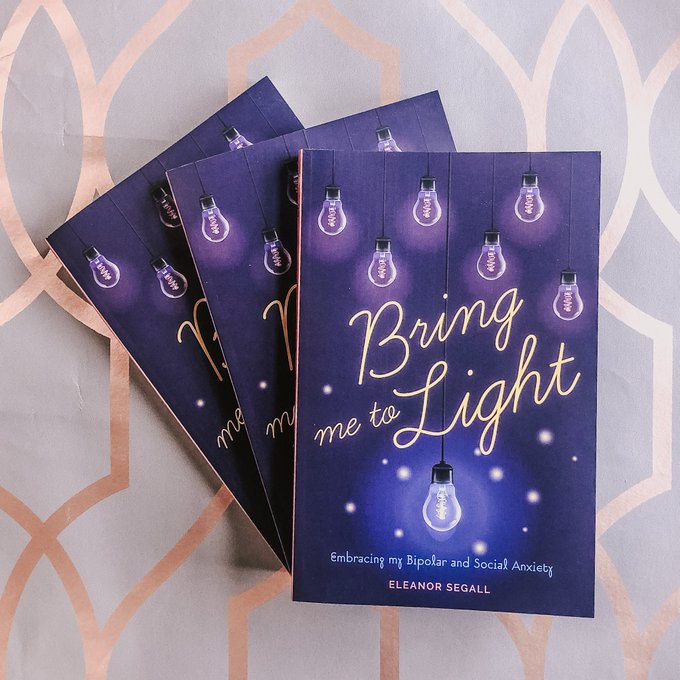
Why I wrote my book, ‘Bring me to Light: Embracing my Bipolar and Social Anxiety’ by Eleanor

bringmeinsta1

(image: Trigger Publishing)

This blog has been a long time coming. I have been so busy promoting my book on social media and in the press that I havn’t actually sat here and told you WHY I decided to write this book. So, here goes.

Firstly, can I just express so much gratitude to this here WordPress blog because without it, I would not have got commissioned at Metro.co.uk (thank you Yvette) or for other places online. This blog gave me the confidence to write and to expand my writing’s reach and for that I will be forever grateful.

In 2013/ early 2014, I sat on the couch, crying and living with a suicidal depression. My bipolar was unstable and all over the place- I felt so low and like there was no way out. However, as I sat and cried- a friend of mine’s face peered up from the newspaper. He was looking for the man that saved him from suicide and was launching a campaign called Find Mike to find him. That man was Jonny Benjamin (who now has an MBE). I had known Jonny for many years as a teenager through friends, but he became my inspiration and my hope that I too could do good things despite having mental illness. He very kindly has provided an endorsement too for my book- thank you Jonny!

With the help of my psychiatrist, I recovered temporarily from the depression but then spun very fast into mania and psychosis (possible due to a large dose of anti depressant). I was sectioned and in hospital for 4 months as an inpatient and a further 4 as an outpatient.

Throughout this time, I could not think about writing because my mind wasn’t stable enough. But as I pieced my life back together, started taking a new mood stabiliser to help control the bipolar episodes and started to recover slowly, I found the power of blogging about my social anxiety due to trauma of the bipolar, to be so helpful. I found that others would share their stories and would reach out to me about their mental health too.

Although life is not perfect and I am still living with an anxiety disorder, I have found a way to write and speak about mental illness. I was diagnosed with bipolar at 16 and there was a lot of shame for me about it back then in 2004. These days, I tell my story for other scared 16 year olds newly diagnosed but also to break down barriers and stigma against mental illness. To explain you can have bipolar or be sectioned or have psychosis but you can recover and you don’t need to spend life in hospital forever. To explain that while this cruel illness runs in families, that with the right healthcare, staying more stable is possible.

I started writing my book with Trigger Publishing because they believed in my story when I sent them my proposal. They are part of the mental health charity the Shaw Mind Foundation and royalties go towards the charity as well as some to me.

I hope that when you read my story, you won’t see it as a despairing ramble- but rather a story of hope, of life, of light triumphing over the darkness- but the darkness making the good times shine brighter. I also bring my bipolar to light, I share it with the world- as scary as this is, so that others can also tell theirs.

I wrote this book too provide a place to talk, start conversation and help heal myself through writing it but sharing that feeling of hope with others too. The book cannot change things that are so needed like urgent mental health funding of the NHS so we have parity of esteem. Yet, i hope it is a starting point about how important mental health treatment is for people to move forward in their lives.

Bring me to Light is out on 5th November 2019 in the UK and is available worldwide. It will be out in the USA in 2020. It can be purchased on Amazon, in book shops and at triggerpublishing.com

I will be sharing press articles and more about the book as it happens, but I hope this blog explains why I wrote my book. Thank you all for your ongoing love and see some of you at the book launch!

Love,

Eleanor x