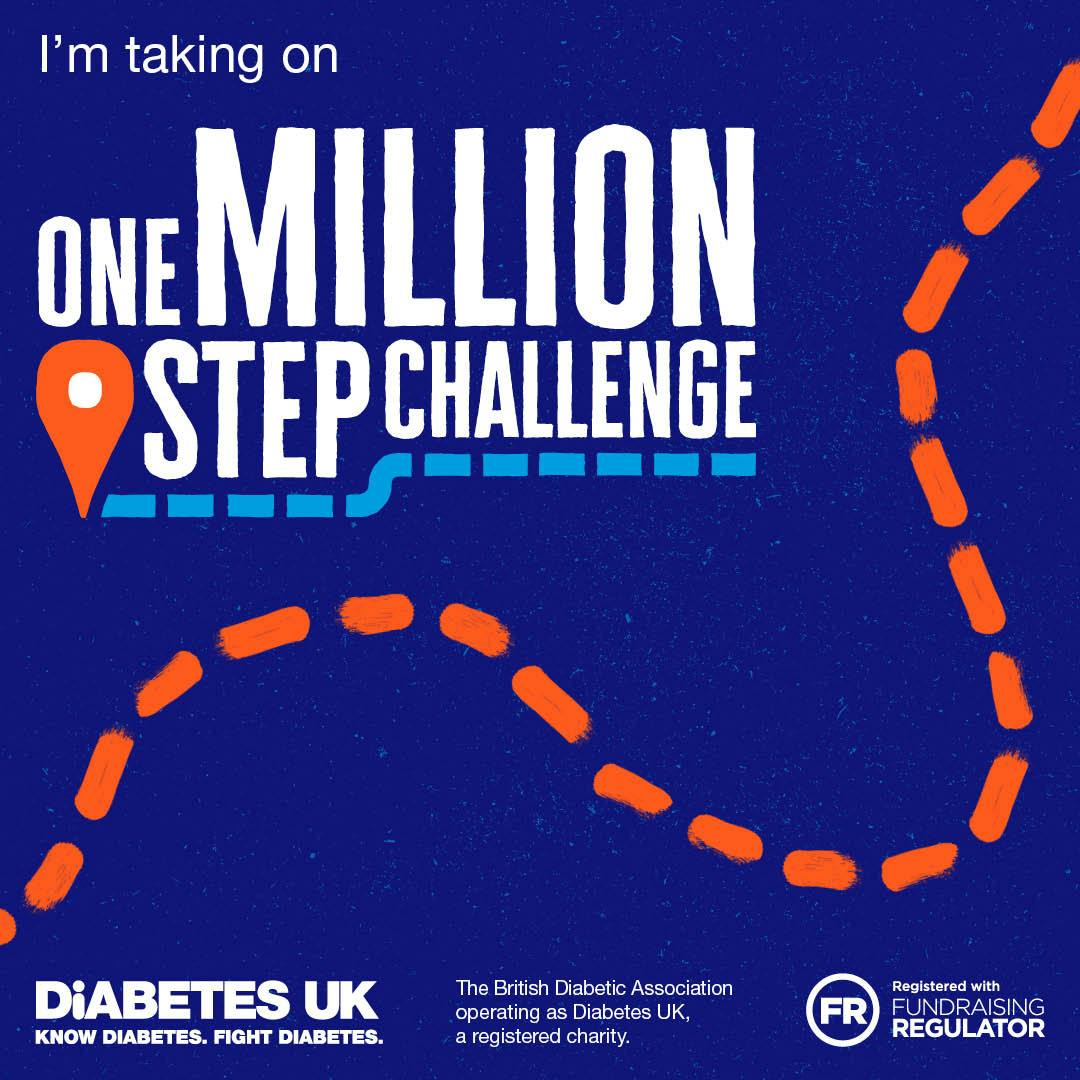
This is scary but here goes! This summer, I’m stepping up for Diabetes UK in their Step Challenge (I will be aiming to do 500,000 steps between my birthday 1st July and September).
I am doing this challenge to not only support the 5 million people in the UK who live with diabetes (including my dad Mike) but also to get fit, healthy and lose weight after being diagnosed with polycystic ovarian syndrome (pcos) last year. With pcos there is a future risk for diabetes as well as fertility challenges- I’m not diabetic currently and want to get healthier.
Those who know me well know this is a big deal for me as I am not a gym goer! I will be aiming to do 5000 steps a day starting on my 36th birthday 1st July- through to 30th September to total 500,000 steps which is one of the challenges.
Please sponsor me if you can afford to fund life saving treatments/research into diabetes and get me off the couch so I am healthier too!
Click sponsor me in previous sentence to donate or learn more!
When you’re struggilng with substance abuse and considering detox, chances are you have a clouded view of what this looks like. Images of withdrawal symptoms, sterile hospital beds, and indifferent staff often cause people to fear going into a rehab center. But drug detox doesn’t have to be this way.
Facilities across the USA (and in the UK) like Utah drug detox centers, can provide a safe, supportive, and structured environment to help you navigate this challenging phase. These centres offer the resources and expertise necessary to manage detox. They can help set you up for long-term success.
What are the key aspects of a positive detox environment, and how do they contribute to a successful recovery journey? We’ll discuss those answers here.
Building a Foundation
Research shows that up to 90% of people who relapse after drug detox do so within the first year. Don’t let this number discourage you, though! It can feel daunting, but it also highlights the importance of setting yourself up for success from the very beginning.
Creating a positive environment during detox will improve your chances of long-term recovery. You need a calming, supportive space. Whether you choose your own home, a friend or family member’s place, or a detox program, make sure it’s comfortable and includes healthy, appealing meals that nourish your body. As you heal and cope with withdrawal symptoms, you’ll need proper nutrition.
Surround yourself with a supportive network of people as well. Those who understand your journey and believe in your recovery will be a crucial source of strength.
Address Detox Concerns
Detoxification is often seen as a difficult, uncomfortable experience, and with good reason. Many people entering detox worry about withdrawal symptoms. These effects can range from anxiety and fatigue to nausea, pain, and muscle aches.
But withdrawal symptoms aren’t the only concern. People might also worry about privacy, safety, and the cost of detox. Quality detox programs focus on patient privacy and confidentiality with trained medical professionals to provide a safe, supportive environment.
These types of detox programs can come with a hefty price tag, but many facilities have flexible payment options or work with insurance. Treatment is still within reach for those struggling financially.
Environment
Imagine stepping into a detox program, not with a sense of dread, but with a feeling of comfort. Instead of glaring lights and cold metal, you’re greeted by a warm, home-like environment. Attentive and professional staff are there to support you, easing the anxieties often associated with detox. This welcoming atmosphere can foster a crucial element of recovery: trust.
Trust in your caregivers is essential. When a detox program feels clinical and impersonal, it can create a sense of detachment. You might feel like just another patient to be processed. But a comfortable and inviting space can make a big difference.
This environment allows you to feel safe, valued, and more receptive to the personalised care and guidance offered by your treatment team. The sense of trust empowers you to fully engage in the detox and recovery process, setting you up for a stronger foundation on your journey to a healthier life.
Take the First Step
Detox is a crucial first step on the path to recovery. By prioritizing a safe, supportive, and comfortable environment, you can significantly increase your chances of long-term success.
Remember, you don’t have to face this alone. Reach out to a qualified professional or treatment center today to begin your journey to a healthier and happier life. Many resources are available to support you, and there is no shame in seeking help. Take that first step today — your future self will thank you for it.
I am absolutely delighted to share that Vuelio has listed Be Ur Own Light as a Top 10 UK Mental health blog! For the 6th year running! I am so grateful as we work hard year-round on the blog. Thank you to all our amazing collaborators too. These lists recognise influential blogs in their sectors.
While we might think that everyone is a buttoned-down professional, everyone has their own relationship to their work. But what about returning to work after a long time away? Maybe you’ve been on maternity leave, have suffered an illness, been struggling with mental health, or have been off work for a variety of reasons.
However, it’s true that settling back into the regular working cycle is often a form of mental health and self-care in itself. This is because work is hard, as is balancing a job around personal priorities. As such, it’s important to get out there, to make the right preparations and to believe you can do it. The secret is that you really can, even if you had to fight against your previous employer thanks to their lack of labor law compliance tracking.
With that in mind, let’s discuss how to brace yourself for a return to work, even after a long time away.
Plan Ahead For Your Transition
Your employer likely knows that you have a period of unemployment in the past, and may have asked you about it. If you were candid about it and still gained the job, your employer will likely understand. For the first couple of weeks, you might ask to do staggered days or part-time shifts, then slowly move into full-time. It can’t hurt to ask.
Alternatively, you might integrate a full month of regular 9-5 work to onboard, and then consider remote working from that point on. Planning ahead for your transition, making these requests, or asking for any appropriate support measures can be key. For example, perhaps you need to visit your physiotherapist once a week for mobility assistance. Laying this all out on the table is healthy, because you have nothing to be ashamed of, and reasonable provisions must be made for you (as they legally ought to be for anyone who experiences a personal condition or disability).
Refresh Your Skills & Knowledge
Even the most capable professional can feel rusty in their skills after a period away, as work isn’t like riding a bicycle, it takes a little adjustment period to feel your best. As such, you might ask to review certain work materials before you start, such as the company structure, role boundaries and parameters, and specific preparations to make.
In some cases, you may have the tools to play around with before you start. If you’re working in the content production section of a marketing department, you might focus on Premiere Pro revision or editing software understanding once more, checking out the new updates to see what has changed. This way, you arrive at the new place a little sharper and more practiced.
Get Into The Daily Schedule Beforehand
You may have a couple of weeks before you start work again, which is a great practice period for getting used to your new schedule. You might begin waking up early in the morning and going to bed early, to help your body clock adjust to the new normal. You could even take the commute a few times to make sure you relax into it, and don’t have to worry about being late for your first day. If taking the train during rush hour or figuring out the best route to drive, that can give you great peace of mind. If you are struggling with your mental health, definitely reach out for support.
Moreover, you might prepare your lunch the night before just to get into the habit, or purchase your train tickets set to be valid by a certain date. Getting into the swing of things allows you to avoid feeling tired out or a little shocked when you settle back into work. You don’t want to wake up for your first day tired, irritable, and hungry, but energised and ready to get started. If you have work anxiety, its OK speak to a trusted friend, family member or therapist and seek support.
Don’t Try & Reinvent The Wheel
Most people like to give a good impression as they turn up to a new job for the first time, but that doesn’t mean you have to become the employee of the year in the first week. Just take it easy, and follow the onboarding plan. That’s all you have to do to begin with. Sure, you might be involved in new meetings, but you don’t have to lay out a large vision or plan just yet. Sure, you might be an integral part of the team, but you don’t need to take everyone’s work on immediately.
It takes time to adapt to a new workplace, and any manager worth their salt understands that. This is also a period to ask as many questions as possible, even if they seem silly on the surface. After all, if you don’t ask now, when will you? Moreover, if you’re a little rusty, don’t be afraid to admit that and slowly sharpen your skills. You don’t have to put every insecurity out there of course, but don’t feel like you have to be perfect, because that’s the quickest way to make a mistake.
Manage Stress & Anxiety Responsibly
It’s natural for people to feel a little stressed at work, and if you have anxious feelings, a new job is fertile ground for them to surface. But you can manage your anxiety with care. You might use supplements to help you (consult a doctor first), and this could include valerian root which is know to deal with mild stress, or ashwagandha, a herbal blend known to relax. Use what works for you and is approved by your doctor, and if advised against taking it or if they clash with any medications you take, make sure to stay well clear. Seeing a therapist can also be helpful.
Moreover, breathing exercises, good sleep schedules and hygiene, and the willingness to take each day at a time can help you feel more relaxed in no time. The first few weeks can be worrying, but sooner rather than later you may begin to feel at home.
With this advice, you’ll be certain to brace yourself even after a long absence preceding your return to work.
I am delighted to be collaborating with Twinkl on their mental health resources for children in schools.
Twinkl say , ‘We must recognise the need to improve understanding of children’s mental health. A person’s mental health is determined by a complex cocktail of different factors interacting. Some of these factors come from a person’s biology, while others come from external factors. Further complicating things, young children don’t always have a full understanding of why they feel they way they do. They can also be reluctant to talk about it, which only adds to the challenge if you’re a teacher trying to support good mental health care at your school. Ultimately, though, if you have concerns that one of your students is struggling with something related to mental health, you should report your concerns to the appropriate authority.’
Twinkl creates resources for teachers and their students, to provide excellent mental health education. This includes resources such as a morning physical and mental health check in, mental health discussion cards, mindfulness colouring pages, and the emotions iceberg to help children understand their feelings.
(image: Twinkl)
Sometimes children come to school unable to express their emotions or what is going on at home. That’s why its so important for teachers to use these tools to help children at school.
Click here to look at the amazing resources and read this blog by Twinkl.
In the journey of outpatient rehab, recognising and celebrating each small victory plays a pivotal role in both motivation and recovery. These milestones, no matter how small they may seem, serve as important markers of progress, offering encouragement and a sense of achievement to those on the path to recovery. Each step forward, regardless of its size, can significantly impact the overall success of rehabilitation. This philosophy not only fosters a positive environment but also strengthens the resolve of individuals to continue striving for their ultimate goal of full recovery.
The Power of Acknowledgment
Acknowledging and celebrating small victories may seem insignificant in the grand scheme of things, but it can have a powerful impact on one’s outlook and determination. In outpatient rehab, where the recovery journey can be long and challenging, even the smallest progress should be praised and recognized. This acknowledgment serves as a reminder that each step taken is a valuable and meaningful effort towards healing. It also helps individuals to focus on the present moment, rather than dwelling on past struggles or future worries.
Boosting Motivation
In outpatient rehab, motivation is a key factor in achieving successful outcomes. By celebrating small victories, individuals can maintain their motivation and drive throughout the rehabilitation process. Each accomplishment reinforces their determination and propels them forward towards their ultimate goal. When individuals feel recognized and supported, they are more likely to remain committed to the rehabilitation process and push through any difficult moments.
Building Confidence
As individuals progress through theiroutpatient rehab program, each milestone reached builds confidence in their abilities and strength. These small victories serve as evidence that they are capable of overcoming challenges and making positive changes in their lives. With each success, individuals are encouraged to set higher goals and push themselves further. This confidence boost can have a lasting impact on their recovery journey and beyond.
Celebrating Together
The power of celebrating small victories is not just limited to the individual in outpatient rehab but also extends to their support system. Family members, friends, and healthcare professionals all play an essential role in providing encouragement and recognition for achievements. By coming together to celebrate each milestone, a sense of community and support is fostered, creating a positive and uplifting environment for the individual in rehab.
Celebrating small victories may seem like a simple act, but its impact on outpatient rehab cannot be underestimated. Each milestone reached serves as a stepping stone towards full recovery and should be recognised and celebrated. By acknowledging these small victories, we can create a more positive and empowering experience for individuals in rehabilitation and help them to achieve their goals with confidence and motivation.
Rianne Hunter is a wife, mother of three, and an independent blogger who writes for a broad range of topics and publishers.
Trigger warning: discussion of self harm/suicide attempts.
I was so excited when I saw my online friend Emily Katy’s brand new book coming out! Emily was one of the first reviewers of my book Bring Me to Light and had taken photos of her reading it with her dog and some horses :). I followed her on social media and saw that she was writing her own memoir on what it was like to live as a teenager with undiagnosed autism and mental ill health. This review is not gifted or sponsored- I just wanted to read Emily’s story.
I want to congratulate Emily and her team as this week it has become a Sunday Times Bestseller which is an incredible feat for any author, especially for their first book!
Emily says,
“Far too many autistic people – women and girls especially – fly under the radar, unseen and unsupported. Many of us reach crisis point and only then (if we are lucky) do we find out that we are autistic. I hope this book can add to the collection of autistic voices demanding change in how autism is understood and recognised”.
I bought this book because I wanted to understand what it was like to live as someone with autism undiagnosed and how that affected Emily’s overall mental health, leading her to be sectioned on a psychiatric unit as her health deteriorated. Although autism is not a mental illness and many see the positives living with a neurodiverse brain, it does impact on mental health, especially when it is undiagnosed by a system not set up to understand it in women.
To the outside world, Emily , who is from the UK like me, looks like a typical girl, with a normal family, living an ordinary life. But inside, Emily does not feel typical, and the older she gets, the more she realises that she is different. As she finally discovers when she is 16, Emily is autistic.
Girl Unmasked is the extraordinary story of how she got there – and how she very nearly didn’t. Still only 21, Emily, writes with startling candour about the years leading up to her diagnosis. How books and imagination became her refuge as she sought to escape the increasing anxiety and unbearable stresses of school life; how her OCD almost destroyed her; how a system which did not understand autism let her down; and how she came so close to the edge that she and her family thought she would never survive. We see how family and friends became her lifeline and how, post-diagnosis, Emily came to understand her authentic self and begin to turn her life around, eventually becoming a mental health nurse with a desire to help others where she herself had once been failed.
(image: Emily Katy)
Emily bravely navigates how being undiagnosed with her autism led to her struggling with OCD, anxiety, self harm and depression -which led to suicide attempts. Thankfully, once Emily was able to get a proper diagnosis of all her symptoms that felt right for her (autism and OCD), she found herself able to recover from her depression. In the book, Emily also discusses ways to help you if you are self harming or feeling suicidal. She talks about how being on a psychiatric unit was extremely distressing and as someone with autism, she found that things like loud noises, unpredictability, lack of normal routine or a schedule and new people coming, were just some of the things she struggled with. While at the unit, Emily was also misdiagnosed as having a personality disorder, as well as an anxiety disorder.
It is clear from reading this important book, that Emily feels one of the reasons she was misdiagnosed was because she was a girl. Autistic females tend to fly under the radar for longer due to assessment methods being developed for males, masking to try to fit in with others socially and their special interests being more socially accepted. As someone with bipolar, I have often been called ’emotional’ or ‘drama queen’ and Emily mentions these labels were given to her and other women with autism too. I found reading the lists of autism myths and facts really helpful to further my understanding.
What stands out to me in Girl Unmasked is Emily Katy’s courage. Not just in telling her own story of the perils of living with undiagnosed autism and how it impacted her mental health, but the fact that after surviving multiple self harm and suicide attempts and being sectioned on a psychiatric unit, she has now become a mental health nurse at just 21 (and now bestselling author) to help others. Emily has managed to move forward with her life and achieve huge things, despite living with the trauma she has faced and she has amazing friends and family too, who are there to support her.
I loved this book and read it in 2 days. Girl Unmasked is not an easy read – it is a meaningful, powerful real story of someone’s life. Please do read with care as it discusses mental health themes alongside autism. On the front of Emily’s book is a rainbow and to me that symbolises the hope with which she lives her life and is now bringing to others.
Emily Katy, 21, lived as an undiagnosed autistic girl for nearly seventeen years. After completing her degree in 2022, she qualified as a mental health nurse. She has a large, highly engaged following on social media: @ItsEmilyKaty X (formerly Twitter) 68.4k followers, 21k Instagram followers and a blog www.authenticallyemily.uk, where she talks about autism and mental health. Emily is a Trustee of the charity ‘The Autistic Girls Network’
Few trials in life are as demanding or relentless as those rooted in chronic physical pain or emotional trauma. For the young adult grappling with long-term afflictions, navigating through daily life can feel like traversing a battlefield with no map and an unreliable compass.
Seeking Solace in Shared Stories
When the weight of your struggle seems too heavy to bear, one of the most powerful avenues toward comfort and understanding is through storytelling and shared experiences. Whether you’re dealing with the debilitating effects of chronic illness, the fallout from trauma, or a blend of both, realizing you’re not alone can be profoundly liberating.
Joining Support Groups
Surrounding yourself with peers who understand firsthand the turmoil you face can provide a unique and invaluable support system. Consider reaching out to local or online support groups focused on your specific condition or trauma type. Here, you can share your story, glean insights from others’ journeys, and forge connections that transcend your individual pain. When you open up to a circle of understanding listeners, you’ll find that there is collective strength in solidarity.
Creating Community
Online forums and social media groups can serve as modern-day campfires, where you can find solidarity and support among those with similar struggles. From these virtual communities, real friendships and mentorships can blossom, creating a network that uplifts and sustains, even on the darkest of days.
The Healing Art of Expression
When words fail us, sometimes the canvas, the page, or the stage can amplify our voices. The creative process—whether through visual arts, music, writing, or performance—can be an outlet for the unspoken struggle within us. Engaging in art as a form of therapy not only provides an escape; it can also catalyse healing on a deeper, psychological level. Be careful though!
Exploring Therapy Through Art
Art therapy, a form of psychotherapy that utilises creative means to express and process emotions, can be particularly powerful for young adults navigating complex internal landscapes. In a safe and guided environment, you can use artistic mediums to explore memories, release pent-up feelings, and discover new perspectives on your pain.
Finding a Creative Community
Being part of a creative community can cultivate a shared language around your pain that transcends traditional dialogue. Whether you join a local writers’ group, painting class, or theater troupe, immersing yourself in art alongside others can provide catharsis, camaraderie, and a fresh lens through which to comprehend and cope with your experiences.
Professional Partners in Your Personal Battle
With a struggle as intricate and unyielding as chronic pain or emotional trauma, it’s often necessary to call upon specialized professionals who can provide the knowledge and guidance you need to manage and, ideally, overcome your challenges.
Therapy and Counselling
The benefits of therapy and counselling for chronic pain and emotional trauma are well-documented. Contacting a skilled therapy center or counselling office can equip you with tools to address the cognitive and emotional aspects of your condition. Cognitive-behavioural therapy, in particular, has shown efficacy in helping individuals reframe their experiences and manage their pain more effectively.
Seeking Medical Specialists
Chronic pain often requires a multidisciplinary approach. Connecting with pain management specialists, physical therapists, or holistic health practitioners can lead to innovative treatments and strategies for maintaining your well-being. For those contending with trauma, seeking out psychiatrists, psychologists, or trauma-focused therapists can pave the way toward understanding and healing deep psychological wounds.
Navigating Life With a Compassionate Guide
The path to healing and resilience from long-term afflictions is rarely a straight line. Sometimes, having a life coach or mentor—a compassionate and knowledgeable guide—can help you chart a course that aligns with your personal goals and values.
Life Coaches
Life coaches work with clients to identify areas of dissatisfaction, set goals, and make strategic plans to achieve those objectives. While a therapist may look into your past to heal emotional wounds, a life coach can help you focus on the present and future, encouraging you to move forward with intention and purpose, despite your struggles.
The Power of Mentorship
Mentors, too, can be instrumental in guiding young adults through the labyrinth of chronic pain and trauma. Whether personal or professional, a mentor can offer support, share wisdom, and act as a role model for resilience. A mentor’s insight and perspective can prove invaluable as you learn to not just survive, but thrive, despite the weight you carry.
Fortifying Your Internal and External Network
In your darkest moments, it’s crucial to know that there are sources of strength—both internal and external—to which you can turn. These can be practices that you cultivate within, or connections you foster without, that fortify you against the relentlessness of your pain.
The Power of Daily Practices
Mindfulness, meditation, yoga, and relaxation techniques can serve as anchors in the storm of chronic pain or trauma. These practices help you tune into your body-mind connection, fostering a sense of control and calm that is often elusive. Establishing a consistent routine of these activities can help reduce stress, manage pain, and improve your overall quality of life.
Building Resilient Relationships
Cultivating healthy and supportive relationships can significantly bolster your resilience in the face of chronic pain or trauma. Whether it’s family, close friends, romantic partners, or even pets, the unconditional support and love found in strong relationships can act as a wellspring of hope and comfort. Nurturing these connections—through open communication, empathy, and mutual aid—can create a network of resources that sustain you through even the most challenging times.
Finding your way through the intricate labyrinth of chronic pain and emotional trauma as a young adult can be daunting, but it’s not a lonely path. By reaching out to these potent sources of support and understanding, you can begin to unravel the complexities of your experiences and piece together a map that leads to a life defined not by your pain, but by your resilience and triumph.
This article is by Meghan Belnap, freelance writer.
Have you ever noticed that your environment has a direct impact on your mood, productivity, and overall well-being? Creating a space that fosters personal growth and self-improvement is essential in creating a positive mindset and achieving your goals. Fortunately, there are plenty of ways to transform your space for your personal development and positive mental health. In this post, we’ll explore some practical tips and tricks to help you create a space that nurtures personal growth and inner transformation.
Create Inspiring Zones
Designate specific areas in your space for different activities that align with your personal growth goals. Whether it’s a cozy reading nook, a meditation corner, or a home office for pursuing your passion projects, having designated spaces for different activities can help you stay focused and motivated. Personalize these zones with items that inspire you, such as motivational quotes, artwork, or plants that bring a sense of calm and positivity to the space. In addition to personalizing these spaces, incorporating elements of nature can further enhance your inspiring zones.
Natural light, for instance, not only improves mood but also increases productivity and creativity. If possible, position your dedicated spaces near windows or in well-lit areas. Adding indoor plants to these areas can also boost air quality while providing a tranquil and refreshing ambiance. For a more dynamic and versatile space, consider using movable dividers or curtains. These can help in delineating your zones without committing to a permanent layout, allowing you the flexibility to adapt your space as your personal growth journey evolves.
Incorporate Natural Elements
Bringing the outdoors in can have a profound impact on your mental and emotional well-being. Consider adding plants, natural light, and earthy tones to your space to create a soothing and grounding environment. Plants not only improve air quality but also have been shown to reduce stress and improve concentration. Open up your curtains during the day to let in natural light, or invest in a light therapy lamp to mimic the benefits of sunlight on cloudy days. Integrate water elements into your space to foster a tranquil and healing environment conducive to personal growth.
A small desktop fountain or an aquarium can introduce the calming sound of moving water, creating a serene atmosphere that enhances focus and mindfulness. Furthermore, selecting furnishings or decor made from natural materials like wood, stone, or bamboo can add texture and warmth to your surroundings, further rooting your space in the calming beauty of nature. These elements, when thoughtfully incorporated, work harmoniously to not only beautify your environment but also to support your mental and emotional well-being, making it a fertile ground for personal development and growth.
(image: free image)
Clear the Clutter
One of the most important steps in transforming your space for personal growth is decluttering. Clutter can create chaos and overwhelm, making it difficult to focus and be productive. Start by going through your belongings and getting rid of anything that no longer serves you or brings you joy. Consider donating items you no longer need or use, and organize the remaining items in a way that is visually appealing and functional. Investing in climate controlled storage can be a great option for storing seasonal items or sentimental belongings that you want to keep but don’t need on a daily basis.
After tackling the physical clutter, addressing digital clutter is equally critical in creating a space conducive to personal growth. Digital clutter, including unorganized files on your computer, unused apps on your phone, and a cluttered email inbox, can be just as overwhelming as physical clutter. Set aside some time to organize your digital life by deleting unnecessary files, unsubscribing from unwanted emails, and organizing your digital documents into clearly labeled folders. A clean digital workspace can significantly boost your focus and productivity, making it easier for you to concentrate on your personal growth goals.
Cultivate a Mindful Routine
Establishing a mindful routine in your daily life can help you stay grounded and present, even amidst the chaos of daily life. Create a morning and evening ritual that includes activities like meditation, journaling, yoga, or reading that nourish your mind, body, and soul. By dedicating time each day to self-care and reflection, you can cultivate a sense of inner peace and clarity that will support your personal growth journey. Your physical environment can play a crucial role in facilitating these routines, so make sure to curate your space with intention and purpose.
Embrace Minimalism
Simplifying your space and your life can have a transformative effect on your mental and emotional well-being. Embrace the principles of minimalism by focusing on quality over quantity, decluttering regularly, and being mindful of your consumption habits. By simplifying your surroundings, you can reduce distractions, increase your focus and productivity, and create a sense of calm and harmony in your space. Additionally, minimalism can cultivate a sense of gratitude and contentment, leading to greater self-awareness and personal growth.
Transforming your space for personal growth is a powerful way to create a supportive environment that nurtures your goals and aspirations. By decluttering, creating inspiring zones, incorporating natural elements, cultivating a mindful routine, and embracing minimalism, you can foster a sense of peace, balance, and inspiration in your space. Remember that personal growth is a journey, and your environment plays a crucial role in supporting your growth and self-improvement efforts. By taking intentional steps to create a space that aligns with your values and aspirations, you can create a sanctuary that empowers you to be your best self!
Self-medicating to resolve mental health issues can sometimes leave the door open for substance abuse. A lot of information goes into choosing the right psychiatric medicine, and it is not something you should choose without medical input. To avoid this common problem, here are a few things you should know about self-medication.
The Consequences
Mental and physical health are a top priority for dual diagnosis treatment. Depression, mania, anxiety and irritability are only a few underlying mood changes that someone may experience. On their own, these mental health conditions are already hard to deal with. When those same conditions are combined with possible substance use disorders, it creates a co-occurring disorder. As an example, a person that is suffering from anxiety will try to self-medicate with unprescribed depressant drugs. These downers are sedatives by nature, and can quickly turn into an addiction for someone who becomes dependent on how it makes them feel. These should only be prescribed by doctors and taken with care.
The Truth
When you’reaware of the consequences of self-medication, the treatment steps become much clearer as a goal. Without professional experience, you can’t diagnose the original underlying cause of your condition. Not all symptoms are created equally, and there is no way for a patient to factor in how a specific medication will interact. Psychiatric medications should never be combined with alcohol, which includes things like cough medicines. Self-medication is not good for you and your body or mind should never be the experiment to find out what works.
Risky Behaviour
Mental health stigmas are one of the reasons that people are open to the dangers of self-medication. They feel that society has a judgmental attitude towards mental health prescriptions. With self-medication, these same prescriptions and their variants are purchased after going through multiple illegal hoops.
Besides the legal issues that could arise, there is a good chance that you are not treating the correct condition. Getting medication to treat depression is a terrible idea for someone that is suffering from bipolar disorder. And when you’re suffering from anxiety, the risk of overdose rises. There is no reason to risk themental and physical consequences of self-medicating when there are more appropriate avenues to treat your condition. Please seek help from your psychiatrist or get referred to one.
Reaching A Personal Goal
When your health is in danger, think twice about going the risky route of self-medicating. It’s easy to use clouded judgement as an excuse for not getting better. No matter how you start, a healthy mind will always be positively fuelled by making healthy personal decisions. Sometimes, self medication can turn into addiction, which can wreak havoc on your body and mind. Reach for appropriate medical support to help support your recovery.








 beurownlight.com