Christmas For CAMHS 2025- Making Christmas And The Festive Season Special For Young People In NHS Mental Health Units.

(images: Christmas For CAMHS)

Every year, the incredible charity Christmas For CAMHS brightens up the lives of children and teens on NHS CAMHS mental health wards. These are for children who are too ill with their mental health (often distressed and traumatised) to be at home with their families, friends and loved ones. In 2004, when I was just 16 and going through a bipolar episode, at Christmas, I was in a mental health ward away from home (I am Jewish and don’t celebrate Christmas religiously but there is something about being given a gift, a card, activities when you are far from home that warms the soul). I know how scary it can be to live in hospital with other ill children and teenagers. So, I absolutely love the work of this important charity.

Christmas For CAMHS was founded by Dr Ro Bevan. While working as a doctor on a children’s ward in 2015, she saw first hand that, during the festive season, hospitals supporting children with physical illnesses were showered with huge amounts of gifts, festive treats and celebrations – as they should be! They even had enough to cover ward birthdays the following year! The following year she was working on a child and adolescent mental health ward. She was shocked by the contrast. So she posted about the inequality on Facebook “We had no presents donated. Our patients had one present each using money scrimped and saved from the NHS budget.” Her plea went unexpectedly viral, inspiring an intrepid bunch of volunteers to come together with her to create our charity Christmas For CAMHS. We had to make sure that no child or young person on a UK mental health ward was ever forgotten at Christmas again. 

Since then the charity has gone from strength to strength, providing some essential Christmas hope for almost 9875 children and young people. Last year, in 2024, the charity sent over 1100 individual gifts (with an additional fidget toy too) to these children and young people – that’s gifts to every young person in every CAMHS unit in the UK! 

They also sent 52 special additional gifts for young people on the ward particularly in need, such as those with no parental support and young people in foster care – this included items such as oodies, comic books and specialist art equipment. But that wasn’t everything! As well as individual gifts and goodies, they sent wellbeing advent calendars, festive decorations and activity kits – great for distracting and boredom-busting – paper chains, homemade cards and ward gifts such as jigsaws, art kits, books and board games. Festive season in a box!

(Image: Christmas for CAMHS)

The charity say, ‘It’s never really about the gift itself. For these young people struggling with conditions such as anorexia, psychosis, bipolar disorder and depression, it’s about a glimmer of hope — the knowledge that someone out there cares for them, is thinking of them, and wants them to feel less alone at a very hard time of year to be poorly in hospital. This is why what we do is so important. These fragments of hope and glimmers of joy can, and do, change the course of lives.’

A recipient of the charity’s kindness who was in hospital years before, told them the following and reached out to the charity.

She said: “I was in a CAMHS inpatient unit over the Christmas period when I was 17. While friends were studying for A Levels and passing their driving tests, I was really struggling to keep myself safe and needed to focus on basics like brushing my teeth and eating regularly. Staying in an inpatient unit is a really tough experience for anyone, but Christmas is particularly hard when the pressure to be with family and enjoy the festive period is much higher.”

I wasn’t safe enough to go home overnight yet, so woke up in hospital on Christmas Day. I remember feeling really low that morning, but the unit had received a care package filled with presents which were given to all of us who were there over the Christmas period. I don’t remember what l picked out, or what the other presents were, but I remember feeling like the universe wasn’t such a bad place after all.”

It felt really special that even when I couldn’t care for myself, there were people who did care for me.I hold that memory close to this day and I’m so grateful to Christmas For CAMHS for helping me through a really difficult time.”

I can relate to this person, I was lucky enough that in 2004, we did receive a small gift and I did get some cards from people in hospital with me (I was struggling with bipolar and psychosis at this time but I still remember that lovely feeling of being thought about by the ward staff).

(image: Christmas For CAMHS)

Christmas For CAMHS is a charity extremely close to my heart. This year, they hope to reach their 10,000th child this Christmas. Times are really tough for charities and they need your help to be Father Christmas and his Elves in all of the CAMHS wards in the UK again this year. You can support Christmas for CAMHS by donating online or choosing a gift from their wish list:

https://www.justgiving.com/campaign/christmas-camhs 

Thank you Christmas for CAMHS and all its staff and volunteers for bringing light and hope to poorly young people going through a challenging time.

For more: please see https://www.christmasforcamhs.org.uk/

National UK Inquiry Reveals 19% Increase In Suicide for People Living With Bipolar- With Bipolar UK

(image: Michelle Henderson: Unsplash)

Trigger warning: discusses suicide

The National Confidential Inquiry into Suicide and Safety in Mental Health (NCISH) released its Annual Report for 2025 last week, revealing that over the past decade, nearly 20% more individuals with bipolar disorder are dying by suicide due to shortcomings in the UK’s mental health system.

According to national charity Bipolar UK, the report provides stark evidence that specialist care is lacking, Lithium (an important mood stabiliser medication) is under-prescribed and suicide prevention measures are falling short.

The report highlights that from 2012 to 2022, there were 1,491 suicides by patients with bipolar, with an alarming 19% increase from 2019 to 2022. Despite Lithium being a clinically proven suicide prevention treatment for people with bipolar, only 39% of those who died were prescribed it and just 12% were receiving psychological therapy​.

This data echoes the findings and lived experience of Professor Tania Gergel, Head of Research at Bipolar UK, in her recent article in The Lancet Psychiatry where she said: “Globally, 15-20% of people with bipolar disorder die by suicide, with 30-60% making at least one attempt. These rates are not decreasing despite an overall decline in global suicide rates.”

According to the Nuffield Trust, there is set to be a £4.8 billion unfunded shortfall in the NHS England revenue budget for 2024/25, raising the prospect that without further funding, service cuts may be inevitable.

With bipolar increasing an individual’s risk of suicide by 20 times that of the general population, Bipolar UK is urging the government to commit to addressing health waiting lists and to invest money in creating a dedicated care pathway for bipolar to reduce suicide rates.

Simon Kitchen, CEO of Bipolar UK, said: “This report is devastating but not surprising. We’ve been shouting from the rooftops that people with bipolar aren’t getting the care they need and now the data lays it bare.

Bipolar carries one of the highest suicide risks of any mental illness, yet specialist services are practically non-existent, and Lithium – the gold-standard treatment for suicide prevention – is underused. The time for excuses is over. We need real action, and we need it now.”

The charity has heard from its community of people living with the condition, who are concerned that they are unable to access psychiatrists, have little to no continuity of care and are not being monitored adequately when at high risk. There is also a lack of bipolar specialists in the UK, leading to people not receiving a correct diagnosis or waiting too long to receive one – all of which add to the risk of suicide.

Professor Gergel said: “Neither bipolar disorder nor suicide in people with bipolar disorder are research priorities, resulting in major knowledge gaps in both. This can and must change. The shocking statistics might well underestimate the prevalence of suicide in people with bipolar disorder, given the probability of death by suicide before treatment or accurate diagnosis.”

Adding to that, Simon Kitchen said: “Suicide prevention in bipolar requires a shift in both research priorities and clinical practice. We know lithium saves lives, but it is still under-prescribed. We know specialist care works, but most services are generic and fail to meet the specific needs of people with bipolar. Bipolar suicide is not inevitable, but without urgent action, people will continue to die.”

(image of Prof Gergel, Bipolar UK)

The NCISH report also revealed broader systemic failures contributing to preventable deaths. Alarmingly, patients with bipolar were more likely to:

  • Die within three months of being discharged from inpatient care, highlighting dangerous gaps in post-discharge support​.
  • Miss vital clinical appointments, often due to social isolation or side effects from medication, with 15% identified as non-adherent before their deaths​.
  • Experience extreme distress without access to psychological therapies, with only 12% receiving talking therapies​.

With more than a million people living with bipolar in the UK, the figures from this latest inquiry represent lives lost and has led Bipolar UK to call for urgent action, including implementing:

  1. Specialist bipolar services in every NHS region to ensure timely diagnosis, access to evidence-based treatments and care tailored to the complexities of the condition.
  2. Increased lithium prescribing, in line with NICE guidelines, ensuring every person with bipolar who could benefit from it is given the opportunity.
  3. Enhanced suicide prevention measures, including better follow-up after hospital discharge and targeted support for those who miss appointments or struggle with medication adherence.

Simon Kitchen concluded: “We need all UK health authorities and departments of health across the nation to act now because lives depend on it. The evidence is undeniable, the solutions are clear, and the cost of inaction is catastrophic. Specialist care, Lithium, and targeted suicide prevention measures can and will save lives.

Bipolar suicide is a national emergency, and the upcoming 10-Year Plan is the critical opportunity to turn the tide. Bipolar-specific services are not optional; they are a lifeline.

“The government and NHS must act now, before more lives are lost to preventable tragedy. It is time to get it right.”

(image: Simon Kitchen, CEO, Bipolar UK)

For more information about suicidal thinking and bipolar, visit: Bipolar and suicide prevention

About Bipolar UK   

Bipolar UK is the only national charity dedicated to supporting people affected by bipolar. Bipolar UK provides a range of services, including information and advice, a network of support groups, an eCommunity, workplace training and telephone and email peer support. Bipolar UK also works in partnership with research organisations and campaigns for change to tackle critical issues. For more information, visit www.bipolaruk.org 

World Mental Health Day 2023: Bipolar Disorder has the Highest Rate Of Suicide- Bipolar UK.

(image: Study Starter)

This World Mental Health Day, clinical experts in bipolar have today announced that successive failings in government policy could have led to a significant reduction in quality of care for those living with bipolar in the UK.

Despite vast improvements in key areas of mental health, the average age for people to get a diagnosis of bipolar is 34 if someone was diagnosed within the past five years, compared to 26 if someone was diagnosed 30 or more years ago.

It is shocking that today people are living with undiagnosed bipolar for longer than they were when the charity was formed 40 years ago. The current average delay to diagnosis is 9.5 years. That’s nearly a lost decade where people are struggling with confusing symptoms without getting the vital bipolar-specific treatment and support they need,” said Simon Kitchen, CEO of leading charity Bipolar UK.

This delay is having catastrophic consequences, with the Bipolar Commission finding that more than a third of the 2,458 people surveyed had attempted suicide because of this delay. This is backed up by research which shows that ‘time to treatment’ is significantly associated with hospitalisations and lifetime suicide attempts.

Tragically, global research estimates that up to 1 in 5 people will take their own life and 60% of people with bipolar will attempt suicide at least once during their lifetime.

It is well established that bipolar has the highest risk of suicide of any mental health condition, yet it is only mentioned once in the Government’s recently published national suicide prevention strategy.

CEO of Bipolar UK CEO, Simon Kitchen, said, “Since Bipolar UK was founded as a charity 40 years ago, we have never stopped campaigning on behalf of those living with bipolar and their families.

“To help prevent the high rate of suicide in those with bipolar and to reduce this unacceptable waiting time for a diagnosis, we are currently campaigning for the Government to commit to prioritising bipolar in the implementation of their national suicide prevention strategy and to commit to reducing the average delay to diagnosis to five year within five years.”

The Bipolar Commission’s Bipolar Minds Matter report launched in parliament in November 2022 includes several recommendations that experts in bipolar and clinicians believe will reduce diagnosis time, improve the quality of life and reduce the high risk of suicide for those living with bipolar.

Kitchen added; “The current care system for bipolar is broken, resulting in an ineffective and inaccurate pathway to diagnosis.

“It is shocking that diagnosis delays are worse now than when Bipolar UK was founded 40 years ago.

“Although we are providing as much support as we can, we desperately need the government to sit up and take action before we lose even more people to suicide.”

To find out more about Bipolar UK’s peer support services please visit: www.bipolaruk.org/get-support 

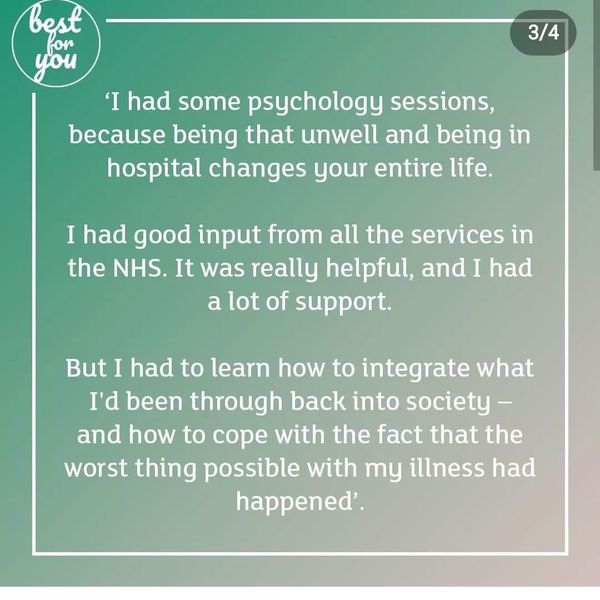
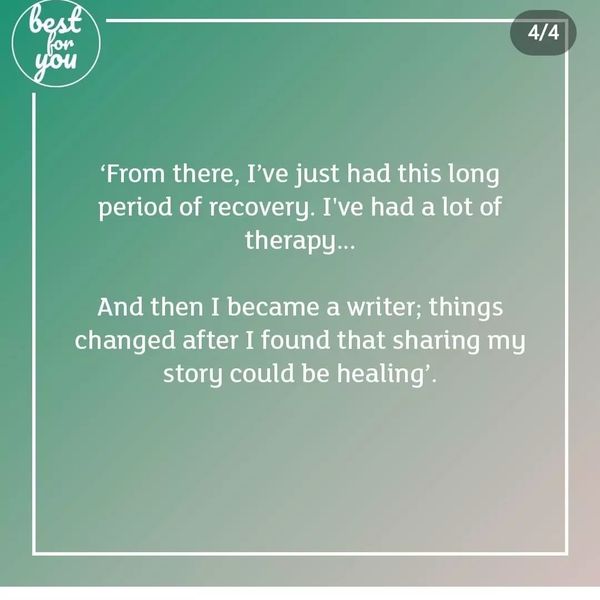
My Interview On Life With Bipolar Disorder by Best For You NHS

(image: Best for You NHS)

The team at Best For You NHS interviewed me about my life journey with bipolar disorder and anxiety. I hope it helps anyone, particularly young people, who are struggling.

You can read the interview that I did with Annabel here. Trigger warning as discusses suicidal thoughts, being in hospital and sexual assault.!

Thank you Annabel and team!

Best for You is a new NHS programme in London to help young people and their families access mental health support We know many can’t access the support they do desperately need and CAMHS services here in the UK are overstretched. I hope that by sharing my story it helps young people feel less alone, but we desperately need more funding into childrens mental health services too!

(Images by Best for You NHS)

Eleanor x

Christmas For CAMHS- Helping Children in Mental Health Units this Christmas.

(image: Christmas4CAMHS)

Many of you know that I support a charity very close to my heart- Christmas For CAMHS. I volunteered with social media and raising awareness. A few years ago, it got charity status and this is so exciting but it still needs your help and donations, so read on as to why its so important to me and those children in hospital!

In 2004, when I was just 16, i was admitted to an NHS CAMHS (children and adolescent mental health unit) at the Priory Hospital North London for depression and psychosis- part of my bipolar disorder on Christmas Eve. Even though I am Jewish, I remember opening a wrapped present (can’t remember what it was) that the staff had organised for us out of their budget. The other patients also left me notes and cards. But the truth is there was no charity giving us presents and we were away from our families, all very ill- so the staff just did the very best they could under the circumstances.

Then, in 2018, I heard about a charitable enterprise set up by a lovely doctor and trainee child psychiatrist called Ro who wanted to do something about the lack of equality children in mental health units had. She and her volunteers were sending presents to children on CAMHS wards across the UK and asking for donations.

Christmas For CAMHS is a registered charity who provides special Christmas gifts every year for children and young people who are inpatients in child and adolescent mental health (CAMHS) wards across the UK over the Christmas holiday period.

They want to make children and young people who are inpatients over the festive season feel thought-about, special and included – our individual gifts for each young person to keep, as well as gifts for their ward, help us to do this.

They have been hugely supported over the past few years by generous donations from the public and have received much gratitude as a result from inpatient units. However, they are only able to provide gifts with your charitable donations.

To find out how you can donate money or gifts please visit their donations page to see the Justgiving page and Amazon gift list.

They say:

Christmas For CAMHS was originally set up because volunteers saw a huge disparity in the way CAMHS units were treated over the festive period compared to other NHS services for children and young people. They wanted to do something to change that.

Children are admitted to CAMHS units to receive support and treatment for mental health issues, such as psychosis or depression or eating disorders like anorexia. There are no official figures for how many children will spend the festive season in CAMHS units across the UK, though we often give gifts to over 1500 young people. While many members of the public and corporate donors give Christmas gifts to children’s hospitals or children’s wards in general hospitals, CAMHS units, which are usually based away from other services, are often forgotten, or not known about. We don’t think this is right.

Every year they talk to every CAMHS unit in the UK to see what gifts their young people would like. Then, with your generous donations, they buy beautiful and thoughtful gifts for young people in almost every unit across the country.

We also include, where possible, some small fidget toys, a gift for the ward like a board game or sports equipment, some activities to do during the festive period and extra gifts for particularly vulnerable young people who are looked after children or who have a refugee background. We also send them an advent calendar full of inspiring quotes and pictures of cute pets. Sometimes we’re able to include a homemade card or two too.

The gifts are assembled at a packing weekend in Bath by our volunteer elves and then whizzed around the country in plenty of time for Christmas! As a charitable organisation, we rely 100% on fundraising and your generous donations. Each penny goes directly to making the magic happen.

(image: Christmas4CAMHS)

So please, support Christmas For CAMHS- if you can donate a gift or money that would be incredible. As a former child patient, the loneliness you feel is unbearable-lets work together to stop the inequality and forgotten children!

see: https://www.christmasforcamhs.org.uk/
An Exclusive Card Collection by Bryony Gordon , Mental health campaigner, for Thortful.com (for World Mental Health Day)

(image: Thortful and Bryony Gordon)

  • thortful launches ‘Affirmations by Bryony Gordon’ to mark World Mental Health Day
  • 100% of profits will go to the Community Programme founded by Bryony; Mental Health Mates

Greetings card marketplace thortful.com has worked with journalist and broadcaster and Mental Health Mates founder Bryony Gordon to create a series of positive affirmation cards written by Bryony and beautifully brought to life by illustrator Frankie Rose.  The cards campaign is in support of Mental Health Mates and Better Health – Every Mind Matters.

World Mental Health Day took place on Sunday 10th October, and throughout the month, thortful will be supporting both Mental Health Mates and the Better Health – Every Mind Matters campaign. The campaign encourages people to look after their mental wellbeing by getting a free NHS-approved Mind Plan. When it comes to taking care of your mental health, having a plan is a brilliant first step. So, throughout the month of October thortful are encouraging people to take the NHS-approved Mind Plan quiz, for personalised ideas to improve mental health and wellbeing.

Mental Health Mates is a network of peer support groups run by people who experience their own mental health issues, meeting regularly to walk, connect and share without fear or judgement. With walks and online communities across the United Kingdom, Mental Health Mates is a thriving community and one that is committed to growing to reach even more people in need of mental health support.

The affirmation cards collection is available exclusively at thortful. The cards include a QR code on the back, to scan to find out more about the partnership and tips to improve mental wellbeing.

Bryony comments: ‘Physical cards are so important, I used to receive them from my friend Fearne (Cotton) during lockdown, when she would write to me just for the hell of it, and it meant so much when it dropped onto the mat, even though we are in constant contact on WhatsApp! It’s easy to forget the stuff that is good for us and harder to retain it. I think affirmations are brilliant and important reminders of the things that make us feel good about ourselves. Reading an affirmation can really help us put positive behaviours into action.’

Clare Perkins, Deputy Director Personalised Prevention, Office for Health Improvement and Disparities (OHID formerly Public Health England) comments: ‘We are pleased to be continuing our partnership with thortful to support people with tips and advice to improve their wellbeing this World Mental Health Day and beyond. There are little steps we can all take to look after our mental health, and getting a free, NHS-approved Mind Plan is a great way to start. It’s important to find out what works for you and that’s why the Every Mind Matters website has lots of resources to try.’

Andy Pearce CEO of thortful comments: ‘We’re delighted to be able to host this collection for Bryony and her amazing community programme. Since our inception in 2016 thortful has always supported Mental Health causes so we’re delighted to be involved. We are also incredibly proud to continue our support of the Better Health – Every Mind Matters campaign by encouraging our community to get a Mind Plan.’

You can have a look at the cards here: https://www.thortful.com/cards/bryonygordon

This article was written on behalf of thortful.com and Bryony Gordon.

We will beat this, It will get better: Guest blog by Jenny Nguyen

distance1

(image: Mercury News, Daphne Sashin -USA)

We are currently living in strange times, where the majority of people are practicing “Social Distancing”. This has become the norm for most people for a couple of weeks or months. Its only a few months of the first year of the new decade, and no one expected coronavirus to have such an impact of everyday life.

Many people out there are worried and anxious about what is happening, you are not alone. We are all in this together and we can beat this virus. My blog is all about me and my anxiety and how I been coping during these difficult times.

Let me start by saying that even before coronavirus, I have suffered from anxiety for most of my life. I am always constantly worried and stressed about what the future holds. It is the uncertainty that makes me so nervous. Sometimes I just want to stay in bed and not talk to anyone. 

It was when something in my life happened, I decided to take matters into my own hands in order to help deal with my anxiety. I decide to self-refer myself and attend CBT classes provided by the NHS. My counsellor has been so helpful in helping me to put things in perspective.  I learnt different ways to help me deal with the anxiety. During the week, I still continue with my CBT lessons, but it is done by telephone.

I really appreciate the work the NHS does. They work so hard to try and help people struggling through hard times and saves people’s lives. 

When I first heard about the coronavirus, it was okay but then when we started to get cases in UK, my anxiety levels started to kick in. I realised that I suffer from health anxiety too, where I would often check online the symptoms and some days, I convince myself that I have coronavirus.

Social media and the news are reporting about coronavirus and this made me more anxious about what the future holds and if I will be able to survive through this time. It started to get really bad after a few days, as cases in the UK kept increasing and we had deaths in the UK. 

Things started to get bad with my mental health as I started to develop symptoms of the virus. One Saturday evening, I started to develop a high fever and started panicking. I had so many thoughts running through my head and ended up calling NHS 111. All they said was ‘it’s a cold’. During that time, I was so scared and my anxiety levels was so high. That evening I found it hard to sleep but I drank a lot of water. The next day I was okay, but decided not to go in to work. It was the right decision to make. 

At work, the decision was made that everyone would work from home until further notice. During the first few days of working at home, it was good because it was great to have freedom of what I wanted to do at home, as we won’t have this much free time again. As time went on, I could feel my anxiety levels increasing and my mind kept wandering to the worst things that could happen to me and my family.

We are in tough times and it is affecting everyone mental health, even if you don’t admit it but this is the time we can work on ourselves and pick up a hobby we enjoy. I suffer from loneliness and I often need others to support me. This is the time you can reconnect with past friends. I recommend reaching out to an old friend and talking to them.

We all go through the same things and know that this bad situation will end very soon. We don’t know when, but we will beat it together.

In order to help with my anxiety levels in this situation, I focus on myself and try to find ways I can help others in this situation. I want to help others who are suffering and find ways to inspire them, that everything will be okay. Having fresh air when you are on lockdown is very important. I have a garden and once in a while I go out for a walk.

We need to protect our mental health. It is okay to be struggling. It’s okay to lose your footing and scramble to stay upright. It’s okay to be screaming on the inside or outside. It’s okay to be scared or anxious or depressed. You are not alone and people are here to support you.

We will get through this together and use this time to do something you always wanted to do. We will beat this! It will get better!


This blog was written by freelance writer Jenny Nguyen, in the UK.

Dear NHS: The Search for EMDR Therapy by Eleanor

sunsetlake1

(image: Freepik)

Today I am writing because I have had enough with the NHS mental health services.  Firstly, I was told that in my area of London, the NHS- national health service doesn’t fund EMDR (rapid eye movement processing therapy- for trauma and PTSD). Why, I have no idea as it is desperately needed. However, I was referred to IAPT wellbeing service (still under NHS), who do have EMDR therapists. Some telephone questionnaires later and I have found that I have been discharged from IAPT – to another team that doesn’t provide the therapy I so dearly need.

I have had years of therapy- CBT x3 and psychodynamic- most had to be privately funded due to the waiting lists in NHS. I need vital treatment for the trauma I faced of becoming so unwell,being in hospital and all I faced during mania and psychosis. My trauma comes out in anxiety and panic attacks which disrupt my daily living. EMDR helps process trauma and I am hoping it will help me to live fully again.

Due to this, the only option with therapy may be to go privately- which is expensive and not ideal for me- I can’t afford it alone. However, I have found an accredited therapist online so this will have to be the route I go down I think. I will speak to the psychiatrist in the other team but don’t hold out any hope as they don’t fund EMDR and there is a 2 year psychology waiting list. Yup, you heard that correctly, 2 years.

I am not doing so well- I have been feeling lower in the mornings and more anxious since having to leave my job. This was another blow today.

Yet….

I am trying to keep myself positive and focused and going. But some days, I just feel like hiding away.

Some positives- I am grateful for:

  1. My new bright pink cardigan is making me smile
  2. Our wedding photos and video come back today
  3. Finding a therapist
  4. Bipolar UK sharing about my book
  5. Love and support from others
  6. Job interviews and book promotion

When people say fund our NHS mental health services, they mean it. People like me are denied access to vital support and put on waiting lists or fobbed off. Its not OK.

Eleanor x


Extract from my Metro article on Homelessness and Mental health issues

homeless
(image: concordhomeless.org)

This is an extract from a Metro.co.uk article that our founder Eleanor wrote and researched on rough sleeping, homelessness and mental health issues. To read the full article click here: http://metro.co.uk/2018/04/10/homelessness-and-mental-health-whats-being-done-to-help-7421391/

The ‘Beast from the East’ put homelessness under the spotlight in February and March as rough sleepers faced freezing conditions. But a more persistent problem among homeless people, which is little talked about, is the prevalence of mental health issues. As someone with bipolar disorder, who has never been homeless, I wanted to investigate what support there is out there for homeless people with mental health conditions.

Anyone can be affected by homelessness, regardless of age, race or sex. Among homeless people, 44% have been diagnosed with a mental health condition, according to Homeless Link. Homeless link points out that homelessness is a stressful, lonely, traumatic experience, which has a major impact on mental health.

In summarising some of its research into homelessness and mental health, Crisis says: ‘Serious mental health issues, such as schizophrenia, bipolar and post traumatic stress disorder are more common among homeless people. ‘Suicide rates are nine times higher, demonstrating the very real need of effective support’

Homeless people with mental health issues, particularly rough sleepers, often have less access to mental health professionals due to their lack of address or their complex needs. Being homeless is extremely overwhelming. Treatment may be the last thing on the mind of a homeless person with a mental health condition when they are focused on finding a way to get food and a place to sleep. The prevalence of drug and alcohol addictions is an added problem.

According to Crisis: ‘Homeless people are more vulnerable to alcohol and drug use. ‘Multiple diagnosis of substance and mental health issues can be a barrier. Rates of alcohol and drug use are four times higher than in the general population.’

Understandably, addiction can get worse when someone is homeless, due to the stress. St Mungo’s is charity that has conducted research into this area and affected change in legislation. Its investigation ‘Stop the Scandal’, looks at mental health and rough sleeping. The charity called for a national strategy to end rough sleeping and changes to the law.

Following St Mungo’s campaign, in 2017 the government backed the Homelessness Reduction Act. This legislation, which came into force on 3 April, is designed to prevent people becoming homeless and to give councils more power to tackle the issue. The government also committed to halve rough sleeping by 2022.

St Mungo’s is leading the way on this. It said: ‘Our experience is that homeless people are treated poorly and often labelled and judged. ‘People see drink or drugs behind rough sleeping, but rarely think about mental health. ‘Mental ill-health can affect anyone, but people sleeping rough face adverse weather conditions, fear and isolation’.


Read more: http://metro.co.uk/2018/04/10/homelessness-and-mental-health-whats-being-done-to-help-7421391/?ito=cbshare

Twitter: https://twitter.com/MetroUK | Facebook: https://www.facebook.com/MetroUK/

Monday Motivation: Update on Mental Health Life

neverlose
(image by blossom and leap via Pinterest)

Last week, I saw my new psychiatrist. He is the kindest man and so helpful. He signposted me to several private mental health services as I very much need therapy for my anxiety disorder. What was sad to see though that these services are not provided by the National Health Service NHS- they are provided by charities, as the NHS service where I live is at breaking point. This is because there are so many people needing psychological input and not enough staff and money. Ultimately it comes down to funding I think. In the past, I have had excellent NHS therapy- although it did not seem to help with the anxiety long term.   So far, I have been on the waiting list for therapy for almost 2 years and I have realised I can’t rely on the NHS for therapy, which is sad.

However, I am grateful I was able to sit down with my new consultant (and Mum) and discuss my life and where I go from here. I am looking into various options for my health and which psychotherapy can help me move forward, get back to work and feel good again.

I am trying to be as positive as I can and think about a happy future. My priority is working on myself so that I can truly thrive. Have a great Monday friends.