Whenever 1st March rolls around, I feel a tremendous sense of pride but also – how has it been so many years since I started blogging on WordPress about my mental health?
Be Ur Own Light Blog started on 1st March 2016 after I had had to leave a face to face job because I was having panic attacks and couldn’t get in to work. I saw blogging as a form of therapy.. and in truth, I was only originally sharing with friends and family because I felt really alone with it. That eventually snowballed into me writing for Rethink Mental Illness and then in the national media, speaking at a few in-person events and recording podcasts. It was also an honour to be included in several books including ‘The Book of Hope’ by Jonny Benjamin MBE and Britt Pfluger, talking about life with bipolar.
There’s times I still feel alone with my health but I also have so much support and understanding from family and friends and readers here too, which helps a great deal.
I just want to thank everyone we have collaborated with in the past year (sponsored or not)- brands, charities, businesses, individuals making a difference in the mental health world. Thank you for writing blogs for Be Ur Own Light and our personal mission of taking a sledgehammer to the stigma of mental illness (or trying to!).
Thank you also to everyone who has promoted or bought my books, especially my recent kids book ‘Arabella and the Worry Cloud’. I am so proud of ‘Bring me to Light’ too and hope sharing my story continues to help people.
If you’ve been following this journey for 9 years (or longer)- thank YOU for being here for the ride and continuing to read, support and show up.
It has been harder for me in the past 2 years to authentically share everything about my mental health and other health things on here but one day I hope that our journey can inspire others. I live in remission from Bipolar due to my medications holding me and I never forget daily how lucky I am to have access to mental health medications (due to living in the UK) and an excellent therapist, plus support from family.
Going forward, I will still be blogging but I am hoping that the sequel to Arabella and the Worry Cloud will manifest soon. I have written it, I just need the funds to secure everything! Shout out to my friend and illustrator Shelley. I hope also that Arabella will continue to reach more children and find it’s way to all who need its message.
Thank you all of you for enabling me to blog and write and hopefully help people with bipolar, depression, anxiety, PTSD, panic attacks etc. Thank you to every person who has read a blog, bought a book, shared an article, commissioned me in the press to write an article on mental health or current affairs and to all who have or continue to believe in me- including my amazing husband and family. and of course G-d who is behind everything.
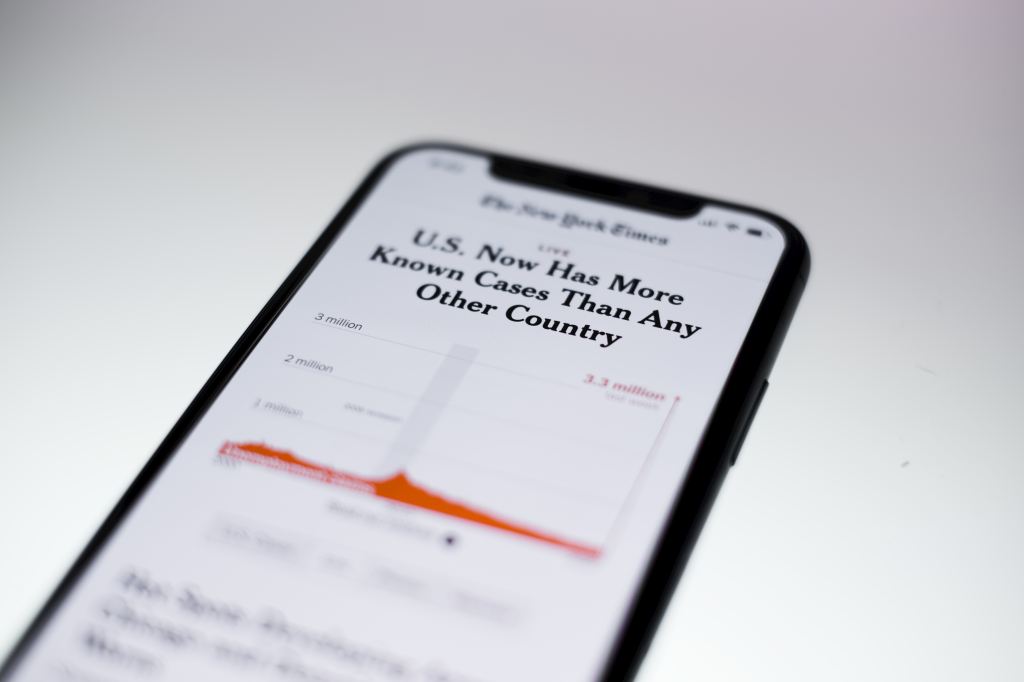
In 2024, there is a growing awareness of the effects associated with constantly consuming negative news, a behaviour commonly known as “doomscrolling.” Media and constant news updates often fuel this habit of seeking out distressing information. Sadly, this can have serious implications for both physical and mental health.
Recent conversations among health experts have shed light on the link between doomscrolling and the increase in Substance-Induced Anxiety Disorder (SIAD) as well as panic attacks. As someone who writes on mental health, I wanted to delve into this correlation, providing insights and practical tips to protect your health in a world that appears to be in a perpetual state of crisis.
What is the Meaning of Doomscrolling?
Doomscrolling involves the consumption of news. Consumers caught up in this cycle feel compelled always to follow disasters, political unrest, environmental crises, and other distressing events, resulting in prolonged exposure to negative media. Additionally, some may even engage in extended sessions of watching vertical, short-form videos without awareness of the passage of time.
We can admit staying informed is important. However, constant focus on distressing media can affect one’s well-being.
Psychological Effects of Doomscrolling
The brain is naturally inclined to react to threats with a fight-or-flight response—a survival instinct ingrained in our biology throughout history.
However, when the mind is activated by immediate non-physical threats, like distressing news, it can result in prolonged stress. This prolonged state of vigilance can heighten anxiety levels over time potentially leading to anxiety disorders and panic episodes.
However, why is it so addictive to watch distressing news? Well, engaging in doomscrolling triggers the activation of dopamine receptors, which provides short relief from anxiety, despite the eventual worsening of mood.
What is more concerning is individuals often revert to doomscrolling in an attempt to alleviate their distress, perpetuating the cycle of negative emotions.
Link to Substance-Induced Anxiety Disorder
Substance-induced Anxiety Disorder (SIAD) begins to show its ugly face when symptoms of anxiety or panic stem directly from substance consumption, withdrawal, or exposure to substances. Common culprits include caffeine, alcohol, nicotine, and certain prescription drugs.
People who engage in doomscrolling may resort to substances like alcohol or prescription drugs as a coping mechanism for the anxiety and stress triggered by the news they consume. This could establish a cycle where substance use provides relief from anxiety symptoms but later worsens them, possibly resulting in SIAD.
Real World Implications – Panic Attacks
Panic attacks are episodes of fear that may manifest as heart palpitations, sweating, trembling, etc. Sometimes there is even an overwhelming sense of dread and fear of losing control.
For those who are exposed to negative news, unfortunately their threshold for panic attacks may be lower. Substances used to manage this stress can further decrease this threshold, making panic attacks more frequent and intense.
(image: Mark Adriane, Unsplash)
Tips for Breaking This Habit
Breaking free from the cycle of doomscrolling requires effort and specific strategies. Here are some “practical?” steps you can follow;
1. Establish Strict Time Boundaries
Hold yourself to designated times during the day for checking the news and make a commitment to stick to these schedules. Utilizing apps restricting your access to websites or social media platforms can help you maintain this routine.
2. Customise Your Social Media Content
Take a role in curating your social media feeds by including uplifting content. Follow accounts that share stories or even your city media feeds to create a balanced experience alongside the inevitable negative news we all have to see.
3. Try Healthy Coping Mechanisms
It may be time to hit the gym. Or engage in activities such as yoga or jogging. Better yet, incorporate mindfulness techniques like meditation or diaphragmatic breathing. Finally, find a way to express yourself through creative endeavors like writing or painting.
4. Consider Professional Support
If needed, and if feelings of anxiety or panic become overwhelming, seek assistance. A health professional can always be beneficial. Therapists can offer personalized coping strategies tailored to meet your needs, as we are all different in what triggers our anxiety.
5. The Inevitable – Keeping in Touch
Even as a mental health writer, I can be better at this one. Having ties with friends and family can ease stress and worry. Interacting regularly can shift our focus away from the constant stream of negative news.
In the end, while staying informed is important, it’s also vital to strike a balance in how we consume news. Recognizing the signs of scrolling through distressing content and taking proactive measures to lessen its impact can help prevent the development of more severe anxiety issues and panic attacks. The world has changed, and mental health is important, so by being mindful and adopting coping strategies, we can safeguard our well-being during these challenging times (no matter where we are located.)
By being aware of how our media intake affects our health, we can navigate the age without falling prey to its negative aspects. Remember, it’s completely fine to unplug for the sake of your well-being.
I sat in A&E on a Wednesday morning trying to control my breathing.
My day began normally with a rushed breakfast and a sweaty commute on the Northern Line. I got to work and started to feel lightheaded and slightly panicky. My chest hurt and I found an empty office to try and calm down. It didn’t work. My brain was screaming ‘heart attack’. A kind colleague put me in a taxi with directions to the hospital.
Of course, I wasn’t having a heart attack. It was a swift diagnosis and then I had hours to wait before seeing the on-call mental health specialist. My panic turned to shame. Especially as I watched ‘real’ sick people come and go from A&E.
It wasn’t my first panic attack, but it was my first one at work.
I was diagnosed with anxiety years earlier in Canada by my GP. I managed it through talking therapies, medication, and support from family and friends. I didn’t have to tell anyone at work and outwardly I always looked like a confident professional. I have what is commonly referred to as ‘high-functioning anxiety’.
My stress levels had been building since I moved to the UK. New country, new job, lots of work travel with more responsibilities, and missing my regular support systems. I felt uncomfortable in my own body; it ached all the time, my memory was unreliable, my hands shook, and my stomach always hurt.
I ignored all the signs and pushed through. It wasn’t one thing, anything specific, or even the building pressures at work. I stopped taking care of myself and I was scared to ask for help. Deep down, I knew it was my fault that I ended up in A&E.
I turned on my phone and scrolled through concerned messages from my team. Excuses raced through my mind: migraine, food poisoning, allergic reaction. Anything but admitting the state of my mental health. How could they, or anyone at work, respect me if they knew my truth?
One of my team members sent a private message asking if I needed a toothbrush. Even now, I can’t explain why it was their simple message that gave me the courage to tell the truth. Perhaps I sensed their kindness and concern? Perhaps because it was ‘normal’ when everything else felt out of control? Whatever the reasons, I decided to be honest with my team and my colleagues from that moment.
I am not unusual. The Mental Health Foundation cites a 2013 study with 8.2 million cases of anxiety in the UK. All my life I had been told I was ‘stressed’, ‘a worrier’, and ‘a perfectionist’. These characteristics make me successful, but they often cost me my mental health.
I recognise that being able to speak out is a privilege and that my seniority made it easier. It was still a risk, but I could no longer afford to be silent about my mental health. My main concern was that I would lose credibility at work. I didn’t want others to see me as weak, unreliable, or incapable.
Senior leadership, my team, and my closest colleagues were immediately supportive and sharing my story changed from being scary to empowering. Speaking out gave me some control over my anxiety and I became a better leader because I could bring my whole self to work. I started to see my anxiety as, if not a strength, something that allowed me to engage honestly with others and with my work.
I would like to share that as a white, middle class Canadian women working in reputable organisations with access to support, I feel that I have had some level of privilege at being able to access this support. Additionally, anxiety as a mental health disorder, is also relatively understood and more accepted.
No matter anyone’s background, including mine, talking about your mental health can be scary and make you feel vulnerable.
There is no one way to support mental health at work and everyone copes differently. It’s not about online yoga classes, taking deep breaths, or flexible working policies. I think it’s about awareness, inclusion, and having difficult conversations. Often when I am struggling, the only thing I want from my employer or a loved one is to be heard.
As a leader with anxiety, I think some of the most important things I can do is speak openly about my experience, help others to do the same, and listen to their stories. I took every opportunity to do these things while working at Imperial College London Business School and I continue to do so in my new role at Cambridge Judge Business School. Instead of just asking my team ‘How are you?’, I ask questions like ‘Are you getting enough sleep?’ or ‘What can I be doing to support you?’.
When I interviewed last year for my role at Judge, I intentionally spoke about my anxiety and how it influenced my leadership and working styles. I felt it was a risk worth taking.
I want organisations, employers, and employees to understand, and to see through my example, that having a mental health disorder doesn’t mean you can’t be successful or ambitious. Everyone faces challenges. Our organisations need to be a place that talking openly is encouraged and supported. Anxiety has taught me to be kinder, more empathetic, and that bringing these qualities to work are beneficial for me, my colleagues, an organisation’s healthy culture.
Erin Hallett is a mental health writer, advocate and speaker, originally from Canada- she now lives in the UK.Erin works at Cambridge judge business school.
On the 1st March 2016, I started this blog as a way to provide therapy for myself- as I was going through panic attacks, (caused by trauma due to a hospitalisation for a bipolar manic episode). Since then I have had several years of EMDR trauma therapy and my life changed so much too- I met my husband, we got married and moved to our first home. I also found a career I love after many twists and turns due to mental illness. Life is never plain sailing especially with mental health and I still live with panic attacks/ social anxiety at times but am learning to manage them.
The blog has turned into a book Bring me to Light (with Trigger), writing for Metro.co.uk, Glamour, the Telegraph, Happiful, Rethink Mental Illness, Mind and other incredible organisations, I have partnered with large and small brands, charities, businesses, writers to create content that battles stigma on mental health. We have been awarded as a Top 10 UK blog by Vuelio since 2018 (thank you) and I love to share my story to help others and educate people about bipolar, anxiety, panic disorders, psychosis, mania and mental health in the workplace (amongst other mental health topics!). I have also recorded podcasts – most recently with Dr Rosena Allin Khan MP, shadow minister for mental health, Daniel Rosenberg at SodsPod and was also interviewed by Penny Power OBE with my Dad Mike (who is a mental health speaker).
When I started this blog I had no idea where it would lead and its been the most special, humbling and amazing journey- with so much more to do so watch this space!. I really want to help more people this year and also have a childrens book I would love to get out there to help kids with anxiety.
As always, I want to thank all my contributors and brands (sponsored or not), as well as the digital agencies and freelance writers who provide content too. I hope to keep it going for the next year at least! Let me know what you want to see.
This year heres what we have been talking about (and big thank you to everyone. If it doesnt have a name by it, content has been written by a writer):
How social distancing is affecting social anxiety in the pandemic- Anita Ginsburg
Book Review of the Smart Girls Handbook by Scarlett Clark- me (Eleanor)
Being kind to myself, social anxiety and life in recovery- me (Eleanor)
Self care ideas for positive change in 2021
How to cope with top 4 challenging life events
The Book of Hope launch– me
Sending self care packages- a guide to sending gifts
Feel less trapped with these powerful ideas
6 Tips to stay positive and help mental health
Moving to our First Home and mental health- me
How to reach for help and not be ashamed
Whats the connection between mental health and addiction- Jennifer at Mandala Healing
We are a top UK mental health blog 2021- thanks Vuelio- Me
Can you still get health insurance cover if you have a history of mental illness?
The benefits of seeking mental health support and help
The link between debt and mental health
Start Up founders are 50% more likely to suffer from a mental health condition- Daniel Tannenbaum
How can mental health workers cope with the new normal?
Easing the burden of divorce- Brooke Chaplan
Stress and Panic Attacks Part two- Me
How to remain independent and look after your health as you get older
How selfie changed my life and mental health- Kathryn Chapman
The benefits of personal training for your mental health- Life Force Fitness
Recovery from alcohol or substance abuse: benefits of a sober living home
6 Ways Fathers can Assist New Mothers- Jess Levine
Work in progress- healing from trauma to find the light- me
Is stress affecting your skin? heres how to tell
Prioritising mental health on the world stage, Simone biles- me
Why privacy is critical for our mental health
Goal setting for mental health
Moving house? 5 tips to deal with moving stress
4 Ways to make mental health a priority in your life- Emma Sturgis
What you need to know about post Partum Depression- Kara Reynolds
The Midnight Library book review- me
5 interior design ideas to boost wellbeing
Steps to help aging and wellbeing
How to keep your children in mind during a divorce-Brooke Chaplan
Bryony Gordons mental health card collection for Thortful.com
The Inquisitive-a film on mental health and suicide- Kelvin Richards
Being self compassionate when I have anxiety- me
Keeping things stress free when selling an elderly family members home
7 Bipolar disorder facts everyone should know- Ronnie Deno
Recovering from an eating disorder- Kara Masterson
Wellbeing tips and activities for children- collaboration with Twinkl resources
Building trust in a relationship
How sleep patterns affect your mental health
Choosing life and freedom- my therapy journey- me
Dealing with imposter syndrome
Confidence on return to the office
lifestyles and mental health- Anna Witcherley at Head Hacks
Stress and mild anxiety formula- Nu mind wellness
Mental health problems in the pandemic- Webdoctor.ie
Patient transport helps anxious travellers- EMA Patient transport
How to stop signs of traumatic brain injury- Lizzie Weakley
Looking after mental health in a tense office environment
Dealing with anxiety as a mom/mum- Kara Reynolds
5 Self help books for 2022
Winter mental health and anxiety update- me
Tips to fight addiction- Lizzie Weakley
Lockdown, sleep, anxiety and mental health- collaboration with TEMPUR mattresses (ad)
Helping elderly people to live independently
Getting your loved one help for their addiction- Emma Sturgis
How to support your spouse with mental health issues- Kara Reynolds
Battling co occurring mental health and substance addiction- Holly
Festive season- me
Its Okay not to be Okay by Esther Marshall book review- me
The difference between a therapist and life coach- Lizzie Weakley
Managing mental health over christmas/ festive time- me
Reflecting on a new year 2022- me
Surviving trauma makes relationships difficult- self compassion helps- Taylor Blanchard
Window to the womb launches avocado app for perinatal wellbeing
Where to start when battling addiction- Rachelle Wilber
Mental health new year resolutions
Book review- Pushing through the cracks- Emily J Johnson- me
Depression meals when life gets hard- Kara Reynolds
Jami see mental health campaign blog
Recovering from cancer- the mental health aspect- Rachelle Wilber
Outdoor activities to improve your mental health- Elizabeth Howard
Mental health and eating disorder recovery journey- Emily J. Johnson
Fitness and mental health
Interview with Penny Power MBE, Thomas Power and Mike Segall on bipolar disorder
Self love for Valentines Day- with Kalms (ad)
Being debt free and in good mental health for 2022
Mental health medication- fighting the stigma- me
Overcoming alcohol addiction- Rachelle Wilber
Spiritual tips for helping mental health
Risk factors for post partum depression
Wow! Thank you for supporting me and the blog, for continuing to read and share it and to help battle the stigma around not only bipolar disorder and anxiety- but every mental illness.
I have spent a number of months avoiding and not taking action on one of the main issues that has. been happening in my life.
As you know, I have spent many years living in the shadow of having bipolar disorder and panic disorder (social anxiety and panic attacks) and possibly also PTSD symptoms from my last hospitalisation.. that I didn’t realise that my panic disorder is essentially agoraphobia too. (Oh got to love my overly anxious nervous system and imagination that creates panic!),.
Agoraphobia is a type of anxiety disorder in which you fear and avoid places or situations that might cause you to panic and make you feel trapped, helpless or embarrassed. You fear an actual or anticipated situation, such as using public transportation, being in open or enclosed spaces, standing in line, or being in a crowd.
For me, this means that I can struggle to leave home alone at times, socialise, go out on public transport, go out to eat, go into a shop, travel anywhere alone including walking and that I panic and avoid and retreat from situations.. When I am going through a period of low mood, the agoraphobia/panic disorder can worsen.
I am managing my panic attacks through therapy and speaking to my therapist works. However, being indoors all the time through Covid and changing my working patterns to working from home meant that my agoraphobia got heightened. I didn’t want to be around crowds because I could get Covid. I didn’t want to go on public transport in a mask- because I might get Covid. I didn’;t go in a shop because people were there- but once vaccinated, this hasn’t changed. Really this was masking deeper anxiety and fear of the world in general- feeling uncertain after a job loss and starting a new career and feeling intensely self conscious too about weight gain on my medication.
Today on facebook, I had a memory from 12 years ago (when I was 21) which informed me that I had been on a night out at Ministry of Sound nightclub in London for a gig and I was also coordinating London Booze for Jews ( a Jewish student bar crawl) – despite the fact I didn’t drink. I have always been social but nights out in bars and clubs are just not my thing these days at the grand old age of 33 (grandma alert).
I know my panic is not the whole of me. In the past I have completed a degree and masters at drama school, travelled to India, Israel, places all over Europe and volunteered in Ghana for 7 weeks. Despite my anxiety, I run two small businesses, have managed to release a book, written for well known publications and achieved many of my dreams. I also met my wonderful husband and am not only proud to be a wife, but an auntie (and hopefully one day a mother too).
I am still Ellie and still the person I was inside before trauma hit.
Despite all of the amazing things above, I have been struggling with getting out of my 4 walls. So this is a diary entry to say: I will get better and get out the flat more. I will try and expose myself to feared situations. Above all, I will be kind to myself and take slow steady steps. I will lose the weight too!
All friends/fam are welcome to try and coax me out and help too!
I really wanted to write today because the sun is shining, apple blossom is on the trees and Spring is finally here! I always feel more hopeful and happy once Spring is here but living with bipolar disorder and an anxiety disorder can mean that some days are harder than others.
This week, I have really struggled with low mood and social anxiety. I’m an optimistic person and sometimes I pack too much into my days and end up having a panic attack because I can’t cope. This is what happened to me yesterday when I decided it would be a great idea to pack in too much, including going across London and delivering many Body Shop orders to my customers and friends. My social anxiety was so high (I think largely due to being in lockdown) , I just wanted to hide and I ended up sleeping to escape my feelings and feeling super low. I am lucky that I understand what to do when this happens and I have a husband and family who support me too. I am still in therapy for my panic disorder and it has improved a lot but there are times when it gets triggered like this week.
I have also found that I am worrying more about what people think of me- if I have said the right or wrong thing or upset anyone. Its so silly but due to past rejection I get scared and those fears bubble to the surface.
On Friday, I had a really productive therapy session. There are a lot of worries about the future that I still hold and being able to unpack them in therapy is really useful for me. I am doing EMDR trauma therapy but a lot of it is talking out and facing those triggers one by one. I have a very good relationship with my therapist and having a session often calms my mind.
In positive news, last week I became an aunt to a beautiful baby girl, Cara Harriet who is the sweetest little baby. She is a joy and light in all our lives and I feel so lucky to have a little niece! My sister and brother in law are amazing 🙂
And in other good news, in April, my essay in the Book of Hope by Jonny Benjamin MBE and Britt Pfluger will be published alongside many others I look up to (Dame Kelly Holmes and my friend Hope Virgo). So there are good things as well as bad!
I am doing a lot better- I dont rapid cycle, I havn’t had an episode of mania or hypomania since 2014. My brain seems to like Lithium and Quetaipine (a mood stabiliser and anti psychotic). I have to learn to be kind to myself and practise self care, because my social anxiety is a fear response from the past.
Being kind to myself is of utmost importance. Heres a list of what I do when I am having a bad day: take a nap, have a bubble bath, read a book, hug the guineapigs and Rob, talk to Rob, a friend or family member, put on a face mask, cry, breathe and listen to calming music, watch a good TV show (I have been watching First Dates Teens), book in a therapy session, eat something nice, put some make up on, wash my hair, wear an uplifting perfume.
For many women, menopause can be both a blessing and a curse. Although it signals the end of menstruation, it also means that a woman is no longer reproductive and that the aging process has well and truly begun.
Menopause starts when a woman’s ovaries no longer release eggs, causing their monthly periods to stop. If you have not had a period for 12 months, this probably means you are going through menopause.
About menopausal anxiety and panic attacks
Menopause can give rise to anxiety and panic attacks, and the symptoms can manifest in a variety of ways. Often, you will feel your heart racing, and you will start to sweat. You may also feel a quickness of breath. In addition, there may be some tingling or numbness in your fingers. You could also feel dizzy, although you won’t pass out during an anxiety attack due to the high levels of adrenaline – you will just have to wait for the episode to come to an end.
Experts have advised that you can overcome anxiety and panic by focusing your attention on something else, such as a sound or a smell.
While some of these symptoms may be unavoidable, you can reduce their effect by taking good care of yourself. Consider the following tips.
Eat nutritious foods that won’t trigger your symptoms
Make sure you eat lots of green vegetables, dairy products, and foods rich in calcium and vitamin D. Meanwhile, you should avoid spicy and sugary foods and anything that contains caffeine or alcohol. One helpful tip is to compile a list of any foods that seem to trigger your menopausal symptoms.
Maintain a regular exercise schedule while keeping yourself hydrated
Another adverse side effect of menopause is weight gain, although you can offset this by exercising regularly. The benefits of physical activities include:
A boost to your energy levels and metabolism
Healthier bones and joints
A reduction in stress
Exercise can also help you fight off anxiety and depression. This is due to the endorphins released by your brain during a physical workout.
Meanwhile, make sure you drink at least 8 to 12 glasses of water every day, as this will reduce your skin and vaginal dryness. Moreover, this simple lifestyle change can also reduce any bloated feelings you may be experiencing due to hormonal changes. As an added bonus, drinking lots of water can also improve your metabolism.
Take sugar in moderation
Foods high in sugar and refined carbohydrates can cause depression and poor bone density. They can also cause your blood sugar levels to fluctuate, which can make you feel tired and irritable.
Go out on a regular basis
Staying indoors for too long is not good for your mental health and may even aggravate your menopausal symptoms. As well as the benefit of absorbing vitamin D from the sun, an outdoor stroll can also reduce your stress levels.
Ensure you eat regular meals
Skipping meals is not a permanent weight loss solution and can exacerbate your menopausal symptoms. It is much better to eat your meals at regular intervals, as this will help you avoid any metabolism problems.
Conclusion
Although menopause is an unavoidable inconvenience, you don’t have to let it bother you. In fact, if you adopt the natural methods outlined above, you will be able to live life to the full without having to worry about the annoying symptoms.
This article was written by LadyCare Menopause Ltd.
Trigger warning: talks about self harm, anxiety, depression and mental illness
For 10 or so years, throughout adulthood, I have battled on and off with something invisible and something I still don’t fully understand myself.
Generalised Anxiety Disorder.
I’m now 29 but my illness started at about the age of 21. In my third year of University, I started to dread things, I started to worry about everything I said, did and I started to question if anyone liked me. I have always been apologetic but this was different. I felt like apologising for walking into a room.
I was unable to switch off, unable to focus on my University work and I withdrew a lot socially. Life moved quite slow back then.
For me I knew this was out of character. I’ve always been fun loving and outgoing, with a smile on my face. I became confused about who I was. I developed an uneasy feeling that would take almost 8 years to learn to sit with.
During the first few years of my disorder, I definitely still achieved a lot. I often feel my disorder makes me thrive more, sort of like overcompensation, a little bit like proving people and myself wrong. I graduated with a BSc in Psychology and at the age of 24, I went on to gain my MSc in International Development.
I don’t think I truly recognised these achievements until about the age of 27.
Whilst studying my MSc life changed quite a lot for me. I had gone through a bad break up in my younger years but then I finally met someone who lifted me back up, who challenged my thoughts, someone who was completely different to me in every way. This was oddly comforting for me, a bit like escapism from my own ruminating thoughts.
Then I entered the world of professional work. I started out as a fundraiser, and in my most recent role I tried my hand at facilitating group therapy. In 5 years I have moved through 4 jobs within the charity sector. Sometimes part time.
During this time my anxiety disorder would often become too much. I often sunk low and developed bouts of depression. I would cry and sob. I was back and forth to the GP, often teary, often red in the face and always a bit embarrassed, even though I didn’t need to feel embarrassed.
At one point I was signed off sick from work, bed bound for 3 months, with no motivation at all, just me, myself and my catastrophic thoughts. I was pretty exhausted, shaky, drained and more confused than ever. My physical symptoms manifested as sweating, chest pains, palpitations, shortness of breath and the odd panic attack.
One thing I started to do was open up, I began to share things with my partner and colleagues. They let me cry if I needed and at the same time my GP was stabilising and finding the right medication to suit me. But I was clearly still unwell.
I quit another job I enjoyed through my inability to cope and my lack of self esteem. My Imposter Syndrome led me down another uneven path. Always overworking. Always overthinking. Always overcompensating. I didn’t slow down until I was forced to.
Another behavioural symptom of my anxiety is skin picking and nail biting. In early adulthood I would sit for 3 hours picking at my face and over the years I have made the skin around my thumbnail so sore it would bleed. It is now scarred.
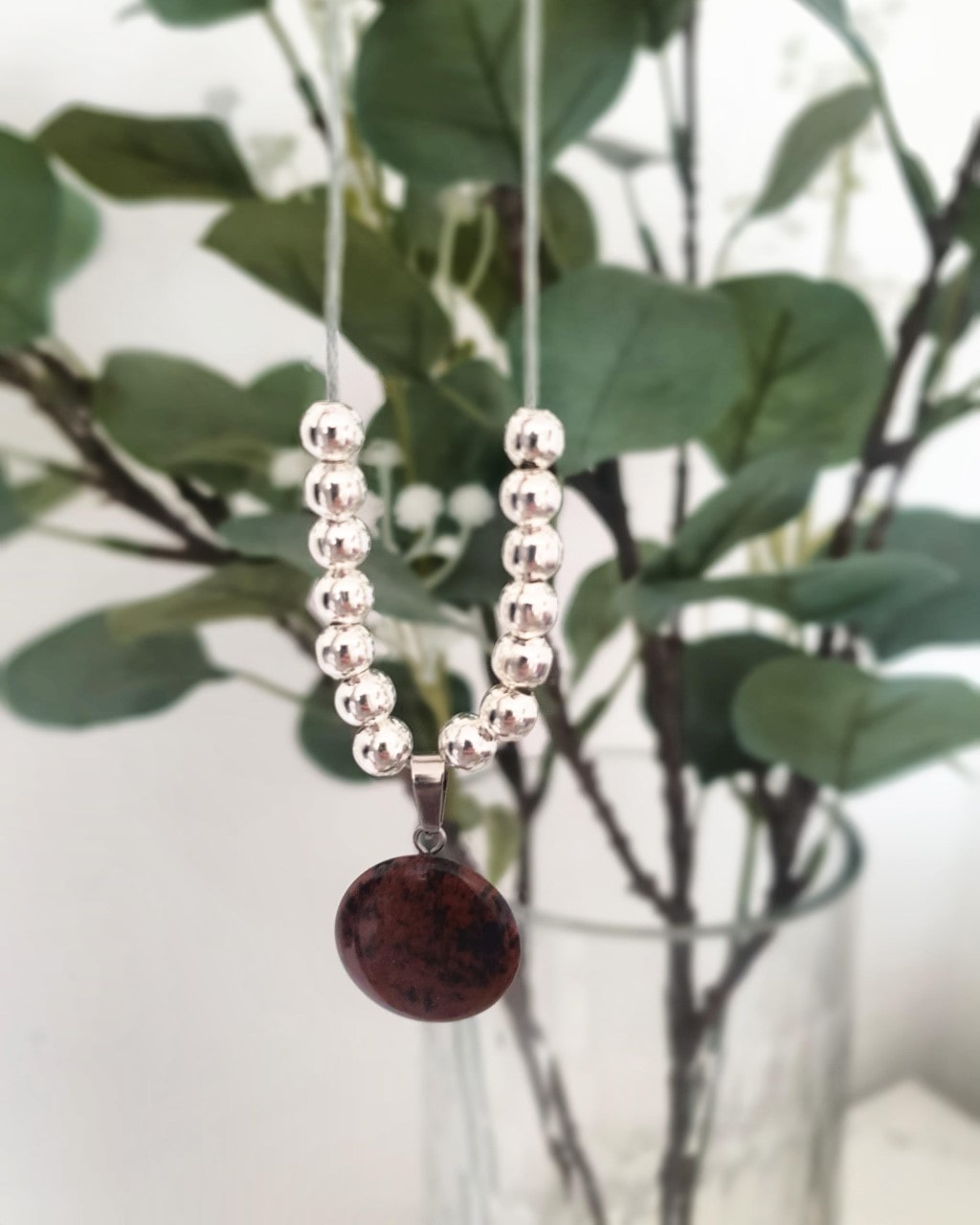
My need to fiddle with something to ease anxiety is always apparent. Earlier this year, I was talking to my friend about making jewellery and how cool it would be to make my own. I have always been into accessories, fashion and jewellery so I said I’d love to make something I can wear and carry with me discreetly but also fiddle with, to stop me from picking so much.
She mentioned worry beads and I was intrigued. I wanted to make my own twist on them. A prettier version, merging them with jewellery design that I would more likely wear, so I did and my life has changed. I have started a small business called Worry Knot.
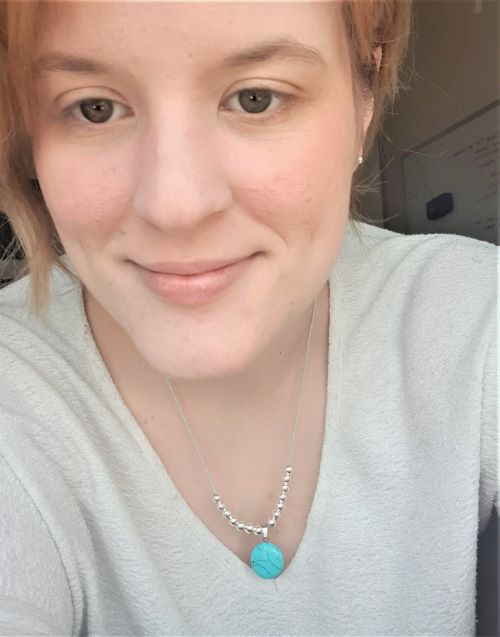
(image: Emma Johnson at Worry Knot)
Alongside selling calming jewellery, I’m blog writing. I’m advocating more widely about the importance of opening up when confusing and sometimes debilitating symptoms develop. Not only is it therapeutic for me to make my jewellery but it’s extra therapeutic playing with this jewellery a few times a day.
Having something to focus on, things to make and to write about has been crucial in managing my own anxiety, especially at such an anxious time for the world. I hope my jewellery can go on to help those feeling anxious not only now but going forward into the future too.
You can also find me @worryknotuk on Facebook and Instagram.
Emma Johnson is a writer with lived experience of mental health issues. She is the founder of Worry Knot, a jewellery brand to help others who have anxiety.
You might feel like a worrier—someone who is unable to let the little things slide, who becomes agitated by small shifts in your schedule, who is kept up at night at the thought of something you said earlier in the day. We all feel worry now and then, but there are people who have an inclination to feel concern and apprehension more than others. If you’re someone who often finds yourself feeling uneasy, fearful, stressed-out, and tense, you might have Generalized Anxiety Disorder (GAD).
Worrying over the Small Things
Are the most basic daily tasks—brushing your teeth, taking out the garbage, commuting to work—stressing you out on a regular basis? Do you find that your usual routine is becoming burdensome, making you feel short of breath and unable to focus elsewhere? If so, it’s likely that you’re undergoing some form of GAD. This is a common symptom of GAD, in that people will become overwhelmed by activities that once were normal, leading them to feel stressed and burdened in the face of small tasks.
Insomnia and Sleep Issues
Whether it’s due to obsessive cyclical thinking or worrying about things that might have happened earlier in the day, there are many people who are kept awake, either unable to sleep at all or regularly disturbed from their sleep during the night. Insomnia can be brought on by various factors, either by an inability to quell your mind prior to going to sleep or increased cortisol levels, which will leave your body in its “fight or flight” mode even at night.
Daily Fatigue
Often as a result of insomnia or poor sleep, daily fatigue can be another symptom found in people with GAD. Without enough rest in the evening, the body and mind will feel sluggish during the day, leaving you exhausted and unable to focus.
Other factors can lead to such fatigue, but they might be wrapped up in other factors of anxiety, whether you are using stimulants such as coffee or alcohol to mentally balance yourself during the day or you are stress-eating unhealthy food as a reaction to increases in overall anxiety.
Upset Stomach and Indigestion
GAD manifests itself in many different symptoms, and some of the most common ones are physical. A common side effect people have when struggling with GAD is stomach distress, including indigestion, constipation, diarrhea, ulcers, and more. Anxiety itself can lead to stomach issues, but, as said above, other lifestyle decisions made while struggling with anxiety can further exacerbate digestion issues, including poor diet, increased alcohol consumption, poor sleep, etc.
Difficulty Concentrating
A common side effect found in people dealing with GAD is the inability to focus during the day. Laboured by concerns, fears, and fatigue, those with GAD will sometimes find it difficult to completely focus on a task without being derailed by some other worrying quality or event.
General Agitation and Discomfort
Quick to become aggravated by general unease and things not going your way? Do you feel ill when attempting to talk in public or in under-populated social scenarios? Are shifts in your daily routine cause for unease and panic? These can all be signs of GAD, as the mind becomes easily perturbed by occurrences and situations it might not expect or want. It’s a struggle to deal with such responses, and it can be difficult to break yourself out of such negative cyclical thinking under such circumstances, but you should do your best to be aware of when such thinking crops up.
Muscle Pain and Discomfort
One side effect of anxiety often not discussed is that of physical pain. Whether it’s muscle tension, tension headaches, hand tremors, chest tightness, or feeling as if you’re unable to breathe, anxiety can lead to detrimental physical responses that might be cause for concern.
Hair Loss and Thinning
Along with other physical effects that anxiety can bring about, one of the more common ones is an effect on hair. GAD can lead to hair becoming thin, brittle, and falling out, both on the head and around the body. For some people already struggling with genetic hair loss, anxiety can lead to hair loss and thinning becoming increasingly worse. Thankfully, there are treatment methods available to facilitate hair regrowth, so you shouldn’t be too worried if you notice the first signs of thinning.
Panic Attacks
You’re likely to know a panic attack if you’ve ever experienced one. Brought about by an intense feeling of fear, unease, and physical symptoms, panic attacks can be a debilitating response to extreme anxiety. The level of response will depend on the person and the level of anxiety, but they are serious reactions to the feeling of a perceived threat. Please reach for medical support from a doctor, if you need it.
Self-Deprecation
If you are regularly feeling down on yourself, feeling as if you cannot meet the standards of perfection or do not match the image you have of yourself, you might be struggling with anxiety. GAD can often leave people obsessed with a self-described definition of who they should be, and anything beneath that can be a never-ending cause of compounding insecurity. If you feel as if you don’t look good enough, aren’t performing as well as you should, or are unsure of your general abilities at work, school, or elsewhere, these underlying feelings might be brought on by anxiety.
While some of these signs can be symptoms of generalized anxiety disorder, it is important to remember that we shouldn’t self-diagnose ourselves with general mood disorders. If you’re concerned that you might have GAD, you should meet and discuss these symptoms with your primary care physician (in the UK, GP) or a therapist—someone who can provide you with a diagnosis and thus help you alleviate said symptoms for the betterment of your mental health.
This unsponsored guest blog was written by Capillus at www.capillus.com , a hair loss treatment brand with medical expertise.
‘The only thing constant in the world is change‘- India Arie
In the past few weeks, it hasn’t been the easiest of times. My anxiety has come back on some days, leaving me feeling pretty low and unable to do certain tasks. However, as each day passes it is slowly improving and I am looking towards the future, both in my life and career.
I am making the transition again to being self employed. For me, this is difficult to blog about- but as we look towards the Jewish New Year, I am holding on to hope.
Hope that all will improve.
Hope that good things are on their way.
Hope that the light is coming back again.
My book will be published in just over a month’s time and I am so excited to hold the paperback in my hands! Thank you everyone who pre ordered the book and made it into a best seller.
I am grateful for every blessing that has come my way. I also have more writing projects planned, stay tuned for further details :). I know it all will lead to good in the end.
I’m currently looking into therapy and further support- EMDR therapy if possible, which helps to process trauma through rapid eye movements and images.
Everything will work out for the good, just some days it is hard to see. A note to self: keep positive and keep going. Good, happiness and dreams are on it’s way even if temporarily hidden.