I was delighted to collaborate with JTeen mental health support helpline and service for Jewish teens and young adults aged 11-24, on a podcast talking about my journey with bipolar disorder and social anxiety. I did this to help others and encourage people to seek help, and show its OK to talk about mental illness.
You can watch the podcast here, please watch with care: Trigger warning: discusses suicidal ideation, psychosis, mania, being sectioned under the mental health act and depression. Suitable for 18+
I decided to do this podcast to fight stigma in the Jewish community in London and worldwide and educate people about bipolar, especially parents as it started for me at the age of 15.
Thank you to Yaakov, Tehilla and Michal for making this such a relaxed but important conversation.
Addiction is so intricate and multifaceted that in the face of extensive scientific research, there are still myths and misconceptions about it that often get in the way of treatment. They cause stigma that keeps people from getting help for fear of being labelled as ‘bad’ or ‘weak’. But, to win the fight against addiction, we have to confront some common misconceptions to create an environment that empowers people and encourages them to get treatment for successful recovery. Here are some of the top misconceptions about addiction:
5 Common Misconceptions About Addiction
(image: Pixabay)
Myth1. Addiction is by choice: If a person is addicted to something, it’s because they chose to be, and it’s their fault.
The truth is that no one chooses to become addicted—addiction is a brain disorder. The American Society of Addiction Medicine describes it as a treatable chronic disease that is a result of the interactions between the brain circuits, upbringing, trauma, environment, and genetics. Heavy and prolonged substance use interferes with the brain networks and increases the likelihood of becoming addicted.
Nevertheless, a choice can influence the recovery journey. The person may choose to seek help dealing with addiction through addiction therapy, exercises, symptoms treatment, and other lifestyle decisions.
Myth2. It just takes willpower to stop: Addiction results from a lack of willpower, if the person wanted to stop using badly enough, they would.
Sadly, a person cannot ‘will away’ their addiction, and it does not result from a lack of willpower or self-discipline. Drugs, alcohol, and other substances produce profound brain changes that alter the natural reward system.
Typically, mental rewards come only after exerting effort, and this takes a while. But, the addictive behavior shortcuts this process and gives the brain pleasure early on. When the brain is used to early results, the person’s self-control and capacity to make good decisions is eroded and replaced with the impulse to engage in rewarding behavior.
The substance-induced impulses are not like the usual urges to eat or drink. They are overwhelming and compulsive impulses whose resolution is only engaging the addiction. It’s the reason why addiction appears irrational in that a person will keep using it even when things are falling apart around them.
Myth3. Tough love compels people with addiction to stop: If you are harsh with the individual, they will understand the seriousness of the issue and feel the need to change.
With addiction, ‘tough love’ is not the answer. Being harsh, insensitive, or indifferent may cause the person to feel unworthy, demoralised, and rejected. It typically produces the opposite results of what was intended.
The better way to address addiction is to take a kind and compassionate approach. The reality is that the majority of people with an addiction are usually contending with other struggles and use addiction to compensate. For example, many people with an addiction struggle with feelings of rejection, and pushing them away with ‘tough love’ only aggravates the underlying problem. However, love, kindness, and support can pull the person closer, address the underlying problem, and start them off on the addiction recovery journey.
Myth4. Addiction does not really go away: An addict will never be truly free. Once an addict, always an addict.
Addiction is a complex condition, and recovering from it takes time. It can indeed be a chronic condition, but even then, the individual can still recover. Addiction is not a life sentence, and there is always hope to get back on a healthy path and live a fulfilling life.
Regardless, it’s normal to have some recovery setbacks. Although it doesn’t happen with everybody, relapsing and returning to substance use after abstaining for some time is normal. But this is not a sign of failure. Instead, it’s an opportunity to discover what is not working in addiction therapy and to restrategize the treatment. Every person is unique, and the relapse provides a chance to understand the unique factors that drove the individual to relapse and helps with formulating strategies to prevent another relapse in the future.
Myth5. You must abstain to recover: The only way to recover is to keep off the substance completely.
The truth is that recovery means different things to different people. Abstinence is only one form of recovery and not the final destination for all people. Moderating use so that substance reliance no longer interferes with a person’s productivity or relationships is also recovery. Some people are only looking to reduce substance use, while others are only looking to use a less harmful substance. From there, these people watch their consumption or wean themselves off, even without treatment.
So, instead of insisting on abstinence or giving a timeline for a complete cessation of use, understand that recovery from addiction is a journey that some reach pretty quickly while others take small steps and a long time to get to the same destination.
Addiction Recovery Can Be Made Easier
Addiction is difficult to resolve, and it doesn’t help that there are many myths and misconceptions surrounding it that further complicate the recovery. But, through education and awareness on addiction and recovery, and showing love, support, and empathy towards the individuals, society can make the recovery journey easier.
Addiction therapy is a particularly useful recovery tool because it sets the individual in an environment where the people and the programs support recovery. Sign up for therapy and start your path to recovery today!
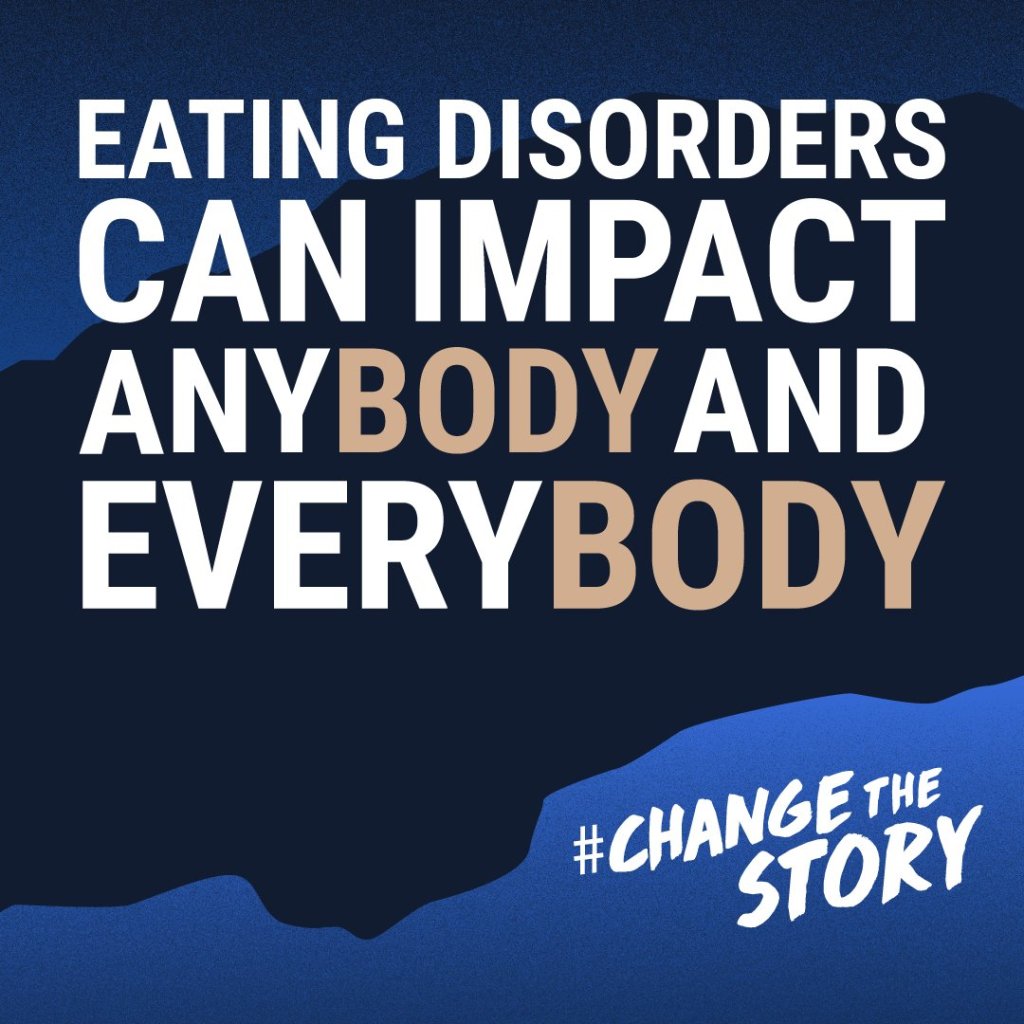
#ChangeTheStory and Anybody and Everybody is a new campaign launched this month by The Hearts Minds and Genes Coalition which is chaired by Multi-Award winning campaigner and Author, Hope Virgo. Hope is a friend of mine who has campaigned for years for help for those with eating disorders and she is a force to be reckoned with and an amazing woman!
Eating disorders are serious, biologically based mental illnesses deserving of equal clinical and research funding to that given to other complex diseases. They want to ensure that no-one with an eating disorder need experience shame or guilt, and everybody should have timely access to specialist services.
Author and Multi-Award winning campaigner, Hope Virgo who chairs the coalition says;“When we think of eating disorders we often immediately think of a white teenage, emaciated girl and fail to realise that eating disorders are so often hidden in plain sight amongst all ages, genders races, ethnicities, body shapes and weights, sexual orientations and socio-economic statuses. The campaign is working to remove the stigma and misunderstanding that surrounds these illnesses, ensuring that nobody should experience shame or guilt for suffering from an eating disorder and to make sure that everybody has prompt access to specialist services.”
(image on Twitter: Change the Story campaign, Hope Virgo and FEAST outside the Houses of Parliament)
Eating disorders are not new illnesses, but there has been a massive rise in cases during the pandemic. Unacceptable delays before treatment means we are also seeing a rise in avoidable chronic long-term illness and loss of life. We need to ensure that we are no longer hiding behind the global pandemic but ensuring that the right support is in place for everyone because no one should be dying of an eating disorder in 2022. They are working to remove the stigma and misunderstanding that surrounds these illnesses, ensuring that nobody should experience shame or guilt for suffering from a biologically based illness and everybody should have timely access to specialist services.
To raise awareness of the campaign they have created a video supported by Instagram. For a long time, people have used Instagram to challenge stereotypes about body size, share their journeys with overcoming body image issues, and celebrate different body types.
Renee McGregor, leading Sports and Eating disorder specialist dietitian said;“We need to change the images, narrative and practices presently associated with eating disorders in order to ensure that no further lives are lost to this illness in 2022 or beyond.”
Suzanne Baker, CarerRepresentative for F.E.A.S.T. (www.feast-ed.org)in the UK, said;“timely access to sustained, specialist treatment is key to recovery from an eating disorder at any age or stage. Currently too many people are not able to access this treatment often due to misconceptions about what an eating disorder ‘looks’ like. There is no one look – eating disorders are serious biologically influenced illnesses and are often hidden in plain sight.
Dr Agnes Ayton, chair of the Eating Disorders Faculty at the Royal College of Psychiatrists, said: “No one chooses to have an eating disorder. An eating disorder can affect anyone at any age and can be caused by a range of factors including genes, mental or physical health conditions and social pressure. The stigma around having an eating disorder prevents many people from asking for help when they need it. No one should feel embarrassed to ask for help. An eating disorder can have very serious long-term effects on the body, but with treatment, people can fully recover. Raising awareness of this issue is an important first step in helping people to get the help they need. If you think you may have an eating disorder, speak to your GP who can refer you to a specialist counsellor, psychiatrist or psychologist. You can also visit the NHS Choices website to find out what additional support is available, including confidential helplines.”
Gerome Breen, Professor of Psychiatric Genetics at King’s College London says: “Research and its dissemination are essential to dispelling the unhelpful myths and stigma that surround eating disorders and compound their long-lasting and devastating impacts. By understanding more about why and how eating disorders develop we can improve society’s conceptualisation of these conditions and hopefully enable more people to seek and receive the support they need.”
(image on Twitter: Jeremy Hunt MP with Hope Virgo)
You can help by posting a selfie to support this campaign with the hashtag #changethestory.
Watch the video here to discover more about the campaign:
Disclaimer: All medication must only be prescribed by a psychiatrist or GP dealing with you individually. Advice from medical professionals must be sought before taking any medication., Never take someone elses medication or try to cure yourself!
This week, I had a conversation with someone about being on mental health medication, in this case, anti depressants for clinical depression. We reminisced that as teenagers, we just weren’t taught properly by school or in society about mental illness. It wasn’t talked about here in the UK back in the 2000s and everything was really hushed up, cloak and dagger, as if you had to be ashamed of it. As if anything to do with our mind was shameful- no one really had much education, unless it happened in your family.
I know that for many people, even in 2022, taking medication for their mental health carries this sense of shame.
For me personally, I was so ill that there really was no choice for me as a 15 year old, but to be started on medication. My symptoms of bipolar disorder first appeared at the age of 15 with depression and anxiety episodes, followed by mania and psychosis. So, I was on anti psychotic medications as well as what is known as a mood stabiliser, a medicine for mood disorders that stabilises moods (in this case, the bipolar poles). I also took regular anti depressants and anti anxiety medications and still do daily. My medicine regime is pretty intense but it means that my bipolar is well controlled and in remission- and that I am stable. My family has a hereditary illness that can be severe- so medication was the right choice for me.
However, for those without a severe mental illness like bipolar or schizophrenia, you may be recommended to try anti depressants first. There are varying different types which work on seretonin reuptake in the brain and help to balance brain chemistry.(although scientists cannot pinpoint the cause for depression fully yet). These can be used in combination with therapy and exercise to help treat depression and anxiety.
Some families and cultures hold great shame to be seen taking mental health medication and so hide it from loved ones. Others stop taking it, believing they are stable and well because the medication has balanced them out- and then crash into depression. For some though, anti depressants are a shorter term thing. The point is, its all so individual and there is no one size fits all medicine- you must do what is right for your recovery but definitely do not suddenly stop them.
In my family, my Dad was already on mental health medication- Lithium for bipolar, when I became ill. So, I was lucky that I had a loving supportive and accepting family, including plenty of medical professionals who understood. It was a steep learning curve for everyone though. And yes, as a teenager, I did hold some shame for taking medicines because I just wanted to ‘fit in’ and be a ‘normal’ teen. Coupled with the fact no one openly talked about mental illness at school or in general (this was just before social media!) and I felt this overwhelming sense of shame that my brain chemicals had let me down. I never once skipped taking medication though.
The thing is with mental health is that you can’t see it. But, you can absolutely feel when something is wrong and when you feel chemically depressed or other mental illness. This is usually depression unlinked to a life event- you wake up with it and you know its back, you feel despondent and unable to cope.
Yet, because you can’t see it- shame is even greater because how do you explain it to others? And are you ‘weak’ or ‘crazy’ to need medication to function?
The answer is No. To have to take the correct prescribed medication for you daily is an effort. You have to commit to it and to seeing how some medicines go. To go through episodes of mental illness makes you stronger and more resilient, surviving each day. You are not weak, your brain just needs help (like helping diabetes or a heart problem) and the words ‘crazy’ or ‘unhinged’ just serve to reinforce stigma. There is no need to be afraid or filled with shame or self loathing- but it is valid to feel this way as you are human!
In 2017, it was estimated that 792 million people worldwide lived with a mental health disorder (one in 10 globally). 46 million of those had my disorder, bipolar. However, this is the tip of the iceberg because mental illness is often underreported due to stigma. So- you are not alone. There is treatment out there to help you.
Remember not to be ashamed of needing medication to cope with life’s challenges (alongside therapy etc). The stigma is slowly falling and I will continue to write and share to this end.
You are not weak! You are powerful beyond comprehension . Do you take medication? Does it help you?
Dealing with mental health problems is tough, especially when there is a stigma. ”Man up? Why don’t you man up?!” (you don’t need to). However, you get to a point where you strike a balance that lets you lead a healthy and productive lifestyle. You’re on an even keel, which is essential as it stops the intense emotions and feelings.
Still, this isn’t the end of your journey. Once you get to a point where you feel you are on top of things, you might want to help others reach the same summit. After all, there’s no greater sensation than giving back. Here’s what you need to do.
Reach Out
You understand the warning signs better than anybody because you’ve been through the ordeal. You also know that people who are finding life difficult tend to bottle up their emotions and push them deep down. As a result, the likelihood of a fellow sufferer reaching out isn’t realistic. Instead, they’ll suffer in silence. Reaching out can be as basic as asking them if they are okay, or letting them know that they have a shoulder to lean on if they want. And, with the development of tech such as Zoom, you don’t have to be in the same room to eliminate loneliness or anxiety.
Share Your Story
Be honest – did you open up to anyone who asked about your issues? No, because it’s tough when there isn’t a sense of empathy. People who haven’t experienced what it’s like don’t understand, making it hard to relate to the pain. You’re different. Having dealt with it, you are better positioned than anyone to offer advice. Of course, they don’t know that until you share your story. Revealing what you went through will encourage them to trust you, ensuring your advice doesn’t fall on deaf ears.
Make It Your Career
If you love helping others and have a passion for mental health, you should consider turning it into a career. Your experience makes you well placed to get to grips with the complexities of the industry, and the advancements in technology mean it’s easier than ever to become certified. Becoming a counsellor is never a walk in the park, but some features make it simpler to juggle. For example, attending an online course instead of being on-campus. Or, doing it part-time to ensure it doesn’t overwhelm you and get in the way of your routine. You’ve got something to offer, so don’t be afraid to show it!
Be Flexible
Due to your success story, you will want everyone to try the method you used because it has had positive results. That’s perfectly acceptable since people draw on their experiences when helping others. However, no two individuals are the same, which means you must be flexible when providing your opinions. Sure, you can lead with what assisted you, yet it’s essential to keep an open mind and encourage whatever makes them happy. Also, never guarantee anything as there are no sure things with mental health.
It’s a process, an unpredictable one with lots of twists and turns, so you need to be prepared for ups and downs.
As some of you will be aware, back in 2017-2018, I helped as a volunteer with fellow volunteers (Lisa Coffman and others) to found the Mental Health Awareness Shabbat (Jewish sabbath) in our communities across the country here in the UK. The initiative, led by the mental health charity Jami and conceived by Rabbi Daniel Epstein, now runs in 150 Jewish communities.
This year, my dad Mike and I were delighted to be asked to share our father and daughter journey with bipolar disorder to Chigwell and Hainault Synagogue.
I have social anxiety- which includes at times a fear of public speaking. In December, I had a breakthrough, where I spoke for a short time at a conference called Limmud alongside my Dad and read from my book Bring me to Light. So, when we were asked to do this talk at Chigwell, I felt it could be possible.
I armed myself with the fact that I knew kind people in the community including the Rabbi and his wife and friends of my husband Rob (its the community he grew up in). I also wanted to share my story to help other people.
So, we stayed with a lovely lady in the community and had friday night dinner with the Rabbi and his family. On Saturday morning, I woke up feeling a little nervous but took my trusted anxiety medication for when I need it- Propranolol, and walked to the synagogue with Dad.
I managed not to have a panic attack and the thought of speaking to help others got me through (as did distraction, deep breathing and drinking a glass of water).
So, at the end of the service, we were called up to speak. Dad went first and talked about his journey with bipolar disorder from when it started for him in 1991 to finding recovery. Then, it was my turn.
I stood up there in the pulpit speaking to a packed audience with a prepared speech. I felt scared but also empowered and began to relax into the talk. I knew that by sharing what happened to me, being sectioned and so ill and talking openly, that I could break stigma and touch others. I was also so proud of my Dad for speaking so openly.
It was only after, when talking to people after the service, that we realised that about 150 people came to listen to our talk! We had some important conversations with people after our talk including someone very newly diagnosed and someone else whose niece had bipolar and is currently very ill.
I couldn’t and still can’t believe I was able to do that. However, since I have been very tired so trying to de-stress and rest as much as I can!
We just want to thank everyone who came to hear our talk and supported us, to every person who thanked us for coming and shared their stories with us. We are so grateful for such a positive reception and thank Rabbi Davis and the Chigwell community for having us.
The Mental Health Awareness Shabbat has had events in communities all across the country. It runs yearly and you can find out more here
Tomorrow, join in and learn what you can about bipolar disorder.
As many of you know, I have bipolar 1 disorder and when not on medication, have episodes of high mood- mania/ psychosis and low mood- severe depression. Thankfully I am in recovery but it affects so many people and is thought to run in families.
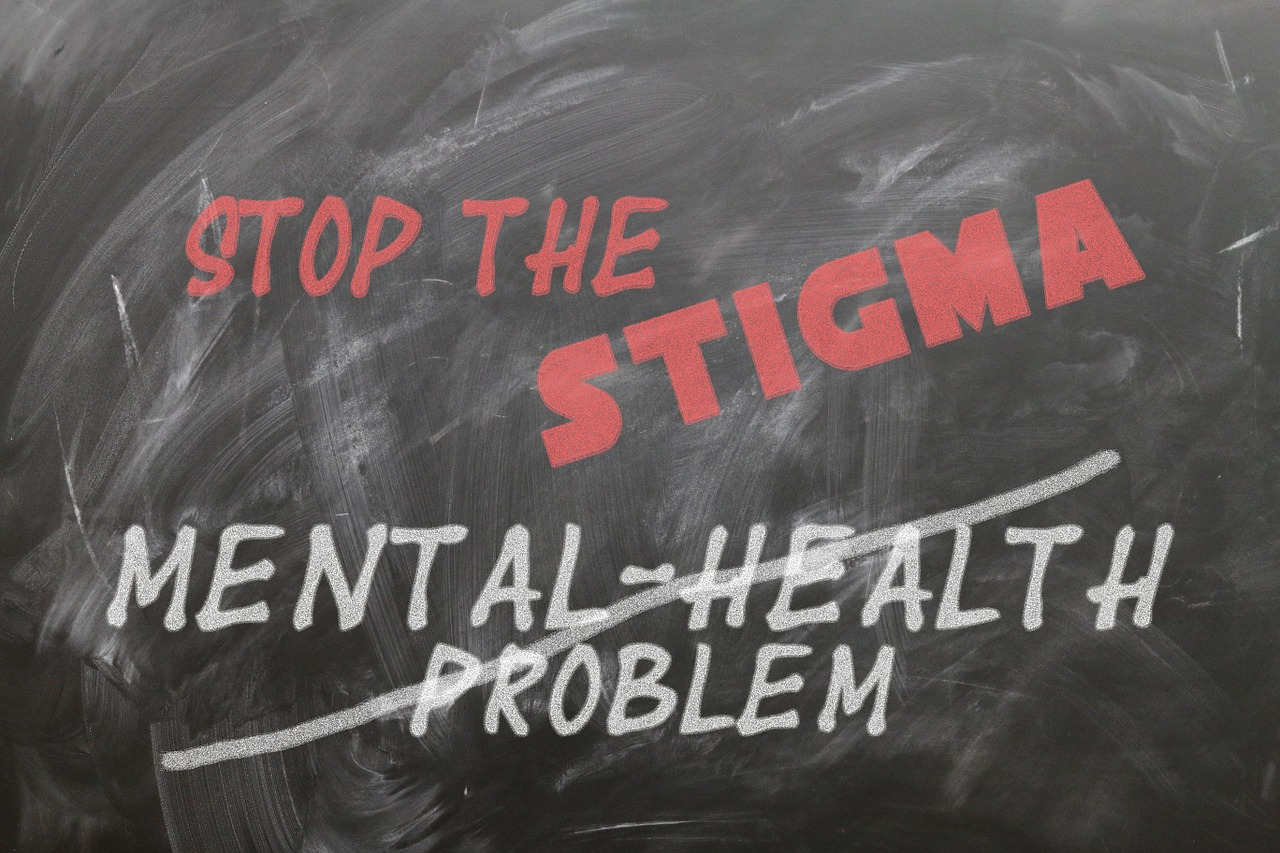
Stigma is a mark of disgrace that sets a person apart from others. When a person is labelled by their mental illness they are often no longer seen as an individual, but as part of a stereotyped group. Negative attitudes and beliefs toward this group create prejudice, which can lead to negative actions and discrimination.
The sad truth is that mental illness is widely misunderstood. Those who suffer have been called names, been blamed for their condition, and isolated. Stigma, and the feeling of shame that it brings, often prevents people from seeking help and treatment for their disorder, even when it is desperately needed. It is crucial that all of us in the mental health community raise our voices and fight to eliminate stigma. If you are not sure where to get started, here are some of the best ways you can work towards reducing stigma in your community.
Ways to Reduce Stigma
1. Become educated and teach others about mental health
Educate yourself about mental health needs so that you are best equipped to discuss them openly! By learning the facts instead of the myths, you will be able to educate others. As you learn more, keep an eye out for opportunities to pass on the facts with friends, family members, or coworkers. If you see someone struggling, encourage them to seek the help of a professional therapist.
2. Encourage equality between physical and mental illness
Unfortunately, not everyone sees mental illness as important as it is, which is why it is so widely misunderstood. People would never shame someone who has the flu, so why does this happen with mental illness? Reminding people of the equality between physical and mental illness is a great way to reduce the stigma and find parity of esteem!
3. Show compassion and get involved
Always remember to treat people who have mental health problems with dignity and respect. Think about how you’d like others to act towards you if you were in the same situation. A simple act of asking a friend or family member how they are doing can make their day and remind them that you care. One of the best ways to show compassion within your community is to get involved with a local non-profit organization that’s working on Stigma Free initiatives!
4. Fight stigma when you see it
You probably see and hear stigma in the public more than you realize. Start paying attention to situations that might be perpetuating this. For example, if you see something online or out in your community that sheds negative light on mental illness, take action and say something rather than turning the other way. Make sure your words and language come from a place or caring and concern, rather than confrontation.
It is so important to the mental health community that progress is made in eliminating the stigma that still surrounds something everyone deals with in one way or another – mental health.
By coming together to fight this common cause, we can make a global impact on how disorders are perceived in society. No matter how you contribute to the movement, you can make a difference by following just one of the tips above and committing to live stigma free!
Author Bio
(image: Brandon Christensen)
Brandon Christensen is a passionate business leader and mental health advocate who is on a mission to leave the world a better place than he found it. Brandon is the co-founder of Modern Therapy, a tele-mental health company. Brandon has been featured as a keynote speaker onmental health topics at colleges like NYU, Skidmore College, and Columbia University. He holds a bachelor’s degree in Business Administration from Ramapo College of New Jersey.
It was googling the official term of ‘adversity’, it’s one of those words that I know exactly what it means, but it is hard to put into words. The Oxford dictionary defined adversity as “a difficult or unpleasant situation.”. It made me think, that is exactly how people see me when I talk about my life with mental illness. Because living with any mental health disorder is seen as ‘difficult’ or ‘unpleasant’ by those who maybe do not understand and who are afraid.
I have certainly been treated differently due to the way I am affected by my anxiety and depression. I was bullied for being introverted, judged for being worried and insulted for things that were deemed ‘lazy’. I was being defined by an illness that I did not understand fully myself, but one thing I have learned today, is that I have never and should never be defined by my mental illness.
I still have to battle adversity in my day to day life, when I explain that I cannot work because I am still dealing with trauma from my previous job. I deal with the adversity that comes with being a person who attempted suicide and who also lost her dad to suicide. I have to constantly challenge the adverse responses that come when I talk about my mental health to a doctor, to a professional and most of all, to the world.
I am an open book today, you can google me and find so many different stories about my mental health. I try not to hide the way that I feel inside because I know that I am only human. For the most part, I am met with support and my heart even flutters each time someone tells me that my openness has helped them; because that kind of thing is priceless.
However, I get a fair amount of hate from people who have never met me, or who just haven’t taken the time to understand me. I am still being forced into this box where I am seen as this monster, or this ‘snowflake’ (one of the more horrendous terms used to attack people with mental health recently).
I have days where I want to delete my Twitter account, remove my blog and change my name, on the worse days I even consider leaving my own country so that I can go completely off-grid. Unfortunately for the people who feed the stigma and adversity, the trolls of today’s world, there is a bigger part of me that feels almost inspired by the judgement I get.
Because each time a person judges my mental health, I am given a reason to fight.
Overcoming adversity is not easy, and it is so hard to break free from the labels that attach to living with a mental health condition. I may always be anxious and depressed but that isn’t a problem, it doesn’t make me a problem. It’s overcoming the responses to said conditions and fighting the stigma, because the stigma is where the problem lies.
I am no idol on how to challenge stigma and adversity, but I do try my best. All I have learned is that people will judge you, no matter what you do. But what the way you decide to judge and define yourself is what will limit the amount of negative stigma that exists around your lifestyle.
The only advice I can really give, if you want to overcome adversity, is to find the confidence to raise your voice, share your opinions, but always, always, be kind and considerate. If you decide to keep your feelings to the confines of your diary or your loved ones, that is okay because you are making positive changes in your home. If you share it with your community or around the world, that’s ok too because one more voice only adds to the group of people who are fighting for your same belief; there is power in unity.
I know that the one thing that has helped me the most, and has kept me fighting for my right to be treated with the dignity and respect that every person deserves, is the support I get from my own online community.
People with bipolar disorder face a major problem in maintaining a good job performance at work due to frequent mood shifts (from high moods to extremely low moods). High moods are characterised by mania and hypomania. On the other hand, low moods are characterised by depression. These mood shifts create several types of challenges in the social, professional, and personal life of the people.
Bipolar disorder can make it very difficult for a person to get or keep a job especially if the symptoms are hampering day-to-day functioning, and if they also have anxiety.
In a recent survey, it has been found that 88% of the individuals with bipolar disorder face problems in maintaining a decent work performance. Around 58% of the people have stopped working altogether.
It’s a fact that bipolar disorder brings many challenges that can hamper work productivity. However, qualified psychiatrists specialising in bipolar disorder say that it’s possible to get and maintain a job while having a bipolar disorder by following a few tips. Let’s talk about them today.
How to get and maintain a job with bipolar disorder
1. Don’t volunteer to disclose your medical information to the employer during the interview. Employers have full right to decide if you can do the job properly. But they can’t ask confidential questions to you.
2. As per the Americans with Disabilities Act, (and other disability legislation around the world like her in the UK), employers can’t force you to give a medical exam or check your medical records. They also can’t ask you questions regarding your medical history. Moreover, this Act forbids any kind of discrimination on the basis of perceived or actual disability. So it’s better you read the rules and regulations of this Act before going for a job interview.
3. Try to avoid talking about your past. Instead, talk about your current capability of doing a job properly.
4. Ask about health insurance after getting a job. Just review the benefits information before accepting the job officially.
5. If your mental illness becomes an issue for the employer once in the job, then bring a letter from your psychiatrist that gives a general outline of the treatment you’re undergoing. Request that the psychiatrist issues a letter where it’s clearly written how much you can cope with at work. You can read the letter before giving it to the employer.
How to keep a job with bipolar disorder
It’s a myth that you can’t be successful at work with a bipolar disorder. There are several things you can do to control your mood swings and manage your work. Let’s talk about them in detail now.
1. Take medicines as instructed: Even if you’re extremely productive during a manic high, don’t skip your medicines. That is not advisable as you can become unwell too with your mania. Don’t stop taking medicines even when you feel well for several months. Remember, medicines keep all your symptoms under control. When you stop taking medicines, your symptoms can reappear and aggravate your mental illness.
Bipolar disorder medications have some side effects. Some medications cause drowsiness. This makes it quite difficult to focus on work. Speak to a psychiatrist specialising in bipolar disorder about this issue if you feel too sleepy at work. Ask if you can change the time you take the medication. Learn about the various strategies to combat drowsiness so that you can give your 100% at work.
2. Relax a little bit: Take short breaks between work regularly. Take a short walk during the lunch break. Listen to music that uplifts your mood. Take deep breathing. All these things help you to relax, especially if you are low or have anxiety .
3. Lead a healthy lifestyle: Exercise regularly to keep your mind and body fit. Eat healthy and nutritious food. Have adequate sleep at night. If possible, try to sleep for 8-12 hours at home. Try to avoid eating unhealthy food. A healthy lifestyle can help you manage bipolar disorder both at home and work, by making you feel at your best.
4. Organise your tasks: Bipolar can at times interfere with work functioning.This means your mind may not cooperate with you on a regular basis. Try to organise your tasks. I
Create a ‘to-do’ list on the Google calendar and check if each task has been completed. Whenever you fail to finish a particular task on a specific date, move it to the next date on the calendar. This way you’ll remember about the unfinished task. Divide big projects into small tasks. It will be easier for you to manage them.
If you are struggling, you can speak to your work HR if they are understanding.
Should you inform your employer? The eternal dilemma
Let’s accept it. There is a social stigma attached to mental health, however many employers are becoming more understanding and the stigma is lessening. Your medical information is something confidential and private. Obviously, you may not want to share it with everyone. You don’t need to talk about your mental health openly at work if you don’t want.
However, if your boss or line manager is cooperative and a good human being, then you can have a conversation with him or her. When you need to take leave for doctor appointments, your boss will understand and give you a day off without issue.
Conclusion
Don’t panic. Don’t feel that you’re less than anyone because of your bipolar. Your mental disorder doesn’t define you. Your work is not the only thing you have in your life. Spend quality time with your friends and family and volunteer to help others.
If you have a good conversation with your employers and/or your doctor/ occupational health, you may be able to manage at work.