5 Effective And Healthy Strategies To Work Though Grief by Lizzie Weakley.

(image: Nick Hewing: Unsplash)

Losing someone dear to you can be emotionally and mentally draining, and at times, it can all feel overwhelming. Grief is a normal response to loss, and while it may seem challenging to find a way forward, there are several strategies that can help you work through it effectively and healthily. This blog post will look at five effective and healthy strategies that can help you work through grief, including counselling, self-care, and finding a support system.

Grief Counselling

Grief counselling is one of the most effective strategies to work through grief. At counselling, you can talk about your feelings, thoughts, and emotions about your loss, which helps you to understand your grief and find ways to work through it healthily. A counsellor can provide you with a safe space to explore your thoughts and feelings, learn coping techniques that work for you, and offer helpful suggestions to help you move forward. You could also consider joining a bereavement group, where you can listen to others and share your experiences of grief.

Self-Care

Grief can take a toll on your physical health, both emotionally and mentally. Practicing self-care is essential in helping you work through your grief effectively. Ensure that you take time to care for yourself by getting enough sleep, eating well, exercising, and engaging in activities that make you feel happy and fulfilled. Engaging in mindfulness practices like yoga, meditation, and deep breathing exercises can also help you feel calm and reduce anxiety.

Find a Support System

You don’t have to go through grief alone; surrounding yourself with people who care for you can help you manage and work through your grief healthily. You can find a support system in close friends, family members, or professional caregivers like hospice workers. The support system will offer you an ear to listen to, a shoulder to cry on, and will help you to continue with your day-to-day activities.

Journalling

Writing down your emotions and thoughts about your loss can be cathartic and helpful in working through your grief. Journalling helps you to identify and understand your feelings, and it gives you an outlet to express your emotions without fear of judgment from others. By exploring your emotions through writing, you can heal your emotional pain and find a way forward.

Seek New Experiences

The loss of someone or something dear to you can make the world seem dull and uninteresting. However, seeking new experiences can help you work through your grief. As scary as it may seem, engaging in new activities or pursuing new hobbies can distract your mind from your grief and help you get back to your normal routine. New experiences can offer you a sense of fulfillment, joy, and purpose.

Everyone grieves differently, but it’s vital to find a strategy that works for you and helps you work through your grief healthily. Grief takes time, and it may be a bumpy road, but with time, you can find ways to move forward while still remembering and loving the person you lost.

Hopefully these five effective and healthy strategies will offer some guidance to those who are mourning and trying to work through their grief. Remember that it’s okay not to be okay, and seeking help is a strength, not a weakness.

This blog was written by freelance writer Lizzie Weakley.

Feeling Low? Here’s What Can Help You Regain Control Of Life.

(image: Pexels: Temo Berishvili)

Each of us is our own worst critic and enemy when it comes to matters of the heart. We judge ourselves more harshly than others and when we set standards for our lives, they can often feel impossible. We listen to our own inner voice more than others and when we are overly critical, we’re actually approaching situations and life all wrong.

Who else do you listen to that tells you you’re bad at things? Probably no one else because no one will criticise you more than you do. When you’re feeling low, it can really help to do all that you can to feel better in yourself. You need to feel like a success!

For example, if you don’t own a business, being accomplished could come from studying hard in something new. If you do own a business, you could feel more accomplished with the help of the create chatbot feature you can add to your website – that accomplishment comes from knowing you’re offering value to customers. Things like this can make you feel fantastic about yourself, which is what you should try to achieve at all times.

So, how else can you feel more accomplished, when you’re feeling low?

Consider where you are in life.

How far have you come in life so far? It doesn’t matter where you are right now, you will have come far in life and you have to think about the journey you’ve undertaken. From a personality and mental point of view – even a physical change – you have changed and grown as a person and it’s so exciting! You need to own that and be proud of yourself for it because you are the best person to feel that pride

Appreciate who you are becoming.

No matter which pathways you’ve taken in life so far, you have to be proud of the person you are becoming. You have done so many things so far and hit so many milestones!. If you’re running your own business, you might consider that this is a massive accomplishment compared to where you imagined you would be right now.

Learn to be comfortable with you.

Not everyone goes through life feeling comfortable about who they are but you are a strong person who has overcome every negative situation in life so far. What’s to stop you doing this again and again? Nothing! You are the person in charge of your life, and you deserve to feel like you are doing something right. By changing the things you’re not proud of, you are going to mature and grow in ways you couldn’t imagine.

Create stability.

In your job, in your home life and in your relationships, you should do all that you can to feel more stable in life. Being in charge of that stability takes some time but it’s something that will make you feel like you’re winning in life and you deserve that. Pace yourself with it and take each day as it comes. Feeling low will not go away overnight. But by creating stability in areas of your life, this will help you.

If you are feeling low and think you may be depressed, please do go and see your GP and /or a therapist. There is no shame in reaching for help.

This article was written by a freelance writer.

Introducing EMDR Therapy- A Guide For Those New To Treatment by Brooke Chaplan.

(image: Unsplash: Kateryna Hlzinitsova)

Have you heard about Eye Movement Desensitisation and Reprocessing (EMDR) therapy but are not sure what it is or how it works? EMDR therapy is a type of psychotherapy that is mainly used to treat Post-traumatic Stress Disorder (PTSD) and other similar conditions. This form of therapy has been known to produce incredible results in clients with symptoms such as anxiety, depression, and overwhelming fear. If you are someone who wants to know more about EMDR therapy, you are in the right place. This guide explains everything you need to know about EMDR therapy in detail. 

What is EMDR Therapy? 

EMDR therapy is a type of psychotherapy designed to help individuals overcome the effects of trauma and other emotional disorders. EMDR works by reprocessing the negative emotions, memories, and sensations related to the trauma so that they no longer have the power to cause distress. During a typical EMDR session, the client is guided through a series of bilateral eye movements, which induce a rapid eye movement (REM) sleep-like state that enables swift processing of traumatic memories. This form of therapy is client-led, meaning that the therapist guides the client, but the client is in control of the process. 

Who Can Benefit From EMDR Therapy? 

EMDR therapy is an ideal treatment option for individuals who suffer from PTSD and other traumatic or stress-related disorders. However, anyone experiencing emotional distress due to past events, relationship issues, anxiety, depression, and other similar issues can also benefit from EMDR therapy. 

The EMDR Therapy Process 

EMDR therapy sessions typically last 50-90 minutes, and the total number of sessions required varies depending on the individual’s needs and symptoms. An initial intake session is held to assess the individual’s needs, symptoms, and goals. During subsequent sessions, the therapist helps the individual to identify and process the negative emotions and memories related to the traumatic experience. This is done through a specific protocol that involves the client’s recall of the traumatic event and the use of bilateral eye movements to enable swift and efficient processing. The therapy ends when the client reports that the distress related to a specific memory has reduced to an acceptable level. 

Benefits of EMDR Therapy 

EMDR therapy is a unique, non-invasive, and relatively quick way to process traumatic memories and help clients overcome negative emotions. The benefits of EMDR therapy include shorter therapy duration, increased treatment efficiency, less chance of retraumatisation, and more profound and long-lasting results. EMDR does not involve any medications or invasive techniques, making it a safe treatment option for most individuals. 

Finding a Qualified EMDR Therapist 

To ensure that you receive the intended benefits of EMDR therapy, it is crucial to find a qualified EMDR therapist who has the necessary training and credentials. If in the UK, EMDR can be found on the NHS but there are long waiting lists, so you may need to find a private therapist via the Counselling Directory. If in the USA, a certified EMDR therapist should be licensed in their state, have the required training, and be registered with the EMDR International Association (EMDRIA). You can also check online reviews or ask for referrals from someone who has benefited from EMDR therapy. 

EMDR therapy is a highly effective form of therapy that helps individuals process their traumatic memories, overcome negative emotions, and achieve lasting healing. If you or someone you love is suffering from PTSD or other mental health issues, we urge you to give EMDR therapy a try.

By following the EMDR therapy process, working with a qualified EMDR therapist, and staying committed to the treatment, you will be able to live a healthier and happier life. We hope this guide was helpful in introducing you to EMDR therapy, and we wish you the best on your healing journey. 

Brooke Chaplan is a freelance writer.

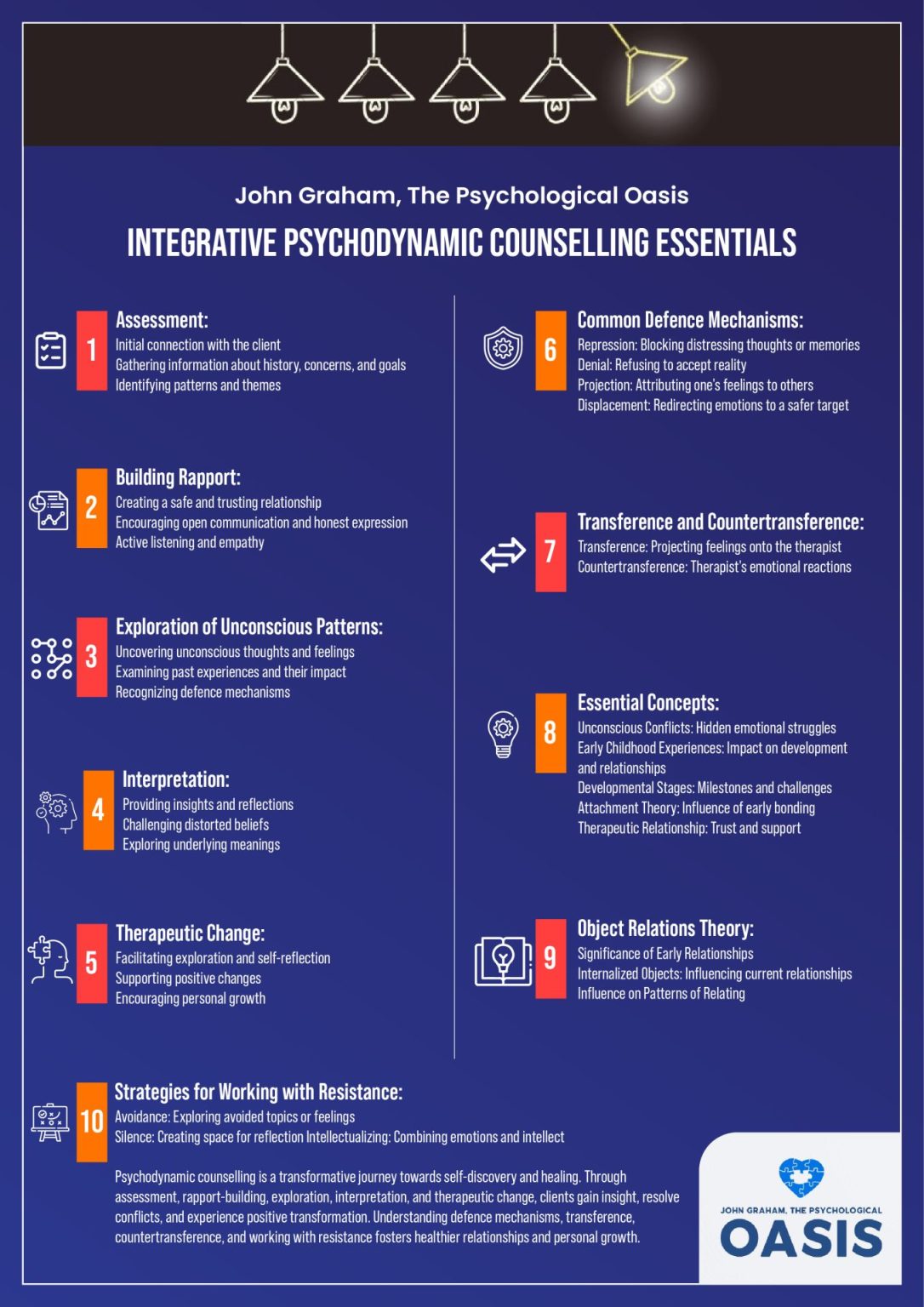
About Integrative And Psychodynamic Counselling : by John Graham.

(image: Shea Rouda: Unsplash)

Psychotherapy is critical to the mental well-being of many. While there is little doubt that psychotherapy is effective, like any other process it must follow a systematic pattern to be successful. There are several stages in this process and understanding them makes any kind of therapy session more beneficial for the counsellor and the person in counselling.

Several major steps need to be undertaken for the cycle of dynamic counselling to become a transformative journey of self-discovery and healing for the participant. The first step is assessment. This is where the counsellor finds out as much as possible about the client. After this rapport will be built to create a safe and trusting relationship between the counsellor and the client. 

Exploration of patterns that may be causing specific behaviors based on past experiences is then done and an interpretation is given. The process also involves a therapeutic change in which the client makes strides toward experiencing personal growth.

There are several other stages that the client may go through which can see them projecting feelings onto their therapist and refusing to accept responsibility. All of these are coping mechanisms that must be worked through during counselling.

During psychodynamic counseling, the counselor will seek to go deeper with the patient so that they can identify traumatic experiences from their childhood and any past unconscious conflicts they have hidden that are impacting their lives today.

If you are looking to learn more about psychodynamic counselling and get an in-depth look at all the stages involved.


Infographic Design By “Unlock Your Inner Oasis with John Graham”

The Power of Group Therapy For Individuals Dealing With Chronic Illness: by Lizzie Weakley

(image: Priscilla Du Preez, Unsplash)

Chronic illness can take a toll on one’s physical, emotional, and mental wellbeing. Individuals struggling with chronic (long term) illness often feel lonely, isolated, and anxious, leading to a decline in their overall quality of life. While individual therapy can be helpful, group therapy can offer additional benefits and support. Group therapy allows people to connect with others who understand and relate to their struggles.

A Sense of Community and Connection

The sense of community and connection that group therapy provides can be incredibly powerful for those dealing with chronic illness. Often, those dealing with illnesses can feel isolated and misunderstood. In a group therapy setting, individuals can connect with others who are going through similar experiences and struggles. This can help reduce feelings of isolation and provide a sense of comfort and understanding, with a qualified therapist.

Learning from Others

In group therapy, people can learn from others who are further along in their journey. For example, someone who was recently diagnosed with an illness may feel scared and uncertain about their future. Hearing from someone who has been living with illness for a longer period of time can offer hope and reassurance and also provide practical support.

Psychoeducation

Some group therapy can provide an opportunity for psychoeducation on chronic illnesses. Members can learn about their illness, medications, treatments, and therapeutic interventions that can help reduce their symptoms. This can give them a sense of control and improve their quality of life.

Better Coping Skills

Chronic illness can be overwhelming and stressful; it often requires individuals to develop new coping mechanisms to manage their symptoms. In a group therapy setting, individuals can learn new coping skills from other members. This can include stress management techniques, mindfulness exercises, and ways to manage pain or fatigue. Learning new coping skills can lead to a reduction in anxiety and an improvement in overall mental health.

Mutual Support

Whilst in group therapy, members can offer mutual support to one another. Those who are having a particularly difficult day or week can lean on other members for support and encouragement. Group members can offer a listening ear or share coping strategies that have worked for them. This provides a sense of comfort and fosters a sense of belonging.

Group therapy can be a valuable tool for individuals struggling with a chronic illness. It provides a sense of community and connection, the opportunity to learn from others, psychoeducation, better coping skills, and mutual support. If you are struggling with chronic illness, consider seeking support through group therapy.

Remember, you are not alone. There are others out there who understand and can support you on your journey. You can also be referred for therapy.

Lizzie Weakley is a freelance writer.

Tips For Finding The Right Psychiatrist For Your Needs: by Brooke Chaplan

(image: free image)

Mental health is just as important as physical health and seeking professional help can make a significant difference in one’s life. But choosing the right psychiatrist can be a daunting task. Finding the right person who understands your needs, and creates a treatment approach that suits you, can be overwhelming. In this blog post, we’ll take a look at some helpful tips for finding the right psychiatrist for your mental health needs.

Ask for Referrals (If Private)

Start by asking for referrals from trusted sources such as family, friends, or a primary healthcare provider if you are going privately. You can’t always choose who you get referred to on the NHS, if you live in the UK but have to trust your GP will refer you to someone good. It’s always a good idea to get recommendations from people who have gone through similar experiences and found a psychiatrist that was helpful to them. Additionally, you could check with your GP or local mental health clinic for referrals.

Check Credentials

Psychiatrists are medical doctors with additional education and training in psychiatry. It’s important to ensure that the psychiatrists you’re considering are board-certified in psychiatry, meaning they have undergone a rigorous training and certification process (in the NHS they will be certified). If going privately, check out their education, training, and professional experience to ensure they hold a reputable degree from a top-rated institution and possess the license to operate.

Consider Experience and Specialisations

A well-experienced psychiatrist would be more likely to handle specific issues than a psychiatrist who is new to practice. You’ll want to find a psychiatrist that has experience in treating the specific mental health conditions or concerns you may have. For example, if you’re dealing with anxiety, you’ll want to seek out a psychiatrist who specialises in anxiety disorders.

Insurance Coverage (For USA/ private insurance)

If you have private health insurance, check with your provider to see which psychiatrists are in-network to help out with the cost of treatment. You may also ask your psychiatrist if they offer a payment plan to make their services more affordable. If in the USA, If you don’t have insurance, consider seeking treatment at community health clinics that offer sliding-fee scales. If in UK, this is free via the NHS but can be a long waiting list, if you are not at crisis point.

Trust Your Instincts

Lastly, trust your instincts. You want to feel comfortable with the psychiatrist you choose, so it is important to ensure that their communication style and methods align with what works best for you. During your first appointment with a potential psychiatrist, pay attention to how the psychiatrist speaks, if they listen to you, and how they react to your concerns. It’s important to choose someone you can feel comfortable opening up to.

It’s important to take the time to find a qualified psychiatrist you feel comfortable with, to help manage your mental health. Referrals from trusted sources, verifying credentials, experience, insurance coverage, and your comfort are all important factors in selecting the right psychiatrist to suit your needs. By keeping these tips in mind, you’ll be more confident in your search for the right psychiatrist.

Remember, seeking help is a sign of strength, and a qualified psychiatric professional can help you feel better mentally, emotionally, and physically.

If you’re in the UK: check out`: https://www.rcpsych.ac.uk/

Brooke Chaplan is a freelance writer from the USA.

Taking Care of Your Mental Health When Living Alone: by Anita Ginsburg.

(image: Unsplash)

Living alone can be an amazing experience. You get to enjoy your own company, have complete control over your home, and create your own unique environment. However, it’s not all sunshine and rainbows. Living alone can also be lonely, isolating, and downright scary at times. It’s even more challenging when we’re going through something that affects our mental health. In this blog post, we’ll discuss some practical tips for taking care of your mental health when living alone.

Create a Routine

One of the biggest challenges of living alone is that we don’t have anyone else to be accountable for. We can sleep all day, watch Netflix all night, and neglect our responsibilities without any immediate consequences. This can lead to a lack of structure and routine, which can have a negative impact on our mental health. Creating a simple routine can help provide some structure to your day and give you a sense of purpose. Start by defining what your day should look like from the moment you wake up until the moment you go to bed. This doesn’t have to be complicated – it can be as simple as waking up at the same time every day, doing some exercise in the morning, working for a few hours, and then taking some leisure time in the afternoon.

Stay Connected

Living alone can be incredibly lonely, especially if you’ve recently moved to a new city or lost touch with friends and family. Social connections are essential for our mental health, so it’s important to stay connected with others in any way possible. Calling or texting friends and family, joining a virtual book club, or connecting with others on social media can all help alleviate feelings of loneliness and isolation.

Create a Comfortable and Safe Home Environment

Living alone can also be scary sometimes, especially if you’ve had negative experiences in the past. It’s important to create a comfortable and safe home environment that you enjoy spending time in. This can include things like decorating your apartment with things that make you happy, investing in a security system, and ensuring that your doors and windows are locked at all times. Feeling comfortable and secure in your home can help alleviate anxiety and stress.

Take Care of Your Physical Health

Taking care of your physical health is crucial for your mental health, especially when living alone. When we don’t have anyone else to motivate us or remind us, it’s easy to fall into unhealthy habits. Eating a balanced diet, getting enough sleep, and exercising regularly can all help improve your mental health.

Seek Professional Help if Necessary

Lastly, if you’re struggling with your mental health, don’t hesitate to seek professional help. Living alone can be challenging, but it’s important to remember that you’re not alone. There are many resources available to help you cope with mental health challenges, including therapy, a psychiatrist, support groups, and hotlines. Don’t be afraid to reach out for help if you need it.

Living alone can be an amazing experience, but it’s important to take care of your mental health when living solo. Creating a routine, staying connected with others, creating a comfortable and safe home environment, taking care of your physical health, and seeking professional help if necessary can all help alleviate mental health challenges. Remember, you’re not alone – there are many resources available to help support you on your mental health journey. So, take care of yourself and enjoy the independence and freedom that comes with living alone.

Anita Ginsburg is a freelance writer form the USA.

5 Effective Strategies To Manage Stress As An Entrepreneur.

(image: Radu Florin, Unsplash)

We all know that being an entrepreneur comes with its fair share of exhilarating highs and daunting lows. The constant pressure to innovate, meet deadlines, lead, and overcome obstacles can take a toll on our mental and emotional wellbeing. 

This is where stress management comes into play. It is important for entrepreneurs to manage their stress, as stress can affect creativity, energy and judgement. If you are an entrepreneur who needs guidance with stress management, read these five effective strategies below: 

Strategy 1: Prioritise Self Care

Self-care is anything you do to take care of yourself – mentally and physically. By taking care of yourself, you promote relaxation. Although relaxation cannot take your stress away entirely, it sure helps. 

Self-care can come in the form of walking around the block, meditating in your garden, taking a warm bath, or even picking up your guitar and pulling some strings. 

To prioritise self-care, you must set up a self-care routine and stick to it; for example, every day after work, set aside an hour for meditation. 

Strategy 2: Delegate And Outsource

As an entrepreneur, you might be used to doing everything independently. It is after all the hard work that got you to the point of owning a business. But you do not have to do everything anymore. 

An overload of work causes an overload of stress, so start delegating and outsourcing tasks – it can be anything from delegating administrative tasks to outsourcing Content Marketing

To give you peace of mind, find trustworthy people to handle these tasks for you. Hire the right team members and research and compare outsourcing partners to ensure you have the best. 

Strategy 3: Improve Your Time Management Skills

Time management is a word that often gets entrepreneurs running in the opposite direction. It can seem like an insurmountable task to take on, especially when so many responsibilities come with running a business. 

However, time management is essential for handling your stress. To better your time management skills, create a to-do list, set up a time-blocking system, and prioritise your daily tasks. 

Luckily this is the modern age, so you can use many online time management tools – Trello or Asana are just two of them. So please don’t let stress get the best of you just because your day is filled with tasks; utilise these tools! 

Strategy 4: Develop A Support Network

People need people, no matter their personality. If you are going through a tough time, reach out to your family members, your friends, or even a trusted business partner/employee. 

Talking about how you are feeling is known to reduce stress because it gives you an outlet to vent. 

So leverage the support of those closest to you; you will be surprised at how much better you feel. 

Strategy 5: Adopt Stress Reduction Techniques

Stress reduction techniques are daily practices you can implement to help reduce your stress. Popular stress reduction techniques include deep breathing exercises, visualisation, and journalling. 

Deep breathing exercises can help you relax by focusing on controlled, long breaths that slowly move in and out of your body. Visualisation involves visualising a calming scene or activity, such as a beach or a walk in the park. And journaling your thoughts and feelings can provide an outlet for difficult emotions. 

You can always contact a professional if you’re unsure about these techniques. They have the necessary skills and knowledge to teach you how to effectively use each technique. 

Start innovating, meeting deadlines, leading and overcoming obstacles with a healthy mindset.

By following these five effective stress management strategies, you will be an unstoppable entrepreneur! 

This article was written by a freelance writer,.

How To Safely Treat An Eating Disorder by Lizzie Weakley.

(image: Annie Spratt: Unsplash)

Eating disorders are complex mental health conditions that require a multi-dimensional approach to treatment. They can affect people of all ages, genders, races, and backgrounds, causing severe emotional and physical distress if left untreated. The good news is that there are many safe and effective treatment options available to those struggling with eating disorders. This article will explore some of the most effective ways to safely treat an eating disorder, including therapy, medication, nutrition counselling, and support groups.

Eating Disorder Treatment Therapy

One of the most important aspects of care is eating disorder treatment therapy. There are different types of therapy available to those struggling with an eating disorder, such as cognitive-behavioural therapy (CBT), dialectical behaviour therapy (DBT), and family-based therapy (FBT). These therapies can help individuals identify and change distorted thoughts and behaviours around food, body image, and weight. CBT is particularly effective in treating individuals with anorexia nervosa and bulimia nervosa, while DBT can help those struggling with binge eating disorder and emotional dysregulation. FBT is a family-based approach to treating eating disorders in adolescents and children, which focuses on empowering the family to help the individual recover.

Medication

Medication may also be prescribed to individuals with eating disorders, particularly those with comorbid conditions such as anxiety or depression that are affecting their recovery. Antidepressants can help reduce symptoms of depression or anxiety, while antipsychotics may be prescribed for those with severe symptoms of body dysmorphia, or the distorted belief that their body is flawed. However, medication should be used alongside therapy and other forms of treatment, and under the close supervision of a medical professional.

Nutrition Counselling

Nutrition counseling can be an important part of eating disorder treatment, particularly for those with severe malnutrition or gastrointestinal problems. A registered dietitian can help individuals create a balanced and customized meal plan, learn about appropriate portions, and manage food fears and weight concerns. Nutrition counseling may also include education around mindful eating, intuitive eating, and healthy coping mechanisms. However, it is important to note that nutrition counseling alone is not sufficient for treating eating disorders.

Support Groups

Support groups can be a valuable resource for individuals struggling with eating disorders, as they provide a safe and non-judgmental environment for sharing experiences and gaining support. They can be particularly beneficial for those who cannot afford or access individual therapy, or who prefer a group format. Local and online support groups are available, and many are free or low-cost. Support groups can also provide a sense of community and belonging, which can be helpful in reducing feelings of isolation and loneliness.

Eating disorders can be devastating, but there is hope for recovery. Treatment may involve a combination of therapy, medication, nutrition counselling, and support groups, depending on the individual’s unique needs and circumstances. Recovery is a journey, and it may take time and patience, but with the right support and resources, it is possible. If you or someone you know is struggling with an eating disorder, reach out to a healthcare professional for help. Remember, you are not alone.

Lizzie Weakley is a freelance writer from the USA.

How To Navigate Grief With Self Care and Counselling Strategies By Brooke Chaplan.

(image: free image)

Grief is a difficult emotion to process, especially when it’s the result of the death of a loved one. It can be overwhelming and can seem never-ending. While it’s impossible to rid yourself of grief completely, there are ways to manage it so that you can start living your life again. Read on to learn more about how self-care strategies and counselling can help you navigate your grief.

Self-Care Strategies for Navigating Grief

One of the best ways to deal with grief is through self-care practices. These are activities that allow you to focus on yourself and give yourself permission to take some time away from your feelings. Here are some tips for engaging in self-care while grieving:

Take time away from work or school

Give yourself permission to step away from your daily obligations and focus on taking care of yourself during this difficult time.

Get outside

Nature is proven to help reduce stress levels, so go for a walk or spend some time outdoors in whatever feels natural (hiking, swimming, etc.).

Spend time with friends or family

Surrounding yourself with people who love and understand what you’re going through can be incredibly helpful during times of grief. Talk openly about your emotions—it may help relieve some of the pain.

Find activities that bring joy

Find activities that bring joy into your life—even if it’s just for a few minutes at a time! Whether it’s reading, painting, listening to music, playing sports, or whatever else makes you happy—give yourself permission to do what brings joy.

Counselling Strategies for Dealing With Grief

Sometimes self-care isn’t enough; everyone needs extra support sometimes, and if that’s true for you, grief counseling may be an option worth considering. Talking through experiences with an outside perspective can help make sense of seemingly senseless situations. Counsellors have been trained in techniques specifically designed to help those dealing with loss manage their emotions in healthy ways. Additionally, counsellors also provide other strategies, such as cognitive behavioural therapy (CBT), which is often used as a way to reframe negative thoughts and behaviours associated with grief into more positive ones. This can lead to improved mental health over time for many and provide insight into how best to handle future losses should they occur again. There are other forms of therapy you could try too, so research and find whats best for you.

Grief is an emotion that everyone will experience at some point in their lives—and it doesn’t always come easily or naturally. But by implementing self-care practices such as taking breaks from work or school and finding activities that bring joy into your life, along with seeking professional counselling services if needed, navigating grief becomes less daunting of a task than it may initially seem when faced with a loss of any kind.

Ultimately, no two people will grieve in quite the same way; however, these strategies serve as a starting point for anyone looking for support during this difficult journey we call life.

Brooke Chaplan is a freelance writer from the USA.